
Reviewed · EASTER ISLAND TOURS
2 Day Private Tour: Easter Island’s Cultural Heritage
The moai tell only part of the story. This two-day private tour gives you a well-planned sweep of Rapa Nui, from the palm-fringed sands of Anakena to the unfinished statues at Rano Raraku and the 15 moai of Tongariki. I especially like the private format, which gives you room to ask questions and adjust the pace, and the chance to hear local stories from guides such as Joaquin and Juan Soler Bolt. Hotel pickup, an air-conditioned vehicle, water, and an accredited local guide also remove much of the island’s travel fuss.
The main caution is time. This tour covers nearly every major archaeological site in only two days, so you will spend plenty of time in the vehicle and may want more time at a few places. Lunch and the national park fee cost extra, and the tour begins at 9 a.m., so you should arrive rested and ready for two full sightseeing days.
In This Review
- Key points to know before booking
- Why two private days work well on Rapa Nui
- Day one: from Anakena’s origin story to Orongo’s birdman cliffs
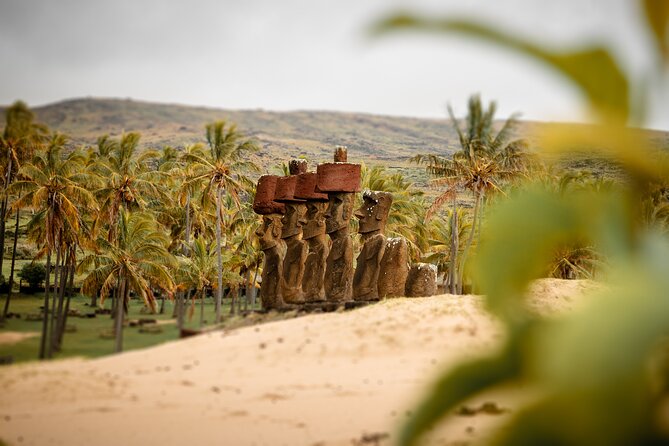
- Anakena Beach and the beginning of Rapa Nui settlement
- Te Pito Kura and the fallen Paro moai
- Puna Pau, where the red headdresses began
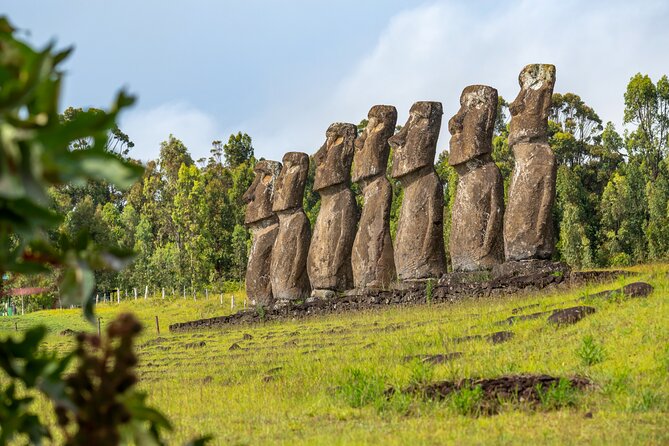
- Ahu Akivi and the seven figures facing the sea
- Tahai, an ancient community beside modern Hanga Roa
- Rano Kau and the broad view across the crater
- Orongo and the birdman competition
- Day two: toppled kings, unfinished moai, and Tongariki
- Vinapu and the island’s most debated stonework
- Moai a Umi and Hanga Poukura
- Ahu Vaihu and the shape of a traditional village
- Akahanga and the island after the statues fell
- Rano Raraku, the workshop behind the moai
- Ahu Tongariki and the 15 restored giants
- What the $320 price really buys you
- Who should book this tour?
- Final call: a strong choice for a first visit
- FAQ
- Where does the tour start?
- How long does the tour last?
- Is the tour private?
- What sites are included on day one?
- What sites are included on day two?
- Is the national park fee included?
- Is lunch included?
- Is transportation provided?
- Can I cancel for a full refund?
Key points to know before booking
- Rano Raraku is the centerpiece: See the volcanic quarry where nearly 1,000 moai were carved, including unfinished statues still attached to the rock.
- Tongariki delivers the big photograph: Fifteen restored moai line a 100-meter ceremonial platform beside the coast.
- Private guiding changes the experience: Your group travels alone, with personal attention and room for questions or family needs.
- The route covers the whole island: Anakena, Orongo, Vinapu, Akahanga, Ahu Akivi, Tahai, and more are included.
- The price is practical for a small group: At $320 per person, the value improves when shared by several people who want a guide and private transport.
- Plan for extra costs: The national park entrance fee and lunch are not included.
Why two private days work well on Rapa Nui
Rapa Nui is small enough to cross by vehicle, but its monuments are spread around the coast and inland hills. A self-guided visit can leave you staring at a fallen statue without knowing why it matters. A good guide connects the stonework, clan politics, astronomy, religion, and oral tradition.
That context is the chief reason to choose this tour. Joaquin has been praised for clear explanations, thoughtful timing, good English, photography help, and a warm manner. He has also adjusted plans for families with toddlers and helped older visitors over uneven ground without making a fuss. Juan Soler Bolt has received similar praise for finding quieter times at major sites and explaining the island with care.
The private setup matters here. You are not waiting for a large bus group to finish taking photographs. You can ask why one moai has a pukao, how a statue may have been moved, or what is known and unknown about the island’s changing political order. That personal exchange can turn a sequence of ruins into a connected story.
The tour has a 4.9 rating from 40 reviews, with 100 percent recommending it. One complaint in the supplied material concerned confusion with a different booking and a shorter-than-expected day, not the guide’s performance. That is worth noting because tour duration can feel less predictable when drive times, meal stops, weather, and site access enter the picture. Confirm the daily timing when you book.
More Private Tours in Easter Island
- 2-Day Private Tour Easter Island Highlights Complete Discovery
★ 5.0 · 110 reviews - Private Full-Day Easter Island Highlights North and West
★ 5.0 · 84 reviews - Full Day Private Tour: Factory of the Moai the stone giants
★ 4.5 · 63 reviews
Day one: from Anakena’s origin story to Orongo’s birdman cliffs
Anakena Beach and the beginning of Rapa Nui settlement
Anakena is more than a pleasant beach stop. Rapa Nui tradition places the arrival of the first king, Hotu Matu’a, here, making the area a cultural starting point for the island’s people. Archaeological remains date to around 1200 AD and include homes, ceremonial areas, caves, and ahu platforms.
The two main monuments are Ahu Ature Huki, with one moai, and Ahu Nau Nau, with seven finely carved figures. Ahu Nau Nau is particularly rewarding because sand protected the statues after they fell, preserving details that are easier to miss elsewhere. You get about 45 minutes here, enough to see the key structures and take in the setting without turning the stop into a beach afternoon.
Bring sun protection and sensible shoes. The beach is the most relaxed setting on the route, but this is still an archaeological area, not simply a swimming break.
Te Pito Kura and the fallen Paro moai
At Te Pito Kura, you see Paro, the largest moai ever placed on an ahu. The statue is about 10 meters tall and weighs more than 80 tons. It lies where it fell, with its large red pukao resting nearby.
That fallen state is part of the lesson. Rapa Nui’s statues were not merely abandoned works of art. They were tied to ancestors, status, clan power, and ceremony. Paro’s scale shows how far that system was pushed before the old order began to weaken.
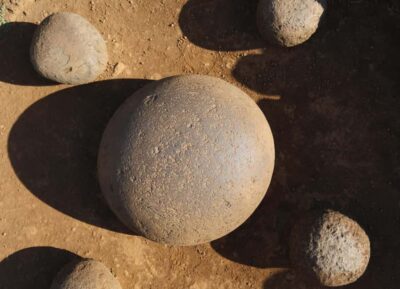
Nearby is Te Pito Kura, a rounded stone associated with mana, or spiritual force. Stories about its magnetic and supernatural qualities are part of the island’s living tradition. Your guide can help separate oral belief, archaeology, and later speculation without draining the site of its mystery.
More Rapa Nui trips and moai walks:
- From Hanga Roa: Rapa Nui Culture Sightseeing Tour
★ 4.6 · 307 reviews - From Hanga Roa: Easter Island Highlights 2-Day Tour
★ 4.3 · 205 reviews - Full Day Tour in Rapa Nui
★ 4.5 · 122 reviews - From Hanga Roa: Journey from Orongo to Ana Te Pahu
★ 4.3 · 75 reviews
Puna Pau, where the red headdresses began
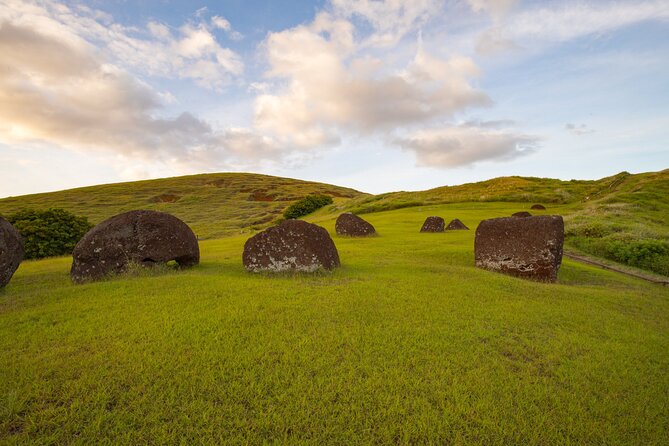
Puna Pau is a red scoria quarry, the source of the cylindrical pukao placed on some moai. The material was softer than the stone used for the bodies, so it could be shaped into headdresses, blocks, containers, and other objects.
The quarry also helps explain the engineering problem behind the monuments. Pukao were moved along a prepared route to ahu sites, sometimes more than 10 kilometers away. Recent excavation has revealed more of that transport path, giving you a clearer sense of the effort involved.
Puna Pau receives about 40 minutes. It is less immediately dramatic than Tongariki or Rano Raraku, but it fills in an important part of the story. You are not only seeing statues. You are seeing an organized system of quarrying, transport, ceremony, and labor.
Ahu Akivi and the seven figures facing the sea
Ahu Akivi is unusual because it sits inland and its seven moai face toward the sea. The platform is linked with the influential Miru clan, and the figures may represent the island’s first explorers or ancient kings.
The statues were transported about 15 kilometers from Rano Raraku. Their careful arrangement and astronomical orientation point to a society with planning, authority, and resources. The stop lasts around 30 minutes, making it a good pause between larger sites.
You should not expect a long walk here. The appeal is the unusual setting and the chance to compare these inland statues with the coastal ahu you see elsewhere.
Tahai, an ancient community beside modern Hanga Roa
Tahai is one of the best places to understand how people lived around the monuments. The ceremonial complex includes three ahu and was occupied by the Marama and Miru clans. Archaeologist William Mulloy’s restoration work helped reveal a settlement where roughly 75 to 200 people lived among caves and rocky shelters.
Look for the stone ramp between Ahu Vai Uri and Ahu Tahai. It may have been used to lower fishing boats from the upper level to the shore. That practical detail is easy to miss, but it shows that the site was a working community as well as a religious center.
Tahai is also a good place to ask your guide about restoration. Much of what you see has been repaired or reassembled, so the site is best understood as a careful reconstruction of an ancient place, not an untouched ruin.
Rano Kau and the broad view across the crater
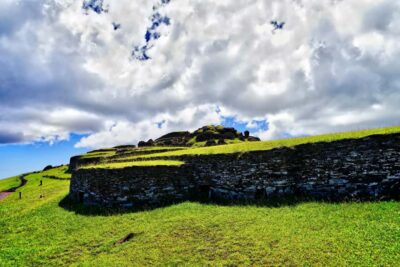
Rano Kau gives you a break from carved stone. The almost circular volcanic crater is about 1.5 kilometers across, with a lake that once provided drinking water and a large concentration of native plant life.
The view is wide and quiet. Wind and distant surf often replace the sound of vehicles, and the crater’s scale helps explain how volcanic geology shaped every part of island life. Obsidian from nearby volcanic sources was also used for tools and other objects.
You spend about 30 minutes here. The stop is free, but the national park entrance fee is not included in the tour price, so plan for that separate expense.
Orongo and the birdman competition
Orongo is one of the most important cultural stops of the first day. This clifftop village was linked to the Tangata Manu, or birdman, competition, held in honor of the creator god Make Make.
Representatives of rival clans descended the cliff, swam to Motu Nui, and waited for the first Manutara egg. The winner’s representative became the birdman of the season, bringing rights and privileges to his clan. The ritual took shape after the older political and religious system had lost authority, so Orongo also marks a major shift in how power was contested.
The village dates in part to around 1400 AD and contains specially built houses. More than 1,700 petroglyphs surround the area, the greatest concentration of rock art on the island. You get about an hour here, which is useful because the cliffs, offshore islets, ceremonial houses, and carvings deserve time.
Stay with your guide and respect barriers. The setting is dramatic, but the cliffs are a serious natural hazard.
Day two: toppled kings, unfinished moai, and Tongariki
Vinapu and the island’s most debated stonework
Vinapu is a fine place to consider how much remains uncertain about Rapa Nui. One wall has tightly fitted stonework that has led to theories of contact between Polynesia and South America. The resemblance is intriguing, but it should not be treated as settled proof.
The Tahira ahu has six fallen statues and a carefully built wall. Vinapu II is older and includes scattered moai and a red scoria column that may have represented a female figure. Some interpretations suggest the column had two heads or was connected with the preparation of bodies before burial.
The stop lasts about 40 minutes. The site is less polished than Tongariki, but that makes the construction details easier to study. Ask your guide to point out the joinery rather than simply taking a quick photograph and moving on.
Moai a Umi and Hanga Poukura
Near Vinapu, Moai a Umi is unusual because it was carved from red rock. Its form and stories add another layer to the island’s use of different stone types and its limited representations of female figures.
About five minutes away, Hanga Poukura brings you to rough coastal lava formations, buried statues, and a mysterious line of figures. The ahu has carefully made stone blocks that contrast with the rugged shore.
This is a quieter, more specialized stop. It suits you if you enjoy unusual details and lesser-known sites, but it may feel less instantly powerful than the large ceremonial platforms later in the day.
Ahu Vaihu and the shape of a traditional village
Ahu Vaihu has been reconstructed as a traditional Rapa Nui village. Here you can see the stone foundations of hare paenga, houses shaped like overturned boats, along with umu pae, stone ovens used for cooking.
The site helps you picture daily life beyond the moai. Ceremonial platforms get most of the attention, yet homes, cooking spaces, storage, and social organization made the ceremonial world possible. A guide’s explanation is especially useful here because the low stone foundations can be hard to read on your own.
Expect about 40 minutes. The stop is accessible as a cultural overview, though the wider tour includes uneven ground and outdoor walking.
Akahanga and the island after the statues fell
Akahanga was once one of the island’s largest villages. Its remains include a small cave, an 18-meter platform, 13 toppled moai, fallen pukao, and a crematorium.
The statues lie scattered rather than restored, offering a different view from the upright figures at Tongariki. This is not a lesser version of the island experience. The fallen monuments show the break in the old ceremonial system and make you think about what happened before European contact and during later periods of social change.
Oral tradition connects Akahanga with the burial of King Hotu Matu’a, including a story about the discovery of his skull. The site also has alignments linked with solstice sunrises and sunsets, possibly tying the area to the burial place of the king’s sister.
The planned visit lasts 90 minutes, one of the longest on the tour. Use it. Walk slowly, listen to the explanation, and compare the toppled statues with the restored platforms you have already seen.
Rano Raraku, the workshop behind the moai
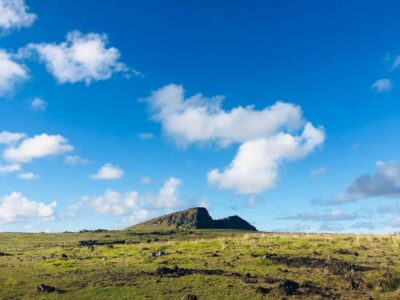
Rano Raraku is the place most likely to define your understanding of Rapa Nui. This volcanic quarry supplied the tuff used to carve almost 1,000 moai. Dozens remain on the slopes, including unfinished figures and statues still connected to the rock.
The unfinished work is the point. It reveals the production process, the sculptors’ methods, and the moment when some projects were stopped. Empty niches show where completed figures were removed. The quarry feels less like a museum and more like a workshop paused in time.
You have about 90 minutes, but this stop can feel short if you love archaeology and photography. Wear sturdy shoes and expect uphill or uneven walking. The scale of the quarry is difficult to grasp from one viewpoint, so follow the route your guide recommends.
Ahu Tongariki and the 15 restored giants
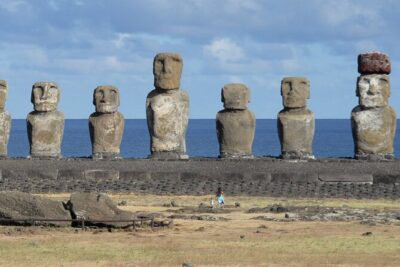
Tongariki is the grand finale for good reason. Its 15 moai line a platform about 100 meters long, creating the largest ceremonial monument on Rapa Nui. The site is linked to a major social, political, and religious center dating to around 900 AD.
Each statue has a different shape and expression. Some are broad, some narrow, and some have more weathered features. Together they show how sculptural styles changed over time while still presenting the ancestors as protectors of the community.
Tongariki was badly damaged and later restored. The restored platform lets you see the monument’s intended scale, but the restoration is also part of the modern story of Rapa Nui. You are looking at ancient achievement and recent conservation work at the same time.
Allow the full hour. This is the place for a wide photograph, but it is also worth putting the camera away for a few minutes. The line of figures, the sea, and the volcanic setting explain why this stop stays with people long after the vehicle leaves.
What the $320 price really buys you
At $320 per person, the tour is not a bargain bus outing, but the price is reasonable for a private two-day program covering nearly all of Rapa Nui’s major sites. Your fee includes a private and personalized experience, an accredited local guide, hotel pickup and drop-off, bottled water, and transport in an air-conditioned vehicle.
The value improves if you are traveling as a couple, family, or small group that wants privacy. You are paying for route planning, local interpretation, transport, and the ability to ask for help with photographs or a change in pace. Several people have found the guides especially caring and flexible, including when traveling with a toddler or when an older family member needed a steady arm.
You still need to budget for the national park fee and lunch. The tour does not include either one. Guides have helped groups stop at local places for meals, but the food cost remains yours.
Who should book this tour?
I would choose this tour if you have only two days on Rapa Nui and want the major sites explained rather than simply photographed. It is also a strong match for families, couples, solo visitors who prefer a personal guide, and anyone interested in archaeology, oral tradition, astronomy, or island politics.
It may not suit you if you want long, unstructured time at each monument. The schedule is ambitious, and the amount of ground covered means some stops receive only 30 or 40 minutes. If your priority is slow photography, extended hiking, or beach time, ask about adjusting the plan before you go.
The experience requires good weather. If poor conditions force cancellation, you are offered another date or a full refund. You can cancel for a full refund up to 24 hours before the 9 a.m. start time, but changes or cancellations inside that window are not accepted.
Final call: a strong choice for a first visit
Book this tour if you want an efficient, personal introduction to Rapa Nui and value a local guide who can explain what the stones mean. The best parts are the human scale of the guiding, the full route, and the contrast between restored monuments such as Tongariki and untouched-looking sites such as Akahanga.
Before paying, confirm the national park fee, meal plans, daily end times, and which guide will lead your group. With those details clear, $320 buys a very useful two-day foundation for understanding Easter Island, not just a checklist of moai.
FAQ
Where does the tour start?
The tour starts in Hanga Roa at 9:00 a.m. Hotel pickup and drop-off are included.
How long does the tour last?
It lasts approximately two days.
Is the tour private?
Yes. It is a fully private activity, and only your group participates.
What sites are included on day one?
Day one includes Anakena Beach, Ahu Te Pito Kura, Puna Pau, Ahu Akivi, Ahu Tahai, Rano Kau, and Orongo.
What sites are included on day two?
Day two includes Vinapu, Moai a Umi and Hanga Poukura, Ahu Vaihu, Ahu Akahanga, Rano Raraku, and Ahu Tongariki.
Is the national park fee included?
No. The national park fee is not included in the tour price.
Is lunch included?
No. Lunch is not included.
Is transportation provided?
Yes. The tour includes transport in an air-conditioned vehicle, along with hotel pickup and drop-off.
Can I cancel for a full refund?
Yes, if you cancel at least 24 hours before the experience start time. Cancellations made less than 24 hours ahead are not refunded.
More 2-Day Experiences in Hanga Roa
- 2 Days Highlights Tour in Easter Island Moai and Nature
★ 4.0 · 55 reviews - Two days of Full Day Tour of Rapa Nui + Sunrise in Tongariki
★ 4.8 · 55 reviews - Private 2 Days Essential Tour of Easter Island
★ 5.0 · 4 reviews - Cable Car, Funicular and Sightseeing Bus in Santiago two days
★ 5.0 · 1,747 reviews
More Historical Tours in Hanga Roa
- 2 Day Small Group Tour in Moai Monuments and Historic Pathways
★ 5.0 · 22 reviews - Easter Island Private Tour: Historical Journey North & West
★ 5.0 · 2 reviews - Santiago: Guided Walking Tour of the Historical Old Town
★ 4.8 · 459 reviews - Tour Viña Santa Rita: History, Wine and Picnic Outdoors
★ 4.5 · 141 reviews
Just added around Hanga Roa
- Volcanic Refuges: Excursion to Underground Civilization★ 4.7 · 8 reviews
- Volcanic Wonders and the Kingdom of the Birdman: Half Day★ 5.0 · 6 reviews
- Easter Island Ancestral Dinner and Show with Transport★ 4.5 · 2 reviews
- Half Day Private Tour: Caves and Volcanic Refuges★ 4.0 · 14 reviews
- Tour to the Motus: Boat trip and snorkeling in Rapa Nui★ 5.0 · 8 reviews
- Birdman Ceremonial Route: Orongo, Ranu Kau Half-Day Tour★ 4.5 · 16 reviews
- Visit Rapa Nui in 4 days with 3 Tours and Accommodation included★ 4.0 · 2 reviews
- Private Tour: Tongariki Sunrise Experience★ 4.5 · 20 reviews
Easter Island Tours, compared.
Two days of Full Day Tour of Rapa Nui + Sunrise in Tongariki
Read our review →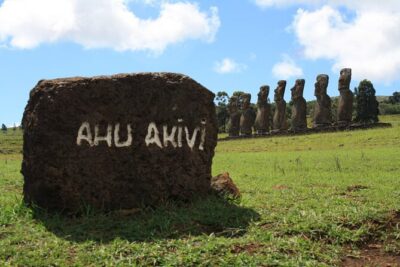
2-Day Private Tour Easter Island Highlights Complete Discovery
Read our review →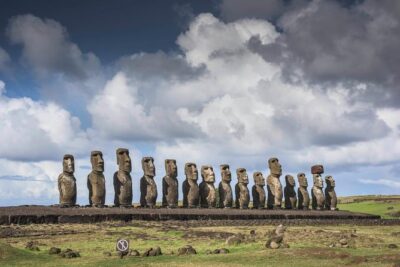
Private Tour: Full Day Easter Island Highlights
Read our review →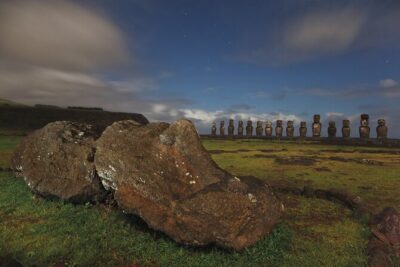
Browse the lists this tour appears in