
Reviewed · EASTER ISLAND TOURS
Birdman Ceremonial Route: Orongo, Ranu Kau Half-Day Tour
The Birdman story begins on a cliff edge. This roughly three-hour outing from Hanga Roa links Orongo village and Rano Kau crater with important moai sites, coastal scenery, and the island’s unusual birdman legends. I like the mix of archaeology and open-air views, and I also like that hotel pickup, a guide, and air-conditioned transport are included for $64. The main caution is that the route details are not perfectly consistent, and some bilingual tours may offer much more Spanish than English.
I also like the small maximum group size of 16, which should make it easier to hear explanations and move between sites. Guides such as Christina and Josephina have received especially warm praise for their clear storytelling and personal approach. Still, you must budget another $100 for the Rapa Nui National Park pass, and this tour is not suitable if you are arriving by cruise ship.
In This Review
- Key points to know before booking
- Why the Birdman route matters on Easter Island
- Orongo village and the Tangata Manu ceremony
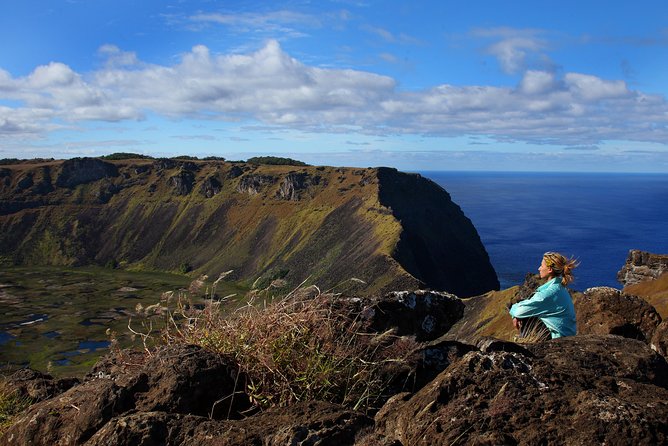
- Rano Kau crater lake and the Motu Nui view
- Ahu Vinapu and the skill of the moai builders
- Tahai and Ana Kai Tangata: the route details need checking
- Guide quality and bilingual explanations
- What $64 really gets you
- Timing, transport, and who should book
- Should you book the Birdman route?
- FAQ
- How long does the tour last?
- What time does the tour start?
- Is hotel transportation included?
- Is the tour private?
- Is the Rapa Nui National Park fee included?
- Where can I buy the national park pass?
- Can cruise passengers join this tour?
- What should I bring?
Key points to know before booking
- Orongo is the emotional center: You’ll see the restored ceremonial village connected to the Tangata Manu, or Birdman, competition.
- Rano Kau delivers the big view: The extinct volcano’s crater lake and ocean outlooks are the visual high point.
- The route may vary: The detailed description includes Tahai and Ana Kai Tangata cave, while the listed stops name Orongo, Rano Kau, and Ahu Vinapu.
- The park fee is extra: The Rapa Nui National Park pass costs $100 per person and is separate from the tour price.
- English quality can vary: Some guides, including Christina, have handled bilingual groups well, but other outings have offered far more Spanish than English.
- This is a morning outing: Pickup begins at about 9:00 a.m., with return to your Hanga Roa hotel after roughly three to three and a half hours.
Why the Birdman route matters on Easter Island
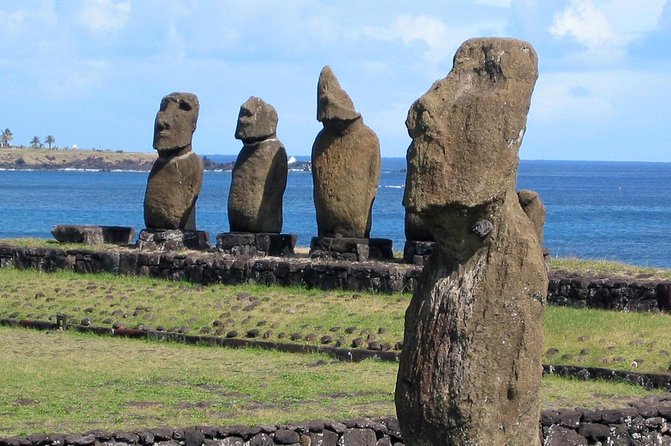
Most visitors first picture Easter Island through its moai. That is understandable, but the island’s later ceremonial life is just as compelling. The Birdman competition at Orongo reveals a society focused not only on ancestor figures, but also on rank, ritual, the sea, and the yearly return of native seabirds.
The contest centered on the manutara bird. Representatives of competing groups waited for the first egg laid on the offshore islet of Motu Nui. A champion, or an appointed competitor, had to reach the islet, secure the egg, and return with it. The prize was not a trophy in the modern sense. It brought power and spiritual status to the winning side.
At Orongo, the story becomes easier to grasp because the setting is so dramatic. The village sits beside the crater of Rano Kau, with steep ocean cliffs and Motu Nui visible offshore. You are not merely hearing about a ceremony in a museum room. You are looking at the terrain that shaped the ceremony.
The guide’s role matters here. The sites are mostly open ground, stone structures, views, and carved figures. Without context, you can admire the scenery and still miss the point. A good explanation connects the oval houses, the offshore islands, the birdman symbols, and the social changes that gave this ceremony such importance.
More Rapa Nui trips and moai walks:
- From Hanga Roa: Rapa Nui Culture Sightseeing Tour
★ 4.6 · 307 reviews - From Hanga Roa: Easter Island Highlights 2-Day Tour
★ 4.3 · 205 reviews - Full Day Tour in Rapa Nui
★ 4.5 · 122 reviews
Orongo village and the Tangata Manu ceremony
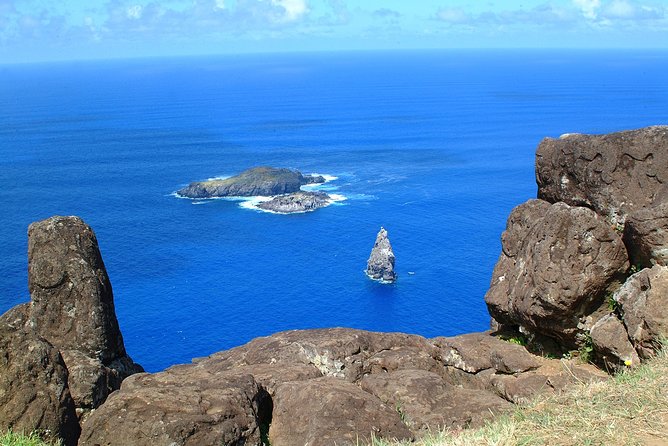
Orongo is scheduled for about 45 minutes, and that is enough for a focused visit, though not enough for a slow study of every feature. You’ll walk among 54 oval houses built from natural materials and look across the water toward the small islands associated with the Birdman contest.
The houses are low and distinct from ordinary modern buildings. Their shape reflects the ceremonial purpose of the settlement and gives the site a solemn, almost otherworldly feel. You can wander independently for part of the visit, which is useful because the best way to absorb Orongo is to pause and look rather than simply follow a guide from one point to the next.
The views help explain the ritual. From the village, the sea is not an abstract backdrop. It was the obstacle, route, and source of prestige. The cliffs made the contest dangerous, while the offshore islets gave the ritual a clear physical goal.
You should bring sturdy, comfortable shoes. The tour description calls for a short stroll at some sites, and archaeological areas can involve uneven ground. Water and a snack are also sensible, since food and drinks are not included.
A drawback is that the entrance fee is not part of the $64 price. The Rapa Nui National Park pass costs $100 per person, applies for 10 consecutive days, and is needed for the archaeological sites visited on tours. You can buy it at the CONAF office inside Mataveri Airport or online through the official site. Download it to your phone or carry a printed copy, since internet service can be limited around the island.
Rano Kau crater lake and the Motu Nui view
Rano Kau is allotted about 30 minutes in the listed schedule. That sounds brief, but the main reward is visual: a vast volcanic crater, a glittering lake, and broad views toward the ocean and Motu Nui.
The crater is part of an extinct volcano, and its bowl gives the site a different character from the moai platforms. You’ll see how the crater’s form helped create a natural setting for the Birdman ceremony. The stop also gives you a chance to connect the view from above with the story you heard at Orongo.
The detailed tour description says you may stop at three viewpoints around Rano Kau. If that happens, you’ll get slightly different angles on the crater and coast rather than one quick photo stop. Weather can change the experience. Clouds, wind, or poor visibility may lead the operator to adjust the route, so keep your schedule flexible.
This is a place where you should resist rushing to take one picture and get back into the van. Look at the relationship between the crater, the village, the cliffs, and the offshore islets. That arrangement is the reason this section of the island feels so closely tied to the Birdman story.
Ahu Vinapu and the skill of the moai builders
Ahu Vinapu is listed as the final stop, with about 30 minutes on site. It offers a useful change of focus after Orongo and Rano Kau. Instead of concentrating on the Birdman ceremony, you’ll examine an archaeological site associated with moai construction and large stone platforms.
The masonry at Vinapu is often discussed for its carefully fitted blocks and advanced construction methods. The site also has hints of pre-Incan influence, although your guide’s explanation will help you understand what is firmly known and what remains a matter of interpretation.
This stop is valuable because it reminds you that the moai were not isolated statues dropped into the scenery. They belonged to ceremonial platforms, social groups, and a system of ancestor respect. The figures represented ancestral spirits, and their size and placement reflected the importance of the people and communities they honored.
You may see moai of different sizes and forms, including figures with red topknots. Some facial details are associated with obsidian, the dark volcanic glass used by Rapa Nui craftsmen. The short visit is enough for an introduction, but anyone fascinated by stonework may wish for more time.
A few more Hanga Roa trips worth comparing side by side
- Ahu Vinapu, Rano Kao and Orongo City Half-Day Tour
★ 4.6 · 20 reviews - Easter Island: Half-Day Archaeology Tour
★ 4.2 · 19 reviews - Santiago Half-Day Walking Tour with Hotel Pick up & Food Sample
★ 4.5 · 467 reviews - Private Tour: Half-Day Santiago Discovery
★ 5.0 · 276 reviews
Tahai and Ana Kai Tangata: the route details need checking
The supplied tour description includes two additional experiences that do not appear in the three-stop itinerary: the Tahai ceremonial complex and Ana Kai Tangata cave. This is the biggest practical issue to clarify before you pay.
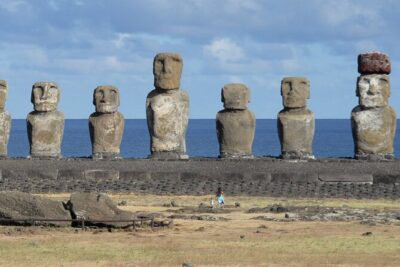
Tahai is described as a stop with three ahu, or ceremonial platforms, near Hanga Roa. The site includes solitary moai and groups of figures in different sizes and shapes. You may also see red topknots and obsidian details. A short guided walk is followed by free time, giving you a chance to look at the statues without being rushed from one explanation to the next.
Ana Kai Tangata is a coastal cave known for paintings and petroglyphs connected with the birdman tradition. The description refers to red and white drawings of birds in flight and images of manutaras. Inside, you may hear the waves breaking against the cliffs while the guide explains the legends tied to the cave and the cliff-top competition.
Those are meaningful additions, not minor details. Tahai gives you a strong introduction to moai culture, while Ana Kai Tangata connects the Birdman story to a physical cave and coastal setting. But because the formal stop list names Orongo, Rano Kau, and Ahu Vinapu instead, you should ask Gray Line Chile to confirm exactly which sites are included on your departure date.
Do not assume all four locations will fit into a three-hour tour. The full description says about three and a half hours, while the summary gives three hours. Weather, traffic, group pace, and site access can all affect the timing.
Guide quality and bilingual explanations
The guide can make or break this outing. The strongest feedback centers on guides named Christina and Josephina, both praised for warmth, useful explanations, and an ability to make the history accessible.
Christina is noted for handling a group speaking two languages. That matters because these excursions may combine Spanish-speaking and English-speaking passengers. Still, you should be prepared for uneven translation. One particularly important warning is that an English-speaking participant found the guide gave far more explanation in Spanish, while another noted that translation problems made the island’s story harder to follow.
That does not mean every English-language departure will be weak. It means you should ask about the language balance when booking or at pickup. If English speakers are a small minority, the guide may naturally spend more time in Spanish. A group of up to 16 people is still manageable, but the experience is not private.
The best approach is to stay near the guide during explanations and ask for clarification if a key part of the Birdman story is unclear. You are paying for interpretation as much as transportation, so it is reasonable to make sure you can follow the central points.
What $64 really gets you
At $64 per person, the tour is priced as a practical introduction rather than a luxury outing. You receive hotel pickup and return in Hanga Roa, an air-conditioned van or bus, and a professional guide. That removes the need to arrange transport between several sites, which is useful on an island where distances and site access can complicate independent sightseeing.
The value is strongest if you want a guided overview in half a day. You can see major archaeological places, hear the Birdman story in its proper setting, and still have much of the day available for other activities.
The total cost is much higher once you add the $100 national park fee. The pass is valid for 10 consecutive days, so it is not a fee for this tour alone. If you plan to visit other Rapa Nui archaeological sites during the same stay, the pass becomes more useful.
Some feedback has compared this outing favorably with much more expensive hotel-arranged tours. That is a reminder to compare what you are actually buying. A higher hotel price does not automatically mean better guiding. Here, the guide’s performance and the exact route matter more than the label attached to the booking.
Timing, transport, and who should book
Pickup begins at 9:00 a.m. from Hanga Roa hotels. The vehicle is an air-conditioned minivan or bus, and the group may include as many as 16 people. The trip is not private, so you should expect a shared pace and limited freedom to linger at any one site.
This outing suits you if you want a compact introduction to southwestern Easter Island, especially if your interests include archaeology, oral tradition, ceremonial sites, and broad coastal views. It also works well early in a stay because the 10-day park pass can then be used on later excursions.
You should think twice if you want a slow photographic tour, a fully private guide, or long periods at each archaeological site. The scheduled stops are short, and route changes are possible in bad weather.
Cruise passengers should not book it. Port pickup is not available, and the stated meeting arrangement is hotel pickup in Hanga Roa. The activity is considered suitable for most people, but comfortable shoes are still important for walking around the sites.
Free cancellation is available if you cancel at least 24 hours before the local start time. Changes or cancellations made within 24 hours are not accepted for a refund.
Should you book the Birdman route?
I would book this tour if you want a reasonably priced, guided half-day that explains why Orongo and Rano Kau matter. The scenery is excellent, and the Birdman ceremony gives you a different way to understand Rapa Nui society beyond the familiar moai.
Before booking, confirm three things: the exact sites included, the expected balance between Spanish and English, and whether your schedule allows for the $100 park pass. If Tahai and Ana Kai Tangata are included as described, the outing offers an especially good mix. If the formal route is limited to Orongo, Rano Kau, and Vinapu, it is still worthwhile, but the focus is narrower.
Book it for context, efficient transport, and a strong first look at the island’s ceremonial southwest. Skip it only if you need a private, unhurried experience or are arriving from a cruise ship.
FAQ
How long does the tour last?
The tour lasts approximately three hours according to the summary, while the detailed description gives about three and a half hours. Timing may change because of weather and group pace.
What time does the tour start?
Pickup begins at 9:00 a.m. from hotels in Hanga Roa.
Is hotel transportation included?
Yes. Round-trip pickup and drop-off from Hanga Roa hotels are included in an air-conditioned van or bus.
Is the tour private?
No. This is a shared excursion with a maximum group size of 16 people.
Is the Rapa Nui National Park fee included?
No. The national park pass costs $100 per person and must be paid separately.
Where can I buy the national park pass?
You can buy it at the CONAF office inside Mataveri Airport or online through the official website. The pass is valid for 10 consecutive days from the purchase date.
Can cruise passengers join this tour?
No. Port pickup is not available, so the tour is not suitable for passengers arriving by cruise ship.
What should I bring?
Wear comfortable clothes and shoes, and bring water and snacks. Food and drinks are not included. It is also wise to carry a printed or downloaded copy of your national park pass because internet access may be limited at archaeological sites.
Just added around Hanga Roa
- Volcanic Refuges: Excursion to Underground Civilization★ 4.7 · 8 reviews
- Easter Island Ancestral Dinner and Show with Transport★ 4.5 · 2 reviews
- Volcanic Wonders and the Kingdom of the Birdman: Half Day★ 5.0 · 6 reviews
- Half Day Private Tour: Caves and Volcanic Refuges★ 4.0 · 14 reviews
- Tour to the Motus: Boat trip and snorkeling in Rapa Nui★ 5.0 · 8 reviews
- Visit Rapa Nui in 4 days with 3 Tours and Accommodation included★ 4.0 · 2 reviews
- Private Tour: Tongariki Sunrise Experience★ 4.5 · 20 reviews
- Sunrise in Tongariki on Easter Island Rapa Nui★ 3.5 · 5 reviews
Easter Island Tours, compared.
Two days of Full Day Tour of Rapa Nui + Sunrise in Tongariki
Read our review →
2-Day Private Tour Easter Island Highlights Complete Discovery
Read our review →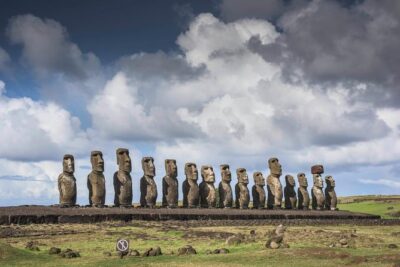
Private Tour: Full Day Easter Island Highlights
Read our review →
Browse the lists this tour appears in