
Reviewed · EASTER ISLAND TOURS
2 Days Highlights Tour in Easter Island Moai and Nature
The moai are only half the story. This two-day outing gives you a useful first look at Rapa Nui, combining its best-known statues with volcanic craters, lava caves, ceremonial villages, beaches, and local history. I especially like the small-group limit of 14 people and the chance to visit both famous sites such as Tongariki and quieter places such as Akahanga.
I also like that local guides lead the visits, since the best parts of Easter Island are often the stories behind the stones. The main caution is uneven guide performance, especially when a tour is bilingual. Some guides have been warm, clear, and deeply informed, while others have spoken too softly, rushed, or given English speakers less attention.
- Rano Raraku reveals where the moai were carved, with unfinished statues still resting in the volcanic quarry.
- Ahu Tongariki and Anakena provide two very different moai settings, one dramatic and ceremonial, the other beside a white-sand beach.
- Day two adds the volcanic and spiritual side of Rapa Nui, including Rano Kau, Orongo, and the Birdman tradition.
- Ana Te Pahu requires real care, with a dark lava cave, uneven ground, bending, and some crawling.
- The $210 price covers two days of transport and guiding, but the National Park ticket and meals are extra.
- Bring water, snacks, sturdy shoes, and patience, since pickup delays and bilingual narration can affect the day.
In This Review
- What the Two Days Actually Cover
- Day One: Moai on the South and East Coast
- Ahu Vaihu and the Shape of an Ancient Village
- Ahu Akahanga and a Less Polished View
- Rano Raraku, the Quarry Behind the Moai
- Ahu Tongariki and the Island’s Iconic View
- Te Pito Kura and the Navel of the World
- Anakena Beach, Moai and a Swim
- Day Two: Caves, Volcanoes, and the Birdman Tradition
- Ahu Akivi and the Seven Moai
- Ana Te Pahu, the Banana Cave
- Puna Pau and the Red Pukao
- Ahu Vinapu and Precise Stonework
- Rano Kau, a Vast Volcanic Crater
- Orongo and the Birdman Competition
- Guides, Languages, and the Shared Van
- Price, Park Fees, and What to Pack
- Who Should Book This Tour
- Should You Book the Two-Day Rapa Nui Tour?
- FAQ
- How long is the tour each day?
- What time does pickup begin?
- Is the National Park ticket included?
- Are meals included?
- Is Ana Te Pahu suitable for everyone?
- How many people can join the tour?
What the Two Days Actually Cover
The tour begins around 10:00 a.m. with pickup from your accommodation in Hanga Roa. You travel by shared vehicle between archaeological sites, usually with a maximum of 14 people. That is a sensible size for Easter Island: small enough for a personal feel, but large enough that the price is lower than a private tour.
The two days cover most of the major places you want to see on a first visit. Day one focuses on the east and north coast, with the quarry at Rano Raraku, the great platform at Ahu Tongariki, and Anakena Beach. Day two turns inland and west toward the island’s volcanic craters, lava caves, ceremonial sites, and the red-scoria quarry at Puna Pau.
The order may change. One well-liked guide explained that the full-day route and the shorter route can be switched depending on the operating schedule. So check your pickup details rather than assuming the first day will match the printed order.
Guiding is the key variable. Guides such as Enzo, Fernanda, Franco, Frank, Zoe, and David have been praised for their warmth, local knowledge, and willingness to answer questions. Fernanda was especially attentive to a visitor with a leg problem, while one guide added music by playing ukulele and singing. At the other end of the scale, some English-speaking participants received only brief translations while Spanish narration took most of the time.
Day One: Moai on the South and East Coast
More Rapa Nui trips and moai walks:
- From Hanga Roa: Rapa Nui Culture Sightseeing Tour
★ 4.6 · 307 reviews - From Hanga Roa: Easter Island Highlights 2-Day Tour
★ 4.3 · 205 reviews - Full Day Tour in Rapa Nui
★ 4.5 · 122 reviews
Ahu Vaihu and the Shape of an Ancient Village
Ahu Vaihu is a good opening stop because it introduces more than statues. The site includes the remains of an old Rapa Nui settlement, so you can picture the ceremonial platform in relation to everyday life. Fallen moai lie near the coast, surrounded by stonework and open ground.
Allow about 45 minutes. Your guide should explain how the platform, statues, and village remains fit together. Stay close during the talk. Several visitors found that explanations began while part of the group was still walking over, which meant people at the back missed important details.
Ahu Akahanga and a Less Polished View
Akahanga offers another coastal ahu, but with a quieter, less restored feeling than Tongariki. The fallen statues and scattered stones make the site feel more like an archaeological place than a formal monument. Ocean views and sea air add to the setting.
This is one of the better stops for understanding that Easter Island is not simply a field of upright statues. The moai were part of a wider ceremonial and social system. You will get more from Akahanga if you ask your guide about the platform, the village remains, and why some statues are no longer standing.
Rano Raraku, the Quarry Behind the Moai
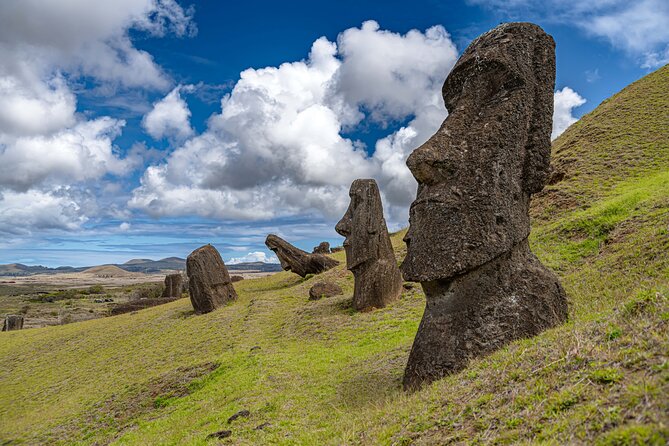
Rano Raraku is the day’s essential stop. This volcanic quarry is where most of the island’s famous moai were carved. Unfinished figures remain in the slopes, and others appear to be waiting in the rock, showing different stages of the carving process.
The site makes the scale of the work easier to grasp. Instead of seeing only a finished statue on a platform, you can observe the raw volcanic material and the abandoned figures left behind. Your guide can help explain how the Rapa Nui shaped, moved, and raised these enormous images.
The walk takes about an hour and includes uneven paths and uphill sections. Wear shoes with a good grip, take water, and do not rush the views. The quarry is more than a photo stop. It is where the technical skill and religious purpose of the moai become easier to understand.
A few more Hanga Roa trips worth comparing side by side
- 2-Day Private Tour Easter Island Highlights Complete Discovery
★ 5.0 · 110 reviews - Two days of Full Day Tour of Rapa Nui + Sunrise in Tongariki
★ 4.8 · 55 reviews - 2 Day Private Tour: Easter Island’s Cultural Heritage
★ 5.0 · 40 reviews - 2 Day Small Group Tour in Moai Monuments and Historic Pathways
★ 5.0 · 22 reviews
Ahu Tongariki and the Island’s Iconic View
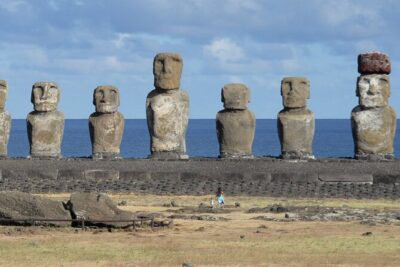
Tongariki is the image many people carry in their minds before arriving at Easter Island: 15 moai aligned on a broad ceremonial platform with the Pacific behind them. The scale is impressive even when you have already seen several statues.
The scheduled visit lasts about 45 minutes, enough to walk around, take photographs, and hear the story of the platform’s destruction and restoration. The printed description refers to sunrise, but the stated tour start is 10:00 a.m., so you should not expect a sunrise visit on this shared excursion. For sunrise, you would need a separate arrangement.
Tongariki can feel crowded compared with Akahanga, but it earns its fame. Look at the differences in size, posture, and facial treatment rather than photographing only the group as a whole. The arrangement also helps explain the importance of the ahu as a ceremonial focus.
Te Pito Kura and the Navel of the World
Te Pito Kura is a shorter, more unusual stop. It is associated with a large rounded stone known as Te Pito o Te Henua, or the Navel of the Earth. Local tradition gives the stone a special place, and your guide can explain the beliefs connected with it.
The moai here is fallen, so this is not another grand lineup of standing statues. That is part of its value. The stop adds legend, cultural meaning, and a reminder that Rapa Nui heritage includes sacred objects and stories as well as monumental figures.
Anakena Beach, Moai and a Swim
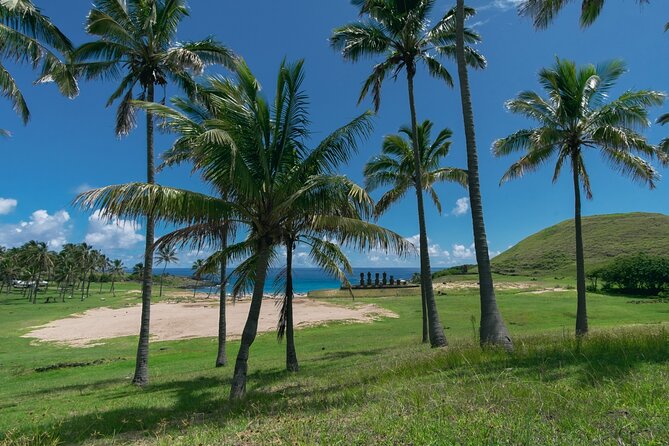
Anakena changes the mood completely. After a day of stone platforms and volcanic ground, you reach a white-sand beach with turquoise Pacific water. Ahu Nau Nau, with its restored moai, sits close to the beach and makes this one of the island’s most memorable combinations of nature and archaeology.
You may have time for a swim, so pack a swimsuit under your clothes or keep one accessible. Food may be available at a nearby restaurant or as a picnic option, but do not treat lunch as guaranteed. The first day has generally offered a better chance for a food break, while the second day may run from pickup until around 3:00 p.m. without one.
For some people, Anakena is the perfect finish. Others feel the beach receives more time than they need after the major archaeological sites. I would keep it, especially if you want a short swim or a change of pace, but bring snacks in case the meal plan is unclear.
Day Two: Caves, Volcanoes, and the Birdman Tradition
Ahu Akivi and the Seven Moai
Ahu Akivi is one of the island’s most distinctive ceremonial sites. Its seven moai face inland toward the setting sun, and tradition connects them with ancestors or navigators who watched over the island. The site has a calmer feel than Tongariki, with open views and a more reflective atmosphere.
The stop lasts about 45 minutes. Listen for the differences between the stories told at Akivi and those connected with the coastal ahu. This is a good place to ask questions, since the meaning of the statues is not limited to a single explanation.
Ana Te Pahu, the Banana Cave
Ana Te Pahu is the most physically demanding part of the tour. This lava tube, also called the Banana Cave, includes dark passages, low ceilings, uneven ground, and sections where you may need to duck, bend, or move carefully off the main path. One account described a section that required crawling.
The cave is interesting because it combines geology with human use. The surrounding vegetation, lava formations, and stories of shelter show how closely Rapa Nui life was tied to the island’s volcanic ground. But this is not a casual stroll. If you have back or knee problems, the cave may be uncomfortable or unsuitable.
Bring shoes with strong grip and a reliable flashlight. The tour information does not promise torches, and at least one visitor felt the cave was unsafe without better lighting. Your phone may work, but a small personal flashlight is the smarter choice. Use the bathroom and refill water before entering, since facilities are limited around the island.
Puna Pau and the Red Pukao
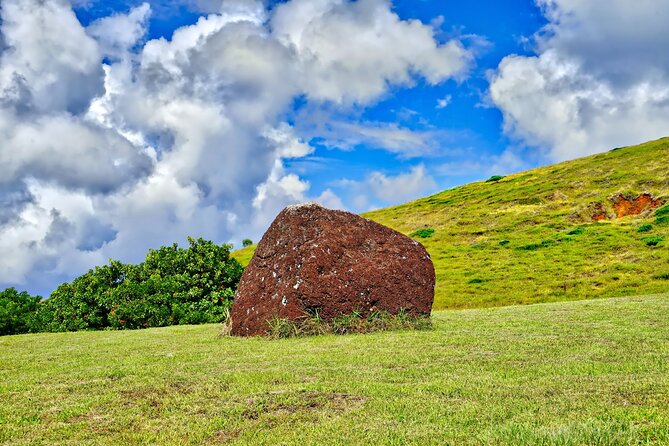
Puna Pau is a small red-scoria quarry used to make the pukao, the topknots placed on some moai. It helps complete the story begun at Rano Raraku. The gray statues were carved from one source, while the red headpieces came from another.
Your guide can explain how the Rapa Nui shaped and transported these heavy pieces. The site also gives broad views across the island, so it is worth taking a moment to look beyond the quarry itself. The visit lasts about 45 minutes and involves less demanding walking than Ana Te Pahu.
Ahu Vinapu and Precise Stonework
Vinapu is known for its carefully fitted stonework and ceremonial platform. Its construction has often prompted comparisons with stone structures in South America, making it a useful place to discuss outside theories and the distinctive engineering of Rapa Nui.
Do not expect another Tongariki-style line of standing moai. Vinapu’s interest lies in the masonry, the platform, and the questions it raises about ancient contact and local building skill. The coastal setting adds good views, but the stones are the main reason to pay attention here.
Rano Kau, a Vast Volcanic Crater
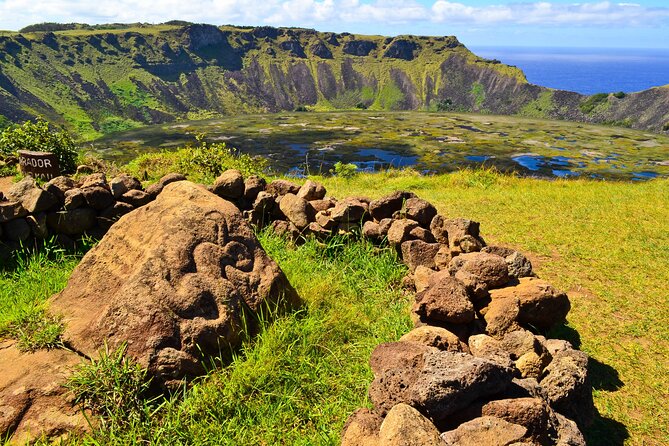
Rano Kau is one of the day’s strongest natural sights. From the rim, you look down into a huge volcanic crater with a lagoon at its center. The water, reeds, and curved walls create a scene very different from the open coast.
The scheduled stop is only about 30 minutes, so listen closely and move efficiently. Weather matters here. Fog and rain can reduce the view, and poor conditions may affect access to some sites. If the weather turns bad, ask the operator whether a change of timing is possible, though this may not always be available.
Orongo and the Birdman Competition
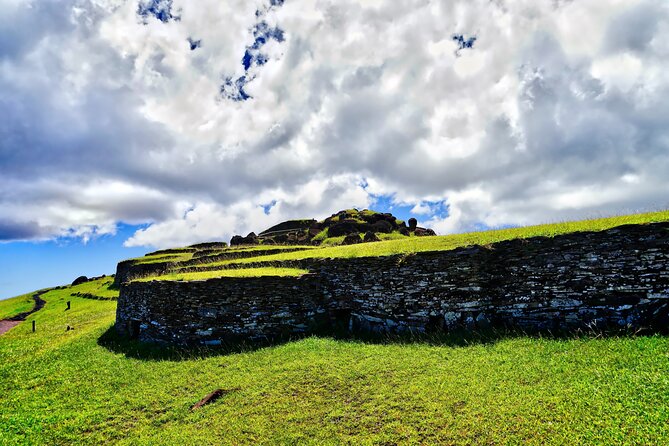
Orongo sits beside Rano Kau and is the cultural high point of day two. The stone village was linked to the annual Birdman competition, a contest that helped determine leadership on the island. Small stone houses and petroglyphs remain near the crater edge.
The view toward the Pacific is powerful, but the story gives the site its meaning. Your guide should explain how contestants reached the offshore islets and why the birdman ritual became important after the era of the great moai construction. This is a place where the island’s political and religious life comes into sharper focus.
Plan about an hour here. Keep a respectful distance from the archaeological remains and stay on the marked routes. The cliffside setting can be windy, so hold onto hats and loose items.
Guides, Languages, and the Shared Van
The strongest part of this tour is often the human element. Local guides have explained Rapa Nui history, geography, food, and present-day island life with warmth. Some have made extra efforts to help with mobility, answer questions, or create a relaxed atmosphere. That local connection can turn a sequence of ruins into a more meaningful day.
The weak point is communication. If Spanish and English speakers share one van, the guide may repeat each explanation in both languages. That takes time, and if the guide talks while walking instead of gathering the group first, anyone at the rear can miss much of the commentary.
Pickup delays have also occurred, including waits of an hour or more. In one case, a guide change caused confusion; in another, a family had to contact the operator because they were missing from the day’s list. I would confirm your pickup the day before and keep your morning flexible.
The vehicles have usually been described as serviceable, but cleanliness and comfort have not been consistent. A maximum of 14 people is manageable, though luggage, wet clothing, or a full van can make the ride feel tight. Drivers vary too. Some have helped people in and out of the vehicle and handled rain with care, while others have been less welcoming.
Price, Park Fees, and What to Pack
At $210 per person, the tour is not a bargain-priced island transfer. You are paying for two days of transport, a local guide, and a route that covers a large share of the main sites. Compared with arranging separate taxis, guides, and transport, the price can make sense if you want a simple plan and do not want to negotiate each outing yourself.
The National Park ticket is not included. This is an important extra cost, and you need to arrange it separately. Meals are also not included, and the second day may have no lunch stop before the tour ends around 3:00 p.m.
Pack:
- Plenty of drinking water
- Snacks for both days
- Sun protection and a hat
- A swimsuit for Anakena
- Sturdy shoes with good grip
- A small flashlight for Ana Te Pahu
- A light rain layer
- Cash or payment for food, since meal arrangements vary
The physical rating is moderate, but that label needs context. Most stops involve walking over uneven ground, and there are uphill sections. Ana Te Pahu is the real test, especially for anyone with knee, hip, or back trouble.
Free cancellation is available up to 24 hours before the start time. Changes or cancellations made inside that window are not accepted for a refund.
Who Should Book This Tour
I would choose this tour if you have only two full sightseeing days on Easter Island and want to see the major archaeological and natural sites in one organized package. It suits first-time visitors, couples, families with reasonably active children, and anyone who values local interpretation more than complete control over the schedule.
It is less suitable if you need a guaranteed English-only guide, dislike shared transport, require a strict timetable, or want long, quiet visits at every site. It is also not a good fit if Ana Te Pahu sounds physically difficult.
The best way to improve your odds is simple: confirm the language, pickup time, day order, lunch plan, and National Park ticket before you go. On the day, stay near the guide during explanations, carry water, and speak up if the group has been split between languages.
Should You Book the Two-Day Rapa Nui Tour?
Yes, if your priority is coverage. The route brings together the island’s essential moai sites, the quarry that produced them, the pukao quarry, a lava cave, two major volcanic areas, Orongo, and Anakena Beach. Few short excursions offer such a broad introduction.
I would book it with realistic expectations. The first day is often the stronger, more polished day, while the second depends heavily on the guide, weather, and cave conditions. If the operator confirms a capable bilingual guide and clear pickup details, the tour offers solid value for a short stay. If you can afford more time, a private guide would give you better control over language, pacing, and weather.
FAQ
How long is the tour each day?
The experience lasts approximately two days. The first day includes six stops and is generally the fuller sightseeing day. The second day may finish around 3:00 p.m., depending on timing.
What time does pickup begin?
The stated start time is 10:00 a.m. Pickup is provided from your accommodation, but delays have occurred, so confirm the exact pickup details in advance.
Is the National Park ticket included?
No. The National Park ticket is not included and must be purchased separately.
Are meals included?
No. Meals are not included. Food may be available near Anakena on the first day, but the second day may have no lunch stop, so bring snacks and water.
Is Ana Te Pahu suitable for everyone?
No. Ana Te Pahu includes a dark lava cave with uneven ground, bending, ducking, and possibly crawling. Good-grip shoes are recommended, and the cave may not suit people with back or knee problems.
How many people can join the tour?
The tour has a maximum of 14 participants. It includes transportation and a native guide.
Just added around Hanga Roa
- Volcanic Refuges: Excursion to Underground Civilization★ 4.7 · 8 reviews
- Easter Island Ancestral Dinner and Show with Transport★ 4.5 · 2 reviews
- Volcanic Wonders and the Kingdom of the Birdman: Half Day★ 5.0 · 6 reviews
- Half Day Private Tour: Caves and Volcanic Refuges★ 4.0 · 14 reviews
- Tour to the Motus: Boat trip and snorkeling in Rapa Nui★ 5.0 · 8 reviews
- Birdman Ceremonial Route: Orongo, Ranu Kau Half-Day Tour★ 4.5 · 16 reviews
- Visit Rapa Nui in 4 days with 3 Tours and Accommodation included★ 4.0 · 2 reviews
- Private Tour: Tongariki Sunrise Experience★ 4.5 · 20 reviews
Easter Island Tours, compared.
Two days of Full Day Tour of Rapa Nui + Sunrise in Tongariki
Read our review →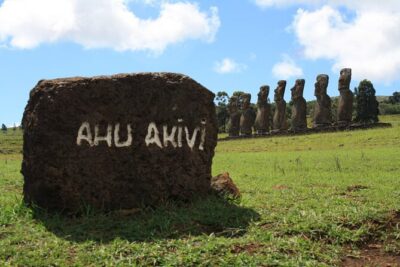
2-Day Private Tour Easter Island Highlights Complete Discovery
Read our review →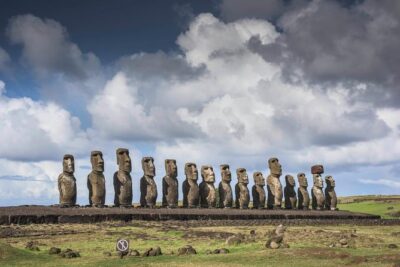
Private Tour: Full Day Easter Island Highlights
Read our review →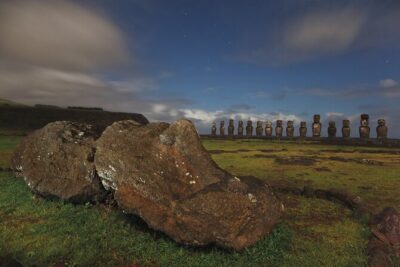
Browse the lists this tour appears in