
Reviewed · EASTER ISLAND TOURS
From Hanga Roa: Easter Island Sightseeing Full Day Tour
The moai are only part of the story. This eight-hour outing links Easter Island’s major archaeological sites in one well-paced day, with hotel pickup, transport, and a bilingual guide who explains what you are seeing rather than simply pointing at statues. I especially like the route’s variety: Rano Raraku shows where the moai were carved, while Tongariki gives you the grand coastal view that appears in so many photographs. The return to your accommodation also makes the day easy after several hours outdoors.
The $70 price is reasonable for a small group of up to 14 people, especially if you have only one full day on the island. The main caution is that the national park ticket and lunch cost extra, and the day can include waiting if other people arrive late at stops or choose a beach break you did not expect.
In This Review
- Key points at a glance
- Why this route works well in one day
- Vaihu, where fallen moai change the mood
- Akahanga and the remains of an older community
- Rano Raraku, the moai workshop in volcanic stone
- Tongariki, the grand coastal view
- Te Pito Kura and the so-called navel of the world
- Guides are the strongest part of the experience
- What the $70 price really covers
- How tiring is the eight-hour day?
- Who should book this tour?
- Practical tips for a smoother day
- Should you book it?
- FAQ
- How long does the Easter Island sightseeing tour last?
- Which sites are included?
- Is hotel pickup and drop-off included?
- What languages does the guide speak?
- How large is the tour group?
- Is the national park ticket included?
- Is lunch included?
Key points at a glance
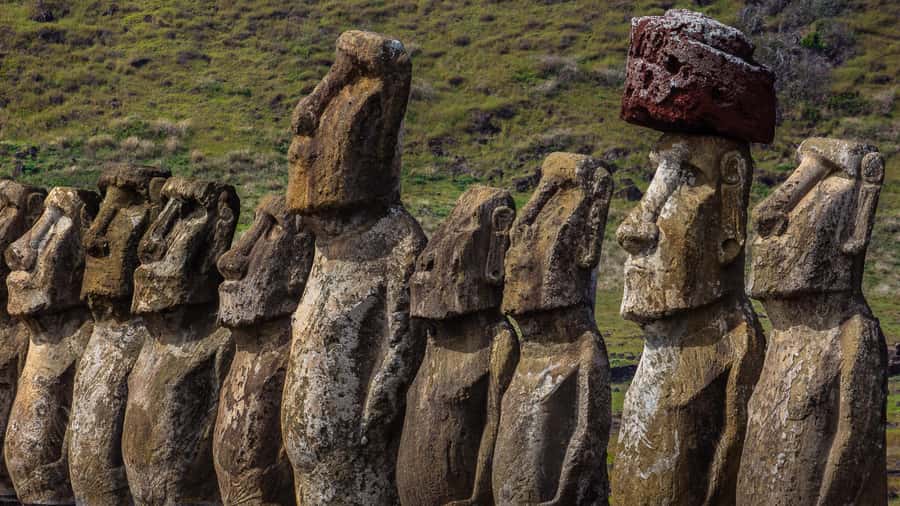
- Rano Raraku is the day’s essential stop: You see unfinished moai still attached to the volcanic stone from which they were carved.
- Tongariki delivers the big photo moment: Fifteen moai face inland with the Pacific behind them.
- A bilingual guide adds real value: Guides such as Hiva, Enzo, Fernanda, Franc, and Ata have been praised for clear explanations and calm pacing.
- Small groups keep the day manageable: The advertised limit is 14 people, with some tours operating in a minibus for about 12 or 13.
- Bring food and water: Lunch is not included, and one account specifically warns that there may be no easy place to buy supplies along the route.
- The beach finish needs planning: Some departures end at Anakena, although the stated route also names Te Pito Kura as the final stop. Ask about the exact schedule if swimming matters to you.
Why this route works well in one day
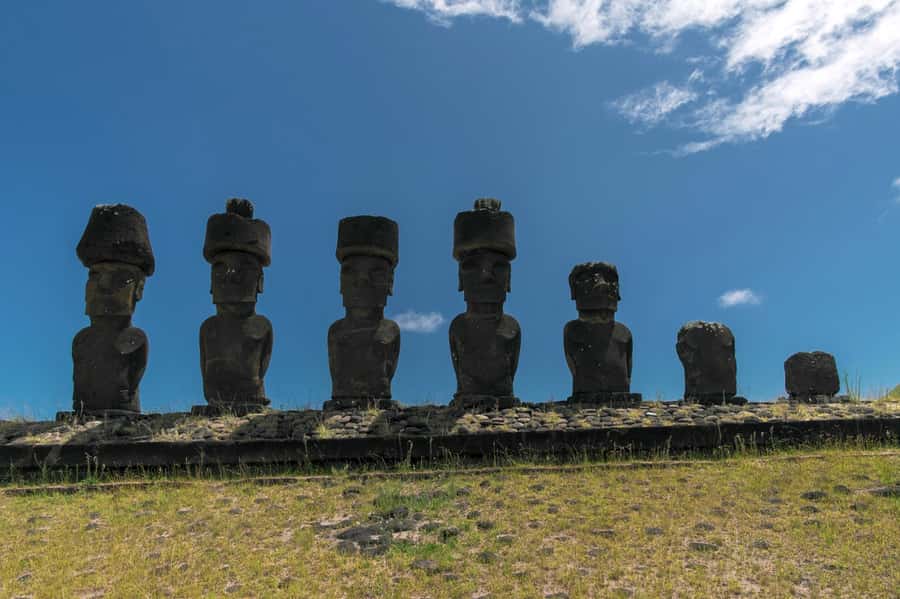
Easter Island, or Rapa Nui, can feel difficult to organize because its major sites are spread around the coast and inland hills. This tour solves that problem with a fixed route through Vaihu, Akahanga, Rano Raraku, Tongariki, and Te Pito Kura, followed by a hotel drop-off.
I like this kind of day for a first visit. You do not have to arrange a vehicle, study the road network, or work out which sites require a guide. Instead, you can focus on the moai and the stories connected to them.
The group size matters. A vehicle carrying no more than 14 people is small enough for questions and easier stops than a large coach. The strongest praise has gone to the guides’ tone and delivery. Hiva was singled out for detailed explanations in English and Spanish, while Fernanda was praised for a calm style that did not make a long day feel tiring. Ata was especially appreciated for clear English pronunciation.
You should still expect a full day rather than a quick sightseeing loop. Pickups can take time, particularly when several accommodations are involved. One departure had a scheduled pickup at 9:45 a.m., with the minivan arriving at 10:20 a.m. Being outside and ready is wise, but a little patience may be needed at the beginning.
More Rapa Nui trips and moai walks:
- From Hanga Roa: Rapa Nui Culture Sightseeing Tour
★ 4.6 · 307 reviews - From Hanga Roa: Easter Island Highlights 2-Day Tour
★ 4.3 · 205 reviews - Two days of Full Day Tour of Rapa Nui + Sunrise in Tongariki
★ 4.5 · 132 reviews
Vaihu, where fallen moai change the mood
Vaihu begins the archaeological story with moai lying near the coast. It is a useful first stop because you see the statues not only as polished monuments, but also as remains of a much larger ceremonial world.
Your guide explains how the figures were made and what their placement meant. The site gives you time to look closely at the stone, the arrangement of the ahu, and the relationship between the statues and the sea.
This is not simply a photo stop. Vaihu helps you understand that many moai are now toppled, damaged, or separated from their original setting. That contrast becomes important later at Tongariki, where the restored line of statues presents a very different sight.
Expect short walks and some steps across archaeological ground. Comfortable shoes, water, and sun protection are sensible. The tour information asks you to bring a passport or identity card, and you should also have your national park ticket ready.
Akahanga and the remains of an older community
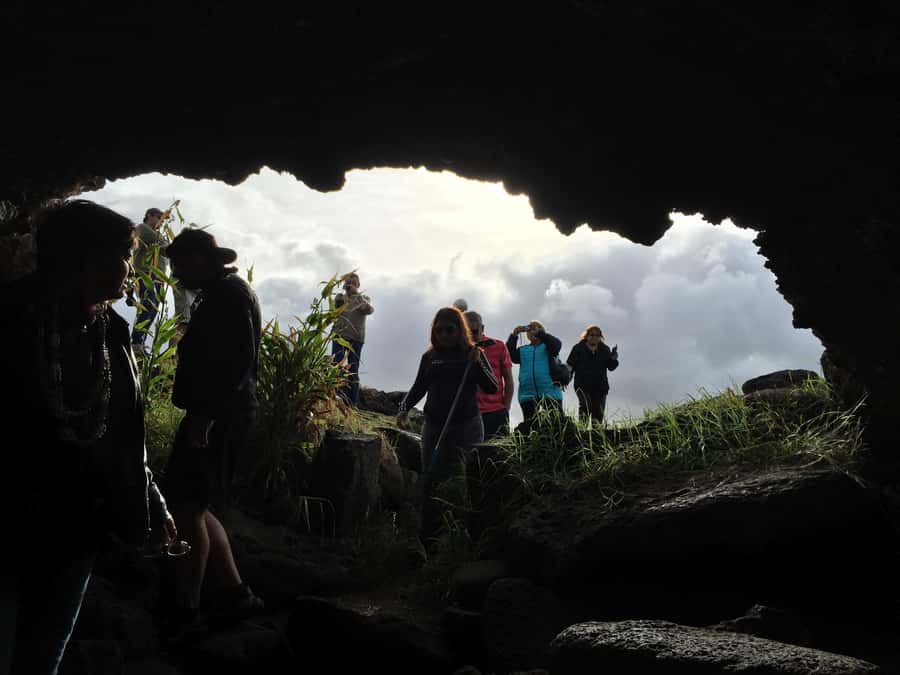
At Akahanga, the focus shifts from individual statues to a wider picture of traditional Polynesian life. You see toppled moai and remnants connected with former village activity, giving the guide room to explain how people lived around these ceremonial sites.
I find this stop valuable because it slows down the usual moai story. The statues were not isolated objects placed randomly around the island. They belonged to communities, rituals, and carefully arranged spaces.
Akahanga can also be a practical point in the day. One account describes a lunch stop near Aka Hanga, but lunch is not part of the official inclusions. Do not count on a meal being provided. Pack snacks and water, and ask the guide early in the day when and where you will have time to eat.
The site may feel less immediately dramatic than Tongariki, but it rewards attention. If you only want the most famous photographs, you may find this stop quieter. If you want a better sense of the people behind the stone figures, it earns its place on the route.
Rano Raraku, the moai workshop in volcanic stone
Rano Raraku is the heart of the tour. This volcanic quarry is where many of the island’s famous figures were carved, and unfinished statues remain in the rock. Here, the scale of the work becomes easier to grasp.
You can see moai at different stages of completion. Some appear to be emerging from the hillside, while others remain attached to the stone below. Your guide explains the carving process and the labor required to shape, separate, and move these enormous figures.
This is where a good guide makes the greatest difference. Without context, the hillside can look like a collection of large stone forms. With clear explanations, you begin to see it as a working site, full of abandoned projects and evidence of changing plans.
Allow yourself time to look beyond the largest statue. The unfinished figures show details that are harder to notice at a finished ahu. You can also compare the rough quarry stone with the more finished surfaces seen elsewhere.
There is an important ticket detail here. One account warns that the stone-carving site can be visited only once with the national park ticket. If you plan to explore Rano Raraku independently on another day, check the current park rules before using your one permitted visit.
A few more Easter Island trips worth comparing side by side
- Full Day Tour in Rapa Nui
★ 4.5 · 122 reviews - Private Tour: Full Day Easter Island Highlights
★ 5.0 · 106 reviews - Full day tour – DREAM
★ 5.0 · 86 reviews - Private Full-Day Easter Island Highlights North and West
★ 5.0 · 84 reviews
Tongariki, the grand coastal view
Tongariki is the visual high point for many people. Fifteen moai line the ceremonial platform with the Pacific Ocean behind them, creating the classic Easter Island scene.
The setting gives you both scale and silence. The statues are immense, but the open coast keeps the view from feeling crowded. This is the place to step back, take photographs, and consider how much effort went into restoring the site.
The guide’s explanation also helps you read the arrangement. You are not just looking at a row of statues. You are seeing a ceremonial platform tied to the island’s wider social and religious life.
The timing here matters. Several people praised tours that gave enough time at each site, while another account found some visits too quick and the beach stop too long. Your guide controls the schedule, but the pace can also be affected by late departures from the group.
If photography is important, mention it early. One person who was picked up late ended up in the middle seat of the vehicle and could not take pictures through a window. That is not a problem at the site itself, but seating and pickup order can affect the journey between stops.
Te Pito Kura and the so-called navel of the world
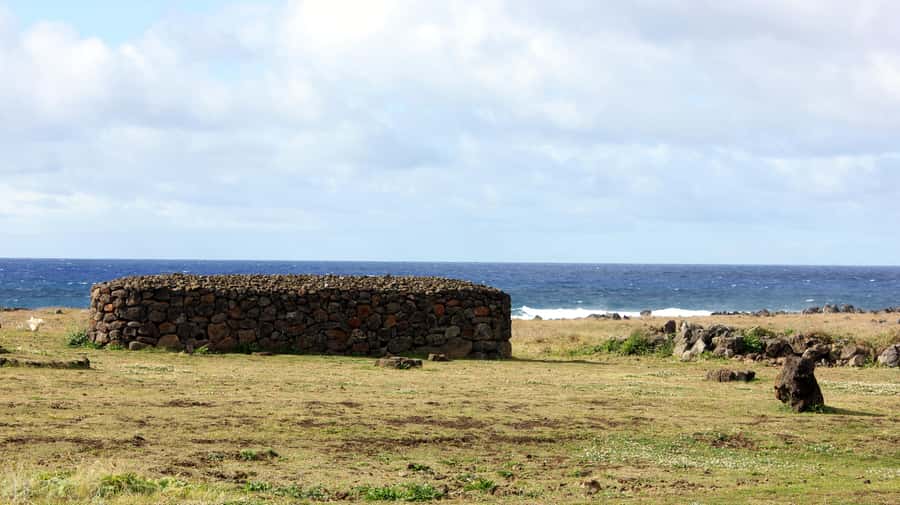
Te Pito Kura brings a different kind of interest. This stop is linked with a notable magnetic stone and stories about its importance. It is less about a large collection of moai and more about the way geology, belief, and oral tradition overlap.
Your guide can help separate what is visible from what is symbolic. That makes the stop a good counterpoint to Rano Raraku and Tongariki, where the scale of the monuments tends to dominate.
The tour description presents Te Pito Kura as the final destination, but some departures have ended at Anakena instead, with time for swimming or a drink at the beach. These are not the same experience. If you want the geological site, confirm that it is included in your day. If you hope to swim, bring a bathing suit and towel, but ask in advance so you know how much time will be available.
One departure left people waiting for about an hour and 15 minutes while others enjoyed the beach. If you do not plan to swim or buy a drink, that kind of finish can feel slow. On the other hand, the beach can be a pleasant way to end a long day, particularly in warm weather.
Guides are the strongest part of the experience
The best reason to choose this tour is the guide. The route is valuable on its own, but the moai do not explain themselves.
Hiva received especially strong praise for caring for the whole group and giving detailed explanations in both English and Spanish. Franc was described as helpful, well informed, and good at keeping the day moving. Enzo was praised for his patience, calm manner, and ability to answer questions in English and Spanish.
Other well-reviewed guides include David, also called Pocho, Angel, Javi, Kainoa, Simon, Gabriel, Fernanda, and Ata. The repeated pattern is clear: people value guides who explain without lecturing, answer questions, and keep the pace comfortable.
The language setup is practical. English and Spanish are offered, though the quality of English delivery may vary by guide. Most comments praise communication, but one person felt the guide’s English could have been stronger. If precise English explanations are important to you, raise that concern when booking or confirming your pickup.
The driver also affects the day. One account praised the driver for handling rough roads and avoiding potholes and ruts. Another found the vehicle mechanically sound but in need of cleaning. Expect practical transport, not luxury.
What the $70 price really covers
At $70 per person, this is not the cheapest way to see Easter Island. Local guides may charge less, and one person directly noted that the tour was pricier than some local options.
Still, the price includes hotel pickup and drop-off, transportation, a native guide, and a small-group format. If you are staying in Hanga Roa and want to see the main sites without arranging separate rides, that package has real value.
The tour also saves planning time. You receive one full day of transport and interpretation rather than piecing together several short excursions. For a short stay, that efficiency may be worth more than the difference between this price and a cheaper private arrangement.
The value drops if you already have a car, a strong understanding of Rapa Nui history, and plenty of time to visit sites independently. It also drops if you expect lunch, a polished vehicle, or a private itinerary. Those are not included.
Remember the extra costs. The national park ticket is not included, and lunch is not included. Bring water and snacks because one account found no reliable food or water stops along the route.
How tiring is the eight-hour day?
The day is long, but the physical demand appears moderate. One person described the walks as short, with a few steps, while another praised a guide for keeping the pace comfortable.
You will spend much of the day in the vehicle and then walk around archaeological sites. The main challenge is sun, wind, uneven ground, and the accumulated effect of several stops. Sunscreen, a hat, water, and sturdy shoes are practical choices.
Toilet stops may be limited. Plan accordingly rather than assuming every archaeological site has facilities nearby.
Weather can change the feel of the day. One departure remained enjoyable despite poor conditions, thanks to a caring guide and strong explanations. You should bring a light layer and protect your documents and electronics from rain if the forecast looks uncertain.
A passport or identity card is required. Keep it with your park ticket, especially because identification may be checked at sites.
Who should book this tour?
I would choose this outing if I had one or two days on Easter Island and wanted the main archaeological sites handled in a single trip. It is also a good fit if you prefer explanations in English or Spanish and like the reassurance of hotel pickup.
It suits people who want a small group but do not need a private vehicle. Families and first-time visitors may appreciate the straightforward schedule, while history-minded visitors will get the most from Rano Raraku and Akahanga.
You may want another option if you dislike fixed schedules, need generous time for photography, or have no interest in a beach stop. The exact end of the day appears to vary, so ask about Anakena and Te Pito Kura before you commit.
This is also not the right choice if you expect meals, frequent bathroom breaks, or guaranteed window seating. Arrive early for pickup and carry your own food and water.
Practical tips for a smoother day
- Keep your passport or identity card and national park ticket accessible.
- Bring water, snacks, sunscreen, a hat, and comfortable walking shoes.
- Pack a swimsuit and towel only if the operator confirms an Anakena beach stop.
- Ask about the pickup window and wait outside your accommodation.
- Confirm whether Te Pito Kura and the beach stop are both included in your departure.
- Tell the guide if you need extra time for photographs, but remember that the group follows a shared schedule.
- Take advantage of souvenir stamps if they are available at the sites and you would like a small memento in your passport.
Free cancellation up to 24 hours before departure and the option to reserve now and pay later make this easier to fit into a changing island schedule. Starting times depend on availability, so confirm the departure time rather than assuming the day begins at a particular hour.
Should you book it?
Yes, if you want an efficient first look at Easter Island’s major moai sites with a guide who can supply the missing context. The strongest parts are the small group, the thoughtful explanations, the sensible route, and the convenience of returning to your accommodation.
I would book it with three conditions in mind: pay separately for the park ticket, carry your own lunch and water, and confirm how the final stop will work. At $70, it is not the bargain-basement option, but it offers solid value when your time is short and you want the island’s essential sites covered without logistical fuss.
FAQ
How long does the Easter Island sightseeing tour last?
The tour lasts eight hours. Starting times depend on availability.
Which sites are included?
The stated route includes Vaihu, Akahanga, Rano Raraku, Tongariki, and Te Pito Kura. Some departures have also ended at Anakena Beach, so confirm the exact route when booking.
Is hotel pickup and drop-off included?
Yes. Pickup and drop-off at your accommodation are included.
What languages does the guide speak?
Live guiding is available in English and Spanish.
How large is the tour group?
The tour is advertised as a small group limited to 14 participants. Some departures use a minibus carrying about 12 or 13 passengers.
Is the national park ticket included?
No. You must purchase the national park ticket separately and bring it with you.
Is lunch included?
No. Lunch is not included. Bring water and snacks because food and drink stops may be limited.
Just added around Easter Island
- Volcanic Refuges: Excursion to Underground Civilization★ 4.7 · 8 reviews
- Easter Island Ancestral Dinner and Show with Transport★ 4.5 · 2 reviews
- Volcanic Wonders and the Kingdom of the Birdman: Half Day★ 5.0 · 6 reviews
- Half Day Private Tour: Caves and Volcanic Refuges★ 4.0 · 14 reviews
- Tour to the Motus: Boat trip and snorkeling in Rapa Nui★ 5.0 · 8 reviews
- Birdman Ceremonial Route: Orongo, Ranu Kau Half-Day Tour★ 4.5 · 16 reviews
- Visit Rapa Nui in 4 days with 3 Tours and Accommodation included★ 4.0 · 2 reviews
- Private Tour: Tongariki Sunrise Experience★ 4.5 · 20 reviews
Easter Island Tours, compared.
Two days of Full Day Tour of Rapa Nui + Sunrise in Tongariki
Read our review →
2-Day Private Tour Easter Island Highlights Complete Discovery
Read our review →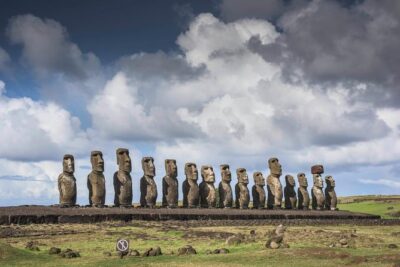
Private Tour: Full Day Easter Island Highlights
Read our review →
Private Full-Day Easter Island Highlights North and West
Read our review →Browse the lists this tour appears in