
Reviewed · EASTER ISLAND TOURS
Private 2 Days Essential Tour of Easter Island
Easter Island rewards careful planning. This private two-day tour packs the island’s key moai sites, volcanoes, quarry, and beaches into a well-paced trip with your own vehicle and local guide. I like the private format, which gives you room to ask questions and spend more time at places that catch your interest. I also like the strong guide reports, especially the praise for Thais, Isabell, and Akahanga.
The main drawback is cost. At $624 per person, plus the mandatory $100 National Park ticket, this is not a bargain tour. Lunch is included only on day one, and cruise passengers cannot use the pickup service or book this activity, so you need to check the details before paying.
In This Review
- Key points to know before booking
- Why this two-day plan works well
- Day one: fallen moai, the great quarry, and Anakena
- Ahu Akahanga shows the village setting
- Rano Raraku explains how the moai were made
- Ahu Tongariki is the visual centerpiece
- Ahu Te Pito Kura brings scale into focus
- Anakena adds a beach to the moai story
- Day two: volcano views and the Birdman ceremony
- Orongo connects the crater to island power
- Rano Kau is one of the island’s finest views
- Ahu Vinapu rewards close attention
- Day two continues with Tahai, Puna Pau, and Ahu Akivi
- Ahu Tahai is the easiest sunset site
- Puna Pau reveals the red stone hats
- Ahu Akivi is unusual for its inland position
- What the $624 price really includes
- Guide quality and the pace of the visits
- Practical details that can affect your decision
- Should you book this Easter Island tour?
- FAQ
- Where does the tour start?
- Is port or tender pickup available?
- Can cruise ship passengers book this activity?
- Is the tour private?
- Is the tour offered in English?
- Is the National Park ticket included?
- Is lunch included on both days?
- What happens if bad weather cancels the tour?
Key points to know before booking
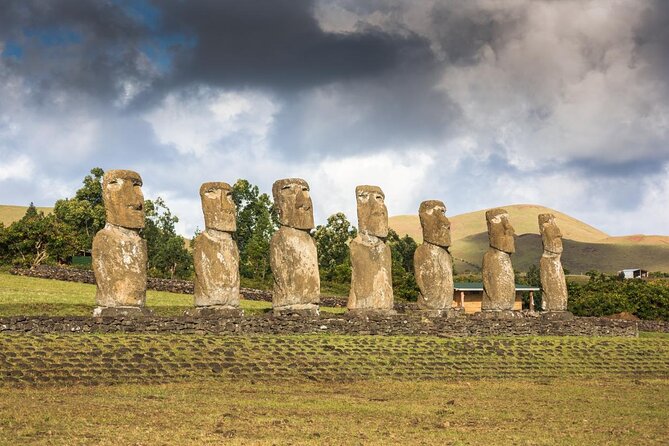
- Fifteen moai at Ahu Tongariki: The island’s largest restored ceremonial platform is given a full two hours, a useful amount of time for photos and explanation.
- Rano Raraku is the heart of the first day: You see the volcanic quarry where most of the moai were carved.
- The second day joins nature and ceremony: Rano Kau and Orongo explain the island’s volcanoes and Birdman ceremony.
- Private transport keeps the schedule flexible: Your group travels with a professional local guide rather than joining a large shared coach.
- The National Park ticket costs extra: It is $100 per person and valid for 10 days from first entry at all park sites.
- Hotel pickup starts at 9:00 a.m.: Pickup is available from most Hanga Roa hotels, but not from the port or tender.
Why this two-day plan works well
Rapa Nui is small enough to cross by vehicle, but its important sites are spread across the island. A good tour needs to connect the moai platforms with the quarries, volcanic craters, ceremonial villages, and coastal settlements. This itinerary does that without leaving the major sites to a hurried drive-by.
Day one follows a broad eastern and northern circuit. It begins with the fallen statues at Ahu Akahanga, then moves to Rano Raraku and Ahu Tongariki, the two places most closely tied to the island’s moai story. The route continues to Ahu Te Pito Kura and Anakena Beach.
Day two focuses on the southwest and interior. You visit Orongo and Rano Kau, then continue to Ahu Vinapu, Ahu Tahai, Puna Pau, and Ahu Akivi. It is a full schedule, but the private setup matters here. You can ask your guide to explain a point again, stop for photographs, or spend less time at a place that does not hold your attention.
The start time is 9:00 a.m. from most hotels in Hanga Roa. The activity is offered in English, and the guide is a professional local escort. Previous guide assignments included Thais, Isabell, and Akahanga. The clearest praise centered on punctuality, good English, strong communication, and explanations that gave enough detail without becoming a lecture.
More Private Tours in Easter Island
- 2-Day Private Tour Easter Island Highlights Complete Discovery
★ 5.0 · 110 reviews - Private Full-Day Easter Island Highlights North and West
★ 5.0 · 84 reviews - Full Day Private Tour: Factory of the Moai the stone giants
★ 4.5 · 63 reviews
Day one: fallen moai, the great quarry, and Anakena
Ahu Akahanga shows the village setting
Ahu Akahanga is a useful opening stop because it introduces the relationship between an ancient settlement and its ceremonial platform. Rather than seeing a moai as an isolated statue, you begin to understand how the ahu functioned within the wider village arrangement.
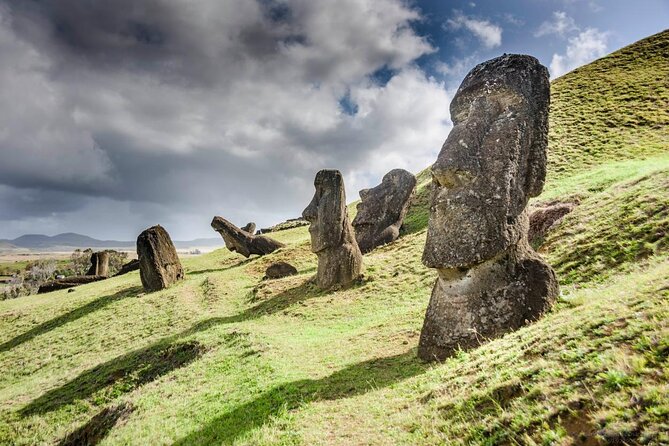
The fallen statues are the striking feature. Some lie on their backs, while others rest face down on the ground. Their position gives the site a quiet, unfinished feel, and it helps you picture how much changed when the old ceremonial system collapsed.
The visit lasts about an hour. Admission is not included in the tour price, but the National Park ticket covers the park sites once you have bought it. Your guide can help connect the fallen figures to the island’s wider story before you reach the larger sites later in the day.
Rano Raraku explains how the moai were made
Rano Raraku is the only volcanic cone tuff quarry on Easter Island. The soft volcanic material here made it possible to carve moai on a much larger scale than would have been practical with harder stone.
You have about two hours at the quarry, and that is one of the strongest parts of the schedule. The site is not simply a row of completed statues. It shows moai in different stages of work, along with figures that remain connected to the rock or were left behind before transport.
This stop changes how you read every platform that follows. At first, the moai can seem mysterious and almost impossible to place. At Rano Raraku, you see the production site and begin to understand the work involved in shaping, removing, and moving these enormous figures to ceremonial platforms around the island.
The quarry is also one of the places where a local guide adds real value. The tour description gives the basic facts, but a guide can help you notice the unfinished forms and explain how this quarry relates to the ahu. Two hours gives you time to look closely instead of grabbing one photograph and heading back to the vehicle.
More Rapa Nui trips and moai walks:
- From Hanga Roa: Rapa Nui Culture Sightseeing Tour
★ 4.6 · 307 reviews - From Hanga Roa: Easter Island Highlights 2-Day Tour
★ 4.3 · 205 reviews - Full Day Tour in Rapa Nui
★ 4.5 · 122 reviews - From Hanga Roa: Journey from Orongo to Ana Te Pahu
★ 4.3 · 75 reviews
Ahu Tongariki is the visual centerpiece
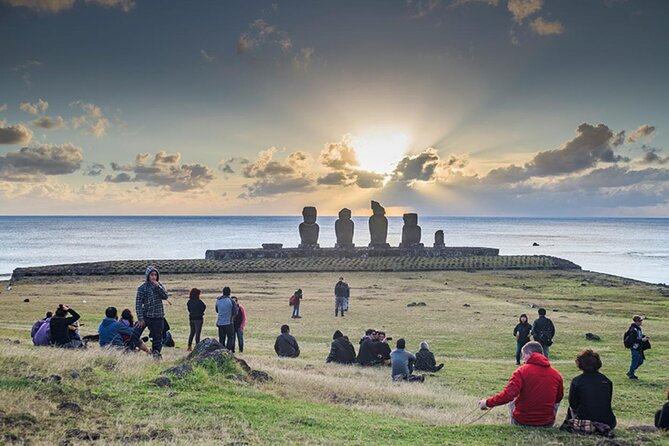
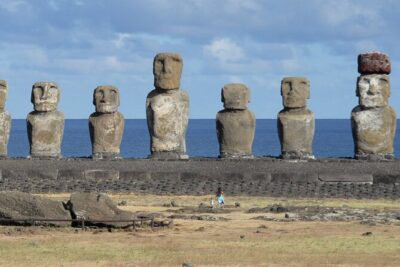
Across from Rano Raraku, Ahu Tongariki presents the island’s most imposing group of restored moai. Fifteen statues face inland with their backs to the Pacific Ocean, arranged on the largest reconstructed platform on Rapa Nui.
The tour allows two hours here. That is generous compared with a stop designed only for a quick photograph. You can study the different sizes and shapes, listen to the guide, and take in the scale of the platform.
A useful detail comes from the experience of one private group, which was able to remain at Tongariki after other groups had moved on and enjoy sunrise there. Sunrise timing is not listed as a standard feature of this tour, so you should not assume it is included. Still, the example shows why a private tour can be valuable when timing and guide judgment work in your favor.
Ahu Te Pito Kura brings scale into focus
Ahu Te Pito Kura is a shorter visit, about 30 minutes, but it contains two memorable details. The moai called Ahu o Paro was about 11 meters long and weighed roughly 90 tons, making it the largest moai transported from Rano Raraku.
Nearby, you find the rounded stone known as Te Pito o te Henua. Tradition says the stone was brought to the island by ancestral figures. The stop is brief, so it works best as a compact pause between Tongariki and Anakena rather than a place where you need a long explanation.
Anakena adds a beach to the moai story
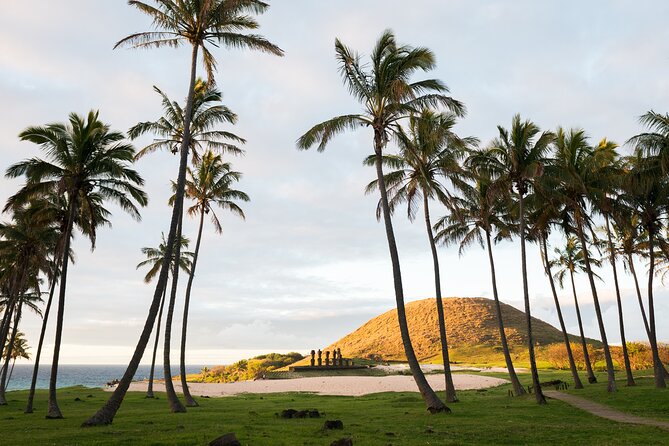
Anakena is the island’s main beach, with warm turquoise water and coral sand. After a morning of quarries and ceremonial platforms, the change of setting is welcome.
The beach also has cultural importance. It was the ancestral home of the Miru Araki royal family, and the Ahu Nau Nau platform nearby is known for the refined carving of its moai. The tour allows an hour, giving you time to see both the beach and the platform.
Do not think of Anakena as a simple beach break. Its value comes from the way it combines scenery, royal tradition, and moai art in one place. If you want a little more time by the water, tell your guide early, though the full day still has to cover every scheduled stop.
Day two: volcano views and the Birdman ceremony
Orongo connects the crater to island power
Orongo sits on one side of the Rano Kau crater and is one of the island’s main ceremonial sites. This is where the Birdman ceremony took place, a later tradition that gives day two a different focus from the moai quarry and platform sites of day one.
You have two hours here, which is appropriate. Orongo is not just a viewpoint. It is a place where the location, the crater, and the ceremony make sense together. The guide’s explanation is especially important because the physical remains alone do not tell the whole story.
The stop also gives you a different way to think about power on Rapa Nui. Day one centers on the carving and movement of moai. Orongo shifts attention to ceremony, competition, and the role of the natural setting.
Rano Kau is one of the island’s finest views
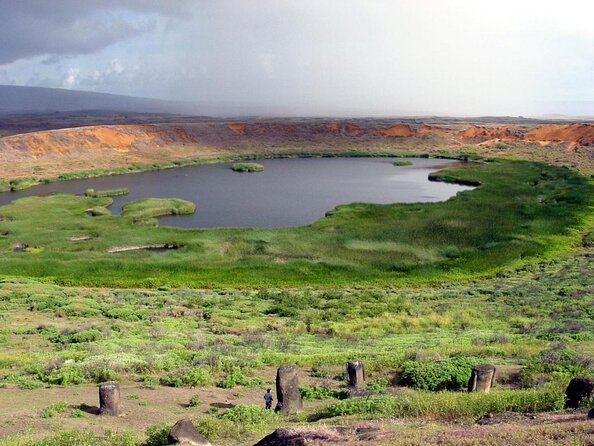
Rano Kau is a large volcanic crater on the southwest side of the island. Its crater is about 1.5 kilometers wide, and the lake inside once served as an important source of drinking water.
The tour allows 30 minutes here. That is enough for a viewpoint stop and photographs, though you should expect this to be more of a scenic pause than a long walk. The crater is also described as the largest reserve of endemic Rapa Nui flora, adding ecological importance to the view.
One guide received special praise for making the volcano a favorite part of the trip. That is easy to understand. After several archaeological sites, Rano Kau gives you a broad natural view and helps explain why the southwest corner mattered to the island’s people.
Ahu Vinapu rewards close attention
Ahu Vinapu is a smaller stop of about 30 minutes, but it is important for its carefully fitted stonework. The builders created fine masonry at the platform, and some theories have drawn comparisons with Inca construction.
That comparison should be treated as a theory, not a settled fact. The best reason to visit is the quality of the stonework itself. Look closely at the platform rather than expecting a large group of standing moai.
This is one of several places where a private guide can prevent the site from becoming a quick photo stop. Ask about the construction details and the theories, then judge the workmanship for yourself.
Day two continues with Tahai, Puna Pau, and Ahu Akivi
Ahu Tahai is the easiest sunset site
Ahu Tahai sits close to Hanga Roa and includes three main ahu: Ko Te Riku, Tahai, and Vai Ure. Ko Te Riku is especially notable for its restored eyes.
The complex was restored in 1974 by American archaeologist William Mulloy. Its proximity to town makes it a popular place for sunset photographs, though sunset is not specified as part of the standard morning start or fixed schedule.
The one-hour visit gives you time to see the three platforms and understand their arrangement. It is also a good place to ask your guide to review the differences between an ahu, a moai, and a pukao before the tour ends.
Puna Pau reveals the red stone hats
Puna Pau is the quarry for the red volcanic stone used to make the pukao, the cylindrical top pieces often described as the moai’s hair. You can see 23 cylindrical forms in early stages of carving, with their shape helping make transport to the ahu easier.
The stop lasts about an hour and includes a high view toward Hanga Roa. That city view gives you a useful sense of the island as a lived-in place, not just an archaeological park.
Puna Pau also rounds out the moai story. Rano Raraku explains the body, while Puna Pau explains the red top element. Seeing both quarries in the same two-day tour makes the construction process much easier to understand.
Ahu Akivi is unusual for its inland position
Ahu Akivi is one of the few ceremonial platforms not located by the sea. Its seven restored moai face toward the setting sun, and their positioning has an astronomical connection.
The statues were restored by William Mulloy, Gonzalo Figueroa, and the Rapa Nui community. That restoration story matters because it shows the work required to return the figures to an upright position and preserve the site for future visitors.
The one-hour stop is a fitting final archaeological visit. After seeing coastal platforms, the quarry, and the red pukao source, you finish with seven inland moai whose orientation adds another layer to the island’s ceremonial planning.
What the $624 price really includes
The listed price is $624 per person. You receive private transportation, a professional local guide, and lunch on day one. You do not receive the mandatory National Park ticket or lunch on day two.
The park ticket costs $100 per person and is valid for 10 days from first entry across all park sites. Add that fee when comparing this tour with other options. The real base cost is therefore $724 per person before you account for day-two lunch.
That is a substantial price, but private transport changes the value calculation. You are paying for a two-day route, a dedicated guide, and the ability to travel only with your own group. The price makes more sense for two or more people who value personal attention and a controlled pace.
If you are a solo visitor focused mainly on keeping costs down, a shared excursion may be easier to justify. If you have limited time on Easter Island and want the major sites organized in two days, the private format is more appealing.
Guide quality and the pace of the visits
The strongest feedback focuses on guide performance. Thais was described as punctual, fluent in English, and good at giving useful information without overloading the group. Isabell was praised for being fun, informative, and passionate about the island.
Akahanga received especially strong praise for punctuality, detailed explanations, patience, and a local sense of welcome. One private group appreciated that he did not hurry them away from Tongariki when other groups had left.
Those details matter because the sites are much more than photo stops. A rushed guide can turn Rano Raraku into a collection of stones and Orongo into a lookout. A good local guide helps you see how the sites connect.
The tour is private, so only your group participates. That does not guarantee unlimited time at every site, since the itinerary has many stops, but it gives you a better chance to ask questions and request reasonable adjustments.
Practical details that can affect your decision
Pickup begins at 9:00 a.m. from most hotels in Hanga Roa. Port and tender pickup is not available, and the activity is explicitly not valid for cruise ship passengers. That restriction is important, especially because a two-day land tour cannot be treated as a cruise excursion with a guaranteed return to the ship.
Confirmation is provided at booking. The tour is offered in English, most people can participate, and group discounts are available. Since the activity is booked on average 156 days ahead, I would not leave this until the final few days if your dates are fixed.
The cancellation rule is simple but firm. You can receive a full refund if you cancel at least 24 hours before the start time. Changes or cancellations inside that window are not accepted for a refund. Poor weather can lead to a different date or a full refund.
Should you book this Easter Island tour?
I would book this tour if you have two days on Rapa Nui, want private guiding, and care about understanding the sites rather than simply collecting photographs. The route covers the main archaeological and natural highlights, and the guide accounts suggest strong attention to timing, communication, and local insight.
I would hesitate if your main goal is the lowest possible price, or if you want a relaxed schedule with long beach time. The itinerary is full, the park ticket costs extra, and day-two lunch is your responsibility.
For couples, families, or a small group staying in Hanga Roa, the private setup is the strongest reason to choose it. Ask about guide availability, clarify the pickup point, and budget the extra $100 park fee before booking. If those details fit, this is a well-organized way to make two days on Easter Island count.
FAQ
Where does the tour start?
Pickup begins at 9:00 a.m. from most hotels in Hanga Roa.
Is port or tender pickup available?
No. Port and tender pickup are not available.
Can cruise ship passengers book this activity?
No. The tour is not valid for cruise ship passengers.
Is the tour private?
Yes. Only your group participates in the activity.
Is the tour offered in English?
Yes. The tour is offered in English.
Is the National Park ticket included?
No. The mandatory ticket costs $100 per person and is valid for 10 days from first entry at all park sites.
Is lunch included on both days?
No. Lunch is included on day one only. Lunch on day two is not included.
What happens if bad weather cancels the tour?
You will be offered a different date or a full refund if the experience is canceled because of poor weather.
More 2-Day Experiences in Hanga Roa
- 2 Days Highlights Tour in Easter Island Moai and Nature
★ 4.0 · 55 reviews - Two days of Full Day Tour of Rapa Nui + Sunrise in Tongariki
★ 4.8 · 55 reviews - 2 Day Private Tour: Easter Island’s Cultural Heritage
★ 5.0 · 40 reviews - 2 Day Small Group Tour in Moai Monuments and Historic Pathways
★ 5.0 · 22 reviews
Just added around Hanga Roa
- Volcanic Refuges: Excursion to Underground Civilization★ 4.7 · 8 reviews
- Easter Island Ancestral Dinner and Show with Transport★ 4.5 · 2 reviews
- Volcanic Wonders and the Kingdom of the Birdman: Half Day★ 5.0 · 6 reviews
- Half Day Private Tour: Caves and Volcanic Refuges★ 4.0 · 14 reviews
- Tour to the Motus: Boat trip and snorkeling in Rapa Nui★ 5.0 · 8 reviews
- Birdman Ceremonial Route: Orongo, Ranu Kau Half-Day Tour★ 4.5 · 16 reviews
- Visit Rapa Nui in 4 days with 3 Tours and Accommodation included★ 4.0 · 2 reviews
- Private Tour: Tongariki Sunrise Experience★ 4.5 · 20 reviews
Easter Island Tours, compared.
Two days of Full Day Tour of Rapa Nui + Sunrise in Tongariki
Read our review →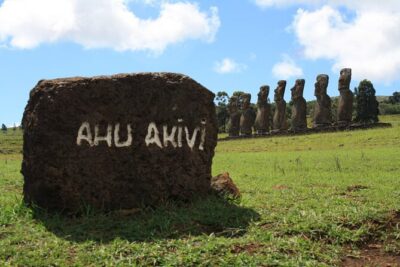
2-Day Private Tour Easter Island Highlights Complete Discovery
Read our review →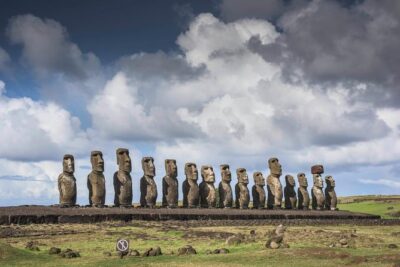
Private Tour: Full Day Easter Island Highlights
Read our review →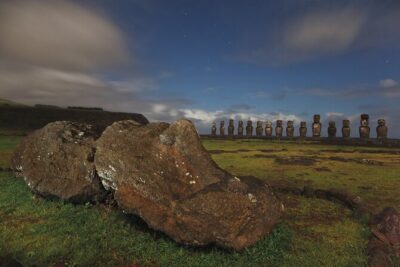
Browse the lists this tour appears in