
Reviewed · EASTER ISLAND TOURS
2 Day Small Group Tour in Moai Monuments and Historic Pathways
Stone figures, volcanic craters, and old island paths fill two memorable days. This tour gives you a well-planned introduction to Rapa Nui, linking the famous moai sites with places that explain how the island’s people lived, worshipped, and governed themselves. I especially like the mix of headline sights such as Ahu Tongariki and Rano Raraku, plus less celebrated places such as Ana Te Pahu and One Makihi.
The other strong point is the small group size, capped at 12 people, with pickup and drop-off at your lodging. Guides including Yoyo, Hekii, and Patricio have been praised for their local insight, patience, and friendly manner. The main consideration is that a group tour can make it harder to hear every explanation, especially if you are not close to the guide or are placed in a second vehicle.
In This Review
- Key points to know before booking
- Why two days works well on Rapa Nui
- Day one: Anakena, fallen statues, and the great eastern platforms
- Ahu Nau Nau and Anakena’s bright morning light
- Ahu Te Pito Kura and the magnetic stone
- One Makihi and the island before restoration
- Ahu Tongariki and fifteen restored moai
- Rano Raraku, the moai quarry
- Day two: red stone, volcanic views, and ceremonial power
- Puna Pau and the moai topknots
- Ahu Vinapu and precise stonework
- Rano Kau, a crater with a wide island view
- Orongo and the birdman competition
- Ahu Akivi and the seven sea-facing moai
- Ana Te Pahu and life inside lava tubes
- Guides, group size, and the quality of the explanation
- Is $300 a fair price?
- Who should book this two-day tour?
- Should you book Green Island Tours?
- FAQ
- Where does the tour begin?
- How long does the experience last?
- How much does the tour cost?
- What is the maximum group size?
- Is cruise port pickup available?
- What level of fitness is required?
- Are admission tickets included?
- Can I cancel for a full refund?
Key points to know before booking
- Ahu Tongariki and Rano Raraku form the tour’s dramatic center: You see 15 restored moai together, then walk through the quarry where many statues were made.
- Day two adds the island’s wider story: Puna Pau, Ahu Vinapu, Rano Kau, Orongo, Ahu Akivi, and Ana Te Pahu show how ceremony, stonework, politics, and daily life fit together.
- The group is limited to 12 people: That is far more personal than a large coach outing, though you should stay near the guide during explanations.
- Local guides are a major strength: Yoyo, Hekii, and others have been praised for clear stories, good humor, patience, and practical help beyond the scheduled stops.
- The price is $300 per person: For two full days with lodging pickup and drop-off, it offers solid value if you want the island’s major sites covered efficiently.
- Cruise passengers need another plan: Pickup from the cruise port is not available.
Why two days works well on Rapa Nui
At roughly $300 per person, this is not a budget walkabout. It is a practical way to cover a large number of major sites without arranging separate transport for each one. The tour runs for about two days, begins at 9:30 a.m., and includes pickup and return to your lodging.
I like the pacing. Day one concentrates on the great moai centers along the eastern and northern side of the island. Day two shifts toward volcanic scenery, ceremonial life, caves, and the unusual inland-facing group at Ahu Akivi. You get the famous photographs, but you also get places that give the stone figures some human context.
The schedule allows about an hour at most stops, two hours at Rano Raraku, and shorter visits at Puna Pau and Ahu Vinapu. That means you have time to walk, take photographs, and listen without racing from one site to the next. Still, this is a full program. If you prefer long, quiet stretches at one location, a private tour may suit you better.
Green Island Tours has also handled customized arrangements for some customers. Communication before arrival has been praised, including quick WhatsApp replies and messages sent the evening before with the next day’s guide and plan. That kind of contact is useful on a remote island, where a clear morning pickup matters.
More Rapa Nui trips and moai walks:
- From Hanga Roa: Rapa Nui Culture Sightseeing Tour
★ 4.6 · 307 reviews - From Hanga Roa: Easter Island Highlights 2-Day Tour
★ 4.3 · 205 reviews - Full Day Tour in Rapa Nui
★ 4.5 · 122 reviews
Day one: Anakena, fallen statues, and the great eastern platforms
Ahu Nau Nau and Anakena’s bright morning light
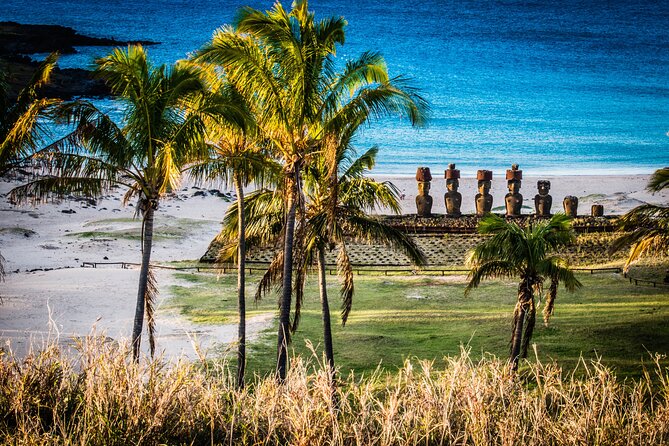
The first stop is Ahu Nau Nau at Anakena, a beach area known for clear morning light and a beautiful setting. The combination is useful: you begin with one of Rapa Nui’s most attractive coastal scenes before moving into the heavier stonework of the day.
Allow about an hour here. You can frame the moai against the beach, then listen to the guide explain the site and its place in Rapa Nui culture. The stop is not only about taking a perfect photograph. Anakena helps you see that the island is more than a field of statues. It has beaches, volcanic terrain, and coastal spaces tied to old settlement and ceremony.
Morning timing favors photography, but weather can change quickly. One person who booked a separate sunrise outing found that weather made the regular monument visit less suitable for sunrise photographs, while the later sunrise outing worked beautifully. That is a useful reminder not to build your entire photo plan around one time of day.
Ahu Te Pito Kura and the magnetic stone
Ahu Te Pito Kura offers one of the island’s most striking stories. The site once held a moai about 10 meters tall, among the tallest ever erected, though today you see only the remains of its former glory.
Nearby is the famous circular stone associated with the legend that it came from Hiva with Hotu Matuʻa, the first king. The story gives the site a human and mythical layer, while the fallen monument shows the force of the later period when many statues were toppled.
You have about an hour here. I would pay close attention to the guide’s explanation rather than treating this as a quick photo stop. The contrast between the enormous moai and the smaller stone connected to origin stories is one of the day’s more interesting pairings.
A few more Hanga Roa trips worth comparing side by side
- 2 Day Private Tour: Easter Island’s Cultural Heritage
★ 5.0 · 40 reviews - Easter Island Private Tour: Historical Journey North & West
★ 5.0 · 2 reviews - Santiago: Guided Walking Tour of the Historical Old Town
★ 4.8 · 459 reviews - Tour Viña Santa Rita: History, Wine and Picnic Outdoors
★ 4.5 · 141 reviews
One Makihi and the island before restoration
One Makihi is an unrestored group of ahu platforms. The structures remain much as they were after islanders turned away from earlier statue traditions and toppled many moai more than two centuries ago.
This stop may feel quieter than Ahu Tongariki, and that is exactly its value. Restored platforms can be visually powerful, but an unrestored site lets you see the damage, abandonment, and passage of time without everything being reconstructed into a tidy picture.
Plan on an hour. The site rewards a guide who can explain change rather than simply point out stones. Yoyo and Hekii have received particular praise for making these explanations engaging and for answering questions patiently.
Ahu Tongariki and fifteen restored moai
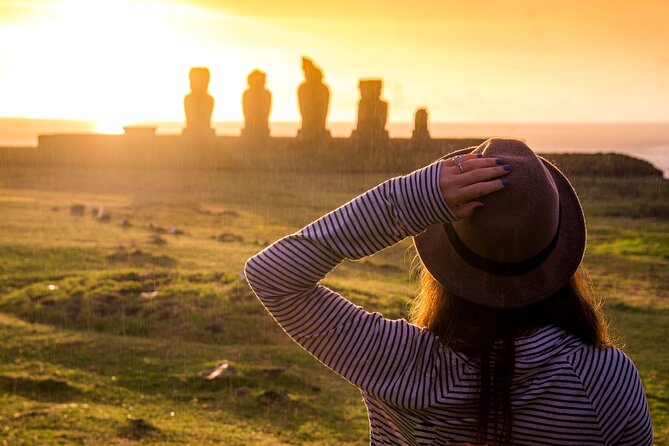
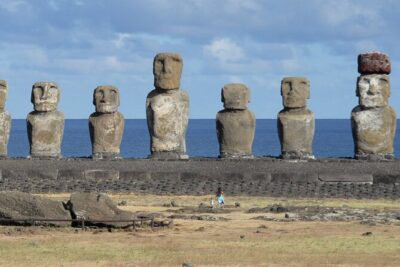
Ahu Tongariki is the visual high point of day one. Fifteen large moai sit together on a restored platform, facing inland and presenting a powerful row of stone faces.
The platform was restored between 1992 and 1996. That detail matters because you are not looking at a group that remained untouched through the centuries. You are seeing a major recovery project that returned the site to a form visitors can understand and appreciate.
The tour allows about an hour, enough for photographs and a walk around the platform. You will want to look beyond the familiar front view. Notice the different sizes and shapes of the statues, the broad platform, and the open volcanic setting around them.
This is also where group management matters. One direct account praised the tour overall but noted that explanations were difficult to hear when people spread out. Stay beside the guide when the story begins, then wander for photographs afterward. That small habit can make the difference between seeing the site and understanding it.
Rano Raraku, the moai quarry
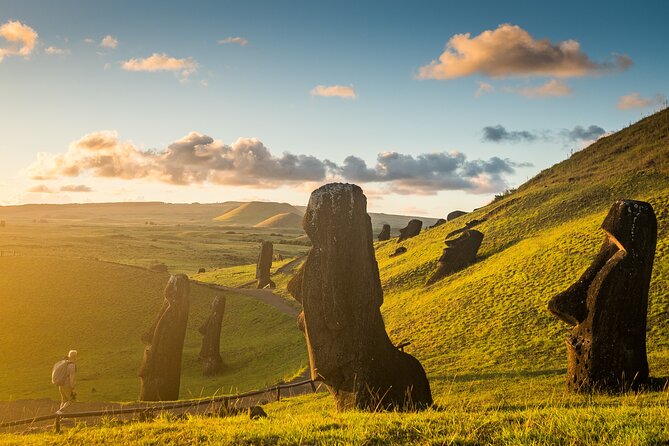
Rano Raraku receives two hours, and it deserves the extra time. This volcanic quarry is where many of the moai were carved. Statues in various stages of completion remain around the slopes, with heads, torsos, and partially finished figures still waiting in stone.
The quarry changes your view of the monuments. At Tongariki, the moai look like finished symbols of power. At Rano Raraku, you see the work process, the raw material, and the sheer scale of the undertaking. Some figures appear to emerge from the hillside, which makes the site feel less like a museum and more like a workshop interrupted long ago.
Wear practical footwear and be ready for a moderate amount of walking. The tour requires a moderate fitness level, and two hours here is intended for more than standing beside the vehicle. You will want time to follow the paths, look closely at unfinished carvings, and keep up with the guide.
Day two: red stone, volcanic views, and ceremonial power
Puna Pau and the moai topknots
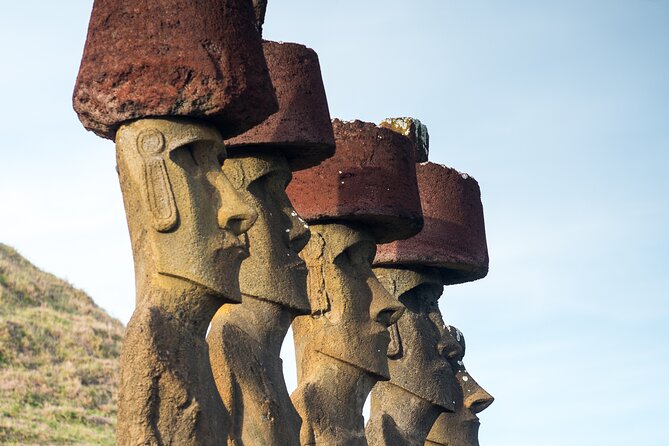
Puna Pau is a small crater where the large red scoria topknots, or pukao, were made. These were fitted onto the heads of some moai in the later period.
The visit lasts about 40 minutes, so this is a compact stop. It works well as a technical counterpoint to Rano Raraku. The first quarry explains how the statues were made, while Puna Pau explains where their distinctive head ornaments came from.
The shorter visit also keeps day two moving. You get the essential explanation and a look at the source of the red stone without spending too much of the morning at one location.
Ahu Vinapu and precise stonework
Ahu Vinapu is known for carefully fitted stonework. Its construction has often been compared with masonry associated with the Inca world in South America, though the site should be appreciated on its own terms as an example of Rapa Nui engineering.
You have about 45 minutes. This is a stop where details matter more than scale. Look at the joins between stones and ask the guide how the platform was made. The site gives you a useful break from rows of statues and shows the skill involved in building the ahu itself.
Because the visit is short, listen first and photograph second. The stones may not have the instant visual impact of Tongariki, but they add depth to your understanding of how much labor went into the ceremonial platforms.
Rano Kau, a crater with a wide island view
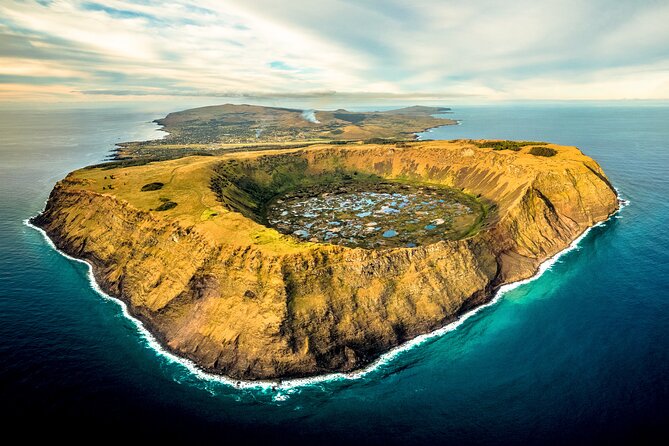
Rano Kau is one of the tour’s finest natural stops. The crater drops about 200 meters to a lake below, with a broad view across the island.
Allow about an hour. This is a place to slow your pace, look across the crater, and take in how volcanic forces shaped Rapa Nui. After two days of focusing on carved stone, the scale of the crater provides a welcome change.
The panoramic setting also prepares you for Orongo, which sits nearby. The guide can connect the natural site with the ceremonial village and explain why this part of the island became so important. Weather will affect visibility, so keep expectations flexible even though the viewpoint is one of the island’s finest.
Orongo and the birdman competition
Orongo is a ceremonial village linked to the birdman competition of the 18th and 19th centuries. Each year, men from different tribes competed for political power in a dangerous contest involving cliff climbing, swimming to offshore islets, and retrieving an egg.
The details are dramatic, but the place itself is equally important. Orongo sits in a spectacular position near the crater and sea, making it easy to understand why ceremony and authority were tied to this location.
The tour allows an hour. Listen carefully here, because the site explains a major shift in Rapa Nui political life. The moai tell one part of the island’s story, while Orongo shows a later system of leadership and competition.
Ahu Akivi and the seven sea-facing moai
Ahu Akivi contains seven restored moai said to represent the first seven explorers who arrived on Rapa Nui. Unlike the better-known groups, these statues look toward the sea.
You have about 45 minutes. The unusual orientation gives the site an immediate point of interest, and the explorer tradition adds a strong connection to the island’s origin stories. This is also a good place to compare restored moai with the unfinished statues at Rano Raraku and the fallen remains at Te Pito Kura.
The shorter stop is enough for the main explanation and photographs. If you want extended time for quiet reflection, you may find the schedule a little brisk, but the full two-day route leaves little major ground uncovered.
Ana Te Pahu and life inside lava tubes
Ana Te Pahu is an extensive network of lava tubes. The ancient Rapanui used these caves for shelter, water collection, planting vegetables, and hiding from aggressive visitors during the 18th and 19th centuries.
This is one of the tour’s most valuable stops because it brings daily life into view. The moai sites can make Rapa Nui seem focused only on ceremony, but Ana Te Pahu points to practical concerns: food, water, safety, and adapting to volcanic ground.
The visit lasts about an hour. Expect a more physical stop than a roadside viewpoint. The stated requirement of moderate fitness is especially relevant here, and you should stay attentive to the guide’s directions inside the cave network.
Guides, group size, and the quality of the explanation
Green Island Tours uses guides including Yoyo, Hekii, Patricio, and Bastian. Yoyo has been praised for making people feel like they were exploring with a friend, while Hekii has been described as patient, good-humored, punctual, and a safe driver. These personal qualities matter on a two-day tour because you spend many hours together.
The guides also appear to offer useful local help beyond the monuments. Direct accounts describe recommendations for restaurants, surf lessons, cultural shows, and other island activities. That is a real benefit if this tour is your first activity after arriving in Hanga Roa.
The 12-person limit is a good middle ground. You pay less than you would for a private vehicle, but you still have a chance to ask questions and meet other people. The trade-off is sound. If the group spreads out, or if a second vehicle is used, you may hear less of the commentary.
If the history and cultural explanation matter most to you, make sure you ride with the guide whenever possible. Being friendly with the driver is not the same as receiving the full commentary.
Is $300 a fair price?
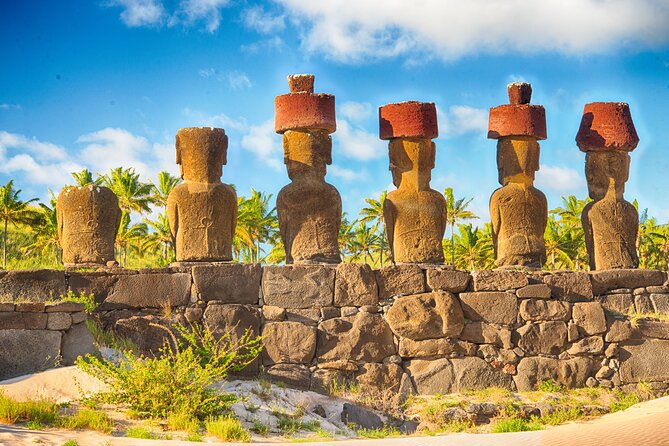
At $300 per person, the tour costs more than simply hiring transport for a few viewpoints, but the value comes from the coverage and interpretation. Two days include the island’s best-known moai sites, the main quarry, ceremonial locations, volcanic scenery, a lava-tube network, and lodging pickup and drop-off.
The route also saves you from piecing together separate outings. A couple who combined this tour with the Historic Pathways Tour found that the two full-day programs covered nearly all of the significant sites they wanted to see. For a first visit, that efficiency is useful.
Small-group pricing is another reason the cost makes sense. You are not paying private-tour rates, yet the group is limited to 12. If you value local explanation and want the main sights handled in a logical order, $300 is a reasonable spend.
The value is weaker if you only want photographs or already have a car and strong background knowledge. In that case, the fixed schedule may feel less flexible than independent sightseeing.
Who should book this two-day tour?
I would recommend it to first-time visitors staying in Hanga Roa who want a clear introduction to Rapa Nui without spending their time arranging transport. It also suits couples, families, and solo visitors who like having a guide available for questions.
Families may appreciate the guides’ ability to keep younger people involved. One account described Yoyo adding fun photo ideas and opportunities for children to taste fruit, while still explaining the island beyond the moai.
You should think twice if you dislike group schedules, need complete control over every stop, or want long periods alone at each site. A private booking may be better for photographers, people with mobility concerns, or anyone who wants to linger.
Pickup from your lodging is included, but cruise port pickup is not available. The tour requires moderate physical fitness, especially for the quarry and lava tubes. Cancellation is free up to 24 hours before the start time, but late cancellations and late changes are not refunded. The experience also requires a minimum number of participants, so a cancellation for that reason results in another date or a full refund.
Should you book Green Island Tours?
Yes, if you want the major Rapa Nui sites covered in two well-filled days and you care about the stories behind the stones. The strongest reasons are the route, the small group limit, and the quality of guides such as Yoyo and Hekii.
Book it early if your dates are fixed. This experience is commonly reserved about 87 days ahead. Choose a private arrangement instead if hearing every word, controlling the pace, or staying with one vehicle matters more to you than the lower small-group price.
For most first visits, this is a sensible foundation. It gives you the great monuments, but it also leaves you understanding the quarry, the ceremonies, the caves, the stonework, and the changing ways Rapa Nui society used its island.
FAQ
Where does the tour begin?
The tour begins in Hanga Roa at 9:30 a.m. Pickup and drop-off at your lodging are included.
How long does the experience last?
The tour lasts approximately two days, with a full itinerary on both days.
How much does the tour cost?
The listed price is $300 per person.
What is the maximum group size?
The group can include a maximum of 12 people.
Is cruise port pickup available?
No. Pickup from the cruise port is not available.
What level of fitness is required?
A moderate level of physical fitness is recommended. The itinerary includes walking at sites such as Rano Raraku and visiting the lava-tube network at Ana Te Pahu.
Are admission tickets included?
Each listed stop shows admission as free. The tour information does not list separate entrance charges.
Can I cancel for a full refund?
Yes, if you cancel at least 24 hours before the local start time. Cancellations or changes made less than 24 hours in advance are not refunded or accepted.
More 2-Day Experiences in Hanga Roa
- 2-Day Private Tour Easter Island Highlights Complete Discovery
★ 5.0 · 110 reviews - 2 Days Highlights Tour in Easter Island Moai and Nature
★ 4.0 · 55 reviews - Two days of Full Day Tour of Rapa Nui + Sunrise in Tongariki
★ 4.8 · 55 reviews - Private 2 Days Essential Tour of Easter Island
★ 5.0 · 4 reviews
Just added around Hanga Roa
- Volcanic Refuges: Excursion to Underground Civilization★ 4.7 · 8 reviews
- Easter Island Ancestral Dinner and Show with Transport★ 4.5 · 2 reviews
- Volcanic Wonders and the Kingdom of the Birdman: Half Day★ 5.0 · 6 reviews
- Half Day Private Tour: Caves and Volcanic Refuges★ 4.0 · 14 reviews
- Tour to the Motus: Boat trip and snorkeling in Rapa Nui★ 5.0 · 8 reviews
- Birdman Ceremonial Route: Orongo, Ranu Kau Half-Day Tour★ 4.5 · 16 reviews
- Visit Rapa Nui in 4 days with 3 Tours and Accommodation included★ 4.0 · 2 reviews
- Private Tour: Tongariki Sunrise Experience★ 4.5 · 20 reviews
Easter Island Tours, compared.
Two days of Full Day Tour of Rapa Nui + Sunrise in Tongariki
Read our review →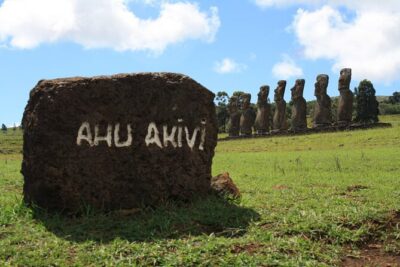
2-Day Private Tour Easter Island Highlights Complete Discovery
Read our review →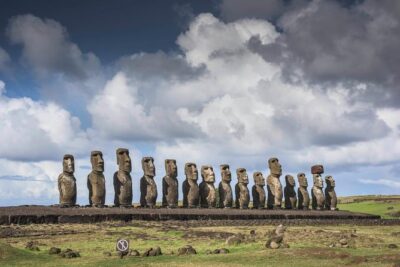
Private Tour: Full Day Easter Island Highlights
Read our review →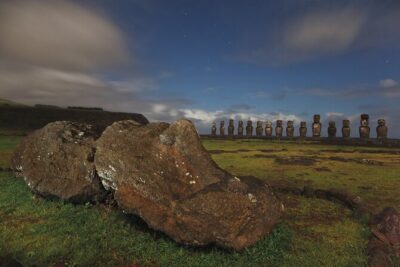
Browse the lists this tour appears in