
Reviewed · EASTER ISLAND TOURS
Visit Rapa Nui in 4 days with 3 Tours and Accommodation included
Rapa Nui rewards a well-planned long weekend. This four-day package gives you airport pickup, three nights in central hostel accommodation, and guided visits to the island’s major moai sites, including Rano Raraku, Ahu Tongariki, Anakena, and Orongo. I like the friendly airport welcome with a natural flower necklace, and I like having transportation arranged for the long days outside Hanga Roa.
The itinerary covers a lot in a short time, including a pre-dawn visit to Tongariki. The main caution is the lodging: the tour costs $400 per person before food and the National Park entrance fee, yet the room quality may be basic. One available assessment praised the tours and guides but described a poorly draining shower, uncovered floor-to-ceiling windows, a bare bedspread, and unreliable Wi-Fi.
In This Review
- Five things to know before booking
- What the $400 package really covers
- Day one: a gentle start in Hanga Roa
- Day two: moai, a volcanic workshop, and Anakena
- Ahu Vaihu and Ahu Akahanga
- Rano Raraku, the moai quarry
- Ahu Tongariki and the eastern coast
- Ahu Te Pito Kura, Ahu Nau Nau, and Anakena
- Day three: crater views, caves, and unusual stonework
- Orongo and Rano Kau
- Ahu Akivi and its seven moai
- Ana Te Pahu’s connected caverns
- Ahu Vinapu
- Day four: Tongariki before dawn and a clean finish
- Guides, group size, and the pace of the tours
- Accommodation and daily comfort
- Who should book this Rapa Nui package?
- Should you book it?
- FAQ
- How long is the Rapa Nui experience?
- What is included in the $400 price?
- Is airport pickup included?
- Is the National Park entrance fee included?
- Are meals included?
- How large can the group be?
- What level of fitness is needed?
- Can I cancel for a full refund?
Five things to know before booking
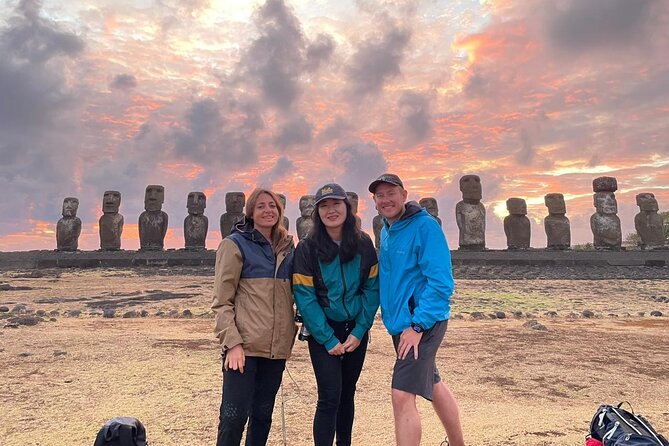
- Ahu Tongariki gets two visits: You see the famous 15-moai platform during the main full-day tour, then return before dawn for a three-hour sunrise outing.
- The $400 price is not all-inclusive: Three hostel nights, transportation, airport service, a welcome city tour, two full-day tours, and the sunrise are included. Food and the National Park fee are extra.
- The route covers the island’s essential archaeological sites: Rano Raraku, Ahu Akahanga, Ahu Vaihu, Ahu Nau Nau, Ahu Akivi, Ahu Vinapu, Orongo, and more are built into the schedule.
- You need moderate fitness: The program includes volcano sites, caves, outdoor archaeological areas, and long touring days.
- The group is capped at 16 people: That is small enough to keep the tours manageable, though not private or highly personalized.
- The hostel deserves careful consideration: The central location and included stay keep costs down, but room standards may not suit you if you expect polished accommodation.
What the $400 package really covers
At $400 per person, this is best viewed as a sightseeing package with basic lodging, not a luxury holiday. You receive three nights in a hostel, airport reception, pickup and drop-off for the scheduled activities, a welcome orientation in Hanga Roa, two full-day tours, and the Tongariki sunrise excursion.
That bundle has real value on Rapa Nui. The island’s archaeological sites are spread across the coast and interior, so arranging transport for each stop can be awkward and expensive. Here, the operator handles the driving and groups the sites into sensible routes. You also avoid spending your first hours figuring out where the central streets, services, and key meeting points are.
The price does not include meals or the National Park entrance ticket. The stated fee is CLP 20,000 for Chilean citizens and $80 for foreign visitors. For an international visitor, that means your practical base cost is closer to $480 per person before food, assuming the listed National Park price remains current.
That extra fee matters because nearly every major archaeological stop falls inside the park system. You should budget for it instead of treating the $400 headline price as the final amount. Tips are also excluded.
More Rapa Nui trips and moai walks:
- From Hanga Roa: Rapa Nui Culture Sightseeing Tour
★ 4.6 · 307 reviews - From Hanga Roa: Easter Island Highlights 2-Day Tour
★ 4.3 · 205 reviews - Full Day Tour in Rapa Nui
★ 4.5 · 122 reviews
Day one: a gentle start in Hanga Roa
Your first contact with the operator comes at Mataveri International Airport. A representative waits with a sign bearing your name and a necklace made from natural flowers. It is a simple welcome, but a useful one after a long flight to one of the world’s most remote inhabited islands.
The airport transfer takes about 30 minutes according to the schedule. From there, you receive a city orientation and help getting familiar with Hanga Roa. The purpose is practical: you are shown central places and given guidance based on your interests.
I like this first-day design because it does not rush you straight into a six-hour archaeological circuit. Hanga Roa is the island’s main hub, and a quick orientation helps you understand where you are staying and how the rest of the four days will work.
The welcome tour is not described as a major sightseeing program, so keep your expectations sensible. Think of it as a useful introduction rather than a full cultural tour. Your accommodation is included for three nights, but the property is a hostel and standards may be modest.
The room is the biggest weak spot in the package. One assessment found the tours and guides strong but described a shower needing serious cleaning, poor drainage, a bare bedspread, curtains that did not cover the floor-to-ceiling windows, and spotty Wi-Fi. If a clean, comfortable room is central to your trip, ask the operator for current accommodation details before paying.
Day two: moai, a volcanic workshop, and Anakena
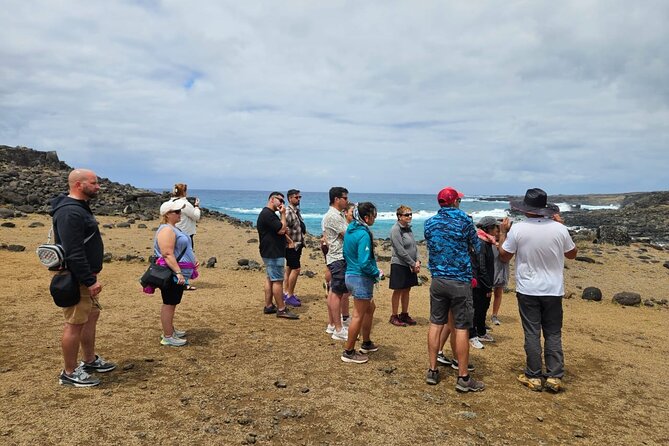
The second day is the package’s long eastern and northern circuit. It links several coastal ceremonial sites with Rano Raraku, the quarry where many moai were carved.
Ahu Vaihu and Ahu Akahanga
Ahu Vaihu gives you an early look at the connection between moai, village life, and the sea. The platform once held eight moai and sits beside an ancestral fishermen’s bay. The program also points out Poko Manu Mea, described as a representative example of Rapa Nui villages and customs.
The stop lasts about 30 minutes. That is enough for an introduction and photographs, but not a slow, detailed exploration. Ahu Akahanga follows, with another 30-minute visit near a small bay and the remains of an old village.
These first stops help you see the moai not as isolated statues, but as part of settlements, ceremonial platforms, food gathering, and coastal life. The short timing means you should listen closely and stay organized when the group is called back to the vehicle.
A few more Hanga Roa trips worth comparing side by side
- 4 Day Tourist Package to San Pedro de Atacama
★ 5.0 · 25 reviews - 4-Day Best of Atacama: Moon Valley, Tatio Geysers and Altiplanic Lagoons
★ 4.0 · 5 reviews - 4-Day Easter Island Experience with Hotel, Tours & Dinner show
★ 5.0 · 3 reviews - 4-Day Atacama Desert Experience with Hotel, Tours & Meals
★ 5.0 · 3 reviews
Rano Raraku, the moai quarry
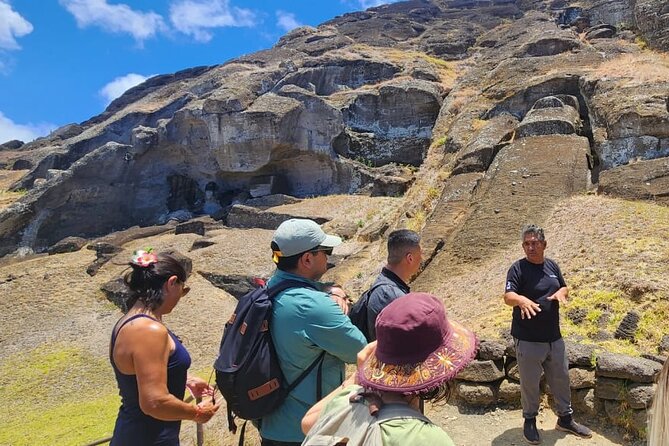
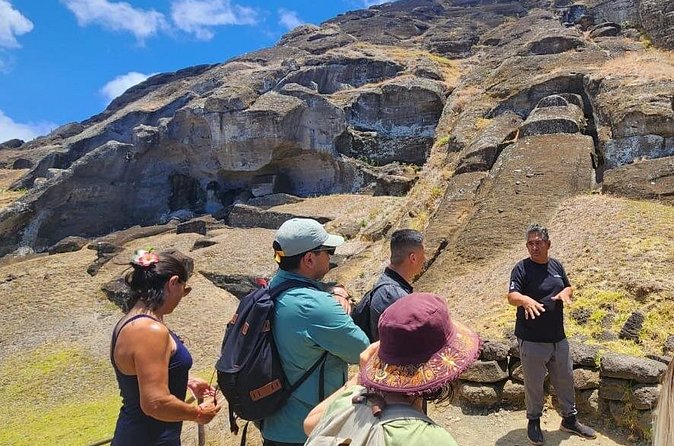
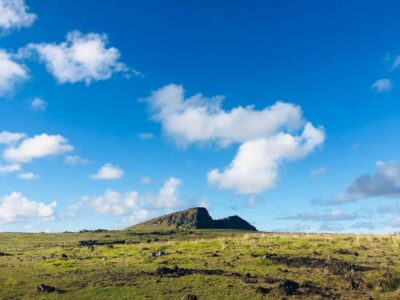
Rano Raraku is the day’s major stop, with about two hours scheduled. This is where the scale of moai production becomes clear. Roughly 400 unfinished figures remain at the quarry, giving you a direct look at statues in different stages of carving.
The unfinished figures are the point. At Ahu Tongariki, you see the finished ceremonial arrangement. At Rano Raraku, you see the work site, with moai still connected to the volcanic rock or left along the slopes. That contrast makes the island’s stone carving tradition easier to understand.
You should expect walking on uneven outdoor ground and some uphill movement. The moderate fitness requirement is most relevant here and at the cave stop on day three. Wear practical shoes and bring water, since food and drinks are not included in the tour price.
Ahu Tongariki and the eastern coast
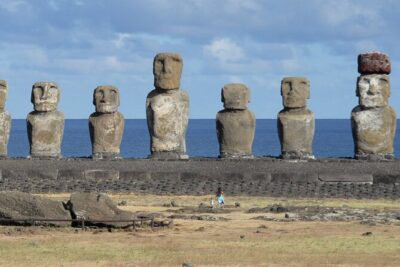
Ahu Tongariki is the largest platform in Polynesia, with 15 upright moai facing inland with their backs to the ocean. The scheduled visit lasts about an hour, giving you time to take in the full row and hear the story of the site.
This is the image many people carry in their minds before arriving on Rapa Nui, but the setting matters as much as the statues. The platform’s scale, the open coast, and the line of figures make it one of the most powerful stops on the island.
The package brings you back here on day four for sunrise, which is a smart choice. Seeing the ahu in regular daylight and then before dawn gives the site two very different moods.
Ahu Te Pito Kura, Ahu Nau Nau, and Anakena
Ahu Te Pito Kura is a one-hour stop associated with the magnetic stone and the island’s longest moai. The schedule gives you more time here than at several of the smaller platforms, though the description does not specify how much walking or interpretation is involved.
Ahu Nau Nau sits about 150 meters inland from Anakena Beach and includes seven moai. After the archaeological visit, you reach Anakena, whose traditional name is Hanga Rau o Te Ariki. The site is tied to the story of King Hotu Matu’a’s arrival.
Anakena adds a welcome change after a day of stone platforms and quarry slopes. It gives the route a human and coastal dimension, with a traditional arrival story connected to the beach. The scheduled beach visit is only 30 minutes, so do not count on a long swim or a leisurely beach afternoon.
Day two is packed. The attraction is efficiency: you cover many of the island’s headline places in one circuit. The tradeoff is that each short stop has a firm rhythm, and Rano Raraku is the only location where you receive a full two hours.
Day three: crater views, caves, and unusual stonework
The third day shifts toward the southwest and interior of Rapa Nui. It combines Orongo and Rano Kau with Ahu Akivi, Ana Te Pahu, and Ahu Vinapu.
Orongo and Rano Kau
Orongo is a ceremonial village on top of Rano Kau. You have about an hour there, enough to focus on the site’s setting and ceremonial role. The elevated location gives the stop a strong sense of place, especially when paired with the nearby volcanic crater.
Rano Kau is one of the island’s three large volcanic cones. The schedule allows 30 minutes, and the crater is noted for its imposing wetland. There is no separate admission charge listed for Rano Kau, though the overall National Park ticket still applies to foreign visitors.
The two stops work well together. Orongo shows how people used the volcanic rim for ceremony, while Rano Kau explains the natural setting beneath it. I would pay close attention here, since the itinerary moves quickly and the crater visit is brief.
Ahu Akivi and its seven moai
Ahu Akivi features seven moai and was known originally as Ahu Atiu. It was the first platform on Rapa Nui to receive complete excavation and restoration work.
The stop lasts about 30 minutes. That is short, but the site adds variety to the route because the seven moai are not presented in the same coastal setting as the platforms at Tongariki, Vaihu, or Nau Nau. It also gives you a chance to see a restored ceremonial platform within an organized archaeological program.
Ana Te Pahu’s connected caverns
Ana Te Pahu receives two hours, making it another substantial stop. The cave program includes Ana Vai Teka, known for large amounts of water, Ana Tapa Iri, which has a very narrow access point, Ana Ohoka, described as modified for funerary use, and Ana Te Pahu itself.
This is the most physically demanding part of the itinerary. You should be comfortable walking through uneven cave areas and dealing with narrow access. The tour specifically asks for moderate physical fitness, and this stop is the clearest reason why.
The caves also bring a different kind of interest. After two days focused mainly on open-air platforms, quarry slopes, beaches, and crater views, Ana Te Pahu shows how underground spaces were used and adapted. Still, you should not expect a casual stroll. If confined spaces or rough walking are difficult for you, ask the operator for more detail before booking.
Ahu Vinapu
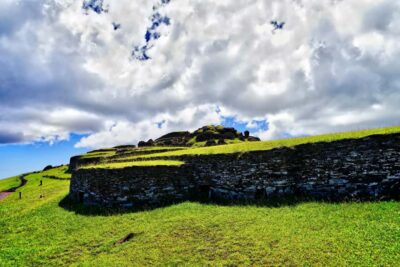
Ahu Vinapu includes two ancestral platforms with construction details that are meant to attract close attention. The visit lasts about 30 minutes.
This is a compact stop, but it rounds out the day by showing another style of platform construction. The quick timing makes the guide’s explanation particularly important. Without context, the stonework may be easy to glance at and leave behind.
Day four: Tongariki before dawn and a clean finish
The final morning begins before sunrise. You travel to the southeast coast for a three-hour visit at Ahu Tongariki, where the 15 moai take on a different character in the early light.
The pre-dawn departure is the one demanding piece of the final day, but it is also one of the package’s best features. You have already seen Tongariki during the daylight circuit, so the return visit is not repetitive. It gives you a second chance to appreciate the platform without trying to squeeze a sunrise into the busy day-two schedule.
After the sunrise visit, the operator takes you to the airport for your departure. The schedule does not provide a long free period on the last day, so you should keep your return flight and packing plans orderly. The airport drop-off is included, which removes one more transport problem.
Guides, group size, and the pace of the tours
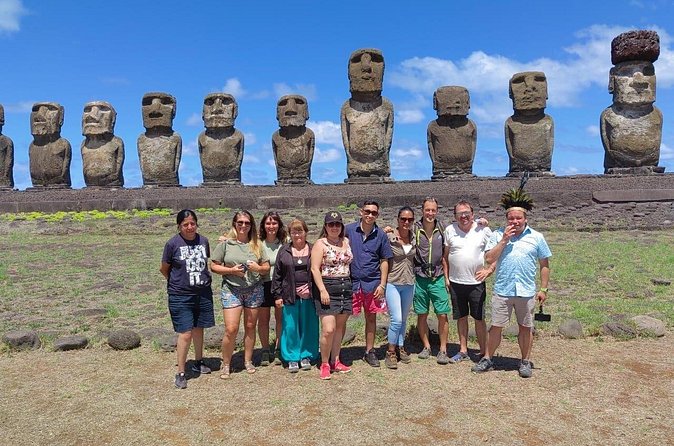
The available information does not name individual guides, but the organized tours are praised for strong guiding and good knowledge of the sites. That matters on Rapa Nui. Many places are visually striking, but the meaning of a platform, quarry, village, or cave is not always obvious without explanation.
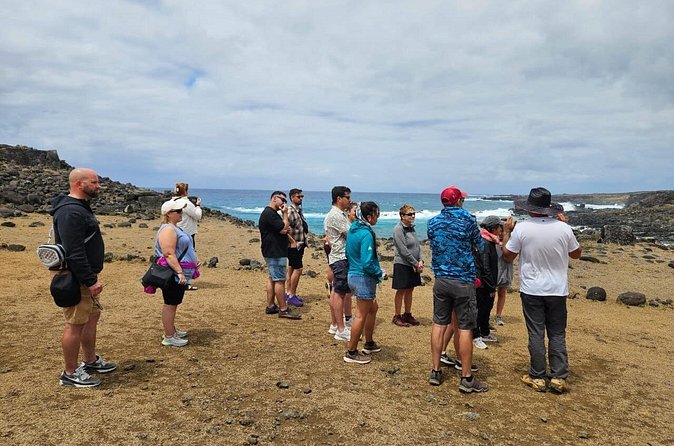
The maximum group size is 16 people. That is a useful middle ground. You are not paying for a private tour, but the group should remain small enough for the guide to keep everyone together and answer some questions.
The schedule is active rather than relaxed. Day two has seven stops, including two hours at Rano Raraku. Day three includes five stops, with two hours in the caves. Add the sunrise excursion and airport transfers, and you have a full program from arrival to departure.
I would choose this package if you want the major sites handled efficiently and do not want to rent a vehicle or arrange separate guides. I would not choose it for an unhurried beach break, a high-end room, or a trip built around sleeping late.
Accommodation and daily comfort
The hostel arrangement keeps the price within reach, but you need to place it in the right category. The accommodation is central, which is useful for the welcome orientation and for getting around Hanga Roa, yet the available room assessment raises practical concerns about cleanliness, shower drainage, privacy from uncovered windows, bedding, and Wi-Fi.
Those are not tiny complaints. After long outdoor days, a clean shower and a comfortable bed matter. If you are happy with simple lodging and plan to spend most of your time at the archaeological sites, the hostel may be an acceptable tradeoff. If you are sensitive to room standards, contact RAPA NUI DREAM before booking and request the exact property and current room conditions.
Food is not included, so plan to purchase meals separately. No meal schedule is provided, and the day-two and day-three programs are long enough that you should not assume you will have plenty of spare time for a relaxed meal during the tours.
Who should book this Rapa Nui package?
This experience suits you if:
- You have only four days on the island.
- You want the main archaeological sites in one organized program.
- You value airport pickup and scheduled transport.
- You are comfortable with a hostel rather than a hotel.
- You can manage moderate walking, uneven ground, and cave access.
- You want a sunrise visit at Ahu Tongariki.
- You prefer a small shared group to arranging every detail yourself.
It is less suitable if you want private guiding, premium lodging, a flexible schedule, or lots of unplanned time. The package is built around coverage and convenience. That is its strength, and also its limit.
The cancellation terms are worth reading before payment. Full refund is available when you cancel at least six full days before the start time. Cancellations two to six days ahead receive 50 percent, while cancellations less than two full days ahead are not refunded.
Should you book it?
Book this tour if your priority is seeing Rapa Nui’s essential sites in four days with transport, airport service, and a Tongariki sunrise already arranged. The itinerary is strong, and the guides are the most highly praised part of the experience.
Before you commit, price in the $80 foreign visitor National Park ticket, meals, and tips. Then ask specific questions about the hostel, especially shower condition, window coverings, bedding, and Wi-Fi. If the operator confirms basic but acceptable lodging, this can be a practical way to experience the island. If accommodation comfort is a major part of your holiday, spend more for a better room and keep the excellent sightseeing plan as a separate goal.
FAQ
How long is the Rapa Nui experience?
The experience lasts approximately four days and includes three nights of hostel accommodation.
What is included in the $400 price?
The price includes three nights of hostel accommodation, two full-day tours, the Ahu Tongariki sunrise, airport reception, pickup and drop-off for the scheduled activities, and a welcome city tour.
Is airport pickup included?
Yes. You are met at Mataveri International Airport with a sign showing your name and a natural flower necklace. Airport drop-off is also included at the end of the experience.
Is the National Park entrance fee included?
No. The National Park ticket is separate. The stated price is CLP 20,000 per Chilean citizen and $80 per foreign visitor.
Are meals included?
No. Feeding is not included in the package price.
How large can the group be?
The maximum group size is 16 people.
What level of fitness is needed?
A moderate level of physical fitness is required. The program includes outdoor archaeological sites, volcano areas, and the Ana Te Pahu cavern route, which includes narrow access in one of the caves.
Can I cancel for a full refund?
Yes, if you cancel at least six full days before the experience start time. Cancellation two to six full days ahead receives a 50 percent refund, and cancellation less than two full days ahead is not refunded.
Just added around Hanga Roa
- Volcanic Refuges: Excursion to Underground Civilization★ 4.7 · 8 reviews
- Easter Island Ancestral Dinner and Show with Transport★ 4.5 · 2 reviews
- Volcanic Wonders and the Kingdom of the Birdman: Half Day★ 5.0 · 6 reviews
- Half Day Private Tour: Caves and Volcanic Refuges★ 4.0 · 14 reviews
- Tour to the Motus: Boat trip and snorkeling in Rapa Nui★ 5.0 · 8 reviews
- Birdman Ceremonial Route: Orongo, Ranu Kau Half-Day Tour★ 4.5 · 16 reviews
- Private Tour: Tongariki Sunrise Experience★ 4.5 · 20 reviews
- Sunrise in Tongariki on Easter Island Rapa Nui★ 3.5 · 5 reviews
Easter Island Tours, compared.
Two days of Full Day Tour of Rapa Nui + Sunrise in Tongariki
Read our review →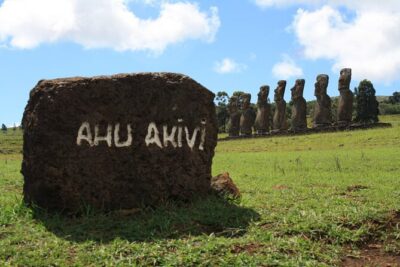
2-Day Private Tour Easter Island Highlights Complete Discovery
Read our review →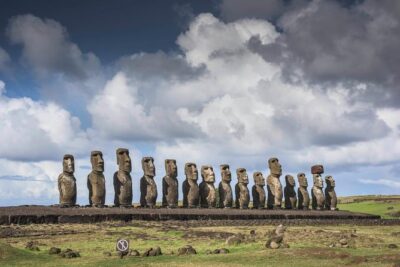
Private Tour: Full Day Easter Island Highlights
Read our review →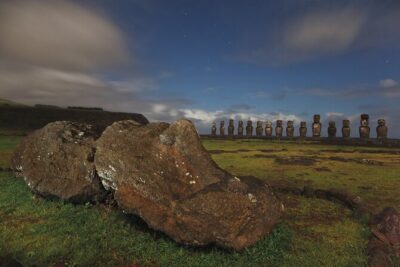
Browse the lists this tour appears in