
Reviewed · EASTER ISLAND TOURS
2-Day Private Tour Easter Island Highlights Complete Discovery
See Easter Island without racing the clock. The two-day private tour links nearly every major archaeological site, from the red-stone quarry at Puna Pau to the 15 moai at Ahu Tongariki. I like the sensible pacing and the chance to travel with a guide who can adjust the day to your interests. The main drawback is cost: $560 per person, plus the required $80 national park ticket, makes this a serious splurge.
I also like the hotel pickup, air-conditioned minivan, bottled water, and door-to-door service. Guides such as Yeni, Joaquin, Yoyo Tuki, Alberto, and Kohu have earned especially warm praise for their local knowledge, personal stories, and patience. Just remember that lunch is not included in the stated price, despite some past arrangements involving meals with the operator’s family, so confirm the plan before you go.
In This Review
- Key points to know before booking
- Why two days makes sense on Rapa Nui
- Anakena Beach and the island’s northern story
- Puna Pau and Ahu Akivi, statues with different stories
- Tahai shows how an ancient village worked
- Rano Kau and Orongo bring volcanic drama
- Vinapu and Hanga Poukura reward careful looking
- Vaihu and Akahanga reveal village life and collapse
- Rano Raraku is the tour’s essential hour and a half
- Ahu Tongariki delivers the great closing image
- Guide quality, local insight, and the private advantage
- Price, meals, and what you actually receive
- Who should book this Easter Island tour?
- Should you book it?
- FAQ
- How long does the tour last?
- What time does the tour begin?
- Is hotel pickup included?
- Is the tour private?
- What is included in the price?
- Is the national park ticket included?
- Is lunch included?
- Can cruise ship passengers join this tour?
Key points to know before booking
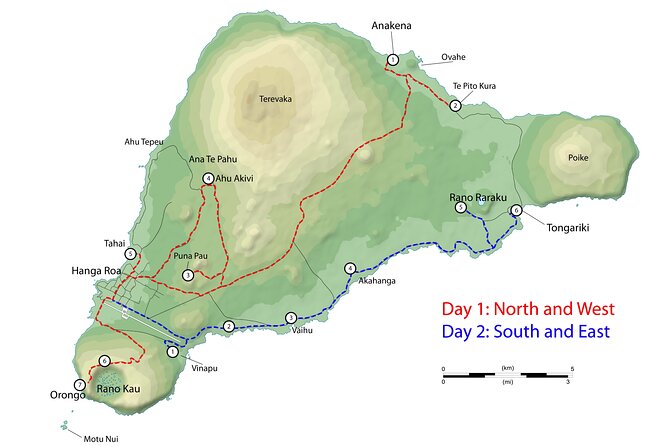
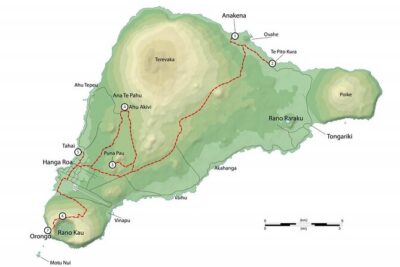
- Two days cover the island’s major moai sites: You visit Anakena, Rano Raraku, Ahu Tongariki, Orongo, Ahu Akivi, and several coastal ahu without forcing everything into one long day.
- The private format gives you room to set the pace: Your group travels alone, and the guide can spend more time on archaeology, photography, local culture, or practical needs.
- Rano Raraku and Ahu Tongariki are the big payoffs: The unfinished statues at the quarry and the restored row of 15 moai are the emotional center of the tour.
- The national park ticket costs extra: Plan on $80 per person for the ticket, which is required and valid at all the sites visited.
- Expect uneven ground and some hills: Strong walking shoes, sun protection, and water are sensible, even though bottled water is provided.
- The guide can make or break the experience: The strongest praise goes to local guides who explain oral traditions, archaeology, and present-day Rapa Nui life rather than simply pointing at statues.
Why two days makes sense on Rapa Nui
Easter Island, or Rapa Nui, is not a place I would try to cover in a single hurried outing. The famous moai are only part of the story. You also need time for the quarries, ceremonial villages, crater views, old house foundations, coastal geology, and the questions that naturally come up once you begin looking closely.
This tour spreads roughly 13 hours of sightseeing over two days. That matters because several sites deserve more than a quick photo stop. At Rano Raraku, for example, you need time to see the statues still attached to the volcanic slope and the figures left partway through production. At Orongo, the setting and the birdman competition make more sense when your guide can explain what you are seeing.
The private format is another advantage. You are not tied to the pace of a large coach group, and your guide can respond to your interests. If you take photographs, need a slower walk, or want more explanation at one site, that flexibility is worth paying for. One family even praised a guide for adapting to a parent with walking limitations.
The schedule begins at 9:30 a.m. with hotel pickup in Hanga Roa. Transfers are approximate, and the exact timing can change with traffic and the time spent at each stop. Since the itinerary contains many locations, you should still expect full sightseeing days, not a casual ride around the island.
More Private Tours in Easter Island
- Private Full-Day Easter Island Highlights North and West
★ 5.0 · 84 reviews - Full Day Private Tour: Factory of the Moai the stone giants
★ 4.5 · 63 reviews - Private Easter Island Full-Day Tour
★ 5.0 · 61 reviews
Anakena Beach and the island’s northern story
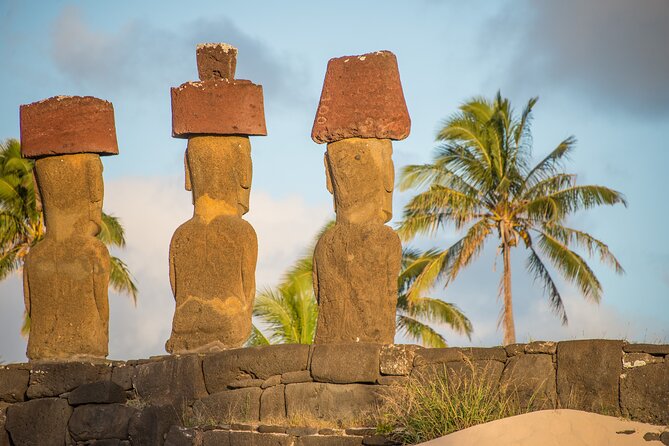
Anakena is the prettiest beach on this route and an important place in Rapa Nui tradition. The ancient capital was located here, and the shore is home to a major ahu with some of the best-preserved restored moai on the island.
The statues were buried in sand for centuries before being dug out. That detail gives the site a different feel from the toppled figures you will see elsewhere. Here, you can study the restored forms and imagine the settlement that once surrounded the ceremonial platform.
You receive about 35 minutes at Anakena. That is enough for a focused archaeological visit, but not enough for a relaxed beach afternoon. If swimming or beach time matters to you, plan to return independently. The tour’s attention is on the ancient capital and its monuments.
At Ahu Te Pito Kura, you see the remains of the tallest moai ever successfully transported to an ahu, a remarkable 9.9 meters high. It lies toppled and unrestored, which gives you a more honest sense of the island’s archaeological record than a restored statue can.
The area also contains a round magnetic rock associated with local stories of special powers. Your guide can help separate cultural tradition from modern speculation without stripping away the fun of the place.
Puna Pau and Ahu Akivi, statues with different stories
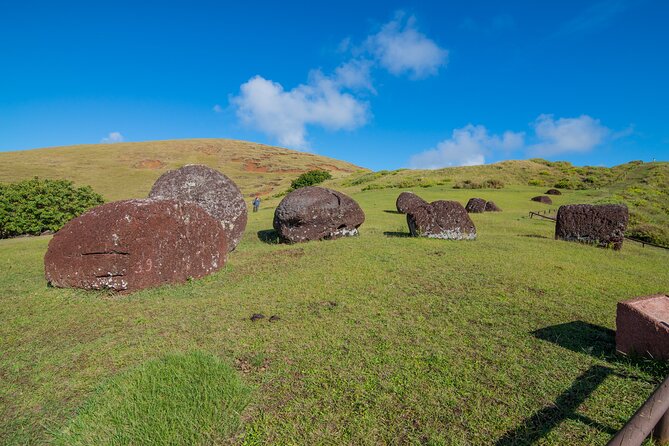
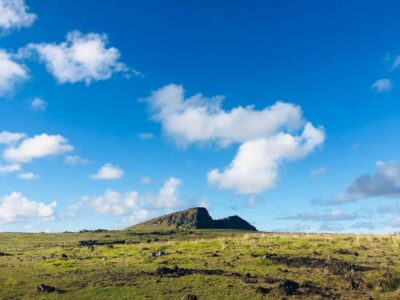
Puna Pau is a small volcanic cone, but its importance is large. This is where the red scoria used for the moai topknots, called pukao, was quarried. Every pukao on the island came from this source.
The stop lasts about 20 minutes. You will not see a full collection of standing moai here. Instead, you learn how the statues were made and finished, and why the red stone looks so different from the gray volcanic tuff used for most bodies.
Ahu Akivi offers one of Rapa Nui’s most unusual arrangements. Its seven moai face toward the sea, unlike the usual inland-facing orientation associated with many ahu. One tradition identifies them with the first seven settlers who arrived on the island roughly a thousand years ago.
You have about 20 minutes here. The site is easy to understand visually, but the interpretation adds much more. A good guide will explain which parts are supported by archaeology and which come from oral tradition. Guides with backgrounds in anthropology and archaeology, including Yeni and Joaquin, were praised for handling those layers with care.
Tahai shows how an ancient village worked
Ahu Tahai sits near Hanga Roa and is one of the best places to connect statues with daily life. The area contains three ahu platforms, along with evidence of a settlement whose residents invested heavily in ceremonial construction.
You get about 30 minutes at the site. Look beyond the moai to the village layout and the ramp leading toward the ocean. The goal is not simply to count statues. It is to see how ceremonial space, housing, and access to the sea fit together.
This is a good place to ask questions. A guide can point out what is reconstructed, what remains in ruins, and how researchers interpret the relationship between the ahu and the settlement. Because the tour is private, you have a better chance of pursuing the subjects that interest you instead of moving on when a large group is ready to leave.
More Rapa Nui trips and moai walks:
- From Hanga Roa: Rapa Nui Culture Sightseeing Tour
★ 4.6 · 307 reviews - From Hanga Roa: Easter Island Highlights 2-Day Tour
★ 4.3 · 205 reviews - Full Day Tour in Rapa Nui
★ 4.5 · 122 reviews - From Hanga Roa: Journey from Orongo to Ana Te Pahu
★ 4.3 · 75 reviews
Rano Kau and Orongo bring volcanic drama
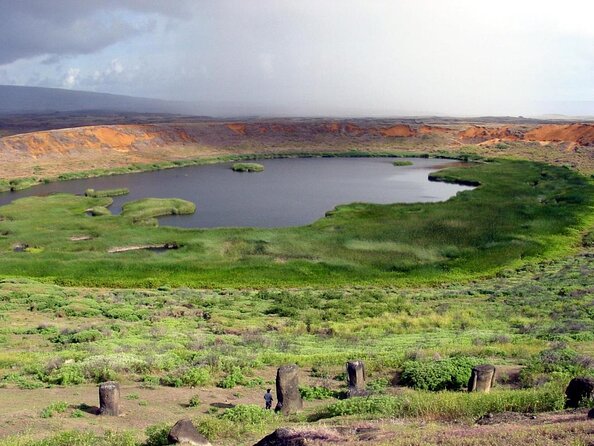
Rano Kau provides one of the finest views on the island. The broad volcanic crater contains a lake that was an important source of drinking water in ancient times. You have about 20 minutes for the viewpoint and explanation.
The crater is impressive on its own, but the guide’s context gives it weight. This is not just a scenic overlook. It is a natural feature tied to water, settlement, and ceremony.
From there, the tour continues to Orongo, a stone ceremonial village on the ridge of Rano Kau. You spend about 45 minutes here, one of the longer stops on the first part of the route.
Orongo is linked to the birdman competition, a powerful ritual contest that shaped political and religious life on Rapa Nui. The village’s position above the crater gives you views in several directions, including back into Rano Kau. You will want time for both the stone structures and the setting.
This stop can be physically demanding because of the ridge and uneven ground. Wear shoes with a firm sole, and be ready for sun and wind. If you want the story to stick, listen closely here. A guide who can explain the ritual, its symbols, and the island’s changing political order will make Orongo far more than a scenic stop.
Vinapu and Hanga Poukura reward careful looking
At Ahu Vinapu, the focus shifts to stonework. Ahu Tahira contains a wall fitted with unusual precision, and its construction has led some people to suggest contact with the Inca Empire.
That claim should be treated as a theory, not settled fact. The value of the site is that it prompts questions about engineering, stone cutting, transport, and the outside connections once imagined for Rapa Nui. You have about 30 minutes here, enough to examine the joints and hear competing interpretations.
The nearby Hanga Poukura area brings together rough lava formations, buried statues, and a coastal blowhole. Several moai are partly buried in a line, with only their backs visible. That strange arrangement is easy to miss if you are rushing.
The ahu here is carefully built from fitted blocks, and the blowhole may send water into the air when waves hit the coast in the right conditions. The natural display is not guaranteed, but the rock formations are worth seeing regardless. Allow about 30 minutes.
Vaihu and Akahanga reveal village life and collapse
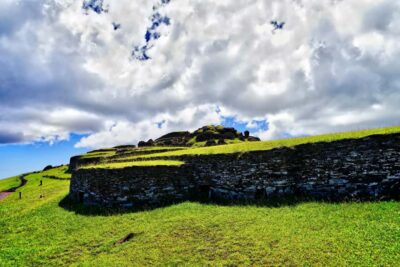
Ahu Vaihu includes a modern reconstruction of an ancient village. You can see examples of old planting methods and enter replicas of boat-shaped houses, which helps you picture how people organized work and home life.
The stop lasts around 30 minutes. Reconstruction always requires a little caution, since it is an interpretation rather than an untouched ruin. Still, it gives you useful visual context before you visit the less restored sites.
Ahu Akahanga offers a more rugged encounter with the past. You walk among the remains of a large village, including boat-house foundations, earth ovens, and a major ceremonial platform where moai still lie toppled.
A second unrestored ahu nearby contains 13 statues of different sizes. Local tradition identifies Akahanga as the burial place of Hotu Matu’a, regarded as the island’s first king. The site combines archaeology and oral tradition in a way that calls for thoughtful explanation.
You have about 30 minutes here, and admission is not included in the listed tour price. Since much of the ground is uneven, you should take your time rather than treating this as a quick photo stop.
Rano Raraku is the tour’s essential hour and a half
If you choose this tour for one reason, make it Rano Raraku. This volcanic slope functioned as the main production center for the island’s moai. Nearly all the statues were carved here, and hundreds remain where the workers left them.
You receive about 90 minutes, which is exactly the kind of generous timing this site needs. Some statues are complete but never transported. Others remain partly attached to the rock, allowing you to see how the carvers worked into the volcanic material.
The unfinished figures change the familiar image of the moai. Instead of seeing only finished monuments on ahu, you see a working quarry, abandoned tools of production, and statues at different stages. It is one of the few places where the scale of the undertaking becomes clear.
The ground can be rough, and there may be slopes to negotiate. Good shoes are important. If you have limited mobility, tell your guide at the start so the pace can be adjusted where possible.
This is also where a strong guide matters most. Guides praised by name, including Yoyo Tuki, Alberto, Yeni, and Joaquin, were valued for explaining not only dates and construction but also the people, beliefs, and unresolved questions behind the statues.
Ahu Tongariki delivers the great closing image
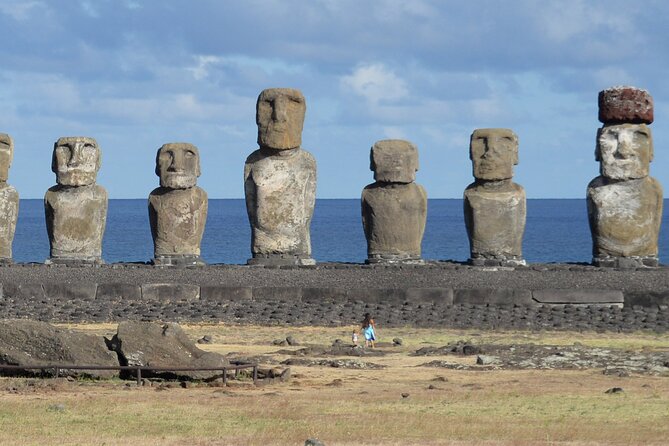
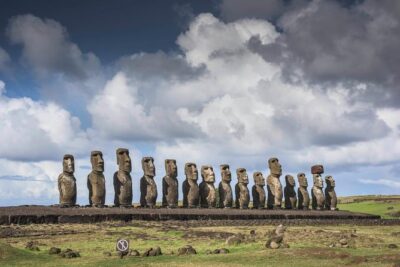
Ahu Tongariki is the largest monument on Rapa Nui. Its 15 moai face the ocean, creating the image most people carry home from Easter Island.
The platform was once destroyed by an earthquake, and a tsunami swept the statues inland. They were later restored to their original position. That recovery gives the site an added layer: you are looking at both ancient achievement and modern conservation work.
The visit lasts about 45 minutes, and admission is not included in the listed price. Take time to look along the full row rather than photographing only the central figures. The size difference between the statues and the broad ocean setting is part of the effect.
Many people treat Tongariki and Rano Raraku as the high points of the tour. I agree, but they work best together. The quarry shows where the statues began, while Tongariki shows what a finished ceremonial platform could become.
Guide quality, local insight, and the private advantage
The operator assigns a driver-guide, so the exact personality and background can vary. That is the one part of the experience you cannot fully control. The strongest guide experiences came from people with direct ties to Rapa Nui, archaeology, anthropology, farming, or local family history.
Yeni was praised for being Rapa Nui, US-educated, flexible, and passionate about her home. Joaquin Soler Hotu received particularly strong praise for his archaeological and historical knowledge, patience with an older family member, photography advice, and ability to explain local culture. Kohu added another perspective by discussing farming, ecosystems, and his family’s connection to the restoration of the 15 Tongariki moai.
Alberto was praised for handling questions about geology, botany, archaeology, and history, including moments when several theories exist. That is the ideal tone for Rapa Nui. You should want a guide who can say what is known, what is debated, and what comes from oral tradition.
Private touring also helped with practical matters. Guides have assisted with airport issues, recommended local food, adjusted pickup locations, and helped when someone felt unwell. Those extras are not guaranteed, but they show why personal service can matter on a remote island.
Price, meals, and what you actually receive
The listed price is $560 per person. Add the required $80 national park ticket, and the known cost becomes $640 per person before lunch or any other personal spending.
That is expensive for transport and sightseeing, but you are paying for a private vehicle, hotel pickup and drop-off, a dedicated guide, bottled water, and a route that reaches nearly all the island’s major sites over two days. If you have only three days on Rapa Nui, the time saved and the amount you see can justify the price.
The tour does not include lunch in the stated inclusions. Some past arrangements described lunch at the owner’s home, local meals, or even dinner with islanders, while another account specifically felt lunch could be better. Treat those meals as an arrangement to confirm, not as part of the guaranteed package.
Bring sun protection, sturdy walking shoes, and your park ticket. The ticket should be purchased online beforehand for $80 per person according to the supplied details, although the practical instructions also say to obtain it upon arrival at the airport. Because those directions conflict, confirm the current purchase procedure before arrival. You must carry the ticket during the tour.
Free cancellation is available up to 24 hours before the local start time. The tour is not available to cruise ship passengers, children must have an adult with them, and most people can participate.
Who should book this Easter Island tour?
I would recommend it most strongly if this is your first visit, your stay is short, or you do not want to rent a vehicle and assemble separate outings. It also suits photographers, families, and anyone who wants time for questions instead of a fixed large-group script.
You should think twice if you prefer to explore independently, spend long periods swimming at Anakena, or visit only a few sites at a very slow pace. The route is packed, even though it is arranged over two days.
Before booking, ask who your guide will be, how the two days will be divided, and whether any lunch arrangement is included. If you are assigned a guide like Yeni, Joaquin, Yoyo, Alberto, or Kohu, the cultural value may be much greater than a basic sightseeing transfer.
Should you book it?
Book this tour if you want to see the island’s major sites in a practical order and understand what you are seeing. The combination of Rano Raraku, Tongariki, Orongo, Anakena, and the smaller ahu makes this a strong first visit.
Skip it if $640 before meals feels too steep or if you have enough time to plan separate visits on your own. For most first-time visitors with only a few days, though, the private format, local guiding, and two-day pace make the cost easier to defend.
FAQ
How long does the tour last?
The experience lasts approximately 13 hours, spread across two days.
What time does the tour begin?
The stated start time is 9:30 a.m.
Is hotel pickup included?
Yes. Hotel pickup and drop-off are included.
Is the tour private?
Yes. Only your group participates in the private activity.
What is included in the price?
The price includes a driver-guide, transport in an air-conditioned minivan, hotel pickup and drop-off, and bottled water.
Is the national park ticket included?
No. Each person needs a national park ticket costing $80, valid for all tours and sites.
Is lunch included?
Lunch is not included in the stated tour inclusions. Some past arrangements involved meals with the operator’s family, so confirm the current plan before booking.
Can cruise ship passengers join this tour?
No. The tour is not available to cruise ship passengers.
More 2-Day Experiences in Hanga Roa
- Two days of Full Day Tour of Rapa Nui + Sunrise in Tongariki
★ 4.8 · 55 reviews - 2 Days Highlights Tour in Easter Island Moai and Nature
★ 4.0 · 55 reviews - 2 Day Private Tour: Easter Island’s Cultural Heritage
★ 5.0 · 40 reviews - 2 Day Small Group Tour in Moai Monuments and Historic Pathways
★ 5.0 · 22 reviews
Just added around Hanga Roa
- Volcanic Refuges: Excursion to Underground Civilization★ 4.7 · 8 reviews
- Easter Island Ancestral Dinner and Show with Transport★ 4.5 · 2 reviews
- Volcanic Wonders and the Kingdom of the Birdman: Half Day★ 5.0 · 6 reviews
- Half Day Private Tour: Caves and Volcanic Refuges★ 4.0 · 14 reviews
- Tour to the Motus: Boat trip and snorkeling in Rapa Nui★ 5.0 · 8 reviews
- Birdman Ceremonial Route: Orongo, Ranu Kau Half-Day Tour★ 4.5 · 16 reviews
- Visit Rapa Nui in 4 days with 3 Tours and Accommodation included★ 4.0 · 2 reviews
- Private Tour: Tongariki Sunrise Experience★ 4.5 · 20 reviews
Easter Island Tours, compared.
Two days of Full Day Tour of Rapa Nui + Sunrise in Tongariki
Read our review →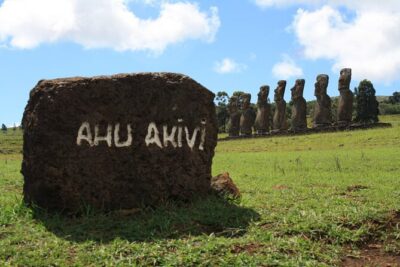
Private Tour: Full Day Easter Island Highlights
Read our review →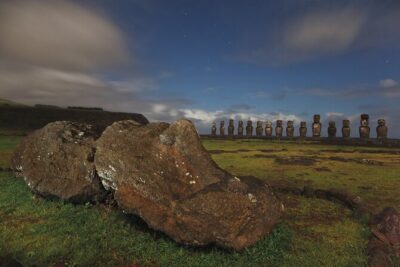
Private Full-Day Easter Island Highlights North and West
Read our review →Browse the lists this tour appears in