
Reviewed · EASTER ISLAND TOURS
Private Tour: Full Day Easter Island Highlights
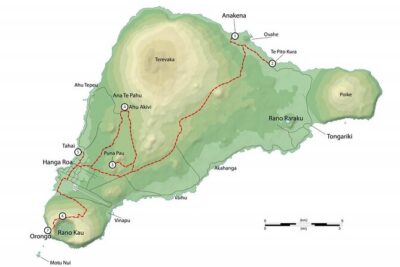
Easter Island rewards a good guide. This private tour links Rano Raraku, Ahu Tongariki, Anakena, Orongo, and Ahu Akivi in one well-planned day, giving you both the famous moai and the stories that make them meaningful. I especially like the private vehicle and the chance to ask questions without competing with a busload of people. The main drawback is cost: at $263 per person, plus a required $100 National Park ticket and optional lunch, this is not a budget outing.
The strongest part is the human side. Guides such as Hugo, Sebastian, Tokerau, Toki, Christina, Wai, and Isobel have been praised for their local connections, storytelling, patience, and ability to explain theories without presenting guesses as fact. You should also know that the advertised duration is about six hours, while some descriptions of the day run from 9 a.m. to 5 p.m., so confirm the exact schedule before booking.
In This Review
- Key points to know before you book
- What this private Easter Island day feels like
- Rano Raraku, where the moai began
- Ahu Tongariki and fifteen moai facing inland
- Anakena Beach, a softer side of Rapa Nui
- Rano Kau, the island’s great volcanic crater
- Orongo and the Birdman ceremony
- Ahu Akivi and the unusual inland moai
- Why the guides make or break the day
- Is $263 per person a fair price?
- Who should choose this tour?
- What to confirm before leaving your hotel
- Should you book the private Easter Island highlights tour?
- FAQ
- How much does the private Easter Island highlights tour cost?
- How long does the tour last?
- Which sites are included?
- Is the National Park ticket included?
- Is lunch included?
- Does the tour include hotel transportation?
- Can cruise ship passengers join this tour?
- Is this a private activity?
Key points to know before you book
- Six major Rapa Nui sites in one private day: The route covers the island’s best-known moai platforms, quarry, beach, volcano, ceremonial village, and inland ahu.
- Rano Raraku gets a full two hours: This is enough time to understand how the moai were carved and to see unfinished statues left in the volcanic tuff.
- Ahu Tongariki is the big visual moment: Fifteen restored moai face inland with the Pacific behind them.
- Local guides add the value: Hugo, Sebastian, Tokerau, Toki, Christina, and other guides are praised for personal stories, clear explanations, and thoughtful answers.
- The National Park fee is extra: Expect to pay $100 per person for a ticket valid for 10 days and all park sites.
- This is not for cruise ship passengers: The tour is designed for people staying on Easter Island rather than arriving for a brief port call.
What this private Easter Island day feels like
Rapa Nui is not a place where a quick photo stop tells the whole story. The moai are powerful objects, but without context you can easily leave knowing little more than their size and number. I like that this tour gives you time at the sites and a guide who can explain the island’s beliefs, ceremonies, engineering, and disputed theories.
The private format matters here. You travel by private vehicle with only your own group, so you can ask about a carving technique, stop for a restroom break, or spend longer with a site that catches your attention. At windy archaeological locations, being able to hear your guide clearly is a real advantage.
The tour starts at 9 a.m. and includes hotel pickup and drop-off. The published duration is approximately six hours, though the listed stops total about five and a half hours before driving time. Several detailed accounts describe a schedule closer to 9 a.m. to 5 p.m., with lunch included or added, so I would ask Kava Kava Tours to confirm the current timing and meal plan.
More Private Tours in Easter Island
- 2-Day Private Tour Easter Island Highlights Complete Discovery
★ 5.0 · 110 reviews - Private Full-Day Easter Island Highlights North and West
★ 5.0 · 84 reviews - Full Day Private Tour: Factory of the Moai the stone giants
★ 4.5 · 63 reviews
Rano Raraku, where the moai began
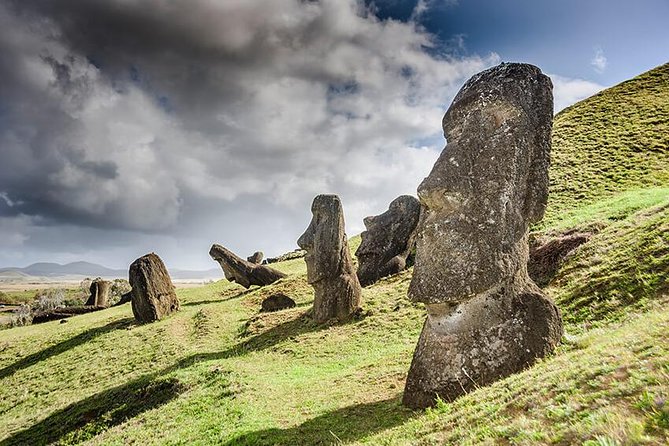
The day gives Rano Raraku two hours, the longest stop on the route. That is sensible. This volcanic cone supplied the tuff, a soft volcanic stone used to carve most of the island’s moai. Here, you see the quarry itself, not just the finished statues placed on ceremonial platforms.
The site helps answer a basic question: how did a society make so many enormous figures? Your guide can point out the stages of carving and explain how the statues were prepared before being moved across the island to an ahu, or ceremonial platform. The unfinished moai are especially useful because they show the work in progress.
I would treat this as the tour’s main educational stop. The terrain and open setting can make the statues feel less like isolated monuments and more like part of a working stone yard. Give your guide room to explain the competing ideas about how the moai moved. Sebastian has been praised for using photos and for separating established facts from possible theories, which is exactly the approach you want at a site surrounded by speculation.
The National Park admission fee is not included. You must buy the required ticket separately, and it is valid for 10 days from first entry at all park sites.
Ahu Tongariki and fifteen moai facing inland
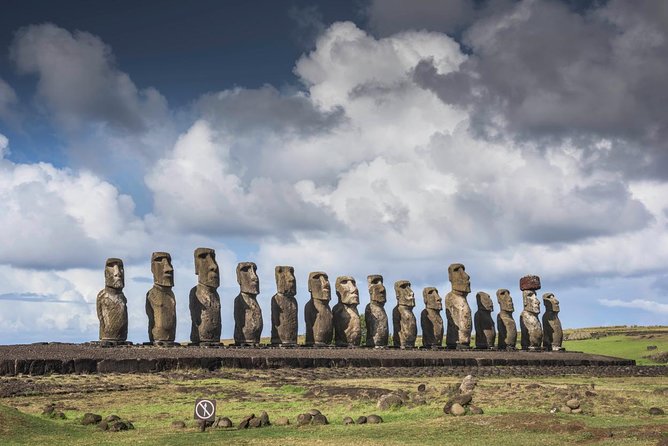
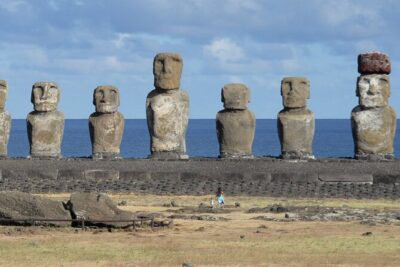
Ahu Tongariki is opposite Rano Raraku and receives about an hour. With fifteen restored moai lined up on the largest reconstructed platform on the island, it is the place where the scale of Rapa Nui becomes hard to ignore.
The statues face inland, with their backs to the Pacific. That orientation reflects the role of the moai as figures connected to communities and ancestors rather than as simple coastal decoration. Your guide can help you notice the arrangement, the restored platform, and the relationship between Tongariki and the quarry nearby.
This is also one of the best stops for photographs. Guides such as Toki and Sebastian have been praised for knowing where to place people for strong pictures, but the setting does not need much help. The long row of figures, broad sky, and ocean beyond create a memorable scene.
One practical point: the open sites can be windy. Bring a raincoat, even if the forecast looks friendly. An umbrella may not hold up well in strong wind, and a coat is more useful for both rain and exposure.
Anakena Beach, a softer side of Rapa Nui
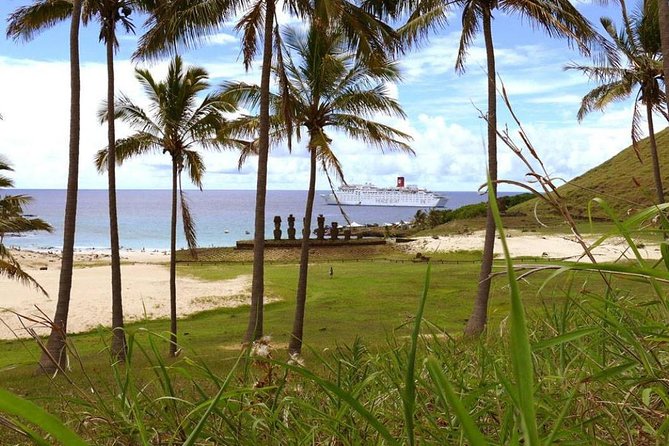
After the stone and ceremony, Anakena changes the mood. The stop lasts about 45 minutes and brings you to warm turquoise water and coral sand. It is the island’s main beach and was associated with the ancestral residence of the Miru Araki royal family.
Anakena is not only a break between archaeological sites. Ahu Nau Nau here is known for the refined carving of its moai, giving you another chance to compare statues with those at Tongariki and the quarry. The beach setting also makes it easier to picture Rapa Nui as a lived-in island, not merely an outdoor museum.
The short visit means you should not expect a long swim or a relaxed beach afternoon. I see it as a useful pause, a place to enjoy the setting, take photographs, and hear about the royal connection before moving on. Lunch may be available as an optional addition at $50 per person. One detailed account praised the tuna steak lunch and the spectacular setting, while another simply noted that lunch was very good. Confirm whether your booking includes the meal or treats it as an add-on.
More Rapa Nui trips and moai walks:
- From Hanga Roa: Rapa Nui Culture Sightseeing Tour
★ 4.6 · 307 reviews - From Hanga Roa: Easter Island Highlights 2-Day Tour
★ 4.3 · 205 reviews - From Hanga Roa: Easter Island Sightseeing Full Day Tour
★ 4.5 · 189 reviews - Two days of Full Day Tour of Rapa Nui + Sunrise in Tongariki
★ 4.5 · 132 reviews
Rano Kau, the island’s great volcanic crater
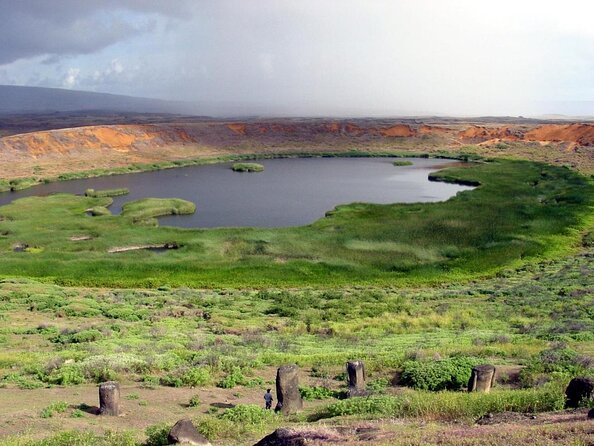
The 15-minute stop at Rano Kau is brief, but the view earns its place. The crater measures about 1.5 kilometers across and contains a lake that once served as an important source of drinking water. It also holds one of the main reserves of endemic flora on Rapa Nui.
Because the stop is short, expect a viewpoint and an explanation rather than a long walk around the crater. This is one of those moments when your guide helps you see more than the camera does. The crater is not just a dramatic hole in the ground. It connects geology, water, plant life, and settlement.
The itinerary places Rano Kau immediately before Orongo, which makes historical sense. The crater provides the setting for the ceremonial village, and the two stops work better together than they would as unrelated photo opportunities.
Orongo and the Birdman ceremony
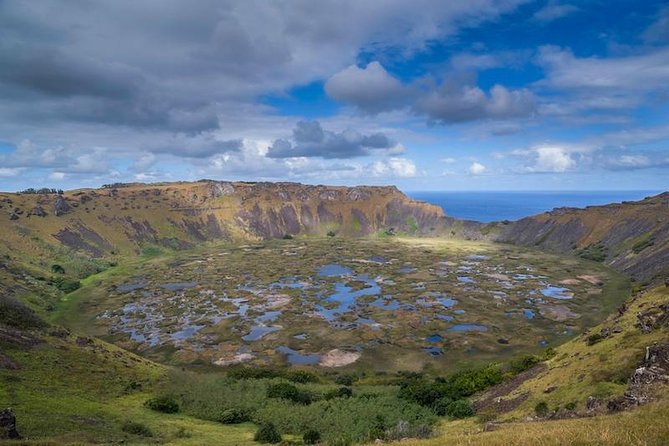
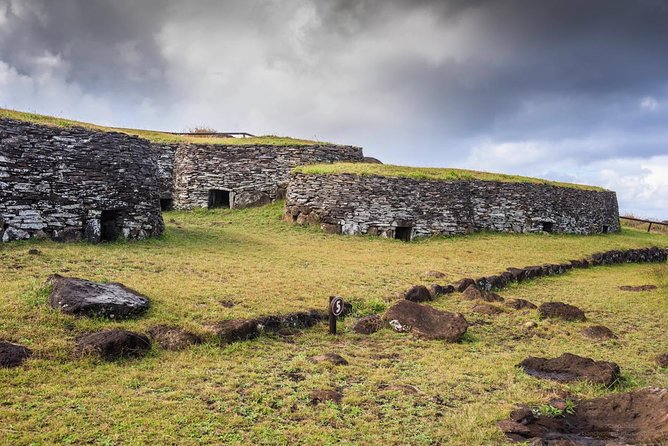
Orongo gets about an hour, and I would protect that time. The village sits along the edge of Rano Kau and is one of the most important archaeological and historical sites on the island. Its location is spectacular, but the ceremony associated with it is the real reason to pay attention.
Orongo was the setting for the Birdman ceremony, a major contest tied to status and leadership. The details are unusual enough to stay with you, and a good guide can explain the ceremony without reducing it to a dramatic legend. The visitor reception center includes a permanent interpretive exhibition, adding useful material beyond what you see outdoors.
One person found the information center a little rushed, which is a fair warning. The schedule covers a lot of ground, and Orongo is a place where you could easily use more time. If this subject matters most to you, tell your guide early in the day that you want enough time for both the village and the exhibition.
Access can also depend on conditions. One solo participant described being kept out of a site by park rangers because the wind was too strong, with Hugo offering to help arrange a return visit the following day. That shows why flexibility matters, but you should not assume every weather-related change will be handled in the same way. Park rules and conditions come first.
Ahu Akivi and the unusual inland moai
The final listed stop is Ahu Akivi, with about 30 minutes. Unlike most ceremonial platforms, it is not by the sea. Its seven restored moai face toward the setting sun and have an astronomical alignment that gives the site a different feel from Tongariki and Nau Nau.
This is a good final stop because it broadens your view of moai placement. You have already seen the quarry and major coastal platforms. Akivi shows that inland ceremonial sites also mattered and that the builders paid close attention to the sky.
Half an hour is enough for an explanation and photographs, but not for a slow, extended visit. If you are fascinated by astronomy, ask questions here. The private format gives you the best chance to explore that subject rather than simply hearing a standard speech.
Why the guides make or break the day
The most consistent praise goes to the guides, not simply to the monuments. That matters because Rapa Nui’s major sites are visually impressive but can feel repetitive if no one explains how they connect.
Hugo is repeatedly described as warm, passionate, and deeply connected to the island. One account notes that his great-grandmother is the island’s oldest living elder, though you should treat that as a personal family detail rather than a standard feature of every tour. Hugo has also been praised for making a solo woman feel safe and for explaining accepted facts alongside possible theories.
Sebastian receives similar praise for storytelling, historical detail, myth-busting, and photography. He also returned a portable phone charger left in his vehicle, personally delivering it to a hotel the next morning. That is a small practical kindness, but it says something useful about the level of care described by past customers.
Tokerau, Toki, Christina, Wai, Isobel, Thaise, Josi, and Toky are also singled out for patience, fluent English, local perspective, and enthusiasm. Isobel was described as a young local guide with broad experience and a good way of speaking to a family with adult children. Christina was praised for explaining possible interpretations rather than pretending every part of Rapa Nui’s past is settled.
Guide assignments can change, so you should not book on the assumption that one named person is guaranteed unless the company confirms it directly.
Is $263 per person a fair price?
At $263 per person, this is expensive compared with a basic shared excursion. Add the mandatory $100 National Park ticket, and the admission cost alone is significant. Optional lunch adds another $50 per person.
Still, the price comparison needs care. You are paying for a private vehicle, hotel transport, a professional guide, and a full route across several distant sites. You also avoid the limits of a large group, where questions are harder and explanations can get lost in wind or crowd noise.
I would call it good value for people who care about interpretation, comfort, and time. It is weaker value if you mainly want transport to the monuments and a few quick photographs. Less expensive local options may exist, but the supplied information does not allow a direct comparison of their credentials, vehicle quality, group size, or guiding.
The tour is recommended by 99 percent of customers and carries a 4.9 rating from 106 reviews, with one strong complaint focused on price. That split is useful. The service seems to satisfy people who want a carefully guided private day, but budget-conscious visitors may reasonably choose a shared tour or ask their hotel about alternatives.
Who should choose this tour?
I would recommend it most strongly to:
- Couples or families who want a day shaped around their own questions and pace
- Solo visitors who prefer private transport and personal attention
- Anyone with only one full day on Easter Island
- People who care about Rapa Nui culture, archaeology, and competing historical theories
- Visitors who want help with photographs at the major moai sites
- Anyone who finds large group tours tiring or difficult to hear
The route may feel busy if you want long, quiet periods at each place. Orongo can feel rushed, and Ahu Akivi gets only 30 minutes. You should also be comfortable with a full day in a vehicle and outdoors.
This activity is not valid for cruise ship passengers. It is intended for people staying at a hotel, with pickup and drop-off included.
What to confirm before leaving your hotel
The National Park ticket is mandatory and not included. It costs $100 per person, is valid for 10 days from first entry, and applies to all park sites.
Lunch is optional at $50 per person. Ask whether the meal is included in your chosen booking, where it will take place, and how much time is set aside for it.
I would also confirm the exact duration. The published figure is approximately six hours, but the six stops and driving distances make a longer day plausible, and detailed accounts describe a 9 a.m. to 5 p.m. schedule. Bring a raincoat, protect your phone from wind and weather, and wear shoes suited to outdoor archaeological sites.
Free cancellation is available up to 24 hours before the start time. Changes or cancellations made less than 24 hours in advance are not accepted for a refund.
Should you book the private Easter Island highlights tour?
Book it if you want to see the essential moai sites in one day and understand what you are seeing. The private setting, hotel transport, strong local guiding, and time for questions justify the cost for many people, especially on a once-in-a-lifetime visit.
Skip it if the price strains your budget or if you prefer to explore independently. The required park fee and optional lunch push the total higher, and the schedule may feel brisk at Orongo and Ahu Akivi.
For the best fit, contact Kava Kava Tours before booking to confirm the guide, start and finish time, lunch, and current National Park arrangements. If those details suit you, this is a practical and thoughtful way to meet Rapa Nui in a single, well-filled day.
FAQ
How much does the private Easter Island highlights tour cost?
The tour costs $263 per person. The mandatory National Park ticket is separate and costs $100 per person. Optional lunch costs $50 per person.
How long does the tour last?
The published duration is approximately six hours, with a 9 a.m. start. Some detailed descriptions of the day run from 9 a.m. to 5 p.m., so confirm the exact schedule before booking.
Which sites are included?
The route includes Rano Raraku, Ahu Tongariki, Anakena Beach, Rano Kau, Orongo, and Ahu Akivi.
Is the National Park ticket included?
No. The National Park ticket is mandatory, costs $100 per person, is valid for 10 days from first entry, and applies to all park sites.
Is lunch included?
Lunch is listed as optional at $50 per person. Confirm the meal arrangement when you book.
Does the tour include hotel transportation?
Yes. Hotel pickup and drop-off are included, along with transport by private vehicle.
Can cruise ship passengers join this tour?
No. The activity is not valid for cruise ship passengers.
Is this a private activity?
Yes. Only your own group participates, and the tour includes a professional guide and private transportation.
Just added around Easter Island
- Volcanic Refuges: Excursion to Underground Civilization★ 4.7 · 8 reviews
- Easter Island Ancestral Dinner and Show with Transport★ 4.5 · 2 reviews
- Volcanic Wonders and the Kingdom of the Birdman: Half Day★ 5.0 · 6 reviews
- Half Day Private Tour: Caves and Volcanic Refuges★ 4.0 · 14 reviews
- Tour to the Motus: Boat trip and snorkeling in Rapa Nui★ 5.0 · 8 reviews
- Birdman Ceremonial Route: Orongo, Ranu Kau Half-Day Tour★ 4.5 · 16 reviews
- Visit Rapa Nui in 4 days with 3 Tours and Accommodation included★ 4.0 · 2 reviews
- Private Tour: Tongariki Sunrise Experience★ 4.5 · 20 reviews
Easter Island Tours, compared.
Two days of Full Day Tour of Rapa Nui + Sunrise in Tongariki
Read our review →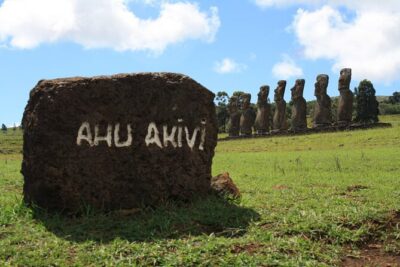
2-Day Private Tour Easter Island Highlights Complete Discovery
Read our review →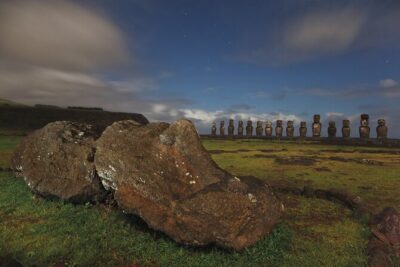
Private Full-Day Easter Island Highlights North and West
Read our review →Browse the lists this tour appears in