
Reviewed · EASTER ISLAND TOURS
From Hanga Roa: Rapa Nui Culture Sightseeing Tour
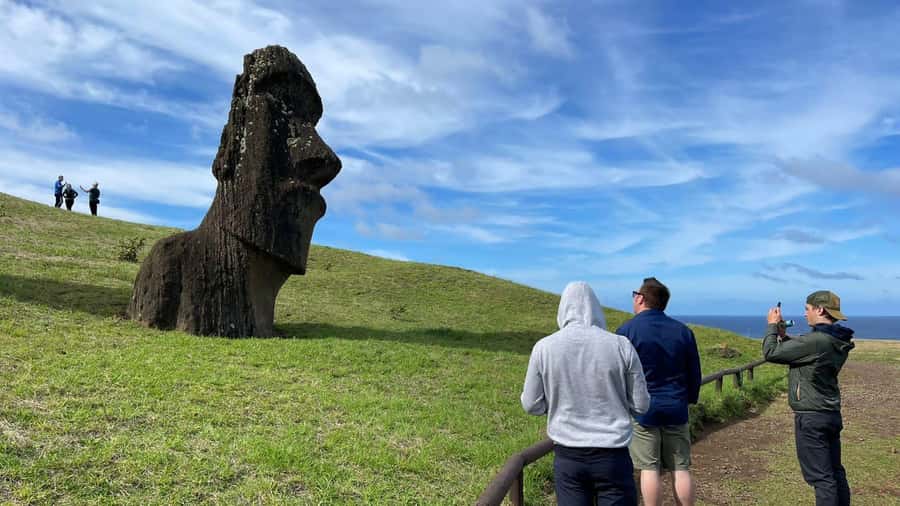
Moai, quarry, beach, all in one day. This $80 full-day outing gives you a practical way to see Rapa Nui’s major archaeological sites without arranging several separate trips. I especially like the native local guides, who add cultural context beyond the usual moai facts, and the comfortable transport with hotel pickup and drop-off.
The main tradeoff is pace. You visit six important places in about eight hours, so there is plenty of time for photographs and short walks, but not unlimited time at every stop. A slow lunch can also squeeze the final visit, so keep your meal moving if you want every minute at Anakena.
In This Review
- Key points to know before you book
- Why this is a smart first look at Rapa Nui
- Hanga Roa pickup and the ride east
- Vaihu and the first look at fallen moai
- Akahanga, legends, and a rougher sense of place
- Rano Raraku, where the moai began
- Ahu Tongariki and the island’s great postcard view
- Te Pito Kura and the magnetic stone
- Anakena Beach, the right ending to a long day
- What the $80 price really gives you
- Guide quality can shape the whole day
- Who will enjoy this day most
- Practical ways to get more from the route
- Should you book the Rapa Nui culture tour?
- FAQ
- How long does the tour last?
- Where does pickup take place?
- Which sites are included?
- Is lunch included?
- Is the National Park ticket included?
- What languages are available?
Key points to know before you book
- Six major sites in one day: Vaihu, Akahanga, Rano Raraku, Tongariki, Te Pito Kura, and Anakena cover the island’s best-known eastern and northern sights.
- Local voices matter: Guides such as Frank, Javiera, Hivi, Zoe, Enzo, and Jose have been praised for explaining Rapa Nui traditions and history in English and Spanish.
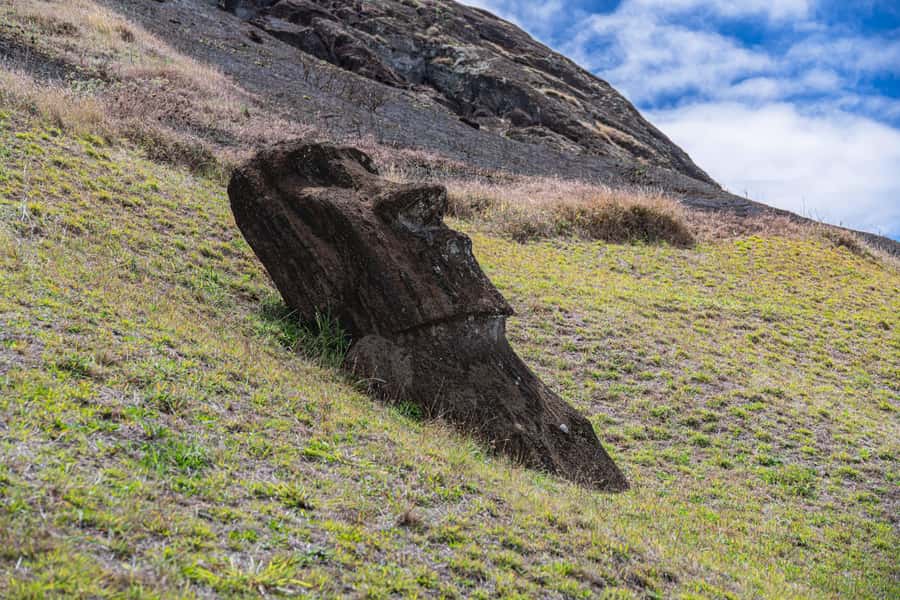
- Rano Raraku is the day’s high point: The moai quarry lets you see unfinished statues still attached to the volcanic rock.
- Anakena adds welcome breathing room: You get about 90 minutes of free time at the palm-fringed beach, with the option to relax, take photographs, or swim.
- Bring extra money for lunch and park admission: Neither the National Park ticket nor lunch is included in the $80 price.
- Expect a full but manageable day: Hotel pickup, transport, and return to Hanga Roa are included, with free cancellation up to 24 hours before departure.
Why this is a smart first look at Rapa Nui
Rapa Nui can feel difficult to organize on your own. The island is remote, the archaeological sites are spread out, and the meaning of each ahu and moai is much clearer when someone explains what you are seeing. This trip solves the basic problem neatly: you get a vehicle, a local guide, and a route that links the major sights in a single day.
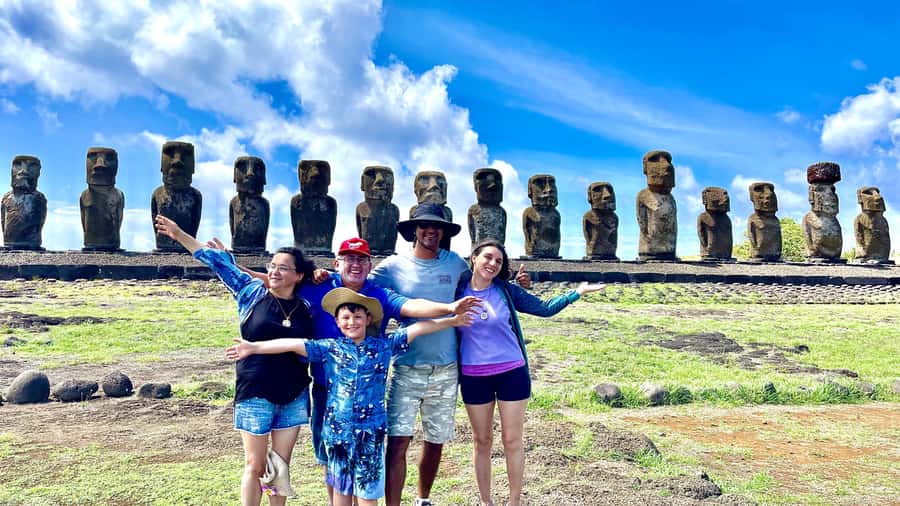
I like the balance between famous monuments and places with a quieter mood. Tongariki gives you the postcard view of fifteen restored moai, while Rano Raraku shows the working side of the statue tradition. Anakena then changes the rhythm completely, giving you time beside the sea rather than another series of ruins.
The 4.6 rating from 307 bookings reflects a strong overall experience, though the score is not a promise that every guide will offer the same depth. Most praise centers on friendly guides, clear explanations, prompt pickup, and the number of major sites covered. One sharply negative account described poor communication and an insulting comment from a guide, while several four-star accounts felt that some minor stops took time away from the most important places. Those concerns are worth keeping in mind, even though the broader pattern is very positive.
More Rapa Nui trips and moai walks:
- From Hanga Roa: Easter Island Highlights 2-Day Tour
★ 4.3 · 205 reviews - Full Day Tour in Rapa Nui
★ 4.5 · 122 reviews - 2-Day Private Tour Easter Island Highlights Complete Discovery
★ 5.0 · 110 reviews
Hanga Roa pickup and the ride east
Your day begins with pickup in Hanga Roa. You are asked to wait in your hotel lobby 10 minutes before the scheduled time, and several accounts specifically praise punctual pickup and good communication.
The route includes a bus or coach ride of about 45 minutes. That matters on Rapa Nui, where the sites are not clustered around town. Rather than spending your day finding transport and checking directions, you can watch the scenery and listen to the guide set the stage for the island’s people, beliefs, and monuments.
The vehicle has been described as comfortable, including a good-quality minivan on one outing. Exact group size can vary, so you should not assume a private tour. One booking had only four people, while other departures may be larger. The small-group experience is especially useful at archaeological sites, where a good guide can answer questions without making the day feel like a lecture.
English and Spanish guiding are available. Several guides have been praised for handling both languages, and Frank was also noted for speaking Rapa Nui. The guide assigned to you may differ, but the strongest part of the experience is the chance to hear local explanations rather than only memorized dates.
Vaihu and the first look at fallen moai
Vaihu is an early stop on the route, with about 45 minutes for a guided walk. You see moai scattered around an ahu, or ceremonial platform, in a setting that immediately shows how much of Rapa Nui remains archaeological rather than polished for sightseeing.
This is not necessarily the most dramatic stop of the day. One person considered the first two locations less impressive than what followed, and other comments suggest that time could be shifted toward the most important moai sites. Still, Vaihu helps you understand the scale of the island’s ceremonial tradition and gives your guide a natural place to discuss how the statues were arranged and what happened when the ahu were later disturbed.
Use this first visit to get comfortable with the ground conditions and the guide’s pace. You will be walking, stopping for photographs, and listening outdoors. A hat, sunscreen, water, and sturdy shoes will make the whole day easier.
Akahanga, legends, and a rougher sense of place
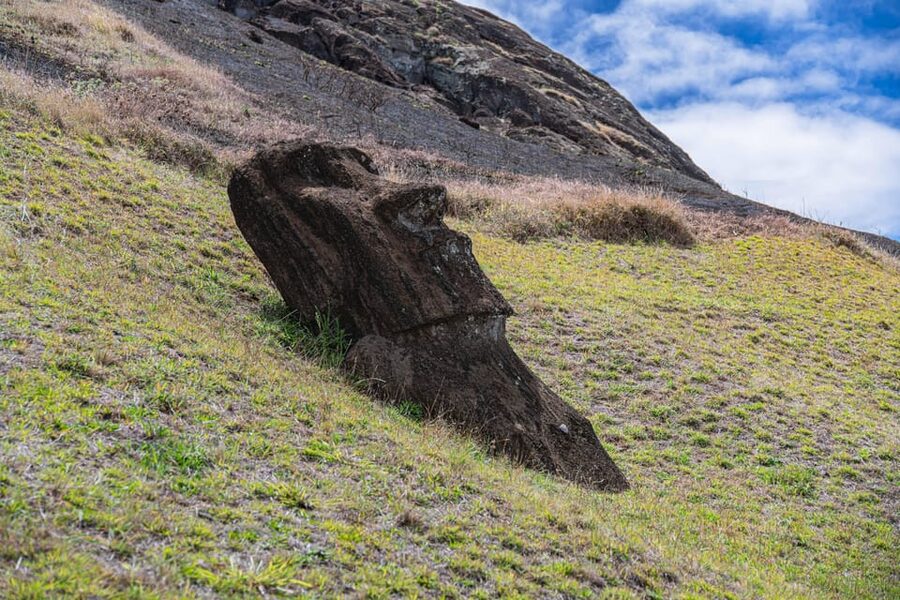
At Ahu Akahanga, you have another 45-minute guided walk. The site is linked with stories and mystery, and its rough condition gives you a different impression from the carefully restored line at Tongariki.
I find the value here less about checking off another famous statue and more about seeing how varied the archaeological sites can be. Not every moai is upright, complete, or framed for a perfect photograph. Akahanga gives you a clearer sense that Rapa Nui is a living archaeological area, with ruins, fallen figures, and local stories spread across open ground.
If you want a day focused only on the most instantly recognizable views, this may feel like a modest stop. If you want to understand how the monuments fit into the island’s wider culture, the explanation here adds useful background. Pay attention to how your guide connects the physical remains with Rapa Nui traditions, since that local context is one of the main reasons to choose a guided day rather than simply hire transport.
Still Chile, but an entirely different landscape:
- Private Full-Day Easter Island Highlights North and West
★ 5.0 · 84 reviews - From Hanga Roa: Journey from Orongo to Ana Te Pahu
★ 4.3 · 75 reviews - Journey of the Ancestors: Tongariki, Rano Raraku & Anakena Beach
★ 4.5 · 70 reviews - Full Day Private Tour: Factory of the Moai the stone giants
★ 4.5 · 63 reviews
Rano Raraku, where the moai began
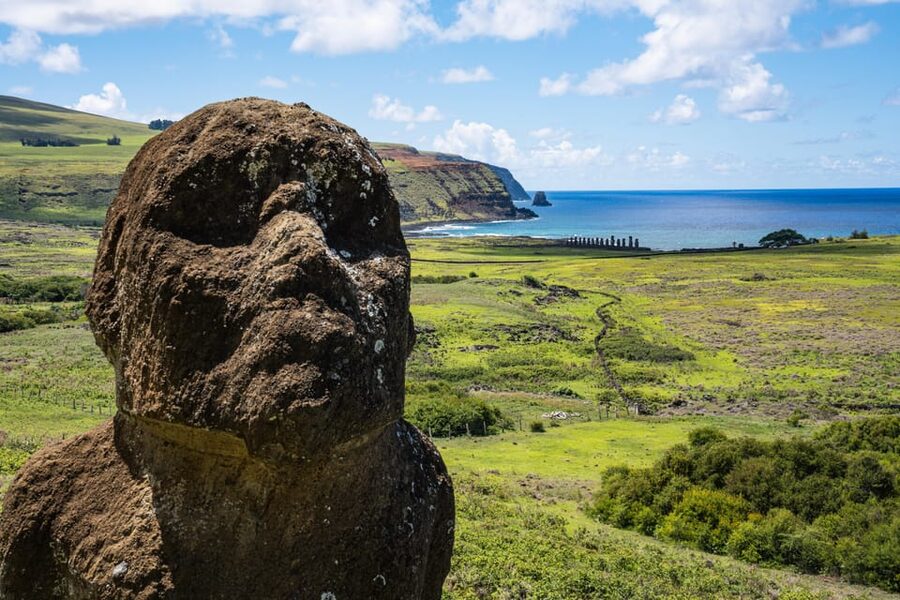
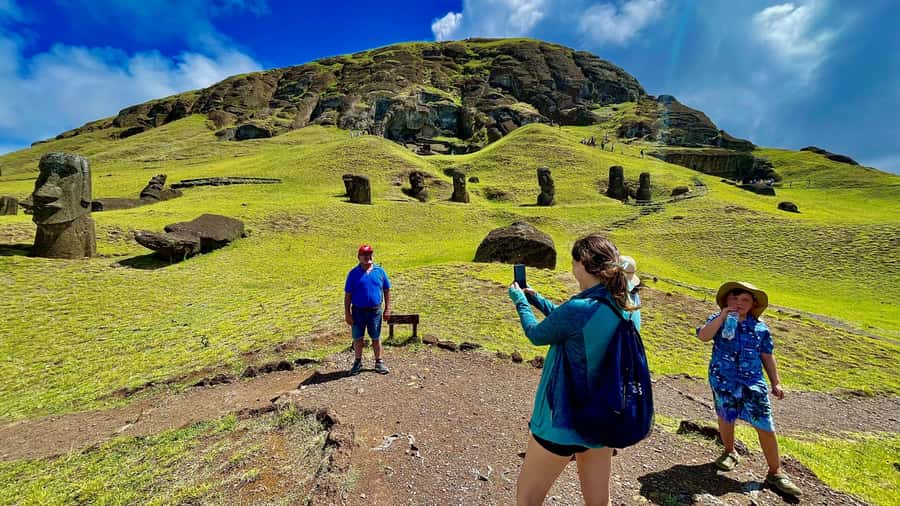
Rano Raraku receives about an hour, and this is where the day usually becomes much more compelling. The volcanic quarry is the place where the moai were carved, and unfinished figures remain visible in the rock.
You can see statues emerging from the slope at different stages of completion. Some appear almost ready to move, while others remain partly attached to the stone. The site turns the moai from mysterious objects into works in progress. You begin to see the quarry as a workshop, not just a scenic stop.
This is also one of the places where a guide makes a major difference. The shape of an unfinished statue, the reason it was left behind, and the process of carving all raise questions that are hard to answer from a distance. Guides such as Frank, Enzo, Hivi, and Zoe have received particular praise for explaining the island’s past in an engaging way.
Wear shoes you can walk in comfortably. You may spend a full hour moving around the quarry area, and the ground can make a casual beach sandal less useful. Keep your camera ready, but do not rush from statue to statue. The best part of Rano Raraku is noticing the small details in the stone and the way the unfinished figures relate to the hillside.
Ahu Tongariki and the island’s great postcard view
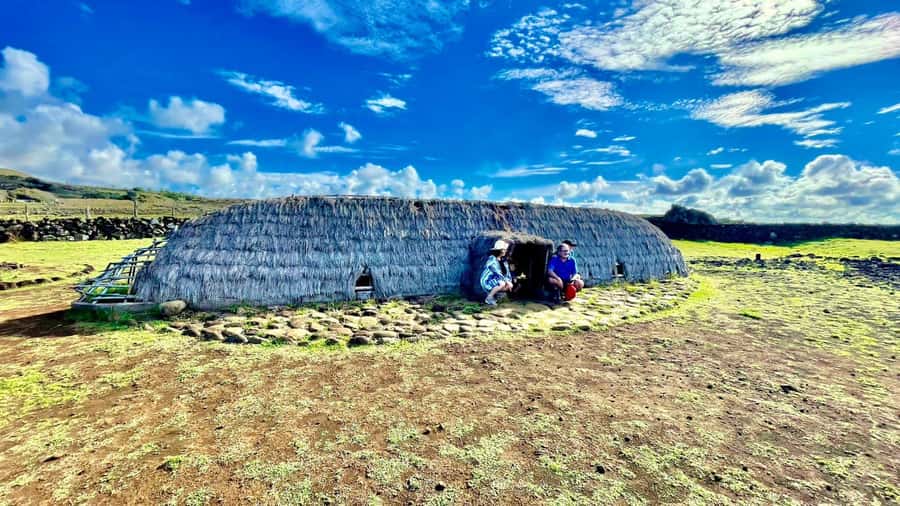
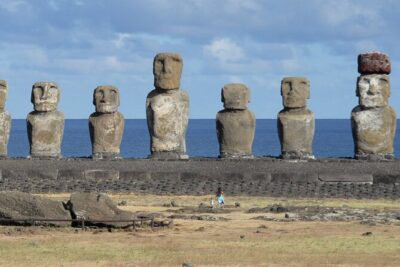
Ahu Tongariki gets about 45 minutes, enough to take in the famous row of fifteen standing moai and photograph the platform from several angles. This is the visual centerpiece for many people, and it deserves its reputation.
The line of statues shows the scale of the engineering effort involved in moving and raising the moai. At the same time, the restored platform makes a useful contrast with Akahanga and Vaihu. Here, you see an ordered ceremonial arrangement. At the earlier sites, you saw more broken and scattered remains.
Forty-five minutes is enough for the main view, but it may feel short if you want to study every figure or take extensive photographs. This is one reason some people wish the day spent less time at smaller stops. Your guide’s commentary can help you focus on what makes Tongariki distinct, rather than using the whole visit for repeated group photographs.
If you are planning a photo of the complete platform, listen first, then take your own time. The guide’s explanation is often what separates a memorable visit from a quick stop beside a famous row of statues.
Te Pito Kura and the magnetic stone
Te Pito Kura comes next, with roughly 45 minutes for a guided visit and walk. The site is associated with a large, smooth stone believed by local tradition to have magnetic or spiritual power.
This stop is smaller and more symbolic than Tongariki or Rano Raraku. You are not coming here for the largest collection of moai. You are coming to hear how stones, land, and spiritual meaning fit into Rapa Nui culture.
Some people may find Te Pito Kura less visually powerful than the quarry or the great platform. I would treat it as a cultural pause rather than a headline attraction. The guide’s explanation matters particularly here, since the significance is not obvious from a photograph. If your guide uses the time well, the stop helps broaden your view beyond the moai themselves.
Anakena Beach, the right ending to a long day
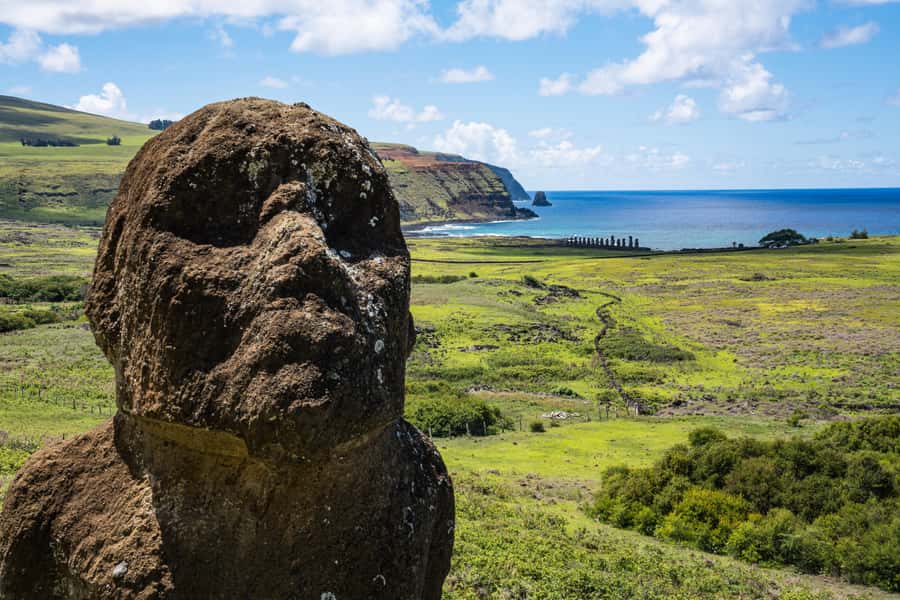
The final major stop is Anakena, where you get about 90 minutes of free time. After hours of archaeological sites and walking, this is a welcome change of pace.
Anakena combines a beach, palm trees, clear blue water, and ceremonial remains. You can relax, take photographs, or swim if conditions suit you. Several people specifically advise bringing swim shorts and a towel, calling the beach one of the finest parts of the day.
The free time is valuable because it gives you control. You are not required to listen to a continuous explanation or move immediately to another monument. You can reflect on the sites you have seen, enjoy the coast, or simply sit down after a busy route.
Lunch may take place during the day, and it is not included. A restaurant near the moai quarry has been described as serving good food at reasonable prices, though other accounts found lunch expensive, which is common on Rapa Nui. One person reported a meal lasting so long that the final stop was missed. I would ask your guide about the timing, avoid a leisurely sit-down meal if the schedule is tight, and carry a snack so hunger does not dictate your day.
What the $80 price really gives you
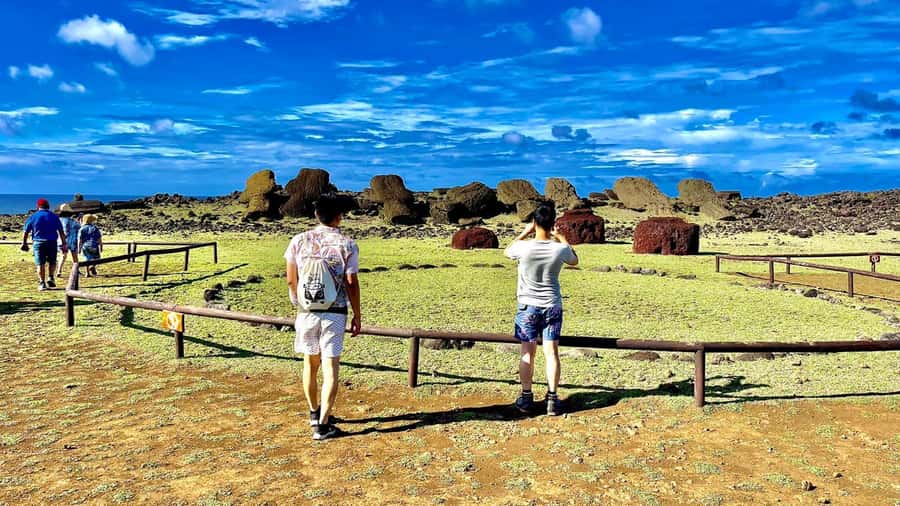
At $80 per person, this is good value if you have only one day to see Rapa Nui’s main sights. The price includes hotel pickup and return in Hanga Roa, transportation, and a local guide. That saves you the effort of arranging a vehicle and makes it easier to connect distant sites in one route.
The value is strongest for first-time visitors. You see the quarry, the largest restored ahu, the famous beach, and several places that add cultural context. If you tried to cover the same ground independently, you would still need to pay for transport and the National Park ticket, then supply your own explanations.
Remember to budget separately for the National Park ticket and lunch. Neither is part of the advertised price. You may also want money for drinks or snacks, especially because the day is long and the meal timing can vary.
This is not the right choice if you want a slow, private photographic tour with unlimited time at each site. The route covers a lot, and the repeated walks on and off the vehicle can become tiring. It is a practical sightseeing day, not a custom research visit.
Guide quality can shape the whole day
The most praised part of this experience is the guide. Many people describe their guide as friendly, patient, clear, and deeply familiar with local traditions. Javiera received warm praise for her respectful manner, while Hivi was singled out for handling every request with care. Frank, also called Franco by one person, was repeatedly praised for good English and strong explanations of Rapa Nui culture.
Zoe was described as making the entire visit worthwhile, and Enzo received praise for patience and thoughtful answers. These comments point to a real strength: a good local guide can connect the moai to daily life, customs, and oral tradition rather than reducing the island to a list of photo stops.
The experience can vary by guide. One account described surface-level information, skipped an important cultural event, incorrect details, little commentary during the ride, and rude treatment at the end. That is a serious warning, even if it appears unusual beside the many positive accounts. If your guide is not explaining the sites, ask direct questions early. You have several hours together, and clear questions may help set the tone.
Who will enjoy this day most
I would choose this tour if you want to see the essential eastern and northern sites without spending time on transport planning. It suits first-time visitors, history fans, photographers who want the major viewpoints, and anyone staying in Hanga Roa for a short visit.
It also works well if you want local interpretation in English or Spanish. The strongest accounts describe guides who explain not just what you are looking at, but why it matters.
You should think twice if you dislike fixed schedules, outdoor walking, or long sightseeing days. The route includes many stops, and the main sites compete for your attention. A private arrangement would give you more control, but likely at a different price.
The activity is marked wheelchair accessible, though the listed stops include guided walks. If access is important to you, contact the provider before booking so you can confirm how each archaeological area will work for your needs.
Practical ways to get more from the route
- Arrive in your hotel lobby 10 minutes early for pickup.
- Bring water, sun protection, comfortable walking shoes, and a towel.
- Pack swimwear for Anakena, even if you are unsure about swimming.
- Keep lunch efficient, since a long restaurant stop may cut into the final beach visit.
- Bring a camera with spare battery power. Tongariki and Rano Raraku offer the day’s strongest photo opportunities.
- Ask your guide about local traditions, not just statue construction. The cultural explanations are a central part of the experience.
- Reserve only when your wider plans are reasonably clear, but note that cancellation is free up to 24 hours in advance and payment can be delayed until later.
Should you book the Rapa Nui culture tour?
I would book this tour if you have one full day and want the best-known moai sites handled in a sensible order. The combination of Rano Raraku, Tongariki, Te Pito Kura, and Anakena gives you a strong picture of Rapa Nui, while Vaihu and Akahanga add quieter archaeological stops.
The main compromise is time. You will see a lot, but you will not linger everywhere. Keep lunch short, bring beach gear, and tell your guide what matters most to you. If the assigned guide is as engaging as Frank, Javiera, Hivi, Zoe, or Enzo, the explanations can turn a busy sightseeing day into a meaningful introduction to Rapa Nui culture.
FAQ
How long does the tour last?
The tour lasts 8 hours and returns to Hanga Roa after visiting six main sites.
Where does pickup take place?
Pickup and drop-off are provided at hotels in Hanga Roa. You should wait in your hotel lobby 10 minutes before the scheduled pickup.
Which sites are included?
The route includes Vaihu, Ahu Akahanga, Rano Raraku, Ahu Tongariki, Ahu Te Pito Kura, and Anakena.
Is lunch included?
No. Lunch is not included, and you should bring extra money for the meal.
Is the National Park ticket included?
No. The National Park ticket must be purchased separately.
What languages are available?
Live guiding is available in English and Spanish.
Just added around Hanga Roa
- Volcanic Refuges: Excursion to Underground Civilization★ 4.7 · 8 reviews
- Easter Island Ancestral Dinner and Show with Transport★ 4.5 · 2 reviews
- Volcanic Wonders and the Kingdom of the Birdman: Half Day★ 5.0 · 6 reviews
- Half Day Private Tour: Caves and Volcanic Refuges★ 4.0 · 14 reviews
- Tour to the Motus: Boat trip and snorkeling in Rapa Nui★ 5.0 · 8 reviews
- Birdman Ceremonial Route: Orongo, Ranu Kau Half-Day Tour★ 4.5 · 16 reviews
- Visit Rapa Nui in 4 days with 3 Tours and Accommodation included★ 4.0 · 2 reviews
- Private Tour: Tongariki Sunrise Experience★ 4.5 · 20 reviews
Easter Island Tours, compared.
Two days of Full Day Tour of Rapa Nui + Sunrise in Tongariki
Read our review →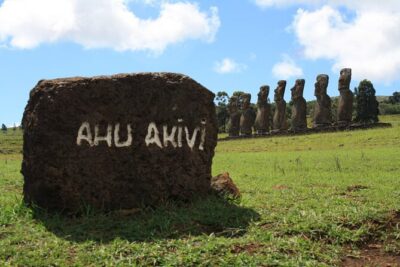
2-Day Private Tour Easter Island Highlights Complete Discovery
Read our review →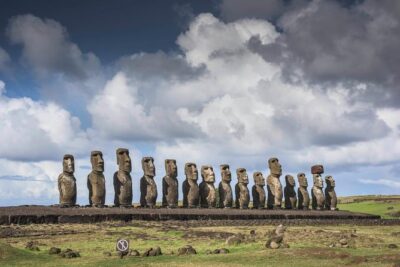
Private Tour: Full Day Easter Island Highlights
Read our review →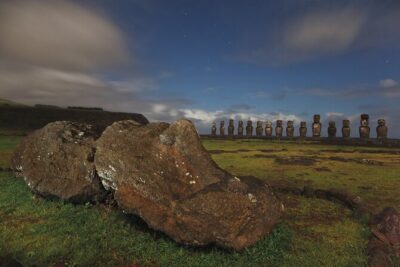
Private Full-Day Easter Island Highlights North and West
Read our review →Browse the lists this tour appears in