
Reviewed · EASTER ISLAND TOURS
From Hanga Roa: Easter Island Highlights 2-Day Tour
The moai tell only part of the story. This two-day trip takes you from coastal ahu platforms to volcanic quarries, cliff-top villages, caves, and a palm-fringed beach, giving you a useful first look at Rapa Nui beyond the famous postcard views.
I especially like the native guides, who explain the island through archaeology, family tradition, and daily life. I also like the small group format, capped at 14 people, plus hotel pickup, a minibus, lanterns for the caves, and rain capes. The main drawback is that the two days may not feel equally strong: Day One is fuller and easier to enjoy, while Day Two can feel rushed or slow if much of the commentary is repeated in Spanish.
In This Review
- Key points to know before booking
- Why two days works well on Rapa Nui
- Day One: from Vaihu to the palm trees at Anakena
- Vaihu and Akahanga: fallen statues and quiet coast
- Rano Raraku: where the moai began
- Tongariki: fifteen moai in one grand view
- Te Pito Kura: sacred meaning and unfinished questions
- Anakena: beach time after archaeology
- Day Two: crater views, stone walls, and island caves
- Orongo at Rano Kau: the best cliff-top setting
- Vinapu: precise masonry and cultural connections
- Puna Pau: the red stone finishing touch
- Ana Te Pahu: a cool change underground
- Ahu Akivi: seven figures facing the sea
- The guides are the heart of the experience
- Is $170 a fair price?
- Practical advice for a smoother two days
- Who should book this Rapa Nui tour?
- FAQ
- How long does the tour last?
- How much does the tour cost?
- Does the tour include hotel pickup?
- What languages are available?
- How large is the group?
- Are meals included?
- Are entrance fees included?
- What equipment is provided for the caves?
- Are drones allowed?
- Can I cancel the booking?
Key points to know before booking
- Day One covers the island’s essential moai sites, including Rano Raraku and the 15 statues at Tongariki.
- Local guides add meaning that you cannot get from photographs alone, with guides such as Jeremías, Javier’s Hucke, Enerike Hey, Zoe, Roberto, Simon, and Franko praised for their warmth and cultural insight.
- The bilingual format can affect the pace, especially if you speak only English or only Spanish.
- Lunch is not included, and the second day may have no meal stop, so pack substantial snacks.
- The $170 price is strong value if this is your first visit and you want guided access to the island’s major archaeological sites.
- You receive hotel pickup, transport, cave lanterns, and rain capes, but site entrance fees are extra.
Why two days works well on Rapa Nui
Rapa Nui is small enough to cross by road, yet its important sites are spread around the coast and interior. A rental motorcycle or car gives you freedom, but it does not automatically give you the meaning behind each ahu, quarry, or fallen moai.
This tour fills that gap. You spend two days moving between major sites with a guide who can explain the statue-making process, competing ideas about the moai, Rapa Nui traditions, and present-day island life. You are not simply collecting viewpoints. You are learning why the sites were built and how they fit together.
The group limit of 14 is helpful. You can hear the guide without fighting a crowd, and the format allows time for questions. Some departures have been much smaller, with only five people on the first day and a private guide on the second. Group size can vary, so you should expect a small-group experience rather than a private tour every time.
Hotel pickup keeps the morning simple. You do not need to arrange transport to a meeting point, and you ride in a spacious minibus between stops. That matters on a full day when the sun, wind, and uneven ground begin to wear you down.
More Rapa Nui trips and moai walks:
- From Hanga Roa: Rapa Nui Culture Sightseeing Tour
★ 4.6 · 307 reviews - Full Day Tour in Rapa Nui
★ 4.5 · 122 reviews - 2-Day Private Tour Easter Island Highlights Complete Discovery
★ 5.0 · 110 reviews
Day One: from Vaihu to the palm trees at Anakena
The first day follows the southern and eastern reaches of the island before ending at Anakena. It is the stronger day for first-time visitors because it gathers several of Rapa Nui’s best-known sites into one well-paced route.
Vaihu and Akahanga: fallen statues and quiet coast
At Vaihu, you begin with moai set against the Pacific. The scene is powerful partly because the statues are not presented as polished museum pieces. Their setting is open, weathered, and tied to the coast and the ahu platform beneath them.
Your guide can help you read what you are seeing: the relationship between the statues, the ceremonial platform, the surrounding settlement, and the forces that changed the site over time. This is where a local guide earns the cost of the tour. Without context, Vaihu can be a quick photo stop. With explanation, it becomes an introduction to how Rapa Nui communities organized sacred places.
Akahanga offers a different mood. The toppled moai lie in solemn disorder, and the site feels less finished than Tongariki. That is part of its value. You see evidence of change and collapse rather than only restored monuments.
I would pay close attention here instead of rushing toward the larger statues later in the day. The fallen figures make it easier to understand that Rapa Nui is not one carefully preserved monument, but a collection of places shaped by centuries of use, upheaval, weather, and restoration.
Rano Raraku: where the moai began
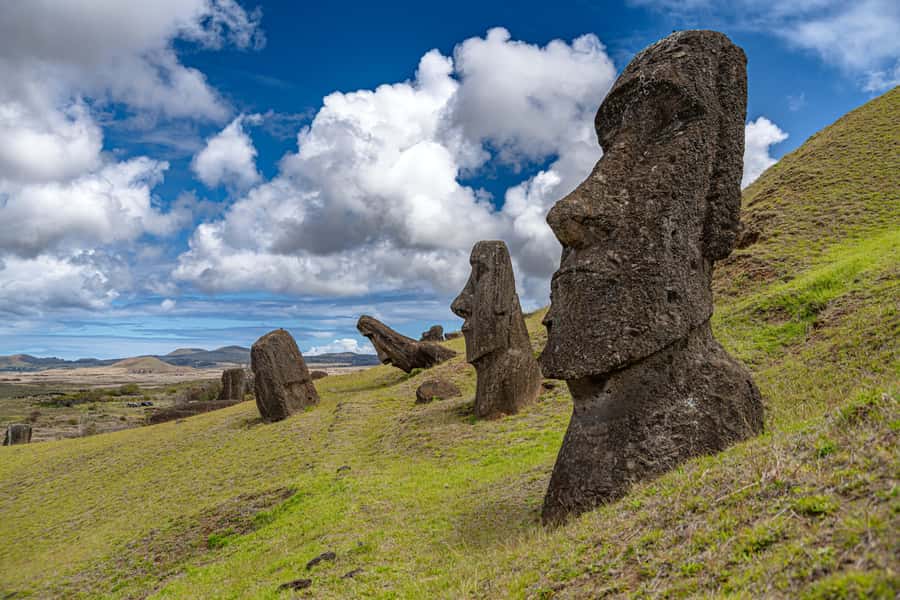
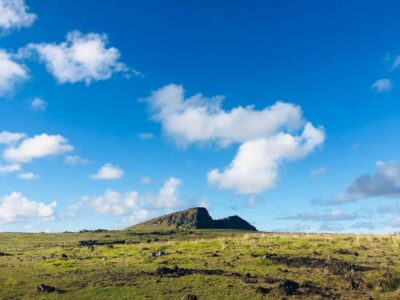
Rano Raraku is the emotional center of Day One. This volcanic quarry supplied the stone for the moai, and the unfinished figures around the slopes show how the work progressed from rock face to statue.
The quarry gives you the clearest sense of scale. You see statues that were completed, partly carved, or left attached to the rock. The unfinished figures raise practical questions that photographs cannot answer easily: how were they shaped, how were they moved, and why were some abandoned?
Your guide will explain the main theories and the cultural meaning behind the statues. Jeremías received especially strong praise for explaining moai theories, island life, and Rapa Nui culture in clear detail. Other guides, including Enerike Hey and Zoe, have also been praised for treating the subject with personal pride rather than delivering a dry recital of dates.
Plan for direct sun here. One useful tip is to carry water, a hat, and strong sun protection. The route involves walking outdoors, and shade may be limited.
Rano Raraku is also where lunch timing can become awkward. One departure stopped at the quarry café, but the café was busy, so the group continued and ate later at Anakena. Lunch is not part of the $170 price, so keep snacks with you even if the guide points out places to eat.
A few more Hanga Roa trips worth comparing side by side
- Two days of Full Day Tour of Rapa Nui + Sunrise in Tongariki
★ 4.8 · 55 reviews - 2 Days Highlights Tour in Easter Island Moai and Nature
★ 4.0 · 55 reviews - 2 Day Private Tour: Easter Island’s Cultural Heritage
★ 5.0 · 40 reviews - 2 Day Small Group Tour in Moai Monuments and Historic Pathways
★ 5.0 · 22 reviews
Tongariki: fifteen moai in one grand view
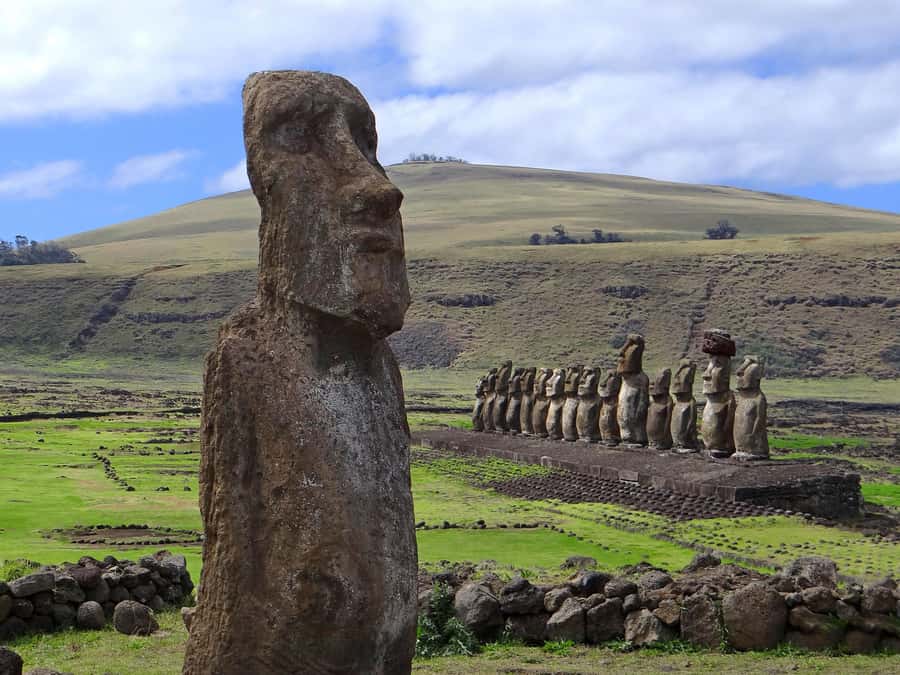
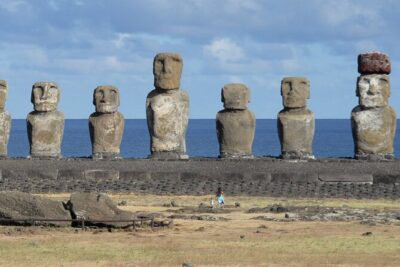
Tongariki is the visual high point of the first day. Fifteen moai line the great platform, creating one of the most memorable views on Rapa Nui.
The scale is hard to appreciate until you are standing in front of the platform. The statues are similar enough to form a single powerful group, yet each has its own stance, shape, and weathering. Your guide can connect Tongariki to the wider story of moai construction and ceremonial life.
This is a good place to listen first and photograph second. The platform, the open ground, and the volcanic hills behind it make a strong composition, but the explanation helps you see more than a row of stone figures.
The site can also show why a guide improves the visit. A short stop without context might give you an impressive photograph. A guided stop can explain the platform, the statue arrangement, and the cultural ideas that shaped it.
Te Pito Kura: sacred meaning and unfinished questions
Te Pito Kura adds a more symbolic stop to the day. It is associated with local legends and gives the guide room to discuss sacred ideas rather than only construction techniques.
This part of the tour may feel quieter after Tongariki. That is not a weakness. The variety helps prevent the day from becoming a parade of similar statue platforms. You move from a large restored ahu to a site where story, belief, and place carry more of the experience.
Your guide’s storytelling style matters here. Roberto has been praised for adding songs at different sites, while Zoe has explained Rapa Nui traditions through both historical information and personal experience. Those touches can make a stop like Te Pito Kura feel less abstract.
Anakena: beach time after archaeology
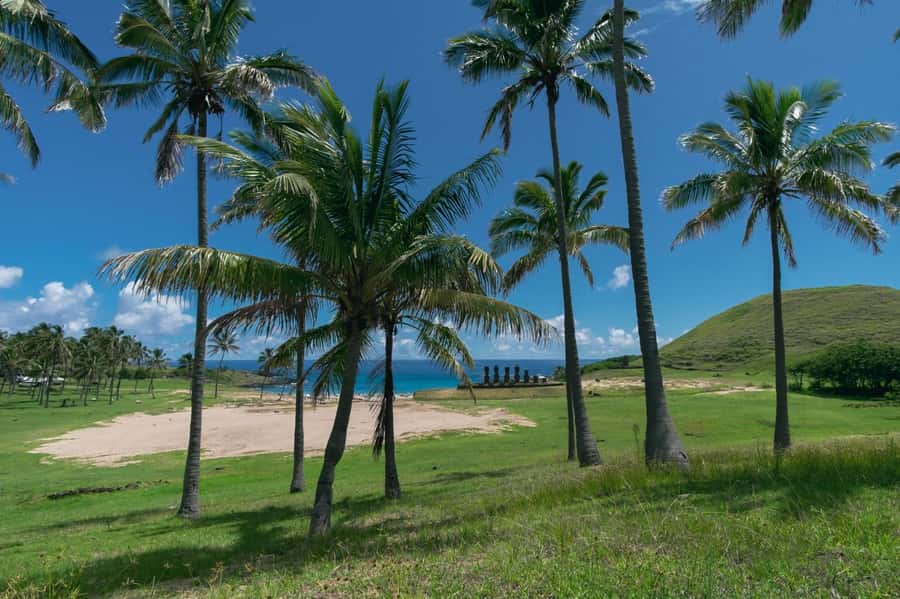
The day ends at Anakena, where palm trees and sand replace volcanic stone. After hours of archaeological sites, the beach offers a welcome change of pace.
You may have about an hour here, depending on the day’s timing. This is often the best chance to relax, eat, and let the morning’s information settle. One guide even dropped participants at Ahu Tahai afterward so they could catch the sunset, although you should not assume that extra stop will always be available.
Anakena is also the practical answer to the lunch problem. Since the group may eat late, bring food to avoid spending the last part of the day hungry. A full day can run from roughly 9:30 in the morning until 6 in the evening, so a small breakfast alone will not carry you comfortably.
Day Two: crater views, stone walls, and island caves
The second day covers a different set of sites and adds more variety. It can feel less consistent than Day One because the schedule may be shorter, the group larger, and the bilingual commentary slower.
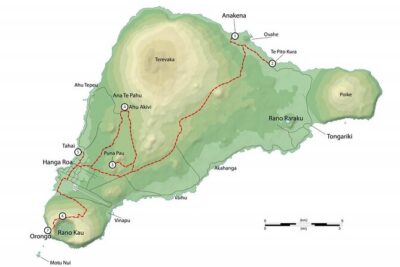
The listed route includes Orongo, Vinapu, Puna Pau, Ana Te Pahu, and Ahu Akivi. Review the exact pickup time when booking, since starting times depend on availability and the route may finish around 3:00 in the afternoon.
Orongo at Rano Kau: the best cliff-top setting
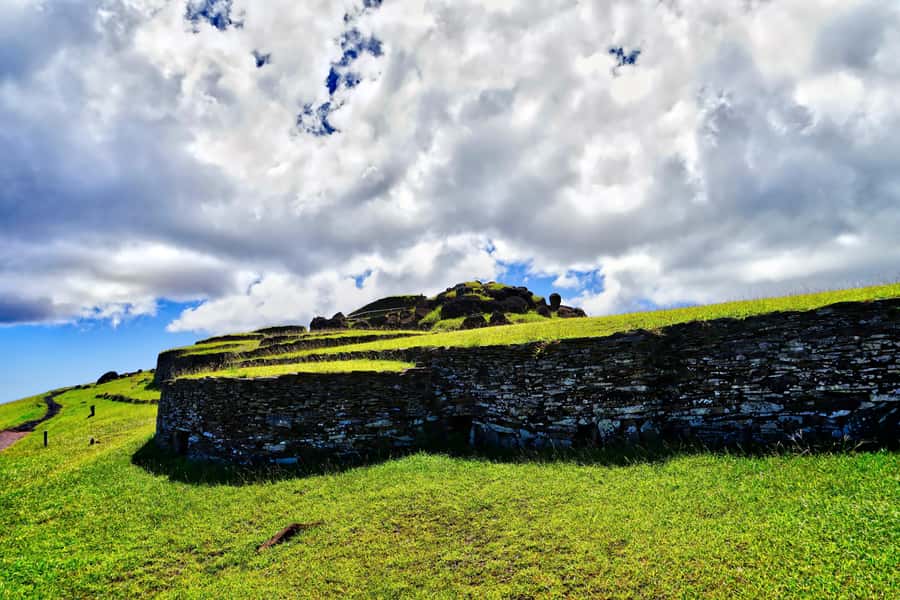
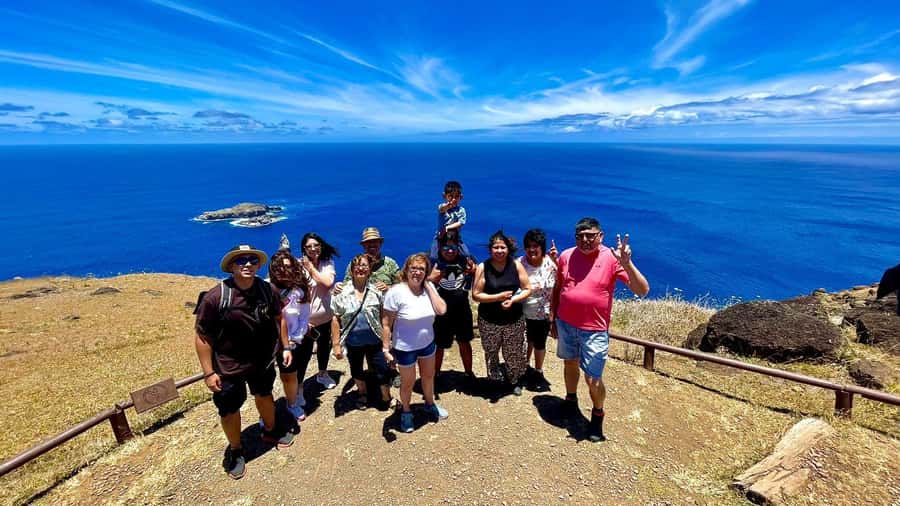
Orongo sits high above the cliffs of Rano Kau. The crater views make this one of the most dramatic stops of the two days, and even a tired group tends to perk up here.
The village connects the physical setting to Rapa Nui ceremony and belief. From the rim, you look across the broad volcanic crater and out toward the sea, gaining a sense of why this location mattered.
One useful point from the tour experience is that Orongo may be the most satisfying stop on Day Two. If the schedule feels rushed elsewhere, this is the place where you should slow down, listen, and take in the view.
Vinapu: precise masonry and cultural connections
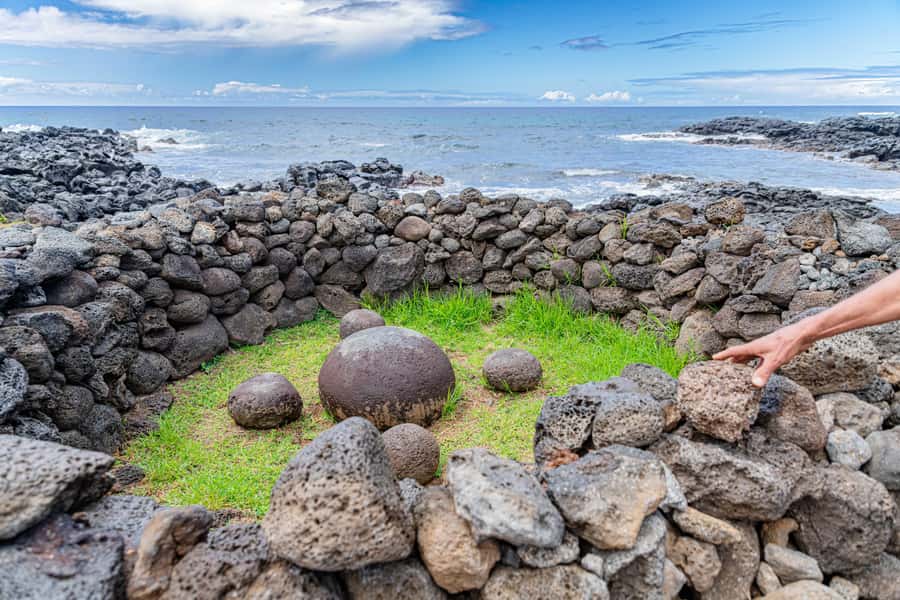
Vinapu is known for carefully fitted stonework. The walls invite comparisons with South American masonry, and your guide can explain why those similarities have attracted attention.
This stop is valuable because it broadens the story beyond moai. Rapa Nui achievement was not limited to carving statues. Stone construction, ceremonial design, and the handling of heavy materials all reveal technical skill.
Do not expect a long, leisurely stop at every location on Day Two. If the guide must repeat the explanation in two languages, the time available for walking and questions can shrink. English and Spanish speakers share the vehicle, and some departures have been roughly half English and half Spanish. If you speak only one language, ask early how the commentary will be divided.
Puna Pau: the red stone finishing touch
Puna Pau is a red scoria quarry. It supplied the topknots placed on some moai, adding an important detail to the statue story.
The visit helps you understand that the statues and their headpieces came from different materials and places. The moai were not a single block of stone with every feature carved from the same quarry.
This is a relatively focused stop, but it is worth keeping in the itinerary. Without Puna Pau, you can leave Rapa Nui thinking only about the bodies of the moai. The red scoria explains one more part of their visual identity and construction.
Ana Te Pahu: a cool change underground
Ana Te Pahu introduces the island’s cave network. You receive a personal lantern, which is included in the tour, and use it to explore dark chambers and look for ancient petroglyphs.
The caves offer a strong contrast with the exposed coastal sites. After hours in direct sun, the cooler, enclosed setting can feel refreshing. It also gives your guide an opportunity to discuss how caves related to shelter, ceremony, and spiritual life.
Bring practical footwear and take care with your footing. The tour is wheelchair accessible, but the exact cave experience may still depend on the conditions and route used that day. If mobility is a concern, ask the provider how the cave portion is handled before booking.
Rain can change the mood quickly. Rain capes are supplied, and Zoe once rearranged the route during bad weather so the group could continue without missing key sites. That kind of flexibility is useful on an island where conditions can shift during the day.
Ahu Akivi: seven figures facing the sea
Ahu Akivi closes the main route with seven moai facing toward the ocean. Their placement is unusual enough to prompt questions, and the site gives your guide another chance to explain how Ahu Akivi differs from coastal platforms.
The stop works well as a final lesson. By this point, you have seen a quarry, restored and fallen statues, a ceremonial village, stone walls, and caves. Ahu Akivi helps tie those pieces together while leaving you with one more puzzle about the moai and their orientation.
The guides are the heart of the experience
The best reason to choose this tour is not the minibus. It is the guide standing beside the stone.
The strongest praise has gone to guides who combine facts with cultural connection. Jeremías was singled out for clear explanations of Rapa Nui life and different theories about the moai. Javier’s Hucke was praised for patience and for translating carefully between English and Spanish. Enerike Hey brought visible pride and affection for the island’s past.
Zoe offers another useful example. When rain disrupted the plan, she changed the order of the stops and used caves away from the usual tourist path. Her approach connected archaeology with family tradition and personal experience.
You may also meet guides such as Roberto, Simon, or Franko. Roberto is remembered for songs and ukulele, while Simon went beyond the basic route by helping a group reach Ahu Tahai for sunset. These details cannot be guaranteed, but they show the personal character that can make the tour special.
There is one clear limitation. If the group includes English and Spanish speakers, the guide may repeat every explanation. That can make Day Two feel long, particularly if you understand only one language. It is not a problem for bilingual participants, but it is worth considering when comparing this with a private or single-language tour.
Is $170 a fair price?
At $170 per person, this is a good value if you are visiting Rapa Nui for the first time and want the main archaeological sites explained properly.
You receive two days of transport, hotel pickup, a small group, live guiding in English and Spanish, cave lanterns, and rain protection. You also avoid the work of planning a route around distant sites and deciding how long to spend at each one.
The value is even clearer if you consider the alternative. A motorcycle or car can provide freedom, and one person used a motorcycle for a separate day before joining the tour. That combination worked well: independent transport offered flexibility, while the guided days supplied explanations and access to places where a guide is required.
The price does not include lunch or entrance fees. Budget for both, and pack food. Also remember that the second day may finish by mid-afternoon, so the two days are not necessarily identical in length.
Practical advice for a smoother two days
Wear comfortable shoes and bring sun protection. You spend much of the time outside, and one participant specifically found that direct sunlight was a major factor.
Carry water and substantial snacks. Lunch arrangements can change, the quarry café may be busy, and Day Two may not include a food stop before the end.
Expect an early pickup period rather than a single fixed moment. One full-day departure collected people from around 9:30 and began the route at about 10:15. With as many as 14 people, pickup can take time.
Do not bring a drone. Drones are not allowed.
The tour allows free cancellation up to 24 hours before departure, and you can reserve now and pay later. Wheelchair accessibility is listed, but ask about the cave route if you need detailed mobility information.
Who should book this Rapa Nui tour?
I would choose it for a first visit, especially if you have only two days and want the major sites covered without managing transport yourself. It suits anyone who values local stories, archaeology, and cultural explanation more than a completely private schedule.
It is also a good choice if you want a friendly small group and the possibility of meeting guides who share songs, local language, and personal knowledge of the island.
I would think twice if you speak only English and strongly dislike bilingual tours. Day Two can involve a lot of repeated commentary, and the larger group may slow pickups. If that sounds frustrating, ask whether a single-language or private option is available.
For most first-time visitors, though, the drawbacks are manageable. The first day is excellent, the route covers the essential moai sites, and the guide’s interpretation gives the island much more meaning than self-guided sightseeing alone.
FAQ
How long does the tour last?
The experience lasts two days. Starting times vary, so you need to check availability when booking.
How much does the tour cost?
The listed price is $170 per person.
Does the tour include hotel pickup?
Yes. Pickup directly from your accommodation is included.
What languages are available?
Live guiding is available in English and Spanish.
How large is the group?
The tour is offered as a small-group experience with up to 14 participants.
Are meals included?
No. Lunch is not included. The route includes opportunities to stop for food, but you should bring snacks, especially for the second day.
Are entrance fees included?
No. Entrance fees to the sites are separate from the tour price.
What equipment is provided for the caves?
You receive a personal lantern for exploring the cave areas. Rain capes are also provided for sudden showers.
Are drones allowed?
No. Drones are not allowed on the tour.
Can I cancel the booking?
Yes. You can cancel up to 24 hours in advance for a full refund. You can also reserve the tour and pay later.
Just added around Hanga Roa
- Volcanic Refuges: Excursion to Underground Civilization★ 4.7 · 8 reviews
- Easter Island Ancestral Dinner and Show with Transport★ 4.5 · 2 reviews
- Volcanic Wonders and the Kingdom of the Birdman: Half Day★ 5.0 · 6 reviews
- Half Day Private Tour: Caves and Volcanic Refuges★ 4.0 · 14 reviews
- Tour to the Motus: Boat trip and snorkeling in Rapa Nui★ 5.0 · 8 reviews
- Birdman Ceremonial Route: Orongo, Ranu Kau Half-Day Tour★ 4.5 · 16 reviews
- Visit Rapa Nui in 4 days with 3 Tours and Accommodation included★ 4.0 · 2 reviews
- Private Tour: Tongariki Sunrise Experience★ 4.5 · 20 reviews
Easter Island Tours, compared.
Two days of Full Day Tour of Rapa Nui + Sunrise in Tongariki
Read our review →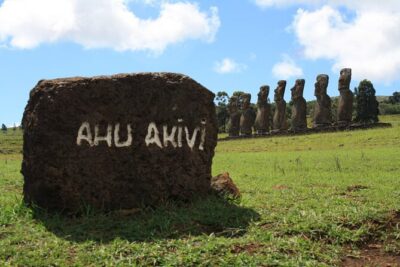
2-Day Private Tour Easter Island Highlights Complete Discovery
Read our review →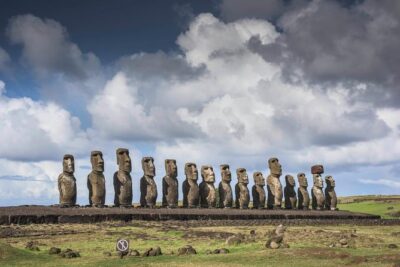
Private Tour: Full Day Easter Island Highlights
Read our review →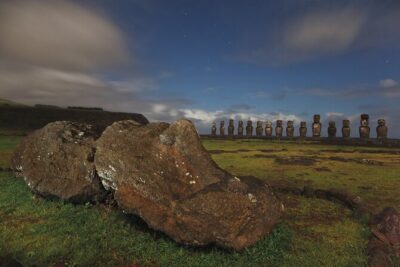
Private Full-Day Easter Island Highlights North and West
Read our review →Browse the lists this tour appears in