
Reviewed · EASTER ISLAND TOURS
Private tour: where the history of the Moai was born
The moai quarry changes everything. This seven-hour tour takes you from toppled statues at Vaihu and Akahanga to the volcanic birthplace of the moai at Rano Raraku, then onward to Tongariki, Te Pito Kura, and Anakena Beach. It is a strong choice if you want the major sites in one day with a native guide rather than a large coach group.
I especially like the limited group size, capped at four people, and the chance for a guide to adjust the day around your interests. Sophia has adapted the outing for a solo guest, while Tete was praised for keeping the pace relaxed and making the stories funny. The main concern is consistency: one booking began at 10 a.m. and ended at 1:10 p.m., far short of the advertised seven hours, while another guest found the car dirty because of a last-minute guide change.
The experience costs $150 per person and includes pickup, drop-off, transport, and a live guide in English or Spanish. You still need to pay for the National Park ticket. With a 4.7 rating from 13 reviews, the strongest pattern is friendly, personal guiding, but you should confirm the start time and expected schedule before setting aside your day.
In This Review
- Key points at a glance
- Why this route makes sense on Rapa Nui
- Vaihu: toppled moai beside the coast
- Akahanga: ruins, platforms, and fallen figures
- Rano Raraku: the place where the moai took shape
- Tongariki: fifteen moai facing the sunrise
- Te Pito Kura: a short stop with a strong legend
- Anakena: ending the archaeology at the beach
- A native guide is the main value
- What $150 per person gets you
- Timing, transport, and booking details
- Who will enjoy this tour most
- Should you book the moai birthplace tour?
- FAQ
- Where does this tour take place?
- How long is the tour?
- How much does the tour cost?
- Is the National Park ticket included?
- What is included in the price?
- What languages are available?
- How many people can join the tour?
- Can I cancel for a full refund?
- Do I have to pay when I reserve?
- Which guides have led this experience?
Key points at a glance
- Rano Raraku is the heart of the day: You see moai in different stages of carving at the volcanic quarry where they were made.
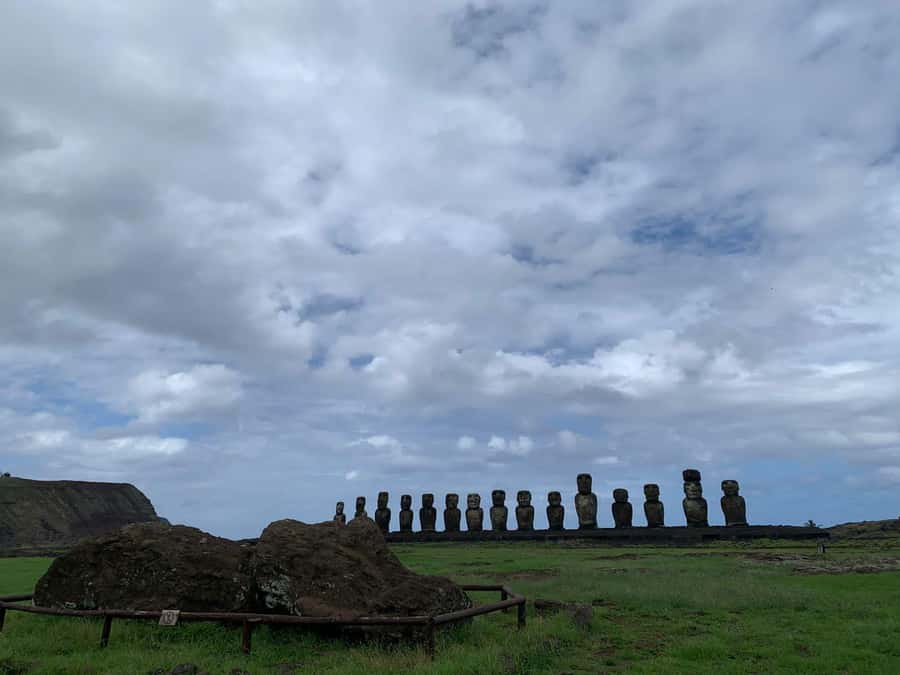
- Tongariki delivers the classic view: Fifteen standing moai line the coast, creating one of Rapa Nui’s most memorable sights.
- The group is genuinely small: With no more than four participants, the guide can answer questions and sometimes adjust the route.
- Your guide matters a great deal: Tete, Sophia, and Hella each received strong praise for warmth, humor, flexibility, and punctual pickup.
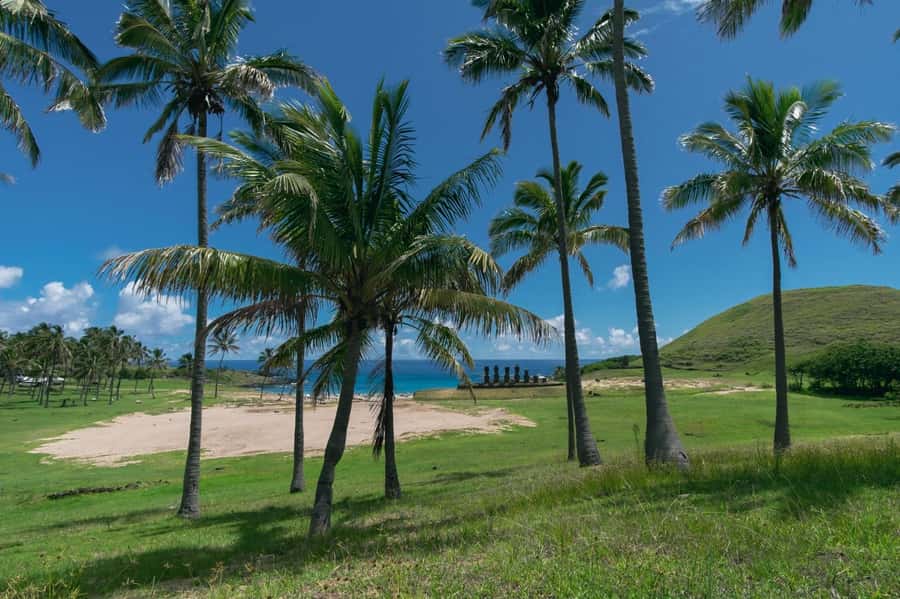
- Anakena adds a welcome change of pace: After several archaeological sites, you finish beside white sand, palm trees, and the Pacific.
- Check the timing carefully: The advertised duration is seven hours, but one booking ended much earlier than expected.
Why this route makes sense on Rapa Nui
Rapa Nui is not a place where one impressive statue tells the whole story. The moai make more sense when you see their setting, their quarry, their ceremonial platforms, and the coastline that connects these places.
This route follows the southern and eastern parts of the island before finishing at Anakena. It gives you several different views of moai culture in one outing. At Vaihu and Akahanga, you see figures lying toppled among old platforms and settlement remains. At Rano Raraku, you see the production site. At Tongariki, you see the statues restored to an imposing row. Te Pito Kura adds legend, and Anakena closes the day with a beach.
That range is the tour’s main strength. You are not simply driving from one famous photograph to another. You get a basic visual sequence: statues were made at the quarry, moved to ceremonial sites, and connected to communities around the island.
The tour is private or very close to private in feel, with a maximum of four people. That matters on Rapa Nui because the value of a local guide comes from conversation. You can ask about the figures in front of you, local life today, language, and the stories tied to each site.
More Private Tours in Easter Island
- 2-Day Private Tour Easter Island Highlights Complete Discovery
★ 5.0 · 110 reviews - Private Tour: Full Day Easter Island Highlights
★ 5.0 · 106 reviews - Private Full-Day Easter Island Highlights North and West
★ 5.0 · 84 reviews
Vaihu: toppled moai beside the coast
Vaihu is an effective first stop because it immediately shows you that the moai are not all upright. Ancient statues lie scattered around the area, giving you a less polished and more physical introduction to Rapa Nui archaeology.
Your guide is expected to explain the workmanship and the questions surrounding the statues. The setting helps you think about the moai as part of a wider social and ceremonial world, not as isolated stone figures made only for display.
Allow yourself time to look closely at the stonework and the surrounding platforms. A rushed visit would weaken the point of the stop. One guest specifically praised the tour for allowing enough time at every location, but another had the opposite experience and felt hurried through the sites. That difference makes it worth asking at pickup how long you will spend at Vaihu and the other stops.
Akahanga: ruins, platforms, and fallen figures
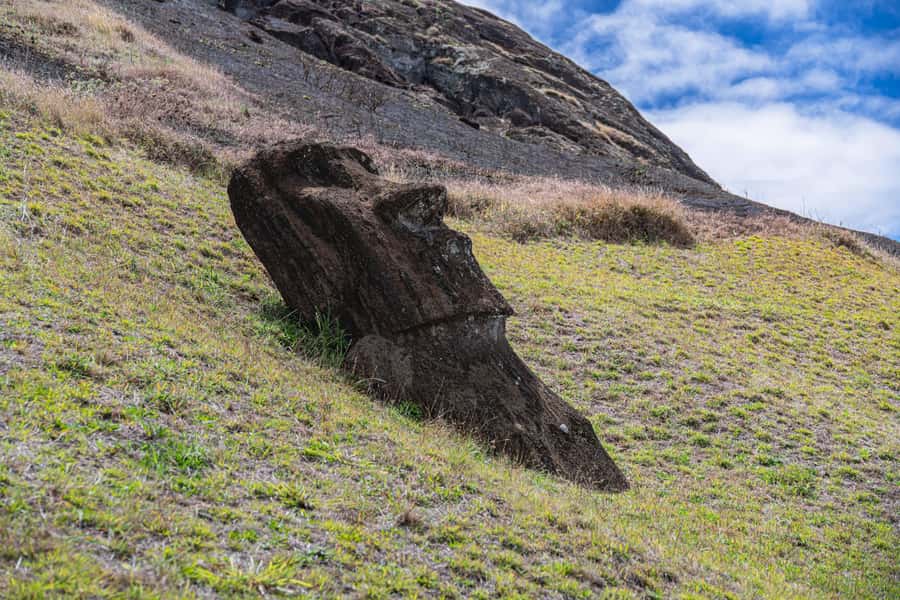
Akahanga adds more historical texture. Here you encounter remains of ancient settlements and ceremonial platforms, along with moai toppled at different points across the site.
The toppled figures are not as instantly photogenic as Tongariki’s restored row, yet they can be more useful for understanding the island’s past. Your guide’s explanation is important here because the physical remains alone do not provide a clear story.
This is one place where the tour’s guiding quality can shape your experience. Tete was praised for telling stories in an entertaining way and for never rushing the group. Sophia was also highly regarded for discussing both Rapa Nui’s past and life on the island today. Those details can turn a quiet archaeological site into a meaningful stop.
A limitation is that the supplied information does not promise a long historical lecture. One guest enjoyed the tour but wanted more context about the people of Rapa Nui, their origins, settlement, and earlier history. If those subjects matter to you, ask for that background directly. A good private tour gives you the chance to guide the conversation.
Rano Raraku: the place where the moai took shape
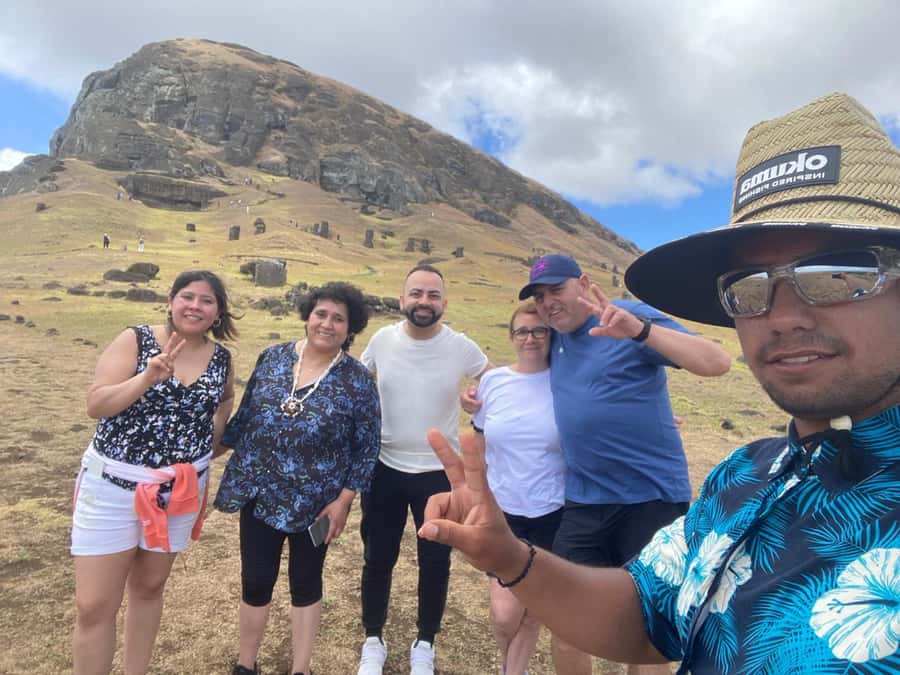
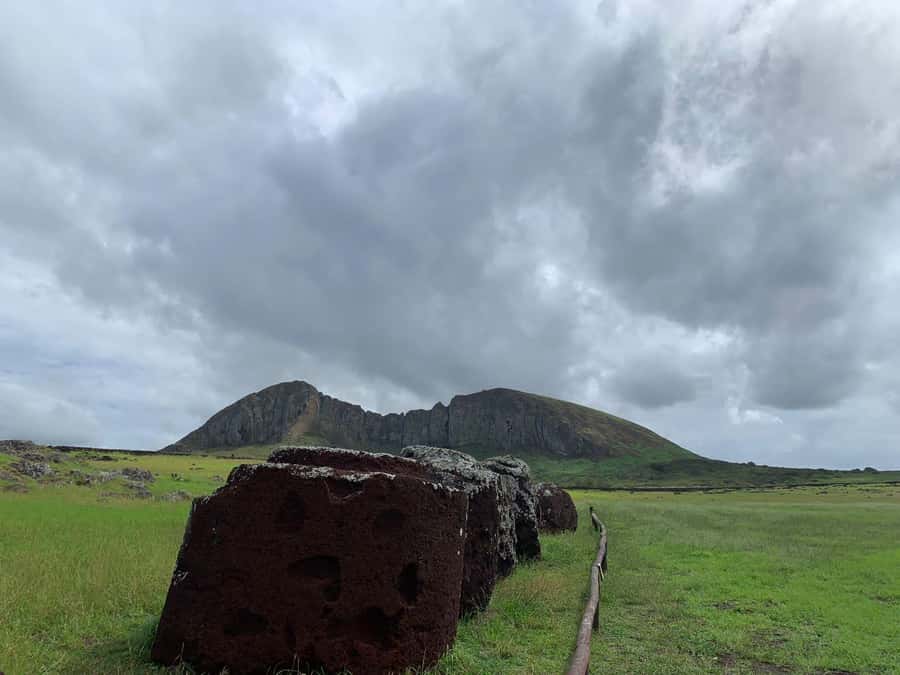
Rano Raraku is the day’s essential stop. This volcanic crater served as the moai quarry, and the site lets you see statues at many points in the carving process.
Some figures appear as rough-hewn blocks. Others are close to finished. Seeing them in place helps you understand that the moai were not produced as identical objects in a distant workshop. The mountain itself was the worksite.
I would plan to spend serious time here. The scale of the quarry and the number of incomplete statues make it one of the places where a guide’s explanation earns its keep. You can look at the stone, compare stages of carving, and ask how the statues may have been prepared before leaving the quarry.
This is also the stop most likely to satisfy the title of the tour. The phrase where the history of the moai was born is not just marketing language here. Rano Raraku is the clearest physical link to how the statues were created.
Still, the schedule problem matters most at a place like this. If the tour is shortened, Rano Raraku is exactly where you will feel the loss. Confirm that the seven-hour plan includes enough time at the quarry, rather than treating it as a quick photo stop.
More Rapa Nui trips and moai walks:
- From Hanga Roa: Rapa Nui Culture Sightseeing Tour
★ 4.6 · 307 reviews - From Hanga Roa: Easter Island Highlights 2-Day Tour
★ 4.3 · 205 reviews - From Hanga Roa: Easter Island Sightseeing Full Day Tour
★ 4.5 · 189 reviews - Two days of Full Day Tour of Rapa Nui + Sunrise in Tongariki
★ 4.5 · 132 reviews
Tongariki: fifteen moai facing the sunrise
Tongariki gives you the grand view. Fifteen moai are arranged in a long row facing the sunrise, making this one of the most powerful visual moments on the route.
The statues have a strong sense of order after the scattered figures at Vaihu and Akahanga. Morning light can add a golden tone, although the exact quality depends on your start time and the day’s conditions. The tour description presents Tongariki as a place for photographs, but I would first take a few minutes to study the line of statues without a camera in front of your face.
Your guide can help explain why this platform matters and how it differs from the quarry and earlier sites. The contrast is the point: Rano Raraku shows creation, while Tongariki shows the finished ceremonial image.
If your departure is later in the morning, you may not get the sunrise effect described in the itinerary. That is not necessarily a flaw, but it is another reason to confirm the pickup time rather than assuming the tour begins at dawn.
Te Pito Kura: a short stop with a strong legend
Te Pito Kura brings a different mood. The site includes an enormous moai and a distinctive spherical stone tied to local myths and special significance.
This stop is less about seeing a large collection of statues and more about hearing the story connected to the place. It gives your guide room to explain how legend and archaeology sit side by side on Rapa Nui.
The value of Te Pito Kura depends heavily on the explanation. Without context, you may see a large fallen statue and a round stone, then move on. With a good guide, the stop becomes a reminder that the island’s heritage includes oral tradition as well as visible monuments.
Because the tour is limited to four people, you can ask questions without holding up a busload of people. That is a modest practical benefit, but on a site built around stories, it can make the difference.
Anakena: ending the archaeology at the beach
Anakena is a smart final stop because it changes the rhythm of the day. After quarry stone, ceremonial platforms, and toppled statues, you arrive at white sand, palm trees, and the Pacific Ocean.
Moai also stand near the beach, so Anakena does not abandon the cultural focus. You can look at the statues, then relax beside the water, swim in the clear sea, and reflect on what you have seen.
One guest enjoyed finishing the outing with lobster on one of the island’s beaches. That meal is not listed as included, so treat it as an example of how the end of the day might unfold, not as part of the package.
The beach makes the route appealing for people who do not want seven straight hours of archaeological sightseeing. It also gives you a chance to cool off and reset. If swimming is important to you, ask the guide about the amount of free time available, since the schedule can vary.
A native guide is the main value
The strongest feature here is not the vehicle or the number of stops. It is the chance to spend the day with a local guide in a very small group.
Tete received praise for being friendly, kind, funny, and unhurried. Sophia adapted a solo tour to include places her guest wanted to see, discussed both earlier Rapa Nui culture and modern island life, and even taught some Chilean Spanish. Hella was praised for punctual pickup and a well-paced agenda.
Those examples show what this tour can do at its best. You are not locked into a rigid script. You can ask for more stories, more time at a favorite site, or a little attention to present-day life.
The feedback is not uniformly perfect. One guide was initially reserved, though the conversation improved later. Another guide arrived as an emergency replacement, and the car was reported to be dirty. These are practical warnings, not reasons to reject the tour outright, but they reinforce the need to confirm who will guide you and what vehicle arrangements are in place.
The languages are English and Spanish. If you want detailed historical context, say so early. One guest felt the tour needed more information about where the Rapa Nui people came from and how they settled the island. That is useful advice for anyone who wants more than site names and legends.
What $150 per person gets you
At $150 per person, the price buys a seven-hour small-group outing with a native guide, transportation, hotel or accommodation pickup, and drop-off. The maximum of four participants gives the price more value than a large group tour if you care about personal attention.
You are paying for coverage of six major places in one day, plus the convenience of not arranging transport between them. On a remote island, that convenience matters. It also means you can focus on the sites instead of managing the route yourself.
The National Park ticket is not included, so add that cost to your planning. The tour price also does not promise meals, even though a guest enjoyed lobster at the beach during the day.
I see the price as fair for a properly delivered private or near-private tour, particularly if you are traveling with two to four people. For a solo visitor, it is a larger spend, but Sophia’s flexible approach shows why the format can still be worthwhile. The value drops sharply if the outing is cut short or if you are hurried through the archaeological sites.
Timing, transport, and booking details
The advertised duration is seven hours, with starting times based on availability. Pickup and drop-off are included, which keeps the day simple.
The most important practical step is to confirm the actual start and finish times. One guest reported a 10 a.m. start and a 1:10 p.m. finish, describing the outing as far shorter than expected. Other feedback describes a full, well-paced day, so the service appears to have had some inconsistency.
You can cancel up to 24 hours in advance for a full refund, and the reserve-now, pay-later option lets you hold a place without paying immediately. Those policies are useful when your Rapa Nui plans are still shifting.
The tour is operated by Hotumatur Rapa Nui. Since the experience depends so much on the guide, I would ask at booking or pickup whether the named guide is confirmed and whether the plan includes enough time at Rano Raraku and Anakena.
Who will enjoy this tour most
I would recommend it to you if you want the main moai sites in one day and prefer a small group to a standard coach. It suits couples, families, and small friend groups who value conversation and flexible pacing.
It is also a good match if you want to combine archaeology with scenery. The route moves from volcanic stone and ceremonial platforms to the coast and beach, so the day does not feel like a chain of identical ruins.
You may want a different option if you need a formal, highly structured historical lecture or a guaranteed early-morning schedule. The guiding can be excellent, but the amount of historical detail depends on the person leading the tour. The timing concern also deserves attention if you have limited days on Rapa Nui.
Should you book the moai birthplace tour?
Book it if you want broad coverage, a native guide, and a small group that may allow the day to feel personal. Rano Raraku and Tongariki alone make the route worthwhile, while Vaihu, Akahanga, Te Pito Kura, and Anakena give you a fuller picture.
Before paying, confirm the seven-hour schedule, the guide, and the National Park ticket cost. If those details are clear, this is a practical way to see Rapa Nui’s major moai sites without losing the human side of the experience.
FAQ
Where does this tour take place?
The tour takes place on Rapa Nui, also known as Easter Island, in Chile. The listed route includes Vaihu, Akahanga, Rano Raraku, Tongariki, Te Pito Kura, and Anakena.
How long is the tour?
The advertised duration is seven hours. Starting times depend on availability, so you should check the schedule before booking.
How much does the tour cost?
The price is $150 per person.
Is the National Park ticket included?
No. The National Park ticket is not included in the tour price.
What is included in the price?
The price includes a native guide, transportation, pickup, and drop-off.
What languages are available?
The live guide is available in English and Spanish.
How many people can join the tour?
The group is limited to four participants.
Can I cancel for a full refund?
Yes. You can cancel up to 24 hours in advance for a full refund.
Do I have to pay when I reserve?
No. The reserve-now, pay-later option allows you to book without paying immediately.
Which guides have led this experience?
Guides named in the available information include Tete, Sophia, and Hella. Sophia, Tete, and Hella received particularly positive comments for their friendliness, flexibility, pacing, or punctual pickup.
More Historical Tours in Easter Island
- 2 Day Private Tour: Easter Island’s Cultural Heritage
★ 5.0 · 40 reviews - 2 Day Small Group Tour in Moai Monuments and Historic Pathways
★ 5.0 · 22 reviews - Easter Island: Private Full Day History Of The Moai
★ 4.6 · 12 reviews - Easter Island Private Tour: Historical Journey North & West
★ 5.0 · 2 reviews
Just added around Easter Island
- Volcanic Refuges: Excursion to Underground Civilization★ 4.7 · 8 reviews
- Easter Island Ancestral Dinner and Show with Transport★ 4.5 · 2 reviews
- Volcanic Wonders and the Kingdom of the Birdman: Half Day★ 5.0 · 6 reviews
- Half Day Private Tour: Caves and Volcanic Refuges★ 4.0 · 14 reviews
- Tour to the Motus: Boat trip and snorkeling in Rapa Nui★ 5.0 · 8 reviews
- Visit Rapa Nui in 4 days with 3 Tours and Accommodation included★ 4.0 · 2 reviews
- Birdman Ceremonial Route: Orongo, Ranu Kau Half-Day Tour★ 4.5 · 16 reviews
- Private Tour: Tongariki Sunrise Experience★ 4.5 · 20 reviews
Easter Island Tours, compared.
Two days of Full Day Tour of Rapa Nui + Sunrise in Tongariki
Read our review →
2-Day Private Tour Easter Island Highlights Complete Discovery
Read our review →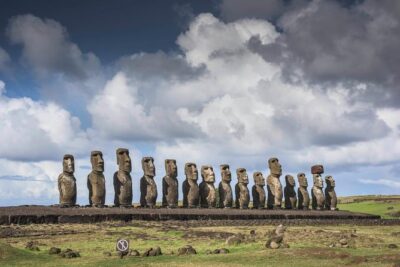
Private Tour: Full Day Easter Island Highlights
Read our review →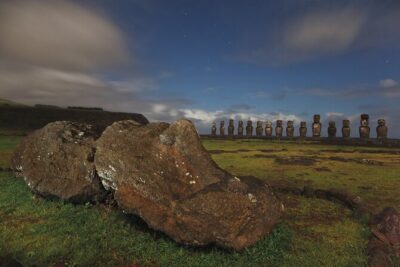
Browse the lists this tour appears in