
Reviewed · EASTER ISLAND TOURS
Easter Island: Private Full Day History Of The Moai
The Moai tell a complicated story. This private seven-hour trip links Easter Island’s great ceremonial platforms, the quarry at Rano Raraku, and two beaches into one packed day. I like the private format, which gives you room to ask questions and adjust the pace, and I like the route’s variety: ruined platforms, unfinished statues, giant standing Moai, pink sand, and a beach stop. The main caution is organization. Pickup and guide communication have not always been smooth, so you should confirm the meeting point and pickup time before setting out.
I also like that the tour reaches the island’s major eastern and northern sites in one sweep. Ahu Tongariki and Rano Raraku are the clear stars, while smaller stops such as One Makihi and Te Pito Kura add useful pieces to the story. At $219 per person, the price is easiest to justify for a private group that values convenience and a dedicated guide.
In This Review
- Key points to know before booking
- Why this route works for a first day on Rapa Nui
- The opening stop at Ahu Vinapu
- Ahu Akahanga and the story of fallen Moai
- One Makihi, a short stop with an unusual statue
- Rano Raraku, the Moai quarry
- Ahu Tongariki and fifteen Moai in one frame
- Te Pito Kura and the island’s largest Moai
- Ovahe, pink sand and a change of pace
- Anakena, the relaxed finish
- What the $219 price really buys you
- Guides, languages, and pickup reliability
- What to bring and how to pace yourself
- FAQ
- How long does the tour last?
- Is hotel pickup included?
- Is the tour private?
- Which languages are available?
- Is food included?
- Is park admission included?
- Is water provided?
- Can I cancel for a full refund?
- Should you book the private Moai history tour?
Key points to know before booking
- Rano Raraku gets two hours: This is where you can walk among unfinished Moai and see how the statues were carved from volcanic stone.
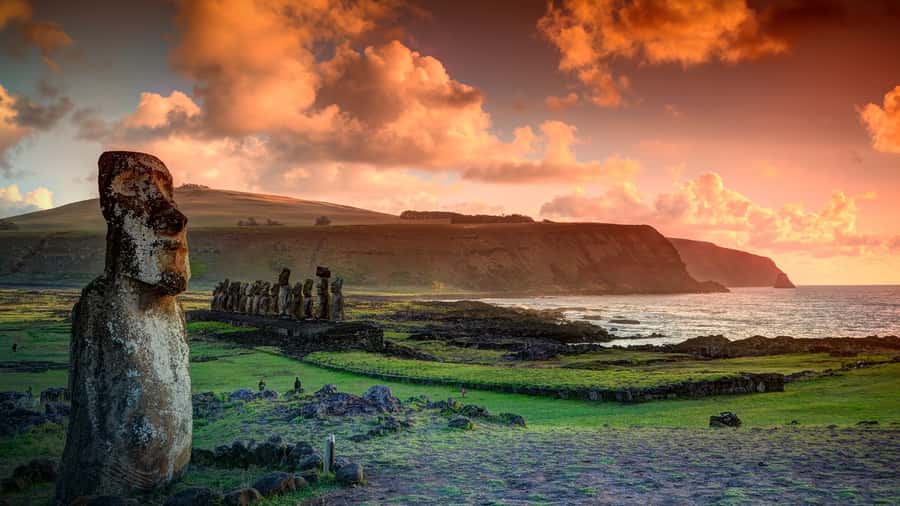
- Tongariki is the visual high point: Fifteen Moai line the restored ceremonial platform, making this one of the island’s most powerful sights.
- The route includes beach time: Ovahe offers rose-colored sand, and Anakena provides about 100 minutes for views, free time, and a possible picnic.
- The tour is private: You travel with your own group and a live guide in English, Spanish, or French.
- Food and park admission cost extra: The $219 price includes hotel pickup, return transport, and an individual bottle of water, but not meals or entry fees.
- Allow time for pickup checks: One guest waited an hour for collection, while another guide waited when a tender arrived late. Communication matters here.
Why this route works for a first day on Rapa Nui
Easter Island is small in size but large in meaning. The Moai are not just giant stone figures lined up for photographs. They were connected to ancestral power, ceremony, family groups, and the authority of the communities that built them.
This route gives you a useful outline of that world. You move from an early ceremonial site to fallen and unfinished statues, then to the island’s largest restored platform. After the main archaeological sites, the day softens into a beach visit at Ovahe and Anakena.
That order is practical. You see the central Moai sites while the guide is explaining their purpose, construction, and placement. Then you get time to breathe by the water instead of spending all seven hours among ruins.
The private setup matters on an island where a good explanation can change what you see. At a large site such as Tongariki, you may want to photograph the whole platform. At Rano Raraku, you may prefer to walk slowly and study the unfinished statues. A private group gives you a better chance of discussing those choices than a large coach group would.
Still, seven hours is a busy schedule. The advertised duration is seven hours, and the listed stops add up to a full day of moving, walking, and short visits. You will see a lot, but this is not a slow archaeological study tour.
More Private Tours in Easter Island
- 2-Day Private Tour Easter Island Highlights Complete Discovery
★ 5.0 · 110 reviews - Private Tour: Full Day Easter Island Highlights
★ 5.0 · 106 reviews - Private Full-Day Easter Island Highlights North and West
★ 5.0 · 84 reviews
The opening stop at Ahu Vinapu
The tour description begins with Ahu Vinapu, a ceremonial platform known for carefully fitted stonework. The wall is often compared with Inca masonry because of the way the stones meet, and this is one of the more intriguing details in the route.
The comparison is useful as a starting point, but you should expect the guide to explain the site within Rapa Nui culture rather than treat it as proof of a direct connection with the Inca world. The point is the quality of the stonework and the questions it raises.
There is a small planning wrinkle here. The detailed stop list identifies the opening location as RJQR+F6 Hanga Roa, with a 20-minute guided visit, while the tour description names Ahu Vinapu. Ask the operator to confirm exactly where this first stop will be. That simple check could prevent confusion at the beginning of the day.
Ahu Akahanga and the story of fallen Moai
Ahu Akahanga is scheduled for about 30 minutes. You get a photo stop, a guided visit, and a walk around the site.
Unlike Tongariki, this is not a polished row of upright statues. The fallen Moai and damaged platform help you picture the island in a less tidy state. They also show why you should not judge Rapa Nui only by its postcard views.
The guide’s role matters most here. Without context, fallen statues can look like scattered stones. With a clear explanation, the site becomes part of the larger story of changing power, abandonment, damage, and restoration.
Thirty minutes is enough for an introduction and photographs, but not for a long exploration. I would listen carefully before reaching for the camera. The smaller sites often provide the details that make the famous ones easier to understand.
One Makihi, a short stop with an unusual statue
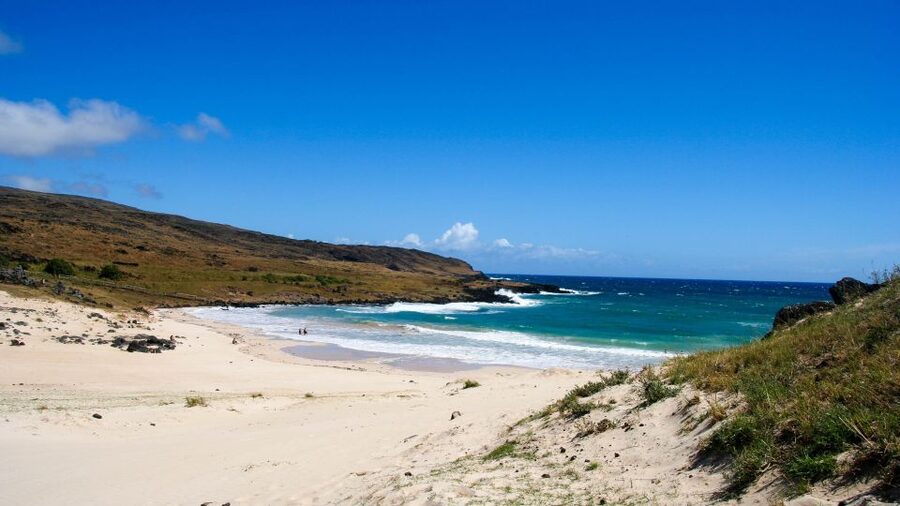
One Makihi receives about 30 minutes and is described as an old Ahu with a supine, finely carved Moai form. This is one of the route’s more unusual stops.
The attraction is not scale. It is the chance to see a less familiar piece of Rapa Nui sculpture and to consider how the island’s ceremonial remains vary from place to place. A short stop like this can also break up the drive between larger sites.
Do not expect the same visual impact as Tongariki. One Makihi is better understood as a brief archaeological pause. The guide’s explanation should help you notice the carving and position of the statue rather than simply checking off another photo stop.
One French-speaking guest reported that two of the shorter photo stops were skipped, although the main sites and guiding were very good. That is worth keeping in mind. If One Makihi or another small stop matters to you, mention it at pickup and confirm the day’s route.
More Rapa Nui trips and moai walks:
- From Hanga Roa: Rapa Nui Culture Sightseeing Tour
★ 4.6 · 307 reviews - From Hanga Roa: Easter Island Highlights 2-Day Tour
★ 4.3 · 205 reviews - From Hanga Roa: Easter Island Sightseeing Full Day Tour
★ 4.5 · 189 reviews - Two days of Full Day Tour of Rapa Nui + Sunrise in Tongariki
★ 4.5 · 132 reviews
Rano Raraku, the Moai quarry
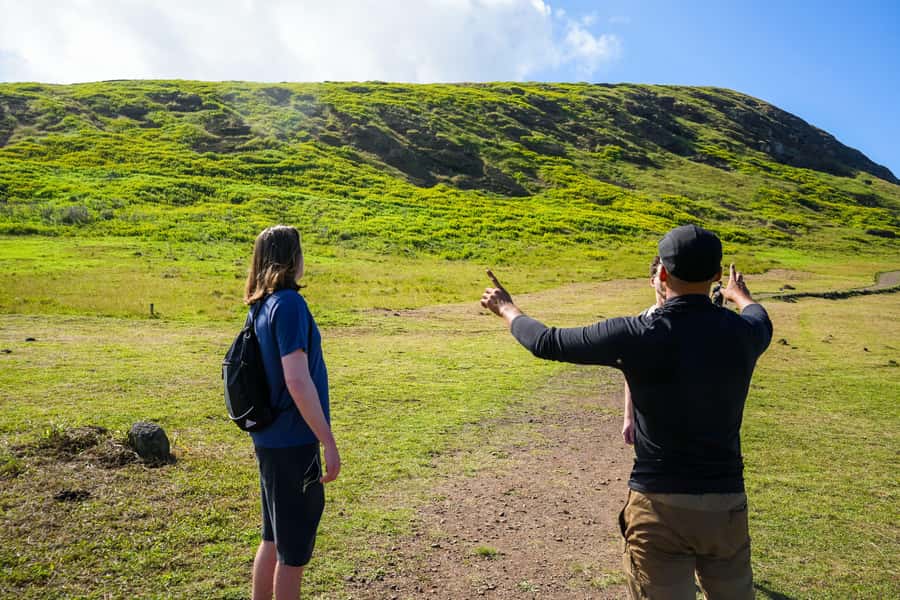
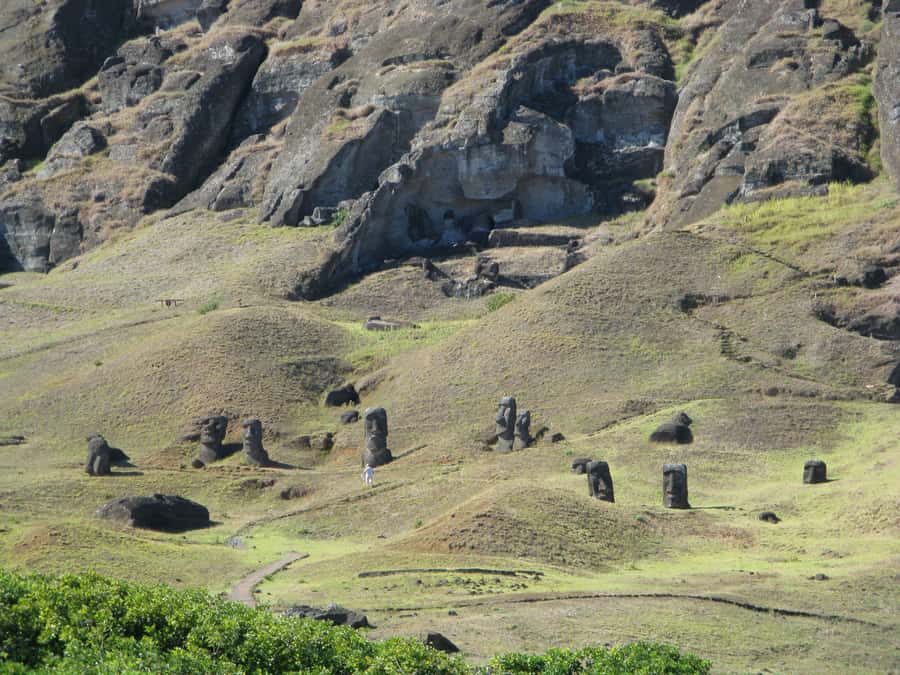
Rano Raraku is the heart of the day. The schedule allows two hours here, more than at any other individual site.
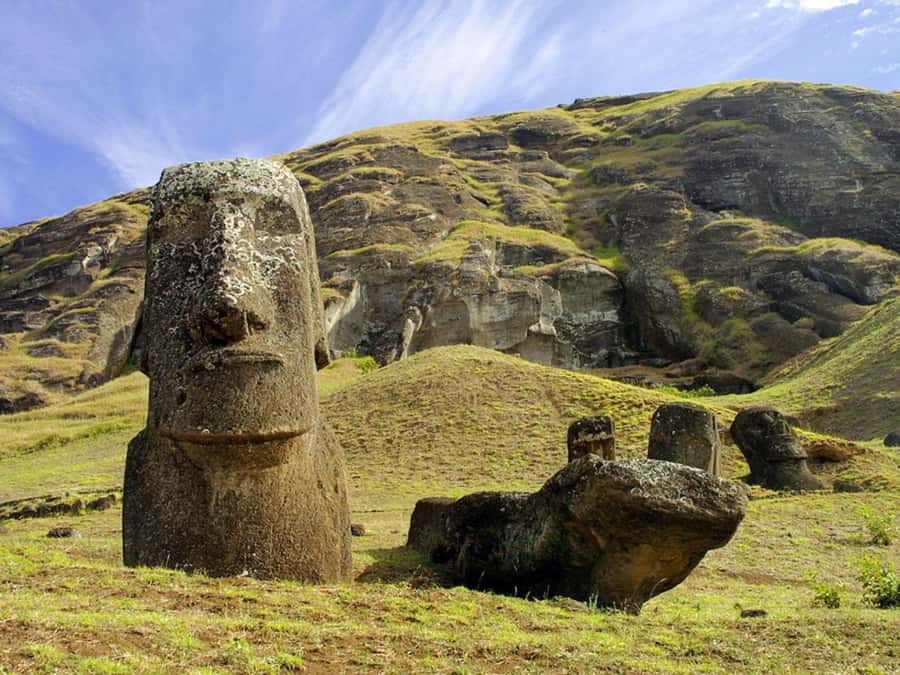
This volcanic quarry is often called the Moai factory because many statues were carved from its stone. You can walk among figures that remain unfinished, partly buried, or still attached to the rock. These statues are valuable because they show the work in progress, not just the finished ceremonial product.
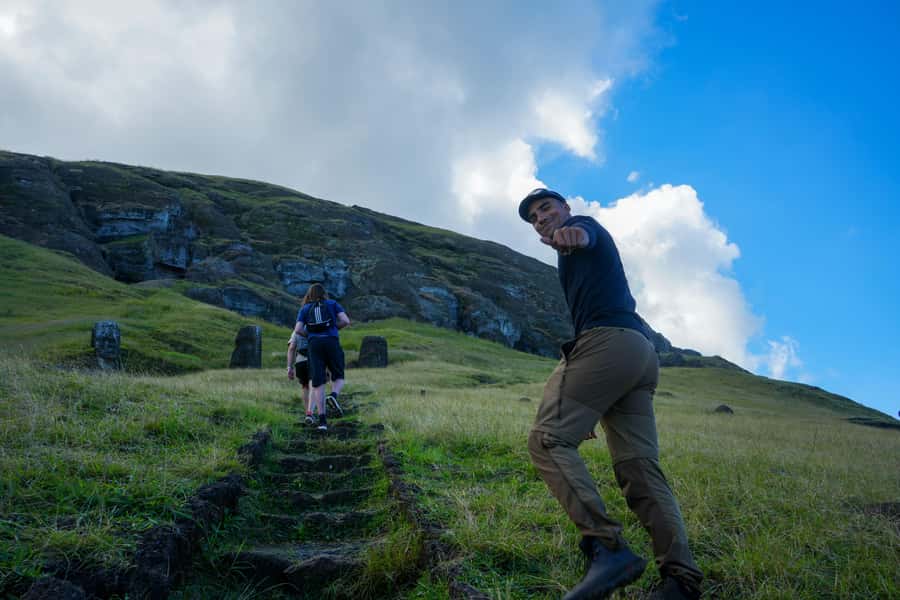
I would use the full time here if walking is comfortable for you. Look closely at the different sizes and stages of completion. The unfinished Moai make it easier to understand that these statues were made through a long process of carving, shaping, moving, and raising.
The site also changes your view of the famous upright figures. At Tongariki, the Moai appear finished and formal. At Rano Raraku, they look like works interrupted by time. That contrast is one of the strongest reasons to choose a route that includes both locations.
The walk is an important part of the visit. Wear shoes suitable for uneven ground, and bring sun protection. Those are practical suggestions rather than included amenities, since the tour only specifically provides an individual bottle of water. Food is not included, so plan ahead for the middle of the day.
Ahu Tongariki and fifteen Moai in one frame
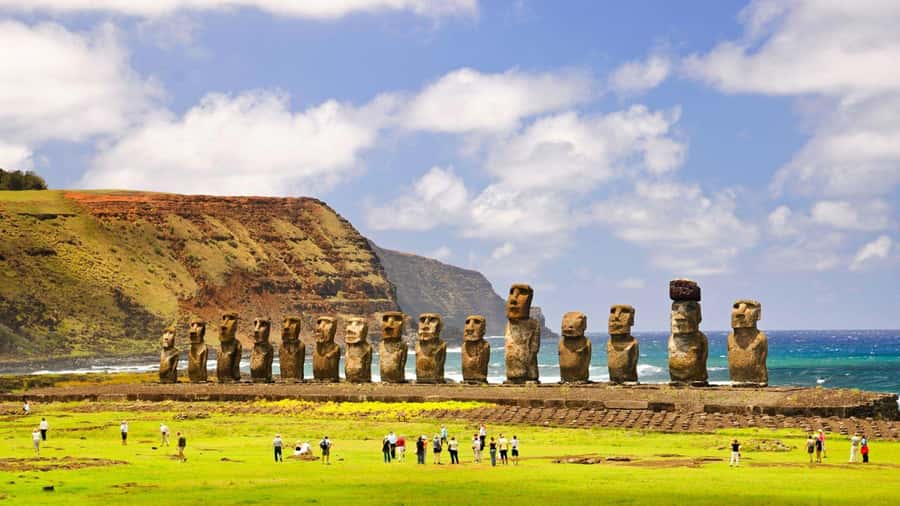
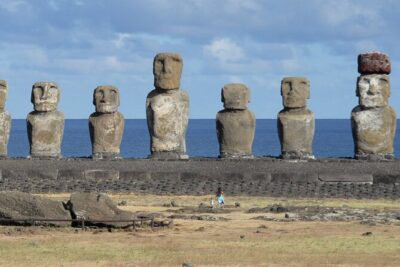
Ahu Tongariki is scheduled for about 80 minutes. It is the largest group of Moai on the island, with fifteen figures arranged on a long ceremonial platform.
This is the moment when the scale of Rapa Nui becomes hard to ignore. The Moai are not scattered randomly. Their arrangement gives the site a strong sense of order, and the guide can explain what the statues meant to the communities that commissioned and placed them.
You will have time for photographs, sightseeing, walking, and a guided explanation. I would take a few minutes to view the entire platform before focusing on individual statues. The line of figures is the main experience.
Tongariki is also where guide quality becomes especially important. A weak explanation can reduce the visit to measurements and statue counts. A strong guide can connect the platform to ceremony, ancestry, social status, and the effort required to create such a setting.
The feedback on guiding is mixed but often very positive. Simon was praised for his history, culture, and language explanations, and Flora received high marks for both her kindness and her guiding. Another guest found the English difficult to follow and felt the explanations repeated basic facts. If you need a particular language, request it clearly when booking and confirm it again before the tour.
Te Pito Kura and the island’s largest Moai
Ahu Te Pito Kura is a 20-minute guided stop. The site is described as sacred and associated with one of the largest Moai on Rapa Nui.
This is a short visit, so expect a focused explanation and time for photographs rather than a long walk. Its value comes from scale and symbolism. After seeing finished statues at Tongariki and unfinished statues at Rano Raraku, Te Pito Kura adds another reminder of the ambition behind the island’s stone figures.
The quick timing is reasonable if you are trying to see the major eastern sites in one day. It may feel rushed if you prefer to sit, sketch, or study the surrounding archaeology. The private format helps a little, since you can ask the guide how long you have and make the most of the stop.
Ovahe, pink sand and a change of pace
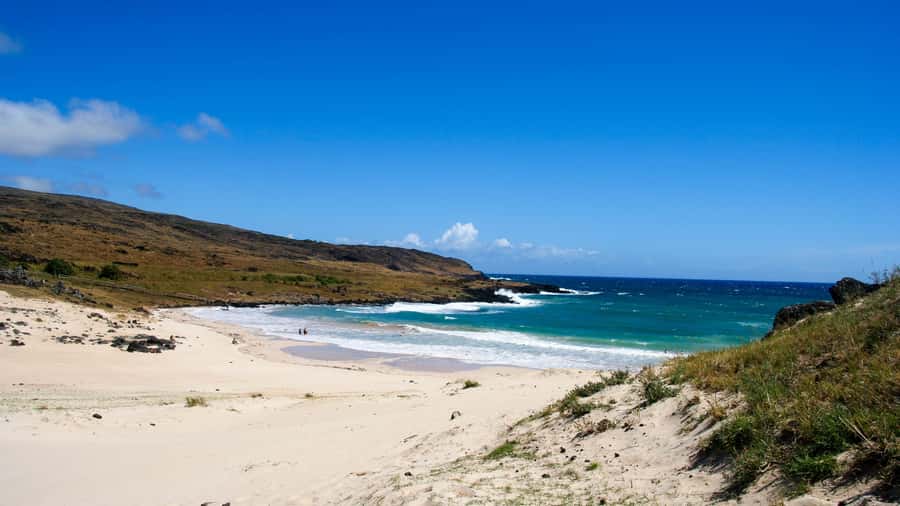
Ovahe is a short 20-minute stop with time for photos, sightseeing, and a guided visit. Its rose-colored sand gives the day a welcome change from the dark volcanic stone of the archaeological sites.
This is mainly a scenic pause. You should not expect a long beach session here because the scheduled time is brief. Enjoy the color, take your photos, and listen for the explanation of why this coast matters within the route.
Ovahe works well as a transition before Anakena. It gives you a quick view of one of Rapa Nui’s distinctive beaches without sacrificing the longer time needed at the Moai sites.
Anakena, the relaxed finish
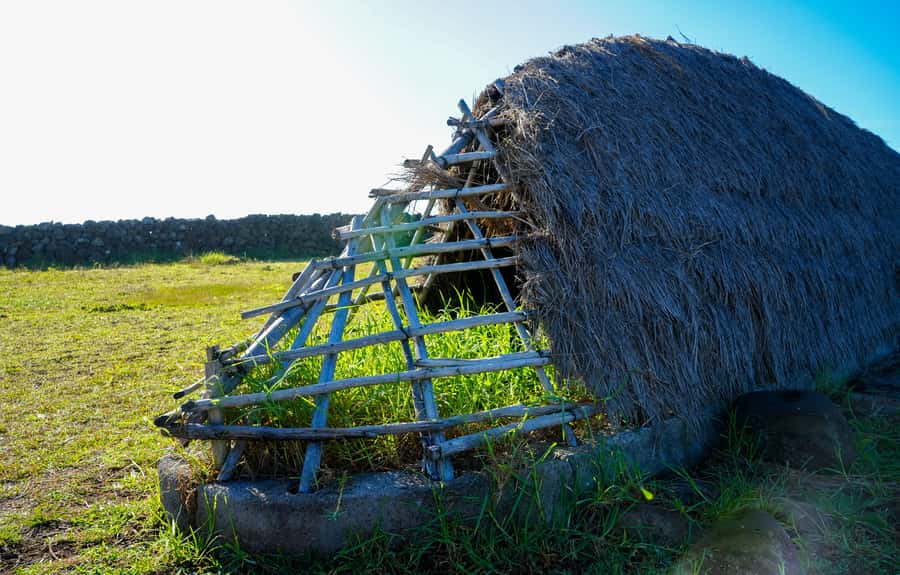
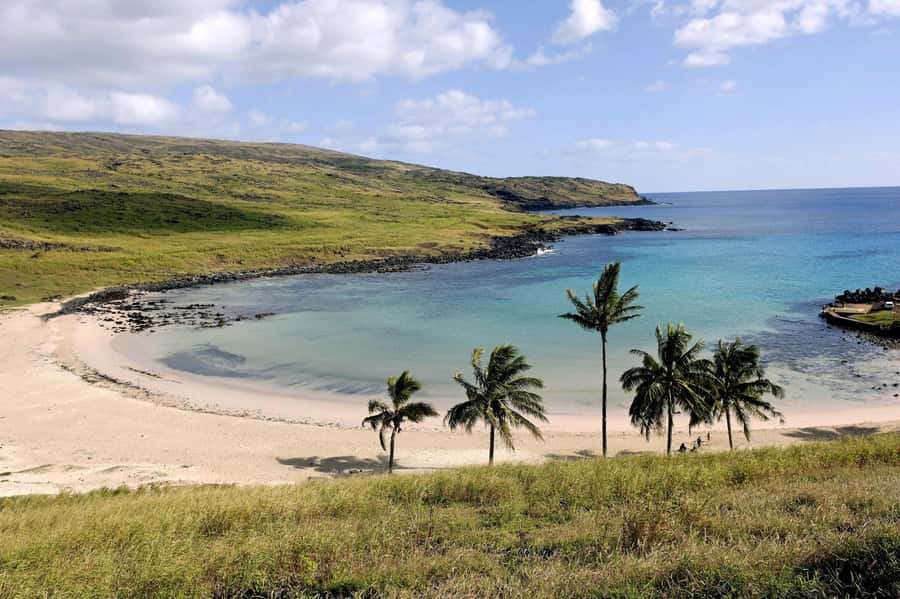
The itinerary gives Anakena about 100 minutes, followed by another 30-minute break period with free time, shopping, photographs, and scenic views along the way.
Anakena is the most relaxed stop of the day. It has clear water, beach views, and the possibility of activities such as snorkeling. A picnic is also suggested, but food is not included, so you need to arrange your own meal.
This is where the tour’s pacing makes sense. After several archaeological sites and a walk at Rano Raraku, you can slow down. You might use the time for the beach, photographs, a picnic, or simply a quiet look at the coast.
Do not treat the beach activities as guaranteed inclusions. The tour description identifies snorkeling and other water activities as possibilities at Anakena, but it does not include equipment or specify that any activity is provided. The confirmed service is the guided stop and free time.
The extra 30-minute break listed at Anakena may overlap with the longer stop rather than represent a completely separate visit. Ask the guide how the time will be divided on your day. That is especially useful if you care more about the beach than shopping or photographs.
What the $219 price really buys you
At $219 per person, this is not a budget sightseeing ride. The value comes from having private transport, hotel pickup and return, a live guide, and a route that covers many of Rapa Nui’s major sites in one day.
For a private group, the calculation may work well. You are paying for convenience and focused attention, not just admission to the ruins. If you have limited time on Easter Island, combining the quarry, the main platforms, smaller archaeological sites, and two beaches can save you from arranging several separate outings.
The value is weaker if you are traveling alone or as a couple on a tight budget. Park admission and food are extra, and the day’s speed means you may not get long, quiet periods at every site.
I would compare the price with the cost of private transport, guiding, and separate park access before deciding. The tour is most attractive when you want a single organized day and do not want to manage the route yourself.
Guides, languages, and pickup reliability
Guiding is available in English, Spanish, and French. The strongest experiences appear to come when the guide can explain more than statue height, weight, and quantity. Ask for the history, meaning, language, and ceremonial role behind each site.
The named guides who received especially warm praise were Simon and Flora. Simon waited for a late tender and still delivered a strong visit to the main sites. Flora was described as kind and very good at explaining the island’s remarkable places.
There are also two practical warnings. One English-speaking guest found the guide’s English hard to understand and said questions were not handled well. Another group waited about an hour after a scheduled 9 a.m. pickup and needed help from local people near the harbor.
If you arrive by cruise tender, tell the operator your arrival details. If pickup is from a hotel, wait in the lobby 10 minutes before the scheduled time and keep the operator’s contact information available. The tour includes pickup and return, but the communication around that service deserves attention.
What to bring and how to pace yourself
Bring water beyond the single bottle provided, especially since the day includes walking and open-air sites. Pack food or arrange a meal because food is not included.
Comfortable walking shoes will help at Rano Raraku and the ceremonial sites. Sun protection is also sensible for a day spent outside, although the provided information does not specify which personal items are supplied.
Keep your schedule flexible. The tour is advertised as seven hours, but pickup delays, tender arrivals, road timing, or changes to short photo stops can affect the exact rhythm. I would avoid booking a tight connection immediately afterward.
The tour is a good match for you if you want the major Moai sites explained in one private day, especially if this is your first visit to Rapa Nui. It also suits families or small groups that want their own vehicle and a guide who can answer questions.
It is less suitable if you want a slow, highly specialized archaeological visit, guaranteed time at every minor stop, or a fully catered beach day.
FAQ
How long does the tour last?
The tour duration is seven hours. The schedule includes guided visits, walking, photographs, sightseeing, and free time at the listed sites.
Is hotel pickup included?
Yes. Hotel pickup and return are included. You should wait in the hotel lobby 10 minutes before the scheduled pickup time.
Is the tour private?
Yes. It is offered as a private group experience.
Which languages are available?
Live guiding is available in English, Spanish, and French.
Is food included?
No. Food is not included. You should plan to bring or arrange your own meal, particularly for the Anakena stop.
Is park admission included?
No. Entrance fees to the parks are not included in the $219 price.
Is water provided?
Yes. The tour includes one individual bottle of water.
Can I cancel for a full refund?
Yes. You can cancel up to 24 hours in advance for a full refund. The tour also allows you to reserve now and pay later.
Should you book the private Moai history tour?
I would book this tour if you want to cover Rano Raraku, Tongariki, Akahanga, Te Pito Kura, Ovahe, and Anakena in one day with a private guide. The route has real range, and the two-hour visit at Rano Raraku plus the 80 minutes at Tongariki gives the most important sites enough time to matter.
Before paying, confirm the first stop, pickup point, guide language, and whether every short photo stop will be included. If the operator handles those details clearly, the tour offers a practical way to see the island’s major Moai sites without arranging several transfers yourself.
At $219 per person, it is a convenience purchase. For a small private group with limited time, that convenience may be worth it. For budget travelers or anyone who prefers a slower pace, the cost and tight schedule deserve closer thought.
More Historical Tours in Easter Island
- 2 Day Private Tour: Easter Island’s Cultural Heritage
★ 5.0 · 40 reviews - 2 Day Small Group Tour in Moai Monuments and Historic Pathways
★ 5.0 · 22 reviews - Private tour: where the history of the Moai was born
★ 4.7 · 13 reviews - Easter Island Private Tour: Historical Journey North & West
★ 5.0 · 2 reviews
Just added around Easter Island
- Volcanic Refuges: Excursion to Underground Civilization★ 4.7 · 8 reviews
- Volcanic Wonders and the Kingdom of the Birdman: Half Day★ 5.0 · 6 reviews
- Easter Island Ancestral Dinner and Show with Transport★ 4.5 · 2 reviews
- Half Day Private Tour: Caves and Volcanic Refuges★ 4.0 · 14 reviews
- Tour to the Motus: Boat trip and snorkeling in Rapa Nui★ 5.0 · 8 reviews
- Birdman Ceremonial Route: Orongo, Ranu Kau Half-Day Tour★ 4.5 · 16 reviews
- Visit Rapa Nui in 4 days with 3 Tours and Accommodation included★ 4.0 · 2 reviews
- Private Tour: Tongariki Sunrise Experience★ 4.5 · 20 reviews
Easter Island Tours, compared.
Two days of Full Day Tour of Rapa Nui + Sunrise in Tongariki
Read our review →
2-Day Private Tour Easter Island Highlights Complete Discovery
Read our review →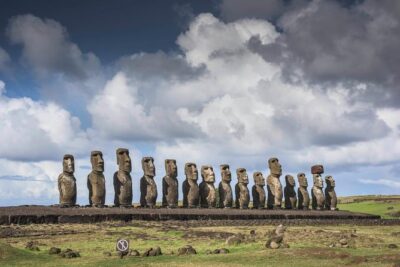
Private Tour: Full Day Easter Island Highlights
Read our review →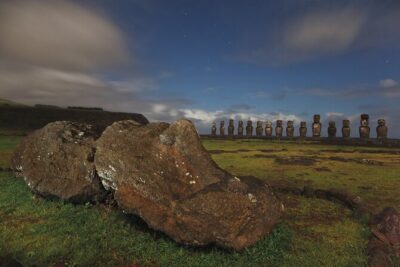
Browse the lists this tour appears in