
Reviewed · EASTER ISLAND TOURS
T3+T4-RAPA NUI ARCHAEOLOGICAL SITES (non-cruise visitors)
Thirteen stops reveal Rapa Nui’s many faces. This private two-day tour packs the island’s major archaeological sites, volcanic craters, moai platforms, petroglyphs, and Anakena Beach into a clear route from Hanga Roa. I like the private vehicle and guide, which give your group a more personal way to see the island, and I like the strong mix of famous sites and quieter places. The main drawback is the pace: thirteen stops in about two days means some visits are brief.
I also like the chance to stop for lunch at a small restaurant in Hanga Roa instead of having a fixed meal built into the tour. You can choose where to eat, which helps keep the day flexible. Still, the $330.40 price does not include the $80 island entrance ticket, so the real cost is higher than the headline figure.
In This Review
- Five things to know before you book
- Why this private Rapa Nui route works
- Day one: abandoned platforms and volcanic views
- Ahu Akahanga and the end of the old moai order
- Ahu Vinapu and carefully fitted stone
- Rano Kau, a crater beside the ocean
- Orongo and the Bird Man ceremony
- Ahu Huri a Urenga and one unusual moai
- Day two: red stone, inland moai, and Anakena
- Puna Pau and the moai’s red topknots
- Ahu Akivi and seven moai facing inland
- Anakena Beach, history beside white sand
- Rano Raraku and Ahu Tongariki: the essential finale
- Rano Raraku, where the moai began
- Ahu Tongariki and fifteen restored moai
- Cost, timing, and the real value
- Who should choose this tour?
- Should you book the two-day Rapa Nui tour?
- FAQ
- How long does the Rapa Nui archaeological tour last?
- What time does pickup begin?
- Where can the guide pick me up?
- Is this a private tour?
- What languages are available?
- Is the entrance ticket included?
- Is lunch included?
- What sites are visited?
- Can children take part?
- Can I cancel or change the booking?
Five things to know before you book
- Thirteen major sites in two days: You see the main moai platforms, Rano Raraku quarry, Orongo, petroglyphs, and Anakena Beach.
- A genuinely private outing: Only your group takes part, with transport in a private vehicle.
- The $80 entrance ticket is extra: It is valid for 10 days and covers all sites listed for the tour.
- Lunch remains flexible: You receive free time to choose among small restaurants in Hanga Roa.
- Pickup is broad and convenient: The guide collects you from a hotel, residence, guesthouse, or campsite.
Why this private Rapa Nui route works
Rapa Nui is small in population but huge in archaeological interest. A single site rarely explains the whole island. You need the quarry to understand how the moai were made, the ahu platforms to see how they were displayed, and the volcanic viewpoints to grasp how isolated this Polynesian outpost is in the South Pacific.
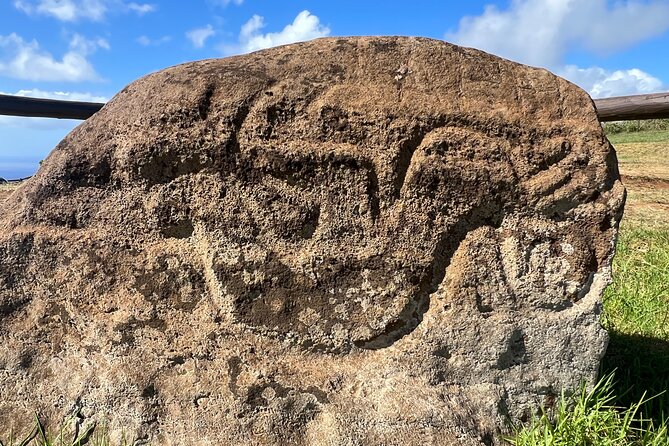
This tour gives you that broad picture. It is not just a parade of statues. You see abandoned platforms, restored ceremonial sites, astronomical alignments, red volcanic stone used for topknots, carved petroglyphs, and the beach associated with the first Polynesian settlers.
The private format matters. Your group can travel in one vehicle and receive guided visits in English, French, or Spanish according to the arrangements made. The tour information highlights English, while the included services also list French and Spanish, so I would confirm your preferred language before paying.
The schedule begins at 9:30 a.m. on the first day and 9:15 a.m. on the second. Pickup is available from any accommodation location listed by the operator. That saves you from arranging a separate taxi or finding a meeting point in Hanga Roa.
The tour is booked, on average, 99 days ahead. That is useful planning information for a remote destination with limited accommodation and guiding services. If your dates are fixed, I would not leave this until the last minute.
More Rapa Nui trips and moai walks:
- From Hanga Roa: Rapa Nui Culture Sightseeing Tour
★ 4.6 · 307 reviews - From Hanga Roa: Easter Island Highlights 2-Day Tour
★ 4.3 · 205 reviews - Full Day Tour in Rapa Nui
★ 4.5 · 122 reviews
Day one: abandoned platforms and volcanic views
Ahu Akahanga and the end of the old moai order
Ahu Akahanga is a good opening stop because it shows Rapa Nui in an unrestored state. The platform is linked with the tomb of the island’s first sovereign, and the fallen moai help you picture the period after the old statue cult was abandoned.
You have about 45 minutes here. That is enough to look over the platform and think about how a traditional village was arranged around its ceremonial center. Because the site has not been restored, it may feel less polished than later stops, but that is precisely its value. You are seeing the remains without a full modern reconstruction.
Admission is not included in the tour price. The general site ticket covers the island’s archaeological sites and is valid for 10 days.
Ahu Vinapu and carefully fitted stone
At Ahu Vinapu, allow about an hour. The striking feature is the precise finish of the stonework. Large blocks fit together with an attention to shape and surface that has encouraged comparisons with South American masonry.
The important point is to treat those comparisons carefully. The tour description notes that Vinapu wrongly reinforced theories of Amerindian settlement. The site is best appreciated for the quality of its construction rather than used as proof of a connection that has not been established here.
This is one of the places where a guide adds real value. Without explanation, you may simply see a wall of fitted stone. With context, you can look closely at the joints, the scale of the blocks, and the skill required to build the platform.
More boat trips from Hanga Roa:
- Tour to the Motus: Boat trip and snorkeling in Rapa Nui
★ 5.0 · 8 reviews - T2-THE MUST-HAVES OF RAPA NUI (non-cruise visitors)
★ 4.5 · 4 reviews - T1-THE GRAND TOUR (non-cruise visitors)
★ 5.0 · 3 reviews - R3-THE RAPA NUI PENINSULA (non-cruise visitors)
★ 5.0 · 2 reviews
Rano Kau, a crater beside the ocean
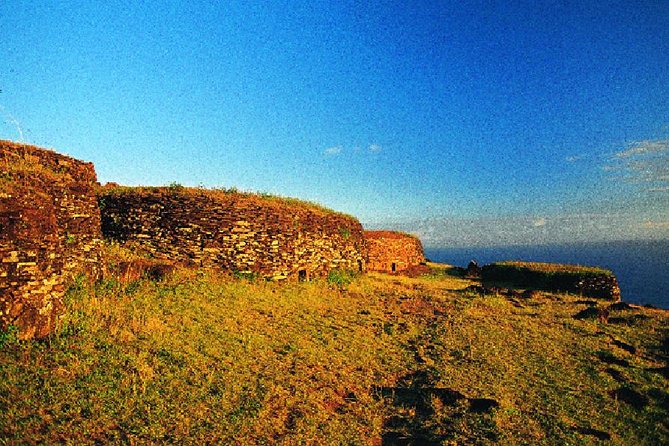
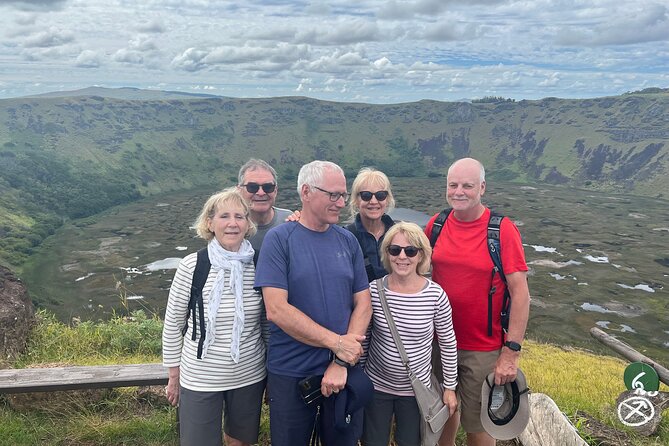
Rano Kau receives only about 20 minutes, but the view is one of the most memorable on the island. The extinct volcano has a broad crater, and its edge looks out toward the open South Pacific.
This stop puts Rapa Nui’s isolation into physical terms. You are not looking at a distant mountain range or a crowded coastline. You see volcanic terrain meeting a vast ocean, with the island’s remoteness immediately apparent.
The itinerary marks admission here as included, while the general cost information says the $80 entrance ticket is not included and covers all sites. I would clarify this minor inconsistency with Aroha Tours Rapa Nui before departure.
Orongo and the Bird Man ceremony
Orongo deserves about an hour. The ceremonial village sits on the side of the volcanic crater, facing offshore islets where seabirds laid eggs during the southern spring.
The annual Bird Man competition was not a simple sporting contest. The person who secured the first egg gained religious authority for the year. That ceremony shows how Rapa Nui society changed after the age of the great moai construction.
The restored stone village and its position above the sea make this one of the most atmospheric stops. You should expect uneven outdoor walking at archaeological sites, though the information provided says most people can participate.
Ahu Huri a Urenga and one unusual moai
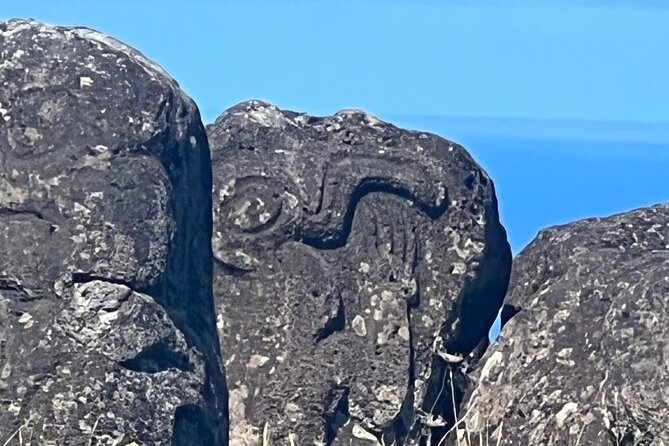
This restored site is small, with a single platform and one moai. Its unusual feature is easy to remember: the statue has four hands.
The visit lasts about 20 minutes, so this is a quick stop rather than a long exploration. The platform also has an astronomical orientation, adding another layer to what might otherwise be remembered only as an odd statue.
Day two: red stone, inland moai, and Anakena
Puna Pau and the moai’s red topknots
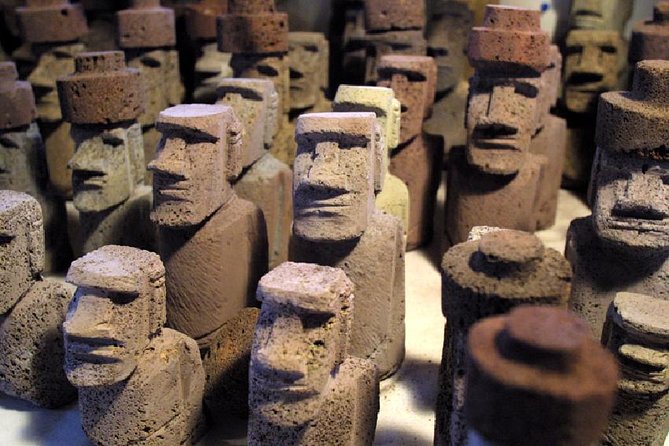
Puna Pau was Rapa Nui’s other major quarry. Instead of carving the gray stone used for most moai, workers extracted red volcanic stone for the statues’ hats or topknots.
You have about 30 minutes here, including a broad view toward Hanga Roa Bay. The site explains an important visual detail: the moai were not meant to look plain. The red stone added color and status to the finished figures.
The view also helps break up the archaeological stops. You are not moving from one platform to another without pause. You are seeing how the island’s volcanic sources shaped its monuments.
Ahu Akivi and seven moai facing inland
Ahu Akivi is unusual because it sits inland rather than directly by the coast. Its restored platform holds seven moai that appear to face toward the sea, although the site’s astronomical orientation is more complicated than a simple seaward view suggests.
Spend about 30 minutes here. The colors and setting differ from the coastal platforms, giving you a useful reminder that Rapa Nui’s ceremonial sites were not all built in the same kind of place.
This stop is especially helpful for understanding that the island’s monuments were part of a wider system. Their placement, direction, and relationship to the sky mattered, not just their size.
Anakena Beach, history beside white sand
Anakena is the tour’s longest stop, at about 90 minutes. On the far side of the island, this white-sand beach is associated with the arrival of the first Polynesian settlers.
It is also Rapa Nui’s classic postcard scene: translucent water, a small coconut grove, and restored moai platforms close to the beach. The site offers a change of mood after the stark volcanic craters and stone quarries.
The time here is long enough to appreciate the setting rather than rush in, take a photograph, and leave. You should still remember that this is an archaeological visit as well as a beach stop. The restored moai are among the best preserved on the island, and their placement beside the beach shows how ceremonial life and coastal settlement connected.
Lunch is not included, but the schedule allows a free lunch with a choice of small restaurants in the village. Since the tour does not specify a restaurant or meal allowance, plan to pay for your own food.
Rano Raraku and Ahu Tongariki: the essential finale
Rano Raraku, where the moai began
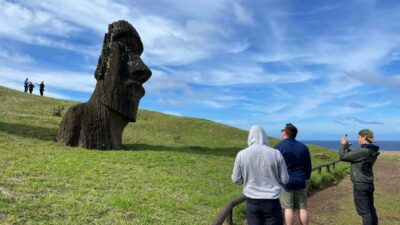
Rano Raraku is the emotional center of the route. Almost all of the island’s stone giants were carved here, and hundreds of unfinished or abandoned statues remain around the quarry.
The tour allows 90 minutes, which is sensible. You need time to walk among the statues and understand the quarry as a working place, not just a field of isolated sculptures. Some figures remain attached to the rock or partly buried, giving you clues about the stages of carving and transport.
This is also where the scale of the moai project becomes clear. At other sites, you see finished statues on platforms. At Rano Raraku, you see the production area, the raw volcanic stone, and the unfinished work left behind.
Admission is listed as not included. Your $80 site ticket is valid for 10 days and covers all the sites in the tour, so it can also be used for additional visits during your stay.
Ahu Tongariki and fifteen restored moai
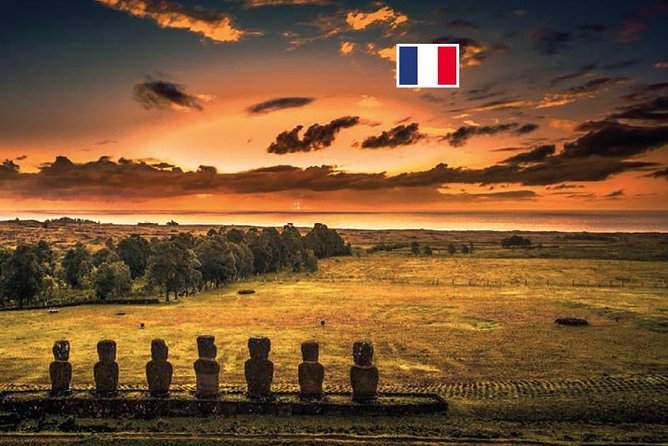
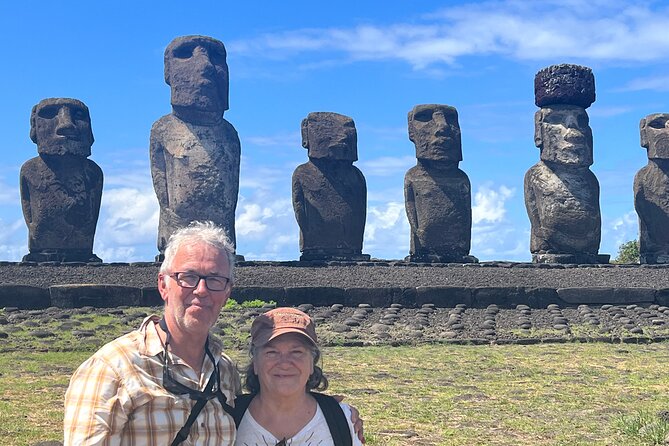
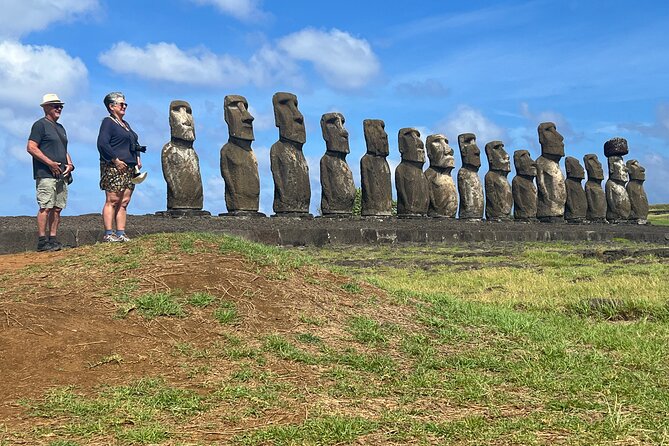
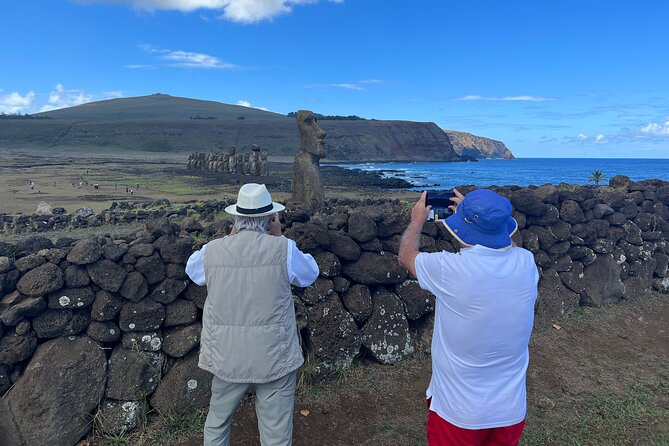
Ahu Tongariki is the grand finish. Fifteen moai line the restored platform, creating one of the most powerful views in Polynesian archaeology.
You receive about an hour here. The platform is considered the island’s most important restored site, and its scale gives the best sense of the collective effort behind the ahu tradition. The statues face inland toward visitors, while the site’s astronomical alignment adds meaning beyond their imposing appearance.
Sunrise is especially associated with Tongariki, but this tour starts in the morning rather than specifying a sunrise visit. You should not assume that the itinerary includes dawn access. Even in regular daylight, the row of fifteen moai is likely to be one of the strongest final images of the two days.
Cost, timing, and the real value
The listed price is $330.40 per person. Add the $80 entrance ticket per adult, and the minimum stated cost becomes $410.40 per person before lunch. Children aged 7 to 12 pay $40 for the entrance ticket, while the tour price and any child discount are not specified.
That price is easier to justify if you value private transport and a dedicated guide. You are not simply buying a ride between viewpoints. The route covers 13 sites, and the guide can explain why a fallen platform, a red topknot, an inland ahu, or a volcanic crater matters.
The tour also includes group discounts, though the amount is not given. Ask for the exact rate if you are booking for several people.
The private format gives you more control than a large group outing, but the itinerary remains fairly fixed. The number of stops means the guide must keep an eye on time. If you prefer to linger for hours at one quarry or return to the same platform at different times of day, this may feel too busy.
The free lunch arrangement is practical but not luxurious. You choose among small restaurants in Hanga Roa, and the meal is not included. That keeps the price from rising further, but you should carry a payment method and allow enough time to eat.
Who should choose this tour?
I would choose this experience if you have two days on Rapa Nui and want the major sites explained in one organized package. It suits first-time visitors who want context, families or small groups who value a private vehicle, and people staying anywhere from a hotel to a campsite.
It also suits anyone who wants more than the famous moai photographs. Ahu Akahanga, Papa Vaka, Pu o Hiro, and Ahu Huri a Urenga give the route variety, while Rano Raraku and Tongariki provide the headline monuments.
You may want a different plan if you dislike a full schedule or prefer independent wandering. Several stops last only 10 to 30 minutes, so you will not have unlimited time at every place. The non-refundable booking rule also calls for care: confirm your dates, pickup location, group size, and language before booking.
The experience has received a perfect rating from eight submitted reviews, with particular praise for Rapa Nui’s archaeological importance, peaceful setting, and beauty. That matches the tour’s strongest feature: it connects monuments with the island’s quiet, open spaces rather than treating the moai as isolated photo stops.
Should you book the two-day Rapa Nui tour?
Book it if you want a private, well-rounded introduction to Rapa Nui and accept the extra entrance fee. The route covers the quarry, the major ahu, Orongo, petroglyphs, volcanic views, and Anakena Beach, which is a strong use of two days.
Before paying, confirm the language, the entrance-ticket details at Rano Kau, the exact group discount, and the final pickup times. If you are happy with a full schedule and short visits at some stops, this is a practical way to see the island’s central archaeological story without arranging every transfer yourself.
FAQ
How long does the Rapa Nui archaeological tour last?
The experience lasts approximately two days.
What time does pickup begin?
Pickup begins at 9:30 a.m. on the first day and 9:15 a.m. on the second day.
Where can the guide pick me up?
Pickup is offered from a hotel, residence, guesthouse, or campsite, regardless of its location.
Is this a private tour?
Yes. Only your group participates in the activity.
What languages are available?
The tour is offered in English. The included services also list private guided tours in French, English, or Spanish, so confirm your preferred language when booking.
Is the entrance ticket included?
The general tour information says the entrance ticket is not included. It costs $80 per person, or $40 for children aged 7 to 12, and is valid for 10 days at all sites. The itinerary separately marks Rano Kau admission as included, so confirm that detail with the operator.
Is lunch included?
No. Lunch is free time, with a choice of small restaurants in Hanga Roa.
What sites are visited?
The route includes Ahu Akahanga, Ahu Vinapu, Rano Kau, Orongo, Ahu Huri a Urenga, Puna Pau, Ahu Akivi, Anakena Beach, Ahu Te Pito Kura, Papa Vaka, Pu o Hiro, Rano Raraku, and Ahu Tongariki.
Can children take part?
Most people can participate. Children aged 7 to 12 receive a reduced entrance-ticket price of $40.
Can I cancel or change the booking?
No. The experience is non-refundable and cannot be changed for any reason. Ensure your dates and details are correct before booking.
Just added around Hanga Roa
- Volcanic Refuges: Excursion to Underground Civilization★ 4.7 · 8 reviews
- Easter Island Ancestral Dinner and Show with Transport★ 4.5 · 2 reviews
- Volcanic Wonders and the Kingdom of the Birdman: Half Day★ 5.0 · 6 reviews
- Half Day Private Tour: Caves and Volcanic Refuges★ 4.0 · 14 reviews
- Tour to the Motus: Boat trip and snorkeling in Rapa Nui★ 5.0 · 8 reviews
- Birdman Ceremonial Route: Orongo, Ranu Kau Half-Day Tour★ 4.5 · 16 reviews
- Visit Rapa Nui in 4 days with 3 Tours and Accommodation included★ 4.0 · 2 reviews
- Private Tour: Tongariki Sunrise Experience★ 4.5 · 20 reviews
Easter Island Tours, compared.
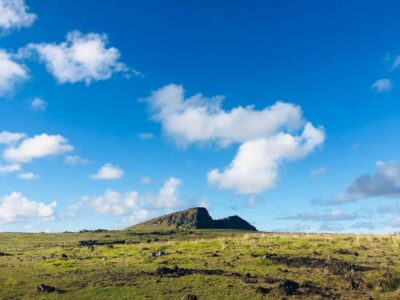
Two days of Full Day Tour of Rapa Nui + Sunrise in Tongariki
Read our review →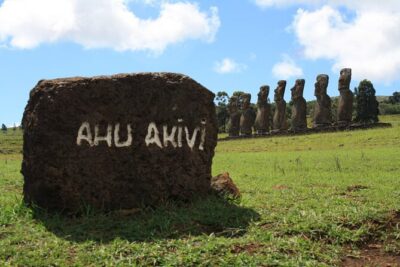
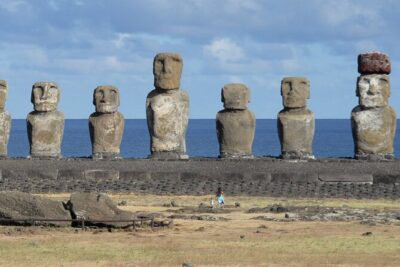
2-Day Private Tour Easter Island Highlights Complete Discovery
Read our review →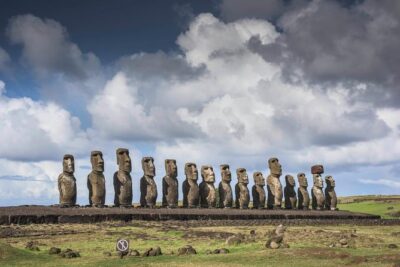
Private Tour: Full Day Easter Island Highlights
Read our review →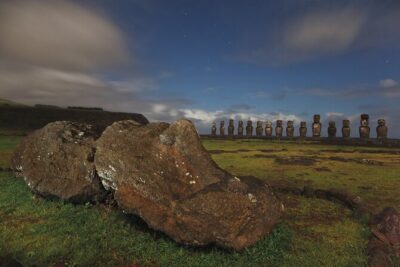
Browse the lists this tour appears in