
Reviewed · EASTER ISLAND TOURS
T1-THE GRAND TOUR (non-cruise visitors)
Rapa Nui reveals its greatest stories in stone. This private, full-day tour links the island’s major ceremonial sites, beaches, volcanoes, petroglyphs, and Moai quarry in one carefully packed circuit around Hanga Roa. I like the private transportation, which keeps the day flexible for your group, and I like the guide-led storytelling, especially since past guests praise David for his passion and clear explanations in French. The main drawback is the price: at $344.50 per person, you also need to budget $80 for the island entrance pass and pay separately for lunch.
This is the sort of day that helps you understand how the sites connect. You will see where the Moai were carved, how they reached ceremonial platforms, and how Rapa Nui’s religious focus later shifted toward the Bird Man ceremony. The pace is brisk, with about nine to ten hours on the road and at the sites, so this suits you best if you want to cover the island’s main sights rather than linger at only one or two.
In This Review
- Key points to know before booking
- Why this route makes sense for one long day
- Ahu Tahai gives you the island’s opening lesson
- Anakena Beach adds a softer side of Rapa Nui
- Te Pito Kura, Papa Vaka, and Pu o Hiro show Rapa Nui’s range
- Ahu Tongariki is the day’s great ceremonial view
- Rano Raraku explains where the stone giants began
- Puna Pau adds color to the Moai story
- Rano Kau and Orongo close the day with a new belief system
- What the $344.50 price really covers
- Who should book this private Rapa Nui day?
- FAQ
- How long does the Grand Tour last?
- Where is pickup available?
- Can cruise passengers join the tour?
- Is the tour private?
- What is included in the price?
- Is the Rapa Nui entrance ticket included?
- Is lunch included?
- Should you book the Grand Tour?
Key points to know before booking
- Private all-day circuit: Your group has its own vehicle and guide, with pickup from a hotel, residence, boarding house, or campsite in Hanga Roa.
- Ten major stops: The route covers Ahu Tahai, Anakena Beach, Ahu Te Pito Kura, Papa Vaka, Pu o Hiro, Ahu Tongariki, Rano Raraku, Puna Pau, Rano Kau, and Orongo.
- The entrance fee is extra: The required Rapa Nui National Park ticket costs $80 per adult and $40 for ages 7 to 17, and it remains valid for 10 days at all sites.
- French guiding is included: The tour information also lists English availability, so confirm your preferred language before booking.
- Lunch is not included: You can eat at a restaurant on the route or bring a picnic for the developed picnic area.
- Not for cruise passengers: Pickup is offered for visitors staying on the island, but cruise ship passengers cannot join this departure.
Why this route makes sense for one long day
Rapa Nui is small enough to circle by vehicle, but its important places are spread across the island. The Grand Tour gives you a broad look at the island’s ceremonial centers, volcanic interiors, coastal sites, and ancient stoneworking areas without requiring you to arrange several separate outings.
I like the order because it begins near Hanga Roa and then moves through the north, east, and south before returning toward town. You start with Ahu Tahai, travel toward Anakena and the northeast coast, continue to Tongariki and Rano Raraku, then finish at the volcano Rano Kau and the ceremonial village of Orongo.
The schedule leaves enough time for the major stops, but not unlimited time. Anakena and Rano Raraku receive about 90 minutes each, while Tongariki, Tahai, and Orongo receive about an hour. Shorter stops at Pu o Hiro and Papa Vaka add variety without taking much time.
Because the tour is private, you are not sharing the vehicle with strangers. That matters on a long day. You can ask questions as they arise, and your group can focus on the places that interest you most within the planned schedule. Still, the tour is not a slow, unstructured outing. Ten stops in one day means you should expect steady movement.
More Rapa Nui trips and moai walks:
- From Hanga Roa: Rapa Nui Culture Sightseeing Tour
★ 4.6 · 307 reviews - From Hanga Roa: Easter Island Highlights 2-Day Tour
★ 4.3 · 205 reviews - Full Day Tour in Rapa Nui
★ 4.5 · 122 reviews
Ahu Tahai gives you the island’s opening lesson
Ahu Tahai sits near Hanga Roa, beside the bay, and makes a strong first stop. The restored ceremonial complex includes several platforms and Moai, with the sea behind them. It is also known as a good sunset location, though this morning departure will give you a daytime introduction rather than an evening visit.
The site helps explain the layout of an ancient Rapa Nui settlement. Ahu platforms were not simply random piles of stones. They formed part of a wider social and ceremonial setting connected to community life and the surrounding environment.
You have about one hour here. That is enough for your guide to explain the basic structure of the site and for you to get your first close look at the island’s carved figures. The entrance charge is not included in the tour price, so make sure your park pass is arranged before the day begins.
Anakena Beach adds a softer side of Rapa Nui
After the ceremonial stonework, Anakena gives the day a welcome change of mood. This is Rapa Nui’s white-sand beach, with translucent water and the island’s only coconut grove. The setting feels almost unexpected after the stark volcanic sites.
Anakena also carries an important origin story. It is associated with the arrival of the first Polynesian settlers, making it more than a place for a quick swim or photograph. The restored ceremonial area includes some of the best-preserved Moai you will see on the island.
You receive about 90 minutes here, the longest single stop on the first part of the route. That gives you time to look at the platforms, enjoy the beach setting, and have a break from the vehicle. Lunch is not included, so this is one of the places where you may choose a restaurant meal or rely on a picnic arrangement later in the day.
The practical catch is that beautiful beach time can compete with archaeological interest. If you want a detailed look at every stone or a long pause beside the water, the overall itinerary may feel tight. For a first visit, though, the combination of beach, settlement story, and Moai makes Anakena one of the day’s best-balanced stops.
Te Pito Kura, Papa Vaka, and Pu o Hiro show Rapa Nui’s range
Ahu Te Pito Kura is a short but striking stop between Anakena and the Poike peninsula. The site is linked to the largest Moai ever raised on an ahu. The statue was toppled in the 19th century and broken in two, so you see both the scale of the original achievement and the damage that followed.
A stone beside the platform is described as having magnetic anomalies. Your guide can place this unusual feature within the wider story of the site, but you should treat it as a brief point of interest rather than a separate major attraction. The stop lasts about 30 minutes.
Papa Vaka shifts your attention from monumental figures to small carved images. The basalt outcrop carries petroglyphs connected to fish and other marine resources. These carvings point to the importance of the sea in Rapa Nui life, an angle that can get lost when every conversation centers on Moai.
You have about 20 minutes at Papa Vaka. That is enough for an introduction and a look at the rock surface, though visitors who care deeply about petroglyphs may want more time than the schedule allows.
Pu o Hiro receives only about five minutes. Its focus is an aerophone stone, a rock associated with sound when air passes through or across it. This is a quick roadside-style stop, useful as a small piece of the island’s cultural picture but not a reason to book the tour by itself.
More boat trips from Hanga Roa:
- Tour to the Motus: Boat trip and snorkeling in Rapa Nui
★ 5.0 · 8 reviews - T3+T4-RAPA NUI ARCHAEOLOGICAL SITES (non-cruise visitors)
★ 5.0 · 8 reviews - T2-THE MUST-HAVES OF RAPA NUI (non-cruise visitors)
★ 4.5 · 4 reviews - R3-THE RAPA NUI PENINSULA (non-cruise visitors)
★ 5.0 · 2 reviews
Ahu Tongariki is the day’s great ceremonial view
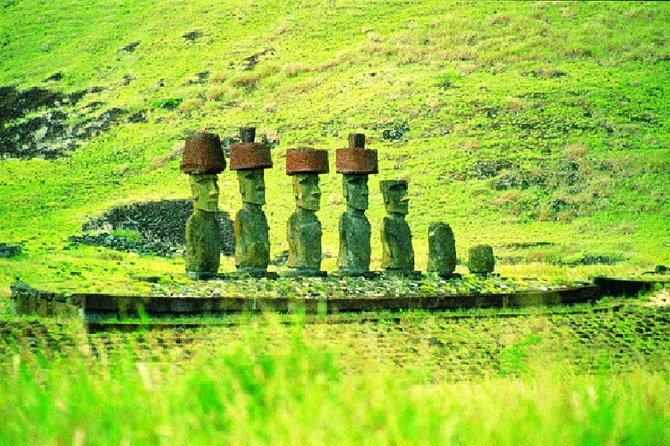
Ahu Tongariki is likely to be one of the strongest moments of the tour. Fifteen Moai face inland from a broad restored platform, creating the kind of view that explains why Rapa Nui has become one of the world’s most recognizable archaeological destinations.
The setting has an astronomical connection, and sunrise gives the site a special mood. This tour reaches Tongariki during a daytime circuit rather than at sunrise, but the scale remains impressive. You can study the line of figures, compare their shapes and condition, and listen to the explanation of how the platform fits into Rapa Nui ceremonial life.
The scheduled visit is one hour. That is a sensible amount of time for a first visit. You can take in the whole platform, look at details, and make photographs without turning the stop into a rushed glance from the vehicle.
The site is also a good example of why a guide adds value. The Moai are visually powerful, but the story becomes clearer when you understand that the platform, the statues, the setting, and the wider community all belong to one system. The praised guide style here is described as well documented, passionate, and good-humored, which suits a place where the basic facts only begin the conversation.
Rano Raraku explains where the stone giants began
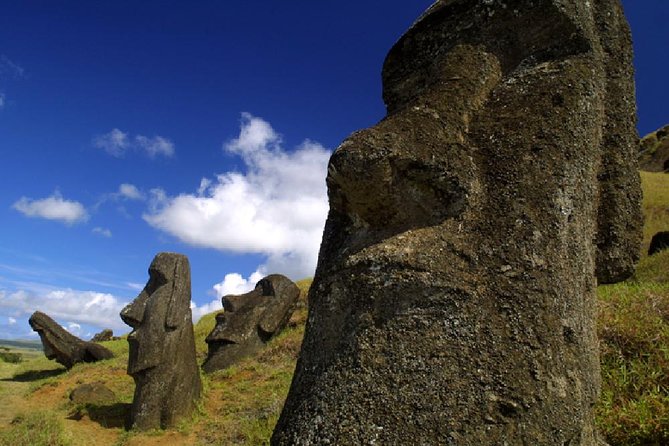
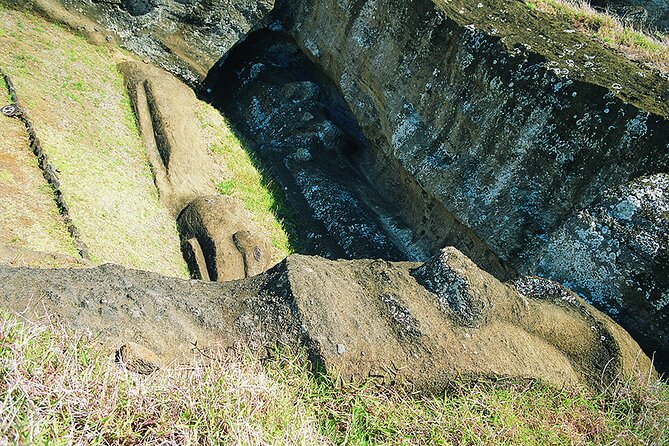
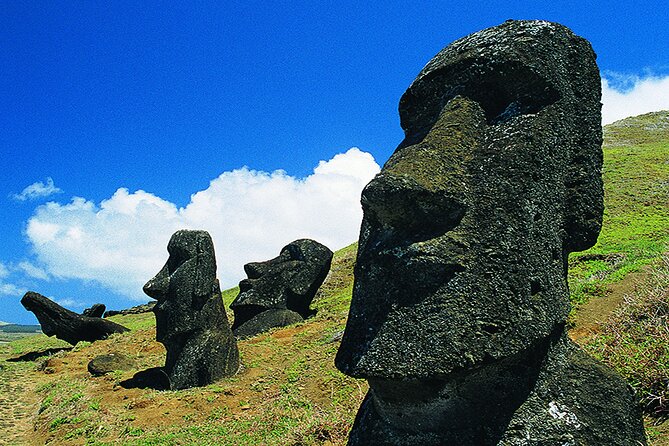
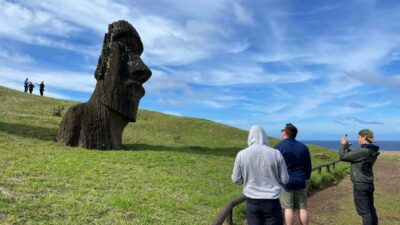
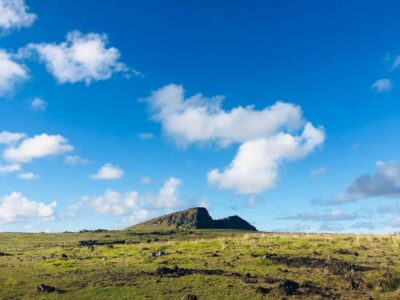
Rano Raraku is the essential Moai stop. This volcanic quarry is where almost all of the island’s great stone figures were carved. Hundreds of statues remain in and around the quarry, giving you a rare chance to see the production site rather than only the finished figures on ceremonial platforms.
The quarry changes how you read the rest of the island. At Tongariki, the Moai appear as a finished row. At Rano Raraku, you can consider the earlier stages of the work and the sheer effort required to shape, move, and raise these huge figures.
You have about 90 minutes here. Wear comfortable footwear and take your time within the permitted areas, since the ground and paths may require attention. The tour data does not specify the exact walking conditions, so ask your guide about the route on the day.
This is also where a private guide can make a major difference. Without context, the quarry can seem like a hillside filled with unfinished statues. With a clear explanation, you can connect the abandoned figures to the island’s changing social and religious life. The site deserves the generous time it receives, though anyone who wants an extensive walk through every section may find the stop too short.
Puna Pau adds color to the Moai story
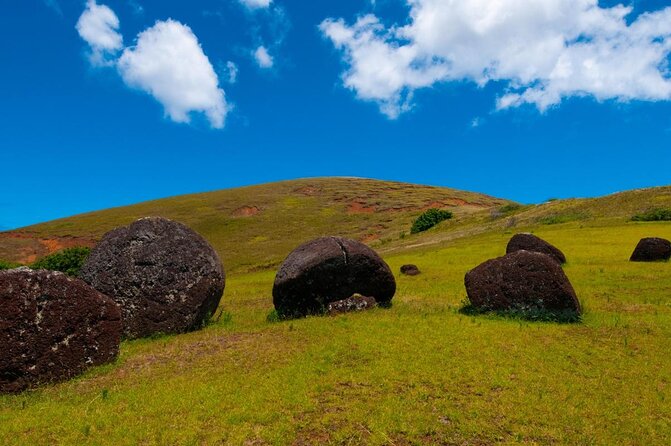
Puna Pau is the island’s other important stoneworking area. Here, red volcanic stone was shaped into the topknots or headdresses associated with some Moai. These red elements added decoration and visual weight to statues that were already enormous.
The stop lasts about 30 minutes and includes a panoramic view toward Hanga Roa Bay. After the large gray forms at Tongariki and Rano Raraku, the red stone helps you notice that Rapa Nui monument building was not only about size. Color and appearance mattered too.
Puna Pau is less overwhelming than the major platforms, but it fills an important gap. You learn that the figures and their upper elements could come from different sources, which gives the island’s building tradition another layer of practical complexity.
Rano Kau and Orongo close the day with a new belief system
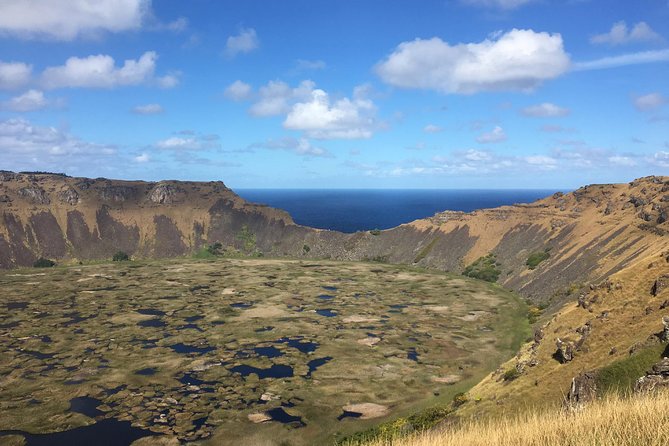
Rano Kau provides one of Rapa Nui’s most memorable views. The extinct volcano has a large crater, and its edge opens toward the broad South Pacific. The site makes the island’s isolation easy to grasp. You are not just looking at a crater, but at a volcanic island surrounded by a huge expanse of ocean.
The stop is scheduled for about 20 minutes. That is brief, but the view communicates quickly. If weather or visibility is poor, this part of the day may have less impact, and the tour data does not promise particular conditions.
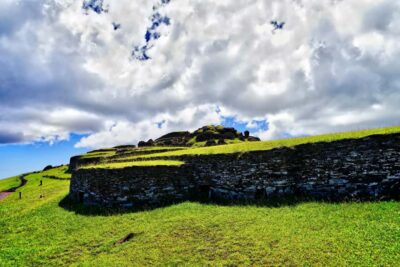
Nearby Orongo presents a different chapter of Rapa Nui culture. The ceremonial village sits on the cliff beside Rano Kau and faces the offshore islets where seabirds nested during the southern spring. The Bird Man ceremony centered on retrieving the first egg, with the winner’s sponsor gaining religious authority for the year.
You have about one hour at Orongo. This is enough time to examine the ceremonial village and hear how the Bird Man tradition differed from the earlier Moai-centered period. The shift is one of the most important ideas in the tour. Rapa Nui’s story did not stop with the construction of giant statues. Religious authority, competition, and social priorities changed.
Orongo works especially well as the final stop because it leaves you with a broader understanding of the island. You finish not only with images of Moai, but with a sense of cultural change over time.
What the $344.50 price really covers
The listed price is $344.50 per person. That is a serious cost, but it includes private transportation and a private guided tour for your own group. On an isolated island where the major sites are scattered, having one vehicle and one guide for a full day can be worth paying for.
The required entrance pass is extra. It costs $80 per adult and $40 for children ages 7 to 17, and it remains valid for 10 days at all sites. The separate note about an $80 Ahu Tahai entrance fee appears to refer to this wider park admission, so confirm the exact payment details before you go rather than assuming Tahai has a second charge.
Lunch is also extra. You can eat at a restaurant on the route or use the developed picnic area. The practical value of this choice is control: a picnic may save money and keep the day moving, while a restaurant meal may give you a more comfortable pause.
Group discounts are available, but the exact discount is not stated. If several people are sharing the private vehicle, ask for the group price before confirming. Since the experience is non-refundable and cannot be changed after booking, check your dates, accommodation, language preference, and park admission carefully.
Who should book this private Rapa Nui day?
I would choose this tour if you have one full day on Rapa Nui and want the island’s major sites explained in a logical circuit. It is especially suitable if you value privacy, want pickup from your accommodation, or prefer not to arrange separate transport between remote archaeological areas.
It also suits French-speaking visitors who want a guide able to explain the island’s stories in French. David is praised for being passionate, well informed, and cheerful, though the tour information also lists English as an offered language. Because those details do not perfectly match, confirm the language before paying.
You may want a different plan if you prefer long beach time, independent wandering, or a slower visit with fewer stops. The nine to ten-hour schedule is productive, but it asks you to keep moving. Cruise passengers cannot use this pickup service, and the listing specifically excludes them.
FAQ
How long does the Grand Tour last?
The tour lasts approximately nine to ten hours, beginning at 9:00 am.
Where is pickup available?
Pickup is available from your hotel, residence, boarding house, or campsite in Hanga Roa.
Can cruise passengers join the tour?
No. The pickup service is not available for cruise passengers.
Is the tour private?
Yes. Private transportation and a private guided tour are included, and only your group participates.
What is included in the price?
The price includes private transportation and a private guided tour. The tour information identifies a French guide and also lists English as an offered language, so confirm your preferred language.
Is the Rapa Nui entrance ticket included?
No. The entrance ticket costs $80 per adult and $40 for children ages 7 to 17. It is valid for 10 days and covers all sites.
Is lunch included?
No. Lunch is separate. You may eat at a restaurant on the route or bring a picnic for the developed picnic area.
Should you book the Grand Tour?
Book it if you want one well-filled day covering Rapa Nui’s main ceremonial sites, quarry, beach, petroglyphs, volcanoes, and Bird Man village. The private format, accommodation pickup, and strong guide praise make the high price easier to justify, especially for a small group that can share the cost.
Skip it if you want a loose schedule or plan to spend most of your time at Anakena, Rano Raraku, or Orongo alone. Before booking, confirm the guide language and the exact entrance-fee arrangements, then remember that the booking cannot be refunded or changed. For a first visit with limited time, this is an efficient and story-filled way to see the essential Rapa Nui sites.
Just added around Hanga Roa
- Volcanic Refuges: Excursion to Underground Civilization★ 4.7 · 8 reviews
- Easter Island Ancestral Dinner and Show with Transport★ 4.5 · 2 reviews
- Volcanic Wonders and the Kingdom of the Birdman: Half Day★ 5.0 · 6 reviews
- Half Day Private Tour: Caves and Volcanic Refuges★ 4.0 · 14 reviews
- Tour to the Motus: Boat trip and snorkeling in Rapa Nui★ 5.0 · 8 reviews
- Birdman Ceremonial Route: Orongo, Ranu Kau Half-Day Tour★ 4.5 · 16 reviews
- Visit Rapa Nui in 4 days with 3 Tours and Accommodation included★ 4.0 · 2 reviews
- Private Tour: Tongariki Sunrise Experience★ 4.5 · 20 reviews
Easter Island Tours, compared.
Two days of Full Day Tour of Rapa Nui + Sunrise in Tongariki
Read our review →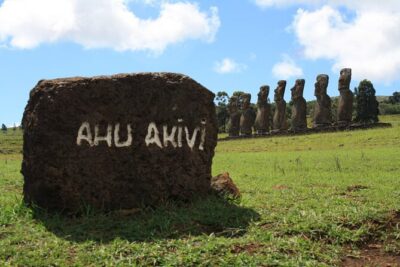
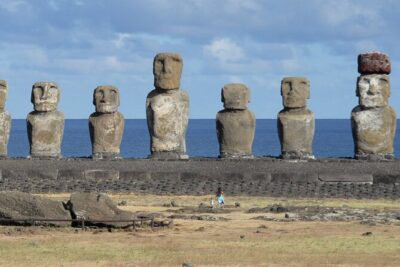
2-Day Private Tour Easter Island Highlights Complete Discovery
Read our review →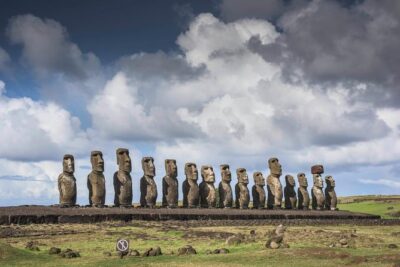
Private Tour: Full Day Easter Island Highlights
Read our review →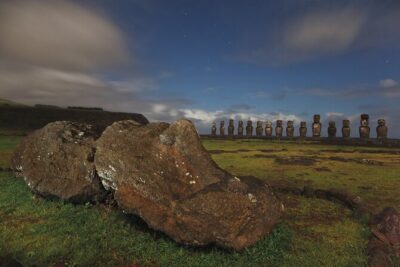
Browse the lists this tour appears in