
Reviewed · EASTER ISLAND TOURS
T2-THE MUST-HAVES OF RAPA NUI (non-cruise visitors)
Seven major sites, one long day, and a clear look at Easter Island’s past. This private Rapa Nui tour brings you from Hanga Roa to the island’s best-known ceremonial sites, volcanoes, quarry, beach, and moai platforms without making you share the vehicle with another group. I especially like the private transportation and the way the route covers both famous highlights and meaningful cultural sites. The main consideration is the extra US$80 park entrance fee, which is not included in the tour price.
I also like the chance to shape the day around your own group, with a guide speaking English, French, or Spanish. The strongest praise has gone to David, a French-speaking guide admired for his command of Rapa Nui culture and history and for keeping a full day interesting. The schedule is busy, though, so you should expect a sightseeing day rather than a slow, beach-centered outing.
In This Review
- Key points at a glance
- Why this private Rapa Nui day works
- Ahu Tahai sets the story beside Hanga Roa
- Rano Kau and Orongo explain Rapa Nui’s later beliefs
- Anakena offers the island’s gentlest hour
- Ahu Tongariki brings the moai into full view
- Rano Raraku is the day’s most revealing stop
- Ahu Akivi closes with an inland perspective
- What the private format is really worth
- Who should book this eight-hour route
- Should you book The Must-Haves of Rapa Nui?
- FAQ
- How long does the tour last?
- What time does pickup take place?
- Where can I be picked up?
- Is the national park entrance fee included?
- Is lunch included?
- Is this a private tour?
Key points at a glance
- Seven major Rapa Nui sites in about eight hours: You visit Tahai, Rano Kau, Orongo, Anakena, Tongariki, Rano Raraku, and Ahu Akivi in one full circuit.
- Private touring makes the pace more personal: Only your group participates, with pickup available from a hotel, residence, guesthouse, or campsite.
- The moai quarry is a major highlight: Rano Raraku lets you see hundreds of unfinished statues where almost all the island’s stone giants were carved.
- Anakena adds a rare beach break: White sand, translucent water, and Rapa Nui’s only coconut grove bring a softer side to the day.
- David earns special praise: If he is your guide, expect strong explanations of island culture and history, especially in French.
- Budget for the separate park ticket: The US$80 entrance ticket covers all sites for 10 days, while children aged 7 to 17 pay US$40.
Why this private Rapa Nui day works
Rapa Nui is compact enough to cross by road, but its key sites are spread around the coast and inland. Seeing the main places in one day takes planning. This tour handles the transportation and links together the island’s most important ceremonial, archaeological, and natural sights.
I like the mix. You are not given seven versions of the same moai platform. The day moves from the restored royal residence at Ahu Tahai to volcanic views at Rano Kau, then to the birdman village of Orongo. Later, Anakena provides sand and water, while Tongariki and Rano Raraku deliver the island’s most recognizable stone figures.
The private format matters here. You do not need to match the pace of a large group or wait for strangers at every stop. You can ask questions as the day unfolds, and a guide can spend more time on subjects that catch your attention. The tour is offered in English, French, or Spanish, with private guided visits included.
The published schedule gives roughly eight hours, with pickup details showing a 9:00 departure and the tour start listed as 9:30. Confirm the exact pickup time when you book. You will want to begin promptly because the day includes several stops and the route covers much of the island.
More Rapa Nui trips and moai walks:
- From Hanga Roa: Rapa Nui Culture Sightseeing Tour
★ 4.6 · 307 reviews - From Hanga Roa: Easter Island Highlights 2-Day Tour
★ 4.3 · 205 reviews - Full Day Tour in Rapa Nui
★ 4.5 · 122 reviews
Ahu Tahai sets the story beside Hanga Roa
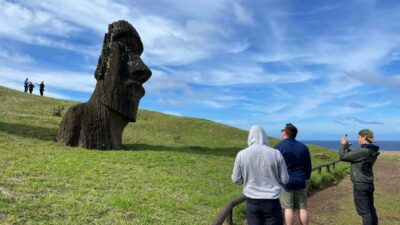
The first stop is Ahu Tahai, with about 90 minutes to explore. This is a strong opening because it introduces the moai in a setting tied to daily life and royal residence, rather than presenting them as isolated statues.
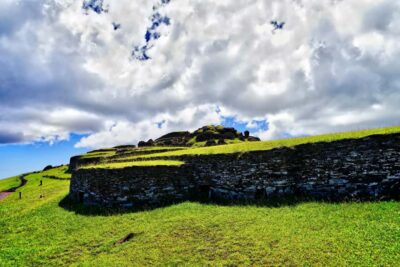
Tahai was one of the island’s early human settlements and has been restored as an example of ancestral living space. That detail gives the site extra weight. You are not only looking at stone figures. You are seeing part of a former community, shaped over generations.
The setting helps, too. Hanga Roa Bay forms the backdrop, so your first major view combines archaeology and the sea. This is a good place to listen closely to your guide, since the physical remains make the explanations easier to follow.
Admission is not included in the tour price. The separate park ticket is valid for 10 days and all the sites covered by the national park ticket, so it is not simply a one-stop charge. If you are staying on Rapa Nui for several days, that longer validity can make the cost easier to accept.
Rano Kau and Orongo explain Rapa Nui’s later beliefs
The drive to Rano Kau brings a sharp change in scenery. You have about 20 minutes at the extinct volcano, and the main attraction is the enormous crater. From here, the Pacific feels especially vast, a useful reminder of Rapa Nui’s isolation.
This is a short stop, so you should treat it as a viewpoint rather than a long walk. The crater and ocean provide one of the day’s clearest visual statements: this is a small island far out in open water.
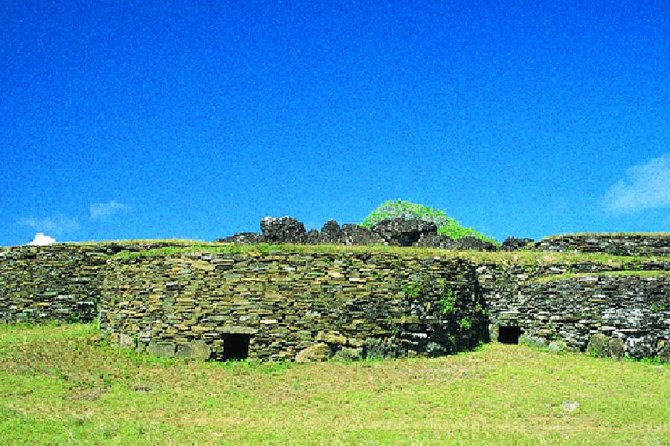
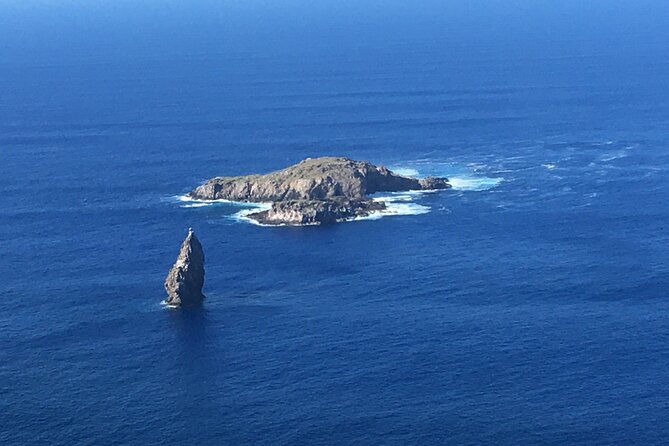
Orongo follows, with about an hour. The ceremonial village sits on a cliff facing offshore islets where seabirds arrived to lay eggs during the southern spring. The site is connected to the Tangata Manu, or Bird Man, ceremony.
The annual search for the first egg selected the year’s religious authority. That story gives Orongo a different focus from the moai platforms. Here, the important question is not simply how the statues were made or moved. It is how religious power operated in a later period of Rapa Nui society.
Orongo has been restored several times, and the cliffside location makes the site memorable. Your guide’s explanation is especially useful here because the meaning of the village and the birdman ceremony is not obvious from the stones alone.
Admission is separate. You may find the hour passes quickly, since the site combines structures, views, and an important cultural story.
Anakena offers the island’s gentlest hour
Anakena Beach receives about 90 minutes, making it one of the longer stops. That is welcome after the more formal archaeological sites.
On Rapa Nui, Anakena is the white-sand beach on the north side of the island. It is also linked to the arrival of the first Polynesian settlers. The setting is striking: translucent water, a sheltered shore, and the island’s only coconut grove.
The beach gives you a different way to understand Rapa Nui. Much of the day concerns ceremony, ancestry, and stone. Anakena shows the island as a place of arrival and settlement, not only as an archaeological puzzle.
The restored moai here are considered the best preserved still visible on the island. That makes the stop more than a swim break. You can look at the statues, enjoy the shore, and let the guide connect the site to the first Polynesian settlement.
The tour description allows lunch at a restaurant on site or a picnic in a developed area, but lunch itself is not included. Plan for that separate cost, or ask about the picnic option. Since this is a private tour, your group may have more say in how you use the 90 minutes, though the exact timing depends on the day’s route.
More boat trips from Hanga Roa:
- Tour to the Motus: Boat trip and snorkeling in Rapa Nui
★ 5.0 · 8 reviews - T3+T4-RAPA NUI ARCHAEOLOGICAL SITES (non-cruise visitors)
★ 5.0 · 8 reviews - T1-THE GRAND TOUR (non-cruise visitors)
★ 5.0 · 3 reviews - R3-THE RAPA NUI PENINSULA (non-cruise visitors)
★ 5.0 · 2 reviews
Ahu Tongariki brings the moai into full view
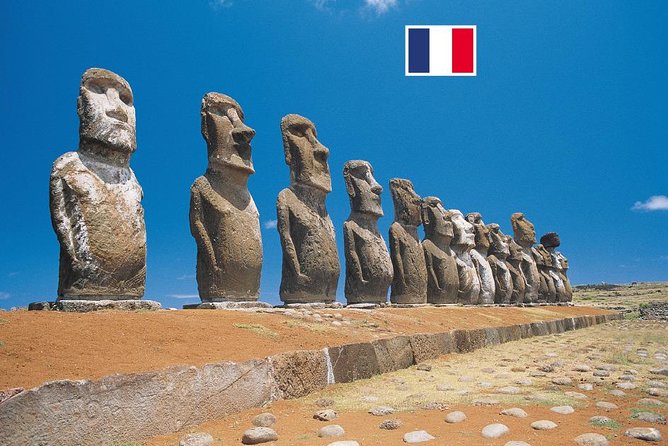
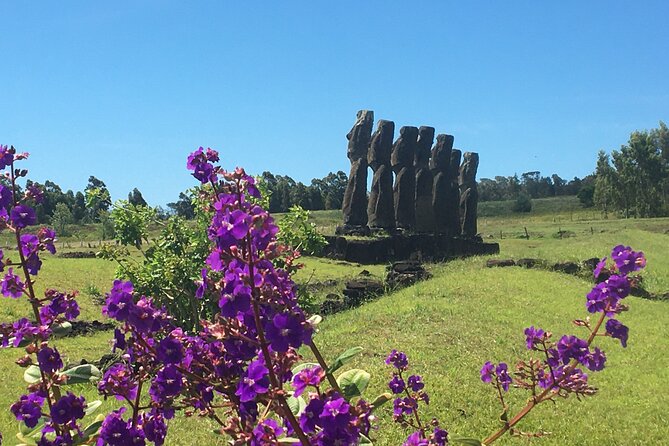
Ahu Tongariki is given about an hour, and it is one of the day’s essential stops. Fifteen moai face you from the restored platform, creating the large-scale scene most people picture when they think of Rapa Nui.
The site is described as the island’s most important and remarkable restored ceremonial platform. That judgment is easy to understand once you see the row together. A single moai can feel mysterious. Fifteen arranged on one ahu make the scale of the work much clearer.
Tongariki also has an astronomical orientation. Sunrises here can create a special atmosphere, but this tour begins in the morning rather than specifically at sunrise. You should not book this day expecting to catch the dawn at the platform. Instead, use the hour to study the arrangement and hear how the platform’s orientation fits into the wider culture of Rapa Nui.
Admission is not included, but the same 10-day ticket covers the site. If you are using the tour as your main island sightseeing day, this is one of the places that makes the entrance fee feel worthwhile.
Rano Raraku is the day’s most revealing stop
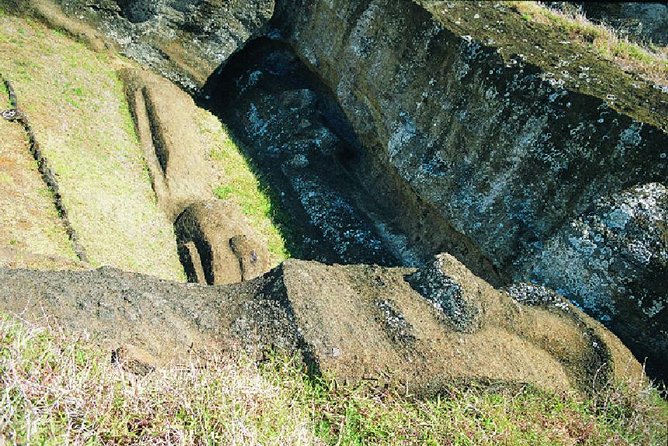
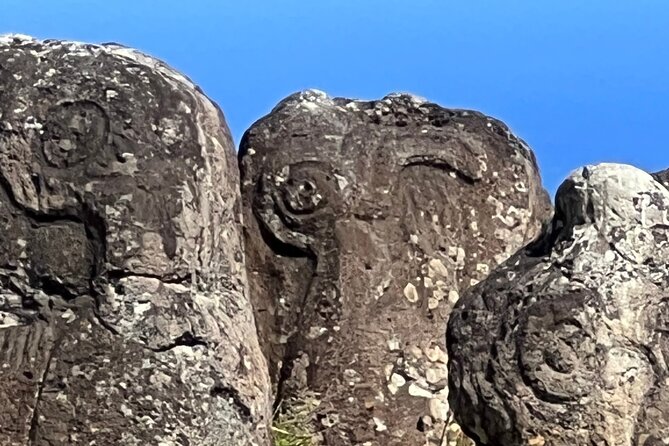
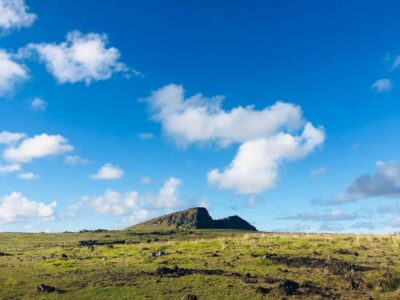
Allow about 90 minutes at Rano Raraku, the quarry where almost all of Rapa Nui’s stone giants were carved. Hundreds of statues remain here, including unfinished figures that show the work in progress.
This is the stop I would protect from rushing. The platforms elsewhere show the finished product. Rano Raraku shows the making of the moai, along with the fact that many statues were left behind.
Walking among the unfinished figures changes the way you see the completed statues at Tongariki and Tahai. You can compare the stages, notice how the bodies were shaped from the volcanic stone, and consider the enormous task represented by each monument.
The site also has a different mood from the restored ahu. It feels like a working place interrupted, with statues still connected to the quarry rather than arranged for final display. Your guide can help place that unfinished work in the wider story of the island.
The 90-minute stop is generous compared with the 20 minutes at Rano Kau. Wear practical footwear and follow site guidance, since the value here comes from walking and looking carefully rather than taking one quick photograph.
Ahu Akivi closes with an inland perspective
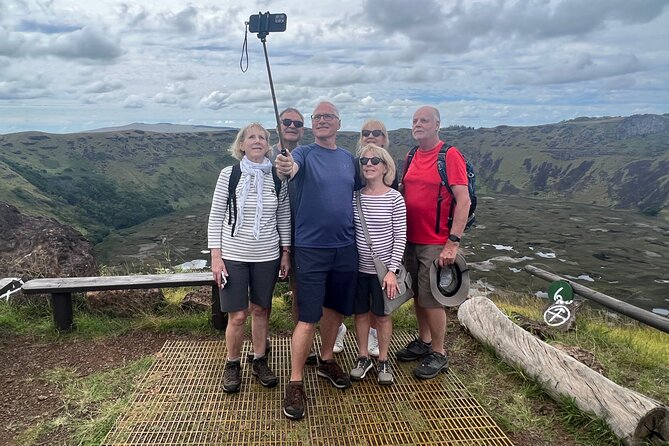
The final stop is Ahu Akivi, with about 30 minutes. Its inland location gives it a different character from the coastal platforms, and the colors and scenery change as a result.
The celestial orientation of the platform adds another layer. After seeing Tongariki’s large row and Rano Raraku’s quarry, Ahu Akivi gives you a quieter final look at how ceremonial sites relate to direction and the sky.
Thirty minutes is enough for an introduction and photographs, but it is not a long visit. That is reasonable at the end of a full circuit. By this point, you will have seen the main forms of Rapa Nui archaeology, and Ahu Akivi works as a final comparison rather than another major block of sightseeing.
What the private format is really worth
The price is $257.63 per person, before the separate US$80 entrance ticket and lunch. For one person, the total can feel high. The value improves when you are traveling as a small private group and want a full day with transportation and guiding already arranged.
Private transport removes the need to plan a route between seven sites. It also gives you a direct guide for questions about culture, history, and the meaning of each place. You are paying for access to a well-organized day, not just a vehicle ride.
The feedback on David is particularly strong. He is praised as a French guide who knows Rapa Nui culture and history extremely well, holds attention throughout the day, and answers questions clearly. If French is important to you, ask if David is available. The tour also offers English and Spanish guiding, so language choice is not limited to French.
The group discount feature may help reduce the per-person cost for a larger party. Still, you should add every required expense before deciding. The entrance ticket is US$80 per adult, or US$40 for ages 7 to 17, and lunch is extra.
The entrance ticket is valid for 10 days and all the sites included here. That is useful if your visit lasts longer than one day. You can return to sites on your own during the ticket period, subject to the applicable site rules.
Who should book this eight-hour route
I would choose this tour if you have limited time on Rapa Nui and want the main sites covered in one organized day. It suits first-time visitors who want context, not just transport to photo stops.
It is also a good match for couples, families, and friends who value privacy and want to ask questions freely. The format works especially well if your group speaks French, since David has received unusually warm praise for his explanations and cultural knowledge.
You should think twice if your ideal day is slow and unplanned. Seven stops in about eight hours means regular movement. Anakena offers the longest relaxed pause, but the tour is mainly an archaeological and cultural circuit.
The route suits most people, since most visitors can participate. Still, you should be comfortable with a full day of sightseeing and time outdoors. The supplied details do not specify walking distances or vehicle accessibility, so ask the provider if you have particular mobility needs.
Pickup is available from your hotel, residence, guesthouse, or campsite. The details show departure at 9:00 and a tour start at 9:30, so confirm the exact time and meeting arrangement. Confirmation arrives within 48 hours of booking, subject to availability.
Should you book The Must-Haves of Rapa Nui?
Book it if you want the broadest single-day introduction to Rapa Nui, especially with a private guide. The route includes the restored residence at Tahai, the volcano and birdman village, Anakena Beach, the full row at Tongariki, the quarry at Rano Raraku, and the inland platform at Ahu Akivi.
The strongest reason to choose it is the combination of coverage and personal guiding. David’s praised ability to explain the island’s culture and history can turn a demanding schedule into a coherent story.
Skip it if you have plenty of time and would rather split these places across several slower days. Also check the full budget first: $257.63 per person, plus the US$80 adult park ticket and lunch. For a private, full-island introduction with pickup and multilingual guiding, it offers solid value, but only if you want the convenience of seeing nearly all the major highlights at once.
FAQ
How long does the tour last?
The tour lasts approximately eight hours.
What time does pickup take place?
The pickup details list departure at 9:00, while the tour start time is listed as 9:30. Confirm the exact pickup time when booking.
Where can I be picked up?
Pickup is offered from a hotel, residence, guesthouse, or campsite.
Is the national park entrance fee included?
No. The entrance ticket costs US$80 per person, or US$40 for children aged 7 to 17. It is valid for 10 days and all the sites covered by the ticket.
Is lunch included?
No. Lunch is not included. You can eat at a restaurant on site or bring a picnic for a developed picnic area.
Is this a private tour?
Yes. Only your group participates, and private transportation and a private guided tour are included.
Just added around Hanga Roa
- Volcanic Refuges: Excursion to Underground Civilization★ 4.7 · 8 reviews
- Easter Island Ancestral Dinner and Show with Transport★ 4.5 · 2 reviews
- Volcanic Wonders and the Kingdom of the Birdman: Half Day★ 5.0 · 6 reviews
- Half Day Private Tour: Caves and Volcanic Refuges★ 4.0 · 14 reviews
- Tour to the Motus: Boat trip and snorkeling in Rapa Nui★ 5.0 · 8 reviews
- Birdman Ceremonial Route: Orongo, Ranu Kau Half-Day Tour★ 4.5 · 16 reviews
- Visit Rapa Nui in 4 days with 3 Tours and Accommodation included★ 4.0 · 2 reviews
- Sunrise in Tongariki on Easter Island Rapa Nui★ 3.5 · 5 reviews
Easter Island Tours, compared.
Two days of Full Day Tour of Rapa Nui + Sunrise in Tongariki
Read our review →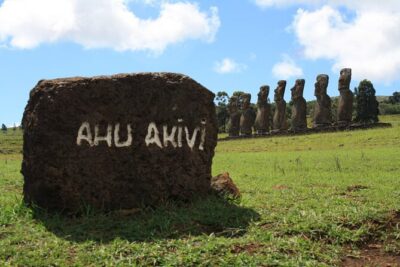
2-Day Private Tour Easter Island Highlights Complete Discovery
Read our review →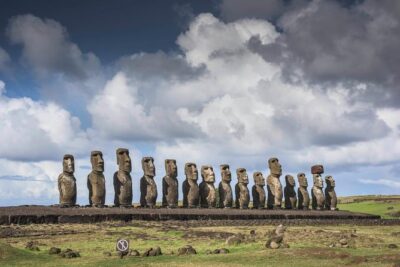
Private Tour: Full Day Easter Island Highlights
Read our review →
Browse the lists this tour appears in