
Reviewed · EASTER ISLAND TOURS
R3-THE RAPA NUI PENINSULA (non-cruise visitors)
The wild edge of Rapa Nui rewards curious hikers. This private half-day outing takes you across Poike Volcano and Ana O Keke, where you’ll find scattered moai, old ceremonial stonework, a Pleiades carving, and a cliffside cave tied to the birdman tradition. I like the small private format and the chance to see parts of the island that receive less attention than the famous quarry at Rano Raraku. I also like the guide-led storytelling, especially David’s ability to explain the island and the birdman ceremony in a way that brings the sites to life.
The main drawback is the extra cost. At $159.19 per person, you still pay separately for the Rapa Nui National Park ticket, listed at $80 per adult, and bring your own picnic lunch. The walk also calls for moderate fitness, so this is not a casual scenic drive with a few easy photo stops.
In This Review
- Key points to know before booking
- Why Poike Peninsula feels different from the famous Rapa Nui sights
- Vai To Heva and the first sacred marker
- Pu To Katiki at the top of Poike Volcano
- Ahu Kava Kava Kioe and the unusual moai stone
- Papa Ui Hetu’u and the Pleiades carving
- Ana O Keke and the Tangata Manu tradition
- Motu Toremo Hiva and the buried moai head
- What the $159.19 price really covers
- Pickup times, language, and physical demands
- Who should choose this Poike hike
- Should you book the Rapa Nui Peninsula tour?
- FAQ
- How long does the Rapa Nui Peninsula tour take?
- Where does the tour begin?
- What time is pickup?
- Is the tour private?
- Is the Rapa Nui National Park entrance ticket included?
- Is lunch included?
- What level of fitness is needed?
Key points to know before booking
- Poike Volcano gives you a quieter side of Rapa Nui: The route visits Vai To Heva, Pu To Katiki, Ahu Kava Kava Kioe, Papa Ui Hetu’u, and Motu Toremo Hiva.
- Ana O Keke is a cliffside cave with a strong cultural connection: The cave is linked to the birdman cult and the preparation of young women for the Tangata Manu ceremony.
- The private format is a real advantage: Only your own group takes part, with private transportation included.
- The tour lasts about five to six hours: The regular pickup is around 9:00 a.m., while a sunrise option leaves at 5:45 a.m.
- Bring money for the park entrance and your own food: Neither the $80 park ticket nor a picnic lunch is included.
- David’s storytelling is a major strength: His explanations of Rano Kau, Orongo, the volcanoes, and the birdman tradition received especially warm praise.
Why Poike Peninsula feels different from the famous Rapa Nui sights
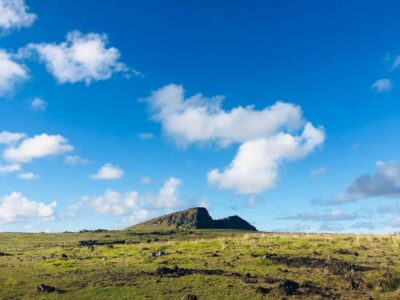
Most first-time visits to Rapa Nui focus on the great moai platforms, the quarry at Rano Raraku, and the ceremonial village of Orongo. This tour takes a different route. Poike Volcano forms one of the island’s major volcanic areas, and the day is built around walking between smaller archaeological remains and dramatic ocean-facing views.
That makes the experience feel more like an outing through an old sacred zone than a checklist of monumental statues. You will not find a long row of intact moai here. Instead, you’ll see fragments, a buried head, worn carvings, and platforms in various states of decay. I find that this can be more revealing than a polished, easy-to-read site. The remains ask you to look closely.
The tour is private, which matters on a route with several stops and a moderate physical demand. You can ask questions as they come up, keep the pace suited to your group, and spend more time at the places that interest you most. Private transportation also saves you from arranging separate rides across Hanga Roa and the peninsula.
The listed duration is five to six hours. That is long enough to make the journey worthwhile without consuming an entire day. Still, the individual stops add up to a serious half-day walk. The listed visits total roughly two and a half hours, before allowing for hiking between sites, transfers, explanations, and pauses for views.
More Rapa Nui trips and moai walks:
- From Hanga Roa: Rapa Nui Culture Sightseeing Tour
★ 4.6 · 307 reviews - From Hanga Roa: Easter Island Highlights 2-Day Tour
★ 4.3 · 205 reviews - Full Day Tour in Rapa Nui
★ 4.5 · 122 reviews
Vai To Heva and the first sacred marker
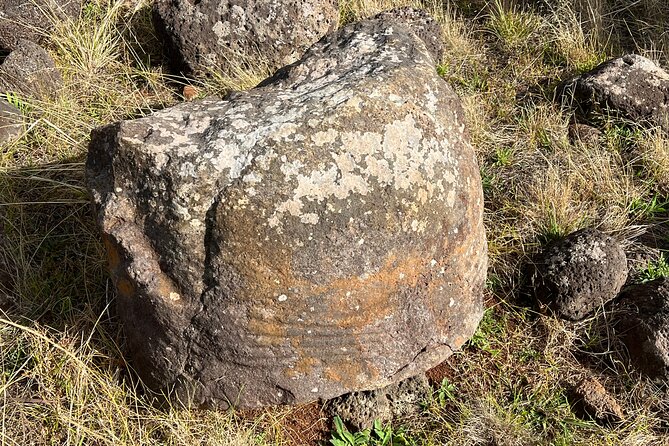
The first stop is Vai To Heva on Poike Volcano. Partway along the route toward the summit, you’ll encounter a large rock shaped by an ancient carver who used the natural form of the stone instead of treating it as a blank slab.
That detail is important. Rapa Nui carving often works with the material already present, and Vai To Heva gives you an early example of how a natural object could be marked and made sacred. You have about 30 minutes here, enough time to examine the rock and listen to the guide’s explanation rather than simply taking a quick picture.
Admission is not included at the stop. In practice, the separate park ticket applies to the protected sites visited during the day. Keep that cost in mind when comparing this tour with other options around Hanga Roa.
The first stop also sets the tone for the walk. This is not a museum-style display with signs at every turn. Your guide provides the context, so the quality of the explanation matters. David has been praised for sharing his passion for Rapa Nui and for holding attention while explaining the island’s past.
Pu To Katiki at the top of Poike Volcano
Pu To Katiki is the summit of the peninsula. The access is described as very easy, but that should not make you treat the whole outing as effortless. You still need moderate physical fitness for the complete walk, and the route includes several sites spread across uneven volcanic ground.
At the top, the reward is broad scenery across the right side of Rapa Nui, with a small crater and views extending from one end of the island to the other. This is the kind of place where I would slow down. The point is not only to reach the highest spot, but to understand how isolated and exposed the peninsula is.
You may want a hat, water, and sun protection, though only the need for moderate fitness is specifically stated in the tour details. The Pacific setting can make the stop feel open and powerful, but it also means there may be little relief from the elements. The exact facilities along the route are not provided, so do not count on buying food or drinks during the walk.
The 30-minute stop gives you time for photos and an explanation of the volcanic setting. If you are interested in geology, the guide’s account of the volcano and the island can add much more than the view alone.
Ahu Kava Kava Kioe and the unusual moai stone
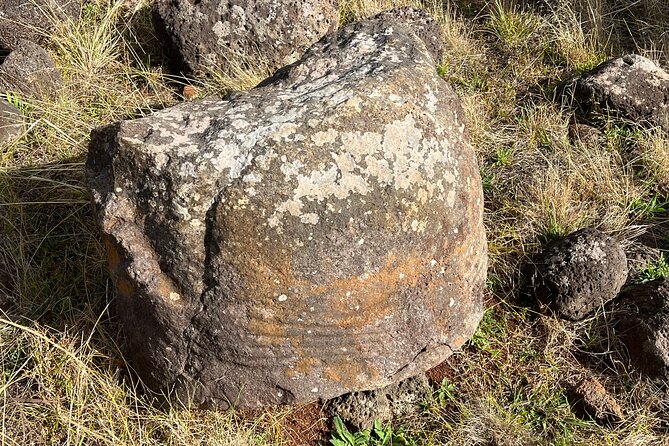
Ahu Kava Kava Kioe is one of the most distinctive archaeological stops. Only a small number of moai were made from stone that did not come from the flanks of Rano Raraku, the island’s major carving quarry. The figures here were made from a lighter, denser rock.
The moai are lying on the ground, scattered around the remains of a platform. Some details remain clear, even though the ceremonial structure has broken down. This is a good place to remember that a moai site does not need a perfectly upright statue to be meaningful. The stone type, the position of the figures, and the damaged platform all tell part of the story.
You get about 20 minutes here. That is enough for a focused visit, though anyone who likes detailed archaeology may wish for more time. Since this is a private outing, you can ask the guide to point out the surviving features instead of trying to interpret the stones on your own.
I especially like this stop for visitors who have already seen the major moai sites. It offers a useful comparison. The familiar Rano Raraku material is not the only stone used for these statues, and Poike shows how varied the island’s carving tradition could be.
More boat trips from Hanga Roa:
- Tour to the Motus: Boat trip and snorkeling in Rapa Nui
★ 5.0 · 8 reviews - T3+T4-RAPA NUI ARCHAEOLOGICAL SITES (non-cruise visitors)
★ 5.0 · 8 reviews - T2-THE MUST-HAVES OF RAPA NUI (non-cruise visitors)
★ 4.5 · 4 reviews - T1-THE GRAND TOUR (non-cruise visitors)
★ 5.0 · 3 reviews
Papa Ui Hetu’u and the Pleiades carving
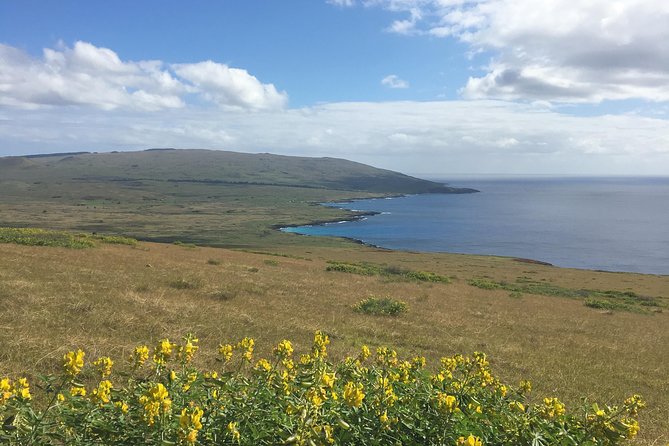
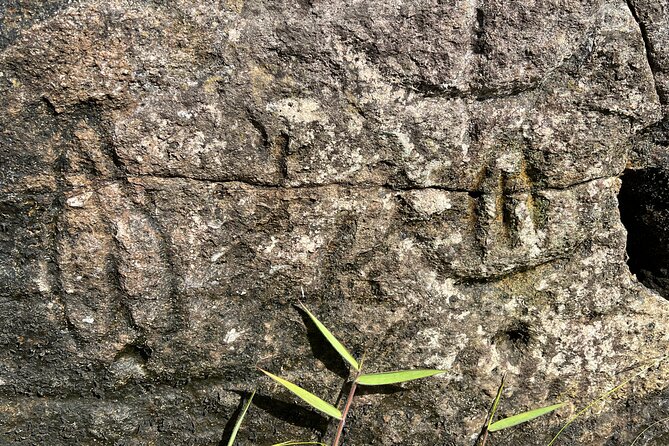
Continuing from the earlier platform, the route descends toward the cliffs and the open Pacific. Here you’ll see Papa Ui Hetu’u, a large stone carved by ancient inhabitants to represent the Pleiades constellation.
The setting gives the carving extra force. You are looking out over the ocean while viewing a stone connected to the night sky. The tour details do not spell out the full meaning of the carving, so this is a good moment to ask the guide for the cultural and astronomical context.
The stop lasts about 20 minutes. It is brief, but the combination of cliff, sea, and celestial symbolism makes it one of the more memorable pauses. It also shows why a guide adds value on Rapa Nui. Without an explanation, you might see a large carved stone. With context, you can begin to understand how the island’s people connected ceremony, nature, and the sky.
Take care near cliff areas and follow the guide’s instructions. The exact walking conditions and safety barriers are not described, so keep your attention on the ground and the edge rather than letting the camera take over.
Ana O Keke and the Tangata Manu tradition
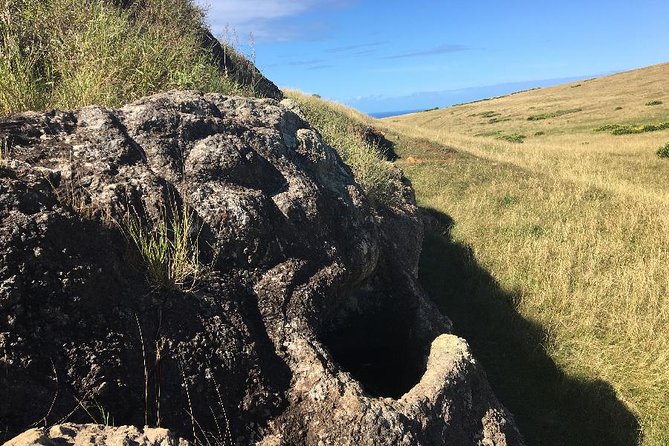
Ana O Keke is a cave above the Pacific, set directly along the cliff side. It is linked to the birdman cult, a major ceremonial tradition associated with the island. The cave was used in the preparation of young women for Tangata Manu, and wall art remains inside.
This is a more enclosed and personal stop than the open summit or ocean-facing stones. The cave’s connection to the birdman tradition gives it a clear human story, not just a geological one. The wall art also makes the visit more than a simple walk to a viewpoint.
You have about 30 minutes here. That should give your guide room to explain the ceremony and allow you to look at the cave carefully. The route’s cultural meaning is a major reason to choose this tour rather than a simple transport circuit.
The birdman tradition can be difficult to understand from a short label or a quick photograph. David’s explanations of Orongo and the birdman ceremony have been especially praised, and that experience should carry over well to a route that includes Ana O Keke. His background as the named guide in the tour information is worth noting when you are deciding how much weight to give the storytelling side of the outing.
Motu Toremo Hiva and the buried moai head
The final stop is Motu Toremo Hiva. Here, a moai head lies buried in front of a crumbling platform, acting as a guardian of the place.
It is a fitting end to the route. The statue is not presented as a complete, upright monument. Instead, you see a fragment partly claimed by the earth, with the remains of the platform nearby. That visual contrast can make you think about the passage of time, changing traditions, and the way Rapa Nui’s ceremonial sites have survived in incomplete form.
The visit lasts about 20 minutes. Since it comes at the end of a hike, you may appreciate the chance to pause, listen, and take in one final archaeological detail before returning to your accommodation.
This is also where the private format can help. If your group is more interested in the carving or the platform, you can use the stop for questions. A larger group might need to move on according to a fixed schedule.
What the $159.19 price really covers
The listed price is $159.19 per person. That is not a low-cost outing, especially after adding the Rapa Nui National Park ticket, listed at $80 per adult and with a $40 rate noted for ages 7 to 17. A picnic lunch is also extra.
The price becomes easier to justify if you value privacy, door-to-door pickup, and a guide who can explain the archaeology and traditions in detail. Private transportation is included, and only your own group participates. You are paying for a focused day with a dedicated guide rather than simply paying for a seat in a large vehicle.
The value is weaker for someone who wants a short, inexpensive sightseeing ride. The route is spread across several stops, the park ticket adds a substantial extra charge, and lunch is not supplied. Before booking, calculate the full cost for your group rather than looking only at the advertised tour price.
Group discounts are offered, though the exact discount is not provided. If you are visiting with several people, ask for the current group rate before confirming. The tour is often reserved about 26 days ahead, so planning early is sensible, particularly if you need a specific date.
Pickup times, language, and physical demands
Pickup is offered from your hotel, residence, guesthouse, or campsite. The regular departure is listed as 9:00 a.m., while the broader tour information gives a 9:30 a.m. start time. Because those times do not match perfectly, confirm the exact pickup time when your booking is accepted.
A sunrise option, called Sunrise over Tongariki, departs at 5:45 a.m. The information provided does not give a full separate schedule for that option, so ask what the early departure includes before selecting it.
The tour is offered in English, while the included service is described as hiking with a French tour guide. If language is important to you, confirm the guide language directly before payment. The provider is Aroha Tours Rapa Nui.
You should have a moderate level of physical fitness. The tour includes hiking around a volcano, a summit, cliff areas, a cave, and several archaeological sites. The access to Pu To Katiki is described as very easy, but that single note does not describe every section of the route. Wear practical walking shoes and plan for a half-day outdoors.
The activity is private, so it suits couples, families with older children, and small groups who want to set their own rhythm. The listed details do not provide an accessibility rating, stroller information, or details about mobility equipment. Ask the operator directly if those concerns apply to you.
Who should choose this Poike hike
I would choose this experience if I wanted a quieter, more interpretive day on Rapa Nui. It suits you if you care about archaeology, volcanic scenery, cave art, astronomy, and the birdman tradition. It is also a smart option for anyone who prefers a guide-led walk to arranging several remote sites alone.
The tour may be less suitable if your main goal is to see the largest number of famous moai in the shortest possible time. Poike’s appeal is its scattered remains and strong setting, not a single grand monument. You also need to be comfortable paying the park fee separately and carrying or arranging your own lunch.
The guide is central to the experience. The strongest praise has focused on David’s passion, his ability to keep the story engaging, and his explanations of the volcano, Rano Kau, Orongo, and the birdman ceremony. Those comments point to an outing where interpretation is as important as the views.
Be careful with the cancellation terms. The experience is non-refundable and cannot be changed for any reason. Confirmation arrives within 48 hours of booking, subject to availability, so do not treat your reservation as fully settled until that confirmation comes through.
Should you book the Rapa Nui Peninsula tour?
Book it if you want a private, active half-day with unusual archaeological remains, cliff views, and a guide who can connect the sites to Rapa Nui’s beliefs and ceremonies. The combination of Poike Volcano, Ana O Keke, the Pleiades carving, and the buried moai head gives you a side of the island that feels less familiar and more exploratory.
Skip it if you want a budget tour, an easy drive, or a day centered only on intact moai. The added park ticket and picnic cost matter, and moderate fitness is required.
For the right visitor, the value is in the access, the small group, and the stories. Confirm the pickup time, guide language, total cost, and physical expectations before paying. If those details work for you, this is a strong choice for seeing Rapa Nui beyond its headline sights.
FAQ
How long does the Rapa Nui Peninsula tour take?
The experience lasts approximately five to six hours.
Where does the tour begin?
Pickup is offered from your hotel, residence, guesthouse, or campsite in Hanga Roa.
What time is pickup?
Regular departures are listed for 9:00 a.m., with a 5:45 a.m. departure available for the Sunrise over Tongariki option. The tour information also lists a 9:30 a.m. start time, so confirm the exact pickup time after booking.
Is the tour private?
Yes. Only your own group participates in this private tour and activity.
Is the Rapa Nui National Park entrance ticket included?
No. The park ticket is extra. The provided details list it at $80 per person, with a $40 rate noted for ages 7 to 17.
Is lunch included?
No. A picnic lunch is not included.
What level of fitness is needed?
A moderate level of physical fitness is recommended. The experience includes hiking around Poike Volcano and visiting several archaeological sites and a cliffside cave.
Just added around Hanga Roa
- Volcanic Refuges: Excursion to Underground Civilization★ 4.7 · 8 reviews
- Easter Island Ancestral Dinner and Show with Transport★ 4.5 · 2 reviews
- Volcanic Wonders and the Kingdom of the Birdman: Half Day★ 5.0 · 6 reviews
- Half Day Private Tour: Caves and Volcanic Refuges★ 4.0 · 14 reviews
- Tour to the Motus: Boat trip and snorkeling in Rapa Nui★ 5.0 · 8 reviews
- Birdman Ceremonial Route: Orongo, Ranu Kau Half-Day Tour★ 4.5 · 16 reviews
- Visit Rapa Nui in 4 days with 3 Tours and Accommodation included★ 4.0 · 2 reviews
- Private Tour: Tongariki Sunrise Experience★ 4.5 · 20 reviews
Easter Island Tours, compared.
Two days of Full Day Tour of Rapa Nui + Sunrise in Tongariki
Read our review →
2-Day Private Tour Easter Island Highlights Complete Discovery
Read our review →
Private Tour: Full Day Easter Island Highlights
Read our review →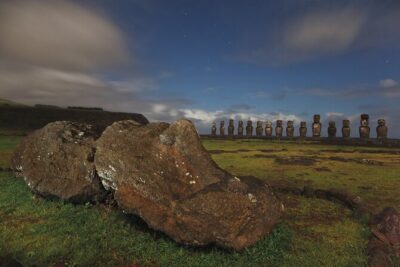
Browse the lists this tour appears in