
Reviewed · STARGAZING & ASTRONOMY
The Rapa Nui Stargazing Experience
The stars here do more than decorate the sky. The Rapa Nui Stargazing Experience pairs Southern Hemisphere astronomy with a nighttime visit to Anakena Beach, where the Moai take on a very different mood. I like the clear sense of place: you learn how Polynesian navigators used the stars, then look through telescopes from a remote coastal setting.
I also like the small comforts, especially hot chocolate, a local cake, blankets, and a follow-up night photo sent by email. The main catch is weather. Clouds and strong wind can cancel the outing, even when Hanga Roa looks clear, so you should book early in your stay if possible.
In This Review
- Key points at a glance
- Why stargazing on Rapa Nui feels different
- Meeting in Hanga Roa between 7:30 and 8:30
- The remote observation site and the first hour
- Hot chocolate, cake, and the value of waiting
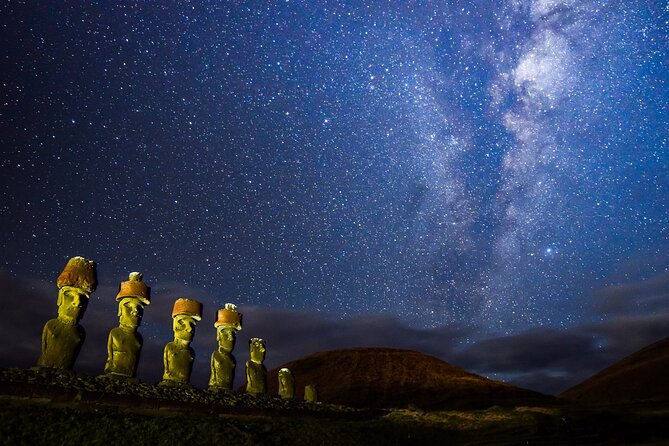
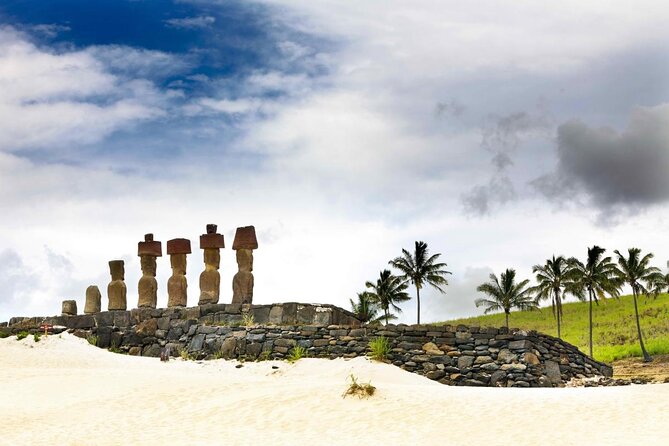
- Anakena Beach and the Moai after dark
- Is $125 a fair price?
- Weather is the one serious uncertainty
- Who will enjoy this most?
- Practical details before you reserve
- Should you book the Rapa Nui Stargazing Experience?
- FAQ
- Where does the Rapa Nui Stargazing Experience begin?
- What time does the experience start?
- How long does the tour last?
- What happens if the weather is poor?
- What is included in the experience?
- How far in advance can I cancel for a full refund?
Key points at a glance
- Polynesian navigation under the Southern Hemisphere sky: The opening talk connects astronomy to how Pacific sailors found their way across the ocean.
- Two very different night settings: A dark observation site gives you the best chance for stars, while Anakena adds the drama of Moai beside the sea.
- Telescopes reveal more than your eyes can: Depending on conditions, you might see the Moon, planets, nebulae, and even Saturn’s rings.
- A small group of no more than 12: This keeps the evening personal and makes it easier to ask questions.
- Comfort matters after dark: Hot drinks, cake, and sometimes blankets make the three-hour outing easier in cool or windy weather.
- Weather and minimum numbers can change the plan: You receive a refund or another date if the provider cancels before departure.
Why stargazing on Rapa Nui feels different
Easter Island is far from the bright city glow that washes out the night sky in much of the world. That distance gives this outing its real appeal. You are not simply looking at a few bright stars from a hotel terrace. You are taken to a remote observation site, where the darkness itself becomes part of the experience.
The setting also connects naturally to Rapa Nui culture. The island is famous for its Moai, but the people who settled and navigated across the Pacific depended on the sun, stars, ocean swells, and winds. A talk about Polynesian navigation gives the sky a human meaning. You are not only learning the names of objects overhead. You are considering how earlier seafarers read the heavens as a working map.
The guides, including Mark, Yoyo, and Toke, are praised for making the evening lively rather than stiff. Mark is described as especially passionate about astronomy, while the guide team brings plenty of humor and storytelling. That matters during the first part of the night, when your eyes need time to adjust and clouds may temporarily block the view.
The experience has earned a 4.5 rating from 32 posted evaluations, with especially strong praise for the guides, the star talk, the telescopes, and the atmosphere at Anakena. One poor rating came from a cancellation caused by wind and weather, which points to the central tradeoff: the provider takes conditions seriously, but you cannot control the sky.
More Rapa Nui trips and moai walks:
- From Hanga Roa: Rapa Nui Culture Sightseeing Tour
★ 4.6 · 307 reviews - From Hanga Roa: Easter Island Highlights 2-Day Tour
★ 4.3 · 205 reviews - From Hanga Roa: Easter Island Sightseeing Full Day Tour
★ 4.5 · 189 reviews
Meeting in Hanga Roa between 7:30 and 8:30
The meeting point is in front of the Katipare Library, also called Centro Lector Katipare, in Hanga Roa. The supplied information gives seasonal timing that you should check carefully when booking:
- From September through April, meet at 8:30 pm.
- During winter, the meeting window is generally 7:30 to 8 pm.
- The general start time is listed as 7 pm, so confirm the exact pickup instruction for your date.
Transportation back to your lodging is included, and the full outing takes about three hours. That is useful on an island where evening transport choices can be limited. It also means you do not need to arrange a late return after standing outdoors in the dark.
The group can include up to 12 people. That is small enough for a more direct exchange with the guides, though it is not a private tour. If you want a quiet, solitary night with no conversation, this may feel more social than expected. If you enjoy asking questions and hearing stories, the size works well.
The tour is usually booked about 64 days ahead. That is a strong reason to reserve before arriving, especially if your time on Rapa Nui is short. More importantly, schedule it near the beginning of your stay if you can. If clouds cancel the first attempt, you have a better chance of using the alternative night offered by the provider.
The remote observation site and the first hour
The evening begins near Anakena Beach, though the exact sequence involves setting up the telescopes at a remote site before the final visit to Ahu Nau. The main astronomy session includes an explanation of the night sky, Southern Hemisphere stars, and Polynesian navigation methods.
This part is more valuable than simply pointing out constellations. From North America or Europe, you may be used to seeing familiar star patterns. On Rapa Nui, the sky presents a different arrangement, and the guide helps you get oriented. You learn how the sky appears to move, how the Earth turns around the Sun, and how the stars fit into larger stories about navigation and mythology.
The guides also use this opening talk to let your eyes adapt to the darkness. That is a practical touch. If you rush straight from a lit vehicle into telescope viewing, your night vision is not ready. A patient introduction gives your eyes time to settle while keeping the group engaged.
The telescopes are the main technical feature. With good conditions, you might view the Moon, planets, nebulae, and other objects that are difficult or impossible to see in ordinary town lighting. One especially memorable possibility is Saturn’s rings, which can turn an abstract astronomy lesson into a sharp, personal moment.
Clouds do not automatically ruin the evening. During breaks in the weather, the guides can continue with explanations of the solar system, Earth’s rotation, and the stars. Still, you should keep your expectations realistic. A cloudy night may offer only a handful of visible objects, and no guide can manufacture a clear sky.
Hot chocolate, cake, and the value of waiting
A hot drink and local cake are included. Some outings also feature blankets, which are welcome additions when you are sitting or standing outdoors at night. The snack is not the reason to pay $125, but it improves the pacing and comfort of the experience.
I see the refreshments as part of the tour’s practical design. Astronomy requires patience. You may wait for your eyes to adjust, for a cloud to pass, or for your turn at the telescope. A warm cup gives you something to do while the sky changes.
The guides have also been praised for adding music and song. That suggests an evening with personality, not a dry lecture followed by a telescope queue. The tone seems friendly and informal, with Mark and his colleagues using humor to keep the group together.
That atmosphere will suit you if you like a guide who talks with you rather than at you. It may be less appealing if you want a strictly scientific presentation with charts, measurements, and little conversation. The astronomy is accessible and entertaining, with cultural stories woven into the technical material.
More night sky trips from Easter Island:
- Rapa Nui Stargazing
★ 4.5 · 62 reviews - Easter Island: Rapa Nui Stargazing Tour
★ 4.8 · 16 reviews - Astronomical Tour on Easter Island
★ 3.5 · 3 reviews - Rapa Nui Astrophotography and Stargazing Night Tour Combination
★ 5.0 · 3 reviews
Anakena Beach and the Moai after dark
The later visit to Anakena is the emotional center of the outing. This is not the same as seeing the beach in daylight. The sand, coast, and Moai become shapes in the dark, and the limited light makes the statues feel more imposing.
The group has special nighttime access to Ahu Nau, the ceremonial platform associated with the Moai at Anakena. That access is a major reason this experience costs more than a simple self-guided evening walk. You get a controlled, organized visit rather than trying to navigate the site alone at night.
The beach stop also creates a strong contrast with the telescope session. At the remote site, you are looking upward and learning how people read the heavens. At Anakena, you look across the shore at monuments built by the people who made this island their home. The two parts belong together, even though one is astronomical and the other archaeological.
Night photography adds another useful touch. The guide team takes a photo of you with the Moai and the night sky, then sends it by email in about five days. Internet service on the island is slow, so do not expect the image immediately. This is a thoughtful souvenir because it captures the unusual combination of stars, ocean, and statues in one frame.
The photo is not a replacement for a professional photography tour. The conditions are dark, the process is shared among the group, and the timing depends on the sky. Still, it gives you a lasting record of an experience that can be hard to reproduce with a phone.
Is $125 a fair price?
At $125 per person, this is not a budget evening. The value depends on what you want from Rapa Nui. If you only need a place to look at stars, you can find darkness without paying for a guided outing. But that misses the telescope equipment, transportation, cultural context, refreshments, Moai access, and night photograph.
I think the price is easier to justify because the experience combines several elements that would be difficult to arrange independently. You are driven to the observation site, given an organized explanation of the Southern Hemisphere sky, helped at the telescopes, taken to Anakena, and returned to your lodging.
The maximum group size of 12 also helps. You are paying for a guided experience rather than a large bus excursion. The value is strongest for someone who appreciates interpretation and wants the night to connect astronomy with Rapa Nui culture.
The value drops if clouds dominate the whole outing. The provider offers a replacement night when weather changes during the tour, subject to availability, and a full refund or alternative date when poor weather cancels the experience completely before departure. You do not receive a refund after the tour has started, so the weather policy is worth understanding before you book.
Weather is the one serious uncertainty
Rapa Nui weather can change quickly, and the provider checks conditions near the actual observation site rather than relying only on what the sky looks like in town. Wind is part of the decision too. A clear sky with winds around 35 kilometers per hour may be judged too uncomfortable or unsafe for the group.
That policy can feel frustrating if Hanga Roa appears clear when the cancellation message arrives. Still, it is sensible for an outdoor astronomy session involving telescopes, darkness, transportation, and time near the coast. The provider may also cancel if the minimum number of people is not met.
You should build flexibility into your schedule. Do not place this tour on your final night unless you have no other choice. If the first night is cloudy, the team may offer another evening or a refund. A second attempt can work well, but it depends on space and your remaining time.
Cloud cover during the tour does not always end the program. The guides can continue the educational talk, wait for breaks, and take Moai photos if conditions allow. One especially good account describes a storm cloud at the start, followed by a clearing sky and telescope views later. That is the right attitude to bring: hope for a spectacular sky, but value the stories and setting even if nature has other plans.
Who will enjoy this most?
I would recommend this for you if you have an interest in astronomy, Polynesian culture, photography, or unusual nighttime settings. It is also a strong choice for families, couples, solo visitors, and friends. The guides’ humor and warm approach make it accessible even if you cannot name a constellation.
It suits first-time stargazers because the talk gives you a framework before the telescope viewing begins. You do not need technical astronomy knowledge. The experience is built around seeing and understanding, not memorizing a list of stars.
It is less suitable if you dislike late evenings, outdoor conditions, or plans that depend on weather. You should also be comfortable with a group setting and a three-hour outing. The tour is not described as an advanced astrophotography session, so serious photographers may want a more specialized option.
If you have limited time on Rapa Nui, I would still consider making room for it. The combination of dark sky and Moai at Anakena is specific to this place. You can visit the beach in daylight on another day, but the nighttime setting gives you a completely different view.
Practical details before you reserve
Confirmation arrives when you book. Most people can take part, and the maximum group size is 12. Meet in front of Katipare Library in Hanga Roa, then expect transportation to the observation site, Anakena, and back to your lodging.
The price is $125 per person. Free cancellation is available until 24 hours before the local start time. Cancellations made less than 24 hours ahead, or changes made inside that period, are not refunded.
If the provider cancels because of poor weather or because the minimum number is not reached, you can choose another date or receive a full refund. If conditions change after the tour begins, the team may try to offer another night free of charge, but that depends on availability.
Bring patience and dress for the night. The supplied information confirms hot drinks, cake, and some reports of blankets, but it does not give a detailed clothing list. Since you will spend time outdoors near the coast, a warm extra layer is a sensible precaution.
Should you book the Rapa Nui Stargazing Experience?
Yes, if you want more than a standard island sightseeing tour. The strongest parts are the Southern Hemisphere sky talk, the chance to see planets and nebulae through telescopes, the warm and funny guides, and the nighttime Moai setting at Anakena.
Book it early in your Rapa Nui stay and leave room for a weather backup. At $125, it is a considered purchase, but the combination of transportation, astronomy instruction, refreshments, special nighttime access, and a follow-up photograph makes the price reasonable for a memorable evening.
Skip it only if your schedule cannot handle a weather change or if you want a silent, self-guided night. For most people who enjoy place-based stories and a bit of wonder, this is one of the island’s more distinctive evening experiences.
FAQ
Where does the Rapa Nui Stargazing Experience begin?
You meet in front of Katipare Library, also called Centro Lector Katipare, in Hanga Roa on Easter Island.
What time does the experience start?
The general start time is listed as 7 pm. From September through April, the meeting time is 8:30 pm, while the winter meeting window is 7:30 to 8 pm. Confirm the exact time for your date when booking.
How long does the tour last?
The full experience lasts about three hours, including transportation back to your lodging.
What happens if the weather is poor?
If the provider cancels completely because of poor weather, you can choose another date or receive a full refund. If weather changes during the outing, the team may try to take you out again free of charge on another night, subject to availability.
What is included in the experience?
The outing includes transportation, telescope observation, a talk about Polynesian navigation and the night sky, a hot beverage, local cake, and nighttime photos at Anakena Beach. The photo is sent by email in about five days.
How far in advance can I cancel for a full refund?
You must cancel at least 24 hours before the local start time for a full refund. Cancellations or changes made less than 24 hours before the experience are not accepted for a refund.
Just added around Easter Island
- Volcanic Refuges: Excursion to Underground Civilization★ 4.7 · 8 reviews
- Easter Island Ancestral Dinner and Show with Transport★ 4.5 · 2 reviews
- Volcanic Wonders and the Kingdom of the Birdman: Half Day★ 5.0 · 6 reviews
- Half Day Private Tour: Caves and Volcanic Refuges★ 4.0 · 14 reviews
- Tour to the Motus: Boat trip and snorkeling in Rapa Nui★ 5.0 · 8 reviews
- Birdman Ceremonial Route: Orongo, Ranu Kau Half-Day Tour★ 4.5 · 16 reviews
- Visit Rapa Nui in 4 days with 3 Tours and Accommodation included★ 4.0 · 2 reviews
- Sunrise in Tongariki on Easter Island Rapa Nui★ 3.5 · 5 reviews
Stargazing & Astronomy, compared.
The Roofless Experience San Pedro de Atacama Stargazing Tour
Read our review →


Astronomical Tour with Guide and Pick Up San Pedro de Atacama
Read our review →
“Astronomical Adventure in San Pedro de Atacama”
Read our review →Browse the lists this tour appears in