
Reviewed · ATACAMA DESERT TOURS
San Pedro de Atacama: Etno-Stargazing Tour with Transfer
The desert sky has a story to tell. This 150-minute evening tour combines clear Southern Hemisphere stars with Western astronomy and Andean sky traditions, then gives you time at a telescope to see planets, clusters, nebulae, or galaxies. I especially like the mix of science and indigenous interpretation, plus the chance to use the telescope yourself. The main caution is the cold, and a bright moon can wash out many stars.
I also like the simple transport from San Pedro and the included keepsake photo, which saves you from wrestling with a camera in the dark. Guides such as Felipe, Claudio, Salvador, and Yvonne have earned praise for explaining difficult ideas in plain English and Spanish. But the meeting point at Restaurant Tara can be tricky to identify, so arrive early and confirm its exact location.
In This Review
- Key points to know before you book
- Why the Atacama night sky is the real attraction
- From ancient Greece to the Andes
- The 15-minute ride out of San Pedro
- What happens at the viewing site
- Using the telescope instead of only looking through it
- The moon can change the whole evening
- Warm drinks, a fire, and the cold desert air
- The astronomy photo souvenir
- How the $41 price holds up
- Who will enjoy this most
- Weather changes are part of the plan
- Final verdict: should you book it?
- FAQ
- How long does the Etno-Stargazing Tour last?
- Where is pickup available?
- What time does pickup take place?
- Which languages are available?
- What can I see through the telescope?
- Does the tour include a drink?
- Should I check the moon phase before booking?
- What happens if the weather is bad?
Key points to know before you book
- Two ways of reading the sky: You learn both the Greek and Western constellation tradition and the Andean way of finding animals, rivers, water, time, and the path beyond life in the Milky Way.
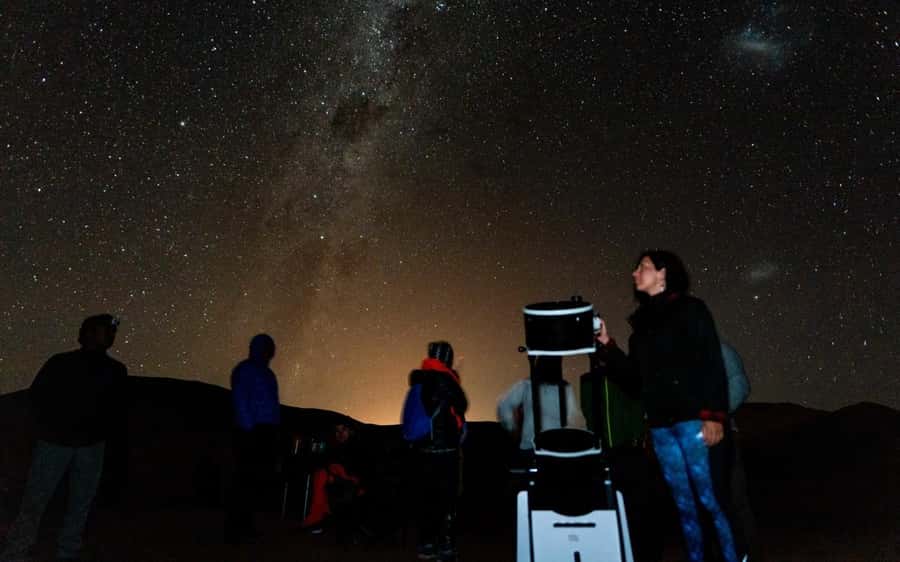
- A real telescope session: With help from your guide, you may view planets, binary stars, clusters, nebulae, and galaxies, depending on the season and conditions.
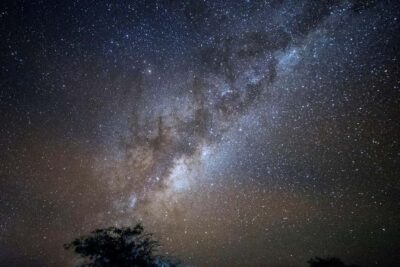
- Dark desert viewing: The short drive takes you away from San Pedro’s lights to a darker site, where the Southern Cross and the crowded Milky Way become easier to pick out.
- Cold-weather planning matters: Bring warm layers, even if the afternoon was hot. Ponchos and blankets may be provided, but the desert night can be bitterly cold.
- A useful souvenir: The tour includes a photo with the stars, sent by email. Under a bright moon, the photo may be taken through the telescope eyepiece instead.
- Good value at $41: The price covers transfers, an astronomy guide, telescope equipment, and a drink, making it a strong choice for a first stargazing experience.
Why the Atacama night sky is the real attraction
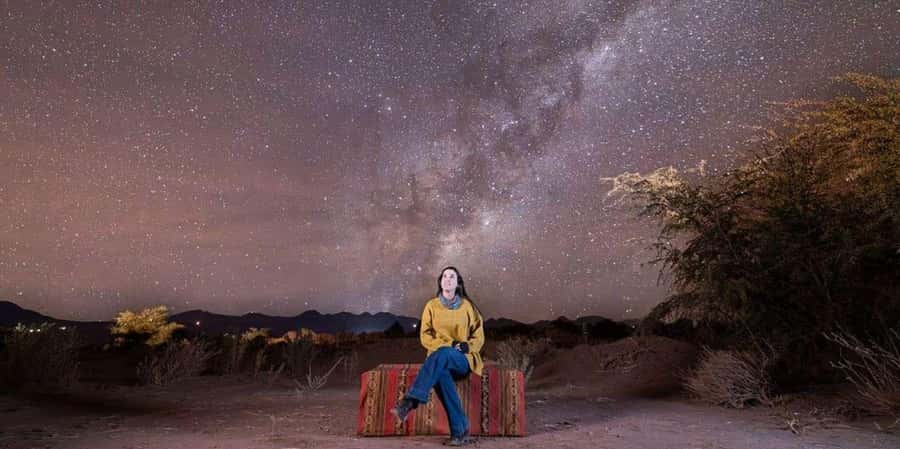
San Pedro de Atacama sits in one of the world’s best-known regions for looking upward. The dry desert air and low light pollution create the setting, but the tour’s value comes from helping you make sense of what you see.
Without a guide, a sky full of stars can become a beautiful blur. You may recognize the Southern Cross, but not know where to look for it or why it matters. You may see a bright point and wonder if it is a planet, a star, or simply a distant light. A good guide gives the sky structure.
The tour begins with the Western view of astronomy. You learn about the brightness and color of stars, planets, the solar system, constellations, and the formation of the universe. The explanations are aimed at ordinary people, not physicists. Felipe has been praised for connecting current scientific research with older ways of understanding the heavens, while Claudio has been described as lively and clear with both adults and children.
That matters because astronomy tours can easily become a lecture. Here, the best guides use laser pointers, questions, and the objects above you to keep the session active. You are not just hearing names. You are learning where to look.
More Stargazing Tours in San Pedro de Atacama
- The Roofless Experience San Pedro de Atacama Stargazing Tour
★ 5.0 · 522 reviews - San Pedro de Atacama: Stargazing Experience
★ 4.7 · 489 reviews - Astronomical Tour “Under the Night Sky”
★ 5.0 · 284 reviews
From ancient Greece to the Andes
The tour then changes direction. Instead of treating the sky as a chart of Greek heroes and mythological figures, it introduces the Andean view of the night.
Long before Spanish arrival, indigenous communities in the Americas watched the sky closely. The dark spaces between bright stars were not empty to them. They could form figures linked to animals, water, rivers, daily schedules, and ideas about life after death.
This is one of the most worthwhile parts of the evening. Western astronomy often focuses on bright stars and the lines we draw between them. Andean astronomy also pays attention to the dark shapes in the Milky Way. That offers you a different way to read the same sky.
The reference to ancient Greece is useful here. You learn how one tradition connected stars into familiar pictures, then compare that with the way Andean observers read the Milky Way and its dark regions. The lesson feels less like a list of constellations and more like a look at how human communities used the sky to organize daily life.
The experience is called an ethno-stargazing tour for good reason. It is not only about seeing Saturn or a star cluster. It is about understanding that astronomy has always been both a science and a cultural practice.
The 15-minute ride out of San Pedro
Pickup is included in San Pedro de Atacama, except for the outlying ayllus. The listed meeting point is Restaurant Tara at Licancabur 10, with return to the same area.
The drive to the viewing site takes about 15 minutes. That is long enough to leave much of the town’s light behind without turning the evening into a major transport operation. The return drive is listed at about 25 minutes.
I recommend treating the meeting point seriously. One person had trouble finding Restaurant Tara because local people did not recognize the name. The guide eventually came looking, but you do not want to begin an astronomy tour by standing in the wrong street under a dark sky. Confirm the location before pickup and arrive a little early.
The seasonal departure times also need attention. From April through August, pickup is at 7 p.m. During Chilean summer time, pickup is between 9 and 9:20 p.m. Check the current time for your date, since the schedule can also shift because of weather.
What happens at the viewing site
The main stop lasts about an hour and a half. You may begin with an outdoor explanation, using the open sky as the classroom. The guide points out stars, planets, and constellations while explaining what you are seeing.
The site is away from the town, and the darkness is a major part of the appeal. Let your eyes adjust and resist the urge to use your phone constantly. Even a bright screen makes it harder to see faint stars for a while.
The Southern Cross is one of the key sights. It is especially meaningful for people from the Northern Hemisphere, who do not see it at home. Depending on the season, the guide may also point out planets, star clusters, binary stars, nebulae, or galaxies.
The exact menu of objects changes. A bright planet might be available on one night and absent the next. The moon, time of year, and weather all shape the program. That uncertainty is not a flaw in the tour. It is simply how observing works.
Other Atacama desert trips from San Pedro De Atacama:
- San Pedro de Atacama: El Tatio Geysers Tour
★ 4.7 · 943 reviews - Half Day Tour to Geysers del Tatio
★ 5.0 · 499 reviews - San Pedro Atacama: Baltinache Lagoons
★ 4.6 · 359 reviews - San Pedro de Atacama: Valle de la Luna Guided Tour
★ 4.4 · 312 reviews
Using the telescope instead of only looking through it
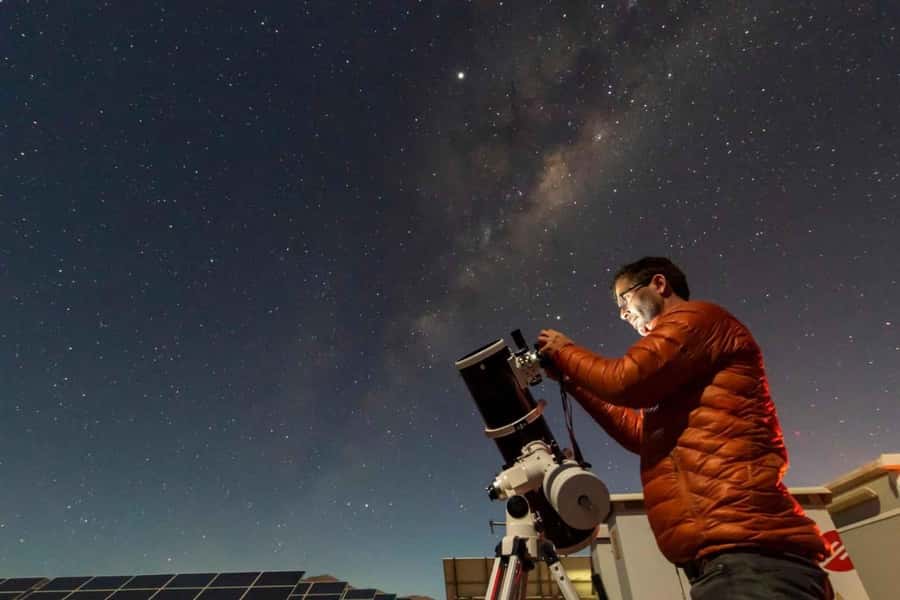
The telescope session turns the evening from a talk into an activity. Your guide helps focus the equipment and explains each object before you look.
You may see Saturn, the crescent moon, Antares, clusters, or other bright targets. Several people have particularly enjoyed seeing Saturn through the large telescopes. A planet that looked like a tiny point a moment earlier can become a sharp, recognizable object with rings.
Some sessions use two large telescopes, which can reduce waiting. The exact arrangement may vary, but the aim is to give everyone a turn. The guide will direct you to the correct part of the sky, adjust the focus, and explain what is in view.
This is helpful for children and first-time observers. You do not need to know the names of stars in advance. Claudio, for example, has been praised for giving children just enough facts to hold their attention without burying them in technical terms.
Bring binoculars if you have them, as they are listed among the suggested items. They will not replace the telescope, but they can help you scan the sky and see the moon or brighter star groupings in a more personal way.
The moon can change the whole evening
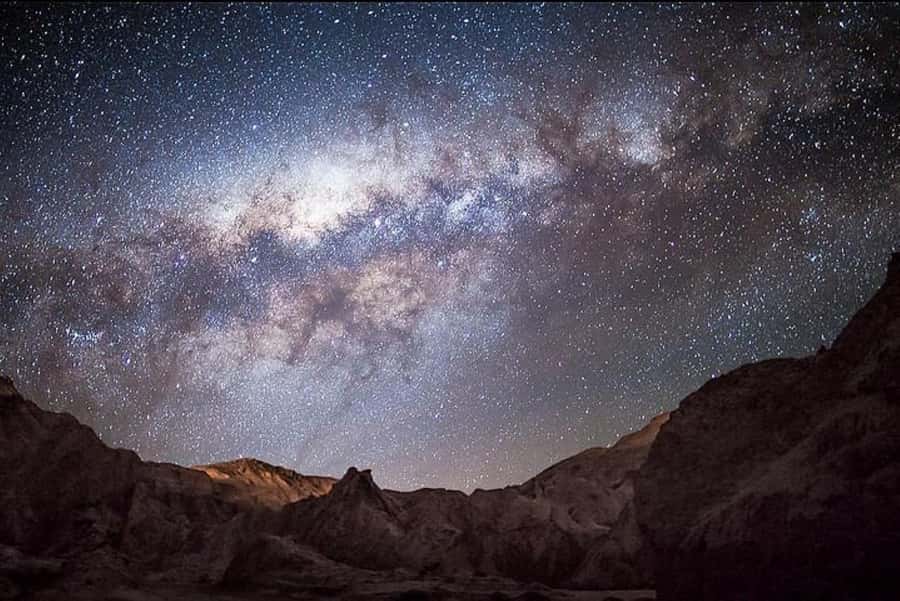
Check the lunar calendar before booking. This is the most important practical tip in the tour description.
A dark or lightly moonlit night usually gives you better views of faint stars and the Milky Way. A bright moon can make the sky look less crowded, though it can also make lunar viewing more impressive. One person who joined near a full moon still enjoyed the evening, but noted that fewer stars were visible.
The included photo also changes during bright moon periods. Instead of a wide star-filled portrait, it may be taken only through the telescope eyepiece. That can still be a fun record of what you saw, but it is not the same kind of portrait as a dark-sky photograph.
If your main goal is the Milky Way and faint constellations, choose a date with less moonlight when possible. If you want to see the moon in detail, a brighter phase may suit you better.
Warm drinks, a fire, and the cold desert air
The official inclusions list coffee, tea, or red wine. Several departures have also included a fire and snacks, creating a relaxed finish after the telescope session. Because food and the exact refreshment menu are not fully consistent in the details, confirm what will be served when you book.
The fire is more than decoration. It gives everyone a chance to warm up and talk after standing still in the cold. Some sessions have included hot chocolate, wine in proper glasses, warm drinks, and a small picnic-style spread.
Do not underestimate the temperature. San Pedro can feel hot in the sun and extremely cold after dark. Bring a thermal layer, fleece, hat, and gloves if you have them. Wear comfortable shoes and clothes that allow you to add or remove layers.
Ponchos and blankets may be provided, and people have appreciated them. Still, supplied warming gear should be treated as backup rather than your only plan. You will enjoy the telescope far more if your hands and feet are warm.
Smoking, alcohol and drugs are not allowed during the activity. The included red wine is part of the arranged refreshment service, not a reason to bring extra alcohol.
The astronomy photo souvenir
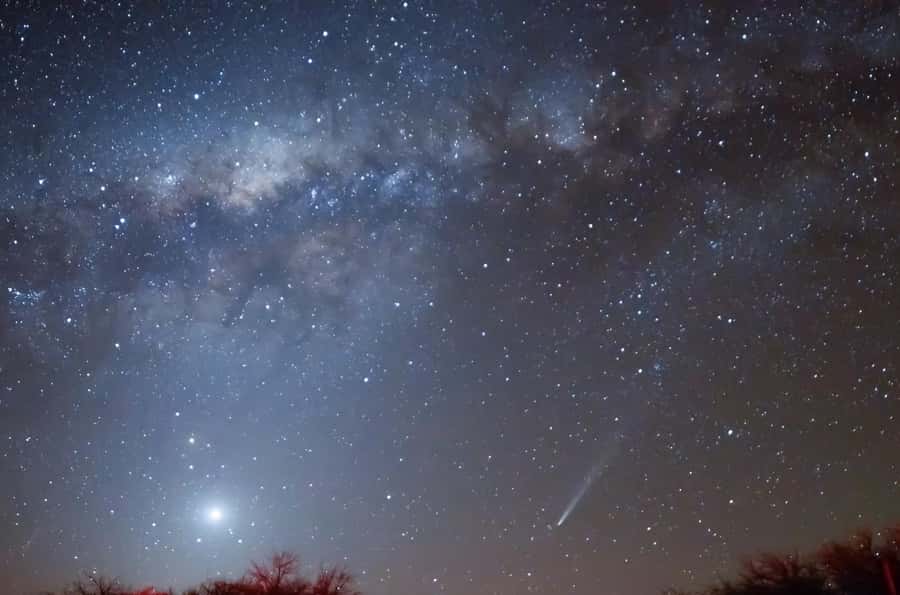
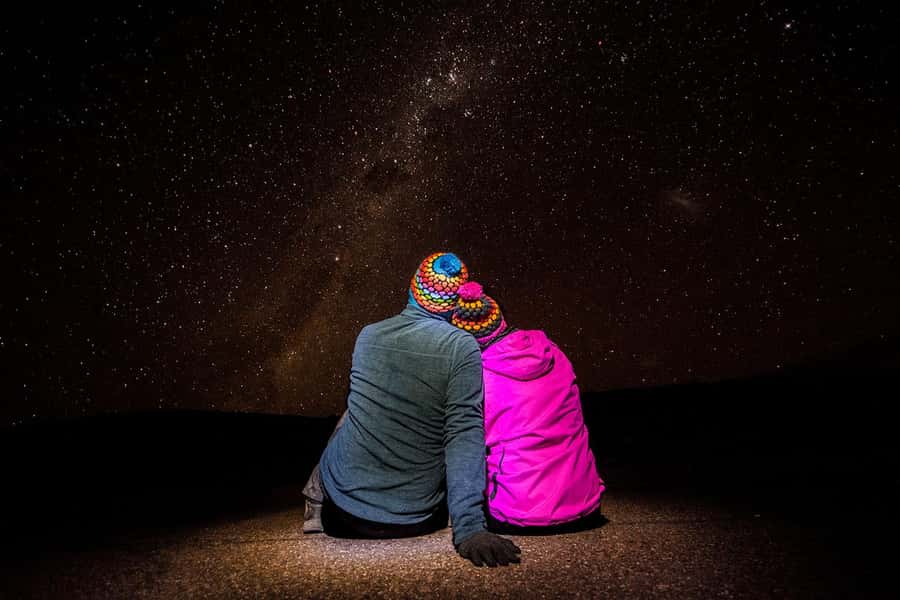
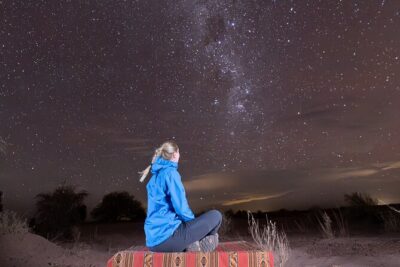
At the end, you have a photo taken with the stars behind you. The image is sent by email, so make sure the provider has the correct address.
This is a nice extra because night photography is difficult. A normal phone photograph usually records a dark person in front of a dark sky, or a bright face with no stars. The organized photo gives you a much better chance of taking home a clear memory.
The photography can also be a small social part of the evening. Guides have helped people with poses and taken individual and group images. Keep your expectations realistic, though. The photo depends on cloud cover, moonlight, and the conditions that night.
During periods of high moonlight, the photo may be taken only through the telescope eyepiece. Read that detail carefully if the portrait is a major reason for booking.
How the $41 price holds up
At $41 per person, this is strong value for a 150-minute evening. The price includes pickup and drop-off in San Pedro, a specialist astronomy guide, telescope equipment, and coffee, tea, or red wine.
You are also paying for interpretation. A telescope alone is not enough if you do not know where to point it or what the object means. The guide’s explanations, the Andean section, and the help with focusing give the activity more substance than a simple transfer to a dark field.
The cost also compares well with the convenience. You do not need to arrange a taxi into the desert, bring your own telescope, or organize a separate astronomy lesson. The photo adds value, especially if you are traveling without a tripod or camera suited to night work.
The only qualification is the refreshment wording. The supplied details confirm drinks, while some departures have included snacks or a fire. I would not book this expecting a full meal unless the provider confirms one for your date.
The overall score is 4.8 out of 5 from 629 ratings, which fits the strongest parts of the experience: the guides, telescope viewing, organization, photographs, and value.
Who will enjoy this most
This is a good choice if you want to understand the sky rather than simply photograph it. First-time stargazers will get plenty of help, while people who already know some astronomy can ask more detailed questions.
Families can also do well here. The explanations are not limited to advanced science, and the telescope gives children a clear reason to stay engaged. The fire, warm drinks, and photo add variety to what could otherwise become a long period of standing in the cold.
The tour suits adults who want culture as well as science. The Andean interpretation gives the night a local connection that a standard constellation talk may lack.
You may want to skip it if you dislike cold outdoor activities, cannot adjust your schedule for a late weather change, or need guaranteed views of a particular planet. The sky is not a theater schedule. Clouds, moonlight, and the time of year decide what is available.
The tour is wheelchair accessible, but the details of the viewing surface and telescope access are not provided. If you use a wheelchair, confirm the site arrangements before booking.
Weather changes are part of the plan
The tour may be moved to later the same night or to the following night when weather blocks the view. Notification may come on the same night, so keep your evening flexible.
That policy can be frustrating, especially if you have a packed itinerary. It can also save the experience. A telescope pointed at cloud is no better than a museum painting of Saturn. One departure moved to 11 p.m. because of cloud and became worthwhile once the sky cleared.
Free cancellation is available up to 24 hours before the activity for a full refund. You can also reserve now and pay later, which helps if your Chile schedule is still changing.
Final verdict: should you book it?
I would book this tour if you want a well-priced introduction to the Atacama sky, especially with an English-speaking guide. The strongest reasons are the mix of current astronomy and Andean sky knowledge, the hands-on telescope time, and the practical extras such as transport and the emailed photo.
Choose a low-moon night for the fullest star field, pack more warm clothing than you think you need, and confirm Restaurant Tara before departure. If you do those three things, this should be one of the better evening activities in San Pedro.
It is not a guaranteed list of planets, and it is not a warm indoor show. That is part of the deal. On a clear night, with a good guide such as Felipe, Claudio, Salvador, or Yvonne, you get something more useful than a pretty sky: you learn how to read it.
FAQ
How long does the Etno-Stargazing Tour last?
The activity lasts 150 minutes, including transport and the guided astronomy session.
Where is pickup available?
Pickup and drop-off are available in San Pedro de Atacama, but not in the outlying ayllus. The listed meeting point is Restaurant Tara at Licancabur 10.
What time does pickup take place?
From April through August, pickup is at 7 p.m. During Chilean summer time, pickup is between 9 and 9:20 p.m. Check availability for the exact time on your date.
Which languages are available?
The live guide service is available in English and Spanish.
What can I see through the telescope?
Depending on the time of year and conditions, you may see planets, stars, binary stars, star clusters, nebulae, galaxies, and objects in the solar system or deep space.
Does the tour include a drink?
Yes. Coffee, tea, or red wine is included. Some sessions may also offer a fire and snacks, but confirm the exact food and drink arrangement before booking.
Should I check the moon phase before booking?
Yes. Bright moonlight can reduce the visibility of faint stars. During high-moonlight periods, the included photo may be taken only through the telescope eyepiece.
What happens if the weather is bad?
The schedule may be changed to a later time the same night or the next night. If the tour must be canceled, other options will be offered and you will be notified.
More Private Drivers in San Pedro De Atacama
- San Pedro de Atacama: Stargazing Experience with Transfer
★ 3.5 · 8 reviews - Private Transfer to Calama Airport (CJC)
★ 5.0 · 5 reviews - Puritama Hot Springs Experience with Transfer and Entrance
★ 5.0 · 5 reviews - San Pedro de Atacama: Etno-Stargazing Tour with Transfer
★ 3.5 · 5 reviews
Just added around San Pedro De Atacama
- Vallecito★ 4.7 · 13 reviews
- San Pedro de Atacama: Valle de la luna★ 3.0 · 3 reviews
- Atacama Desert and Magic Bus Visit★ 4.8 · 15 reviews
- Valle de la Luna: A Moon-Like Escape in Atacama★ 5.0 · 3 reviews
- 3 Perfect Days in Atacama + Transfer★ 4.5 · 3 reviews
- Atacama Stargazing Tour Under One of the World’s Clearest Skies★ 4.0 · 3 reviews
- Valley of the Moon In San Pedro de Atacama★ 4.5 · 9 reviews
- Moon Valley Tour, the Best Seller★ 4.5 · 2 reviews
Atacama Desert Tours, compared.
The Roofless Experience San Pedro de Atacama Stargazing Tour
Read our review →
Browse the lists this tour appears in