
Reviewed · STARGAZING & ASTRONOMY
Easter Island: Rapa Nui Stargazing Tour
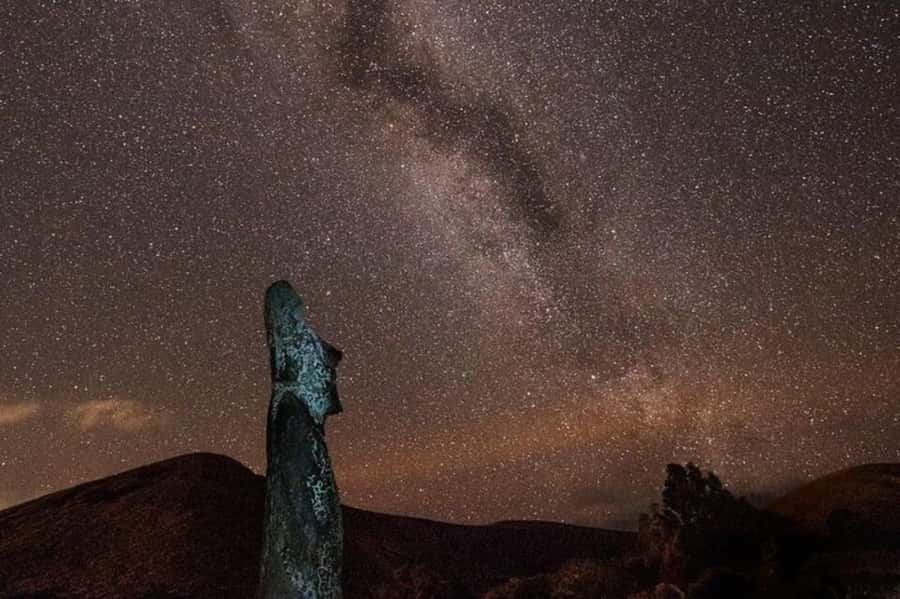
The stars tell Rapa Nui’s story. This three-hour evening outing combines Polynesian navigation, basic astronomy, and a telescope session at a remote observation site, with the rare chance to visit Ahu Nau Nau after dark. It is a small-group experience, capped at 12 people, and includes transport back to your hotel, hot chocolate, local cake, and a digital photo.
I like the way the tour connects the night sky to the island’s settlement and voyaging traditions rather than treating stargazing as a simple telescope show. I also like the personal touch provided by guide Marc, also identified as Mark in one account, who may explain constellations, sing a traditional song, and help you take your own star photos.
The main drawback is value. At $140 per person, the evening can feel expensive if clouds block much of the sky or if there is little to see through the telescope. Uneven ground is another concern, especially for anyone with limited mobility.
In This Review
- Key things to know before booking
- Why stargazing makes sense on Easter Island
- Meeting at Katipare Library
- The drive to traditional observation sites
- Looking through the telescope
- Ahu Nau Nau after dark
- Taking your own night photographs
- Marc’s personal style
- Hot chocolate, cake, and the late-night rhythm
- Is $140 a fair price?
- Who should book this experience?
- Practical advice for a better night
- Should you book the Rapa Nui Stargazing Tour?
- FAQ
- Where does the tour meet?
- What time does the tour start?
- Is hotel pickup included?
- Is a National Park ticket included?
- What languages are available?
- Does the tour run during the full moon?
- What happens if bad weather cancels the tour?
Key things to know before booking
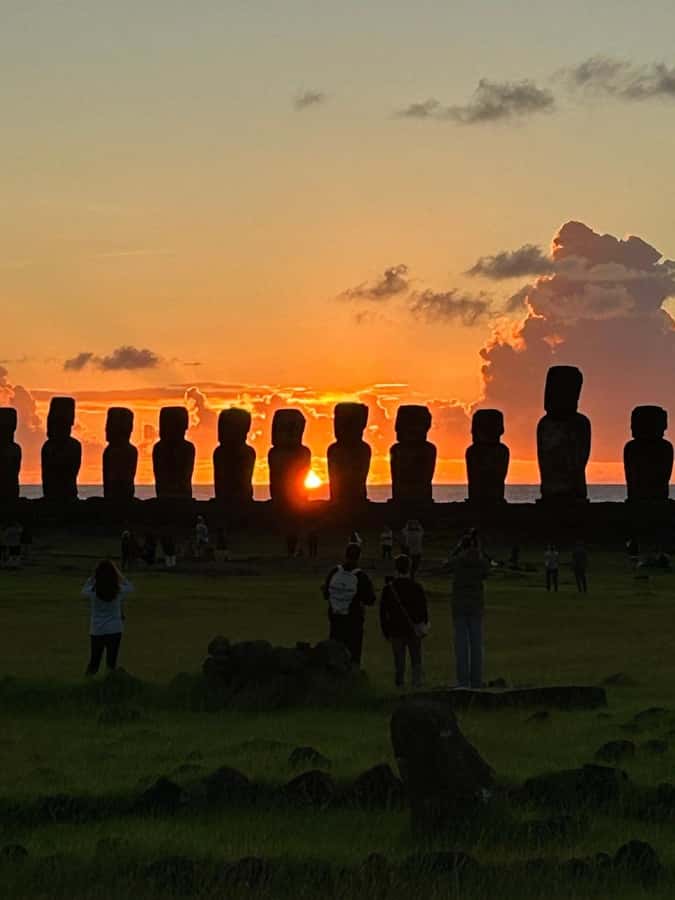
- Ahu Nau Nau after dark: You can visit this important moai site at night, with access included in the experience.
- Southern Hemisphere stars: The guide points out stars and constellations that you cannot see from northern skies.
- Polynesian wayfinding: The astronomy lesson explains how voyagers used the heavens to guide long ocean journeys.
- Small group size: The maximum is 12 people, which gives you a better chance to hear the guide and use the telescope.
- Seasonal meeting times: Meet at Katipare Library at 21:00 in summer or 19:00 in winter.
- Weather matters: The tour does not run close to the full moon and may be canceled if conditions are poor.
Why stargazing makes sense on Easter Island
Rapa Nui is famous for moai, but the island’s night sky adds another layer to the story. Long before modern aircraft and electronic navigation, Polynesian voyagers crossed huge stretches of ocean by reading stars, ocean swells, winds, birds, and cloud patterns.
This experience uses astronomy as a way to explain how people reached and settled one of the most isolated inhabited islands on Earth. You are not simply shown a few bright points through a telescope. You learn why the sky mattered to the people who navigated here and how the Southern Hemisphere appears different from the skies familiar to many visitors from Europe or North America.
I find that this makes the evening more useful than a standard stargazing session. Even if clouds reduce the number of stars you see, the talk about navigation and settlement still gives the night a clear purpose.
The emphasis is on basic astronomy, Polynesian voyaging, navigational methods, and the archeo-astronomy of Rapa Nui. That combination should suit you if you enjoy cultural context as much as visual spectacle.
More Rapa Nui trips and moai walks:
- From Hanga Roa: Rapa Nui Culture Sightseeing Tour
★ 4.6 · 307 reviews - From Hanga Roa: Easter Island Highlights 2-Day Tour
★ 4.3 · 205 reviews - From Hanga Roa: Easter Island Sightseeing Full Day Tour
★ 4.5 · 189 reviews
Meeting at Katipare Library
The tour begins in front of Centro Lector Katipare, also known as Katipare Library, in Hanga Roa. Hotel pickup is not included, so you need to make your own way to this meeting point.
Timing changes with the season. The stated meeting time is 21:00 during summer and 19:00 during winter. Check the confirmed start time carefully, since the later summer departure can make this a very late evening if you have an early start the next day.
The meeting point is in Hanga Roa, the island’s main town, while the stargazing takes place away from town lights. The drive is handled by a driver-guide, and live commentary continues during the journey.
Because the tour ends with hotel drop-off, the return is easier than the start. Still, do not assume you can simply wait at your accommodation. The instructions clearly place the meeting at Katipare Library.
The drive to traditional observation sites
After meeting the group, you head toward traditional observatory areas and a remote site suited to watching the sky. The point of leaving town is simple: fewer artificial lights mean better conditions for seeing stars and constellations.
The precise route can change with conditions, so you should think of this as an evening built around several related settings rather than a rigid list of stops. The guide explains the sites and their connection to Rapa Nui’s sky traditions while you travel.
The small group limit of 12 matters here. Astronomy talks can become frustrating when you are standing behind a large crowd or waiting too long for a telescope. With fewer people, you should have more time to hear the explanation and take a turn at the instrument.
The setting is not designed like a polished observatory. That is part of the appeal, but it also means you need to be careful. The ground can be uneven, and there may not be strong lighting underfoot. One older participant found the footing difficult, so sensible shoes and a small personal flashlight are good ideas.
Looking through the telescope
The telescope is the practical center of the evening. After learning the basics, you get a chance to view stars and planets through the instrument at the observation site.
The experience of using the telescope is more memorable when you understand what you are looking at. The guide helps connect the bright objects above you with the wider story of Southern Hemisphere astronomy.
Results will depend heavily on the night. When conditions cooperate, the telescope gives the session a clear focal point and helps you notice details you could miss with the naked eye. On a less active night, the telescope may still be the best part of the outing, but the program can feel quiet and limited.
That is the key value question. You are paying for the setting, the guide’s interpretation, transport, the telescope, and access to a special site at night. You are not paying for a guaranteed parade of planets and spectacular celestial events.
The activity does not operate four days before or two days after the full moon. This restriction is useful rather than inconvenient. A bright moon can wash out many stars, so avoiding that period improves the odds of a darker sky.
Even so, the moon schedule cannot control cloud cover. If poor weather cancels the evening, you are offered another date or a full refund. The same applies if the minimum number of participants is not reached.
More night sky trips from Easter Island:
- Rapa Nui Stargazing
★ 4.5 · 62 reviews - The Rapa Nui Stargazing Experience
★ 4.5 · 32 reviews - Astronomical Tour on Easter Island
★ 3.5 · 3 reviews - Rapa Nui Astrophotography and Stargazing Night Tour Combination
★ 5.0 · 3 reviews
Ahu Nau Nau after dark
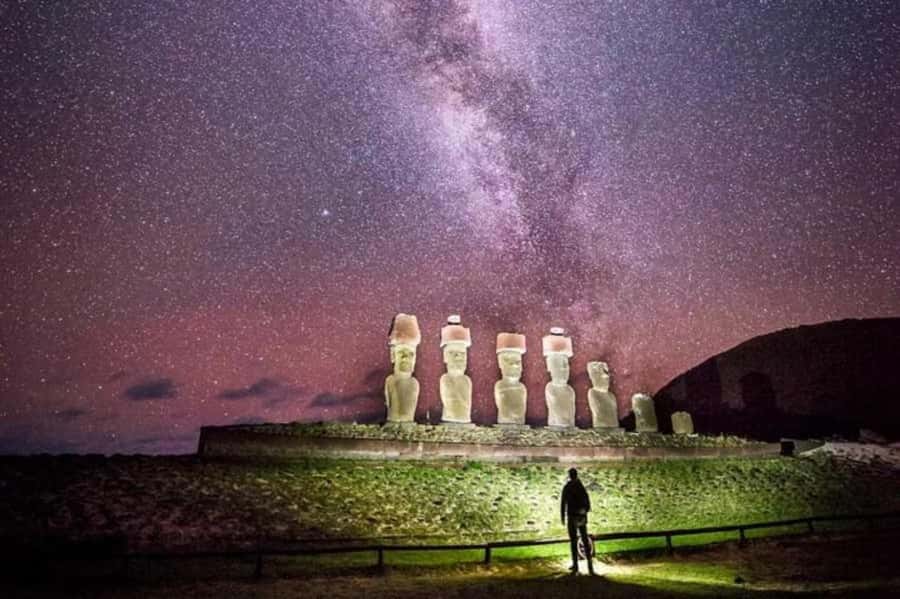
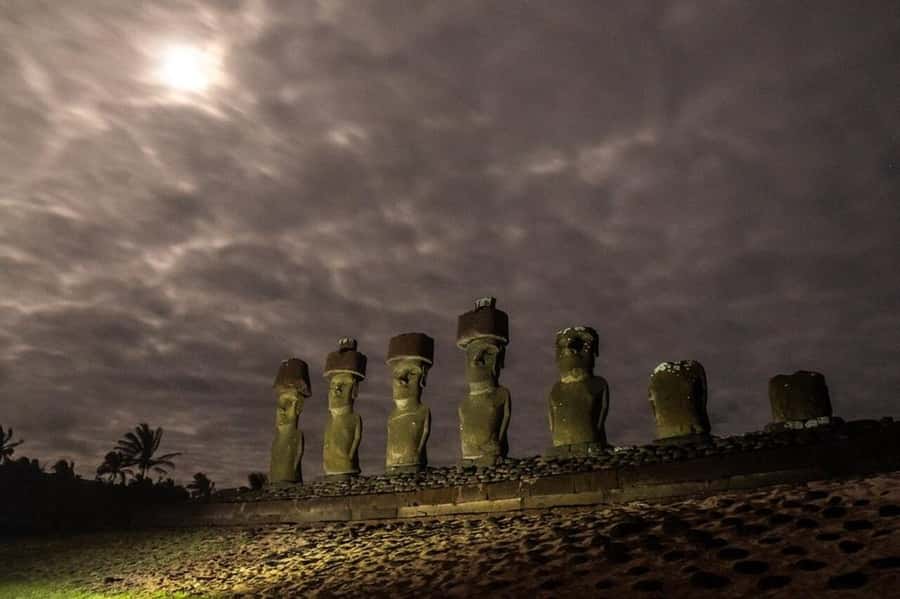
Ahu Nau Nau is one of the most appealing parts of the experience. The tour includes nighttime access to the site, allowing you to see the moai in a completely different setting from a daytime visit.
The contrast matters. In daylight, the statues are part of a busy sightseeing day, often surrounded by shifting groups and bright views. At night, the focus moves toward silence, darkness, and the sky above the figures.
The exact conditions of your visit will depend on the night and the group, but the experience can include time by the beach near the moai and photographs beside the statues. Having private-feeling access to the beach at night was a memorable feature for one participant, especially when paired with the stars overhead.
You should keep expectations sensible. This is not a full daytime archaeological tour, and the activity does not replace a proper visit to the island’s main heritage sites. Instead, it gives you a short, unusual nighttime view of Ahu Nau Nau and shows how the moai relate to the sky and surrounding setting.
The included digital photo adds value here. It gives you a ready-made record of the evening, while you are also allowed to take your own pictures.
Taking your own night photographs
Photography is encouraged, but night photography requires patience. The tour allows you to take personal photos, including star images with a tripod. If you bring a phone tripod or camera support, you will have a better chance of producing a sharp image.
The included digital photo is helpful because handheld phone images can be difficult in very low light. You can enjoy the evening without spending the entire time trying to balance a phone against a rock or statue.
Do not expect every personal photograph to work. Star photography depends on clear skies, darkness, stable equipment, and careful timing. The photo opportunity beside the moai may be more dependable than a perfect Milky Way image, since cloud conditions can change.
I especially like that the activity does not treat photography as an extra charge. You can make your own images and still receive one digital photo as part of the package.
Marc’s personal style
The guide can make a major difference on a quiet night. Marc, also referred to as Mark, has been praised for explaining constellations and navigation in an engaging way. His style may include singing a traditional song or even a song he wrote, which gives the evening a personal finish rather than ending with a final telescope view.
That kind of moment will not suit everyone. If you want a strictly technical astronomy lecture, the singing may feel outside the main subject. If you enjoy a warm, human connection to the place, it can be one of the night’s strongest memories.
The guide speaks English and Spanish. Live commentary is provided during the outing, so you should select the language that works best for you when booking.
Because this is a small group, the guide’s personality will be part of the experience. A quiet evening with a reflective guide may feel atmospheric to one person and too slow to another. The available feedback gives the strongest praise to the explanations, singing, and personal attention rather than to a packed schedule.
Hot chocolate, cake, and the late-night rhythm
The tour includes hot chocolate and local cake, described in the details as a coffee break. This is a small feature, but it matters in a cool, late-night setting.
A warm drink gives the evening a comfortable pause after time outside. The local cake also adds a taste of the island without turning the activity into a formal food tour.
The program lasts about three hours. That is long enough to include the drive, astronomy explanation, telescope viewing, site access, photographs, and refreshments without taking up an entire night.
Still, the pace may feel slow if the sky is quiet and you prefer constant activity. One account considered the tour good but felt there was not much happening during part of the evening. I would book it for atmosphere and learning, not for nonstop entertainment.
Is $140 a fair price?
At $140 per person, this is a premium evening activity on Easter Island. The price includes a driver-guide, live commentary, hotel drop-off, the digital photo, telescope access, hot chocolate, local cake, and nighttime access to Ahu Nau Nau.
That package is easier to justify if you value three things: a small group, a specialized guide, and access to a site after dark. It is also more appealing if you have already seen major moai sites during the day and want a different angle on Rapa Nui.
The price is harder to justify if your main goal is simply to see stars. You may have a beautiful sky, but poor weather or a quiet night can reduce the visual payoff. The activity does not promise a particular planet, constellation, or astronomical event.
I would compare it with the cost of arranging your own nighttime outing, but the included interpretation and transport are important. Driving in an unfamiliar place at night is not the same as being taken to a chosen observation area by someone who can explain what you are seeing.
The rating of 4.8 from 16 published ratings supports the view that the experience usually works well, though the lower rating points to a real concern: the program can feel overpriced when the sky offers little. That is not a flaw unique to this operator. It is the basic risk of any weather-dependent stargazing trip.
Who should book this experience?
I would recommend it to you if you enjoy archaeology, astronomy, traditional navigation, photography, and small-group cultural activities. It is particularly good for anyone who wants to understand Rapa Nui beyond the daytime moai circuit.
It also suits couples and curious solo visitors who like a slower evening with a guide. The song, warm drink, and nighttime setting give it a more personal tone than a standard lookout stop.
Families with older children may also enjoy the telescope and the story of Polynesian voyaging, though the late timing and uneven ground need consideration. Anyone using a wheelchair should not book, since the activity is specifically listed as unsuitable for wheelchair users.
I would be cautious if you have limited balance, difficulty walking on uneven surfaces, or little interest in astronomy. You should also think twice if you need a tightly packed itinerary with guaranteed sights.
Practical advice for a better night
Wear sturdy shoes. The ground at the observation areas may be uneven, and darkness makes small obstacles harder to spot.
Bring a warm layer even if the evening begins pleasantly. You will spend time outside at night, and the included hot chocolate suggests that the organizers expect some chill.
If you want to photograph the stars, bring a tripod or phone tripod. The activity allows personal photography, but a stable setup will help far more than relying on handheld shots.
Check the moon phase before booking. The tour is unavailable from four days before the full moon through two days after it, and this is intended to protect dark-sky conditions.
Keep your schedule flexible. Poor weather can lead to a new date or a full refund, but you should avoid placing this activity on the final possible night of your stay if seeing the sky is a top priority.
Finally, confirm the seasonal meeting time and arrive at Katipare Library rather than waiting for pickup at your hotel.
Should you book the Rapa Nui Stargazing Tour?
Book it if you want a thoughtful nighttime experience that links moai, astronomy, and Polynesian wayfinding. The telescope, Ahu Nau Nau access, personal guide style, refreshments, and photo make it more than a simple star watch.
Skip it if $140 feels too high for a weather-dependent activity or if you want constant action. The strongest reason to go is not a guaranteed telescope spectacle. It is the chance to hear how the sky helped shape Rapa Nui’s story, then look up from an ancient site and see that same Southern Hemisphere sky for yourself.
FAQ
Where does the tour meet?
Meet in front of Katipare Library, also called Centro Lector Katipare, in Hanga Roa, Easter Island.
What time does the tour start?
The meeting time is 21:00 in summer and 19:00 in winter. Check availability and your booking confirmation for the exact start time.
Is hotel pickup included?
No. You must reach Katipare Library for the start of the tour. Hotel drop-off is included at the end.
Is a National Park ticket included?
No. You need to have your own National Park ticket for entry.
What languages are available?
The live guide and commentary are available in English and Spanish.
Does the tour run during the full moon?
No. It is not available from four days before the full moon through two days after the full moon.
What happens if bad weather cancels the tour?
You will be offered another date or a full refund. The same choice applies if the minimum number of participants is not reached.
Just added around Easter Island
- Volcanic Refuges: Excursion to Underground Civilization★ 4.7 · 8 reviews
- Easter Island Ancestral Dinner and Show with Transport★ 4.5 · 2 reviews
- Volcanic Wonders and the Kingdom of the Birdman: Half Day★ 5.0 · 6 reviews
- Half Day Private Tour: Caves and Volcanic Refuges★ 4.0 · 14 reviews
- Tour to the Motus: Boat trip and snorkeling in Rapa Nui★ 5.0 · 8 reviews
- Birdman Ceremonial Route: Orongo, Ranu Kau Half-Day Tour★ 4.5 · 16 reviews
- Visit Rapa Nui in 4 days with 3 Tours and Accommodation included★ 4.0 · 2 reviews
- Sunrise in Tongariki on Easter Island Rapa Nui★ 3.5 · 5 reviews
Stargazing & Astronomy, compared.
The Roofless Experience San Pedro de Atacama Stargazing Tour
Read our review →


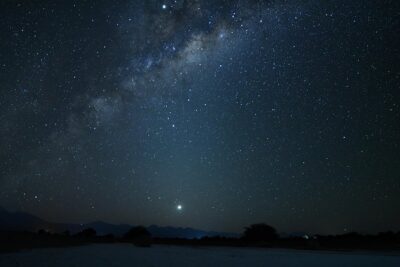
Astronomical Tour with Guide and Pick Up San Pedro de Atacama
Read our review →
“Astronomical Adventure in San Pedro de Atacama”
Read our review →Browse the lists this tour appears in