
Reviewed · ATACAMA DESERT TOURS
Stargazing Tour in San Pedro de Atacama
The desert sky does the heavy lifting. This 2 to 2.5-hour evening outing combines naked-eye astronomy, telescope viewing, Chilean wine, hot drinks, local snacks, and a Milky Way photograph for $35 per person. I especially like the chance to see planets, star clusters, and galaxies through several telescopes, and the guides’ real enthusiasm, particularly from Alberto and Alejandro.
The main catch is simple: weather and moonlight matter a lot. Clouds can cancel the evening, while a bright moon can wash out many stars. It can also get bitterly cold, and the tour has no bathroom, so you need to prepare before leaving town.
In This Review
- At a glance
- Why San Pedro is such a fine place to look up
- Meeting near the center of San Pedro
- Starting with wine and the naked-eye sky
- What you can see through the telescopes
- Astrophotography and the promised souvenir
- Cold, clouds, and moonlight
- Is $35 a fair price?
- Who should book this evening?
- FAQ
- How long does the stargazing tour last?
- How much does the tour cost?
- Where does the tour start?
- Where can I be dropped off afterward?
- What happens if the weather is bad?
- Are drinks and food included?
- When will I receive the astrophotography?
- Should you book the San Pedro stargazing tour?
At a glance
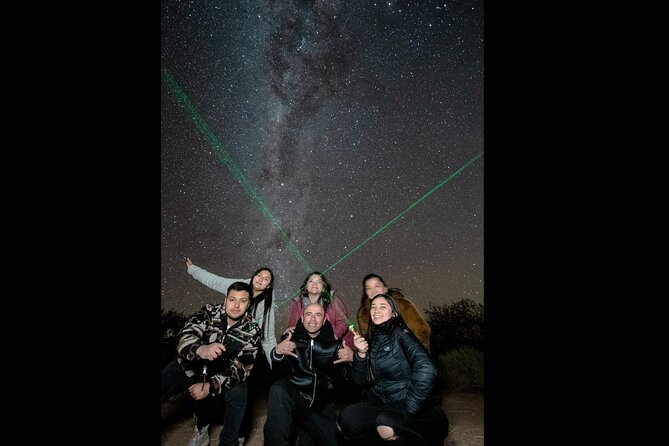
- See the Atacama sky with expert guidance: Alberto holds a PhD in Astronomy, while Alejandro has more than 10 years of experience leading stargazing tours.
- Use powerful telescopes: Depending on the night, you might view Saturn and its rings, the Moon, Sirius, star clusters, galaxies, or other distant objects.
- Get a Milky Way photo: Astrophotography is included, with images generally sent by email about three days after the tour.
- Enjoy desert hospitality: Chilean wine, pisco sours on some evenings, hot drinks, snacks, and blankets or ponchos help make the cold more manageable.
- Keep the group small: The maximum is 16 people, which gives you a better chance to reach the telescopes and ask questions.
- Watch the moon calendar: A full or nearly full moon creates a striking sight but makes faint constellations and the Milky Way harder to see.
Why San Pedro is such a fine place to look up
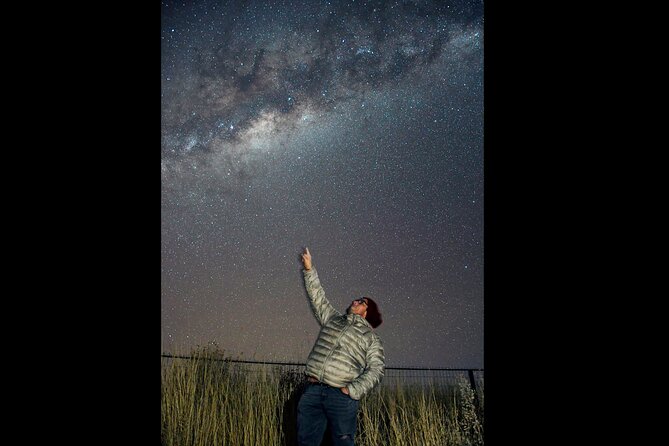
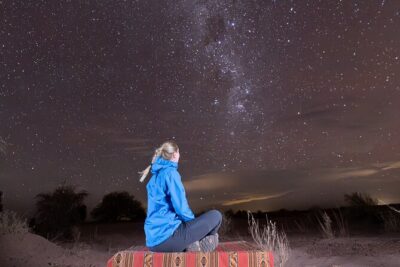
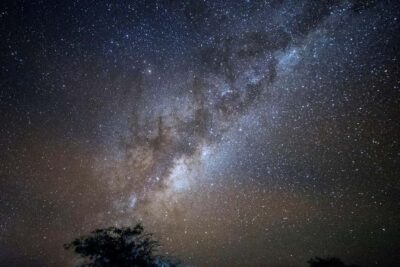
San Pedro de Atacama sits in one of the world’s best-known areas for astronomical observation. The dry desert air and limited artificial light can produce an astonishing number of visible stars. On a clear night, the Milky Way is not a faint smudge. It can appear as a broad, textured band across the sky.
That setting makes this more than a standard telescope demonstration. The first part takes place with your own eyes, helping you understand what you are seeing before equipment enters the picture. A guide points out stars and constellations visible during that season, then explains how the night sky changes through the year.
You should keep your expectations realistic. You are not guaranteed to see every famous constellation or a perfect Milky Way arch. The moon, cloud cover, and time of year all change the show. One night may bring Saturn’s rings and a clear view of the galaxy. Another may offer only a few bright stars before clouds close in.
That uncertainty is part of astronomy, not a flaw in the desert. Still, it is worth checking the moon phase before booking if your main goal is a dark sky full of faint stars.
More Stargazing Tours in San Pedro de Atacama
- San Pedro de Atacama: Etno-Stargazing Tour with Transfer
★ 4.8 · 629 reviews - The Roofless Experience San Pedro de Atacama Stargazing Tour
★ 5.0 · 522 reviews - San Pedro de Atacama: Stargazing Experience
★ 4.7 · 489 reviews
Meeting near the center of San Pedro
The stated meeting point is Escuela E-26, at Ignacio Carrera Pinto 499 in San Pedro de Atacama. The tour ends back in San Pedro, with drop-off available at hotels close to the town center.
The operator does not drive to outlying areas or the ayllus, including Solor, Beter, Cucuter, Coyo, Tulor, Quitor, Chechar, Yaye, and Sequitor. If you are staying outside central San Pedro, confirm your transport plans before booking. This is an important detail because a short walk in town is very different from arranging a taxi late at night.
The group limit of 16 is a useful middle ground. It is large enough to give the evening a social feel, but not so large that the telescopes become completely impractical. You should still expect a shared activity rather than a private astronomy lesson.
The total timing is listed at about two and a half hours, though the core program is also described as two hours. In practice, allow roughly three hours from pickup or meeting time through return, especially if the group is getting settled or transport runs late. One evening began a little behind schedule, so do not plan a tightly timed dinner or early morning activity immediately afterward.
Starting with wine and the naked-eye sky
The evening begins with a welcome drink, usually Chilean wine, followed by an introduction to the sky. Some accounts also describe pisco sours, along with coffee, tea, and other hot drinks.
The drink is not the reason to book this tour, but it gives the opening a relaxed Chilean touch. You are standing under a huge desert sky, often wrapped in a blanket or poncho, rather than sitting in a formal planetarium. Local snacks and typical products are served as part of the experience, with enough food to make the waiting and telescope rotation comfortable.
The naked-eye portion is where the guides’ teaching matters most. Alberto is described as especially passionate about astronomy, and Alejandro has spent over a decade leading stargazing outings. They explain the visible stars and constellations, answer questions, and adjust the talk to the season and conditions.
The quality of the explanation can depend on who leads your particular evening. Some guides are more confident in English than others, and one account found the opening talk difficult to hear because the guide spoke quietly. The tour is offered in English and Spanish, but bilingual explanations can mean that each language receives less time. If you have trouble hearing, say so early rather than hoping the next section will be clearer.
What you can see through the telescopes
After the introduction, the group moves to the telescopes for close-up views. This is the part that gives the experience its real value. Looking at a bright star with your eyes is impressive, but seeing Saturn’s rings or the Moon through a telescope gives the night a sharper focus.
The exact objects depend on the date, darkness, and weather. Past observations have included Saturn, the Moon, Sirius, star clusters, galaxies, and other deep-sky objects. You might also see shooting stars during the open-sky portion, though no guide can promise them.
Several accounts describe using two or three telescopes, each offering a different view. The setup allows people to look through the equipment without being rushed, though you should expect to share time with the rest of the group. The guides can also help you photograph the Moon through a telescope using your phone when conditions allow.
The guides do not simply point the equipment at a bright object and move on. The better evenings include explanations of what the object is, how far away it lies, and why it looks different through the telescope. That context turns a pretty view into something you can remember later.
One important warning: the season affects what appears overhead. Orion, for example, is prominent at certain times of year but not all year. If you have a particular constellation or planet in mind, ask before booking. A disappointing evening can result from expecting a seasonal object at the wrong time.
Other Atacama desert trips from San Pedro de Atacama:
- San Pedro de Atacama: El Tatio Geysers Tour
★ 4.7 · 943 reviews - Half Day Tour to Geysers del Tatio
★ 5.0 · 499 reviews - San Pedro Atacama: Baltinache Lagoons
★ 4.6 · 359 reviews - San Pedro de Atacama: Valle de la Luna Guided Tour
★ 4.4 · 312 reviews
Astrophotography and the promised souvenir
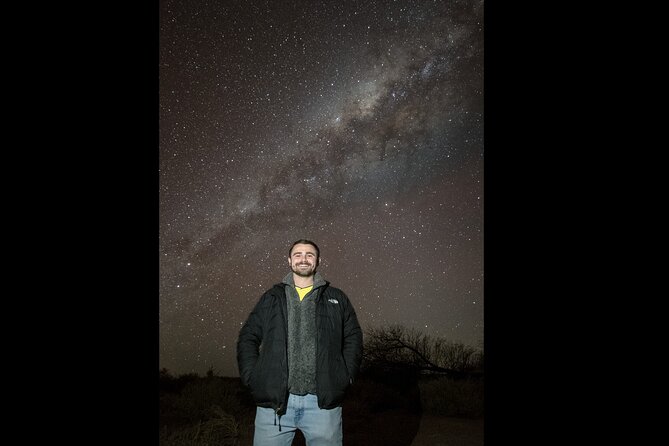
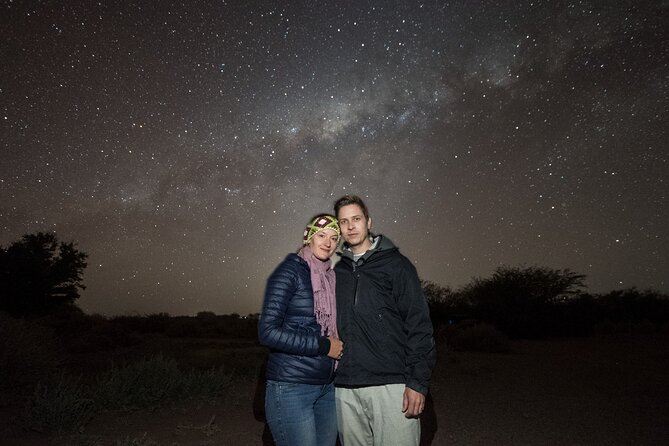
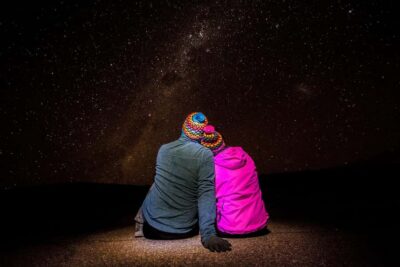
The included astrophotography is one of the strongest reasons to choose this outing. During the session, the team takes a photograph with the Milky Way behind you, creating a useful souvenir rather than leaving you with a few blurry phone pictures.
The final image is not necessarily handed over on the spot. The photos are generally prepared and emailed about three days after the tour. Plan for that delay, and check your email after returning home. If the image does not arrive on time, contact the operator directly.
The photography also adds a social moment to the evening. You get a chance to step away from the telescopes, pose beneath the sky, and leave with something that shows the scale of the Atacama night. It is a nice extra, but keep the priority in the right order: the sky itself is the main event.
Cold, clouds, and moonlight
San Pedro’s desert climate can be warm during the day and surprisingly cold after dark. You will spend two or more hours outside with little movement, so bring proper warm layers even if the afternoon felt mild. Blankets and ponchos may be available, but they are backup, not a substitute for a jacket.
There is no bathroom during the activity. Use one before meeting the group, especially if you plan to enjoy wine, pisco sour, coffee, or tea.
Clouds are the most serious practical risk. The operator may cancel if conditions make stargazing impossible, and you should receive the choice of another date or a full refund. Communication has not always been perfect, especially when a phone number was entered incorrectly or the weather changed during the afternoon. Check your messages on the day of the tour and make sure the operator has the correct contact details.
If the sky is partly cloudy, the guide may try to continue or adapt the program. That can work well when clouds open for a few minutes. On a fully cloudy evening, however, there may be little to see. The operator has sometimes chosen to cancel rather than provide a poor experience, which is the honest decision, even if it disrupts your plans.
Moonlight deserves equal attention. A full moon can be beautiful through the telescope and may allow excellent views of lunar details. But once it rises, faint stars and parts of the Milky Way can disappear in its glare. A bright moon is not a bad night for astronomy, but it is a different kind of night.
Is $35 a fair price?
At $35, this is a good value if you want a guided introduction to the Atacama sky without paying for a private observatory session. The price includes the telescope program, drinks, snacks, and an astrophotography image. It also covers an organized evening outside town, where you can sit down, stay warm with supplied coverings, and avoid arranging your own late-night transport.
The value depends on your goal. If you simply want to lie under the stars in silence, you could find that atmosphere without paying for a tour. If you want help identifying constellations, access to telescopes, and a chance to see objects that are hard to locate alone, the fee is easier to justify.
The experience is also a sensible choice for people who do not know much about astronomy. You do not need to arrive with technical background. The guides explain the basics and then let you look for yourself. People with serious astronomy experience may prefer a more specialized observatory program, especially if they want a fixed schedule of objects or advanced equipment.
Who should book this evening?
I would recommend it to couples, families, and solo visitors who want a memorable night activity in San Pedro. It suits curious beginners particularly well, since you get both a plain-language explanation and hands-on time at the telescopes.
It is a strong choice if you value a friendly atmosphere, refreshments, and a souvenir photo. The small group size and bilingual format also make it easier to ask questions than at a large commercial astronomy show.
You should think twice if you dislike cold weather, have limited patience for changing conditions, or want a guaranteed list of planets and constellations. You should also avoid scheduling it on your final night if a weather cancellation would leave no time to reschedule.
Book at least a couple of weeks ahead when possible. The average booking lead time is about 18 days, and the better dates can fill earlier. If the moon phase matters to you, choose a darker night. If you mainly want to see the Moon, a brighter night may work beautifully.
FAQ
How long does the stargazing tour last?
The experience lasts approximately 2 hours and 30 minutes. The main program is also described as about two hours, so you should allow extra time for meeting, transport, and drop-off.
How much does the tour cost?
The listed price is $35 per person.
Where does the tour start?
The meeting point is Escuela E-26, Ignacio Carrera Pinto 499, in San Pedro de Atacama, Antofagasta, Chile.
Where can I be dropped off afterward?
Drop-off is available at hotels close to the town center of San Pedro de Atacama. The operator does not drive to the listed outlying ayllus and communities outside town.
What happens if the weather is bad?
The experience requires good weather. If poor conditions force a cancellation, you will be offered another date or a full refund.
Are drinks and food included?
Yes. The evening includes Chilean wine, hot drinks, and typical local snacks. Some accounts also describe pisco sours.
When will I receive the astrophotography?
The photographs are generally sent by email about three days after the tour. Contact the operator if you have not received them after that time.
Should you book the San Pedro stargazing tour?
Yes, if you want an affordable, friendly introduction to one of the world’s great night skies. The telescopes, strong astronomy guides, snacks, and included photograph give the evening more substance than simply standing outside and looking up.
Book with realistic expectations. Dress warmly, use a bathroom before meeting, check the moon phase, and keep one flexible night available in case clouds interfere. On a clear, dark evening, the Atacama sky can become one of your most lasting memories in Chile.
Just added around San Pedro de Atacama
- Vallecito★ 4.7 · 13 reviews
- Atacama Desert and Magic Bus Visit★ 4.8 · 15 reviews
- San Pedro de Atacama: Valle de la luna★ 3.0 · 3 reviews
- Valle de la Luna: A Moon-Like Escape in Atacama★ 5.0 · 3 reviews
- 3 Perfect Days in Atacama + Transfer★ 4.5 · 3 reviews
- Atacama Stargazing Tour Under One of the World’s Clearest Skies★ 4.0 · 3 reviews
- Valley of the Moon In San Pedro de Atacama★ 4.5 · 9 reviews
- Moon Valley Tour, the Best Seller★ 4.5 · 2 reviews
Atacama Desert Tours, compared.
The Roofless Experience San Pedro de Atacama Stargazing Tour
Read our review →
Browse the lists this tour appears in