
Reviewed · EASTER ISLAND TOURS
Super Saver: the best of Easter Island
Easter Island rewards careful planning. This three-day package brings together the island’s major moai sites, volcanic craters, ceremonial centers, and Anakena Beach without making you arrange several separate excursions. I especially like the small group limit of 16 people and the chance to visit Rano Raraku, where unfinished moai remain in the volcanic rock.
I also like that hotel pickup, airport transfers, transport, a professional guide, and lunch at Anakena are included. The main consideration is the extra $100 Rapa Nui National Park entrance fee, which is not included in the $294 tour price. The schedule also requires attention because the two tour patterns run on different days.
In This Review
- Key points before you book
- What this three-day Easter Island package actually covers
- Ahu Akivi and Puna Pau: Moai, ancestors, and red stone
- Ahu Tahai gives you a sea view close to Hanga Roa
- Ahu Tongariki and the island’s largest moai platform
- Three hours at Rano Raraku is the package’s best use of time
- Anakena Beach adds a welcome change of pace
- Orongo and Rano Kau explain the Birdman era
- Ahu Vinapu shows careful stonework
- Guides, group size, and the shared-tour setup
- Transport and practical comfort
- Who will get the most value from this package?
- Should you book the Super Saver package?
- FAQ
- How much does the Super Saver package cost?
- How long does the experience last?
- Is hotel pickup included?
- Are airport transfers included?
- Is lunch included?
- Which days does the Ahu Akivi and Orongo tour operate?
- Which days does the Anakena Beach tour operate?
- Can I choose the dates for the different tours?
- Is this a private tour?
- Is the tour suitable for cruise passengers?
- What should I bring to Anakena Beach?
Key points before you book
- Three days cover the island’s essential sights, from Ahu Akivi and Ahu Tongariki to Orongo and Anakena Beach.
- Rano Raraku gets three hours, giving you time to see unfinished moai rather than making a rushed photo stop.
- The $294 price does not include the $100 national park fee, so budget $394 per person before any extra food or drinks.
- Tour days are fixed by route: Ahu Akivi and Orongo operate Monday, Wednesday, and Friday, while Anakena runs Tuesday, Thursday, and Saturday.
- The group can include up to 16 people, and the tour is shared rather than private.
- Bring water, snacks, sunscreen, sunglasses, and a towel, especially for the Anakena day.
What this three-day Easter Island package actually covers
Easter Island, or Rapa Nui, is not a place where you want to depend only on a rental car and a quick map. The most important sites are spread around the island, and their meaning is easier to grasp when someone explains the ceremonial platforms, moai, volcanic quarries, and Birdman traditions as part of one story.
This package divides the sightseeing into three outings. One half-day route visits Ahu Akivi, Puna Pau, and Ahu Tahai. A full day travels toward Ahu Tongariki, Rano Raraku, and Anakena Beach. The other half-day visits Orongo, Rano Kau, and Ahu Vinapu.
The exact order depends on the day you select. The Ahu Akivi and Orongo route operates on Monday, Wednesday, and Friday. The Anakena route operates on Tuesday, Thursday, and Saturday. You need to enter your preferred dates carefully and contact the operator to confirm the arrangement.
At $294 per person, the package makes the most sense if you have only a few days on Rapa Nui. Buying three outings together saves you the trouble of coordinating separate transport and guides. Still, the park fee adds a substantial amount, bringing the basic cost to $394 per person. Food and drinks are also extra unless specifically included, with lunch provided on the Anakena day.
More Rapa Nui trips and moai walks:
- From Hanga Roa: Rapa Nui Culture Sightseeing Tour
★ 4.6 · 307 reviews - From Hanga Roa: Easter Island Highlights 2-Day Tour
★ 4.3 · 205 reviews - Full Day Tour in Rapa Nui
★ 4.5 · 122 reviews
Ahu Akivi and Puna Pau: Moai, ancestors, and red stone
Ahu Akivi is one of the island’s most distinctive moai sites. Its seven statues face toward the ocean, unlike most moai, which face inland toward the communities they were built to protect.
You get about 45 minutes here. That is enough time to view the platform, take photographs, and hear the explanation of the seven ancestral guardians. The stop is especially useful early in your visit because it introduces the spiritual role of the moai. These statues were not simply oversized decorations. They represented ancestors and their continuing relationship with the living community.
Admission is not included, so you need the Rapa Nui National Park ticket to enter. Bring a hat and water. Shade and places to buy supplies are limited during the day, and the sun can feel strong even during a short stop.
Puna Pau is a very different kind of site. This low red scoria quarry is where the pukaos were carved. The pukaos are the reddish stone topknots often called moai hats, although their shape and meaning are more complex than that nickname suggests.
The stop lasts about 30 minutes. You will not spend as long here as at Rano Raraku, but Puna Pau adds an important piece to the story. The moai were made from one type of volcanic stone, while many pukaos came from this separate red scoria source. That detail helps you understand the labor and planning behind the ceremonial statues.
Ahu Tahai gives you a sea view close to Hanga Roa
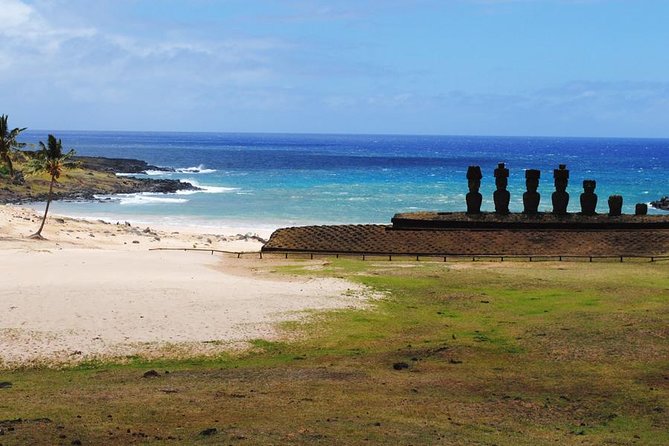
Ahu Tahai is a compact ceremonial complex near the sea and one of the easiest major sites to visit from Hanga Roa. The stop lasts about 30 minutes and includes moai platforms and archaeological remains.
I like this part of the route because it connects the monumental sites with the everyday setting of the island. You are not looking at statues in isolation. You see them beside the coast, close to the modern settlement, where the relationship between community, ceremony, and the sea becomes easier to picture.
Tahai is also a good place for photographs. The site is known for sunset viewing, although the tour timing may not line up with sunset every day. Admission is free, unlike several other stops that require the national park ticket.
One practical point: the Ahu Akivi route may be shared with a Spanish-speaking group. English explanations have generally been clear, but one account described the Spanish presentation as longer on some occasions. If you need detailed English interpretation, listen closely and ask your guide to repeat anything you miss.
Ahu Tongariki and the island’s largest moai platform
The full-day route begins with Ahu Tongariki, home to 15 moai arranged along the coast. It is the largest moai complex on Rapa Nui and one of the island’s most powerful sights.
You get about 45 minutes here. The line of statues makes an immediate impression, but the site becomes more meaningful when your guide explains the role of the ancestors and the communities connected to them. The scale also gives you a sense of the effort required to build and maintain a ceremonial platform.
Tongariki is a popular photographic stop, so the short visit may feel quick if you want many pictures. I would use the first few minutes to look carefully at the full platform before focusing on individual details. The stop requires the national park entrance fee.
Still Chile, but an entirely different landscape:
- 2-Day Private Tour Easter Island Highlights Complete Discovery
★ 5.0 · 110 reviews - Private Full-Day Easter Island Highlights North and West
★ 5.0 · 84 reviews - From Hanga Roa: Journey from Orongo to Ana Te Pahu
★ 4.3 · 75 reviews - Journey of the Ancestors: Tongariki, Rano Raraku & Anakena Beach
★ 4.5 · 70 reviews
Three hours at Rano Raraku is the package’s best use of time
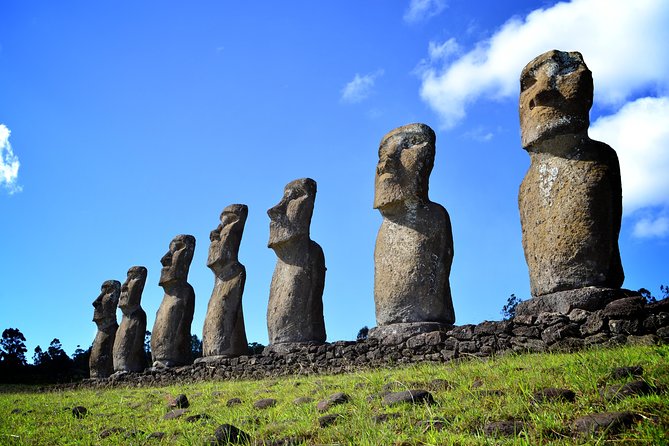
Rano Raraku is the volcanic quarry where most of the island’s moai were carved. The tour allows three hours here, which is far more useful than a brief stop beside the road.
This is where you can see statues in different stages of production. Some remain partly attached to the volcanic rock, while others appear as if they were abandoned during transport. The unfinished figures make the carving process easier to understand than a completed statue ever could.
I consider the generous timing at Rano Raraku one of the strongest features of the package. You have time to walk, study the forms, and absorb the scale of the quarry without being hurried through in a few minutes. Admission is not included, so your park ticket is essential.
Wear sensible shoes and carry water. The itinerary specifically recommends bringing water and snacks, and you should take that advice seriously. There are not many opportunities to buy supplies along the route. The quarry stop may also feel demanding if you prefer a slower pace, since three hours is a substantial portion of the full-day outing.
Rano Raraku can also produce what one visitor called moai overload on the full-day tour. That is a fair warning. The statues are extraordinary, but the day includes several major ceremonial sites in succession. If you want time for quiet reflection or repeated photographs, the schedule may feel brisk. If you have only a short stay, the density is exactly why the tour works.
Anakena Beach adds a welcome change of pace
After the quarry and ceremonial sites, the full-day tour continues to Anakena Beach for about two hours. This is one of the island’s few white sand beaches and a welcome change from the volcanic stone found across much of Rapa Nui.
Anakena is not only a place to relax. It is tied to the early Polynesian settlement of the island, so the stop continues the connection between natural places and Rapa Nui culture. You get time to enjoy the beach, take photographs, and slow down after a morning of archaeological sites.
Lunch is included on this day, which improves the value of the package. Food and drinks are not generally included elsewhere, so check what is provided before setting out.
Bring a bathing suit, towel, sunglasses, sunscreen, water, and snacks. The beach stop is the only part of the itinerary where swimming gear is specifically useful. If you do not plan to swim, the two hours still give you time to rest and enjoy the setting.
Orongo and Rano Kau explain the Birdman era
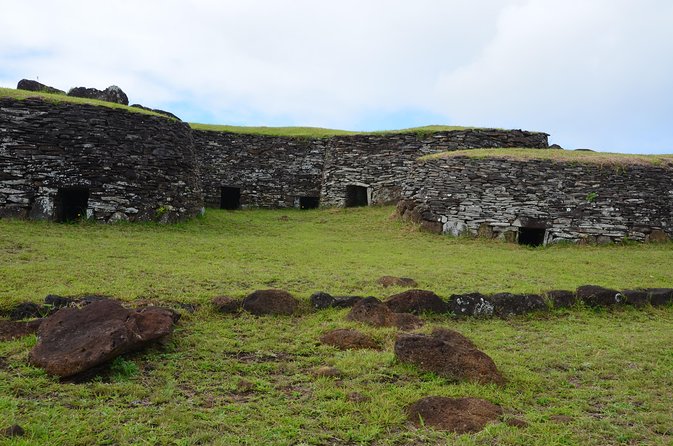
The second half-day route visits Orongo, a ceremonial village on the rim of Rano Kau. You get about 20 minutes at Orongo, followed by roughly 30 minutes at the crater.
Orongo is connected to the Tangata Manu, or Birdman Ceremony. In this competition, participants sought the first egg of the manutara bird on Motu Nui. The contest carried political and spiritual meaning, with the result tied to power, wisdom, and the relationship between people, nature, and the ancestors.
The short stop means you need to stay focused. Listen to the guide before wandering toward the viewpoints or studying the stone structures. The site is not just about a dramatic view. Its importance comes from the ceremony and the difficult setting chosen for it.
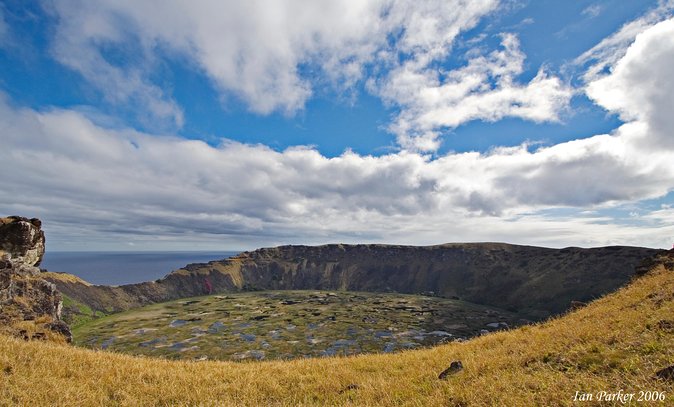
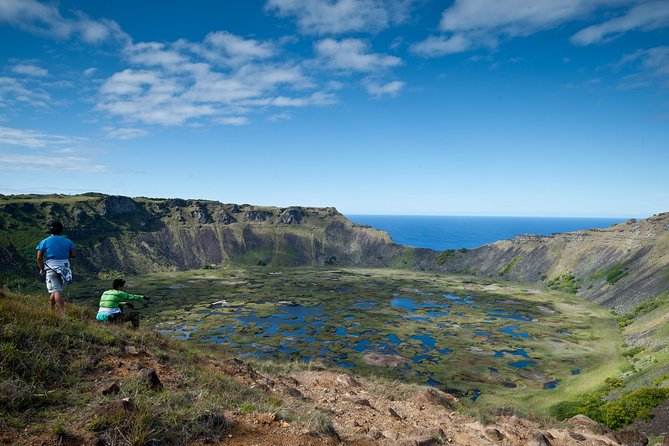
Rano Kau offers wide views of the ocean and Motu Nui, along with the crater lake inside the volcano. The crater is one of the most visually striking stops in the package, and it gives the Birdman story a clear physical setting.
Again, this visit is brief. You will have time to see the crater and take photographs, but not necessarily enough time for a long, quiet walk. Admission is not included, and the national park fee covers this type of site.
Ahu Vinapu shows careful stonework
Ahu Vinapu is a short stop of about 20 minutes. The archaeological site is known for carefully fitted stonework and construction techniques that have led to discussion about possible pre-Incan influence.
The most useful way to approach Vinapu is to look at the masonry rather than simply searching for upright moai. Its value lies in the engineering and the precision of the platform. The stop adds variety after the more familiar statue sites and shows that Rapa Nui achievement was not limited to carving figures.
Twenty minutes is enough for an introduction, but it is not a long archaeological visit. If you enjoy stone construction and technical details, you may want to ask your guide questions while you are there. Admission is not included.
Guides, group size, and the shared-tour setup
The experience is offered in English, but it is not private. Groups can reach 16 people, although smaller groups are possible. A group of this size usually keeps transport and movement manageable, while still giving the operator enough people to run the route efficiently.
Guide quality can vary. Some guides have provided clear explanations of the moai, the Birdman period, and current theories about the island’s past. Christina received particular praise for her patience and for taking extra care to translate for English-speaking passengers in a mostly Spanish-speaking group.
There has also been an English-language concern on some departures. One passenger felt that English explanations were shorter than Spanish ones, and another found the Ahu Akivi guide less informative than the guides on the other two outings. That does not make the package a poor choice, but it is worth knowing that the experience may depend partly on the assigned guide.
The strongest advice is simple: if you miss a detail, ask. A good guide can make the difference between seeing a row of statues and understanding why the site matters.
Transport and practical comfort
Hotel pickup and drop-off in Hanga Roa are included, as are round-trip transfers to and from Mataveri Airport. Transport is by air-conditioned minivan or bus, which matters on a full day that includes Tongariki, Rano Raraku, and Anakena.
Port pickup is not available. This tour is not suitable if you are arriving by cruise ship, even if you have limited time ashore.
Bring water every day. The routes do not offer many places to buy drinks or snacks, and the full-day outing is especially long. Sunscreen, sunglasses, and a hat are sensible choices. For Anakena, add a towel and bathing suit if you want to swim.
The stated operating hours are Monday through Saturday, from 9:30 a.m. to 6 p.m., during the listed operating period through December 2026. The tour itself is spread over three days, so do not assume every route runs every day.
Who will get the most value from this package?
I would choose this tour if I had a short visit to Easter Island and wanted the main sites handled in one plan. It is especially useful for first-time visitors who want context at each stop rather than simply driving from one moai platform to another.
It also suits you if you prefer guided transport, need airport transfers, or do not want to arrange several separate day tours. The combination of Rano Raraku, Tongariki, Orongo, Rano Kau, Vinapu, Akivi, Puna Pau, Tahai, and Anakena covers a great deal of the island’s cultural and natural appeal.
I would hesitate if you want a private experience, long visits at every site, or complete control over the schedule. The package is shared, the stops are timed, and some English explanations may be shorter when the group is multilingual.
The package has an overall rating of 4.3 from eight ratings. The most consistent praise goes to the coverage, friendly guides, useful historical explanations, and the way the tour fits a short stay. The main cautions are guide variation, occasional itinerary changes, and the additional park fee.
Should you book the Super Saver package?
Book it if you want to see the essential Easter Island sites in three organized days and your dates fit the Monday-to-Saturday schedule. At $294, the bundled price is reasonable for the transport, guiding, airport transfers, and broad coverage, but remember to add the $100 national park fee.
Before paying, confirm the dates for both route types and make sure your booking has at least two people. Bring water and sun protection, and expect a shared group rather than a private guide. If you accept those limits, this is a practical way to get a strong first look at Rapa Nui, especially when every day on the island matters.
FAQ
How much does the Super Saver package cost?
The listed price is $294 per person. The $100 Rapa Nui National Park entrance fee is extra, so budget $394 per person before any additional food or drinks.
How long does the experience last?
The package lasts approximately three days. It includes two half-day tours and one full-day tour.
Is hotel pickup included?
Yes. Hotel pickup and drop-off in Hanga Roa are included.
Are airport transfers included?
Yes. Round-trip transfers to and from Mataveri Airport are included.
Is lunch included?
Lunch is included on the Anakena Beach day trip. Food and drinks are not included unless specifically stated.
Which days does the Ahu Akivi and Orongo tour operate?
The Ahu Akivi and Orongo route operates on Monday, Wednesday, and Friday.
Which days does the Anakena Beach tour operate?
The Anakena Beach route operates on Tuesday, Thursday, and Saturday.
Can I choose the dates for the different tours?
Yes. You may choose which day to take each tour, but you need to contact the operator to establish the dates. At checkout, select the Ahu Akivi tour date and enter the dates for the other tours in the special requirements box.
Is this a private tour?
No. This is a shared tour, with a maximum of 16 people.
Is the tour suitable for cruise passengers?
No. Port pickup is not available, and the tour is not suitable for passengers arriving by cruise ship.
What should I bring to Anakena Beach?
Bring a bathing suit, towel, sunglasses, sunscreen, water, and snacks.
Just added around Hanga Roa
- Volcanic Refuges: Excursion to Underground Civilization★ 4.7 · 8 reviews
- Volcanic Wonders and the Kingdom of the Birdman: Half Day★ 5.0 · 6 reviews
- Easter Island Ancestral Dinner and Show with Transport★ 4.5 · 2 reviews
- Half Day Private Tour: Caves and Volcanic Refuges★ 4.0 · 14 reviews
- Tour to the Motus: Boat trip and snorkeling in Rapa Nui★ 5.0 · 8 reviews
- Birdman Ceremonial Route: Orongo, Ranu Kau Half-Day Tour★ 4.5 · 16 reviews
- Visit Rapa Nui in 4 days with 3 Tours and Accommodation included★ 4.0 · 2 reviews
- Private Tour: Tongariki Sunrise Experience★ 4.5 · 20 reviews
Easter Island Tours, compared.
Two days of Full Day Tour of Rapa Nui + Sunrise in Tongariki
Read our review →
2-Day Private Tour Easter Island Highlights Complete Discovery
Read our review →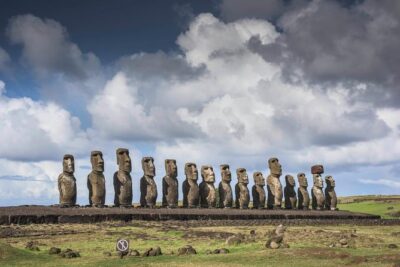
Private Tour: Full Day Easter Island Highlights
Read our review →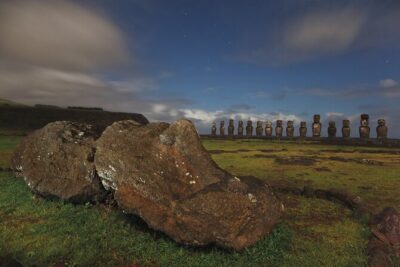
Browse the lists this tour appears in