
Reviewed · EASTER ISLAND TOURS
Rapa Nui Highlights Program: 3 incredible tours to discover!
Moai, volcanoes, and one packed island. The Rapa Nui Highlights Program brings together the island’s key archaeological sites in three guided outings over two days. I like the smart coverage, from the moai at Ahu Akivi to the quarry at Rano Raraku, and I like the small groups, limited to 15 people. The main drawback is that the National Park ticket, meals, and drinks cost extra.
The schedule gives you both famous sights and quieter stops that are easy to miss without local guidance. Jaime received praise for spending plenty of time at each site, while Ugo was singled out for adding strong cultural detail to the full-day tour. I would confirm pickup times before arrival, since one booking had late notice about the final arrangements.
In This Review
- Six details that make this program useful
- Why two days is a good fit for Rapa Nui
- Ahu Akivi and Puna Pau: moai with a sense of direction
- Vinapu, Rano Kau, and Orongo’s Birdman story
- Rano Raraku and the making of the moai
- Ahu Tongariki, Te Pito Kura, and the largest moai
- Anakena: ending among palms, sand, and moai
- Guides, transport, and the small-group experience
- Is $220 a good value?
- Who should book this program?
- FAQ
- How long does the Rapa Nui Highlights Program last?
- What tours are included?
- Which sites are included in the Ahu Akivi tour?
- Which places are visited on the Orongo tour?
- Which sites are included on the full-day Anakena tour?
- Is the National Park ticket included?
- Are meals and drinks included?
- Should you book the Rapa Nui Highlights Program?
Six details that make this program useful
- Three major tours in two days: You cover Ahu Akivi, Orongo, Rano Raraku, Tongariki, Anakena, and several less familiar sites.
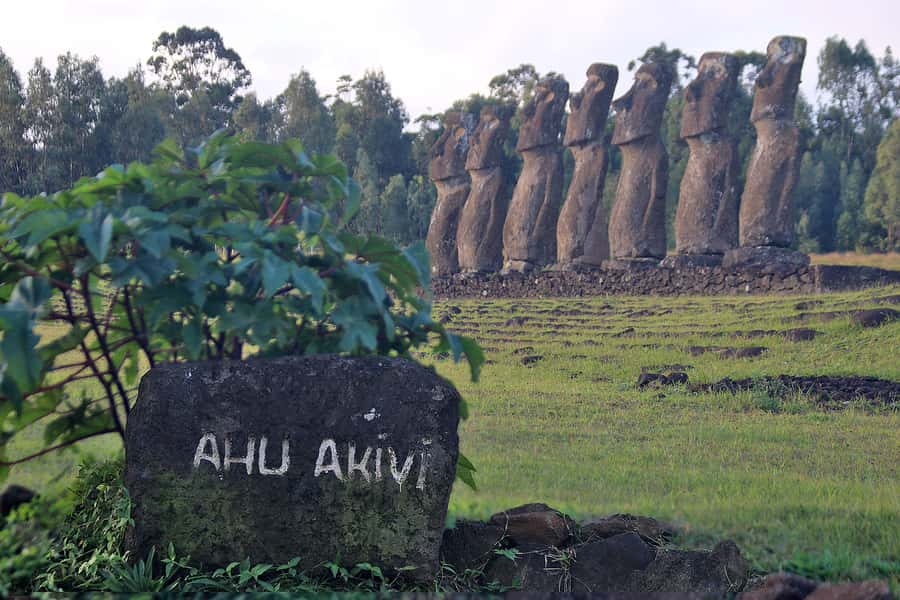
- Ahu Akivi’s seven moai: These statues face inland toward the island, with a strong connection to the story of King Hotu Matu’a and seven explorers.
- Rano Raraku’s unfinished statues: The volcanic quarry still holds 397 moai, giving you the clearest view of how these figures were made.
- Orongo and the Birdman ceremony: The clifftop village links archaeology with one of Rapa Nui’s most unusual traditional contests.
- Ahu Tongariki’s fifteen moai: This is the big visual moment, but Te Pito Kura holds the island’s largest moai once raised on an ahu.
- English and Spanish guiding: The program uses live guides, with small groups and hotel pickup included.
Why two days is a good fit for Rapa Nui
Rapa Nui is small enough to cross by road, but its major sites are spread around the coast and interior. A self-guided visit can easily become a parade of stone platforms without much sense of how they connect. I like this program because the guide gives each stop a place in the larger story of the island.
You spend two days moving between ceremonial platforms, volcanic craters, quarries, beaches, and old settlement areas. That range matters. The statues are famous, but the setting and the reasons behind their placement are what make Rapa Nui memorable.
The program costs $220 per person. That is a fair price if you want transport, a guide, and a tightly planned route through the island’s main archaeological areas. You are not just paying for a ride to the moai. The value comes from linking the sites and hearing explanations about customs, beliefs, astronomy, fishing taboos, and the changing role of ceremonies.
Still, budget for the National Park ticket separately. Food and drinks are also not included. The package does not provide pickup or drop-off at Explora Hotel, so that is another point to check before booking.
The small-group limit of 15 is helpful. It should give you a better chance to hear the guide than a large coach tour, while still keeping the price below a private outing. One booking described a near-private group of only three people, though you should treat that as a possibility rather than a promise.
More Rapa Nui trips and moai walks:
- From Hanga Roa: Rapa Nui Culture Sightseeing Tour
★ 4.6 · 307 reviews - From Hanga Roa: Easter Island Highlights 2-Day Tour
★ 4.3 · 205 reviews - Full Day Tour in Rapa Nui
★ 4.5 · 122 reviews
Ahu Akivi and Puna Pau: moai with a sense of direction
The Ahu Akivi half-day outing begins with hotel pickup and heads to Ahu Akivi, one of the few platforms where the moai face toward the ocean. The seven figures represent explorers sent by King Hotu Matu’a before his colonization voyage, according to Rapa Nui tradition.
That orientation gives the site a different feeling from many other ahu, where the statues turn their backs toward the sea and face inland. Your guide can help explain how direction, ancestry, and ceremony fit together. Without that context, you might simply see seven statues on a platform and move on.
The route continues to Puna Pau, a small crater made from red volcanic slag. This is where the pukao, the red stone topknots often described as hats, were made. The stop helps you see that the moai and their headpieces came from different parts of the island.
That detail is easy to miss. The reddish stone contrasts with the gray volcanic material used for many of the statues, and the site gives you a practical sense of the work involved in shaping and transporting the pukao.
Ahu Uri Aurenga completes this half-day route. It has a single statue and an important astronomical alignment. The platform is oriented along the winter solstice, marking the start of the season called tonga and the period when certain taboos governed fishing and other activities.
The statue also faces east and lines up with two nearby hills, Maunga Mataengo and Maunga Tararaina. Two smaller ahu are close by. This is the kind of stop I value on a guided visit because the meaning is not immediately obvious from the stones alone.
The listed route also includes Tahai. Since the exact order and timing can vary, ask for the day’s plan when you book. The Ahu Akivi outing is available Monday, Wednesday, and Friday.
Vinapu, Rano Kau, and Orongo’s Birdman story
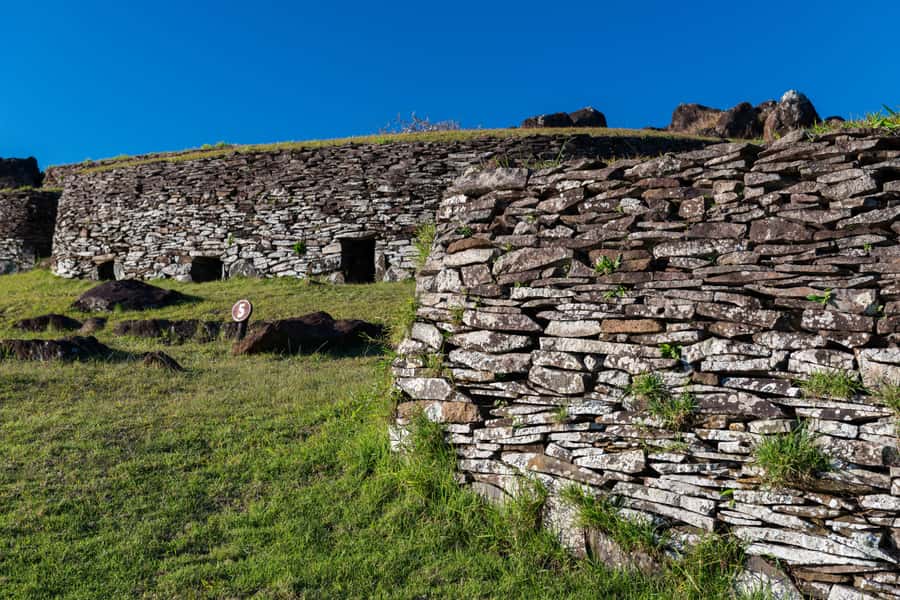
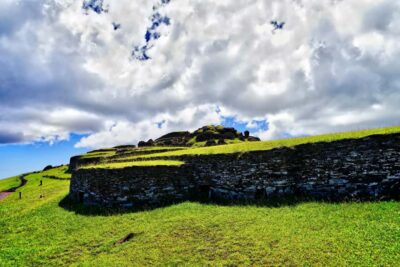
The Orongo half-day tour starts in the Vinapu sector. Here, large basalt stones were fitted together with remarkable precision, in a style often compared with Inca construction at Machu Picchu.
The comparison is interesting, but it is best used as a prompt rather than a claim that the two cultures were directly connected. Your guide can point out the construction technique and help you focus on the stones themselves. The fitted blocks are the reason Vinapu feels different from the more familiar moai sites.
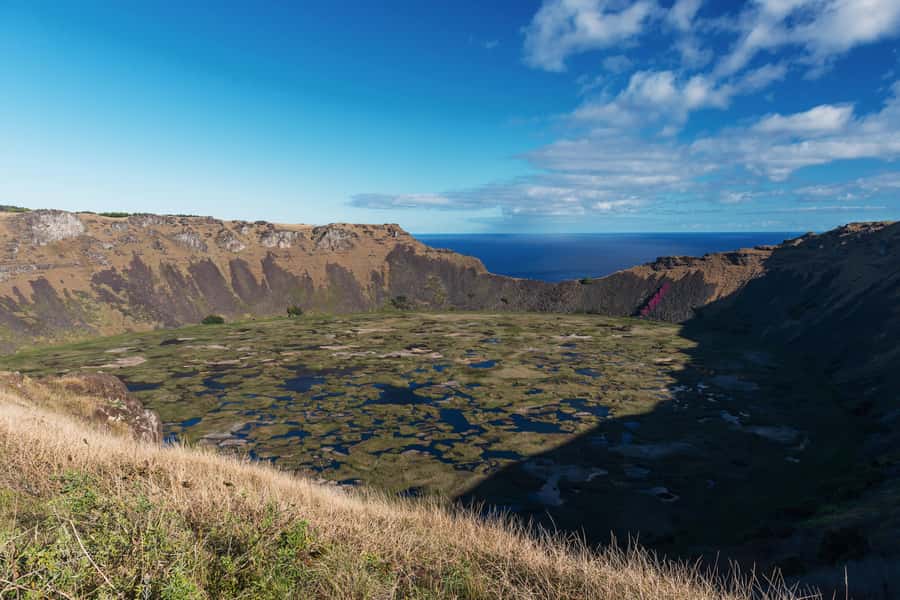
From Vinapu, you continue to Rano Kau, a huge volcanic crater with a lake, small reed-covered islets, and unusual plant and animal life. The crater is one of the island’s most dramatic natural settings, and it gives the tour a welcome change from ceremonial platforms and statues.
The final stop is Orongo, a ceremonial village near the crater. This is where you learn about the Birdman contest, one of the most distinctive ceremonies in Rapa Nui culture. The site links political power, religious belief, and a dangerous annual competition.
I would allow yourself time to listen here. Orongo is not simply another viewpoint. Its importance comes from the ceremony and the way the village was used, so a good guide makes a real difference. The program is conducted in English or Spanish, and clear explanations matter most at sites like this.
The Orongo tour is also available Monday, Wednesday, and Friday. Because the two half-day outings share those days, check the exact combination available for your dates. The advertised program lasts two days, but the scheduling details deserve confirmation before you pay.
Rano Raraku and the making of the moai
The full-day Anakena route is the longest and most packed outing. It begins with Ahu Vaihu and Akahanga, two ceremonial areas with stone platforms where moai and pukao were gathered after their original use.
These sites are valuable partly because they show a less polished side of Rapa Nui archaeology. You see fallen statues and disrupted platforms rather than a single perfectly restored row. That can make the visit feel more honest. The island’s past was not preserved as a neat open-air museum.
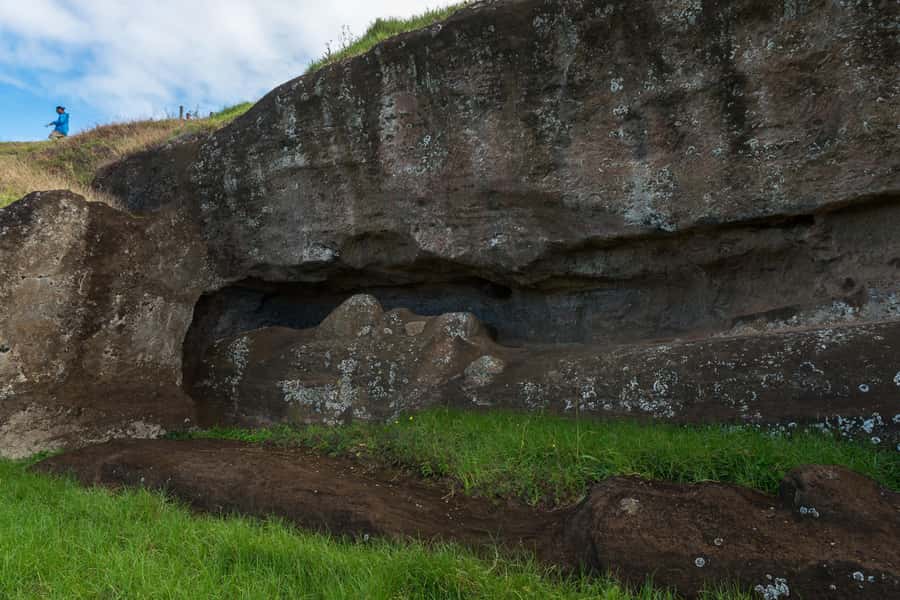
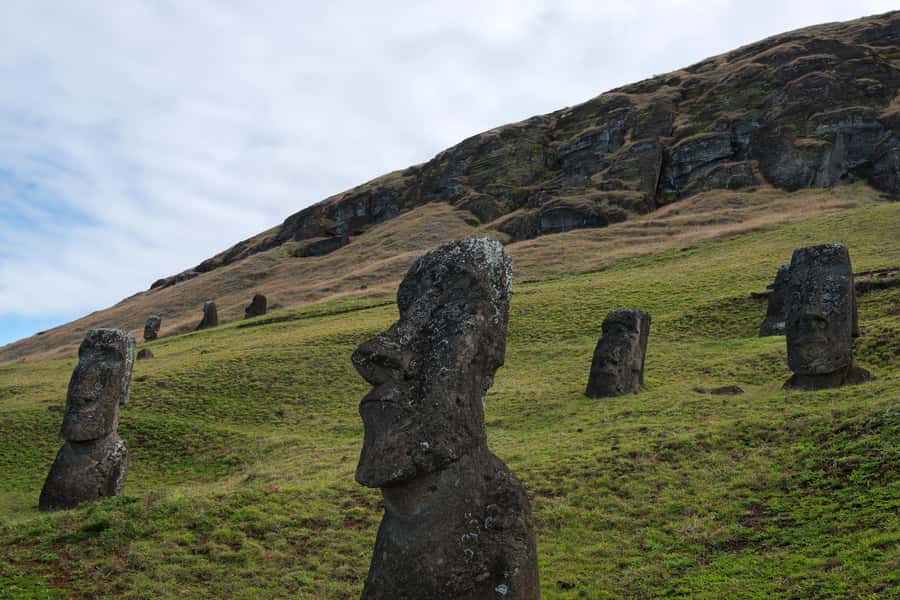
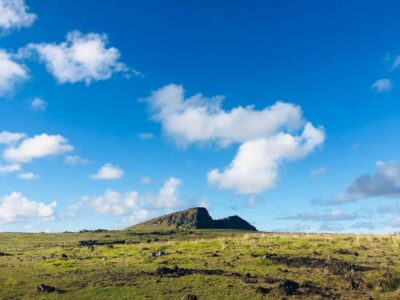
Next comes Rano Raraku, the volcanic crater that served as the main moai quarry. The crater formed from consolidated ash and contains a lagoon. On its slopes, the statues were carved from the volcanic material before being moved to platforms around the island.
A total of 397 moai remain at the quarry. Some are partly buried or unfinished, and that is what makes the site so useful. At an ahu, you see the finished product. At Rano Raraku, you get closer to the production process and the scale of the work.
This is likely to be one of the most rewarding stops of the entire two-day program. You can compare the unfinished forms with the completed statues seen elsewhere, and your guide can explain why the quarry was central to Rapa Nui society.
The full-day route is available Tuesday, Thursday, and Saturday. Since it is a long day with several major stops, wear practical shoes and carry water. Food and drinks are not included, so plan for that before setting out.
Still Chile, but an entirely different landscape:
- 2-Day Private Tour Easter Island Highlights Complete Discovery
★ 5.0 · 110 reviews - Private Full-Day Easter Island Highlights North and West
★ 5.0 · 84 reviews - From Hanga Roa: Journey from Orongo to Ana Te Pahu
★ 4.3 · 75 reviews - Journey of the Ancestors: Tongariki, Rano Raraku & Anakena Beach
★ 4.5 · 70 reviews
Ahu Tongariki, Te Pito Kura, and the largest moai
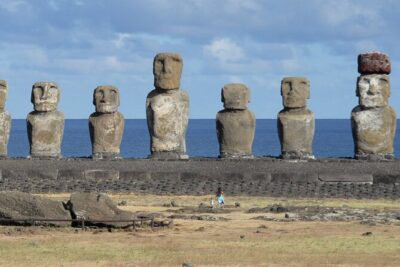
Ahu Tongariki is the grand visual stop on the full-day route. Fifteen huge moai stand on the restored ceremonial platform, facing inland with the Pacific behind them.
The scale is hard to grasp from photographs. The row gives you a chance to compare different statue shapes and sizes, while the open setting shows how much work went into placing so many figures together. Your guide’s explanation helps connect the platform to the wider role of ahu in Rapa Nui society.
The route then continues to Te Pito Kura. This site has the largest moai ever erected on an ahu, Moai Paro, which measured about 10 meters and weighed roughly 85 tons.
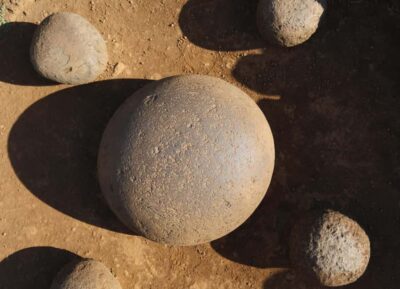
Paro is no longer standing, but its size remains clear. This is a useful reminder that the biggest statue is not always the most famous one. You can also see Te Pito o Te Henua, a large spherical stone identified as the navel of the world.
The name gives the place a strong symbolic charge, and it is one of those locations where a short explanation adds much more than a quick photograph. I would listen carefully to the guide’s account rather than treating the stone as just another unusual object.
Anakena: ending among palms, sand, and moai
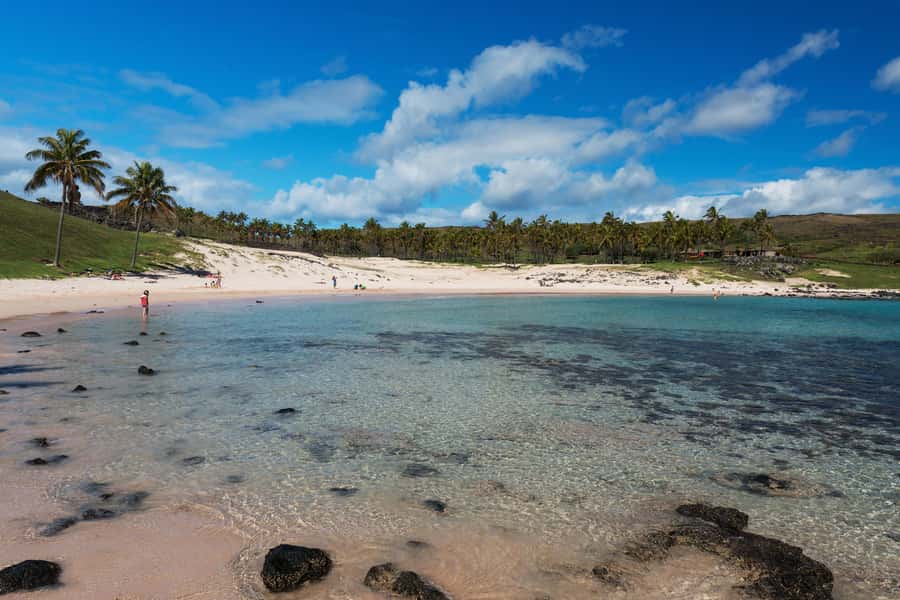
The day ends at Anakena, the island’s best-known beach. After a full day of quarries, platforms, and volcanic sites, the pale sand offers a change of pace.
What makes Anakena special is not only the beach. A row of moai faces inland with its back to the sea, creating one of Rapa Nui’s most memorable combinations of archaeology and natural scenery.
This final stop gives you time to take in the setting before returning to your hotel. The program description presents Anakena as a place to rest, but the exact amount of free time depends on the day’s pace and the guide. If beach time is especially important to you, ask how long the group usually remains there.
I like the order of the full-day trip. You begin with older ceremonial areas, move through the quarry and major platforms, then finish somewhere more relaxed. It gives the day a clear arc instead of feeling like a random list of stops.
Guides, transport, and the small-group experience
Hotel pickup is included, and you should wait in the lobby 10 minutes before the scheduled time. The groups are limited to 15 people, and the tours are led in English or Spanish.
The strongest part of the guiding appears to be the explanations at the archaeological sites. Ugo received particular praise for adding cultural detail and passion during the one-day route. Jaime was also praised for being prompt, spending plenty of time at each stop, and explaining thoroughly in both Spanish and English.
One German-speaking booking had a German tour companion and noted good restroom breaks and a relaxed pace. That does not establish a standard German-language departure, so ask Koa Ma´ara Travel directly if you need guiding in German.
The main practical weakness is communication before pickup. One booking had to wait for confirmation of the activity and an approximate pickup time because the operator works with contractor guides. I would not treat that as a reason to reject the tour, but I would ask for the final pickup details before your first morning.
The advertised tour is not suitable for wheelchair users, pregnant women, or cruise ship passengers. Cruise ship timing is a particular concern because this is a two-day program with scheduled hotel pickup, not a shore excursion built around a ship’s departure.
Is $220 a good value?
At $220 per person, the price makes sense for anyone who wants the main Rapa Nui sites covered with transport and interpretation. You receive three outings, including one full day, and the route reaches more than 900 archaeological sites across the island’s wider area, though no tour can stop at all of them.
The price is less attractive if you plan to visit only one or two sites, already have a rental car, or prefer to set your own pace. A self-guided visit may offer more freedom, but you would need to arrange transport and find reliable explanations for places such as Ahu Uri Aurenga and Orongo.
Remember the extra costs. The National Park ticket is not included, and neither are meals or drinks. Pickup and drop-off at Explora Hotel are also excluded. These are not minor details on a two-day itinerary, so include them in your total budget.
Free cancellation is available up to 24 hours before departure for a full refund. You can also reserve now and pay later, which helps if your island schedule is still changing.
Who should book this program?
I would choose this experience if you have two days on Easter Island and want the main sites explained rather than simply photographed. It suits first-time visitors, history-minded people, and anyone who prefers a small guided group to arranging several separate outings.
It is also a good match if you want a balanced introduction. You get moai, quarry sites, ceremonial villages, astronomy, traditional taboos, a volcanic crater, and a beach, not three nearly identical statue stops.
I would look elsewhere if you need wheelchair access, are pregnant, or are arriving by cruise ship. I would also ask detailed questions if you need guaranteed German guiding, a firm pickup time far in advance, or substantial time at Anakena.
FAQ
How long does the Rapa Nui Highlights Program last?
The program lasts two days and includes three tours: two half-day outings and one full-day outing.
What tours are included?
The program includes the half-day Ahu Akivi tour, the half-day Orongo tour, and the full-day Anakena tour.
Which sites are included in the Ahu Akivi tour?
The route includes Puna Pau, Ahu Akivi, Tahai, and Ahu Uri Aurenga.
Which places are visited on the Orongo tour?
The Orongo route visits Vinapu, Rano Kau, and the ceremonial village of Orongo.
Which sites are included on the full-day Anakena tour?
The full-day route includes Ahu Vaihu, Akahanga, Rano Raraku, Ahu Tongariki, Te Pito Kura, Te Pito o Te Henua, and Anakena.
Is the National Park ticket included?
No. The National Park ticket is not included in the $220 price.
Are meals and drinks included?
No. Food and drinks are not included, so you should plan for them separately.
Should you book the Rapa Nui Highlights Program?
For most first-time visitors with two days available, I would book it. The route covers the island’s essential archaeological areas, the guides add useful cultural context, and the small-group format keeps the experience personal without the cost of a private tour.
Before booking, confirm your exact tour dates, pickup time, language needs, and the extra cost of the National Park ticket. If those details work for you, this is a practical way to see the moai, understand the ceremonies, and leave Rapa Nui with a much clearer sense of the people behind the stones.
Just added around Hanga Roa
- Volcanic Refuges: Excursion to Underground Civilization★ 4.7 · 8 reviews
- Easter Island Ancestral Dinner and Show with Transport★ 4.5 · 2 reviews
- Volcanic Wonders and the Kingdom of the Birdman: Half Day★ 5.0 · 6 reviews
- Half Day Private Tour: Caves and Volcanic Refuges★ 4.0 · 14 reviews
- Tour to the Motus: Boat trip and snorkeling in Rapa Nui★ 5.0 · 8 reviews
- Birdman Ceremonial Route: Orongo, Ranu Kau Half-Day Tour★ 4.5 · 16 reviews
- Visit Rapa Nui in 4 days with 3 Tours and Accommodation included★ 4.0 · 2 reviews
- Private Tour: Tongariki Sunrise Experience★ 4.5 · 20 reviews
Easter Island Tours, compared.
Two days of Full Day Tour of Rapa Nui + Sunrise in Tongariki
Read our review →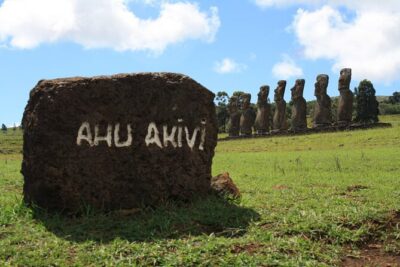
2-Day Private Tour Easter Island Highlights Complete Discovery
Read our review →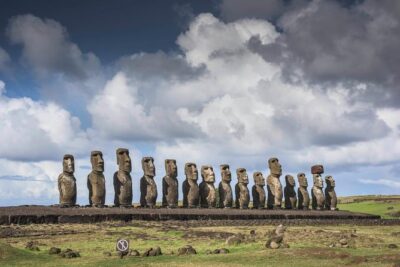
Private Tour: Full Day Easter Island Highlights
Read our review →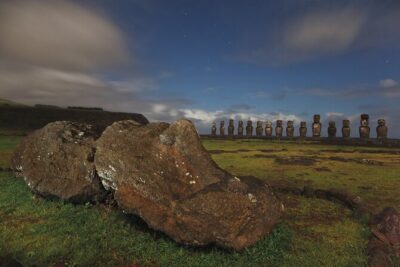
Browse the lists this tour appears in