
Reviewed · EASTER ISLAND TOURS
Mysteries and Legends: Complete Journey of Rapa Nui in 3 Tours
Rapa Nui rewards patient exploring. This three-day program takes you from moai quarries and fallen statues to volcanic craters, ceremonial villages, and Anakena Beach. I especially like the wide coverage of the island and the chance to see major sites without arranging separate transport. I also like the small-group format, with no more than 15 people and hotel pickup included. The main drawback is cost: at $290 per person, the tour does not include the National Park entrance fee or picnic lunches, and one guide worked in both Spanish and English, which may not suit every English-speaking visitor.
The schedule is sensibly spread across three outings rather than cramming every site into one exhausting day. Guides such as Maitu, Nicholas Paka, Nico, and Mera have been praised for their warmth, clear explanations, flexibility, and punctuality. I would still confirm the language arrangement before paying, and I would compare the price with local booking options once you arrive in Hanga Roa.
In This Review
- Key points to know before you book
- Why three days works well on Rapa Nui
- Day one: fallen kings, a giant quarry, and Anakena
- Ahu Akahanga and the island’s fallen moai
- Rano Raraku, where the moai began
- Ahu Tongariki and its row of fifteen
- Ahu Te Pito Kura and the largest moai
- Anakena Beach, a softer ending
- Day two: stone engineering and the Bird Man tradition
- Ahu Vinapu and carefully fitted volcanic rock
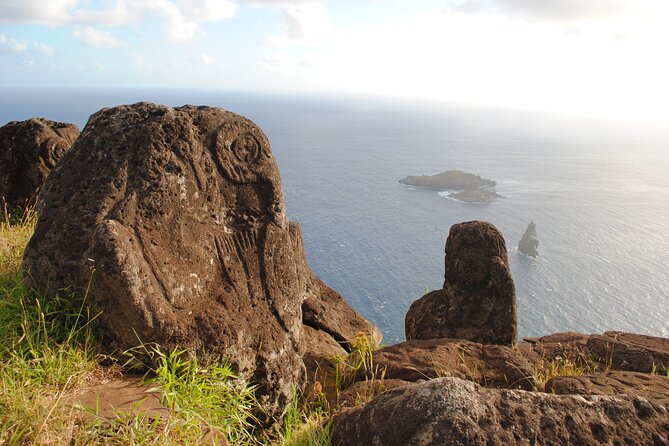
- Orongo, the Bird Man ceremony
- Rano Kau and its crater
- Day three: red stone, seven guardians, and Hanga Roa
- Puna Pau and the red-stone headdresses
- Ahu Akivi and the seven moai
- Ahu Tahai and three restored platforms
- What the $290 price really buys you
- Guides, group size, and the human side of the tour
- Who should book these three excursions?
- Final verdict: a strong full-island introduction
- FAQ
- How long does the experience last?
- Where does the tour take place?
- How much does the tour cost?
- Is National Park admission included?
- Is lunch included?
- Is hotel pickup provided?
- What type of vehicle is used?
- How large is the group?
- Can I cancel for a full refund?
Key points to know before you book
- Rano Raraku is the centerpiece: You spend 90 minutes at the quarry where most moai were carved.
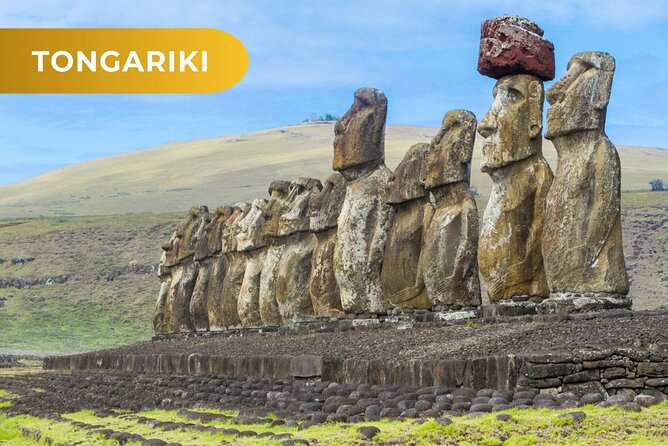
- Ahu Tongariki gives you the classic moai view: Fifteen restored statues line the ceremonial platform.
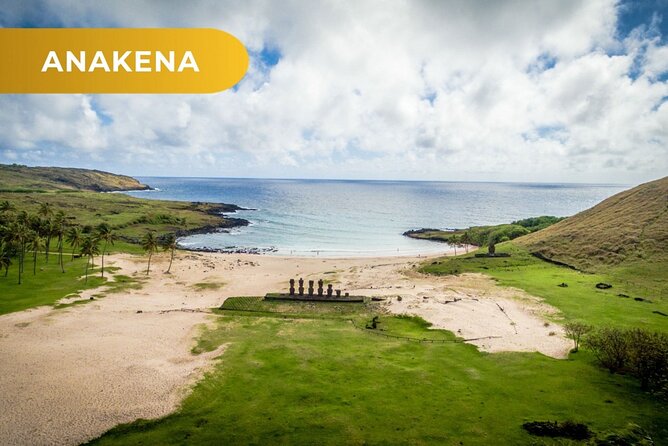
- Anakena adds a welcome change of pace: White sand, palm trees, turquoise water, and well-preserved moai make this the most relaxed stop.
- Orongo and Rano Kau work best together: One explains the Bird Man competition, while the other reveals a striking volcanic crater.
- The program covers the island’s major sites: Three excursions reach roughly a dozen important archaeological places.
- Budget for extra costs: Park admission and picnic lunches are not included in the $290 price.
Why three days works well on Rapa Nui
Rapa Nui is small enough to cross by road, but its sites are spread out and deserve time. A single rushed circuit would let you take photographs, but it would leave little room to understand why a quarry, platform, crater, or fallen statue matters.
This program divides the sights into three guided outings. The first day concentrates on the eastern and northern side of the island, the second heads toward the volcanic southwest, and the third covers several sites close to Hanga Roa. That division gives you breathing room and helps the monumental stonework sink in.
I also like the practical structure. You ride in an air-conditioned vehicle, get picked up at your hotel, and travel in a group capped at 15 people. That is small enough to feel manageable, though it is not the same as a private tour. The guides and drivers have been praised for punctual departures and flexible decisions, including returning to Orongo when fog blocked the view on the first attempt.
The program lasts approximately three days, but exact departure times are not provided. Ask about the daily schedule, language, and park ticket arrangements before you go.
More Rapa Nui trips and moai walks:
- From Hanga Roa: Rapa Nui Culture Sightseeing Tour
★ 4.6 · 307 reviews - From Hanga Roa: Easter Island Highlights 2-Day Tour
★ 4.3 · 205 reviews - Full Day Tour in Rapa Nui
★ 4.5 · 122 reviews
Day one: fallen kings, a giant quarry, and Anakena
Ahu Akahanga and the island’s fallen moai
Ahu Akahanga introduces one of Rapa Nui’s most important themes: the moai you see today were not all left standing. Several lie on the ground around the ceremonial area, and local legends connect the site with the burial place of the island’s first king.
You get about 45 minutes here. That is enough for an introduction, photographs, and a guide’s explanation of the platform and its legends. It is also a useful first stop because it gives you a contrast with the upright statues you will see later.
Do not expect a polished monument with every statue restored. The fallen figures are part of the site’s meaning. They show the island’s upheaval and remind you that Rapa Nui is not simply a collection of postcard views.
Rano Raraku, where the moai began
Rano Raraku is the most important stop of the first day and receives 90 minutes, the longest visit in the program. This volcanic quarry is where most of the moai were sculpted.
The value here lies in seeing the statues in different stages of completion. The quarry helps you think about the practical problem behind the famous stone figures: how were these huge forms shaped from volcanic rock, removed from the slope, and moved to ceremonial platforms across the island?
Your guide’s explanation matters greatly at Rano Raraku. Without context, the statues can look like a line of impressive but unrelated objects. With a good guide, the unfinished forms, quarry walls, and transport theories become part of one larger story.
Wear practical shoes and allow yourself time to look beyond the first cluster of statues. The stop is not just a quick photo call. It is the place where the scale of Rapa Nui’s stoneworking effort becomes easiest to grasp.
Still Chile, but an entirely different landscape:
- 2-Day Private Tour Easter Island Highlights Complete Discovery
★ 5.0 · 110 reviews - Private Full-Day Easter Island Highlights North and West
★ 5.0 · 84 reviews - From Hanga Roa: Journey from Orongo to Ana Te Pahu
★ 4.3 · 75 reviews - Journey of the Ancestors: Tongariki, Rano Raraku & Anakena Beach
★ 4.5 · 70 reviews
Ahu Tongariki and its row of fifteen
Ahu Tongariki is the grand visual moment of day one. Fifteen moai have been restored and raised on the ceremonial platform, creating the most powerful group view in the program.
You have 45 minutes here. That should give you time to take in the full row, examine differences between the figures, and listen to the explanation of the platform’s restoration. The site can feel almost theatrical, but the guide helps keep it grounded in archaeology rather than turning it into a simple photo stop.
I would place Tongariki among the essential sights of Rapa Nui. It is one of the places where the scale of the island’s ceremonial tradition becomes immediately clear.
Ahu Te Pito Kura and the largest moai
The 25-minute stop at Ahu Te Pito Kura is brief but specific. The ceremonial center holds the largest moai ever built, though the statue is lying on the ground.
That detail makes this stop a useful companion to Ahu Tongariki. One presents a restored group standing together, while the other shows the sheer ambition of a statue that never reached its intended position, or no longer remains there.
Because the visit is short, listen closely to the guide and keep your expectations realistic. This is not a long walking stop. It is a focused look at one extraordinary figure and the ceremonial setting around it.
Anakena Beach, a softer ending
Anakena changes the mood. After quarries, fallen statues, and monumental platforms, you get an hour at a beach with white sand, palm trees, and turquoise water.
The area is also valued for its well-preserved moai. That combination makes Anakena more than a rest break. You can appreciate the statues, then pause beside the beach and let the day slow down.
Picnic lunch is not included, so plan for that cost and ask the operator how the meal break is handled. The supplied details do not specify whether food can be purchased at the stop or whether you should bring your own. This is one of the practical points worth confirming in advance.
Day two: stone engineering and the Bird Man tradition
Ahu Vinapu and carefully fitted volcanic rock
Ahu Vinapu is a compact 45-minute stop with a different focus from the moai quarry. Here, the stone construction shows how Rapanui builders worked volcanic rock, while several destroyed moai remain connected with internal clan conflicts in the 18th century.
The site is valuable because it shifts your attention from the statues themselves to the platforms beneath them. The masonry is the subject, and a well-prepared guide can help you notice how the stones were shaped and placed.
Ahu Vinapu may feel less immediately dramatic than Tongariki or Rano Raraku. I would not skip it, though. It adds an important layer to the story by showing that Rapa Nui achievement was not limited to carving statues.
Orongo, the Bird Man ceremony
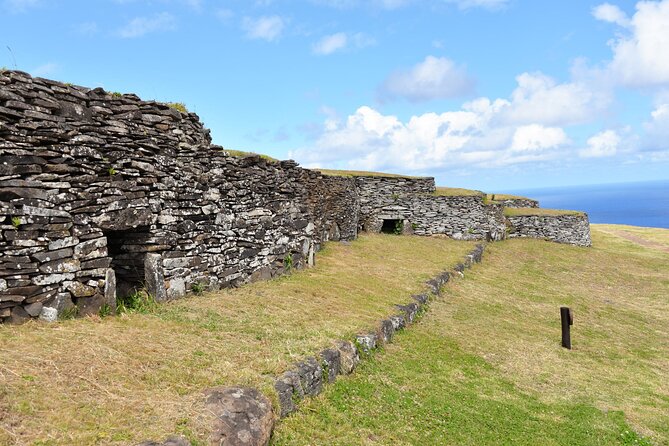
Orongo receives an hour and explains the Tangata Manu, or Bird Man, competition. The contest decided which clan would direct the island for a year.
This is one of the most distinctive cultural stops in the program. The focus is not only on moai, but also on political power, ritual, competition, and the volcanic setting around the ceremonial village.
Fog can affect the experience. One guide reportedly returned to Orongo when mist made the first visit too difficult, a good example of the flexibility you want on Rapa Nui. If visibility is poor, ask whether a return visit is possible. The program’s three-day structure may make that easier than a tightly packed one-day excursion.
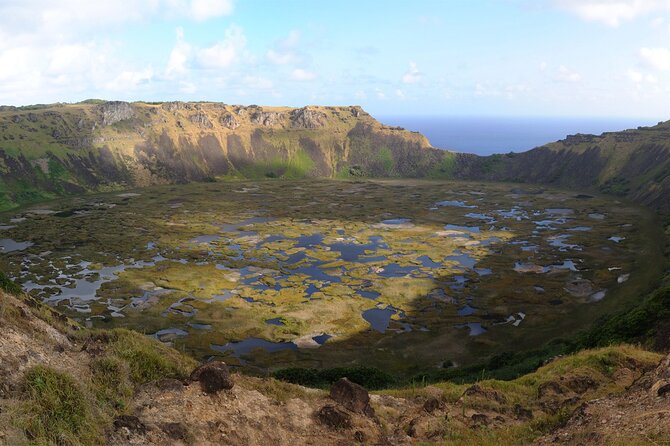
Rano Kau and its crater
The Rano Kau stop lasts about 20 minutes, making it the shortest visit in the program. It reveals the volcano’s large crater and the natural sanctuary within it.
The timing is enough for an overlook and an explanation, but it may feel quick if you want a long look or extended photography. I would think of Rano Kau and Orongo as one combined experience, even though they are listed separately. The volcano explains the setting, while Orongo explains what people did there.
Weather matters at both places. Mist may obscure the crater or ceremonial area, so keep your schedule flexible and bring an extra layer. Poor weather can also cause the entire experience to be rescheduled, with either another date or a full refund offered.
Day three: red stone, seven guardians, and Hanga Roa
Puna Pau and the red-stone headdresses
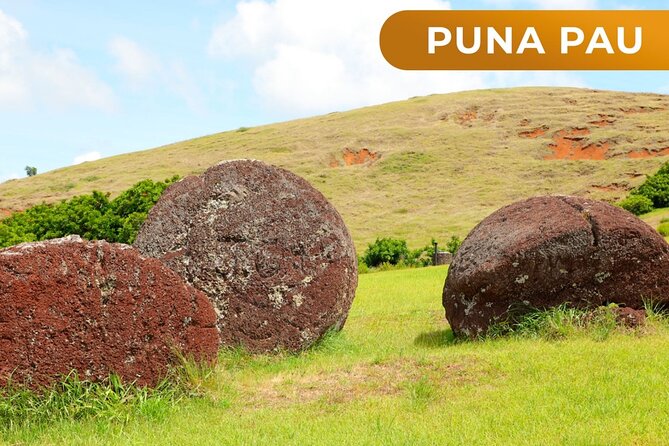
Puna Pau is a 30-minute visit to the quarry where pukao, the red stone headdresses associated with famous moai, were carved.
This stop completes an idea introduced at Rano Raraku. The statues and their headdresses came from different places, so the quarry system involved more than one type of stone and more than one stage of production.
The visit is short, but it gives you a useful visual distinction. You are not looking at another group of full statues. You are learning where the red top elements came from and how they fit into the larger ceremonial tradition.
Ahu Akivi and the seven moai
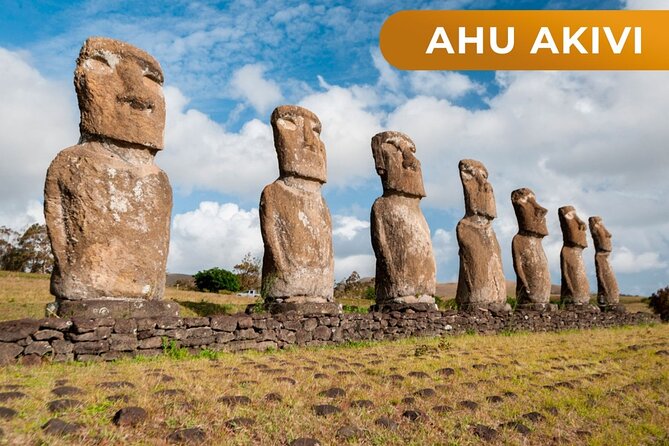
Ahu Akivi contains seven restored moai of equal dimensions, facing toward the sea. The figures are aligned with sunset during the spring equinox and turn their backs to sunrise during the autumn equinox.
The site offers a different feel from Tongariki. Instead of a large platform crowded with fifteen figures, you see a more measured arrangement of seven matching statues. The astronomical alignment adds another reason to pay attention to their position.
You have 35 minutes here. That is enough for the main explanation and photographs, although anyone especially interested in solar alignment may wish for more time. Ask your guide to explain the seasonal orientation clearly, since it is one of the most distinctive details of the stop.
Ahu Tahai and three restored platforms
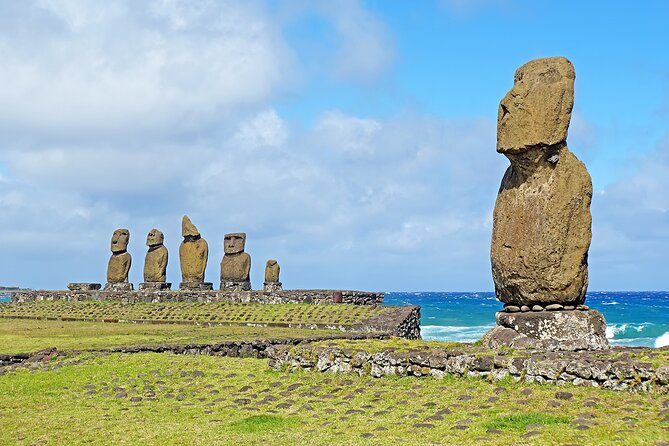
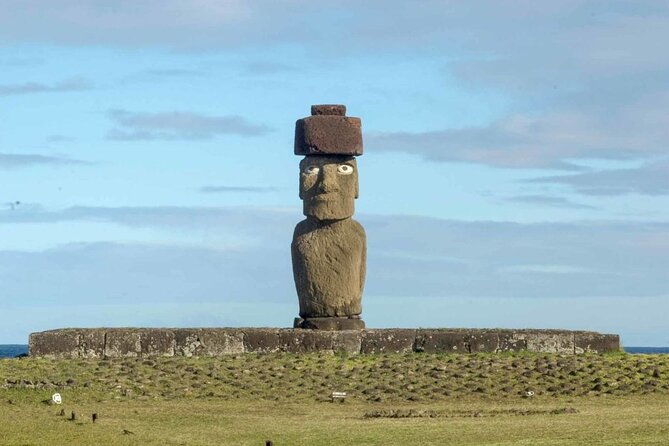
Ahu Tahai closes the program with three restored platforms: Ahu Tahai, Ahu Vai Uri, and Ahu Ko Te Riku. The area combines archaeological remains with more contemporary elements and is close to Hanga Roa.
The 45-minute visit gives you time to compare the three platforms rather than rushing past a single statue. It is a fitting final stop because the site gathers several forms of Rapa Nui ceremonial architecture in one place.
Ahu Tahai is also a good place to review what you have seen over the previous days. You have encountered fallen moai, unfinished statues, restored rows, a quarry for pukao, and a site tied to the Bird Man competition. This last stop helps connect those pieces.
What the $290 price really buys you
At $290 per person, this is not a budget option. The price looks more reasonable if you need transport, hotel pickup, a guide, and a planned route covering the island’s main archaeological sites over three days.
The air-conditioned vehicle matters on long touring days, especially when weather changes. A group limit of 15 also gives you a better chance to hear the guide than you would in a large coach. The strongest value comes from the amount of ground covered and the interpretation at places such as Rano Raraku, Orongo, and Vinapu.
The weak point is that the National Park entrance fee is not included. Picnic lunches are also extra. Add both items to your real budget before comparing this program with booking locally.
There is another price question worth asking. One person found the same general experience cheaper when arranged on the island and felt that booking through Viator added a markup. I would compare prices with Maururu Travel in Hanga Roa, but balance that saving against the security of arranging your dates before arrival.
Language may affect the value, too. One account described a mixed Spanish and English group despite expecting an English tour. Confirm whether your departure is fully in English, bilingual, or assigned according to the day’s group.
Guides, group size, and the human side of the tour
The strongest praise centers on the guides. Maitu was singled out for making the experience meaningful and for explaining Rapa Nui culture and history with care. Nicholas Paka was praised for his enthusiasm and clear presentation, while Nico and Mera were credited with making the three outings work especially well.
Different guides may lead the different days, which can be a benefit. You may hear several ways of explaining the island, though the quality and language could vary from one excursion to another.
Punctuality has been a consistent strength, and hotel pickup has sometimes been provided even when a property was not clearly shown on the pickup list. Still, communication with the agency has not always been easy. One person had to visit the office in person after messages went unanswered. Confirm pickup details directly if possible.
Most people can take part, and the group is limited to 15. The supplied information does not describe detailed accessibility arrangements, walking distances, or terrain, so ask specific questions if those factors matter to you.
Who should book these three excursions?
I would choose this program if you want to see nearly all the major sites without renting transport or building your own route. It suits first-time visitors who value explanations, hotel pickup, and a small group more than the lowest possible price.
It is also a good fit if you have three days available on Rapa Nui. The spread-out schedule gives you time to appreciate the difference between a quarry, a ceremonial platform, a volcano, and a beach.
I would hesitate if you are traveling on a tight budget, want a private guide, or strongly prefer a single language throughout. You might save money by arranging tours after arriving in Hanga Roa, though that means accepting less certainty about dates and availability.
The program requires good weather and a minimum number of participants. If it is canceled for either reason, you can choose another date or experience, or receive a full refund. You can also cancel for a full refund up to 24 hours before the start time. Changes or cancellations inside that window are not accepted.
Final verdict: a strong full-island introduction
I would recommend this tour to anyone who wants a guided introduction to Rapa Nui’s essential sites and has room in the budget for park admission and food. The route is well designed, the three-day pace is sensible, and the combination of major moai sites, volcanic settings, ceremonial centers, and Anakena Beach gives you a rounded visit.
I would book it after confirming three things: the total price including park entry, the language of each outing, and the pickup arrangements. If those details work for you, the convenience and site coverage justify the cost. If price is your main concern, compare local rates in Hanga Roa before committing.
FAQ
How long does the experience last?
The program lasts approximately three days, with one group of visits scheduled for each day.
Where does the tour take place?
The experience is based in Hanga Roa on Rapa Nui, also known as Easter Island, in Chile.
How much does the tour cost?
The listed price is $290 per person.
Is National Park admission included?
No. Entrance to the National Park is not included in the tour price.
Is lunch included?
No. Picnic lunch is not included.
Is hotel pickup provided?
Yes. Hotel pickup is included.
What type of vehicle is used?
Transportation is provided in an air-conditioned vehicle.
How large is the group?
The group can have a maximum of 15 people.
Can I cancel for a full refund?
Yes. You must cancel at least 24 hours before the experience start time for a full refund. If poor weather or an insufficient number of participants causes cancellation, you will be offered another date or experience, or a full refund.
Just added around Hanga Roa
- Volcanic Refuges: Excursion to Underground Civilization★ 4.7 · 8 reviews
- Easter Island Ancestral Dinner and Show with Transport★ 4.5 · 2 reviews
- Volcanic Wonders and the Kingdom of the Birdman: Half Day★ 5.0 · 6 reviews
- Half Day Private Tour: Caves and Volcanic Refuges★ 4.0 · 14 reviews
- Tour to the Motus: Boat trip and snorkeling in Rapa Nui★ 5.0 · 8 reviews
- Birdman Ceremonial Route: Orongo, Ranu Kau Half-Day Tour★ 4.5 · 16 reviews
- Visit Rapa Nui in 4 days with 3 Tours and Accommodation included★ 4.0 · 2 reviews
- Private Tour: Tongariki Sunrise Experience★ 4.5 · 20 reviews
Easter Island Tours, compared.
Two days of Full Day Tour of Rapa Nui + Sunrise in Tongariki
Read our review →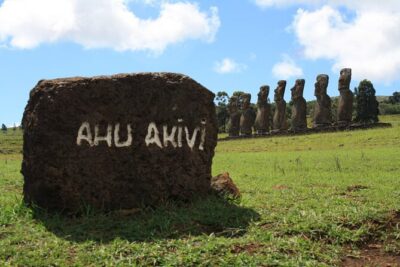
2-Day Private Tour Easter Island Highlights Complete Discovery
Read our review →
Private Tour: Full Day Easter Island Highlights
Read our review →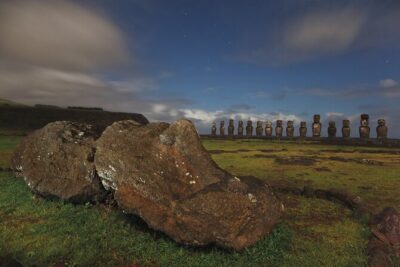
Browse the lists this tour appears in