
Reviewed · EASTER ISLAND TOURS
Majestic Monuments and Paradise Beaches: Full Day
See Easter Island’s greatest sights in one day. This seven-hour tour links Ahu Akahanga, Rano Raraku, and Ahu Tongariki with the island’s biggest moai and a long rest at Anakena Beach. I like the efficient route and the chance to combine stone monuments with sand, palms, and turquoise water. I also like that the group is capped at 20 people, which should keep the day more manageable than a large coach outing.
The main catch is easy to miss: the Rapa Nui National Park entrance fee is not included in the $130 price. Lunch is not included either, so you need to budget for both the park ticket and food. Guide quality can also vary. Nico and Maricio earned especially warm praise for being friendly, punctual, and helpful, while one English-speaking participant found the commentary difficult to follow.
In This Review
- Key points at a glance
- Why this route works so well in one day
- Ahu Akahanga: fallen moai and island legends
- Rano Raraku: where the stone giants were made
- Ahu Tongariki: fifteen moai facing the coast
- Ahu Te Pito Kura and the island’s largest moai
- Anakena Beach: three hours to slow the pace
- What the $130 price really covers
- Guide quality can shape the whole day
- Timing, group size, and comfort
- Who should book this Easter Island tour?
- Should you book Majestic Monuments and Paradise Beaches?
- FAQ
- How long does the tour last?
- What time does the tour begin?
- How much does the tour cost?
- Is the Rapa Nui National Park entrance fee included?
- Is lunch included?
- Which sites are visited?
- How long is the stop at Anakena Beach?
- How many people can join the tour?
- What happens if bad weather cancels the tour?
Key points at a glance
- Six major stops in seven hours: The route covers fallen moai, the quarry at Rano Raraku, the restored 15-statue platform at Ahu Tongariki, the island’s largest moai, and Anakena Beach.
- Rano Raraku is the heart of the day: This is where most of the island’s famous stone figures were carved.
- Ahu Tongariki gives you the classic moai view: Fifteen statues were restored and raised again in recent decades.
- Anakena gets three hours: You have time for a slower finish with white sand, palm trees, turquoise water, and a look at well-preserved moai.
- Bring extra money for required costs: The $130 tour price does not cover the Rapa Nui National Park entrance or lunch.
- Guide choice matters: Nico, Maricio, and Nicholas received strong praise for timing, patience, hospitality, and local information.
Why this route works so well in one day
Easter Island, or Rapa Nui, rewards careful pacing. Its moai sites are spread across the island, and seeing them independently means arranging transport between places that are not close together. This tour gives you a fixed seven-hour route, an air-conditioned vehicle, and a guide to connect the sites.
The order also makes sense. You begin at Ahu Akahanga, where the moai lie fallen. You then reach Rano Raraku, the quarry where most of the statues were made, before seeing the restored figures at Ahu Tongariki. After that come Ahu Te Pito Kura and Anakena Beach.
I like this progression because you see more than isolated statues. You begin with collapse and legend, then visit the place where the moai were shaped, then see an enormous ceremonial platform restored to its former scale. The final stop changes the mood from archaeology to rest.
The tour starts at 9:00 a.m. and lasts about seven hours. That is a full day, but it is not an exhausting marathon of ten-minute photo stops. The listed timing gives an hour at each of the first four monument sites and three hours at Anakena. Still, the schedule leaves little room for delays, so arriving on time matters.
More Rapa Nui trips and moai walks:
- From Hanga Roa: Rapa Nui Culture Sightseeing Tour
★ 4.6 · 307 reviews - From Hanga Roa: Easter Island Highlights 2-Day Tour
★ 4.3 · 205 reviews - Full Day Tour in Rapa Nui
★ 4.5 · 122 reviews
Ahu Akahanga: fallen moai and island legends
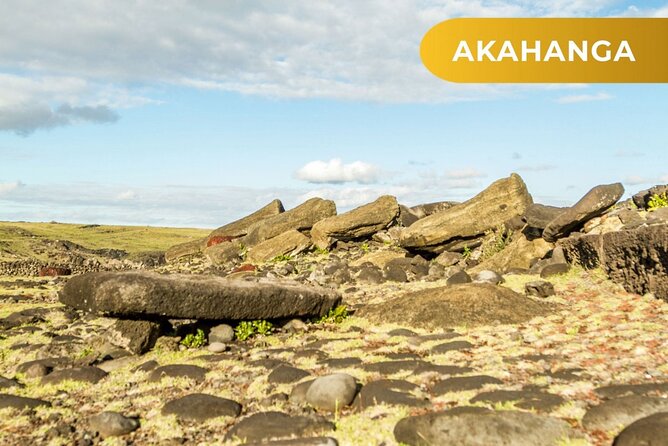
The first stop is Ahu Akahanga, a ceremonial site filled with fallen moai. The statues are not presented as polished, upright icons here. Their position gives you a stronger sense of the island’s changing fortunes and the fact that these monuments have endured damage, movement, and time.
The site is also linked with legends about the burial place of the island’s first king. That story adds a human layer to the stones, though you should treat it as part of Rapa Nui tradition rather than a simple proven fact.
You have about one hour here. That is enough time to look closely, listen to the guide, and take in the setting without rushing from one statue to the next. A guide who explains local traditions well can make this stop much more meaningful. The praise for Nico and Maricio centered on their local information, friendly manner, and ability to keep the group moving at the right times.
Rano Raraku: where the stone giants were made
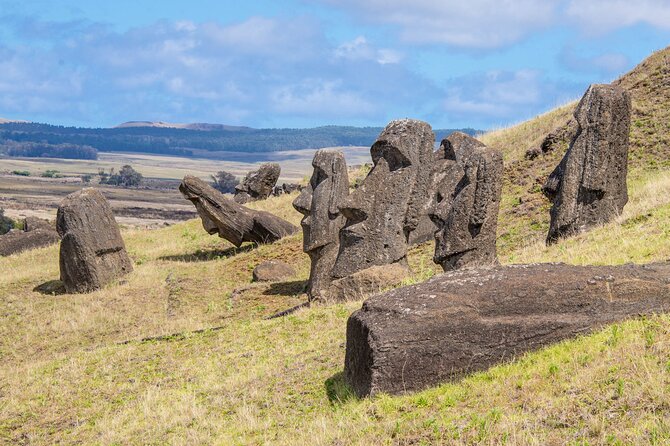
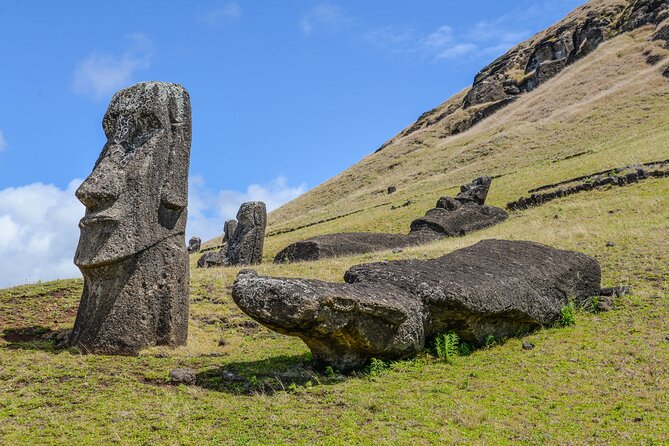
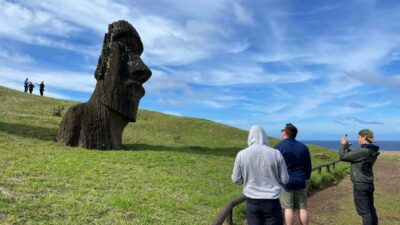
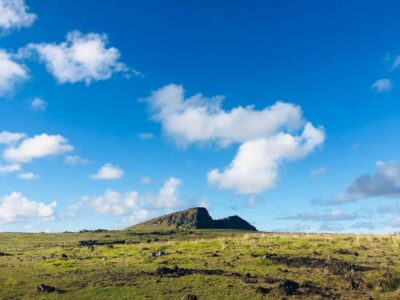
Rano Raraku is the most important stop for understanding the moai. This volcanic quarry is where most of the island’s stone figures were carved. Instead of seeing only completed statues on ceremonial platforms, you get a glimpse of the production site itself.
The hour here should help you understand the scale of the work. The key questions are simple but striking: How were the figures cut from the rock? How did people move such heavy stone bodies across the island? Why were some statues left unfinished?
The tour promises attention to those mysteries, including the methods used to transfer the statues to other parts of Rapa Nui. I would listen closely here, since the value of this stop depends heavily on the explanation. The rocks and statues can impress you on their own, but a clear guide helps turn the quarry into a story about planning, labor, belief, and engineering.
Because the park entrance is not included in the tour price, make sure you have arranged that cost before setting out. All five monument and beach stops list admission as included in the tour, but the separate national park fee remains your responsibility. That distinction is important when you compare the $130 price with other options.
Ahu Tongariki: fifteen moai facing the coast
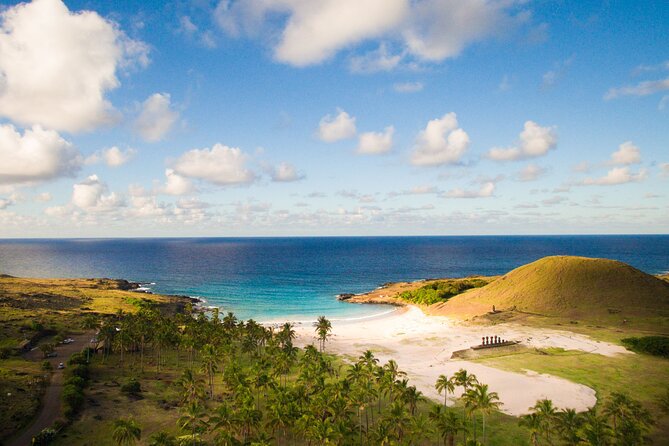
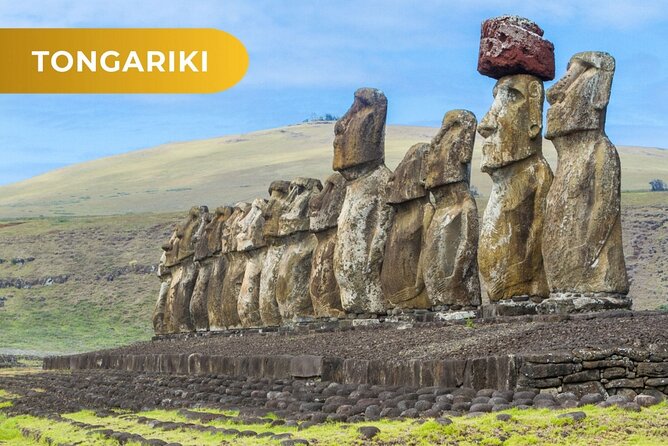
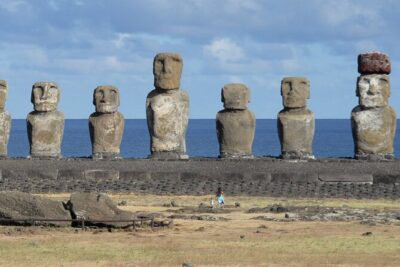
Ahu Tongariki is likely to be the visual high point of the monument portion. Fifteen moai were restored and raised again in recent decades, creating the famous long platform of statues near the coast.
Seeing the figures together gives you a better idea of the scale of Rapa Nui ceremonial sites. A single moai can feel mysterious. Fifteen aligned on one platform make the social effort behind the monuments much easier to grasp.
You have one hour at Ahu Tongariki. That should give you time to study the differences in shape and size, take photographs, and hear how the platform was restored. The restoration itself matters. These statues are not simply untouched survivors. Their present arrangement reflects major work carried out in modern times to return the site to a powerful visual form.
This is also a stop where timing can affect the experience. The tour’s fixed schedule helps keep the group on track, but you will not have unlimited time to linger. If photography is a priority, use the first few minutes to take the broad view, then put the camera away and listen.
A few more Hanga Roa trips worth comparing side by side
- Private Full-Day Easter Island Highlights North and West
★ 5.0 · 84 reviews - Full Day Private Tour: Factory of the Moai the stone giants
★ 4.5 · 63 reviews - Private Easter Island Full-Day Tour
★ 5.0 · 61 reviews - Private Full-Day Easter Island Highlights South and East
★ 5.0 · 60 reviews
Ahu Te Pito Kura and the island’s largest moai
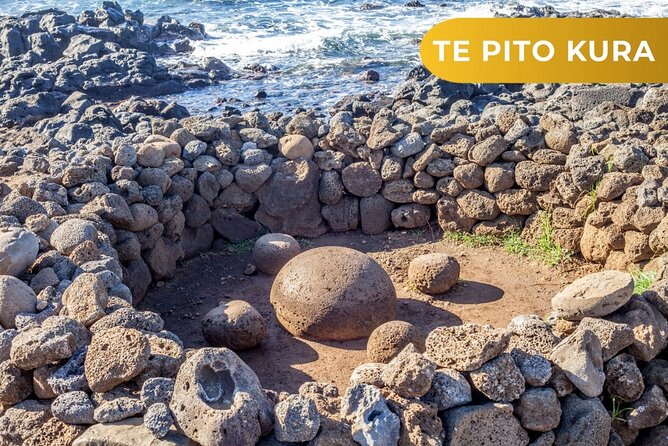
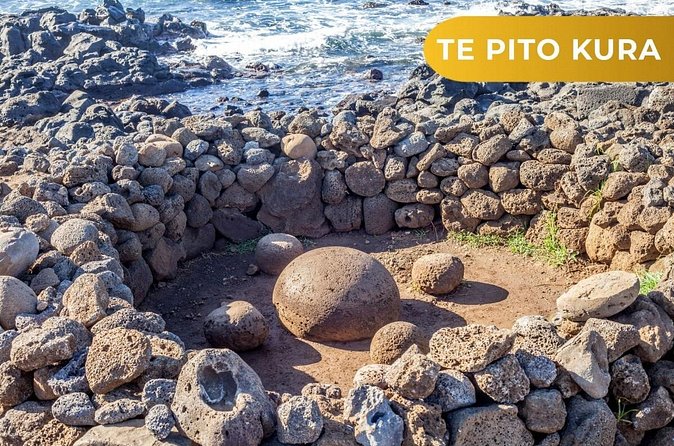
Ahu Te Pito Kura is a ceremonial center with the largest moai ever built. That fact alone makes the stop worthwhile, especially after seeing the smaller or more numerous figures elsewhere.
The one-hour visit gives you time to consider the ambition behind the statue. Size was not merely decoration. It points to the importance attached to these monuments and to the resources needed to carve and move them.
This stop may feel quieter than Ahu Tongariki because the main appeal is a single exceptional figure rather than a large row of standing statues. I would treat it as a useful contrast. Tongariki shows collective scale, while Te Pito Kura focuses attention on the limits of moai construction.
The guide’s role is important again. A short explanation of why this moai is regarded as the largest gives the stop context. Without that help, you might simply take a photograph and move on.
Anakena Beach: three hours to slow the pace
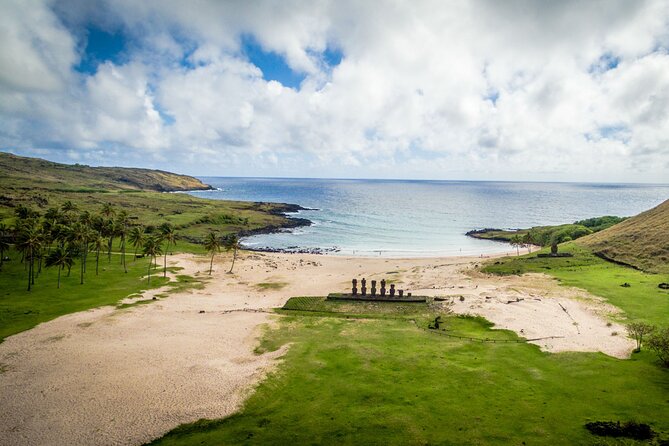
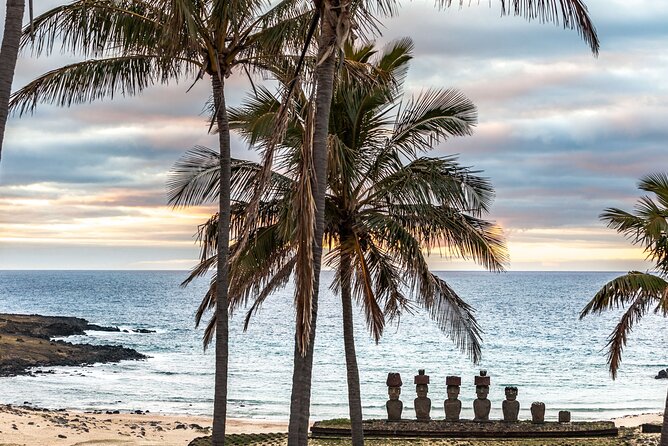
The final stop is Anakena Beach, also known as Hanga Rau or Te Ariki. Here the monuments give way to white sand, palm trees, and turquoise water. The tour allows three hours, far more than at any other stop, so this is not just a quick beach photograph.
Anakena is described as having some of the best-preserved moai on the island. That combination makes it a fitting final stop. You can look at the statues, then rest beside the water and let the day become less hurried.
The longer break is especially useful because the first four stops each involve a concentrated look at major archaeological sites. You can use Anakena to sit, enjoy the setting, and take a break from constant sightseeing. The experience is not only a checklist of monuments. It gives you time to appreciate the island’s beaches as well.
Food requires planning. Lunch is not included in the stated tour price. One account of the day referred to lunch and live music at the beach, but the official inclusions clearly say lunch is excluded. I would not depend on a meal being provided. Ask the operator about food arrangements before departure or bring money and supplies suitable for the stop.
What the $130 price really covers
At $130 per person, the tour offers a practical way to reach the island’s major eastern and northern sites in one day. The air-conditioned vehicle is useful, especially during a long outing with several stops. Transport between remote monuments is the main part of the value.
You are also paying for a guide, group coordination, and a route that includes the best-known sites. Independent transport could give you more freedom, but it would require arranging your own vehicle and deciding how to connect Ahu Akahanga, Rano Raraku, Ahu Tongariki, Ahu Te Pito Kura, and Anakena.
The price looks less attractive if you assume it includes every expense. It does not include the Rapa Nui National Park entrance or lunch. Add those costs before deciding. The listed group limit of 20 people is reasonable, though the actual feel of the tour can vary depending on how many people book that day.
I see the tour as good value for someone who wants a guided overview without spending several days organizing transport. It is less compelling for someone who already has a rental car, prefers long independent visits, or wants a specialist archaeological tour.
Guide quality can shape the whole day
The strongest praise focuses on the guides. Nico and Maricio were described as fun, friendly, professional, punctual, and good at getting the group to the right places at the right times. Nico was also praised for his local information. Nicholas received similar approval for leading a strong tour of the island’s main sites.
That kind of practical guiding matters on a tight schedule. A guide who watches the clock without making you feel hurried can protect your time at the major stops. Patience also helps when a group includes different ages or languages. One account described a group of eight adults and one child, with the guide remaining patient and entertaining. The guide even caught a sea urchin for the group, a small detail that suggests a willingness to make the day personal.
The feedback is not uniformly glowing. One English-speaking participant found the guide’s English hard to follow and felt the Spanish-speaking part of the group received much more attention. If you need detailed commentary in English, confirm the language arrangement before booking.
The overall rating is 4.8 from 15 ratings, and 93 percent of participants recommend the experience. That is a strong result, but the sample is small. I would treat it as evidence of a generally successful tour, not a guarantee that every guide or language experience will be identical.
Timing, group size, and comfort
Seven hours is enough to see the main sites, but you should expect a structured day. The first four stops each receive about an hour. Anakena receives three hours, which creates a useful pause but also means the tour spends less time at each archaeological site than a private, fully flexible outing might.
The air-conditioned vehicle is a practical inclusion. You will be moving between outdoor sites, so having a cool place between stops can make a long day easier. The group maximum is 20 people. That is not an intimate private tour, but it is far smaller than the biggest bus excursions.
Most people can participate, according to the tour information. No special fitness requirement is stated. Even so, you should expect outdoor sightseeing at several monument sites, and weather can affect the experience. The tour requires good weather. If poor weather causes cancellation, you are offered another date or a full refund.
The start time is 9:00 a.m. Confirmation arrives within 48 hours of booking, subject to availability. Since the tour is often booked 49 days ahead, I would arrange it early if your dates in Hanga Roa are fixed.
Who should book this Easter Island tour?
I would recommend it to you if this is your first visit to Rapa Nui and you want the main sights handled in one day. The route is especially useful if you have limited time in Hanga Roa and do not want to organize transport between distant sites.
It also suits families and mixed-age groups. The air-conditioned vehicle, clear schedule, and long beach break make the day easier than a nonstop archaeological circuit. The account from a group with one child suggests the pace can work for a larger family party.
You should think twice if your main goal is quiet, independent study. With up to 20 people and fixed one-hour stops, you may want more time at Rano Raraku or Ahu Tongariki. A private arrangement could give you more control, but likely at a higher cost.
Should you book Majestic Monuments and Paradise Beaches?
Book this tour if you want a strong first look at Easter Island’s major monuments, reliable transport, and a pleasant beach finish. The combination of Rano Raraku, Ahu Tongariki, the largest moai at Ahu Te Pito Kura, and Anakena is the main reason to choose it.
Before paying, confirm the language of the guide, the separate Rapa Nui National Park entrance fee, and how you will handle lunch. If Nico, Maricio, or Nicholas is assigned, the day may benefit from the friendly, well-timed guiding praised by past participants. If you want maximum flexibility or expert-level archaeological detail, choose a smaller or private tour instead.
The tour can be canceled up to 24 hours before the start for a full refund. Changes made inside that window are not accepted, and a minimum number of participants is required. Those terms are fair, but weather and availability can affect the final plan.
FAQ
How long does the tour last?
The tour lasts approximately seven hours.
What time does the tour begin?
The tour starts at 9:00 a.m.
How much does the tour cost?
The listed price is $130 per person.
Is the Rapa Nui National Park entrance fee included?
No. The Rapa Nui National Park entrance fee is not included in the tour price.
Is lunch included?
No. Lunch is not included.
Which sites are visited?
The tour visits Ahu Akahanga, Rano Raraku, Ahu Tongariki, Ahu Te Pito Kura, and Anakena Beach.
How long is the stop at Anakena Beach?
The tour allows approximately three hours at Anakena Beach.
How many people can join the tour?
The maximum group size is 20 people.
What happens if bad weather cancels the tour?
If poor weather causes cancellation, you are offered a different date or a full refund.
Just added around Hanga Roa
- Volcanic Refuges: Excursion to Underground Civilization★ 4.7 · 8 reviews
- Easter Island Ancestral Dinner and Show with Transport★ 4.5 · 2 reviews
- Volcanic Wonders and the Kingdom of the Birdman: Half Day★ 5.0 · 6 reviews
- Half Day Private Tour: Caves and Volcanic Refuges★ 4.0 · 14 reviews
- Tour to the Motus: Boat trip and snorkeling in Rapa Nui★ 5.0 · 8 reviews
- Visit Rapa Nui in 4 days with 3 Tours and Accommodation included★ 4.0 · 2 reviews
- Birdman Ceremonial Route: Orongo, Ranu Kau Half-Day Tour★ 4.5 · 16 reviews
- Private Tour: Tongariki Sunrise Experience★ 4.5 · 20 reviews
Easter Island Tours, compared.
Two days of Full Day Tour of Rapa Nui + Sunrise in Tongariki
Read our review →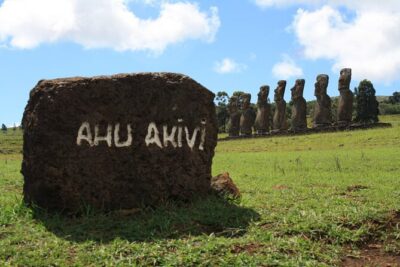
2-Day Private Tour Easter Island Highlights Complete Discovery
Read our review →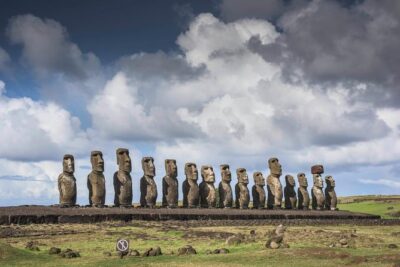
Private Tour: Full Day Easter Island Highlights
Read our review →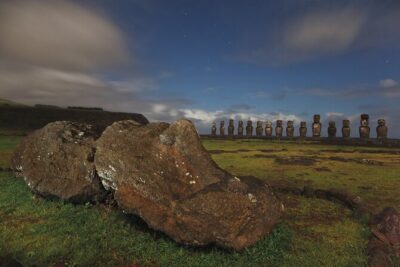
Browse the lists this tour appears in