
Reviewed · EASTER ISLAND TOURS
Private Full-Day Easter Island Highlights South and East
Ancient statues meet volcanic drama. This private Easter Island tour takes you from unusual buried moai and carefully fitted stonework to the island’s great statue quarry and its famous row of 15 upright figures. I like the private minivan format, which lets your group ask questions and set a comfortable pace, and I like the strong mix of archaeology, legends, village remains, and natural features.
The best guides make this trip worthwhile. Guests have praised Albert, Andres, Benjamin, Simon, Sophia, and Bruna for clear explanations and warm service. My main caution is practical: the tour costs $280 per person, lunch is extra, and the national park ticket costs another $80 per person. One older complaint also described an uncomfortable replacement van, so I would confirm the vehicle and seating needs before departure.
In This Review
- What makes this Easter Island tour worth considering
- A private route through southern and eastern Rapa Nui
- Ahu Huri A Urenga and the winter-solstice alignment
- Ahu Vinapu and the island’s best-fitted stones
- Hanga Poukura, buried statues, and a sea blowhole
- Ahu Vaihu and a picture of daily village life
- Ahu Akahanga and fallen moai
- Rano Raraku, where the moai began
- Ahu Tongariki and the row of 15 moai
- What the $280 price includes, and what it does not
- The minivan, timing, and comfort questions to ask
- Who should book this Easter Island tour?
- Final verdict: book it for the guide, quarry, and Tongariki
- FAQ
- What time does the tour start?
- How long does the tour last?
- Is hotel pickup included?
- Is this tour available for cruise ship passengers?
- Is the national park ticket included?
- Is lunch included?
- Is the tour private?
- Is the tour offered in English?
What makes this Easter Island tour worth considering
- Rano Raraku is the centerpiece: Spend about 1 hour 40 minutes at the volcanic quarry where most moai were carved and left behind.
- Ahu Tongariki delivers the big visual moment: Fifteen restored moai line the largest ahu, or ceremonial platform, on Rapa Nui.
- Private touring changes the pace: Only your party joins the guide, making it easier to ask about family stories, ceremonies, and competing theories.
- Vinapu raises an intriguing question: Its tightly fitted stonework has led many people to suggest contact with the Inca Empire.
- Hanga Poukura adds wild coastal scenery: Rough lava, buried statues, and a sea blowhole bring variety to the archaeological stops.
- You must buy the park ticket first: The $80 ticket is not included and is required for the tour’s main sites.
A private route through southern and eastern Rapa Nui
The day begins at 9:30 a.m. with pickup at your Hanga Roa hotel. You will meet a local professional driver-guide, then ride in an air-conditioned minivan toward the south and east side of the island.
That private setup is useful here. Easter Island sites are spread across open country, and the meaning of a fallen statue or stone platform is not always obvious from a quick look. A guide can connect the remains to old settlement patterns, farming methods, royal traditions, and the long story of how the moai were made.
The tour is bilingual, with the same guide speaking English and Spanish. That is convenient for mixed-language groups, though you may want to confirm your preferred language when booking. The advertised duration is about 6 hours 30 minutes, including transfers and stops. Exact timing can change with traffic and the pace of your group.
Bring your pre-purchased Rapa Nui National Park ticket. It costs $80 per person, is not included in the tour price, and is valid for the island’s tour sites. This is the single most important booking detail. Arriving without it could spoil the day before it starts.
More Private Tours in Easter Island
- 2-Day Private Tour Easter Island Highlights Complete Discovery
★ 5.0 · 110 reviews - Private Full-Day Easter Island Highlights North and West
★ 5.0 · 84 reviews - Full Day Private Tour: Factory of the Moai the stone giants
★ 4.5 · 63 reviews
Ahu Huri A Urenga and the winter-solstice alignment
The tour description places Ahu Huri A Urenga near the start of the southern drive. This site features a single moai with four hands, an unusual detail among Easter Island statues.
The statue is also aligned with the sunrise at the winter solstice. That gives the stop a useful reminder that Rapa Nui monuments were not simply placed at random. Ancient builders paid close attention to direction, season, ceremony, and the movement of the sun.
There is a small itinerary inconsistency worth noting. The main description includes Ahu Huri A Urenga, but the detailed stop list begins with Vinapu and does not assign a separate time to Huri A Urenga. Ask your operator to confirm whether this stop is included on your specific departure. Private tours can sometimes adjust the order, but you should know exactly what you are paying to see.
Ahu Vinapu and the island’s best-fitted stones
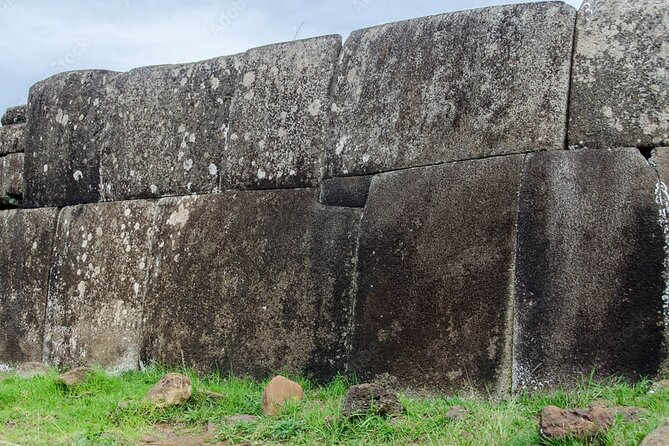
At Ahu Vinapu, the focus shifts from a single statue to construction skill. Ahu Tahira has blocks fitted so closely that the wall can remind you of the famous stonework of the Andes.
This is where a good guide earns the fee. The fitted masonry has encouraged theories about contact between Rapa Nui and the Inca Empire. That idea remains a subject of debate, so listen for the distinction between what is visible at the site and what is inferred from it.
You get about 30 minutes here. That is enough to examine the wall and platform, but not enough for a slow, technical study. I would use the time to ask how the stones were shaped, moved, and placed, rather than simply taking photographs and moving on.
The admission fee is listed as free at the stop itself, but the national park ticket still applies to the protected sites overall. Keep that ticket accessible throughout the day.
Hanga Poukura, buried statues, and a sea blowhole
Near Vinapu, Hanga Poukura changes the mood. The coast is made of rough lava formations, and several statues lie buried in a line with only their backs visible.
That partial view is strangely effective. A complete moai can feel formal and grand. A row of buried figures raises more questions. Were they left unfinished, covered by later activity, or affected by changes at the ahu? Your guide can give you the local interpretations and explain what is known.
Hanga Poukura also has a blowhole. When the sea conditions are right, waves force water through the lava and send it upward. The effect depends on the ocean, so do not treat it as a guaranteed show. Still, it adds a natural feature to a day otherwise centered on stonework and statues.
Plan on about 30 minutes. Wear shoes with a firm sole and take care near uneven lava. The provided information does not promise a specific level of walking difficulty, so anyone with mobility concerns should ask the operator for details before booking.
More Rapa Nui trips and moai walks:
- From Hanga Roa: Rapa Nui Culture Sightseeing Tour
★ 4.6 · 307 reviews - From Hanga Roa: Easter Island Highlights 2-Day Tour
★ 4.3 · 205 reviews - Full Day Tour in Rapa Nui
★ 4.5 · 122 reviews - From Hanga Roa: Journey from Orongo to Ana Te Pahu
★ 4.3 · 75 reviews
Ahu Vaihu and a picture of daily village life
Ahu Vaihu offers a different kind of stop. Along with the ceremonial remains, you can see a modern reconstruction of an ancient village, including examples of plantation methods and replica boat houses.
This matters because the moai can make Rapa Nui seem like a place built only for monuments. The village display helps you think about ordinary life: shelter, food production, and the way people used the land around ceremonial centers.
The stop lasts about 30 minutes. It is not as visually overwhelming as Tongariki or Rano Raraku, but it gives the day a needed human scale. If you want a tour that explains more than statue dates and photo angles, this is a worthwhile pause.
The term boat house refers to the long, narrow traditional structures associated with the island. A replica cannot replace an original building, but it can help you picture how settlement spaces were organized.
Ahu Akahanga and fallen moai
Ahu Akahanga was once one of the island’s larger villages. Here, you can see house foundations, a cave, and a large ceremonial platform with many fallen statues.
Fallen moai are part of the island’s complicated story. They show that the old ceremonial order did not continue unchanged, but the ruins do not provide a simple answer for every question. Local legends connect this area with Hotu Matu’a, the king said to have led the island’s colonization, and say he was buried here about a thousand years ago.
Treat that as an important tradition rather than a confirmed fact. One pleasure of touring Rapa Nui with a local guide is learning how archaeology, oral history, and legend sit beside one another without always producing one neat answer.
You get around 40 minutes at Akahanga. The foundations and cave reward a slower look than a quick stop for the ahu alone. Ask your guide to point out how the village remains relate to the ceremonial platform.
Rano Raraku, where the moai began
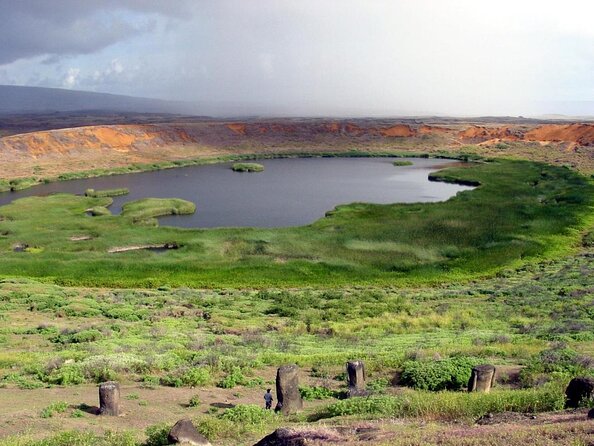
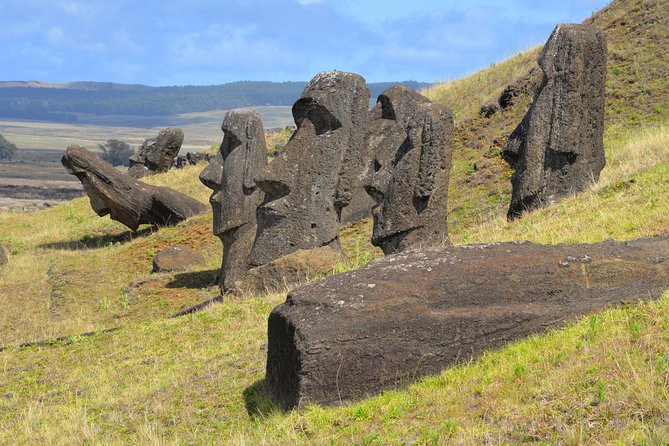
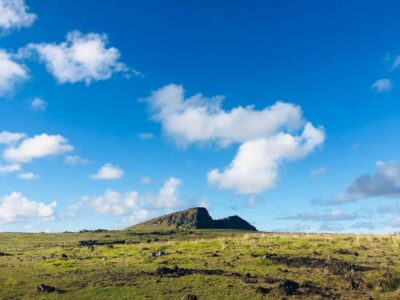
Rano Raraku is the longest stop, at about 1 hour 40 minutes, and it deserves the time. This volcanic crater functioned as the main carving center for most of the island’s moai.
Here, the statues are not lined up in a polished ceremonial row. Many remain around the quarry, still attached to the rock or abandoned during different stages of production. Hundreds were left in place when work stopped.
This is the moment when the scale of moai building becomes easier to grasp. At a completed ahu, you see the finished result. At Rano Raraku, you see the workshop, the raw volcanic material, and the unfinished process. The site lets you think about labor, design, transport, and the decision to abandon so much work.
The long visit also gives your guide room to explain the different stages of carving. Listen closely here, because the stop can become confusing if you only hear a list of names and dates. Ask which figures are unfinished, which were removed from the quarry, and how the statues relate to the crater.
You should expect walking on uneven ground and allow time for photographs without rushing the explanations. The data provided does not specify the exact walking distance or trail conditions, so ask ahead if you have mobility limitations.
Ahu Tongariki and the row of 15 moai
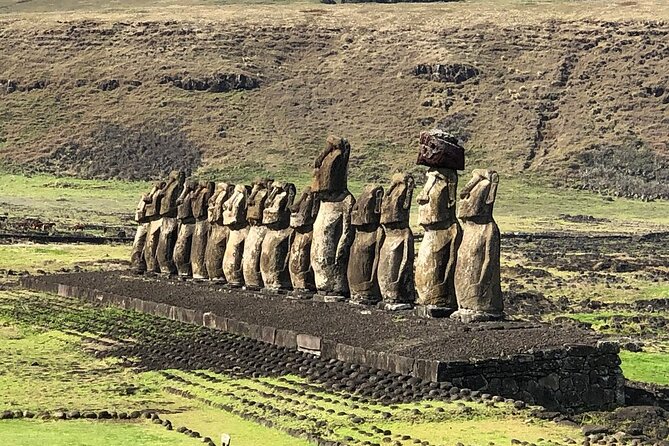
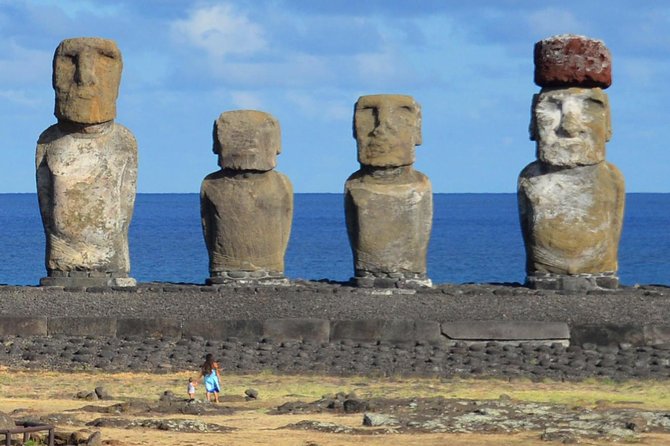
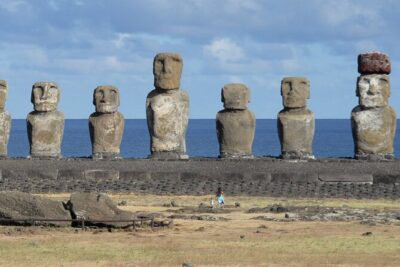
Ahu Tongariki is the final major stop, with about 45 minutes set aside. It is the largest and most impressive monument on the route, crowned by 15 mighty moai.
This is the classic Easter Island view, but it carries more weight after the earlier stops. You have already seen the quarry where statues were shaped and the fallen figures at Akahanga. At Tongariki, the restored line shows what a completed ceremonial platform could look like.
Give yourself time to step back. The scale is easy to underestimate when you stand close to the figures. From farther away, the row reads as one powerful composition, with the volcanic interior behind it and the ocean nearby.
Your guide can also help you understand why Ahu Tongariki is more than a photo stop. The platform, statues, and setting belong to a larger ceremonial system. The explanation turns an impressive view into a place with structure and purpose.
Because Tongariki comes at the end, the timing may feel tight if earlier stops run long. The private format helps, but it does not remove the fixed daylight and driving time. Keep your questions focused and tell your guide which sites matter most to you.
What the $280 price includes, and what it does not
The price is $280 per person. You receive hotel pickup and drop-off, transport in an air-conditioned minivan, bottled water, and a local driver-guide for your private party.
The value depends on how much you want interpretation. You could rent a car or an ATV and reach many sites independently, but you would not automatically get the stories, legends, construction theories, or farming context. Several strong guide experiences have been associated with names including Albert, Andres, Benjamin, Simon, Sophia, and Bruna. The praise centers on clear teaching, patience, and answers to questions.
The extra costs matter:
- National Park ticket: $80 per person, purchased online beforehand
- Lunch: not included
- Cruise port pickup: not available
A few older accounts describe a memorable family lunch at the tour company owners’ home, sometimes with music and local hospitality. Do not assume that lunch is part of this current tour. The published details clearly say lunch is extra, so ask what arrangements are available on your date.
For two people, the tour price alone is $560, before park tickets and lunch. That makes it a serious expense, but a private full-day-style outing on a remote island can be worth it if you value personal guiding and want to cover the quarry and Tongariki efficiently.
The minivan, timing, and comfort questions to ask
Hotel pickup removes the need to arrange your own transport from Hanga Roa. You will spend a fair part of the day in the vehicle, though, so comfort matters.
One older complaint described a replacement van with a seat that lacked back support and could not be adjusted. The issue affected one passenger badly enough that he returned to the hotel. This does not prove that every vehicle has the same problem, but it is a fair reason to ask about the minivan before paying.
If you have back, leg, or mobility concerns, tell the operator in advance. Ask whether the vehicle has adjustable seats and how much walking is expected at Rano Raraku, Akahanga, and the coastal lava area.
The tour is private, so only your group participates. That is ideal if you want to stop for questions, take photographs, or avoid being tied to strangers. It also means the experience depends heavily on the assigned guide. Confirmation arrives within 48 hours, subject to availability, so check the guide language and pickup details when confirmed.
The tour is recommended by 95 percent of customers and has a 4.8 rating from 60 reviews. Those numbers suggest a strong overall record, with guiding as the most praised part and vehicle comfort as the clearest caution.
Who should book this Easter Island tour?
I would choose this tour if you have one main sightseeing day and want the southern and eastern sites explained rather than simply visited. It suits couples, solo visitors, families, and small groups who prefer a private vehicle and direct access to a guide.
It is especially useful if Rano Raraku and Ahu Tongariki are high on your list. One day of sightseeing cannot cover every part of Rapa Nui, but this route handles two of the island’s biggest attractions while adding several less familiar stops.
If you have two or more days, consider pairing this outing with another route covering the island’s other areas. A single day gives you a strong foundation, but it will not show every major site.
I would skip it if you want a low-cost, self-guided outing or if you are arriving by cruise ship. It is also a poor fit if you need guaranteed vehicle accessibility and cannot confirm the seating and walking arrangements in advance.
Final verdict: book it for the guide, quarry, and Tongariki
This is a strong private introduction to Easter Island’s south and east. The route combines carefully fitted stonework, buried statues, village reconstructions, fallen moai, the statue quarry at Rano Raraku, and the 15 figures at Ahu Tongariki.
I like that the day goes beyond the famous postcard stops. I also like the chance to ask a local guide about the island’s legends and competing theories in a private setting. The main drawbacks are the high total cost, the separate park ticket and lunch, the uncertain inclusion of Ahu Huri A Urenga in the detailed schedule, and the need to confirm vehicle comfort.
Book it if personal guiding matters to you and you want the quarry handled well. Before you pay, confirm the exact stops, language, vehicle, lunch plan, and park ticket requirement. Cancel at least 24 hours before the start time if your plans change, since later cancellations are not refunded.
FAQ
What time does the tour start?
The tour starts at 9:30 a.m.
How long does the tour last?
The experience lasts approximately 6 hours 30 minutes. Transfer times can change depending on traffic and the time of day.
Is hotel pickup included?
Yes. Hotel pickup and drop-off in Hanga Roa are included.
Is this tour available for cruise ship passengers?
No. The tour does not pick up at cruise ship terminals and is not available for cruise ship passengers.
Is the national park ticket included?
No. You must purchase the Rapa Nui National Park ticket online beforehand. It costs $80 per person and is valid for all tours and sites.
Is lunch included?
No. Lunch is not included in the tour price.
Is the tour private?
Yes. Only your party participates in this private tour and activity.
Is the tour offered in English?
The tours are bilingual and are conducted in English and Spanish by the same guide.
Just added around Hanga Roa
- Volcanic Refuges: Excursion to Underground Civilization★ 4.7 · 8 reviews
- Easter Island Ancestral Dinner and Show with Transport★ 4.5 · 2 reviews
- Volcanic Wonders and the Kingdom of the Birdman: Half Day★ 5.0 · 6 reviews
- Half Day Private Tour: Caves and Volcanic Refuges★ 4.0 · 14 reviews
- Tour to the Motus: Boat trip and snorkeling in Rapa Nui★ 5.0 · 8 reviews
- Birdman Ceremonial Route: Orongo, Ranu Kau Half-Day Tour★ 4.5 · 16 reviews
- Visit Rapa Nui in 4 days with 3 Tours and Accommodation included★ 4.0 · 2 reviews
- Private Tour: Tongariki Sunrise Experience★ 4.5 · 20 reviews
Easter Island Tours, compared.
Two days of Full Day Tour of Rapa Nui + Sunrise in Tongariki
Read our review →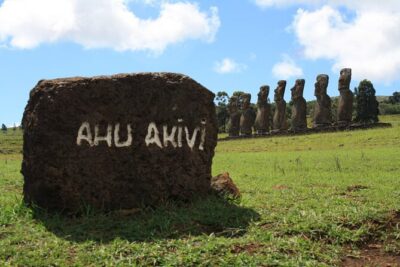
2-Day Private Tour Easter Island Highlights Complete Discovery
Read our review →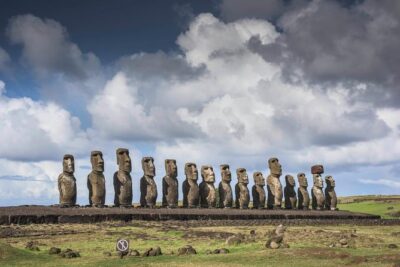
Private Tour: Full Day Easter Island Highlights
Read our review →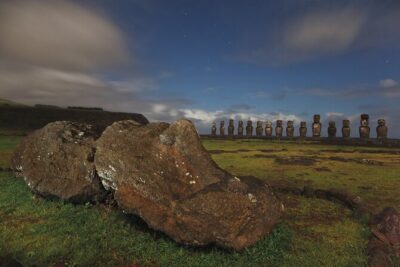
Browse the lists this tour appears in