
Reviewed · EASTER ISLAND TOURS
Hanga Roa: Full Day Moai and Mistery
Fifteen Moai make Tongariki unforgettable. This seven-hour tour packs in Rapa Nui’s major archaeological sites, from fallen statues at Akahanga to the volcanic quarry at Rano Raraku. I especially like the chance to see Moai in different stages of creation and the strong focus on local culture through native guides. I also like that the day ends at Anakena Beach, giving you a quiet change of pace after hours among ancient stone figures. The main drawback is time: with six stops, some visits may feel hurried, particularly at Tongariki.
The tour costs $100 per person, with transportation, a driver, and a local guide included. The National Park ticket costs extra, so add that to your budget before you book. Pickup is available in Hanga Roa, and the tour can be led in English or Spanish.
In This Review
- Key points to know before booking
- Why this seven-hour route works
- Vaihu: Moai beside the sea
- Akahanga and the evidence of a troubled past
- Rano Raraku, where the Moai were made
- Tongariki and the fifteen-statue view
- Pito Kura and the ceremonial side of Rapa Nui
- Anakena Beach closes the day gently
- Guides, hospitality, and the human side of the tour
- What the $100 price really covers
- Who should choose this tour?
- Should you book Hanga Roa: Full Day Moai and Mystery?
- FAQ
- Where does the tour start?
- How long does the tour last?
- Which sites are included?
- Is the National Park ticket included?
- What languages are available?
- Is transportation included?
- Can I cancel the tour for a refund?
Key points to know before booking
- Six major stops in seven hours: You visit Vaihu, Akahanga, Rano Raraku, Tongariki, Pito Kura, and Anakena Beach in one full day.
- Rano Raraku is the history lesson: The quarry shows Moai still attached to the rock, partly finished, or positioned around the crater.
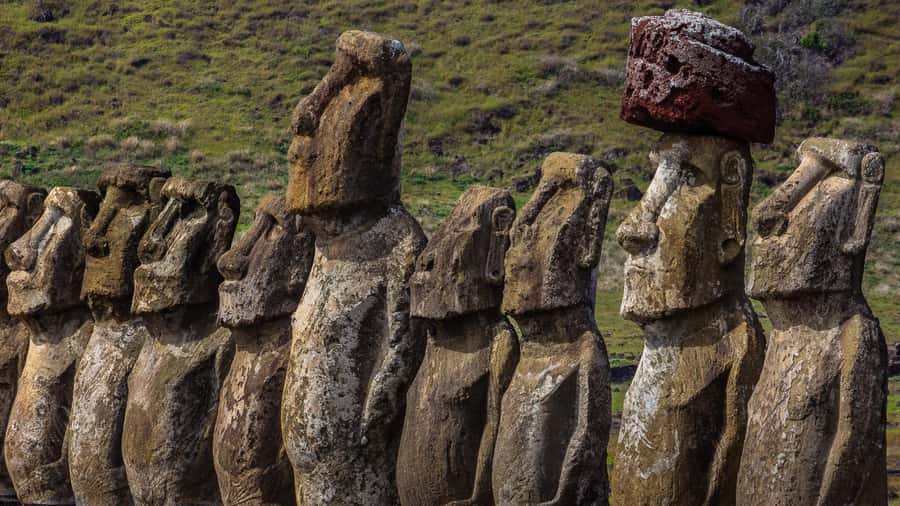
- Tongariki is the visual high point: Fifteen restored Moai face inland with the Pacific behind them.
- Local guiding matters: The tour focuses on Rapa Nui culture, ceremony, statue-making, and restoration rather than simple photo stops.
- Anakena gives the day breathing room: Golden sand, turquoise water, and coconut palms offer a peaceful final stop.
- Budget for the park ticket: It is not included in the $100 price.
Why this seven-hour route works
Rapa Nui is not a place where one famous statue tells the whole story. The meaning comes from seeing the quarry, ceremonial sites, fallen figures, restored platforms, and coastal settings together. This route gives you that broad picture in a single day.
I like the order because it moves between different kinds of places. Vaihu and Akahanga introduce the remains of the past. Rano Raraku explains how the statues were made. Tongariki shows the scale of the finished work. Pito Kura adds a ceremonial layer, and Anakena closes the day with sea and sand instead of more stone.
That variety keeps the tour from becoming a long sequence of similar platforms. Still, seven hours is a tight window for six stops. If you prefer to spend a long time photographing one site or sitting quietly beside a Moai, this schedule may feel brisk.
The experience includes a driver and a live guide, not transportation alone. That distinction matters on Rapa Nui. The sites can look mysterious at first, but the guide helps connect the stone figures to Rapa Nui beliefs, craftsmanship, social life, and the island’s difficult past.
Guide quality will shape your day. One especially strong guide is Ene, identified in the feedback as an archaeologist who gave clear and detailed explanations. Zoe also received warm praise for her hospitality. Those names suggest the company has capable guides, though your own guide may be different.
More Rapa Nui trips and moai walks:
- From Hanga Roa: Rapa Nui Culture Sightseeing Tour
★ 4.6 · 307 reviews - From Hanga Roa: Easter Island Highlights 2-Day Tour
★ 4.3 · 205 reviews - Full Day Tour in Rapa Nui
★ 4.5 · 122 reviews
Vaihu: Moai beside the sea
Vaihu is an early reminder that the Moai are not isolated museum objects. They belong to a wider ceremonial setting shaped by the coast, stone platforms, and Rapa Nui traditions.
Here, ancient statues lie in a setting that evokes both respect and uncertainty. You can look closely at the figures and consider how much effort went into moving and placing them. Your guide should help explain what the Moai represented and why these statues mattered to the Rapa Nui people.
This stop works best as an introduction. You are not yet at the most famous site, but you begin to see the difference between a fallen Moai and one restored to its platform. The fallen figures also give the place a serious mood. The visit is less about a single perfect photograph and more about understanding that the island’s ceremonial sites changed over time.
If you are interested in cultural tourism, listen closely here. The value of Vaihu lies in context, and a local guide can turn a quiet group of stones into a meaningful first chapter.
Akahanga and the evidence of a troubled past
Akahanga brings you closer to the island’s more difficult story. Fallen Moai and their topknots are scattered across the site, showing that the ceremonial world you see today did not remain untouched.
The toppled statues are striking because they remove the distance between you and the monument. At a restored platform, the Moai can feel remote and monumental. At Akahanga, you can see the figures closer to the ground, along with the separate stone topknots that once completed their appearance.
Your guide explains the craftsmanship and cultural meaning behind these forms. That explanation is important because it is easy to treat the site as a field of ruins. Instead, you can begin to picture the skill required to shape the statues, create the topknots, and place them in a ceremonial setting.
This stop may feel less polished than Tongariki, but that is part of its value. You see the island’s past in an unsettled state. If your main goal is a neat row of statues against a perfect ocean view, Akahanga may not be your favorite stop. If you want a fuller picture of Rapa Nui, it earns its place.
Rano Raraku, where the Moai were made
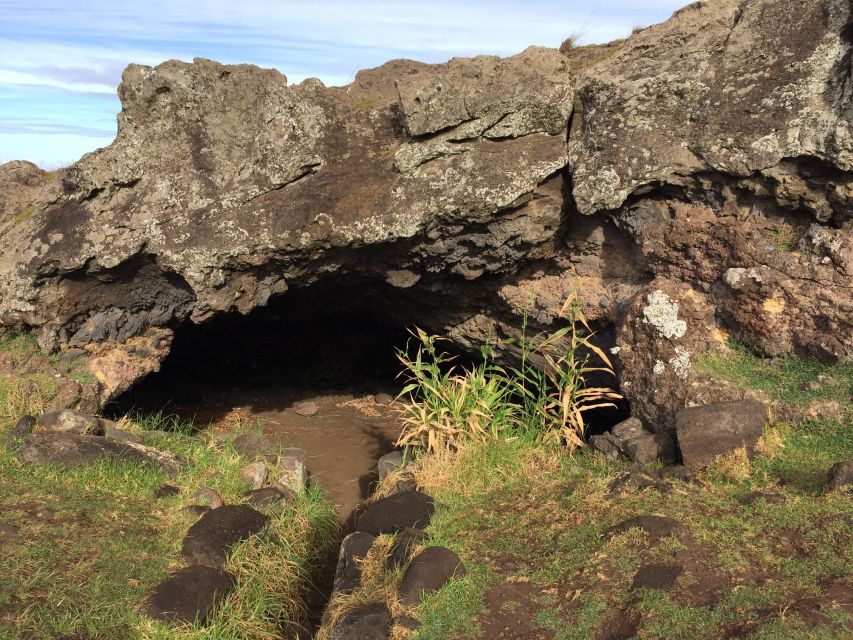
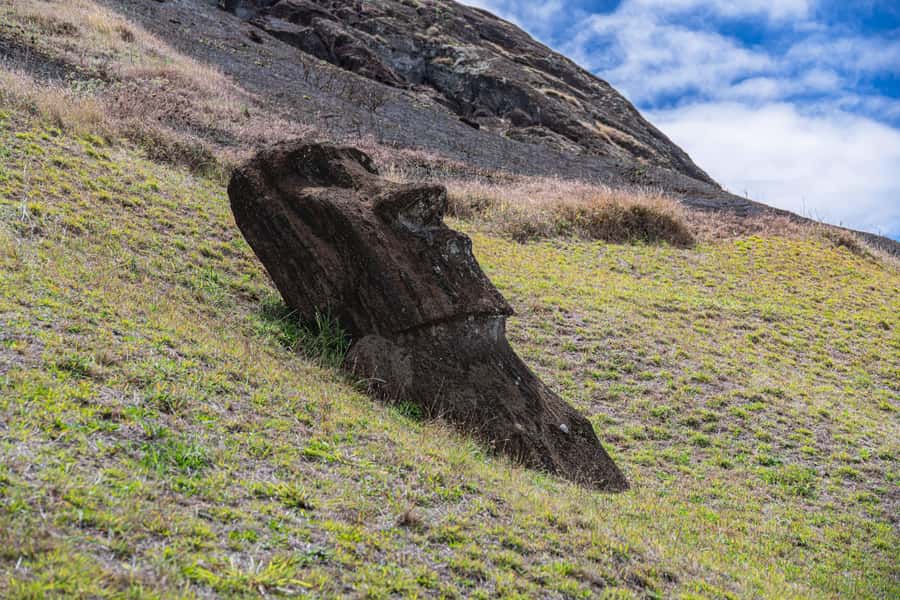
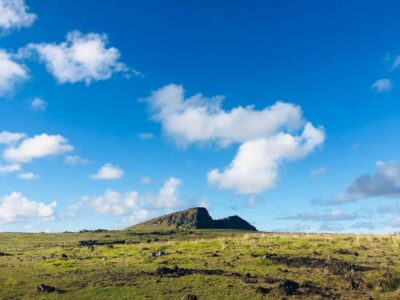
Rano Raraku is the heart of the tour. This volcanic quarry is where the Moai were carved, and it gives you the rare chance to see statues at several stages of completion.
Some figures remain attached to the rock. Others are partly shaped, while additional Moai are positioned around the crater. The effect is powerful because the quarry makes the production process visible. You are not only looking at finished monuments. You are seeing the worksite where the island’s stone figures began.
I find this stop especially useful for correcting a common misunderstanding. The Moai did not simply appear around the island. They were carefully carved, shaped, and prepared before being moved to ceremonial platforms. Standing among unfinished figures makes that work feel concrete.
The volcanic setting adds to the experience, but the quarry can also be one of the busiest or most time-sensitive visits on a full-day route. Keep your attention on the guide, since the stories here explain much of what you will see later at Tongariki and the coastal sites.
Rano Raraku is also the place where your walking pace may matter. The information supplied for this tour does not give a precise walking distance or trail difficulty, so ask the operator about the planned route if mobility is a concern. The tour itself is listed as wheelchair accessible, but individual archaeological paths can still affect how easily you reach every viewpoint.
A few more Hanga Roa trips worth comparing side by side
- Private Full-Day Easter Island Highlights North and West
★ 5.0 · 84 reviews - Full Day Private Tour: Factory of the Moai the stone giants
★ 4.5 · 63 reviews - Private Easter Island Full-Day Tour
★ 5.0 · 61 reviews - Private Full-Day Easter Island Highlights South and East
★ 5.0 · 60 reviews
Tongariki and the fifteen-statue view
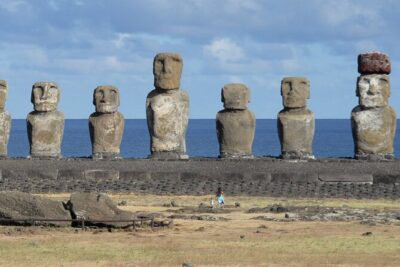
Tongariki is the visual centerpiece. Fifteen Moai line the ceremonial platform, with the Pacific Ocean behind them. The arrangement is large enough to make you stop talking for a moment, which is useful on a tour that covers a lot of ground.
Your guide discusses the restoration work and the symbolic meaning of the group. That restoration story adds an important layer. Tongariki is not only an ancient site. It also reflects the care taken to bring the platform and statues back into view.
Give this stop the attention it deserves. One weakness reported about the experience is that the guide moved quickly through the most impressive sites, including Tongariki, while spending too much time in less rewarding places. I would make it clear at the start that Tongariki is a priority for you. Ask how much time is planned there and keep your camera ready before you arrive.
The site works in several ways. From a distance, the row has a strong formal power. Up close, each figure has its own shape and condition. With the sea behind the platform, Tongariki also shows how Rapa Nui ceremonial spaces relate to the island’s natural setting.
If you can only remember one view from the day, it may be this one. Just do not assume the schedule will give you unlimited time. Seven hours is enough to visit Tongariki, not necessarily enough to linger there for an hour.
Pito Kura and the ceremonial side of Rapa Nui
Pito Kura is less famous than Tongariki, but it adds useful contrast. The site is described as a sacred ceremonial village with distinctive features tied to rituals and ceremonies.
This is where the guide’s cultural background matters most. A quick look may not tell you why the site was important. Listen for details about how the space was used and how ceremony shaped life on the island.
Pito Kura is also a reminder that Rapa Nui is more than a collection of giant statues. The Moai attract most of the attention, but villages, ritual spaces, platforms, and coastal areas help explain how the society functioned.
The possible downside is that a lesser-known site can receive less time on a busy itinerary. I would not judge it by the number of photographs you take. Its purpose is to broaden your understanding of the island’s spiritual life before the relaxed finish at Anakena.
Anakena Beach closes the day gently
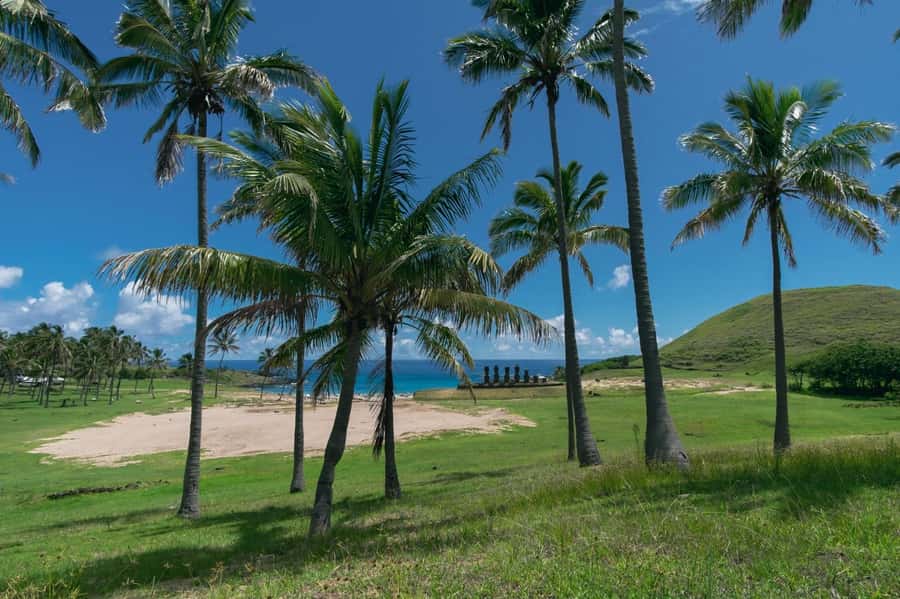
After the stone platforms and volcanic quarry, Anakena Beach feels like a change of world. Turquoise water meets golden sand, and coconut palms give the shore a calm, tropical character.
This is a smart final stop. You have spent much of the day concentrating on archaeology and cultural explanations. Anakena gives you room to breathe, take in the coast, and think about what you have seen.
The beach also helps you remember that Rapa Nui is not only an archaeological destination. Natural beauty is part of the experience, and the sea provides a fitting backdrop for the island’s long story.
Do not expect the beach to replace a full beach day. The tour lasts seven hours and includes five other major sites. Time at Anakena will depend on the pace of the earlier visits, so treat it as a peaceful ending rather than a long swim-and-sun session.
Guides, hospitality, and the human side of the tour
The strongest praise for this experience centers on hospitality and guiding. Ene was described as an archaeologist with especially strong knowledge of the sites, while Zoe was singled out for being excellent. Another response praised the hospitality in general.
That matters because the route includes places that need explanation. A driver can take you to Rano Raraku, but a strong guide can show why an unfinished statue matters. A guide can also explain why fallen figures at Akahanga should not be viewed simply as damaged scenery.
The feedback is not uniformly positive. One booking described a guide as unmotivated, inattentive during the drive, and too quick at the best stops, while the driver was considered reliable. That is a serious concern on a tour where the guide is central to the experience.
The overall rating is 4.4 out of 5 from 22 reviews, which suggests a generally positive experience with some inconsistency. I would book this tour for the route and the chance of a strong local guide, but I would also speak up if the schedule begins to favor empty or less important stops over Tongariki and Rano Raraku.
What the $100 price really covers
At $100 per person, the price is reasonable if you want to see the island’s main sites in one organized day. Transportation, a driver, and a live English or Spanish guide are included. You avoid having to arrange separate rides between widely scattered archaeological locations.
The price becomes less attractive if you want a slow, private-feeling visit at every stop. The route covers a lot, and the value depends on how well the seven hours are managed. Good explanations and sensible timing make the cost worthwhile. Long pauses at unimportant places and rushed visits to major sites do the opposite.
Remember that the National Park ticket is not included. This is the most important extra cost to check before booking. The tour price is not the complete entrance budget.
Reserve now and pay later is available, and you can cancel up to 24 hours in advance for a full refund. Those terms help if your Rapa Nui plans are still changing.
Who should choose this tour?
I would recommend it to you if this is your first full day on Rapa Nui and you want a broad introduction. The route covers the most important types of sites: fallen Moai, the quarry, a restored platform, a ceremonial village, and a beach with cultural importance.
It also suits people who value interpretation. The focus is not just on transport and photographs. The guide explains creation, ceremony, restoration, and the meaning of the Moai for the Rapa Nui people.
This tour may be less suitable if you dislike a full schedule or want to spend long periods at one location. It may also frustrate serious photographers if the guide keeps the group moving at Tongariki or Rano Raraku.
The tour is listed as wheelchair accessible, but because the exact paths and walking arrangements are not described, confirm how each stop is handled before you reserve. Pickup is available from Hanga Roa, and the guide languages are English and Spanish.
Should you book Hanga Roa: Full Day Moai and Mystery?
I would book this tour if you want the island’s major Moai sites in one day and you value having a local guide explain what you are seeing. Rano Raraku and Tongariki alone give the trip strong appeal, while Anakena keeps the day from becoming an endless sequence of ruins.
Before booking, ask about the expected time at Tongariki, Rano Raraku, and Anakena. Those are the stops most likely to shape your memory of the day. Also confirm the National Park ticket cost and mention any mobility needs in advance.
The route is excellent. The guide makes the difference. If the tour delivers the same level of care associated with Ene or Zoe, the $100 price offers solid value. If the schedule is poorly managed, you may wish you had more time at the sites that matter most.
FAQ
Where does the tour start?
Pickup is available from Hanga Roa.
How long does the tour last?
The tour lasts seven hours.
Which sites are included?
The route includes Vaihu, Akahanga, Rano Raraku, Tongariki, Pito Kura, and Anakena Beach.
Is the National Park ticket included?
No. The National Park ticket is not included in the tour price.
What languages are available?
The live guide can conduct the tour in English or Spanish.
Is transportation included?
Yes. Transportation, a driver, and a local guide are included.
Can I cancel the tour for a refund?
Yes. You can cancel up to 24 hours in advance for a full refund.
Just added around Hanga Roa
- Volcanic Refuges: Excursion to Underground Civilization★ 4.7 · 8 reviews
- Easter Island Ancestral Dinner and Show with Transport★ 4.5 · 2 reviews
- Volcanic Wonders and the Kingdom of the Birdman: Half Day★ 5.0 · 6 reviews
- Half Day Private Tour: Caves and Volcanic Refuges★ 4.0 · 14 reviews
- Tour to the Motus: Boat trip and snorkeling in Rapa Nui★ 5.0 · 8 reviews
- Birdman Ceremonial Route: Orongo, Ranu Kau Half-Day Tour★ 4.5 · 16 reviews
- Visit Rapa Nui in 4 days with 3 Tours and Accommodation included★ 4.0 · 2 reviews
- Private Tour: Tongariki Sunrise Experience★ 4.5 · 20 reviews
Easter Island Tours, compared.
Two days of Full Day Tour of Rapa Nui + Sunrise in Tongariki
Read our review →
2-Day Private Tour Easter Island Highlights Complete Discovery
Read our review →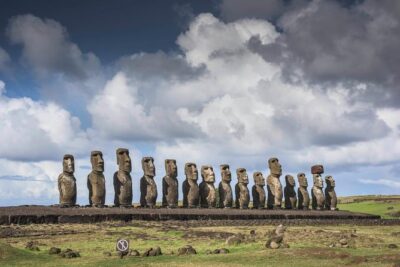
Private Tour: Full Day Easter Island Highlights
Read our review →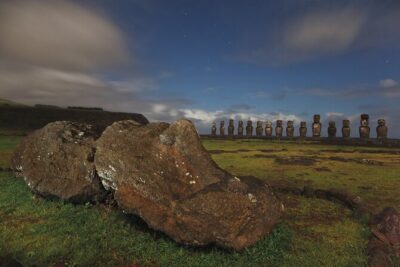
Browse the lists this tour appears in