
Reviewed · EASTER ISLAND TOURS
Full Day Tour: The Moai Trail
Moai, villages, legends, and one beautiful beach. This 6 to 8 hour tour gives you a strong first look at Rapa Nui, with stops at major ceremonial sites and a local guide to explain the island’s stories. I like the broad route, which includes Ahu Tongariki, Rano Raraku, and Anakena in one day. I also like the small group size, capped at 10 people, which should make it easier to hear your guide and ask questions.
The main catch is the separate national park fee, which costs $100 per person for most visitors or CLP40,000 for Chileans. Pickup communication also needs care. One person waited 45 minutes without knowing what was happening, while another group dealt with delays when the park tickets had not been arranged clearly. Once the tour gets moving, the local guides, especially Aranui and Nico, receive warm praise for making the island’s past understandable and personal.
In This Review
- Key points at a glance
- Why this route works for a first day on Rapa Nui
- Ahu Vaihu brings ancient village life into view
- Ahu Akahanga connects moai with oral tradition
- Rano Raraku explains where the moai began
- Ahu Tongariki delivers the big moai moment
- Ahu Te Pito Kura has scale and mystery
- Anakena Beach gives the day a welcome change of pace
- The guide can make or break the day
- Transport and pickup need a little planning
- What the $110 price really covers
- Who should book the Moai Trail?
- Should you book it?
- FAQ
- How long does the Moai Trail tour last?
- What time does the tour start?
- Is hotel pickup included?
- Is the Rapa Nui National Park entrance fee included?
- How much is the national park fee?
- Is lunch included?
- What language is the tour offered in?
- How many people can join the tour?
- Are service animals allowed?
- Can I cancel for a full refund?
Key points at a glance
- Six major sites in one day: Visit Ahu Vaihu, Ahu Akahanga, Rano Raraku, Ahu Tongariki, Ahu Te Pito Kura, and Anakena Beach.
- A small group of no more than 10: This is a better setup for questions and conversation than a large coach tour.
- A local guide shapes the experience: Aranui and Nico are singled out for warm, engaging storytelling.
- The park fee is not included: Add $100 per person, or CLP40,000 for Chileans, before you calculate the true cost.
- Anakena gives the day a softer finish: You get time for the white sand beach, shade, food, and drinks.
- Pickup is offered from Hanga Roa: Be ready 5 to 10 minutes early, but confirm the exact pickup details.
Why this route works for a first day on Rapa Nui
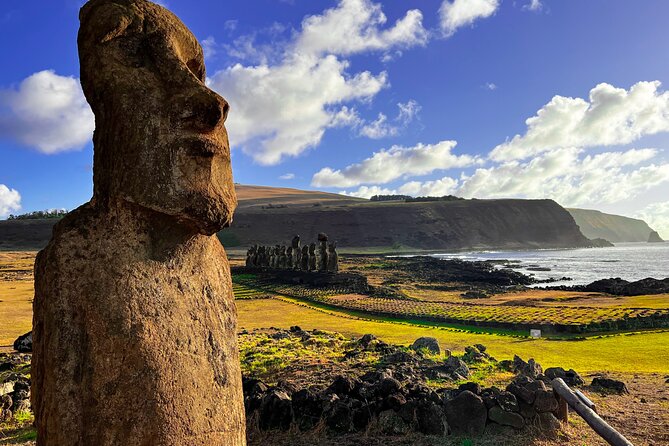
Rapa Nui can feel hard to understand if you only see isolated stone figures. The Moai Trail helps connect the pieces. You see village remains, ceremonial platforms, the quarry where many moai were made, a huge restored platform, and the beach linked with the first royal settlement.
I like this order because it mixes major monuments with human stories. Ahu Vaihu and Ahu Akahanga show how people lived and how ceremonial places related to village life. Rano Raraku explains the work behind the statues. Ahu Tongariki gives you the grand visual payoff, while Anakena lets you slow down after several hours of stone platforms and open ground.
The day lasts about 6 to 8 hours, though the exact timing can shift with pickup locations and the pace of the group. The advertised start is 9:30 a.m., with pickups taking place from that time onward. You should be ready at your accommodation entrance 5 to 10 minutes before the expected pickup.
This is not a private tour, but the maximum of 10 people keeps it fairly intimate. That matters on Rapa Nui, where the guide’s explanation is a large part of the value. You are not simply taking photographs of moai. You are trying to understand why they were placed, who used the sites, and how oral traditions preserve the island’s past.
More Rapa Nui trips and moai walks:
- From Hanga Roa: Rapa Nui Culture Sightseeing Tour
★ 4.6 · 307 reviews - From Hanga Roa: Easter Island Highlights 2-Day Tour
★ 4.3 · 205 reviews - Full Day Tour in Rapa Nui
★ 4.5 · 122 reviews
Ahu Vaihu brings ancient village life into view
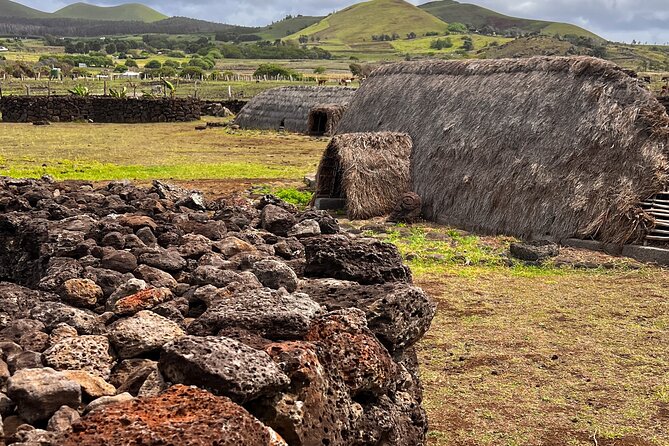
The first stop, Ahu Vaihu, lasts about 30 minutes. Its focus is not just the moai. A reconstructed village area shows the types of structures used by Rapa Nui communities, including chicken coops, stone gardens, and boat houses.
This is a useful opening because it puts daily life beside the monuments. Stone platforms can look abstract when you first arrive on the island. Seeing the basic parts of a village gives you a clearer idea of how people organized food, shelter, boats, and work.
The stop is brief, so you should expect an introduction rather than a long, detailed visit. Admission is not included in the tour price, and you need the Rapa Nui National Park ticket to enter the relevant sites. Ask your guide early in the day if you are unsure how your ticket will be checked.
Ahu Akahanga connects moai with oral tradition
At Ahu Akahanga, you spend about 45 minutes among an original village area, its structures, ceremonial platforms, and moai lying in front of them. The site is also tied to the story of Hotu Matu’a, regarded in oral tradition as the first king of Rapa Nui.
This is one of the better places for a guide who can explain how island history is carried through spoken accounts. The story of Hotu Matu’a is not presented as a simple textbook timeline. It is part of a living cultural tradition, and your guide can help you understand why these stories matter.
The fallen moai here also change your view of the statues. At other sites, the figures can appear formal and complete. Here, the toppled remains remind you that the island’s ceremonial centers have passed through upheaval, weather, and major changes over time.
You have 45 minutes, enough to look closely and listen without feeling rushed. As with Ahu Vaihu, the separate national park admission applies.
Rano Raraku explains where the moai began
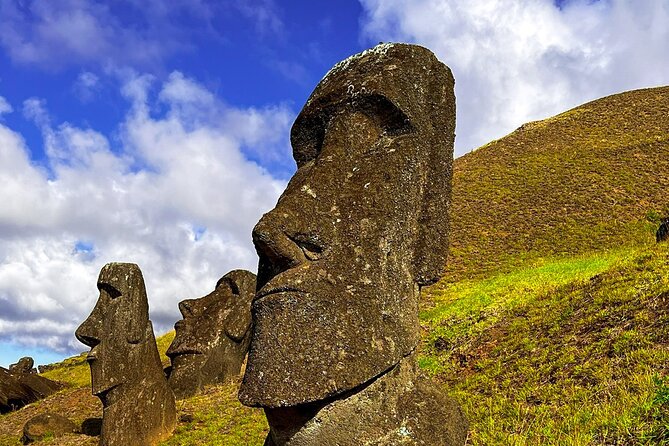
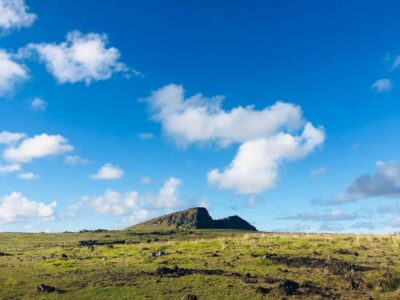
The 90 minutes at Rano Raraku are among the most valuable on the route. This is the place associated with the creation of the moai, and it helps you see the statues as the result of an enormous process rather than isolated objects.
The setting is memorable because unfinished and partially completed moai remain connected to the stone from which they were carved. You can use this stop to think about the scale of the work: quarrying, shaping, transporting, and raising a figure that could weigh many tons.
The site also carries a modern story. It required restoration after a destructive tsunami linked to the Valdivia earthquake. Japanese contributors Tadano and Sano played an important part in that restoration. That detail adds another layer to the visit. You are not only looking at an ancient ceremonial center, but also at a place that required major modern care.
The long stop is welcome, but it may be the most physically demanding part of the day. The tour information says you need to be physically compatible with the activity. No exact walking distance or accessibility details are provided, so ask the operator if you have mobility concerns.
Bring water and protect yourself from the sun. Lunch and snacks are not included, and there is no promise that food will be available at every stop.
A few more Hanga Roa trips worth comparing side by side
- Private Full-Day Easter Island Highlights North and West
★ 5.0 · 84 reviews - Full Day Private Tour: Factory of the Moai the stone giants
★ 4.5 · 63 reviews - Private Easter Island Full-Day Tour
★ 5.0 · 61 reviews - Private Full-Day Easter Island Highlights South and East
★ 5.0 · 60 reviews
Ahu Tongariki delivers the big moai moment
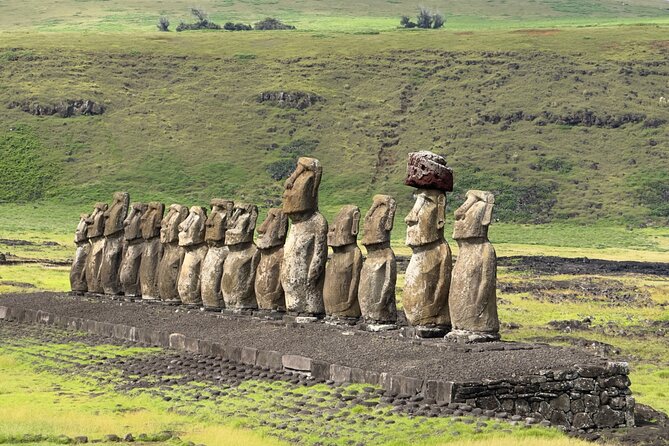
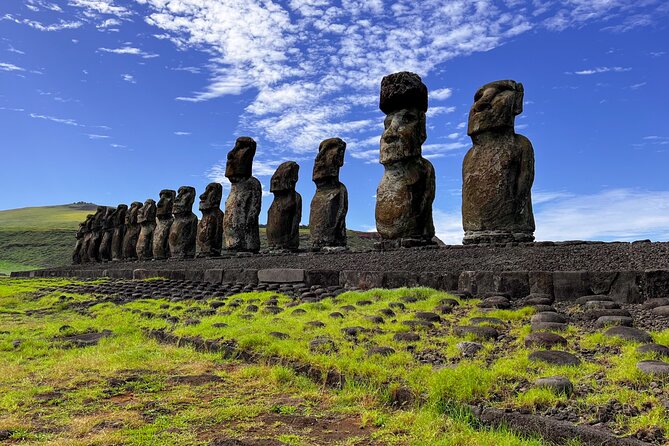
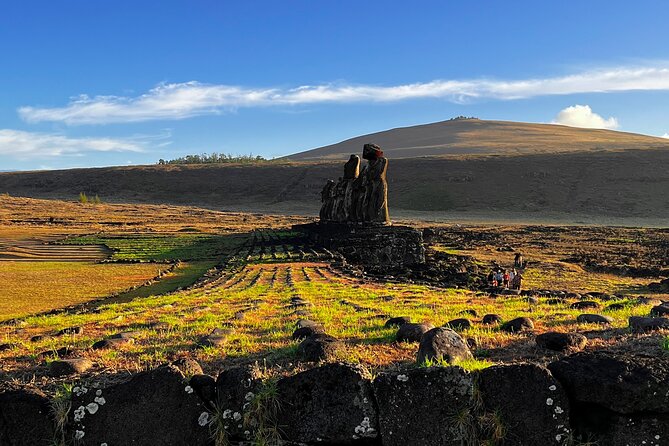
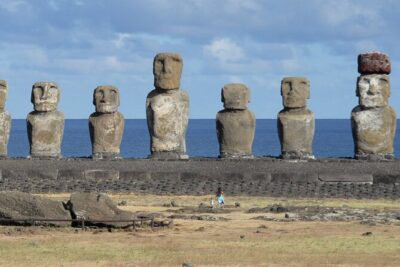
Ahu Tongariki receives about one hour, and this is likely to be the visual highlight for many people. Its famous platform carries 15 moai, creating the powerful group view that most visitors hope to see on Rapa Nui.
The site also has a difficult recent story. A tsunami caused by the Valdivia earthquake damaged the area, and restoration work brought the ceremonial center back into view. The involvement of Tadano and Sano, along with Japanese support, is part of the explanation you should hear while you are there.
One hour is a sensible amount of time. You can take in the full platform, study individual figures, and listen to the guide without spending the entire afternoon at one monument. A good guide should help you notice differences in size, posture, and condition rather than treating the platform as one single object.
Admission is not included in the tour price. This is another reason to purchase the national park pass before the day begins. A park ticket delay can cut into your time at one of the island’s most important sites.
Ahu Te Pito Kura has scale and mystery
The 30-minute visit to Ahu Te Pito Kura focuses on Paro, described as the largest moai ever raised on its platform. The figure measures about 10 meters high and weighs roughly 88 tons.
That size is difficult to grasp from a printed number. Once you are near the site, the point becomes clear: Rapa Nui’s moai were not small household statues. They represented a huge investment of labor, organization, and belief.
You will also hear about a round stone associated with magnetic effects and unusual energy. Treat this part as local tradition and mystery rather than a scientific promise. It is still an engaging detail, especially after spending the morning learning about the physical work behind the moai.
Thirty minutes goes quickly here. Use the time to listen first, then take photographs. Admission is separate from the tour price.
Anakena Beach gives the day a welcome change of pace
The final stop is Anakena Beach, with about one hour to enjoy the area. The bay was originally called Hanga Rau o Te Ariki, or king’s landing bay, and tradition connects it with Hotu Matu’a and the settlement of the island. Over time, Anakena became associated with royalty.
After several hours at ceremonial sites, the white sand and clear water provide a useful change. You can spend the hour at the beach or stay in the shaded park area. Food and drink options are available in that area, according to the tour details, but lunch is not included in the booking.
Anakena is more than a convenient final stop. It reminds you that Rapa Nui is not only about monuments. The island’s beaches, royal traditions, village life, and ocean setting all belong to the story.
The one-hour limit means you should decide what matters most to you. If you want time on the sand, do not use the whole stop for photographs. If swimming is not your priority, the shade, food, and drinks may make the park area more comfortable.
The guide can make or break the day
The strongest praise for this experience goes to the local guides. Aranui is described as a good fit for a mixed-age group that included a 9-year-old, an adult, and two seniors. That suggests a guide who can adjust the pace and explain difficult material in a friendly way.
Nico is also praised for leading an enjoyable day and for covering important sites before finishing at Anakena. If you are able to request a guide, asking about Aranui or Nico may be worthwhile, though guide assignments cannot be guaranteed from the information provided.
The guide’s role matters because Rapa Nui’s story includes archaeology, oral tradition, local identity, royal lineage, and modern restoration. A simple list of dates will not do much for you. You want someone who can explain why a fallen moai matters, how village structures worked, and how island traditions connect the sites.
The language offered is English. One review also describes the guide as friendly and well informed about the history of the local people. The experience is offered to most people who can manage the physical demands of the activity, and service animals are allowed.
Transport and pickup need a little planning
Pickup and drop-off are included, generally from accommodations in Hanga Roa. You should provide a clear reference if your lodging has no obvious entrance or reception area. Accommodations outside Hanga Roa may require another meeting point or an extra charge.
The pickup window is not exact. The stated start time is 9:30 a.m., but the vehicle may arrive later depending on where you are staying and which pickups come first. Be ready early and confirm the details in advance.
Communication appears to be the weak spot. One person waited 45 minutes because other passengers were collected first and there was no clear message about the delay. Another person reported that the vehicle was a small, older truck that felt cramped with five passengers.
That does not mean every departure uses the same vehicle, but you should set sensible expectations. This is a practical island excursion, not a luxury coach outing. Send your accommodation details carefully and ask how pickup will be confirmed. If you can use WhatsApp, it may be worth requesting a message with the expected pickup time.
What the $110 price really covers
The advertised price is $110 per person. It includes transport, pickup and drop-off, an English-speaking local guide, and essential equipment. It does not include lunch, snacks, or the Rapa Nui National Park entry fee.
For most visitors, the added park charge is $100 per person. Chilean citizens pay CLP40,000. That means the real cost for a non-Chilean adult is about $210 before food and drinks, not $110.
At that total, the value depends on how much you want convenience and interpretation. You are getting transport to six major sites, a full day of guiding, and a group limited to 10 people. Renting or arranging separate transport could require more planning, and you would still need to pay the park fee.
The price is less attractive if you expect a polished vehicle, included meals, or a private experience. It is more appealing if you want a broad introduction to Rapa Nui without organizing each site yourself.
The national park fee should be treated as a required extra, not a minor footnote. Buy it before the tour if possible, and confirm that your guide will accept or help verify it. Delays over the ticket can waste valuable time at the first major sites.
Who should book the Moai Trail?
I would recommend this tour for a first visit to Rapa Nui when you want to cover the main sites in one day. It suits couples, families, and mixed-age groups, especially if you value a local guide more than luxury transport.
It also works well for people with limited time on the island. The route gives you a broad foundation, so you can decide later which places deserve a slower second visit.
I would be more cautious if you need guaranteed accessibility, a spacious vehicle, or a fully planned meal. The activity requires a suitable level of physical ability, and the supplied details do not specify exact walking conditions. Ask before booking if that point matters to you.
You should also make peace with the extra park fee and the flexible pickup window. Those are not deal breakers, but they need to be part of your plan.
Should you book it?
Book the Moai Trail if you want a full day of major Rapa Nui sites, local storytelling, and simple transport in a small group. The combination of Rano Raraku, Ahu Tongariki, Paro at Ahu Te Pito Kura, and Anakena gives you a strong introduction to the island’s monuments and traditions.
I would book it after confirming three things: the national park ticket, the pickup time, and the expected vehicle. If the operator communicates those details clearly, the tour offers good practical value despite the extra admission cost.
Skip it if you want a private, polished, slow-paced experience. For most first-time visitors who want the island’s main moai sites explained in one day, it is a sensible choice, with the guide’s quality likely to shape the experience more than anything else.
FAQ
How long does the Moai Trail tour last?
The tour lasts approximately 6 to 8 hours.
What time does the tour start?
The stated start time is 9:30 a.m. Pickup takes place from that time onward, depending on your accommodation’s location.
Is hotel pickup included?
Yes. Pickup and drop-off are included for accommodations in Hanga Roa. Lodgings outside Hanga Roa may require another meeting point or an additional cost.
Is the Rapa Nui National Park entrance fee included?
No. The park entrance fee must be purchased separately before the tour.
How much is the national park fee?
The stated fee is $100 per person. Chileans pay CLP40,000 per person.
Is lunch included?
No. Lunch is not included unless specifically indicated, and snacks are also not included.
What language is the tour offered in?
The tour is offered in English.
How many people can join the tour?
The maximum group size is 10 people.
Are service animals allowed?
Yes. Service animals are allowed.
Can I cancel for a full refund?
Yes, if you cancel at least 24 hours before the experience’s start time. Cancellations or changes made less than 24 hours in advance are not accepted for a refund.
Just added around Hanga Roa
- Volcanic Refuges: Excursion to Underground Civilization★ 4.7 · 8 reviews
- Easter Island Ancestral Dinner and Show with Transport★ 4.5 · 2 reviews
- Volcanic Wonders and the Kingdom of the Birdman: Half Day★ 5.0 · 6 reviews
- Half Day Private Tour: Caves and Volcanic Refuges★ 4.0 · 14 reviews
- Tour to the Motus: Boat trip and snorkeling in Rapa Nui★ 5.0 · 8 reviews
- Birdman Ceremonial Route: Orongo, Ranu Kau Half-Day Tour★ 4.5 · 16 reviews
- Visit Rapa Nui in 4 days with 3 Tours and Accommodation included★ 4.0 · 2 reviews
- Sunrise in Tongariki on Easter Island Rapa Nui★ 3.5 · 5 reviews
Easter Island Tours, compared.
Two days of Full Day Tour of Rapa Nui + Sunrise in Tongariki
Read our review →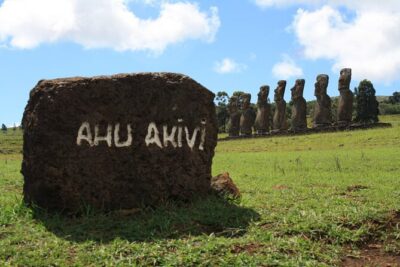
2-Day Private Tour Easter Island Highlights Complete Discovery
Read our review →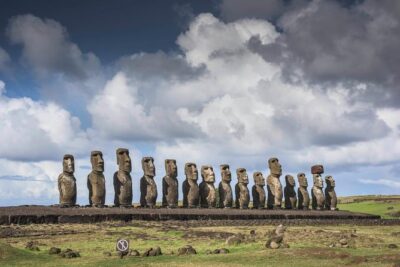
Private Tour: Full Day Easter Island Highlights
Read our review →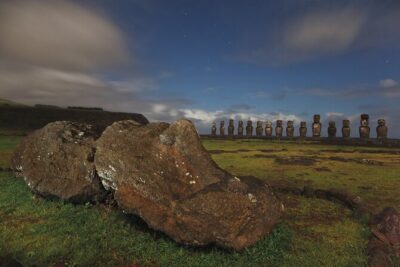
Browse the lists this tour appears in