
Reviewed · EASTER ISLAND TOURS
Full Day Tour – The Land of Hotu Matu´a
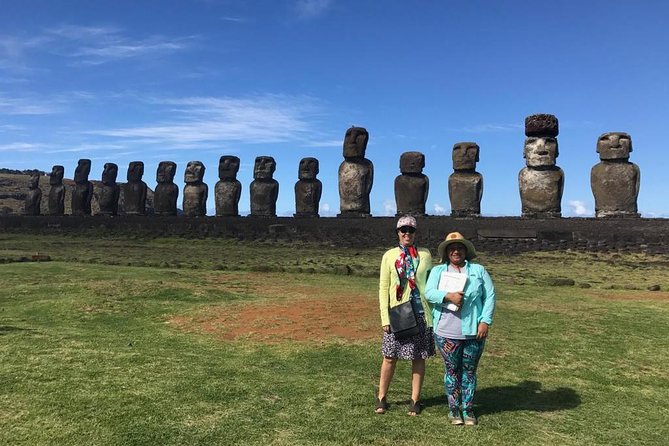
Fifteen moai in one unforgettable row. I like this tour for its broad view of Rapa Nui and its small maximum group of nine, which makes a long day easier to manage. I also like the chance to visit Rano Raraku, the volcanic quarry where the moai were carved, with enough time to see it properly. The main drawback is that the Rapa Nui National Park entrance ticket and lunch are not included, so you must budget for both.
The English-speaking guides are the heart of the experience. Hannah, also referred to as Hana, earned praise for bringing island culture to life, while Hagita was singled out for her strong grasp of the island’s past. The schedule can be adjusted if pickup times become complicated, but six major stops in seven hours still means a brisk pace.
In This Review
- Key points to know before booking
- Why this seven-hour route works
- Ahu Vaihu and the first look at ruined Rapa Nui
- Ahu Akahanga and moai left where they fell
- Rano Raraku, the quarry that explains the moai
- Ahu Tongariki and the island’s grandest platform
- Ahu Te Pito Kura and the magnetic stone
- Anakena Beach, moai, and a change of setting
- What the guides add to the day
- Is $177.09 a fair price?
- Who should book this full-day tour?
- FAQ
- Where does the tour begin?
- How long does the tour last?
- How many people can join the tour?
- Is the tour offered in English?
- Is transportation included?
- Is lunch included?
- Is the Rapa Nui National Park entrance ticket included?
- What happens if bad weather cancels the tour?
- Should you book The Land of Hotu Matu´a?
Key points to know before booking
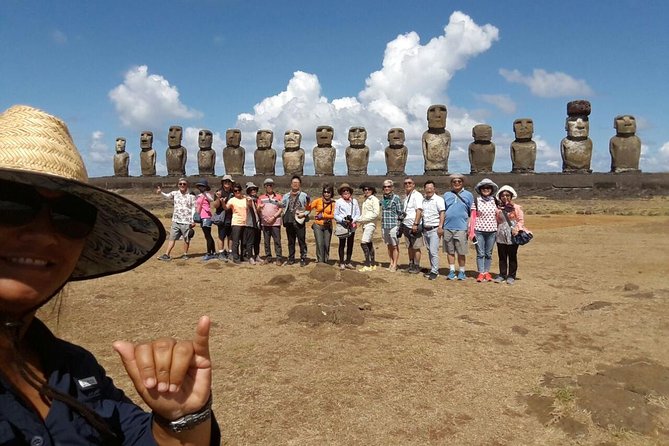
- See 15 moai at Ahu Tongariki: This is the island’s largest restored platform and the tour’s most striking group view.
- Spend two hours at Rano Raraku: The quarry is given more time than any other stop, allowing you to appreciate unfinished statues and the volcanic setting.
- Visit both major moai sites and quieter ruins: Vaihu, Akahanga, Tongariki, and Anakena show different parts of Rapa Nui’s past.
- Travel in a small group: The vehicle holds no more than nine people, a useful advantage on a full-day outing.
- Pickup is flexible: The operator collects participants from different accommodations and can work around preferred schedules when possible.
- Plan for extra costs: Lunch and the Rapa Nui National Park entrance ticket are separate from the $177.09 tour price.
Why this seven-hour route works
Rapa Nui is compact, but its archaeological sites are spread around the island. A tour like this saves you from arranging transport between distant platforms, the quarry, and the beach. I like the route because it covers the main southeast coast sites, then continues to Anakena in the north.
The seven-hour duration is long enough to give the most important places real attention, especially Rano Raraku. It is not a slow, stop-and-stroll day, though. Several visits last 30 or 40 minutes, so you should be ready to get out, look around, listen carefully, and move on.
You ride in an air-conditioned vehicle, which matters on a warm day and makes the road time more comfortable. The group limit of nine is another practical plus. You get more room than on a large coach, and the guide has a better chance of answering individual questions.
The tour is offered in English. Pickup is available from different accommodations in Hanga Roa, and the operator says it can be flexible with timing. That flexibility helped one group that had people arriving at different times, with the guide and driver allowing the group to gather without wasting the whole visit.
More Rapa Nui trips and moai walks:
- From Hanga Roa: Rapa Nui Culture Sightseeing Tour
★ 4.6 · 307 reviews - From Hanga Roa: Easter Island Highlights 2-Day Tour
★ 4.3 · 205 reviews - Full Day Tour in Rapa Nui
★ 4.5 · 122 reviews
Ahu Vaihu and the first look at ruined Rapa Nui
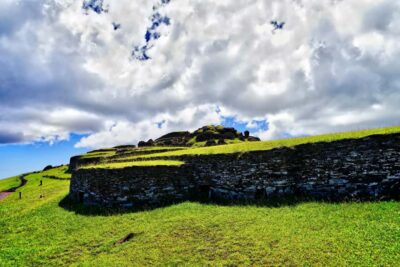
Your first stop is Ahu Vaihu, where you see a replica of a village, a ruined ceremonial platform, and moai that have been knocked down. The stop lasts about 40 minutes.
This is a useful opening because it shows Rapa Nui as an archaeological site rather than only a collection of upright statues. The fallen moai and damaged platform give you a sense of how much of the island’s ceremonial past survives in broken form.
I would listen closely to the guide here. The physical remains are important, but the visit becomes much more useful when you understand what a village and platform meant in island society. Hannah’s strength, according to the praise she received, was turning these remains into a clear story instead of simply pointing at stones.
Admission is not included at this stop, so confirm how the national park ticket works before the day begins. The provided details identify the Rapa Nui National Park entrance ticket as an extra cost, rather than including it in the tour price.
Ahu Akahanga and moai left where they fell
Ahu Akahanga follows, with about 40 minutes at the site. Here you see archaeological remains, a former village area, ruined platforms, and moai lying on the ground.
I like the contrast between Akahanga and Tongariki later in the day. At Tongariki, the statues have been restored to their platform. At Akahanga, the fallen figures and damaged structures offer a more raw view of the island’s past.
This is another place where a guide adds real value. Without context, a fallen statue can look like a simple photo stop. With explanation, you can pay attention to the platform, the village remains, and the position of the moai rather than focusing only on the famous faces.
The 40-minute visit should be enough for an introduction, but not for a long independent walk. If you like taking many photographs or reading every available sign, you may find the pace tight. I would keep your camera ready and save longer questions for the vehicle or the quieter moments of the day.
Rano Raraku, the quarry that explains the moai
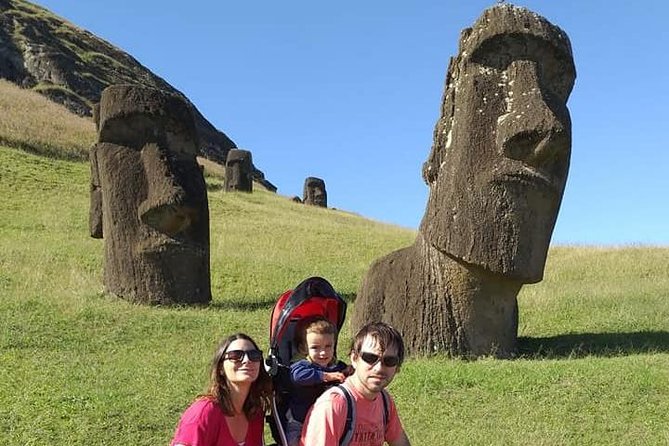
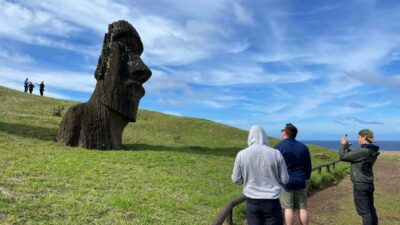
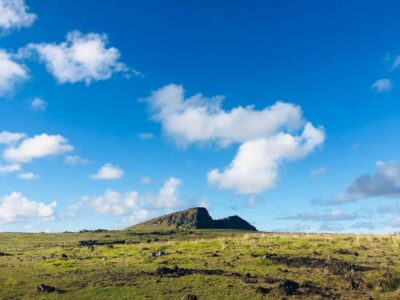
Rano Raraku is the centerpiece of the tour, and the schedule gives it two hours. That is a wise choice. This volcano served as the quarry where the moai were carved, so it explains how the statues were made before they were moved to ceremonial platforms around the island.
You can expect this stop to feel different from the ahu sites. Instead of seeing statues only at their final ceremonial locations, you are near the source of the stone. Unfinished moai remain part of the quarry setting, giving you a direct look at the stages of production.
Two hours allows the guide to explain the quarry and gives you time to look around without the rushed feeling of a brief roadside stop. It is also the part of the day most likely to require a moderate level of physical fitness. The tour information specifically asks participants to be in reasonably good shape, so bring that point into your decision.
I would wear comfortable shoes and keep water close, though the supplied details do not specify what the operator provides. The route may include uneven ground, and you should be prepared to walk at a steady pace. You do not need to treat the visit like a demanding hike, but it is not simply a view from the vehicle.
The quarry is also where a strong guide can make the largest difference. Hagita was praised for explaining the island’s past and culture with depth, and that kind of guide is especially useful at Rano Raraku. You will get more from the stop if you ask how the carving process connects with the platforms and statues seen elsewhere.
A few more Hanga Roa trips worth comparing side by side
- Private Full-Day Easter Island Highlights North and West
★ 5.0 · 84 reviews - Full Day Private Tour: Factory of the Moai the stone giants
★ 4.5 · 63 reviews - Private Easter Island Full-Day Tour
★ 5.0 · 61 reviews - Private Full-Day Easter Island Highlights South and East
★ 5.0 · 60 reviews
Ahu Tongariki and the island’s grandest platform
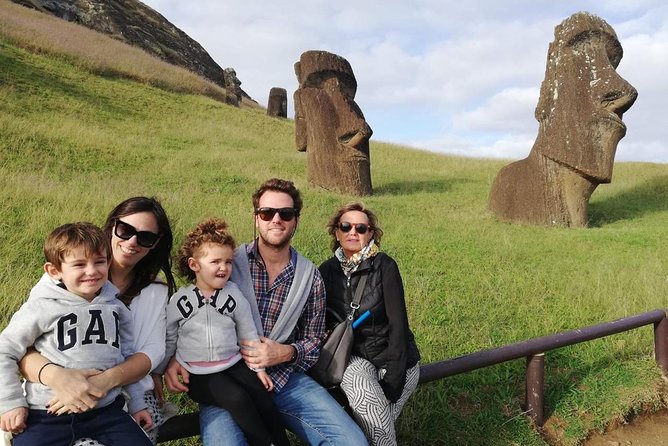
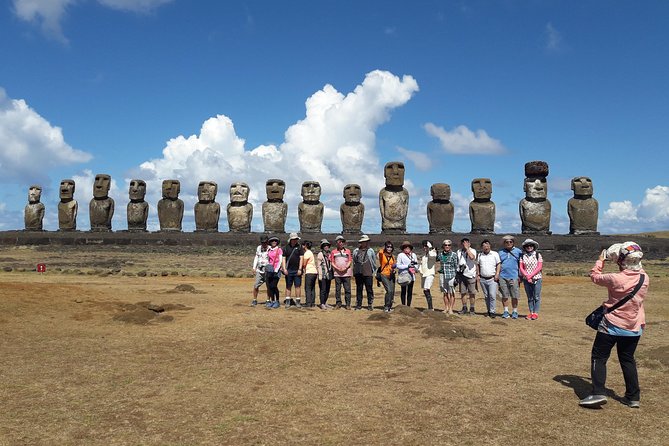
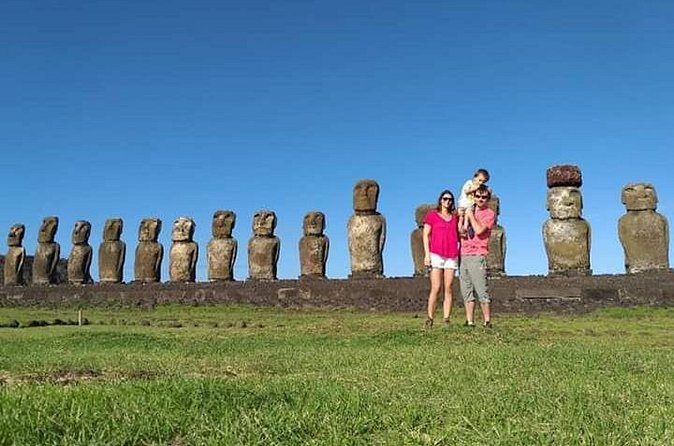
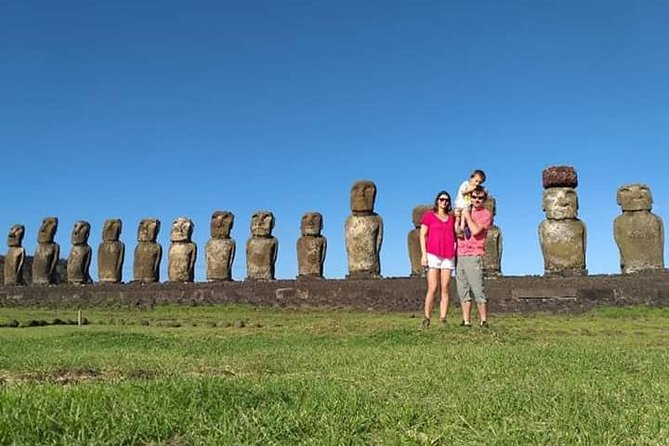
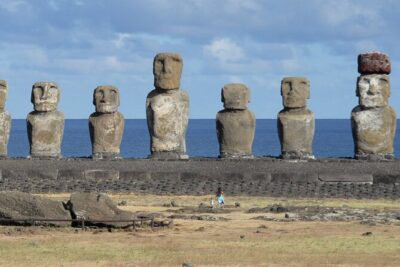
After the quarry, the tour visits Ahu Tongariki for about 40 minutes. This is the largest restored platform on Rapa Nui, with 15 moai lined up together.
For many people, this will be the visual high point. The row of statues gives you the classic image associated with Easter Island, but the setting is more meaningful after you have already seen fallen moai, ruined platforms, and the quarry where the stone came from.
The 40-minute stop is enough to take in the full platform, photograph the group, and hear the guide’s explanation. It is not designed for a long, unhurried exploration. I would first step back and take in all 15 figures, then move closer for details.
Tongariki also shows why a full-island route is worthwhile. Seeing one restored platform alone can feel like a single famous monument. Seeing it after Vaihu, Akahanga, and Rano Raraku gives you a clearer sense of how the sites connect.
Ahu Te Pito Kura and the magnetic stone
Ahu Te Pito Kura is a shorter stop of about 30 minutes. You see a moai lying on its old platform and the famous magnetic stone.
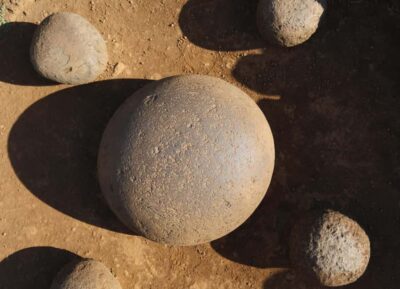
This visit adds variety to the day. The stone has a reputation for magnetic properties, and the fallen moai again reminds you that many statues are no longer upright on their platforms. It is a compact stop, so I would treat it as a focused visit rather than expecting a large site with lots of time to wander.
The guide’s explanation matters here because the magnetic stone is easy to treat as a novelty. You can enjoy the unusual feature while also paying attention to the archaeological remains beside it. With only half an hour, the guide will help you understand what deserves your attention first.
Anakena Beach, moai, and a change of setting
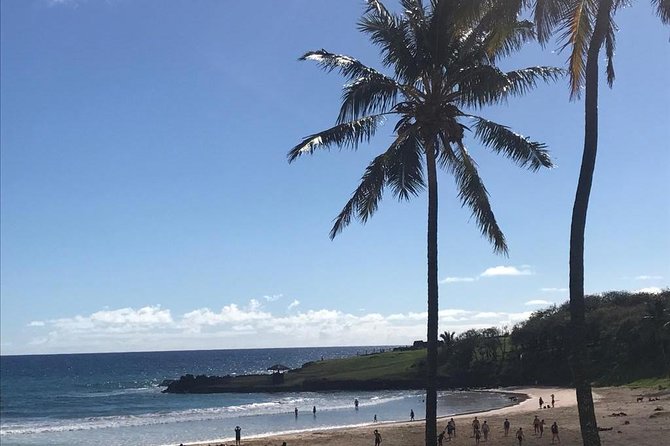
The final stop is Anakena Beach, with about one hour devoted to archaeology. The focus is not simply sun and sand. You visit restored moai platforms located at the beach.
That makes Anakena a good finish. After a day of volcanic stone, ruined villages, and fallen statues, the beach provides a change of setting while keeping the main subject of the tour in view. I like that the stop does not abandon archaeology for a quick scenic pause.
The one-hour visit should give you time to see the restored platforms and absorb the setting at a less hurried pace. Still, lunch is not included, so do not assume this stop automatically includes a meal. Ask the operator how the day’s food break is handled, or plan to bring money for lunch.
The route ends with a more relaxed feeling than it begins, but the tour remains focused on the island’s ceremonial remains. If you are hoping for a long beach stay, this may not be the right outing. If you want to see the moai connected with Anakena while also getting a glimpse of the coast, the stop fits well.
What the guides add to the day
The clearest strength of this experience is the guiding. Hannah, also called Hana in the available details, was praised for making the island’s past and culture understandable through stories. Hagita was also singled out for strong explanations and broad knowledge of the island.
That matters on Rapa Nui. The sites are visually powerful, but the meaning is not always obvious from the stones alone. A good guide helps you connect a village, a fallen moai, a quarry, and a restored platform into one story.
You should ask questions as you go. The tour is offered in English, and the guide’s role is not limited to transport between stops. The strongest feedback focused on clear answers, enthusiasm for the island, and the ability to make each archaeological place feel distinct.
One practical note: the small group can be a real benefit, but the schedule may be affected if people arrive at different pickup times. The operator has shown flexibility in that situation, and the guide and driver may adjust the start of the sightseeing portion while the group gathers. That is helpful, though it can also mean a later or faster visit at some stops.
Is $177.09 a fair price?
At $177.09 per person, this is not a budget sightseeing ride. I think the price is reasonable for someone who wants transport, an English-speaking guide, air conditioning, and a full route around the island in a group capped at nine people.
The value comes from the number of major sites covered in one day. Booking separate transport to reach Vaihu, Akahanga, Rano Raraku, Tongariki, Te Pito Kura, and Anakena could be difficult, especially if you do not have a rental car or do not want to manage the route yourself.
You must add the Rapa Nui National Park entrance ticket and lunch. That changes the final cost, so compare the total rather than looking only at the advertised tour price. The tour becomes a better deal if you value expert interpretation and door-to-door pickup more than the lowest possible fare.
It is also worth noting that the experience is commonly reserved well in advance, with an average booking time of 79 days. If your dates are fixed, do not leave it until the last moment. Confirmation is sent within 48 hours of booking, subject to availability.
Who should book this full-day tour?
I would recommend it to a first-time visitor who wants to see the island’s main archaeological highlights in one organized day. It also suits people who prefer a guide to explain what they are seeing rather than visiting the platforms without context.
The route is a strong choice for cruise passengers or anyone with limited time in Hanga Roa, provided the pickup schedule matches your arrival and departure plans. One review describes taking the tour from a ship and seeing the whole island, but you should still confirm your timing directly before booking.
You should think twice if you want a very slow pace, a long lunch, or many hours at Anakena Beach. The tour covers six stops, and the 30 to 40-minute visits are purposeful rather than leisurely. Moderate physical fitness is also expected, especially at Rano Raraku.
Free cancellation is available if you cancel at least 24 hours before the start time. Changes made inside that window are not accepted, and late cancellations are not refunded. The tour can also be moved or refunded if poor weather prevents departure or if the minimum group size is not reached.
FAQ
Where does the tour begin?
Pickup is offered from different accommodations in Hanga Roa. The operator says it can be flexible with the schedule if you have a preferred pickup time.
How long does the tour last?
The experience lasts approximately seven hours.
How many people can join the tour?
The maximum group size is nine people.
Is the tour offered in English?
Yes. The tour is offered in English.
Is transportation included?
Yes. Transportation is provided in an air-conditioned vehicle.
Is lunch included?
No. Lunch is not included in the tour price.
Is the Rapa Nui National Park entrance ticket included?
No. The entrance ticket to Rapa Nui National Park is an additional cost.
What happens if bad weather cancels the tour?
If poor weather causes a cancellation, you will be offered another date or a full refund. A different date, another experience, or a full refund is also offered if the minimum number of participants is not reached.
Should you book The Land of Hotu Matu´a?
I would book this tour if you want a well-organized first look at Rapa Nui, especially if you have only one full day and want the main sites explained in English. The combination of Rano Raraku, Tongariki, the ruined platforms, Te Pito Kura, and Anakena gives you a strong view of the island’s archaeological past.
The best reason to choose it is the guide. Hannah, Hana, and Hagita received the strongest praise, and their explanations appear to turn a demanding sightseeing schedule into a meaningful one. Just budget separately for lunch and the national park ticket, wear practical shoes, and accept that six stops in seven hours will keep you moving.
Just added around Hanga Roa
- Volcanic Refuges: Excursion to Underground Civilization★ 4.7 · 8 reviews
- Easter Island Ancestral Dinner and Show with Transport★ 4.5 · 2 reviews
- Volcanic Wonders and the Kingdom of the Birdman: Half Day★ 5.0 · 6 reviews
- Half Day Private Tour: Caves and Volcanic Refuges★ 4.0 · 14 reviews
- Tour to the Motus: Boat trip and snorkeling in Rapa Nui★ 5.0 · 8 reviews
- Birdman Ceremonial Route: Orongo, Ranu Kau Half-Day Tour★ 4.5 · 16 reviews
- Visit Rapa Nui in 4 days with 3 Tours and Accommodation included★ 4.0 · 2 reviews
- Private Tour: Tongariki Sunrise Experience★ 4.5 · 20 reviews
Easter Island Tours, compared.
Two days of Full Day Tour of Rapa Nui + Sunrise in Tongariki
Read our review →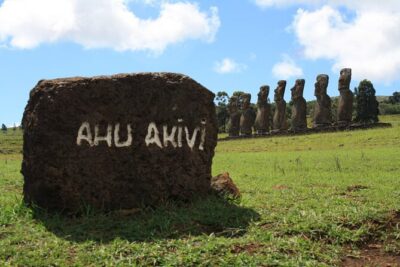
2-Day Private Tour Easter Island Highlights Complete Discovery
Read our review →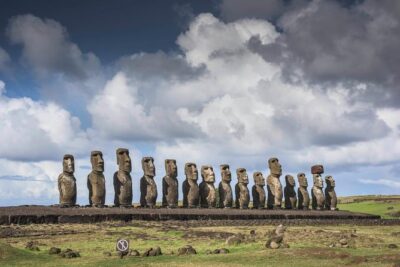
Private Tour: Full Day Easter Island Highlights
Read our review →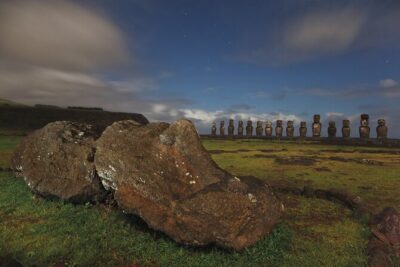
Browse the lists this tour appears in