
Reviewed · EASTER ISLAND TOURS
Anakena and Rapa Nui Culture in Easter Island
Fifteen moai face the morning sun. This six-hour tour takes you from Hanga Roa to Easter Island’s essential archaeological sites, including Rano Raraku, Ahu Tongariki, and Anakena Beach. I like the small group of no more than 10 people, and I like that round-trip transport and a guide are included. The main catch is that park admission, lunch, and personal expenses cost extra.
The route gives you a strong first look at Rapa Nui culture without asking you to plan several separate outings. Guides Luis and Cesar earned special praise for their clear explanations and helpful manner. Still, I would confirm the pickup point and total price before paying, since some customers were directed to an office instead of receiving hotel pickup, and one booking showed a much higher charge than the local tour price.
In This Review
- Key points to know before booking
- Why this six-hour route works well
- Starting in Hanga Roa at 9:30 am
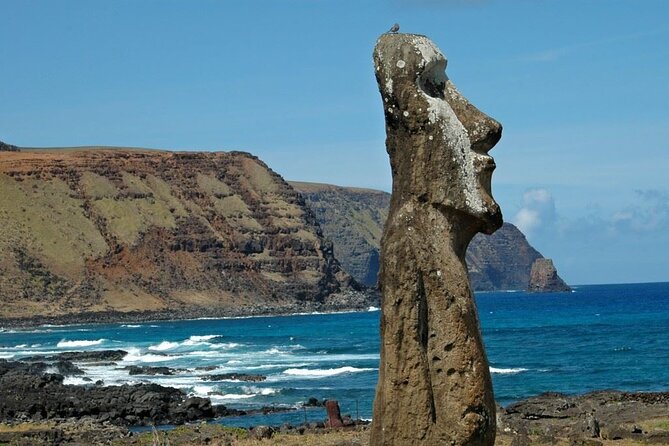
- Ahu Vaihu and Ahu Akahanga: moai in a rougher setting
- Rano Raraku and the unfinished moai
- Ahu Tongariki and the power of 15 moai
- Ahu Te Pito Kura and Moai Paro
- Anakena Beach: a graceful finish
- What the guide adds to the experience
- Price, park fees, and the value question
- Who should choose this Rapa Nui tour?
- Should you book Anakena and Rapa Nui Culture?
- FAQ
- How long is the Anakena and Rapa Nui Culture tour?
- What time does the tour start?
- Where does pickup take place?
- Is hotel pickup included?
- Is the Rapa Nui National Park entrance fee included?
- Is lunch included?
- How large is the tour group?
- Is the tour offered in English?
- Can cruise passengers book this experience?
Key points to know before booking
- Rano Raraku is the tour’s centerpiece: You see the volcanic quarry where about 397 unfinished moai remain.
- Ahu Tongariki delivers the big visual moment: Fifteen enormous statues line a 200-meter ceremonial platform.
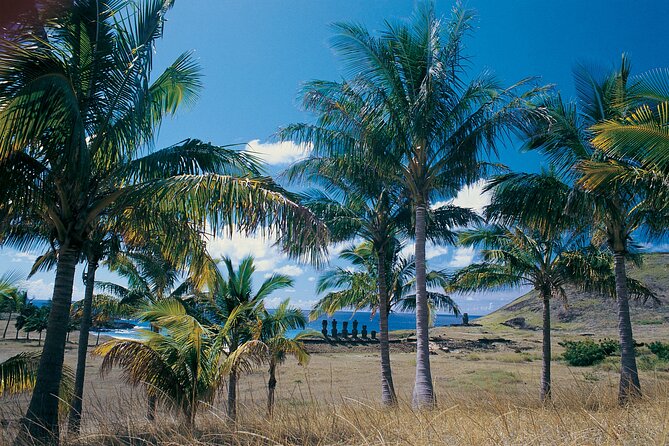
- Anakena adds a welcome change of pace: You can eat lunch by the beach, though lunch is not included.
- A group of up to 10 keeps the outing personal: A smaller party can make it easier to hear and ask questions.
- Park admission is extra: The tour price does not include entry to Rapa Nui National Park.
- Pickup needs checking: Central hotel pickup is offered, but some bookings have used a meeting point instead.
Why this six-hour route works well
Easter Island, also called Rapa Nui, is not a place where the famous sites sit around one easy town square. Hanga Roa is the main center, while the moai sites are spread across the island. For a first day, having transport between the sites is a real advantage.
This outing gives you a broad sweep of the island’s best-known archaeological places. You will see fallen and unfinished moai, a working quarry, a restored ceremonial platform, a giant toppled statue, and a beach with statues facing inland toward the island.
The schedule is fairly brisk. Most major stops receive about an hour, and the full outing lasts around six hours. That is enough time to get a clear sense of Rapa Nui culture, but not enough for long wandering at every site. If you want slow photography, extended walks, or a quiet picnic at Anakena, a private or longer tour may suit you better.
The group limit of 10 is one of the stronger features. A large coach can make archaeological sites feel like a checklist. A small vehicle usually makes it easier to stay close to the guide and follow explanations about how the moai were made, moved, and placed.
More Rapa Nui trips and moai walks:
- From Hanga Roa: Rapa Nui Culture Sightseeing Tour
★ 4.6 · 307 reviews - From Hanga Roa: Easter Island Highlights 2-Day Tour
★ 4.3 · 205 reviews - Full Day Tour in Rapa Nui
★ 4.5 · 122 reviews
Starting in Hanga Roa at 9:30 am
The tour begins at 9:30 am, with pickup from selected centrally located hotels. You are asked to provide your hotel name and address when booking. If your hotel lies outside the pickup area, the operator is supposed to confirm the closest meeting point.
That last detail matters. The published arrangement promises central hotel pickup, but one customer was told to report to the Mahinatur office instead. Another had to walk to a meeting place after a full-day outing was split into shorter tours. I would not leave this to chance. Confirm the pickup location and time the day before, especially if your hotel is not clearly in central Hanga Roa.
The first 30 minutes are listed for the Hanga Roa pickup portion. From there, the route heads along the coast and into the island’s archaeological heart.
Ahu Vaihu and Ahu Akahanga: moai in a rougher setting
The first major part of the tour takes you to Ahu Vaihu and Ahu Akahanga. These sites offer a useful contrast to the grand restored platform at Ahu Tongariki later in the day.
At Ahu Vaihu, the ocean crashes against the cliffs near the stone ceremonial remains. The setting gives you a sense of how exposed these ancient sites are. You are not simply looking at statues in a museum-like display. The ahu, or ceremonial platforms, sit in open country with the sea close by.
Ahu Akahanga is especially interesting because it remains in its original state. Its fallen moai and stone structures help you picture the island before modern restoration work. The scene is less polished than Tongariki, but that is part of its value. You can see the remains as an archaeological place rather than a perfectly arranged photo stop.
Plan on about an hour here. Wear shoes suitable for walking over uneven ground, since the experience includes walking and the sites are not described as fully paved. The tour does not list an accessibility limitation, and most people can participate, but anyone with mobility concerns should ask the operator for current site details.
Rano Raraku and the unfinished moai
Rano Raraku is the most important stop for understanding how the moai were made. This volcanic crater served as the quarry where the statues were carved from stone.
Around 397 unfinished sculptures remain here. Some are only partly separated from the rock, while others appear to have been left during different stages of production. Their unfinished condition gives you a rare look at the work process. At Ahu Tongariki, you see completed figures arranged on a platform. At Rano Raraku, you see the workshop behind them.
You receive about one hour at the crater. That is enough to see the main concentration of statues and hear the guide explain the site, but you may wish for more time. This is the stop where a strong guide makes the biggest difference. Luis was singled out for giving detailed explanations at the major sites, and that kind of guidance can turn a collection of stone figures into a readable story.
The volcanic setting also changes the mood of the day. Rano Raraku feels quieter and more mysterious than the coastal ahu. The unfinished moai seem to emerge from the slopes, and their presence makes the scale of the carving effort easier to grasp.
Park admission is not included in the tour price. Since Rano Raraku lies within Rapa Nui National Park, you need to budget for the separate entrance ticket. Check the current fee before arrival, because the supplied tour details do not state the amount.
Still Chile, but an entirely different landscape:
- 2-Day Private Tour Easter Island Highlights Complete Discovery
★ 5.0 · 110 reviews - Private Full-Day Easter Island Highlights North and West
★ 5.0 · 84 reviews - From Hanga Roa: Journey from Orongo to Ana Te Pahu
★ 4.3 · 75 reviews - Journey of the Ancestors: Tongariki, Rano Raraku & Anakena Beach
★ 4.5 · 70 reviews
Ahu Tongariki and the power of 15 moai
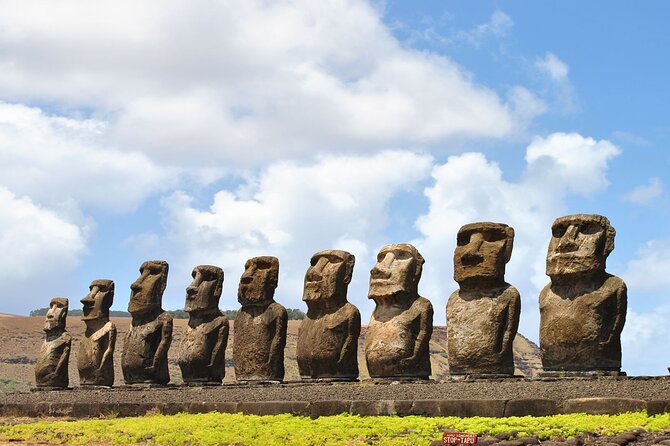
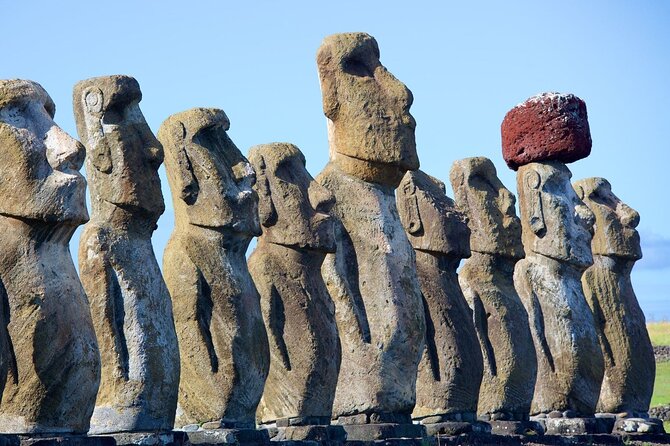
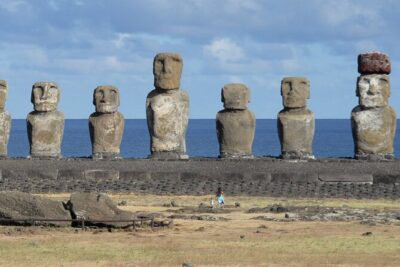
Ahu Tongariki is the grand set piece of the day. Its ceremonial platform stretches about 200 meters and carries 15 large moai.
The row of statues gives you the classic Easter Island image, but the site is more than a postcard stop. The scale of the platform and the number of statues show how much labor and organization went into Rapa Nui ceremonial life. Your guide can add the cultural and historical context that a quick photograph cannot provide.
You have roughly an hour here. That should allow time to view the platform, take photographs, and listen to the explanation. It may feel short if you want to study every statue or walk around the entire area.
Ahu Tongariki is also where the tour’s small group format helps. With up to 10 people, you can usually stay near the guide without being swallowed by a large crowd. You can ask about the individual moai, the platform, and the relationship between the statues and the surrounding coast.
The tour schedule places Ahu Tongariki alongside Ahu Te Pito Kura. The exact order may vary, so do not treat the listed sequence as a guarantee. Your guide controls the timing on the day.
Ahu Te Pito Kura and Moai Paro
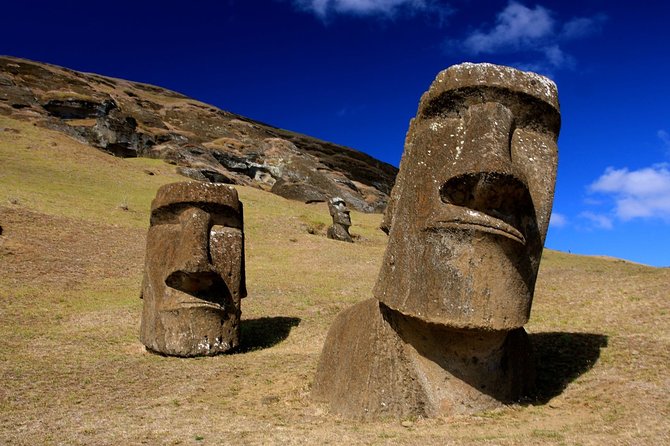
At Ahu Te Pito Kura, you see Moai Paro, described as the largest moai ever built. It measures about 10 meters tall and weighs roughly 85 tons.
The statue is no longer standing, but its size remains easy to appreciate. This is a useful stop after Tongariki because it shifts your attention from a row of completed statues to one enormous figure and the challenge of moving such a massive stone.
The site also contains the spherical stone called Te Pito o Te Henua, commonly translated as the navel of the world. The stone has cultural importance and adds another layer to the visit. It is a small object compared with Moai Paro, but it attracts plenty of attention because of its shape and name.
The tour allocates about an hour here. That may be more time than you need if you are mainly interested in the moai, but the stop gives the guide room to explain the ceremonial setting and local traditions.
Anakena Beach: a graceful finish
Anakena is the final major stop, and it gives the day a welcome change of rhythm. After several archaeological sites, you can relax beside the coast and look at the moai near the beach.
The beach is described as a paradisiacal setting, but the practical point is simpler: this is your chance to sit down, eat, and take in the scenery without immediately moving to another stone platform. Lunch is not included, so plan to pay for your own meal or bring whatever is permitted and practical for the outing.
Timing is the main issue. The itinerary allows about an hour at Anakena, and one customer wished for more beach time. Another had expected lunch to come earlier and found the meal schedule too late for their appetite. I would carry a snack and water, then treat lunch as an optional part of the stop rather than the centerpiece.
Anakena also rounds out the story of the island. You have seen statues in a quarry, statues fallen near the sea, and statues arranged on a major ahu. Here, you see moai near a beach, in a setting that feels more relaxed and scenic.
What the guide adds to the experience
A guide is included, and the strongest praise has focused on the quality of the explanations and the kindness of the staff. Luis was described as giving detailed information at each major site. Cesar was praised for being patient, helpful, and consistently willing to assist visitors.
That personal service matters on Rapa Nui. The sites are visually striking, but without context you may miss why an ahu matters, how Rano Raraku functioned, or why Te Pito o Te Henua is important. A good guide connects the stones to Rapa Nui culture rather than treating the island as a collection of oversized statues.
Because the group is capped at 10, you should have a better chance of hearing the guide and asking questions. The tradeoff is that the tour follows a shared timetable. If one site captures your imagination, you probably cannot stay much longer than the planned hour.
Price, park fees, and the value question
The stated price is $100.84 per person. For a six-hour outing with transport from central hotels, a professional guide, and stops at the island’s main archaeological sites, that can be fair value, provided you understand what is not included.
You must pay separately for:
- Rapa Nui National Park admission
- Lunch
- Drinks and personal expenses
- Any extras not listed
The price needs extra attention because one customer reported being charged $156.88 per person through the booking platform, while the local operator quoted a much lower direct price for a similar tour. The complaint also involved confusion over lunch and hotel pickup. The operator directed the customer to the booking platform for payment questions.
That does not prove every booking will have the same problem, but it gives you a practical reason to compare the final checkout total with the advertised rate. Check the currency, service fees, lunch wording, park entry, and pickup details before confirming. On a remote island, sorting out a billing issue can eat into precious vacation time.
The tour is likely best value for someone who wants one organized day and does not want to arrange island transport. If you are comfortable hiring services locally and can confirm a lower direct rate, you may find a cheaper option. The tradeoff is that you will need to handle the planning yourself.
Who should choose this Rapa Nui tour?
I would choose this experience if you are visiting Easter Island for the first time and want to cover the major sites in one outing. It is also a good fit if you prefer a small group, want commentary in English, and value hotel transport over independent planning.
The outing suits people who can manage several stops and moderate walking. Most people can participate, but the tour details do not promise special mobility support. Ask in advance if uneven ground, slopes, or longer periods on your feet could be difficult.
I would be more cautious if your priority is an unhurried beach day. Anakena receives about an hour, and the whole route moves at a steady pace. I would also hesitate if you dislike unclear pickup arrangements or want lunch included in the price.
The cancellation terms are reasonable: you can cancel up to 24 hours before the start for a full refund. Changes or cancellations inside that 24-hour window are not accepted for a refund.
Should you book Anakena and Rapa Nui Culture?
Book it if you want a compact introduction to Easter Island with the major moai sites, a small group, and a guide who can explain what you are seeing. Rano Raraku and Ahu Tongariki alone make the route worthwhile, while Anakena provides a pleasant finish.
Before you pay, confirm four things: the exact amount charged, the park entrance fee, the lunch arrangement, and your pickup point. If all four are clear, this is a practical way to see Rapa Nui’s essential sites in one day. If the price rises far above $100.84 or the pickup becomes vague, compare a direct local option or a private tour.
FAQ
How long is the Anakena and Rapa Nui Culture tour?
The experience lasts approximately six hours.
What time does the tour start?
The scheduled start time is 9:30 am.
Where does pickup take place?
Pickup is offered from selected centrally located hotels in Hanga Roa. If your hotel is outside the pickup area, the operator will confirm the closest meeting point.
Is hotel pickup included?
Hotel pickup and drop-off are included for centrally located hotels. You should provide your hotel name and address when booking.
Is the Rapa Nui National Park entrance fee included?
No. Admission to Rapa Nui National Park is not included in the tour price.
Is lunch included?
No. Lunch is not included. You can have lunch at Anakena Beach, but you must pay for it separately.
How large is the tour group?
The group can have a maximum of 10 travelers.
Is the tour offered in English?
Yes. The tour is offered in English and includes a professional guide.
Can cruise passengers book this experience?
No. This service is not valid for cruise passengers because cruise excursions and transfers use a different operation and rate.
Just added around Hanga Roa
- Volcanic Refuges: Excursion to Underground Civilization★ 4.7 · 8 reviews
- Easter Island Ancestral Dinner and Show with Transport★ 4.5 · 2 reviews
- Volcanic Wonders and the Kingdom of the Birdman: Half Day★ 5.0 · 6 reviews
- Half Day Private Tour: Caves and Volcanic Refuges★ 4.0 · 14 reviews
- Tour to the Motus: Boat trip and snorkeling in Rapa Nui★ 5.0 · 8 reviews
- Visit Rapa Nui in 4 days with 3 Tours and Accommodation included★ 4.0 · 2 reviews
- Birdman Ceremonial Route: Orongo, Ranu Kau Half-Day Tour★ 4.5 · 16 reviews
- Private Tour: Tongariki Sunrise Experience★ 4.5 · 20 reviews
Easter Island Tours, compared.
Two days of Full Day Tour of Rapa Nui + Sunrise in Tongariki
Read our review →
2-Day Private Tour Easter Island Highlights Complete Discovery
Read our review →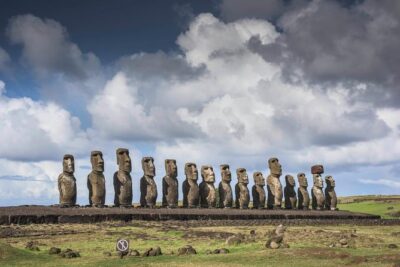
Private Tour: Full Day Easter Island Highlights
Read our review →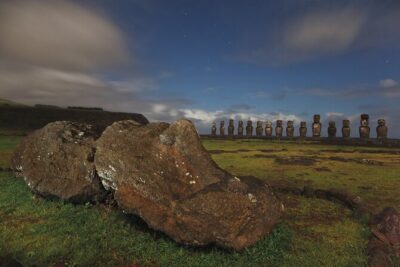
Browse the lists this tour appears in