
Reviewed · EASTER ISLAND TOURS
Private Tour: Full-Day Easter Island Archeological sites
The fallen moai tell the island’s story best. I like the private vehicle and hotel pickup, which keep a long day simple, and I like the chance to spend two full hours at Rano Raraku, the quarry where the statues were made. The main drawback is cost: $263 per person is before the mandatory $100 national park ticket and optional lunch.
This tour also gives you room to set the walking pace. That matters at Rano Raraku, where the track climbs steadily. Guide Maeva has been praised for placing each statue in both historical context and current scientific understanding, while still making the day feel relaxed. You should know that cruise ship passengers cannot join, and the itinerary does not include lunch.
In This Review
- Key points to know before booking
- Why a private seven-hour tour works on Easter Island
- Ahu Akahanga: fallen moai and the shape of a village
- Rano Raraku: the quarry that explains the moai
- Ahu Tongariki: fifteen statues facing inland
- Ahu Te Pito Kura and the enormous Ahu o Paro
- Anakena Beach: moai, coral sand, and a change of pace
- What the $263 price really includes
- Who will get the most from this tour
- Practical details that can shape your day
- Should you book this Easter Island tour?
- FAQ
- How long does the private Easter Island tour last?
- Is hotel pickup and drop-off included?
- Is the national park ticket included in the price?
- Can cruise ship passengers join this tour?
- How many people can join the private tour?
- Is lunch included?
Key points to know before booking
- Rano Raraku gets the most time: Two hours here lets you see the quarry rather than rush through it.
- A private group keeps the day flexible: Only your party joins, with a maximum of eight people.
- The national park ticket costs extra: Plan on $100 per person, valid for 10 days from first entry.
- You see both fallen and standing moai: Akahanga, Tongariki, Te Pito Kura, and Anakena each show a different part of the island’s story.
- Anakena adds a beach break: Turquoise water, coral sand, and the restored Ahu Nau Nau provide a change of pace.
- The tour is built for hotel-based visitors: Pickup and drop-off are included, but port pickup is not available.
Why a private seven-hour tour works on Easter Island
Easter Island is not a place where a quick photo stop tells the whole story. The moai are impressive on their own, but the real interest comes from understanding their quarry, ceremonial platforms, village layout, and movement across the island.
This tour covers that sequence in one day. You begin at Ahu Akahanga, see where the statues were carved at Rano Raraku, compare the giant platform at Ahu Tongariki, then continue to Ahu Te Pito Kura and Anakena Beach. The route gives you both the major sights and a useful sense of how they connect.
The private format is the strongest practical feature. Your group can travel by private vehicle, avoid waiting for strangers, and ask questions as they arise. With no more than eight people, the guide can usually keep the explanation personal. You are not locked into the pace of a large coach group.
The day begins at 9:00 a.m. and lasts about seven hours. Hotel pickup and drop-off are included, which saves you from arranging separate transport around Hanga Roa. The tour is not available to cruise passengers because port pickup is not offered.
More Private Tours in Easter Island
- 2-Day Private Tour Easter Island Highlights Complete Discovery
★ 5.0 · 110 reviews - Private Full-Day Easter Island Highlights North and West
★ 5.0 · 84 reviews - Full Day Private Tour: Factory of the Moai the stone giants
★ 4.5 · 63 reviews
Ahu Akahanga: fallen moai and the shape of a village
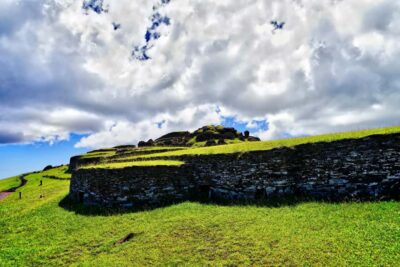
Your first stop is Ahu Akahanga on the southeast coast. This is a useful place to begin because the statues are not presented only as polished icons. Several lie on their backs or face down on the ground, giving you a direct look at the island’s later period of upheaval.
The site also helps explain how an island village related to its ceremonial center, or ahu. Your guide can connect the platform, the moai, and the nearby settlement pattern instead of treating the statues as isolated objects.
Allow about an hour here. That is enough time to look closely, listen to the explanation, and take in the coastal setting without making the stop feel rushed. The fallen figures can be less immediately dramatic than the line at Tongariki, but they offer an important counterpoint. You see that these monuments had a long life before becoming the carefully managed archaeological sites you visit today.
Admission is not included in the tour price, so you need the separate national park ticket before entering the sites. The ticket costs $100 per person and is valid for 10 days from your first entry at all park sites.
Rano Raraku: the quarry that explains the moai
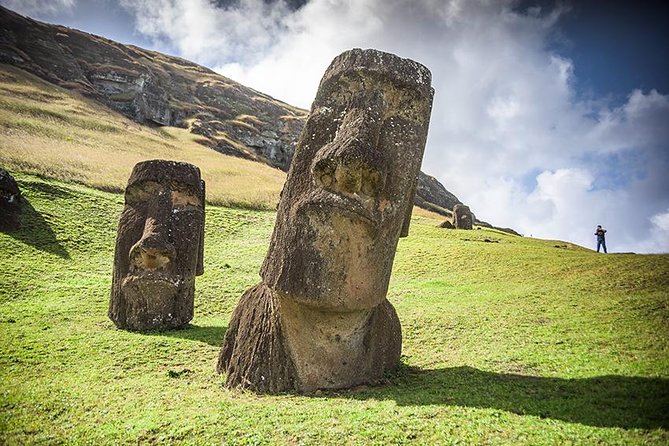
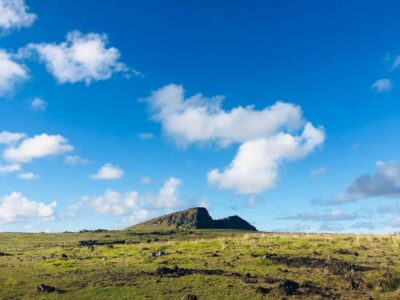
Rano Raraku is the heart of the day. This volcanic cone contains the island’s only known quarry in volcanic tuff, the soft material used to make the moai on a large scale.
I would pay close attention here, because the quarry changes how you see every statue that follows. You can look at unfinished figures still connected to the stone and imagine the work involved before a moai ever reached an ahu. The site also shows that statue production was not a simple matter of carving one figure and carrying it downhill. The quarry itself is part workshop, part archaeological record, and part explanation for the island’s monumental building program.
The tour allows two hours at Rano Raraku, the longest stop of the day. That is a wise allocation. The track includes a steady uphill walk, so wear practical shoes and be ready for uneven ground. The guide can set a pace that suits your group, an especially useful benefit of a private outing.
You should not assume the quarry will feel like a quick roadside stop. The time here is active and outdoors, with walking required to see more than the first view. If you have limited mobility, ask about the route before booking. The supplied details say most people can participate, but they do not promise a fully accessible path.
This is also where guide quality matters most. Maeva has been praised for explaining the moai through both traditional history and current scientific understanding. That combination is valuable because Easter Island’s story includes old oral traditions, archaeological evidence, and questions that continue to be studied. A good guide helps you separate established facts from interpretation without draining the mystery from the place.
Ahu Tongariki: fifteen statues facing inland
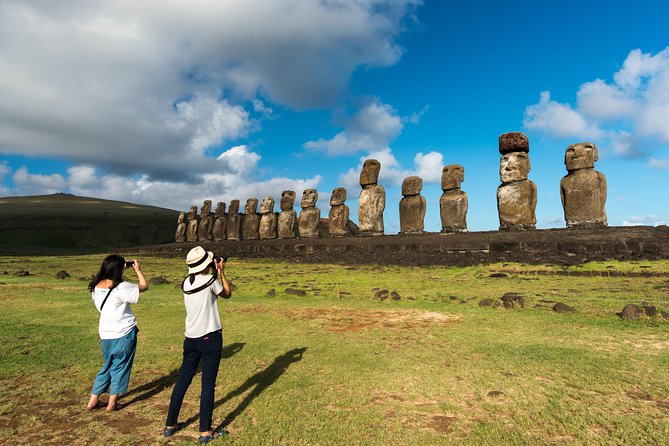
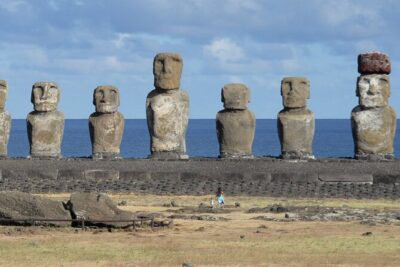
Ahu Tongariki sits opposite Rano Raraku and gives you the day’s most commanding line of standing moai. Its reconstructed platform holds fifteen visible statues, all with their backs toward the Pacific Ocean and their faces turned inland.
The scale is the point here. After seeing the quarry and some fallen figures, you can appreciate the effort involved in moving and raising the moai. Tongariki lets you see the finished ceremonial statement: a long platform, a row of figures, and the island behind them.
The stop lasts about an hour. Use part of that time to look at the row as a whole, then inspect the individual statues. They are not identical, and their arrangement matters. Your guide’s explanation should help you understand why an ahu was more than a display shelf for stone figures.
The setting also gives you a helpful visual link to Rano Raraku. You are seeing the finished platform in relation to the source of the material. That pairing is one of the tour’s best design choices.
More Rapa Nui trips and moai walks:
- From Hanga Roa: Rapa Nui Culture Sightseeing Tour
★ 4.6 · 307 reviews - From Hanga Roa: Easter Island Highlights 2-Day Tour
★ 4.3 · 205 reviews - Full Day Tour in Rapa Nui
★ 4.5 · 122 reviews - From Hanga Roa: Journey from Orongo to Ana Te Pahu
★ 4.3 · 75 reviews
Ahu Te Pito Kura and the enormous Ahu o Paro
Ahu Te Pito Kura is a shorter stop, about 30 minutes, but it contains two memorable details. Here you find Ahu o Paro, the largest moai transported from Rano Raraku. The figure measures about 11 meters long and weighs roughly 90 tons.
The statue lies at the site, so this is not another standing row like Tongariki. Its size is easier to grasp when you see it close to the ground. The moai’s dimensions turn an abstract number into a physical problem: carving, moving, and positioning a stone figure of this weight required a major organized effort.
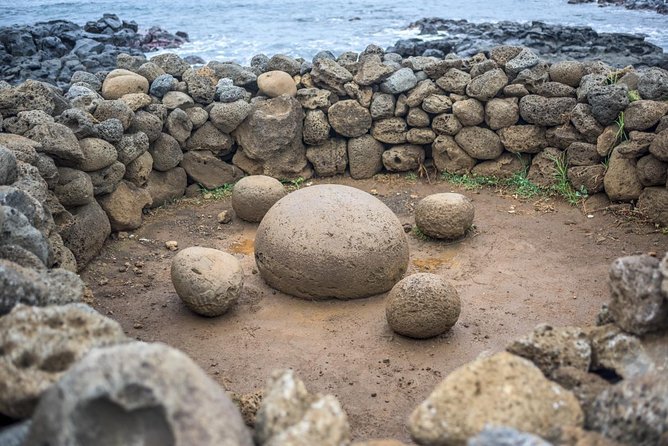
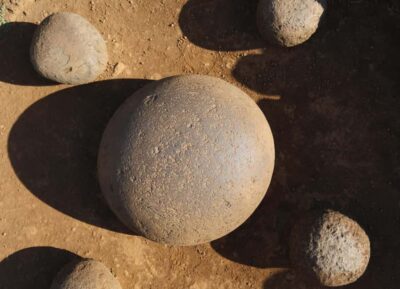
Nearby is the rounded stone known as Te Pito o te Henua. Tradition says the ancestors brought it to the island. Your guide can place that tradition beside the physical site, giving you a brief look at how oral memory and archaeological places overlap.
Because the stop is short, you may need to choose your priorities. Take in Ahu o Paro first, then give the rounded stone and its story your attention. This is a compact visit, not a long walk or a leisurely stay.
Anakena Beach: moai, coral sand, and a change of pace
Anakena Beach is the final stop and offers a welcome shift from quarry paths and ceremonial platforms. The beach has warm turquoise water and coral sand, and it served as the ancestral residence of the Miru Araki royal family.
You have about 45 minutes here. That is enough for a look at the beach, a pause by the water, and time with Ahu Nau Nau, one of the island’s most refined ahu sites. The moai here provide a different finish to the day because the setting is open, bright, and coastal rather than industrial and rocky.
Do not read this stop as a full beach day. Forty-five minutes is a short visit, and lunch is not included. The tour offers lunch for an additional $50 per person, but you should confirm the arrangement when booking rather than assume it is part of the schedule.
Anakena also helps round out the story. The day begins with a ceremonial center and fallen statues, moves to the quarry and the largest reconstructed platform, then ends at a royal residence beside the sea. It is not just a list of famous sites. The route shows how moai, community life, ceremony, and place fit together.
What the $263 price really includes
At $263 per person, this is not a budget sightseeing loop. The price covers a professional guide, private transport, hotel pickup and drop-off, and an exclusive tour for your party. For a group of two, the cost is substantial. For a group of four to eight, the private format becomes easier to justify because you are paying for the vehicle and guide across your own party.
The national park charge changes the final calculation. Add $100 per person for the mandatory ticket, bringing the basic combined cost to $363 per person before lunch. If you choose the optional $50 lunch, the total rises again.
That sounds steep, but the value depends on what you want from Easter Island. If your priority is simply to see a few moai and take photographs, a less expensive option may suit you. If you want the guide to explain how a village related to an ahu, why Rano Raraku matters, and how the statues connect across several sites, the private format has a clearer purpose.
The 182-day average advance booking figure is another practical signal. Easter Island has limited tour capacity, and private excursions are not something I would leave until the last minute. Booking well ahead gives you a better chance of securing your preferred date and making the national park visit fit your wider plans.
Who will get the most from this tour
I would choose this experience if you want a focused first look at Easter Island’s main archaeological sites and prefer to travel only with your own group. It suits couples, families, and small groups who value questions, a flexible walking pace, and direct explanations.
It is especially useful if you want context rather than a fast series of photo stops. The two hours at Rano Raraku make the difference. You have time to walk the quarry track and consider the unfinished moai instead of seeing only the famous completed figures.
The tour may be less suitable if you need a slow day with minimal walking. Rano Raraku includes a steady uphill section, and the overall schedule covers five locations in about seven hours. Anakena is also too brief for anyone seeking a long swim or extended beach time.
You should also calculate the full cost before booking. The headline price does not include the $100 national park ticket, and lunch costs another $50 if you select it. That does not make the tour poor value, but it does make the final budget easy to underestimate.
Practical details that can shape your day
The 9:00 a.m. start gives you a full daytime route without turning the outing into an evening activity. Hotel pickup and drop-off remove one common worry, especially when your accommodation is in Hanga Roa and you do not want to arrange a vehicle separately.
Keep your national park ticket ready. It is mandatory for all the sites on this route and remains valid for 10 days from your first entry, which is helpful if you plan to revisit any park site during your stay.
Plan for outdoor conditions and walking at Rano Raraku. The tour description does not provide a detailed equipment list, so the safest approach is practical footwear and clothing suitable for several outdoor stops. Since the guide can adjust the pace for your group, tell the operator about any walking concerns before the day begins.
The booking allows up to eight people, and only your party participates. Confirmation is provided at booking. Free cancellation is available if you cancel at least 24 hours before the start time. Changes or cancellations inside that window are not refunded or accepted.
Should you book this Easter Island tour?
Book it if you want the island’s major moai sites explained as one connected story, not simply photographed one after another. The private vehicle, hotel service, small group limit, and generous time at Rano Raraku make this a strong choice for a first full day of archaeology.
I would be more cautious if your budget is tight or if you want a relaxed beach outing. Once you add the mandatory national park ticket, the total cost is high, and the walking at the quarry requires some effort.
For most visitors staying in Hanga Roa, this is a sensible way to cover the essential sites in one day. Just budget honestly, confirm the lunch choice, and reserve early if your dates are fixed.
FAQ
How long does the private Easter Island tour last?
The tour lasts approximately seven hours and begins at 9:00 a.m.
Is hotel pickup and drop-off included?
Yes. Hotel pickup and drop-off in Hanga Roa are included, along with transport by private vehicle.
Is the national park ticket included in the price?
No. The mandatory national park ticket costs $100 per person. It is valid for 10 days from your first entry and covers all park sites.
Can cruise ship passengers join this tour?
No. The activity is not valid for cruise ship passengers because port pickup is not available.
How many people can join the private tour?
A booking can include a maximum of eight people. Only your own group participates.
Is lunch included?
No. Lunch is not included. An optional lunch is available for $50 per person.
Just added around Hanga Roa
- Volcanic Refuges: Excursion to Underground Civilization★ 4.7 · 8 reviews
- Easter Island Ancestral Dinner and Show with Transport★ 4.5 · 2 reviews
- Volcanic Wonders and the Kingdom of the Birdman: Half Day★ 5.0 · 6 reviews
- Half Day Private Tour: Caves and Volcanic Refuges★ 4.0 · 14 reviews
- Tour to the Motus: Boat trip and snorkeling in Rapa Nui★ 5.0 · 8 reviews
- Birdman Ceremonial Route: Orongo, Ranu Kau Half-Day Tour★ 4.5 · 16 reviews
- Visit Rapa Nui in 4 days with 3 Tours and Accommodation included★ 4.0 · 2 reviews
- Private Tour: Tongariki Sunrise Experience★ 4.5 · 20 reviews
Easter Island Tours, compared.
Two days of Full Day Tour of Rapa Nui + Sunrise in Tongariki
Read our review →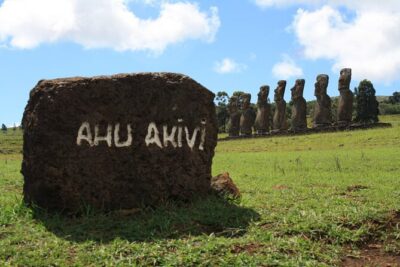
2-Day Private Tour Easter Island Highlights Complete Discovery
Read our review →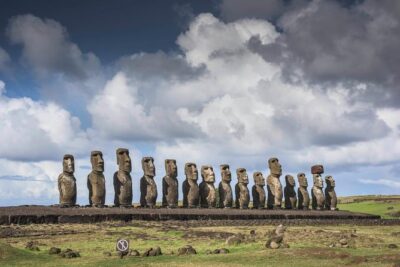
Private Tour: Full Day Easter Island Highlights
Read our review →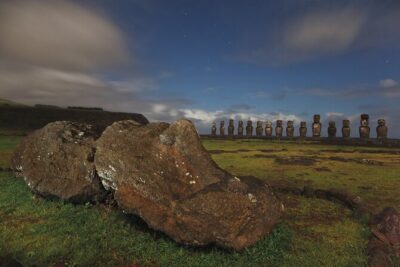
Browse the lists this tour appears in