
Reviewed · EASTER ISLAND TOURS
Private Tour: Easter Island Caves
Rapa Nui goes underground. This private four-hour outing from Hanga Roa combines volcanic caves with abandoned archaeological sites, giving you a different view of Easter Island beyond the famous moai. I especially like the chance to enter Ana Te Pahu, the island’s largest cave, and the quiet visit to Ahu Te Peu, where fallen moai and an enormous ancient boathouse remain unrestored.
I also like the convenience of hotel pickup and private transport, since your group does not need to organize a rental car or share the day with strangers. The main caution is physical: the route can involve much more walking than the short stop times suggest, and Ana Kakenga has a very tight entrance. Bring water, sunscreen, and a hat even though the operator advises you to travel light.
In This Review
- Key points to know before you book
- Why these caves add something new to Easter Island
- Ana Te Pahu, the cave of the bananas
- Ana Te Pora and its ceremonial past
- Ana Kakenga and the two windows
- Ahu Te Peu, fallen moai and a 43-meter boathouse
- Walking, heat, and the real level of effort
- What the $250 price really covers
- Who should book this private cave tour
- Timing, transport, and small practical details
- Should you book the Easter Island caves tour?
- FAQ
- How long is the Easter Island Caves tour?
- What sites are visited?
- Is hotel pickup included?
- Is the National Park ticket included?
- Is this tour suitable for cruise ship passengers?
- Do I need a high level of fitness?
- Is the tour private and offered in English?
Key points to know before you book
- Ana Te Pahu is the centerpiece: Four connected underground chambers and old umu cooking areas make this the most substantial cave stop.
- Ana Kakenga requires comfort with tight spaces: Its small entrance leads to two openings above the sea cliffs.
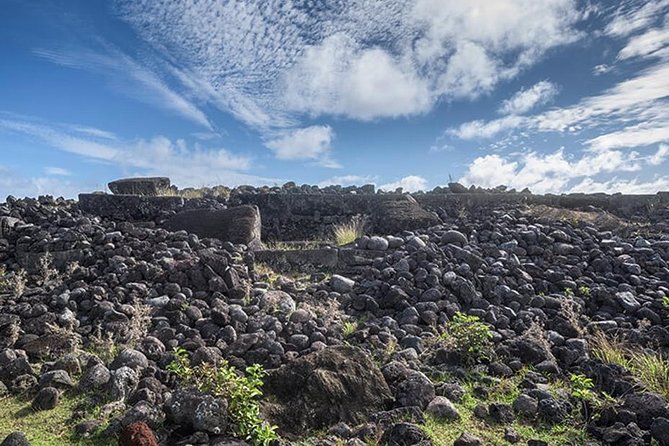
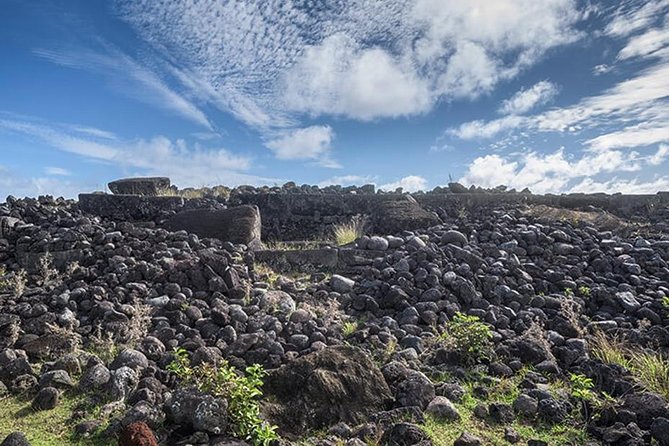
- Ahu Te Peu is unrestored: Fallen moai, an old village area, and a 43-meter hare paenga give the site an unusually raw feel.
- The tour may be more strenuous than advertised: One account describes roughly five miles of walking in midday sun.
- The $250 price excludes the $100 National Park ticket: Your ticket is valid for 10 days from first entry and covers all park sites.
- Private touring offers flexibility: Only your group participates, with pickup and drop-off included, but the tour is not available to cruise passengers.
Why these caves add something new to Easter Island
Many first-time visits to Rapa Nui focus on moai platforms, quarry sites, and broad coastal views. Those places matter, but the caves show how people used the island’s volcanic ground for daily life, shelter, ceremonies, and refuge.
These are not polished show caves with lights, railings, and numbered paths. You enter natural lava passages, some of which were later used by the Rapa Nui people. The archaeological value comes partly from what remains in and around the caves, and partly from understanding why these spaces mattered.
The tour lasts about four hours and begins at 9:00 a.m. The four scheduled stops total about 100 minutes of stated visiting time. The rest goes to driving, walking between parking areas and entrances, and moving through the sites. That timing matters because the day may feel active rather than leisurely.
The private format is useful here. You can ask your guide to explain how the caves were formed, how they were used, and what you should watch for at each site. You also avoid spending the day waiting for a large group to get organized.
Still, private does not always mean easy. You need a moderate level of physical fitness, and one detailed account described about five miles of walking in heat and full sun. That is a serious warning for anyone expecting a short vehicle-based sightseeing trip.
More Private Tours in Easter Island
- 2-Day Private Tour Easter Island Highlights Complete Discovery
★ 5.0 · 110 reviews - Private Full-Day Easter Island Highlights North and West
★ 5.0 · 84 reviews - Full Day Private Tour: Factory of the Moai the stone giants
★ 4.5 · 63 reviews
Ana Te Pahu, the cave of the bananas
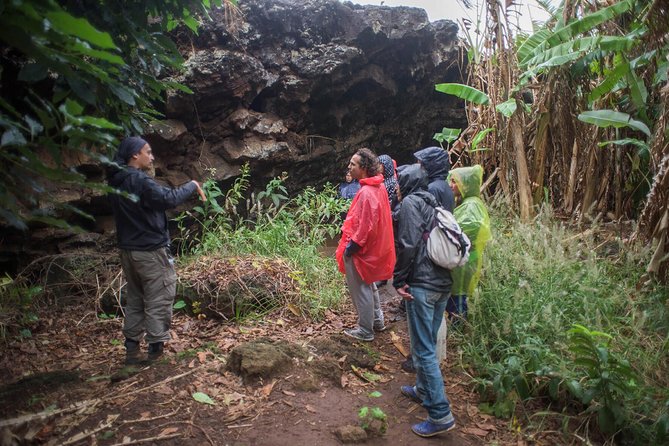
Ana Te Pahu is the main event. Lava channels run through an important area and connect four underground chambers, making this the largest cave on Rapa Nui.
The size explains its practical value in earlier times. Several umu, traditional earth-oven cooking areas, show that people prepared food here. The entrance is also known for its many banana trees, which gives the cave its familiar nickname, the cave of the bananas.
I like this stop because it connects geology with ordinary life. You are not simply looking at a hole in the ground. The cave served as a working place, and the cooking remains help you picture people gathering, preparing food, and using the shelter provided by the lava tubes.
The entrance area can be especially interesting because plant life grows where sunlight reaches the cave. You may find the contrast striking: green banana trees at the opening, then dark volcanic passages beyond.
The listed visit is 30 minutes, although that does not describe the full time spent reaching and exploring the site. Wear shoes with a firm sole. Natural cave floors can be uneven, and the tour requires walking rather than simply stepping out of a vehicle for a quick look.
Ana Te Pora and its ceremonial past
Ana Te Pora is smaller in the schedule, with about 20 minutes allotted. Its main entrance lies roughly 100 meters from the parking area, so the approach is fairly short compared with the longer walks that may occur elsewhere.
The cave served as both a shelter and a ceremonial place in ancient times. That dual role gives the stop more weight than its short duration suggests. It helps show that caves were not used for just one purpose. A volcanic chamber could provide protection, support daily activities, or hold spiritual importance.
You should listen closely to the guide here. The physical setting may be less dramatic than Ana Te Pahu or Ana Kakenga, but the explanation of how the space was used is what makes it worthwhile.
Because the cave is a natural site, conditions can vary. The tour information does not promise lighting, paved access, or extensive safety infrastructure. Carry only what you need, but do not leave behind the basics you require for sun and hydration.
Ana Kakenga and the two windows
Ana Kakenga is often called the cave of the two windows. Lava once flowed toward the sea, leaving two openings that look directly toward the cliff edge. The cave extends for about 50 meters and served as a kionga, or refuge, in earlier times.
The two openings are the visual reward. They connect the dark interior with the coast and let you understand how volcanic activity shaped the site. This is a place where the setting does much of the talking, but your guide can add the human story behind its use as a refuge.
There is one major practical issue: the entrance is very small. If you dislike confined spaces, this may be the stop that determines whether the tour is right for you. Even if you are comfortable in caves, move carefully and expect the access to feel more demanding than a normal walking path.
The scheduled visit is 30 minutes. Do not read that as 30 minutes of easy viewing. The entrance, interior movement, and walk to the cave all affect how much time you spend in each part.
This stop also shows why the tour should not be judged by its mileage alone. A route of several miles can include short cave visits, but repeated walking in heat can still be tiring. Take the physical side seriously, especially if you have already spent several days exploring Rapa Nui on foot.
More Rapa Nui trips and moai walks:
- From Hanga Roa: Rapa Nui Culture Sightseeing Tour
★ 4.6 · 307 reviews - From Hanga Roa: Easter Island Highlights 2-Day Tour
★ 4.3 · 205 reviews - Full Day Tour in Rapa Nui
★ 4.5 · 122 reviews - From Hanga Roa: Journey from Orongo to Ana Te Pahu
★ 4.3 · 75 reviews
Ahu Te Peu, fallen moai and a 43-meter boathouse
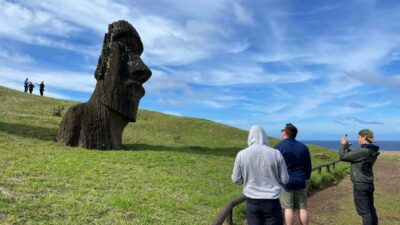
Ahu Te Peu is the archaeological stop that gives the tour its strongest sense of time. The area has not been restored, so the site remains close to the condition left after internal conflict brought down the moai.
That lack of reconstruction is valuable. You can see the fallen statues rather than a neatly rebuilt platform, and the disorder tells part of the island’s story without being tidied away for easy viewing. I find this kind of site more revealing than a perfectly reconstructed monument because it lets you see the consequences of change.
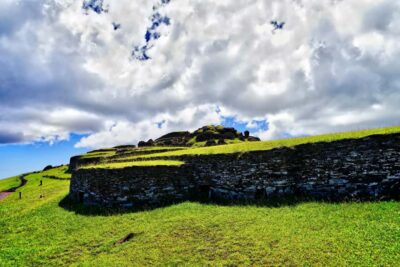
Ahu Te Peu was once a village. You can also see what is described as the largest hare paenga on the island, an ancient boat-shaped house foundation. The structure called Tore Tahuna measures 43 meters and is traditionally connected with Ariki Tu’u Ko Ihu.
The visit lasts about 20 minutes, but the site deserves your full attention. Look beyond the fallen moai and consider the village that once occupied the area. The enormous hare paenga gives the place a human scale, showing that Rapa Nui archaeology is not only about statues. It is also about homes, food, movement, status, and community life.
Ahu Te Peu may be the most praised part of the outing for people who want quiet archaeological sites. It offers the chance to get close to fallen moai without the crowds associated with the island’s best-known locations.
Walking, heat, and the real level of effort
The operator describes the required fitness level as moderate. That is the safest way to approach the tour, but I would prepare for something harder than a casual stroll.
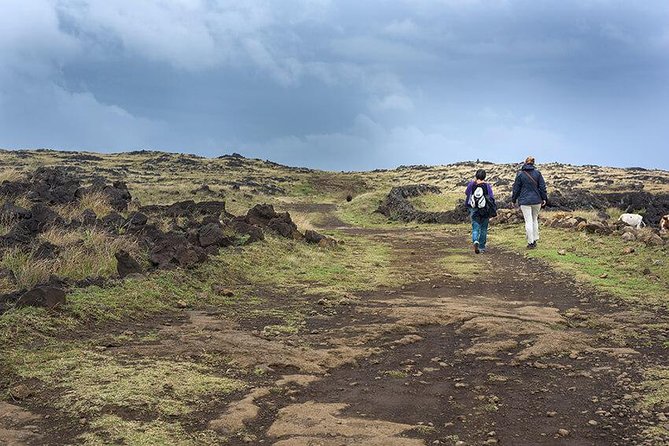
One detailed account describes roughly five miles of total walking, including time in the sun and heat. The same account says the guide walked far ahead, which made the route feel harder and less supported. That is useful information for you, even if your own guide handles the pace better.
The most important preparation is simple:
- Bring more water than you think you need.
- Keep sunscreen and a sun hat with you.
- Wear good walking shoes.
- Carry only a light bag, but do not leave essential sun protection in the vehicle.
- Tell the guide at the start if you need a slower pace or more frequent pauses.
The advice to travel light makes sense inside caves, but it should not mean traveling without water or protection from the sun. A small day pack is a better compromise than leaving everything behind.
Guide quality also matters on a tour like this. The company says the tour is offered in English and includes a local professional guide. One account identifies a guide named Thais and describes limited explanation and uncertainty about the route. If Thais is assigned to your group, confirm the language and walking plan before setting off. In any case, ask direct questions early. A private tour gives you the chance to make your needs clear.
What the $250 price really covers
The listed cost is $250 per person. That includes a private vehicle, hotel pickup and drop-off, a private tour, and a local professional guide.
The required National Park ticket costs another $100 per person. That brings the direct cost to $350 per person before lunch, food, or drinks. The park ticket is valid for 10 days from your first entry and covers all park sites, so it is not necessarily an extra cost created by this one outing. If you are spending several days on Rapa Nui, you can use the same ticket for other visits.
For a solo traveler, the price is high. For a couple or small group, private transport and a dedicated guide make the cost easier to justify, especially if you value hotel pickup and the ability to ask questions without a large tour group around you.
The value depends on your priorities. If you want the lowest-cost way to see caves, this is not it. If you want a private half-day with transportation included and a mix of caves and archaeological sites, the price is more reasonable.
Group discounts may be available, but the exact savings are not specified. Ask before booking if you are traveling with several people.
Who should book this private cave tour
I would recommend it most strongly to people who have already seen some of Rapa Nui’s major moai sites and want a different side of the island. It also suits you if you enjoy archaeology that has not been heavily restored and if natural caves sound more appealing than another standard viewpoint.
The tour may suit:
- Couples or families wanting a private guide
- Small groups that can divide the cost
- People with moderate fitness who are comfortable walking in sun
- Visitors interested in ancient shelter, food preparation, ceremonies, and refuge
- Anyone eager to see fallen moai at a quieter site
- English-speaking visitors who want a private outing
I would be cautious if you have claustrophobia, limited mobility, trouble walking several miles, or little tolerance for heat. Ana Kakenga has a very small entrance, and the total route may be much longer than the brief cave visit times suggest.
This is not a suitable option for cruise ship passengers. Port pickup is not available, and the tour specifically excludes cruise bookings.
Timing, transport, and small practical details
Pickup begins at 9:00 a.m., and you need to provide your Hanga Roa hotel for collection. Hotel drop-off is included at the end.
The private vehicle is a real convenience. You do not need to arrange separate transport between scattered sites, and you can keep your schedule focused on the caves and Ahu Te Peu.
The tour is offered in English, and confirmation is received when you book. Service animals are allowed. Food and drinks are not included, and lunch is not provided, so plan your meal around the four-hour schedule.
Admission is not included in the tour price, but the National Park ticket is mandatory. If you have already purchased a valid ticket for another Rapa Nui visit, check whether it covers these sites during its 10-day validity period.
Free cancellation is available up to 24 hours before the start time. Inside that 24-hour window, refunds and changes are not accepted.
Should you book the Easter Island caves tour?
Book this tour if you want private access to unusual archaeological sites, are comfortable with uneven walking, and like the idea of entering natural lava caves. Ana Te Pahu and Ahu Te Peu give the outing real substance, while Ana Kakenga offers the most memorable cave setting.
I would not book it expecting a gentle four-hour drive with four quick stops. Prepare for heat, walking, and a confined entrance. Confirm that your guide will conduct the tour in English, carry your own water and sun protection, and ask for a clear outline of the route before leaving.
For an active visitor who wants more than the standard moai circuit, this can be a rewarding half-day. For anyone seeking an easy outing, better options are likely available on Rapa Nui.
FAQ
How long is the Easter Island Caves tour?
The tour lasts approximately four hours and begins at 9:00 a.m.
What sites are visited?
The route includes Ana Te Pahu, Ana Te Pora, Ana Kakenga, and Ahu Te Peu.
Is hotel pickup included?
Yes. Pickup and drop-off at your hotel on Easter Island are included. You must provide the hotel details for pickup.
Is the National Park ticket included?
No. The mandatory National Park ticket costs $100 per person. It is valid for 10 days from first entry and applies to all park sites.
Is this tour suitable for cruise ship passengers?
No. The tour is not valid for cruise passengers because port pickup is not available.
Do I need a high level of fitness?
You need a moderate level of physical fitness. The route can involve substantial walking in sun and heat, and Ana Kakenga has a very small entrance.
Is the tour private and offered in English?
Yes. Only your group participates, transport is by private vehicle, and the tour is offered in English.
Just added around Hanga Roa
- Volcanic Refuges: Excursion to Underground Civilization★ 4.7 · 8 reviews
- Easter Island Ancestral Dinner and Show with Transport★ 4.5 · 2 reviews
- Volcanic Wonders and the Kingdom of the Birdman: Half Day★ 5.0 · 6 reviews
- Half Day Private Tour: Caves and Volcanic Refuges★ 4.0 · 14 reviews
- Tour to the Motus: Boat trip and snorkeling in Rapa Nui★ 5.0 · 8 reviews
- Birdman Ceremonial Route: Orongo, Ranu Kau Half-Day Tour★ 4.5 · 16 reviews
- Visit Rapa Nui in 4 days with 3 Tours and Accommodation included★ 4.0 · 2 reviews
- Astronomical Tour on Easter Island★ 3.5 · 3 reviews
Easter Island Tours, compared.
Two days of Full Day Tour of Rapa Nui + Sunrise in Tongariki
Read our review →
2-Day Private Tour Easter Island Highlights Complete Discovery
Read our review →
Private Tour: Full Day Easter Island Highlights
Read our review →
Browse the lists this tour appears in