
Reviewed · EASTER ISLAND TOURS
Easter Island: The Moai Trail Private Archeological Tour
The moai tell a complicated story. This private six-hour outing links Ahu Tongariki and Rano Raraku, the quarry where hundreds of statues were carved, with Akahanga, Te Pito Kura, and Anakena Beach. I like the hotel pickup and the private vehicle, which make a long day around Rapa Nui simple. I also like the chance to hear the island’s story from a local guide rather than merely pose beside famous stone figures.
The main concern is timing. The advertised duration is six hours, but the listed stop times add up to about eight hours, and the entrance fee is another $80 per person. You should confirm the day’s schedule and total cost before booking, especially if you have a tight plan on Rapa Nui.
In This Review
- Key points to know before you book
- Why this private Moai Trail is worth your day
- Ahu Akahanga and the story of fallen moai
- Rano Raraku, where the moai were made
- Ahu Tongariki and its fifteen moai
- Te Pito Kura and the navel of the world
- Anakena Beach and Ahu Nau Nau
- What the guide adds to the experience
- Price, entrance fees, and practical tradeoffs
- Who should book the Moai Trail
- Should you book it?
- FAQ
- Where does the tour begin and end?
- How long does the tour last?
- What sites does the tour visit?
- Is the tour private?
- What languages are available?
- Is the entrance fee included?
- Is food included?
- Can cruise ship passengers join the tour?
Key points to know before you book
- Rano Raraku is the heart of the day: You see roughly 400 moai in different stages of carving, from rough stone forms to nearly finished statues.
- Ahu Tongariki delivers the grandest view: Fifteen moai line the island’s largest ahu, or ceremonial platform.
- Anakena adds a softer ending: White sand, palm trees, and Ahu Nau Nau provide a welcome change after the quarry and stone platforms.
- The tour is genuinely private: You ride in a private vehicle with a professional English- or Spanish-speaking guide.
- The guide can shape the experience: Guides named Sol, Hugo, Miguel, Yoyo, and Isa received especially warm praise for clear storytelling, humor, punctuality, and cultural insight.
- Budget for the extra fee: The tour costs $200 per person, but entrance fees of $80 per person are not included, and food is also your responsibility.
Why this private Moai Trail is worth your day
Rapa Nui can feel confusing if you only visit one moai site. The statues are famous, but their meaning becomes clearer when you see the full chain: the ceremonial platforms, the fallen figures, the quarry, the transport routes, and the beach settlements.
This tour gives you that broad picture in one outing. You start near Akahanga, continue to the huge row at Tongariki, walk through Rano Raraku, stop at Te Pito Kura, and finish at Anakena. That sequence gives you both the archaeological sites and the island’s open coastal scenery.
I especially like the private format for this route. You do not have to match the pace of a large group, and you can ask direct questions as the day unfolds. Feedback about guides Sol, Hugo, Miguel, Yoyo, and Isa repeatedly highlights the qualities that matter here: punctual pickup, friendly conversation, strong historical background, and explanations that connect ancient customs with life on Rapa Nui today.
The private setting also makes the $200 price easier to understand. For one person, it is a costly day once the $80 entrance fee is added. For a couple or small group, the price buys private transport, hotel pickup and return, and a guide focused on your party. If you want the lowest possible price, this is not the obvious choice. If you want structure and personal attention, it is a fairer deal.
More Private Tours in Easter Island
- 2-Day Private Tour Easter Island Highlights Complete Discovery
★ 5.0 · 110 reviews - Private Full-Day Easter Island Highlights North and West
★ 5.0 · 84 reviews - Full Day Private Tour: Factory of the Moai the stone giants
★ 4.5 · 63 reviews
Ahu Akahanga and the story of fallen moai
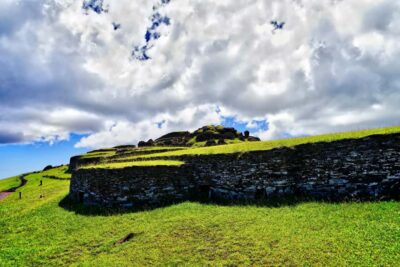
The first stop is Ahu Akahanga, a former ceremonial center near the village of Akahanga. You spend about 30 minutes here, looking at an ahu and moai that were knocked down during tribal conflicts.
That detail matters. The familiar image of Easter Island often shows upright moai facing inland, but Akahanga makes the island’s later turmoil visible. The fallen statues are not simply unfinished ruins. They form part of a story about changing power, conflict, and the end of the period when these monumental figures dominated ceremonial life.
You also see remains of hare paenga, boat-shaped stone houses used by the island’s ancient inhabitants. These foundations help you picture daily life beyond the moai. The stones outline homes that once had a distinctive canoe-like form, giving the site a more human scale than the giant statues alone.
Thirty minutes is enough for an introduction, though not a leisurely archaeological study. Your guide’s explanation will make a big difference here. A strong guide can help you notice the house foundations, the position of the ahu, and the way the fallen statues differ from the carefully restored figures at Tongariki.
Rano Raraku, where the moai were made
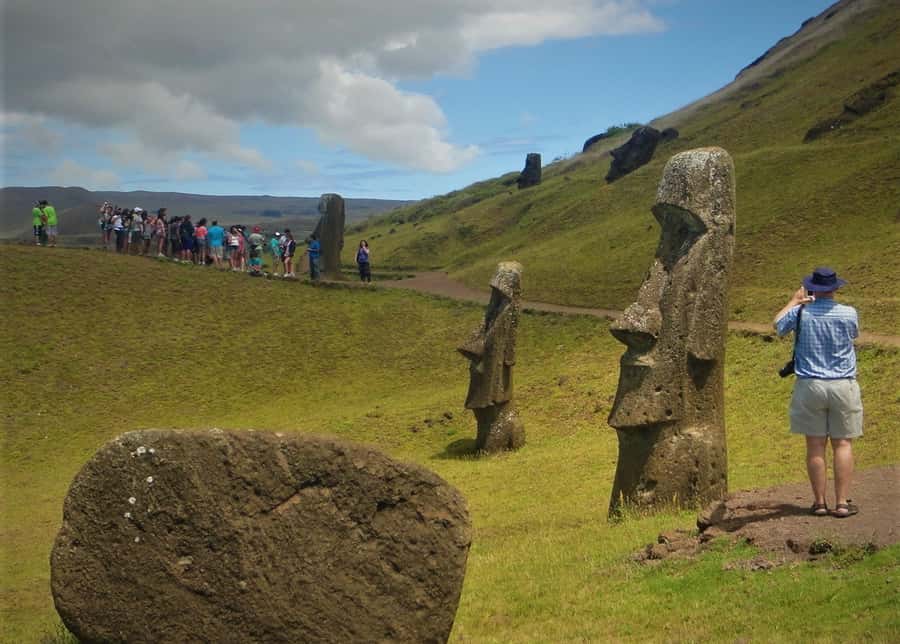
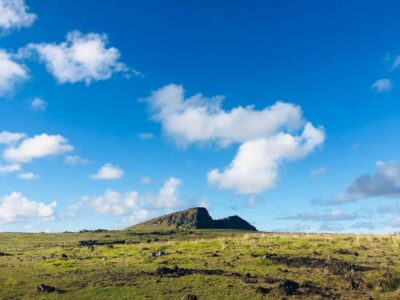
Rano Raraku is the major stop of the day, with a listed visit of three and a half hours. That long block is justified. This is not just a quarry with a few statues near the entrance. It is the place where the volcanic tuff used for most moai was carved, and the slopes contain about 400 figures in different stages of work.
Here, you see moai still attached to the rock, partially shaped figures, and statues that appear much closer to completion. The unfinished forms give you a rare look at the work process. Instead of treating the statues as mysterious objects that appeared fully formed, you can see the stages that went into making them.
The quarry also changes your sense of scale. Some moai look modest from a distance, while others seem enormous as you approach them. The statues are scattered across the volcanic slopes, so comfortable shoes are important. This is the least suitable part of the day for anyone with mobility limitations, and the tour is not suitable for wheelchair users.
Three and a half hours is enough time to walk, listen, stop for photographs, and let the setting sink in. It can also feel like a long visit if you prefer quick sightseeing. I would choose this tour only if the quarry is a top priority, because Rano Raraku takes up more than half of the published six-hour schedule.
The guide’s role is especially important here. Hugo was praised for providing more than basic facts, including broader cultural discussion and connections between Rapa Nui and Japan. That kind of conversation can make the quarry feel less like a checklist of statues and more like a place where you are thinking about how societies build, use, and reinterpret monuments.
Ahu Tongariki and its fifteen moai
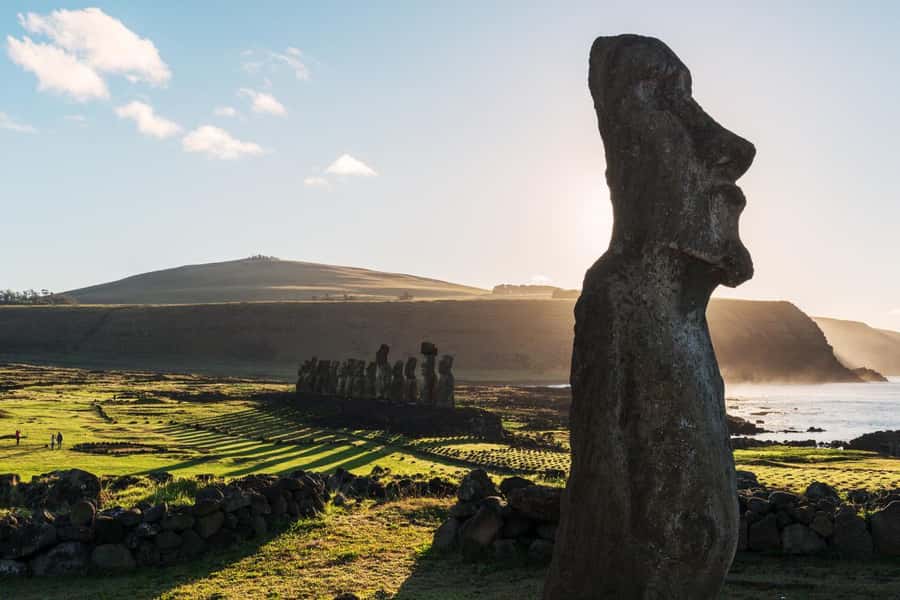
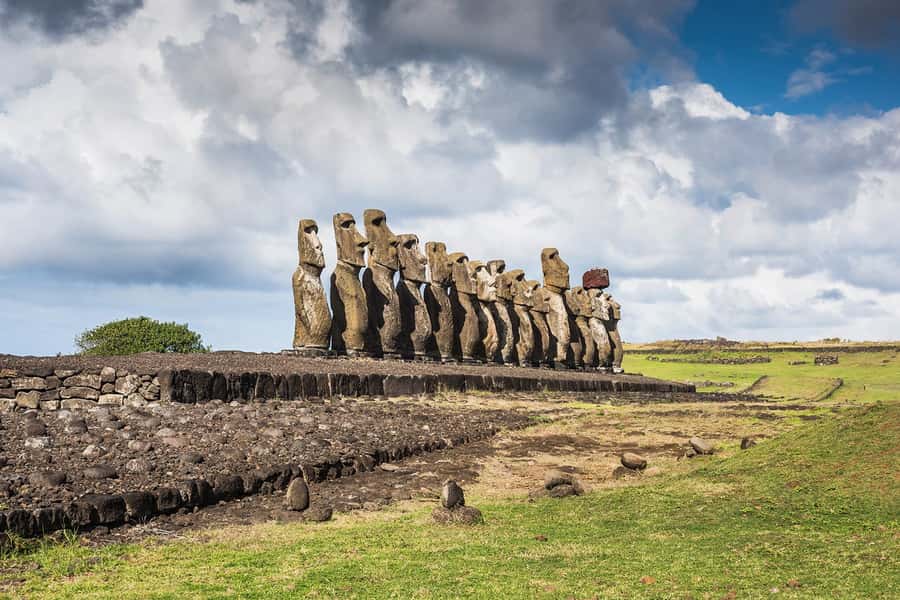
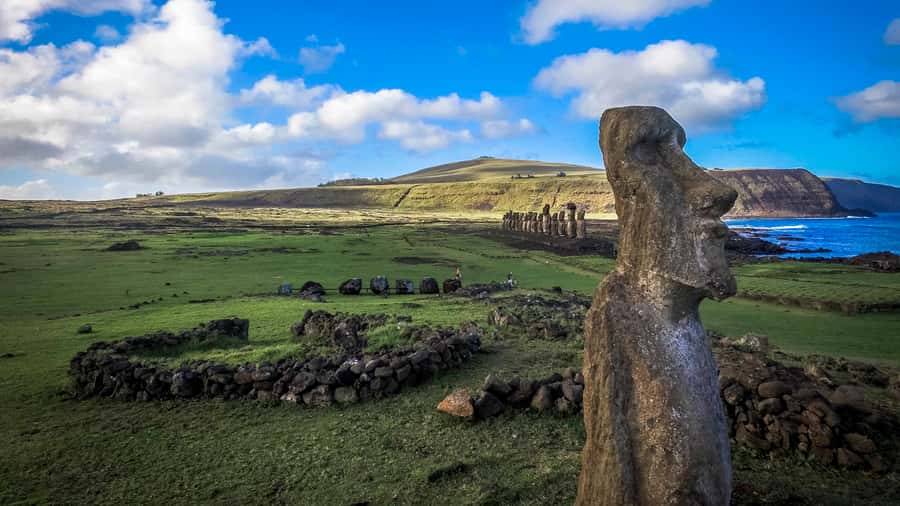
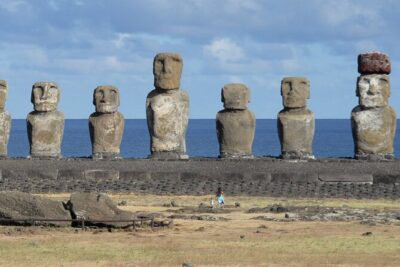
Ahu Tongariki is the most imposing platform on the island, with 15 moai arranged in a long row. The sight is one of Rapa Nui’s defining views, and it is the clearest place on this route to understand the scale of the island’s ceremonial architecture.
After the smaller or fallen remains at Akahanga, Tongariki provides a dramatic contrast. The restored platform and upright moai create a strong sense of order. You can compare the statues’ different heights and shapes, while your guide explains what the ahu represented and why this particular site mattered.
The published schedule allows two hours at Tongariki. That is generous for a platform visit, but it gives you time to look carefully rather than rush through a photograph. You can also use the stop to absorb the setting, since the platform is not an isolated museum display. It sits in open terrain with the volcanic interior nearby.
There is a practical scheduling issue here. The stated stop durations for Akahanga, Rano Raraku, Tongariki, Te Pito Kura, and Anakena total about eight hours, not six. That may reflect flexible timing, rounded estimates, or a discrepancy in the published schedule. Ask the operator how long you will actually spend at Tongariki and the quarry before you pay.
More Rapa Nui trips and moai walks:
- From Hanga Roa: Rapa Nui Culture Sightseeing Tour
★ 4.6 · 307 reviews - From Hanga Roa: Easter Island Highlights 2-Day Tour
★ 4.3 · 205 reviews - Full Day Tour in Rapa Nui
★ 4.5 · 122 reviews - From Hanga Roa: Journey from Orongo to Ana Te Pahu
★ 4.3 · 75 reviews
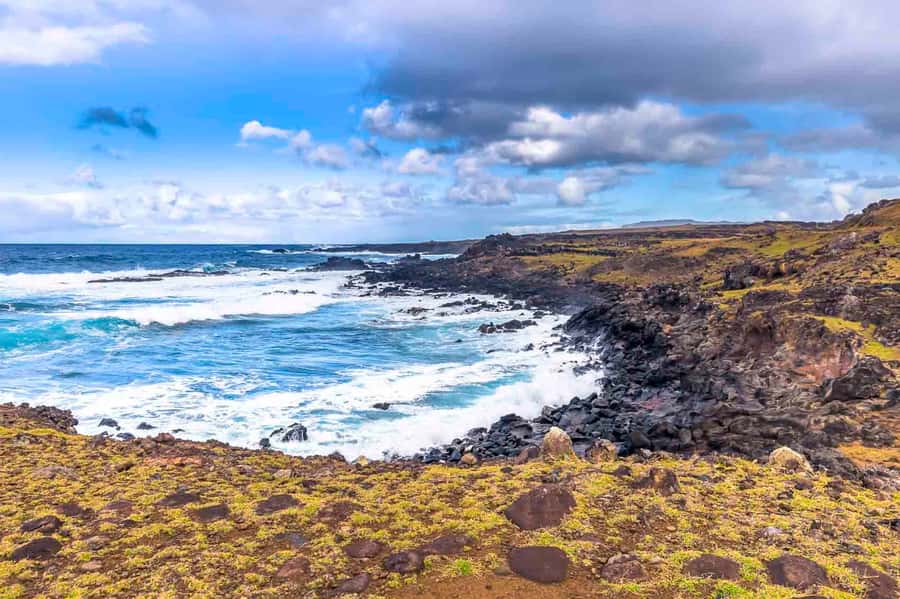
Te Pito Kura and the navel of the world
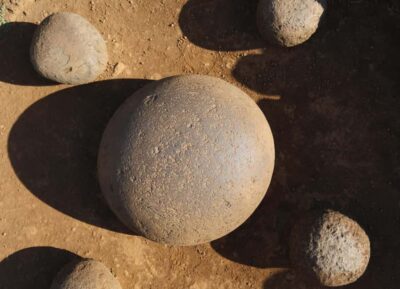
The visit to Ahu Te Pito Kura is listed at about 30 minutes. This site is connected with Paro, described as the tallest moai on the island, and with a large spherical stone known as Te Pito or Te Henua, the navel of the world.
According to Rapa Nui tradition, the stone was brought to the island on the boat of Hotu Matua. The story adds a different layer to the site. At Rano Raraku, you are looking at the physical process of carving. At Te Pito Kura, you encounter a sacred object tied to origin stories and the island’s place in the world.
Half an hour is a short visit, but it should be enough to see the main features and hear the legend. Do not expect this stop to have the same visual impact as Tongariki or the quarry. Its value comes from the story and from the chance to connect the stone monuments with oral tradition.
Anakena Beach and Ahu Nau Nau
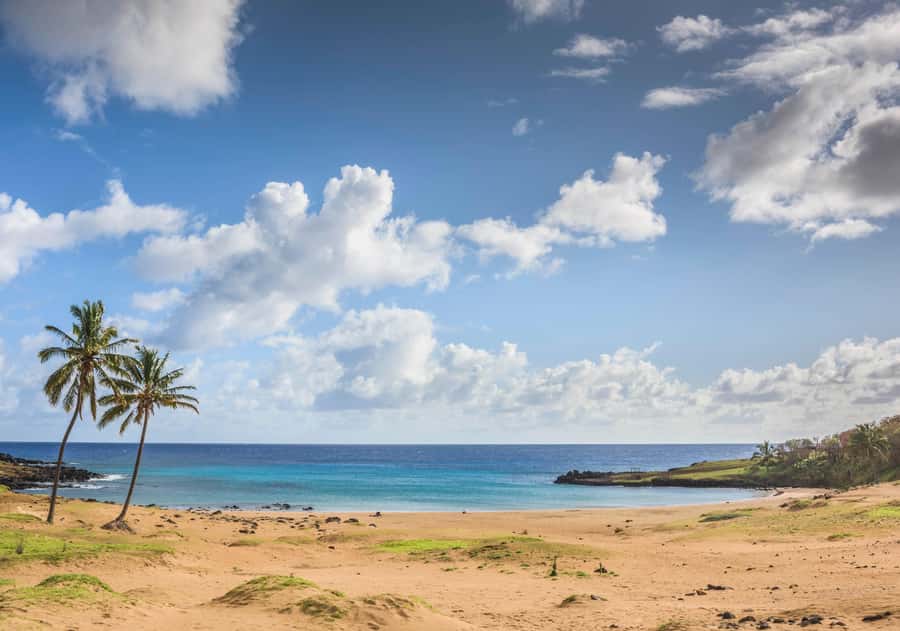
Anakena is the final major stop, with a listed visit of about an hour and a half. Its white sand beach offers a welcome change after a day of volcanic rock, carved stone, and archaeological remains.
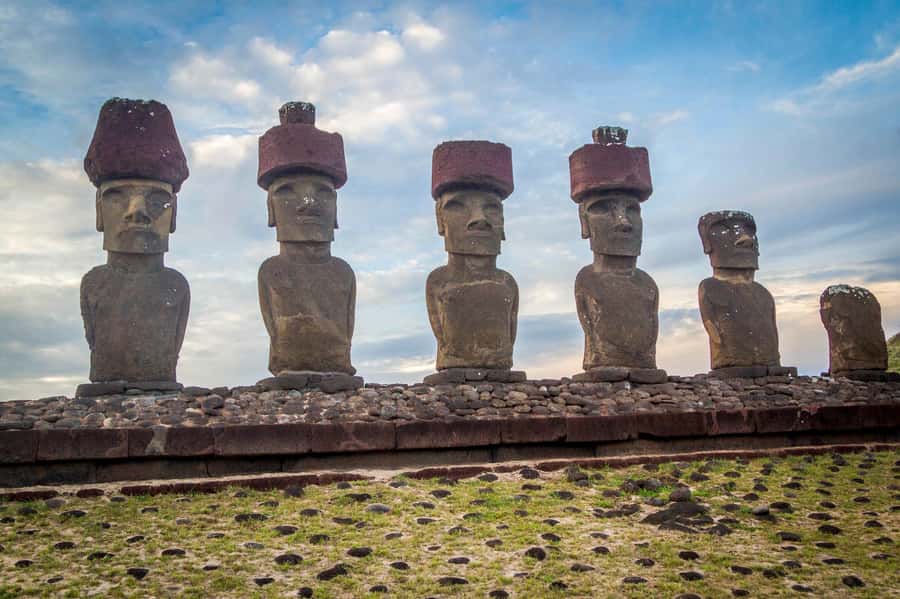
The beach is tied to the arrival of Ariki Hotu Matua and his sister Avareipua, important figures in Rapa Nui origin tradition. You also visit Ahu Nau Nau, an archaeological complex with five moai wearing pukao, the red stone topknots placed on some statues.
Look closely at the backs of these figures. Petroglyphs are carved there, adding small details that are easy to miss if you only stop for the famous front view. This is one reason a private guide can help. You can ask what to look for, rather than walk past the carvings without noticing them.
Anakena also gives the day a more relaxed finish. You get natural beauty alongside the archaeology, and the beach setting helps balance the intensity of Rano Raraku. Food and drinks are not included, so plan your own refreshments. The supplied information does not specify a meal stop or beach time for swimming, so do not assume either is part of the schedule.
What the guide adds to the experience
The quality of the guide is the strongest thread running through the feedback. Sol was praised for engaging Rapa Nui storytelling and careful service. Hugo was singled out for humor, detailed cultural context, and discussion of how outside cultural studies have viewed the island. Miguel was praised for a well-organized day and clear explanations, while Yoyo was described as warm, funny, and full of useful facts.
That range of praise gives you a useful expectation: the tour is at its best when you treat it as a conversation, not just a ride between sites. Ask about the tribal conflicts at Akahanga, the carving stages at Rano Raraku, the meaning of pukao, and how Rapa Nui culture continues today.
The language choices are English and Spanish. If you have a strong preference, request it when booking. The tour is private, so the guide can likely spend more time on the subjects that interest you, but the supplied information does not promise a particular guide by name.
One thoughtful piece of feedback raised concern about overtourism and the need to respect how Rapa Nui people live today. Keep that in mind. The moai are not just spectacular photo subjects. They are part of an Indigenous culture that remains present, and respectful behavior at the ahu and archaeological sites matters.
Price, entrance fees, and practical tradeoffs
The tour price is $200 per person. Add the listed $80 entrance fee, and your basic cost reaches $280 per person before food and drinks.
That is a serious price for a six-hour tour, but the private format explains part of it. You receive hotel pickup and drop-off in Hanga Roa, private transportation, and a professional guide. You do not need to arrange a rental vehicle or work out the route yourself, which can be useful on an island where the major sites are spread out.
The value is strongest for couples, families, or small groups that want a dedicated guide. Solo visitors should compare the cost with shared options if available. The tour is also a better fit for someone who wants context and questions answered than for someone who only wants quick stops for photographs.
Wear comfortable shoes and bring warm clothing. The day includes walking around uneven archaeological sites, and conditions can change. Judy’s experience remained enjoyable even in heavy rain, but that is a reminder to prepare for wet weather rather than count on a dry day.
The tour includes hotel pickup in Hanga Roa and returns you there at the end. It is not available to cruise ship passengers, and the stated restrictions exclude people with mobility impairments and wheelchair users.
Who should book the Moai Trail
I would recommend this tour if you have limited time on Rapa Nui and want the major eastern and northern sites tied together by a single guide. It suits first-time visitors who want the story behind the statues, not just a collection of impressive stops.
It is also a good choice if you value private transport, dislike large groups, or want to ask detailed questions. The positive feedback about punctuality, humor, and cultural explanation suggests that the human side of the tour can be as memorable as the monuments.
I would hesitate if your priority is a relaxed beach day, a low-cost outing, or a strictly six-hour schedule. The published stop times need clarification, and the extra entrance fee pushes the total price higher. The walking at Rano Raraku also requires a reasonable level of mobility.
You can cancel up to 24 hours in advance for a full refund, and the reserve-now, pay-later option keeps your plans flexible. Those policies help, but they do not replace checking the schedule, entrance requirements, and guide language before booking.
Should you book it?
Book the Moai Trail if you want one carefully organized day covering Akahanga, Tongariki, Rano Raraku, Te Pito Kura, and Anakena, with a private guide to explain what you are seeing. The strongest reasons are the quarry, the 15 moai at Tongariki, and the chance to hear thoughtful cultural interpretation from guides such as Sol, Hugo, Miguel, Yoyo, or Isa.
Skip it if $280 before food feels too high, if you need wheelchair access, or if you require a tightly timed six-hour outing. For most active first-time visitors staying in Hanga Roa, this is a strong way to meet Rapa Nui’s most important monuments in one substantial day.
FAQ
Where does the tour begin and end?
Pickup and drop-off are provided at your hotel in Hanga Roa.
How long does the tour last?
The activity is advertised as six hours. The listed time blocks for the individual stops add up to about eight hours, so confirm the actual schedule with Kava Kava Tours before booking.
What sites does the tour visit?
The route includes Ahu Akahanga, Rano Raraku, Ahu Tongariki, Ahu Te Pito Kura, Anakena Beach, and Ahu Nau Nau.
Is the tour private?
Yes. Transportation is provided in a private vehicle, and the tour is for a private group.
What languages are available?
The live guide is available in English or Spanish.
Is the entrance fee included?
No. An entrance fee of $80 per person is listed separately from the $200 tour price.
Is food included?
No. Food and drinks are not included.
Can cruise ship passengers join the tour?
No. The tour is not available for cruise ship passengers. It is also not suitable for wheelchair users or people with mobility impairments.
Just added around Hanga Roa
- Volcanic Refuges: Excursion to Underground Civilization★ 4.7 · 8 reviews
- Easter Island Ancestral Dinner and Show with Transport★ 4.5 · 2 reviews
- Volcanic Wonders and the Kingdom of the Birdman: Half Day★ 5.0 · 6 reviews
- Half Day Private Tour: Caves and Volcanic Refuges★ 4.0 · 14 reviews
- Tour to the Motus: Boat trip and snorkeling in Rapa Nui★ 5.0 · 8 reviews
- Birdman Ceremonial Route: Orongo, Ranu Kau Half-Day Tour★ 4.5 · 16 reviews
- Visit Rapa Nui in 4 days with 3 Tours and Accommodation included★ 4.0 · 2 reviews
- Astronomical Tour on Easter Island★ 3.5 · 3 reviews
Easter Island Tours, compared.
Two days of Full Day Tour of Rapa Nui + Sunrise in Tongariki
Read our review →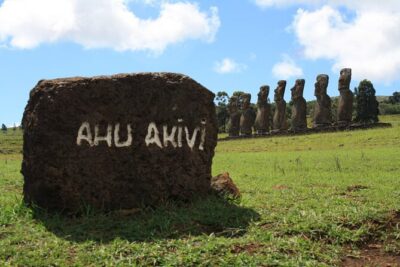
2-Day Private Tour Easter Island Highlights Complete Discovery
Read our review →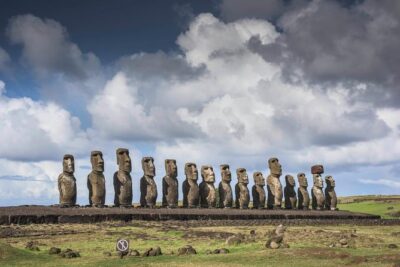
Private Tour: Full Day Easter Island Highlights
Read our review →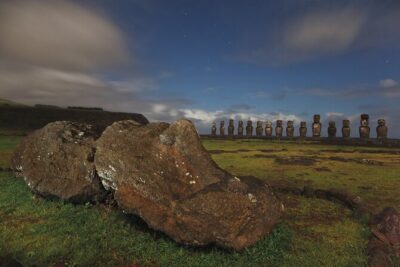
Browse the lists this tour appears in