
Reviewed · EASTER ISLAND TOURS
2 Days touring Rapa Nui Highlights in small groups
Moai, volcanoes, and a vanished royal world await. This Rapa Nui tour packs the island’s major archaeological sites into a tightly planned outing, with a small group capped at eight people and hotel pickup arranged for around 9:30 am. I like the broad coverage, from the beach at Anakena to the cliffs of Orongo, and I also like having a guide such as Joaquín to explain the island’s people, customs, and monuments as you go.
The main drawback is pace. The route covers 11 sites and about six to seven hours, so explanations can begin while you are still walking into position. If you move slowly or need extra care on uneven ground, you may occasionally fall behind the group.
In This Review
- Key points before you book
- Why this route works for a first visit
- Anakena and Ahu Nau Nau: moai beside the sand
- Ahu Te Pito Kura and the fallen Moai Paro
- Rano Raraku: the place where the moai began
- Ahu Tongariki and the island’s biggest ahu
- Vaihu and Vinapu: when the old order fell
- Puna Pau: the red stone behind the pukao
- Ahu Tahai and Ahu Akivi: two very different settings
- Rano Kau and Orongo: crater, cliffs, and the birdman ceremony
- What the $1,000 price really covers
- Who should book this Rapa Nui outing?
- FAQ
- How long does the Rapa Nui tour last?
- What time does the tour begin?
- Is hotel pickup available?
- How many people can join the group?
- Is the national park ticket included?
- Is the tour offered in English?
- What level of fitness is needed?
- Can I cancel for a full refund?
- Should you book it?
Key points before you book
- Eleven major sites in one long outing: You visit Anakena, Rano Raraku, Tongariki, Vinapu, Puna Pau, Tahai, Akivi, Rano Kau, and Orongo, among others.
- A maximum of eight people: The small group should make transport and questions easier than on a large coach tour.
- Rano Raraku gets 90 minutes: This is the longest stop, and rightly so. The quarry holds about 400 moai, many still attached to the volcanic rock.
- The national park ticket is extra: You must buy it before the first day, either at Ma’u Henua offices or through the Rapa Nui National Park website.
- The price is high but the coverage is broad: At $1,000 per person, the value depends on how much you want to see and whether your schedule allows time for separate visits.
- Joaquín brings energy to the history: His animated delivery can make a long day more engaging, though you should stay close if you do not want to miss part of his explanation.
Why this route works for a first visit
Rapa Nui is not a place where one famous statue tells the whole story. The island’s meaning comes from seeing the quarry, ceremonial platforms, toppled figures, red volcanic stone, old settlements, and birdman ceremonies as connected pieces.
This outing gives you that broad picture. You begin with restored moai beside the sea, then move through the quarry that produced most of the statues. Later, you see the biggest ahu on the island, old platforms damaged by clan conflict, and the crater and ceremonial village linked to the birdman cult.
That sequence matters. At Rano Raraku, you see how the moai were carved. At the ahu, you see where they were placed. At Vaihu and Vinapu, you see what happened when the old social order broke down. At Orongo, you see a later ceremonial tradition tied to competition and the islets offshore.
You should expect a full day rather than a relaxed outing. The listed stop times add up to about six hours and 45 minutes, before driving between sites. The title refers to two days, but the supplied schedule presents a single 6 to 7 hour route beginning at 9:30 am. Confirm the exact division with Rapa Nui Dream when you book, especially if you want to spread the visits over two days.
More Rapa Nui trips and moai walks:
- From Hanga Roa: Rapa Nui Culture Sightseeing Tour
★ 4.6 · 307 reviews - From Hanga Roa: Easter Island Highlights 2-Day Tour
★ 4.3 · 205 reviews - From Hanga Roa: Easter Island Sightseeing Full Day Tour
★ 4.5 · 189 reviews
Anakena and Ahu Nau Nau: moai beside the sand
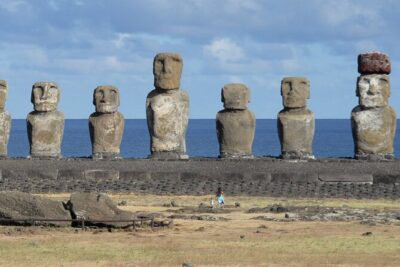
The first stop is Ahu Nau Nau at Hanga Rau o te Ariki, better known as Anakena. This is one of the most pleasing introductions to Rapa Nui because the ceremonial platform sits near the beach, showing how sacred sites and daily settlement areas could share the same setting.
Seven moai were restored on the platform. They are described as the best-preserved restored statues on the island, so you get a clear look at the carved bodies and the way the figures were arranged on the ahu.
You also see Ahu Ature Huki, restored by the Rapa Nui community in the 1950s. That detail gives the stop an important human angle. The story is not only about an ancient society. It is also about modern Rapa Nui people caring for and rebuilding their own heritage.
The scheduled visit lasts 35 minutes. That is enough for a guided look and photographs, but not enough for an unhurried beach stop. Wear shoes you can walk in, even though the setting may tempt you to think only about sand and swimming.
Ahu Te Pito Kura and the fallen Moai Paro
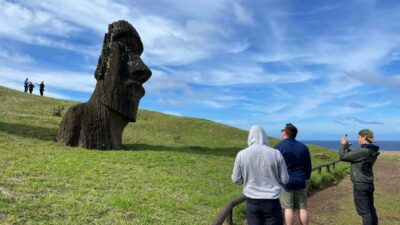
Ahu Te Pito Kura gives you a different sight: not a restored platform, but a giant moai lying where it fell. Moai Paro once measured 9.9 meters and weighed more than 80 tons, making it the largest statue successfully moved from Rano Raraku to an ahu.
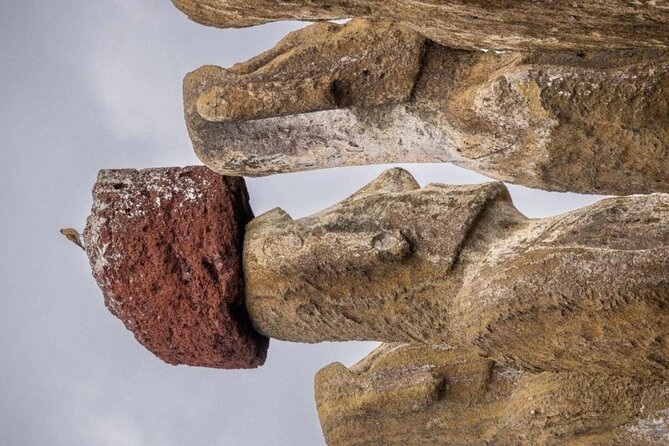
The statue was toppled almost two centuries ago and has not been restored. That may sound less impressive than seeing a row of upright moai, but the fallen figure helps you grasp the scale of the old building effort. You can also see its enormous pukao, the red stone headdress, measuring nearly two meters high and weighing about 10 tons.
The stop lasts 25 minutes. It is brief, so listen closely and keep near the guide. Admission is not included in the tour price, and this is one of several places where your national park ticket is required.
Rano Raraku: the place where the moai began
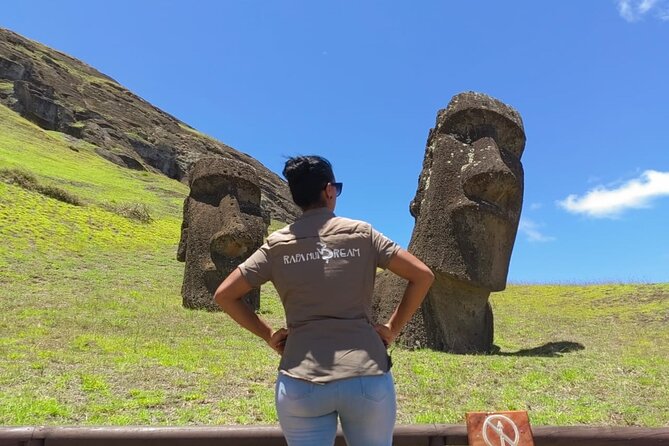
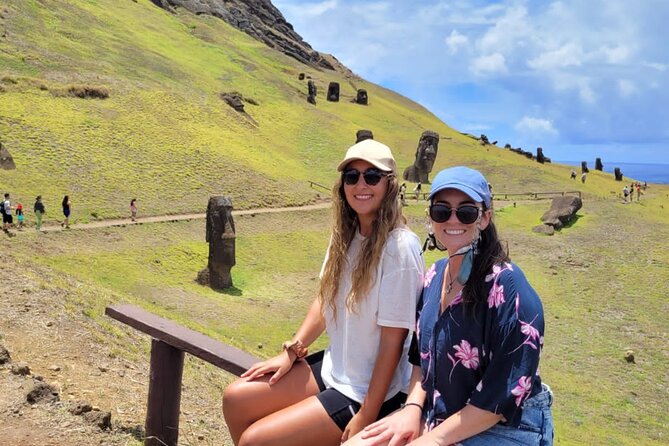
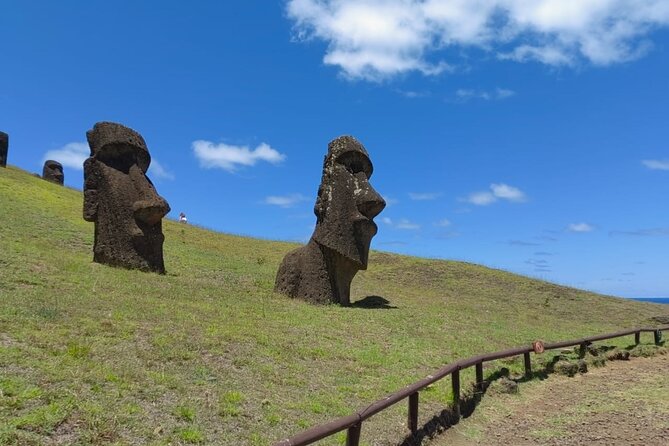
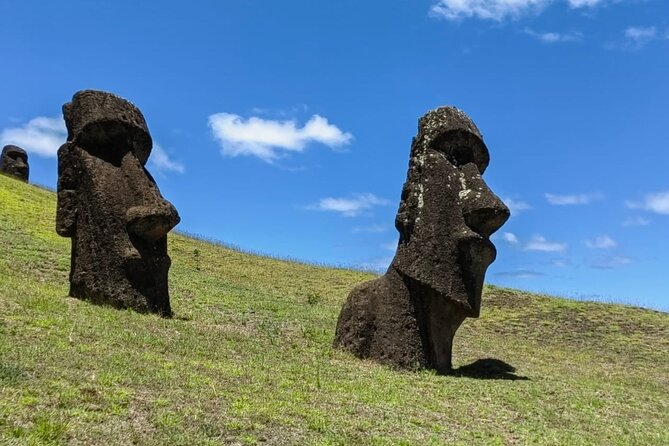
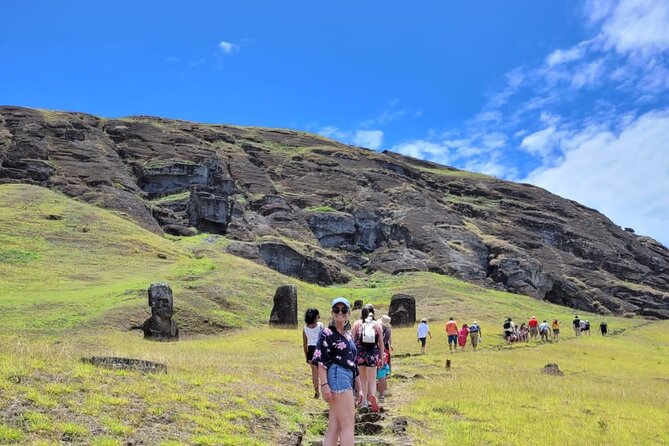
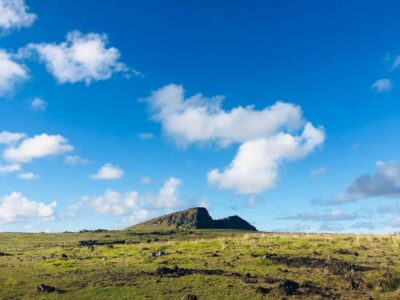
Rano Raraku is the heart of the route. Allow 90 minutes here, longer than at any other stop. This volcanic quarry contains about 400 moai, with many still partly embedded in the rock.
The site lets you see the carving process in a way no museum can match. Some statues remain attached to the quarry wall. Others are scattered around the slopes and nearby parking area. You can compare unfinished figures with more complete forms and picture the labor involved before a statue ever reached the coast.
This is also the stop where the tour format matters most. A guide can point out the carving technique and explain why so many statues were left behind. The ground may be uneven, and the route involves walking rather than simply stepping off a vehicle for a quick photograph.
If you are older, cautious on your feet, or simply like to take your time, stay close to Joaquín or ask him to repeat key points. One useful criticism of the experience is that explanations sometimes begin before slower walkers have joined the group. That is a small issue, but Rano Raraku is too important to experience from the back of the pack.
A few more Easter Island trips worth comparing side by side
- Two days of Full Day Tour of Rapa Nui + Sunrise in Tongariki
★ 4.5 · 132 reviews - 2-Day Private Tour Easter Island Highlights Complete Discovery
★ 5.0 · 110 reviews - 2 Days Highlights Tour in Easter Island Moai and Nature
★ 4.0 · 55 reviews - Two days of Full Day Tour of Rapa Nui + Sunrise in Tongariki
★ 4.8 · 55 reviews
Ahu Tongariki and the island’s biggest ahu
Ahu Tongariki is the visual centerpiece for many people. Fifteen moai rise together on the largest ahu in Polynesia, with their backs to the Pacific.
The arrangement gives you a strong sense of scale. One statue is impressive. Fifteen on a single platform changes the mood completely. The site also helps you understand that the moai were not placed randomly. They belonged to a ceremonial setting tied to community and ancestors.
The planned visit lasts 45 minutes. That gives you time to look from several angles and listen to the explanation without rushing as badly as at some shorter stops. Admission is extra through the park ticket.
Bring protection from the sun. The information provided does not list shade, food, or drinks along the route, so do not assume those services will be available at every stop.
Vaihu and Vinapu: when the old order fell
At Ahu Vaihu, you see the remains of statues that were toppled during clan conflicts. The site includes an interpretation center where you can enter buildings and gain a clearer idea of how settlements were arranged.
This stop helps keep the day from becoming a parade of intact statues. Rapa Nui’s past includes conflict, change, and loss. Vaihu makes those parts visible. The 30-minute visit is short, but the interpretation center adds useful context to the stones outside.
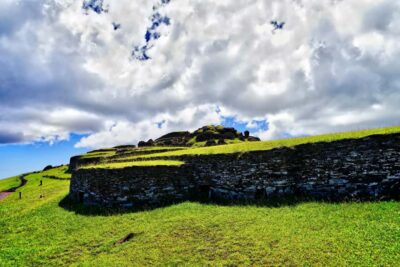
Ahu Vinapu offers another change in mood. Its ceremonial complex includes two platforms, Ahu Tahira and Ahu Vinapū, built with large basalt slabs. The careful stonework has led to discussion about a possible connection with the Inca Empire.
That proposed connection is a point of interest, not a simple fact you should treat as settled. The site also includes damaged structures and the remains of an older third ahu, giving you several layers of construction to read.
The visit lasts 40 minutes. Vinapu is a good place to focus on masonry rather than statue count. Look at how the stones meet and how the surviving walls differ from the restored sites.
Puna Pau: the red stone behind the pukao
Puna Pau is a red slag quarry used mainly to make pukao, the large headdresses placed on some moai. After seeing the huge pukao at Te Pito Kura, this stop gives you the source material.
The visit lasts 25 minutes. It is not as visually dominant as Tongariki or Rano Raraku, but it completes an important part of the story. The statues and their red crowns came from different volcanic materials and different parts of the island.
This is another reason a guide adds value. Without explanation, Puna Pau can look like a short quarry stop. With context, you begin to see the island’s ceremonial monuments as carefully planned works requiring stone, transport, skilled carving, and community effort.
Ahu Tahai and Ahu Akivi: two very different settings
Ahu Tahai is one of the best places for a quiet pause. The archaeological site contains three ceremonial platforms: Ko Te Riku, Tahai, and Vai Uri.
It is also one of the oldest inhabited areas and remains important for contemporary ceremonies. The sea provides a calming setting, and the site is well suited to photographs. The tomb of American archaeologist William Mulloy is here as well. His work contributed greatly to the study of Rapa Nui, so Tahai links ancient monuments with the people who helped bring their story to a wider audience.
The planned stop is 30 minutes, and admission is free. You may wish for more time, especially if photography matters to you. Still, Tahai gives the busy schedule a needed breathing space.
Ahu Akivi offers a more unusual arrangement: seven moai facing the ocean. The ahu is more than 500 years old and was originally called Ahu Atiu.
The 20-minute visit is the shortest of the major archaeological stops. The statues facing seaward make the site different from the moai commonly seen with their backs to the water. I would pay close attention here because there is not much spare time for wandering.
Rano Kau and Orongo: crater, cliffs, and the birdman ceremony
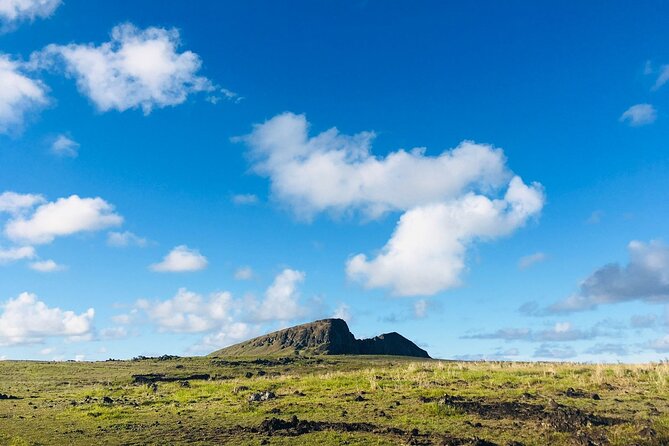
Rano Kau is the largest volcano on Rapa Nui and one of the most powerful natural settings on the island. Its crater once provided an important source of drinking water for ancient communities.
The scheduled stop lasts 20 minutes, which is enough to take in the crater’s vast interior and the silence around it. It is also a good reminder that Rapa Nui is not only about carved stone. Water, volcanic land, and settlement shaped life here.
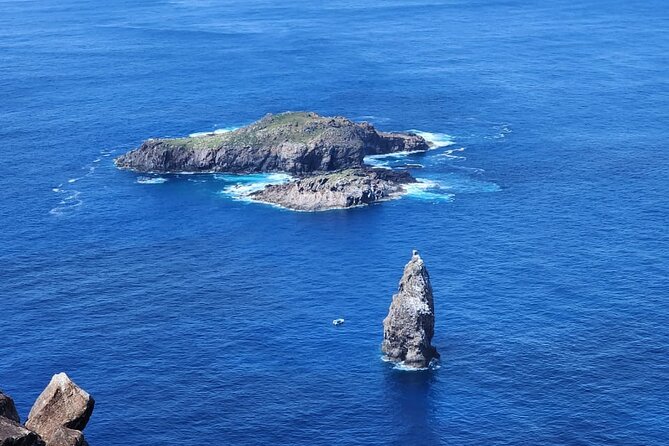
Orongo sits at the top of Rano Kau and is the final stop. This ceremonial village contains stone houses with a style found nowhere else on the island, along with petroglyphs connected to the birdman cult.
You also get wide views toward the Pacific and the offshore motu, or islets. The setting explains why Orongo mattered. It was not just a village of stone structures. It was a carefully chosen ceremonial site tied to the sea, the cliffs, and a demanding contest.
The visit lasts 45 minutes. Admission is extra, and you will want to keep the group together because the site combines buildings, carvings, and views. Orongo is a strong finish because it shifts the focus from the earlier moai tradition to another major period in Rapa Nui culture.
What the $1,000 price really covers
At $1,000 per person, this is an expensive tour. The price makes the most sense if you want one organized route covering nearly all the major sites and prefer a guide to supply context as you go.
The small group is a real advantage. With no more than eight people, you should have a better chance to hear the guide and ask questions than you would on a large bus. Pickup is offered, and the start time is 9:30 am, with instructions to wait at your accommodation’s entrance or reception. The operator says it will send relevant pickup information the day before.
The national park ticket is not included. You must buy it before the first day through Ma’u Henua offices or the Rapa Nui National Park website. Several stops list free admission, but many important sites require the park ticket, so include that extra cost in your budget.
Group discounts are offered, though no discount amount is supplied. Ask for the current terms before paying. Free cancellation is available if you cancel at least 24 hours before the local start time. Changes or cancellations inside that window are not accepted for a refund.
Who should book this Rapa Nui outing?
I would choose this tour if you have limited time on Easter Island and want a strong first look at the full story. It suits people who value an English-speaking guide, hotel pickup, and a small group more than a slow, private schedule.
It is also a good match if you want to see both headline sites and less polished places such as Vaihu and Vinapu. Those stops add useful context and keep the day from becoming a simple moai checklist.
I would hesitate if you dislike tight schedules, want long photography sessions, or need a very slow walking pace. The required fitness level is moderate, and the stop at Rano Raraku includes walking over uneven ground. If you are careful on your feet, tell the guide at the start and stay close during explanations.
FAQ
How long does the Rapa Nui tour last?
The experience is listed as lasting approximately 6 to 7 hours. The scheduled stops total about 6 hours and 45 minutes, not counting travel between sites.
What time does the tour begin?
The stated start time is 9:30 am.
Is hotel pickup available?
Yes. Pickup is offered. You should wait at the entrance or reception of your accommodation, and the operator will communicate relevant details the day before.
How many people can join the group?
The group has a maximum of eight travelers.
Is the national park ticket included?
No. You must have your national park ticket before the first day of the excursion. It can be purchased at Ma’u Henua offices or through the Rapa Nui National Park website.
Is the tour offered in English?
Yes. English is one of the offered languages.
What level of fitness is needed?
A moderate level of physical fitness is required. The itinerary includes walking at archaeological sites, including Rano Raraku.
Can I cancel for a full refund?
Yes, if you cancel at least 24 hours before the experience start time. Cancellations or changes made less than 24 hours before the start are not accepted for a refund.
Should you book it?
Book this tour if your main goal is to see as much of Rapa Nui as possible with a small group and an English-speaking guide. The route covers the essential moai sites, the quarry, the red-stone pukao source, the volcanic craters, and Orongo’s birdman setting in one concentrated outing.
Before booking, confirm how the advertised two-day wording fits the listed six to seven hour schedule. Also budget for the park ticket and prepare for a brisk pace. If you can stay with the group and keep your expectations practical, this is a strong way to get your bearings on an island where every ahu tells only part of the story.
Just added around Easter Island
- Volcanic Refuges: Excursion to Underground Civilization★ 4.7 · 8 reviews
- Easter Island Ancestral Dinner and Show with Transport★ 4.5 · 2 reviews
- Volcanic Wonders and the Kingdom of the Birdman: Half Day★ 5.0 · 6 reviews
- Half Day Private Tour: Caves and Volcanic Refuges★ 4.0 · 14 reviews
- Tour to the Motus: Boat trip and snorkeling in Rapa Nui★ 5.0 · 8 reviews
- Birdman Ceremonial Route: Orongo, Ranu Kau Half-Day Tour★ 4.5 · 16 reviews
- Visit Rapa Nui in 4 days with 3 Tours and Accommodation included★ 4.0 · 2 reviews
- Sunrise in Tongariki on Easter Island Rapa Nui★ 3.5 · 5 reviews
Easter Island Tours, compared.
Two days of Full Day Tour of Rapa Nui + Sunrise in Tongariki
Read our review →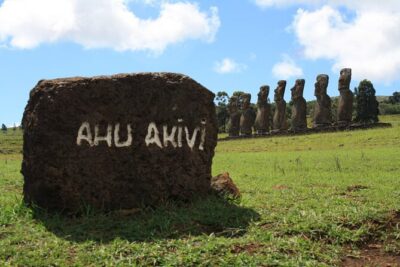
2-Day Private Tour Easter Island Highlights Complete Discovery
Read our review →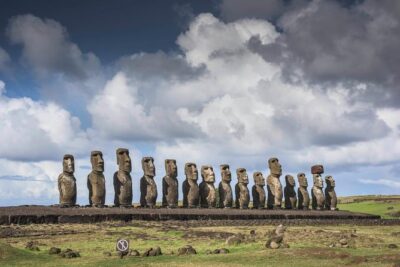
Private Tour: Full Day Easter Island Highlights
Read our review →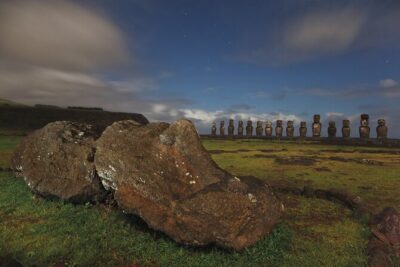
Browse the lists this tour appears in