
Reviewed · EASTER ISLAND TOURS
Private Tour: 2 Half Days & 2 Full Days
The moai are only half the story. This four-day private tour gives you time to connect the statues with Rapa Nui culture, volcanoes, ceremonies, craft traditions, and the island’s Christian past. I like the private vehicle and hotel pickup, which keep the days flexible, and I like the chance to visit major sites in a sensible order rather than rushing through them.
The strongest part may be the personal guiding. Hugo is described as a proud Rapa Nui guide whose love for his homeland shapes the experience. That warmth matters here, since Easter Island is not just an outdoor museum. The main consideration is cost: at $934 per person, plus the required $100 National Park ticket, this is a serious investment, especially since lodging is not included.
In This Review
- Key points to know before booking
- What the four-day format gives you
- Day one: Huri a Urenga, Hanga Roa, and sunset at Tahai
- Day two: the quarry, fifteen moai, and Anakena Beach
- Day three: Orongo and the volcanic southwest
- Day four: sunrise at Ahu Tongariki
- Guide, vehicle, and group experience
- Is $934 per person a fair price?
- Who should book this Easter Island tour?
- FAQ
- How long does the tour last?
- What is the price per person?
- Is the National Park ticket included?
- Is hotel pickup available?
- Is this a private tour?
- Is the tour available in English?
- Can cruise ship passengers book this tour?
Key points to know before booking
- Four days cover the island’s major ceremonial sites: The schedule includes Ahu Tongariki, Rano Raraku, Anakena, Orongo, Rano Kau, Ahu Akivi, and several smaller sites.
- A private guide changes the pace: Your group alone takes part, with pickup from any hotel or accommodation on Easter Island.
- Sunrise at Ahu Tongariki is built into the plan: Day four begins with one of Rapa Nui’s most memorable views.
- The required park ticket costs extra: Budget another $100 per person. It is valid for 10 days from first entry and covers all park sites.
- Hugo receives the warmest praise: His personal connection to Rapa Nui is a major part of the tour’s appeal.
- This does not work for cruise passengers: The experience is designed for people staying overnight on the island.
What the four-day format gives you
Easter Island is small enough to cross by vehicle, but its important sites are spread around the coast and interior. A quick one-day outing can show you the famous moai, yet leave little room for the details that make Rapa Nui memorable: the quarry where statues were carved, the volcano crater tied to the Birdman ceremony, the red stone used for moai topknots, and the way Christian and island traditions meet in Hanga Roa.
This tour uses two half days and two full days. That gives you a useful rhythm. The first day focuses on town and nearby cultural sites. The second makes a broad circuit of the eastern and northern parts of the island. The third heads toward the volcanic southwest and central sites. The final morning returns to Ahu Tongariki for sunrise.
You should expect full sightseeing days, but not four nonstop days in a vehicle. Most stops last between 20 minutes and two hours. That balance lets you see a lot without treating every moai as a quick photo stop.
The private format is particularly valuable on an island where weather and light can affect what you see. You can ask questions as they arise, spend more time at a site that catches your attention, and keep the experience within your own group. The tradeoff is simple: a private tour generally costs more than joining a shared excursion.
More Private Tours in Easter Island
- 2-Day Private Tour Easter Island Highlights Complete Discovery
★ 5.0 · 110 reviews - Private Tour: Full Day Easter Island Highlights
★ 5.0 · 106 reviews - Private Full-Day Easter Island Highlights North and West
★ 5.0 · 84 reviews
Day one: Huri a Urenga, Hanga Roa, and sunset at Tahai
The opening stop, Ahu Huri a Urenga, offers a quieter introduction to Rapa Nui ceremonial architecture. Its position relates to the winter solstice, and the ahu has four arms and hands, an unusual feature that continues to interest archaeologists.
You have about 20 minutes here. That is enough for an explanation and photographs, though not a long walk or extended study. Since the admission ticket is not included in the stated tour price, you should have your National Park ticket ready if it applies to this site.
The Church of Rapa Nui provides a different kind of cultural encounter. Inside Santa Cruz Church, Christian figures are adapted to traditional island forms. This is not simply a stop for religious visitors. It shows how outside traditions and Rapa Nui identity have met and changed one another over time.
Next comes the Museo Antropologico P. Sebastian Englert in Hanga Roa. Plan on about an hour. The museum holds more than 20,000 objects, including tools, bone artifacts, ornaments, fishhooks, and a moai eye, described as the only one found.
That last detail gives the museum special weight. The giant statues can feel monumental and distant in the open air. Here, smaller objects help explain the practical skills and beliefs behind them. The museum also gives you a useful base before the larger sites later in the tour.
The island cemetery follows, with about 20 minutes to look around. Crosses, crucifixes, and moai forms appear together among the graves. Like the church, it offers a direct view of two cultural traditions sharing the same place.
At the Feria Artesanal Hare Umanga, you get 30 minutes to see local craftwork. The market began in the 1970s during the Tapati Rapa Nui festivities and remains a meeting point for local artisans. This is a good place to buy something made on the island, though you may want to compare items before making a choice.
The day ends at Ahu Tahai, one of the most convenient ceremonial complexes near Hanga Roa. Archaeologist William Mulloy restored it in 1974. The complex includes three principal ahu: Ko Te Riku, Tahai, and Vai Ure. Ko Te Riku is especially recognizable because its moai has restored eyes.
You have about an hour here, and the timing makes sense. Tahai is popular for sunset photography, but the value is not only the view. This is a place where you can see several ceremonial arrangements together and begin to understand how an ahu functions as more than a row of statues.
Day two: the quarry, fifteen moai, and Anakena Beach
Day two is the tour’s great moai circuit. It begins at Ahu Akahanga on the southeast coast, where fallen statues lie on their backs and faces. The site helps you picture how a traditional village related to its ceremonial center.
Ahu Akahanga is not as visually tidy as a restored platform, and that is part of its value. The fallen moai show the island as a real archaeological site rather than a polished collection of monuments. Give yourself the full hour to listen and look carefully.
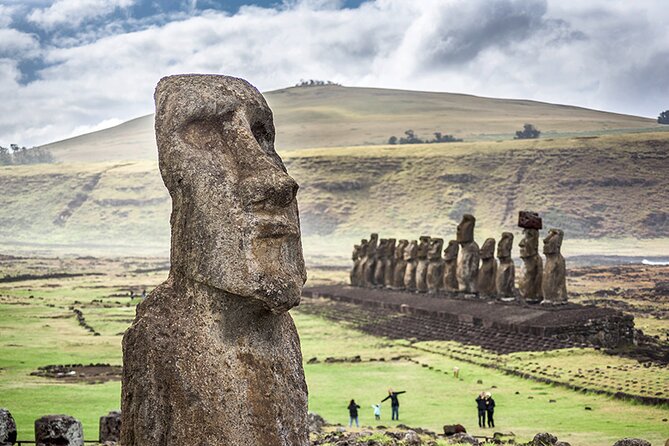
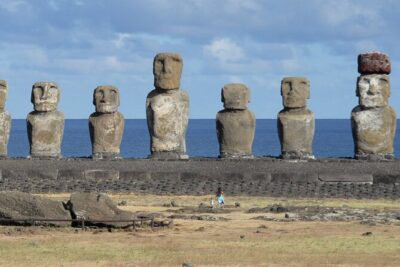
At Ahu Tongariki, the scale changes. This is the largest reconstructed platform on Easter Island, with fifteen standing moai facing inland and their backs to the Pacific. You receive an hour here, enough time to appreciate the line of statues from several angles.
Tongariki is likely to be one of the moments you remember most. The platform’s size makes the island’s ceremonial ambition easier to grasp. It also sets up the next stop, because Rano Raraku, the quarry where the statues were made, sits opposite Tongariki.
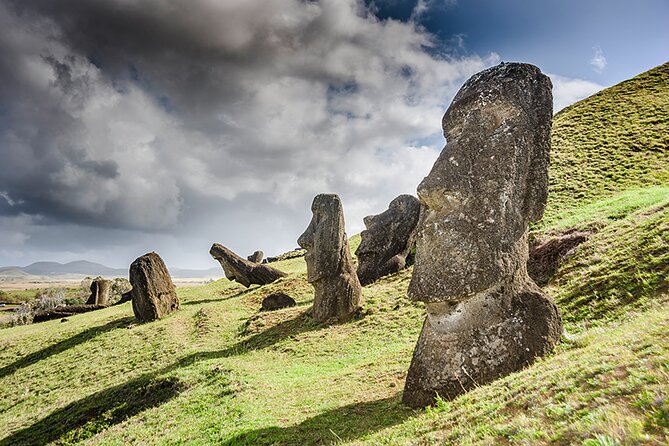
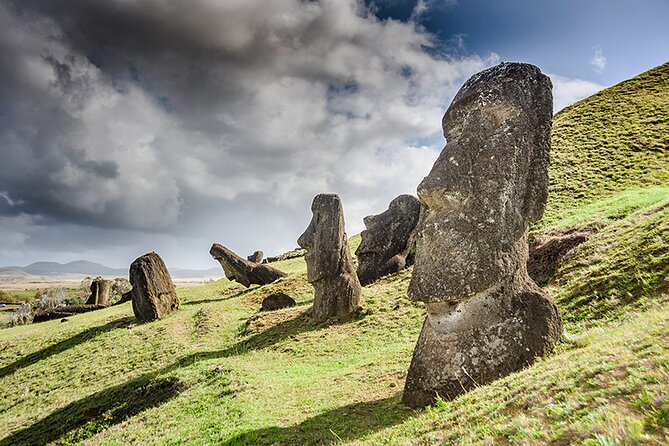
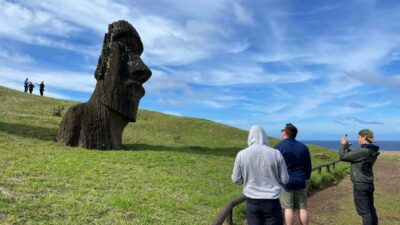
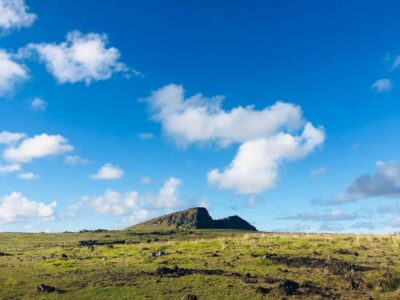
Rano Raraku receives two hours, the longest stop of the day and one of the most important on the entire tour. This volcanic tuff quarry supplied the stone for the moai. The statues were carved here before being moved to ahu around the island.
The quarry helps answer a question that naturally follows every first sight of a moai: how was it made? You can see unfinished forms and statues connected to the carving process. Two hours is welcome because the site deserves more than a quick view from the vehicle.
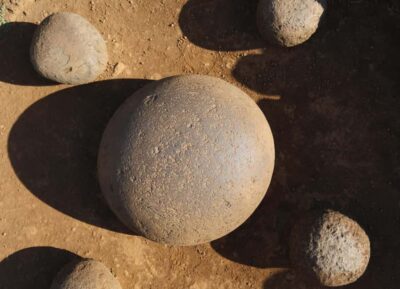
Ahu Te Pito Kura follows for 30 minutes. Here you find Ahu o Paro, described as the largest transported moai, measuring about 11 meters and weighing roughly 90 tons. Nearby is the rounded stone called Te Pito o te Henua, which tradition says was brought by the ancestors.
This short stop is a useful contrast to Rano Raraku. At the quarry, you see the beginning of the statue-making process. At Te Pito Kura, you see the extraordinary size that the finished work could reach.
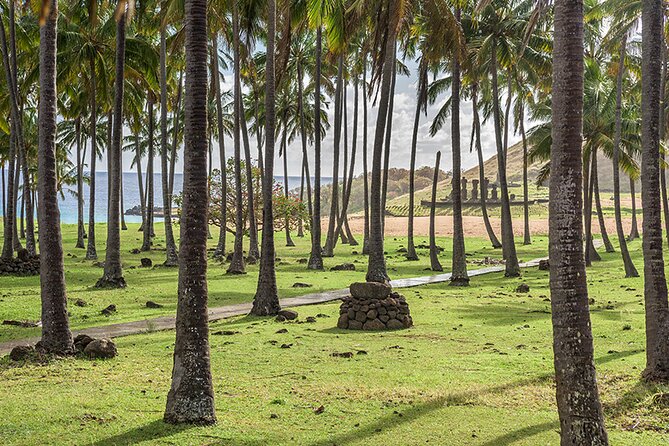
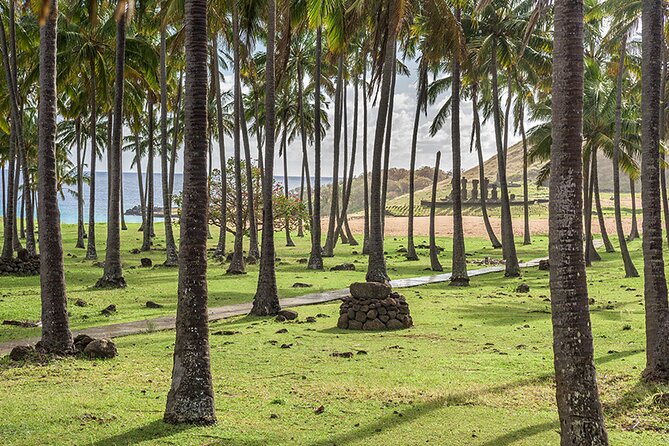
The final stop is Anakena Beach, with about an hour to enjoy the island’s main beach. Warm turquoise water and coral sand make this a welcome change after the stone sites. Anakena was also the ancestral residence of the Miru Araki royal family.
Ahu Nau Nau is the cultural centerpiece here. Its moai are known for refined carving, and the beach gives you an unusual setting for an ahu. You get both a place of relaxation and a ceremonial site in one stop. Do not mistake this for a full beach day, though. The schedule allows about an hour, not a long swim-and-sun session.
Day three: Orongo and the volcanic southwest
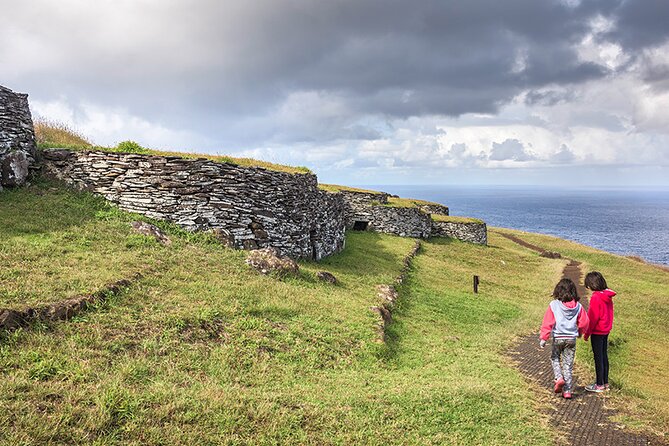
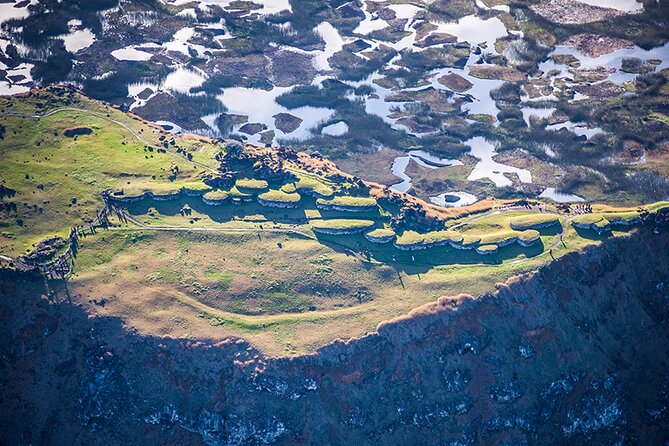
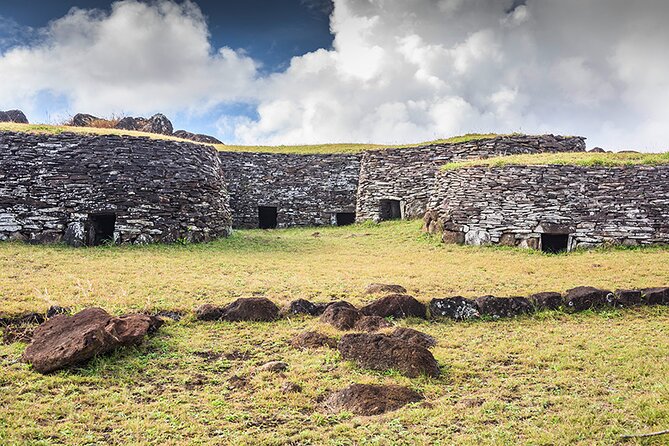
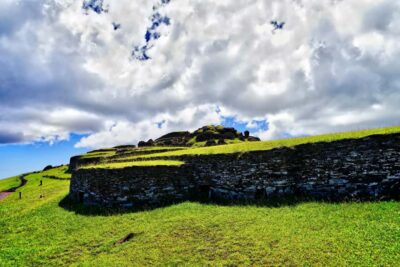
Day three begins at Orongo, a village on the edge of Rano Kau’s crater. This is the setting for the Birdman ceremony, one of the island’s major ceremonial traditions. You have 90 minutes, which should give you time to take in the site and its position above the crater.
Orongo matters because it shows a later phase of Rapa Nui ceremonial life. The moai are not the whole story. The Birdman ceremony connected competition, status, and the natural setting of the island, and the village’s location makes that connection easy to picture.
Rano Kau is next, with about 30 minutes. The crater is about 1.5 kilometers wide, and its lake once served as an important source of drinking water. It also shelters endemic flora.
The stop is brief, so expect a viewpoint-style visit rather than an extended walk around the crater. Even so, the scale of Rano Kau gives you one of the best natural views on the island. It is a helpful reminder that volcanic landforms shaped daily life as much as they shaped the moai.
At Puna Pau, you see the quarry for the red volcanic stone used to make pukao, the topknots placed on some moai. About 30 minutes lets you see 23 cylindrical pieces at an early carving stage and look toward Hanga Roa.
Puna Pau is a fine example of why context matters. A moai’s red topknot can seem like a simple decorative feature when viewed from a distance. Seeing the separate quarry and partly shaped cylinders makes the labor and planning behind it much clearer.
The day ends at Ahu Akivi, one of the few ceremonial platforms located inland rather than beside the coast. Its seven restored moai face the setting sun and have astronomical positioning.
The visit lasts about 30 minutes. That is enough to see the platform and hear why its position is unusual. Ahu Akivi also reflects the role of William Mulloy and Gonzalo Figueroa, who worked with the Rapa Nui community to restore the statues to standing positions.
More Rapa Nui trips and moai walks:
- From Hanga Roa: Rapa Nui Culture Sightseeing Tour
★ 4.6 · 307 reviews - From Hanga Roa: Easter Island Highlights 2-Day Tour
★ 4.3 · 205 reviews - From Hanga Roa: Easter Island Sightseeing Full Day Tour
★ 4.5 · 189 reviews - Two days of Full Day Tour of Rapa Nui + Sunrise in Tongariki
★ 4.5 · 132 reviews
Day four: sunrise at Ahu Tongariki
The final visit returns to Ahu Tongariki before sunrise. The sun rises behind the platform during the southern summer, from October through March. During the rest of the year, it rises from the direction of Poike volcano.
You have 90 minutes here, giving you time to watch the changing light rather than arrive, take one photograph, and leave. Winter brings a greater chance of unclear skies, so sunrise is not guaranteed to be dramatic. That uncertainty is part of the deal with outdoor sightseeing, but the platform remains impressive even under cloud.
Returning to Tongariki also gives the tour a satisfying shape. You first see the platform during the main day-two circuit, then return when the light and mood are entirely different. If photography matters to you, this second visit is one of the tour’s best features.
Guide, vehicle, and group experience
The tour is offered in English and includes private transportation, a professional guide, and pickup from hotels or other accommodations on the island. You must provide your lodging details so the pickup can be arranged.
Hugo receives the clearest praise connected with the experience. His appeal is not presented as a dry list of credentials. The important point is that he loves Rapa Nui and speaks about his homeland with genuine feeling. That can make a major difference at places such as the cemetery, Orongo, and Rano Raraku, where facts alone do not fully explain the meaning of what you see.
Because this is a private activity, only your group participates. That suits couples, families, and small groups who want to ask questions without worrying about a busload of strangers. It may be less appealing if you prefer meeting new people or want the lowest possible price.
Most people can participate, according to the supplied tour information. Still, the schedule includes outdoor sites and volcanic areas, so you should be comfortable moving between viewpoints and archaeological areas. The exact walking conditions are not specified, so ask Kava Kava Tours if you need detailed mobility information.
Is $934 per person a fair price?
The listed price is $934 per person. Add the mandatory $100 National Park ticket, and the known cost becomes $1,034 per person before accommodation and other personal expenses.
That is not a budget tour. Its value comes from the amount of time and the private setup. You receive four days of guided sightseeing, transportation, hotel pickup, and lunch as listed among the inclusions. The schedule reaches nearly all of the major sites, including the quarry, the largest platform, the main beach, the Birdman village, and the inland ahu.
The price is easier to justify if you have limited time on Easter Island and want the island explained rather than merely photographed. It is harder to justify if you plan to rent transport, visit fewer sites, or prefer independent sightseeing.
Pay close attention to the wording around lunch. Lunch is included in the tour’s listed inclusions, but the details do not specify how many lunches or where they are provided. Ask before booking if meals are important to your budget.
The National Park ticket is valid for 10 days from first entry and covers all park sites. Since several days include park locations, the pass is not an optional add-on. It should be part of your planning from the start.
Who should book this Easter Island tour?
I would choose this experience if you want a private, wide-ranging introduction to Rapa Nui and care about the stories behind the sites. It is especially suitable for families, couples, and small groups staying on the island for at least four days.
The tour also suits anyone who wants the practical work handled for them. Hotel pickup, private transport, an English-speaking guide, and a planned route remove much of the island’s sightseeing guesswork.
I would hesitate if your budget is tight, if you dislike early starts, or if you want long stretches of unplanned beach time. The itinerary is full, and the final sunrise requires an early departure. Cruise passengers cannot use this tour, since it is not available to people visiting only for the day.
With a rating of 4.6 from five reviews, the strongest signal is the personal praise for Hugo. His connection to Rapa Nui appears to be the heart of the experience. That makes this more than a transport package, but it also means your enjoyment will depend partly on how well the guide’s style fits your group.
My advice is straightforward: book it if you want the major sites covered with context, comfort, and a private guide who cares deeply about the island. Skip it if you are mainly seeking the cheapest way to see the moai.
FAQ
How long does the tour last?
The experience lasts approximately four days and combines two half days with two full days of sightseeing.
What is the price per person?
The listed price is $934 per person. The mandatory National Park ticket costs an additional $100 per person.
Is the National Park ticket included?
No. The National Park ticket is not included. It is valid for 10 days from first entry and covers all park sites.
Is hotel pickup available?
Yes. Pickup is offered from all hotels and accommodations on Easter Island. You need to provide your hotel details for arrangement.
Is this a private tour?
Yes. Only your group participates in the activity, and private transportation is included.
Is the tour available in English?
Yes. The experience is offered in English and includes a professional guide.
Can cruise ship passengers book this tour?
No. The tour is not available for cruise ship passengers.
Just added around Easter Island
- Volcanic Refuges: Excursion to Underground Civilization★ 4.7 · 8 reviews
- Easter Island Ancestral Dinner and Show with Transport★ 4.5 · 2 reviews
- Volcanic Wonders and the Kingdom of the Birdman: Half Day★ 5.0 · 6 reviews
- Half Day Private Tour: Caves and Volcanic Refuges★ 4.0 · 14 reviews
- Tour to the Motus: Boat trip and snorkeling in Rapa Nui★ 5.0 · 8 reviews
- Birdman Ceremonial Route: Orongo, Ranu Kau Half-Day Tour★ 4.5 · 16 reviews
- Visit Rapa Nui in 4 days with 3 Tours and Accommodation included★ 4.0 · 2 reviews
- Private Tour: Tongariki Sunrise Experience★ 4.5 · 20 reviews
Easter Island Tours, compared.
Two days of Full Day Tour of Rapa Nui + Sunrise in Tongariki
Read our review →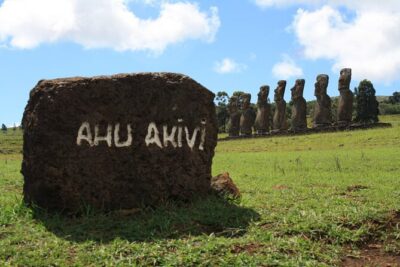
2-Day Private Tour Easter Island Highlights Complete Discovery
Read our review →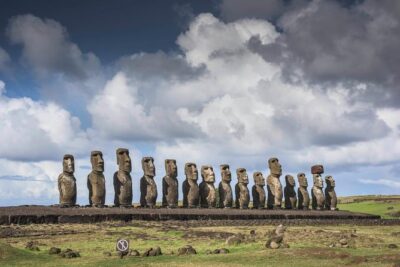
Private Tour: Full Day Easter Island Highlights
Read our review →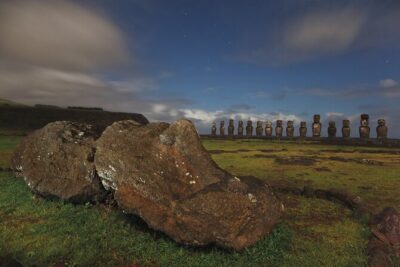
Browse the lists this tour appears in