
Reviewed · EASTER ISLAND TOURS
Private Tour: 2 Half Days & 1 Full Day Easter Island Essentials
Feel the island’s story unfold. This private three-day tour gives you a smart way to see Rapa Nui when you have only two nights, with time at the major moai sites and a guide focused on the island’s past and culture. I especially like the private vehicle and flexible pace, plus the chance to see sunrise at Ahu Tongariki, home to 15 restored moai. I also like that guides such as Tokerau, Alberto, Yo-yo, and Sebastian add local insight instead of simply pointing out statues. The main drawback is cost: at $795 per person, you still need to pay the $80 national park ticket separately.
The schedule is full, but it is well planned for a short stay. You will cover volcanic craters, ceremonial platforms, the moai quarry, Anakena Beach, and the red-stone quarry at Puna Pau. Lunch, hotel pickup and drop-off, private transportation, and a professional guide are included, but cruise ship passengers cannot join this tour.
In This Review
- Key points at a glance
- Why this three-day plan works for a short stay
- Day 1: Orongo, Rano Kau, Vinapu, and Tahai
- Day 2: The full island route from Akahanga to Anakena
- Day 3: Tongariki sunrise, Ahu Akivi, and red volcanic stone
- How the private guide changes the experience
- Is $795 per person a fair price?
- Who should book this experience?
- Final verdict: a strong choice for two nights on Rapa Nui
- FAQ
- How long is the Easter Island Essentials tour?
- Is this a private tour?
- What is included in the price?
- Is the national park ticket included?
- Does the tour include a visit to Ahu Tongariki?
- When does the sun rise behind the Ahu Tongariki platform?
- Is this tour available to cruise ship passengers?
- Can children participate?
- Does the tour visit the moai quarry?
- Can I cancel for a full refund?
Key points at a glance
- Sunrise at Ahu Tongariki: See 15 moai against the morning sky, with the sun rising behind the platform in summer and near Poike volcano during the rest of the year.
- A private three-day plan: Your group travels alone, so the guide can adjust timing, shopping stops, explanations, and family needs.
- The moai quarry at Rano Raraku: Walk among unfinished statues and see where the island’s largest stone figures were carved.
- Strong local guiding: Tokerau is praised for his passion and island connections, while Alberto, Yo-yo, and Sebastian are noted for flexibility, clear explanations, and excellent English.
- A real short-stay solution: The schedule suits people staying two nights who want the main archaeological sites without arranging separate transport.
- Extra cost to plan for: The $80 national park ticket is not included in the $795 tour price.
Why this three-day plan works for a short stay
Easter Island, or Rapa Nui, is not a place where you can casually wander from one major sight to the next. The archaeological sites are spread around a small but surprisingly varied island, and public transport is not part of this experience. A private vehicle turns your limited time into a clear route through the key places.
The plan uses two half days and one full day. That matters. You get a substantial day for the east coast and northern sites, while the first and third days leave room around your arrival and departure schedule. The sunrise visit on Day 3 begins the final morning with one of the island’s strongest sights, followed by Ahu Akivi and Puna Pau.
I like the private format because it keeps the experience personal. You are not trying to hear a guide over a large group, and your party can ask questions as they come up. One guide even adjusted the start time by a few minutes for a family with children. Alberto also fit in shopping and helped create playful phone photographs with the statues.
That flexibility is useful, but you should not mistake private for leisurely. The itinerary includes long stops at major sites, yet the three days are packed. If you want long independent walks, extended beach time, or a slow morning at every location, you may find the schedule brisk.
More Private Tours in Easter Island
- 2-Day Private Tour Easter Island Highlights Complete Discovery
★ 5.0 · 110 reviews - Private Tour: Full Day Easter Island Highlights
★ 5.0 · 106 reviews - Private Full-Day Easter Island Highlights North and West
★ 5.0 · 84 reviews
Day 1: Orongo, Rano Kau, Vinapu, and Tahai
The first half day begins at Orongo, a ceremonial village on the rim of Rano Kau. You receive about 90 minutes here, enough time to take in the stone houses, the crater setting, and the importance of the Birdman ceremony.
Orongo is one of the best places to understand how geography shaped Rapa Nui culture. The village sits high above the coast, and the setting helps explain why this became a place for ritual and competition. Your guide can connect the visible remains to the Birdman tradition and the wider story of island society.
Next comes Rano Kau, one of the island’s most striking natural sights. The volcanic crater is about 1.5 kilometers wide, and its lake once served as an important source of drinking water. It is also a major reserve for native plant life.
The planned stop lasts 30 minutes. That is enough for the viewpoint and an explanation, but not for a long walk around the crater. I would treat this as a focused scenic and cultural stop rather than a hike.
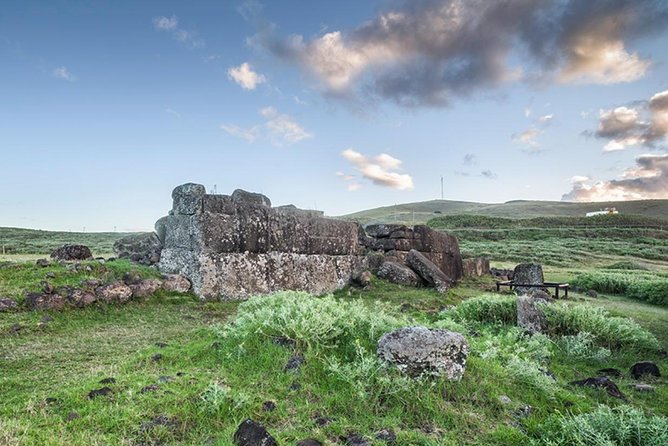
At Ahu Vinapu, the emphasis shifts to stonework. The site is valued for the precision of its ancient construction, and some theories have compared its masonry to Inca building styles. Your guide can help you look closely at the fitted stonework instead of treating the stop as just another ruined platform.
The day ends at Ahu Tahai, a ceremonial complex restored in 1974 by American archaeologist William Mulloy. Tahai includes three ahu, or ceremonial platforms: Ko Te Riku, Tahai, and Vai Ure. Ko Te Riku is particularly memorable because its moai has restored eyes.
You have about an hour at Tahai. Its location near Hanga Roa makes it a convenient sunset spot and a good introduction to the island’s moai tradition. The practical advantage is timing: after visiting remote sites, you finish close to town rather than driving far into the countryside.
Admission is not included at any of these stops. The separate national park ticket costs $80 per person, so include that in your budget from the start.
Day 2: The full island route from Akahanga to Anakena
Day 2 is the longest and most site-heavy part of the experience. It begins at Ahu Akahanga on the southeast coast, where fallen moai lie on their backs and faces near the ground.
That sight can feel more affecting than a row of upright statues. It shows the damage and disruption that affected the ceremonial sites, while also giving you a sense of how a traditional village was arranged around its ahu. The planned hour gives your guide time to explain the site without rushing you through it.
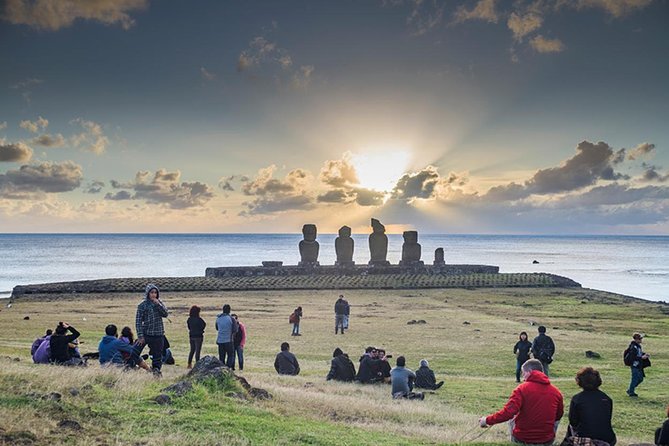
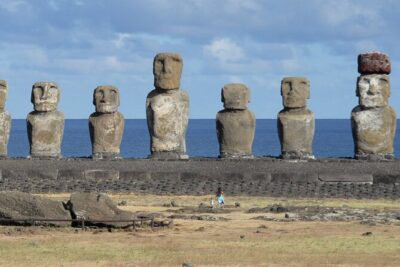
From Akahanga, the route continues to Ahu Tongariki, the largest reconstructed ahu on Rapa Nui. Fifteen moai face inland with their backs to the Pacific, creating one of the island’s most powerful views.
You have 90 minutes here during the daytime visit. That gives you time to study the scale of the platform, take photographs, and hear how the site was restored. Tongariki is not merely a photo stop. Its size helps you understand the labor and organization that went into moving and raising these statues.
The next stop is Rano Raraku, the only volcanic tuff quarry on the island. This is where the moai were carved before being transported to ceremonial platforms around Rapa Nui.
Two hours is the right amount of time for this site. You can see unfinished statues still attached to the rock and get a clearer sense of the carving process. The quarry changes the way you see the moai elsewhere. Instead of viewing each statue as an isolated monument, you begin to picture the stages of cutting, shaping, moving, and placing it.
Rano Raraku is also one of the more physically active stops. The data provided does not specify the walking surface or accessibility, so you should ask the operator about current conditions if mobility is a concern. The schedule allows more time here than at most other sites, which is valuable because the quarry rewards a slower look.
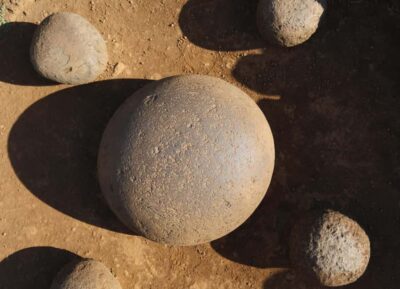
Ahu Te Pito Kura follows. Here you see Ahu o Paro, described as the largest moai transported from Rano Raraku, measuring about 11 meters long and weighing roughly 90 tons. Nearby is the rounded stone known as Te Pito o te Henua, which tradition says was brought to the island by ancestors.
The stop lasts 30 minutes. That is enough for the main explanation and photographs, though you will not have the same extended viewing time available at Rano Raraku or Tongariki.
The final stop is Anakena Beach, the island’s main beach. Its warm turquoise water and coral sand make a pleasant change after a day centered on stone and ritual sites. Anakena was also associated with the ancestral residence of the Miru Araki royal family.
Ahu Nau Nau is the major cultural focus here. Its moai are known for their refined workmanship, and several retain or suggest details that make them especially distinctive. The one-hour stop gives you time to see the platform and enjoy the beach setting.
I like the way Day 2 balances archaeology and scenery. You move from fallen statues to the largest restored platform, then to the quarry, a giant transported moai, and a beach tied to royal tradition. The drawback is simple: it is a long day with several major stops, so bring patience and be ready to keep moving.
Lunch is included, though the supplied details do not specify the restaurant, menu, or exact timing. Your guide can also suggest food and activities based on your schedule and location, a useful bonus when you have little time in Hanga Roa.
Day 3: Tongariki sunrise, Ahu Akivi, and red volcanic stone
The final day begins early at Ahu Tongariki for sunrise. You get about 90 minutes with the 15 moai, this time before the site takes on the look of a normal daytime visit.
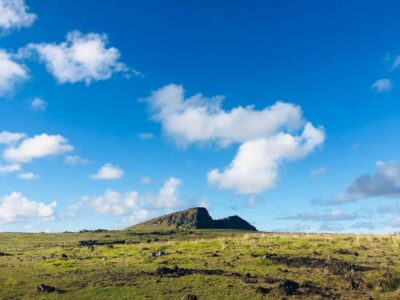
From October through March, the sun rises behind the platform during summer. During the rest of the year, sunrise is seen from the direction of Poike volcano. Winter has a greater chance of unclear skies, so the view depends partly on weather.
Even with that uncertainty, this is the strongest reason to choose this particular schedule. The statues, the open horizon, and the changing light create a different experience from the previous day’s visit. If the sky is cloudy, you still see Tongariki in the quiet morning setting, but you should keep expectations realistic. A sunrise tour cannot promise clear weather.
The next stop is Ahu Akivi, one of the few ceremonial platforms located inland rather than by the coast. Its seven moai were restored by William Mulloy, Gonzalo Figueroa, and the Rapa Nui community.
The statues have an astronomical alignment and face toward the setting sun. The planned stop is 30 minutes, so this is a concise visit. It works best when your guide explains the platform’s orientation and restoration, since the significance is not always obvious from a quick glance.
At Puna Pau, you visit the quarry where red volcanic stone was extracted for the pukao, the large topknots or hair pieces placed on some moai. Twenty-three cylindrical pukao prototypes remain at an early stage of carving, showing how the pieces were prepared for transport to the ahu.
Puna Pau also gives you a privileged view of Hanga Roa. After the grandeur of Tongariki and the solemnity of Akahanga, this final stop offers a wider view of the island’s main settlement.
The third day is short but meaningful. It does not try to repeat every major site. Instead, it gives you a celebrated sunrise, an inland ceremonial platform, and a look at the red stone used for moai adornment.
More Rapa Nui trips and moai walks:
- From Hanga Roa: Rapa Nui Culture Sightseeing Tour
★ 4.6 · 307 reviews - From Hanga Roa: Easter Island Highlights 2-Day Tour
★ 4.3 · 205 reviews - From Hanga Roa: Easter Island Sightseeing Full Day Tour
★ 4.5 · 189 reviews - Two days of Full Day Tour of Rapa Nui + Sunrise in Tongariki
★ 4.5 · 132 reviews
How the private guide changes the experience
The strongest part of this tour is not simply the number of sites. It is the guide’s role in linking them.
Sebastian is praised for speaking excellent English and presenting information in a way that is easy to follow. That matters on Rapa Nui, where a site can look simple until someone explains what happened there and why it mattered.
Tokerau is described as deeply connected to the island and passionate about sharing his home. His local relationships also added an entertaining side to the driving time. If you are paired with him, bring a few country music suggestions.
Alberto is praised for shaping the day around what the group wanted. He added shopping time, helped with phone photography, and made the sunrise at Tongariki a highlight. Yo-yo is noted for clear explanations, punctuality, and patience with a family that needed a slightly later start.
You cannot request a particular guide from the information provided, so do not book on the assumption that one named person is guaranteed. Still, the pattern is encouraging: the guiding approach appears personal, flexible, and attentive to different kinds of visitors.
Is $795 per person a fair price?
The price is high, especially once you add the $80 national park ticket. For two people, the tour cost is $1,590 before that admission charge. It is not a budget sightseeing option.
The value comes from the private transport, hotel pickup and drop-off, lunch, a professional guide, and the amount covered in only three days. You are paying for a plan that reaches the island’s major sites without requiring you to solve the driving and timing yourself.
I think the price makes the most sense for a short visit, a family group, or anyone who wants context rather than a series of photographs. The cost per person may also feel more reasonable for a larger private party, though the exact price structure beyond the stated per-person amount is not provided.
It makes less sense if you have a longer stay and prefer to explore slowly, or if you already have transport and a strong plan. In that case, you may value independent time more than the convenience of a private three-day route.
Who should book this experience?
I would choose this tour if you are staying only two nights and want the major sights organized into a sensible plan. It is also a good fit if you want to ask questions, adjust the pace, add shopping, or get help with local food and activity suggestions.
Families may appreciate the private setting. A guide can respond to children’s needs more easily than a large group can, and one family specifically valued the ability to start a few minutes late.
The tour also suits first-time visitors who want the culture explained clearly. The moai are the headline, but the best parts of Rapa Nui include the ceremonies, village layouts, quarries, astronomical alignments, and restoration work.
I would think twice if you dislike early starts, full sightseeing days, or fixed route planning. The sunrise at Tongariki requires an early morning, and Day 2 covers a lot of ground. The tour is flexible, but it remains a three-day essentials program rather than a slow retreat.
Free cancellation is available up to 24 hours before the start time. Changes or cancellations made within 24 hours are not accepted for a refund, and the cut-off follows local time.
Final verdict: a strong choice for two nights on Rapa Nui
I recommend the Easter Island Essentials tour for anyone with a short stay who wants the island’s major sites explained by a private guide. The sunrise at Tongariki, the two-hour visit to Rano Raraku, and the flexible guiding are the best reasons to book.
The price deserves serious thought, and the national park ticket is extra. Still, the private transport and concentrated schedule can be worth it when every hour matters. If you want to leave Rapa Nui understanding more than the shape of the moai, this is a well-targeted choice.
FAQ
How long is the Easter Island Essentials tour?
The experience lasts approximately three days, arranged as two half days and one full day.
Is this a private tour?
Yes. Only your group participates in the activity, with private transportation and a professional guide.
What is included in the price?
Lunch, private transportation, hotel pickup and drop-off, transport by private vehicle, and a professional guide are included.
Is the national park ticket included?
No. The national park ticket costs $80 per person and must be paid separately.
Does the tour include a visit to Ahu Tongariki?
Yes. Ahu Tongariki is visited during the full day and again for sunrise on the third day.
When does the sun rise behind the Ahu Tongariki platform?
From October through March, the sun rises behind the platform. During the rest of the year, sunrise is seen from the direction of Poike volcano.
Is this tour available to cruise ship passengers?
No. The tour is not available for cruise ship passengers.
Can children participate?
The provided information says most people can participate. A previous family experience also noted that the guide accommodated children and adjusted the start time by a few minutes.
Does the tour visit the moai quarry?
Yes. Day 2 includes two hours at Rano Raraku, the volcanic tuff quarry where the moai were carved.
Can I cancel for a full refund?
Yes, if you cancel at least 24 hours before the experience start time. Cancellations or changes made less than 24 hours before the start time are not refunded.
Just added around Easter Island
- Volcanic Refuges: Excursion to Underground Civilization★ 4.7 · 8 reviews
- Volcanic Wonders and the Kingdom of the Birdman: Half Day★ 5.0 · 6 reviews
- Easter Island Ancestral Dinner and Show with Transport★ 4.5 · 2 reviews
- Half Day Private Tour: Caves and Volcanic Refuges★ 4.0 · 14 reviews
- Tour to the Motus: Boat trip and snorkeling in Rapa Nui★ 5.0 · 8 reviews
- Birdman Ceremonial Route: Orongo, Ranu Kau Half-Day Tour★ 4.5 · 16 reviews
- Visit Rapa Nui in 4 days with 3 Tours and Accommodation included★ 4.0 · 2 reviews
- Private Tour: Tongariki Sunrise Experience★ 4.5 · 20 reviews
Easter Island Tours, compared.
Two days of Full Day Tour of Rapa Nui + Sunrise in Tongariki
Read our review →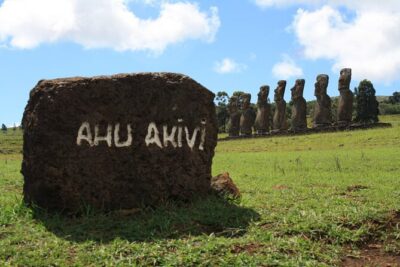
2-Day Private Tour Easter Island Highlights Complete Discovery
Read our review →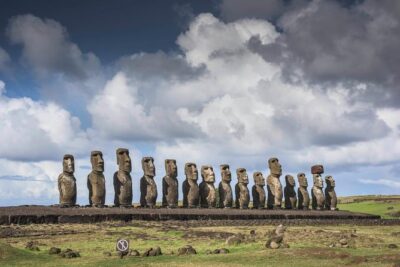
Private Tour: Full Day Easter Island Highlights
Read our review →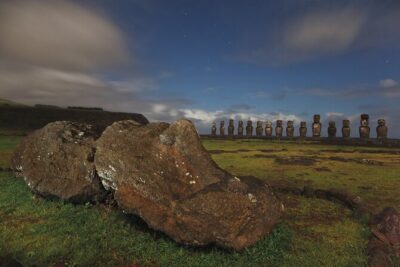
Browse the lists this tour appears in