
Reviewed · EASTER ISLAND TOURS
Full Day Tour to the Emblematic Sites in Rapa Nui
Rapa Nui rewards a full day. This 7 to 8 hour outing connects Orongo, Rano Kau, Rano Raraku, Ahu Tongariki, and Ahu Akivi, giving you a clear look at the island’s volcanic setting and moai traditions. I like the route because it covers the essential sites without making you arrange several separate trips, and I like the small maximum of 10 people. The main drawback is the price: $300 per person, with the National Park ticket added separately.
The day begins at 9:30 a.m. and includes lunch, which keeps the schedule simple. Guide Bruno has earned especially warm praise for his patience, flexibility, and local insight, including waiting through a two-hour weather delay before adjusting the day’s plan. Still, you need moderate physical fitness, and the National Park ticket must be purchased before the first excursion.
In This Review
- Five things to know before booking
- Why this full-day route works well
- Orongo and Rano Kau: ceremony above the sea
- Rano Raraku: the island’s moai workshop
- Ahu Tongariki and its row of 15 moai
- Ahu Akivi and the seven ocean-facing figures
- What $300 per person really buys you
- Lunch, fitness, and the rhythm of the day
- Who will get the most from this Rapa Nui day tour?
- Booking advice and cancellation terms
- Should you book it?
- FAQ
- How long does the full-day Rapa Nui tour last?
- Which sites are included?
- Is lunch included?
- Is the National Park entrance ticket included?
- Where does the tour start and finish?
- Is pickup available?
- How many people can join the tour?
Five things to know before booking
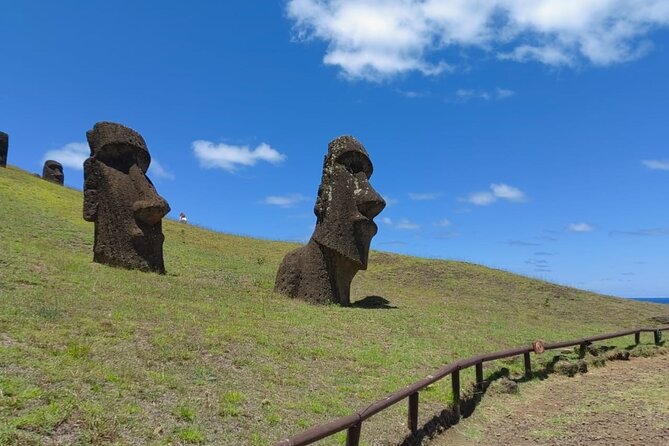
- Five major Rapa Nui sites in one day: The route includes two volcanoes, two ahu platforms, and the island’s famous moai quarry.
- A small group of up to 10 people: This should feel more personal than a large coach outing, though the exact group size can vary.
- Lunch is included: Tell the operator about food allergies or dietary restrictions ahead of time.
- The park ticket costs extra: Foreign visitors pay $80, while Chileans pay CLP20,000 per person.
- Bruno may be the guide to request: He is praised for waiting through a serious flight delay and reshaping the day around what mattered most to his guests.
Why this full-day route works well
Easter Island, or Rapa Nui, can look compact on a map, but its major archaeological sites are spread across the island. A full-day route saves you from piecing together transport and helps you see several very different settings in one outing.
The order gives you a useful sense of contrast. Orongo and Rano Kau sit together above the island’s dramatic southwestern coast. Rano Raraku shows where many moai were carved. Ahu Tongariki presents the great row of restored statues, while Ahu Akivi offers a smaller and more unusual platform with seven moai facing toward the ocean.
I like this mix because the day is not just a parade of statues. You get ceremonial sites, volcanic craters, unfinished stone figures, and restored platforms. Each stop answers a different question about Rapa Nui: where people gathered, where moai were made, how they were displayed, and how the island’s natural setting shaped its culture.
The tour is offered in English, begins at the Mata Nui Hostel near Hanga Roa Catholic Church, and returns to the same meeting point. Pickup is offered, with passengers asked to wait at the entrance or reception of their accommodation. Confirm the pickup details before departure, especially if you are not staying close to the stated starting point.
More Rapa Nui trips and moai walks:
- From Hanga Roa: Rapa Nui Culture Sightseeing Tour
★ 4.6 · 307 reviews - From Hanga Roa: Easter Island Highlights 2-Day Tour
★ 4.3 · 205 reviews - From Hanga Roa: Easter Island Sightseeing Full Day Tour
★ 4.5 · 189 reviews
Orongo and Rano Kau: ceremony above the sea
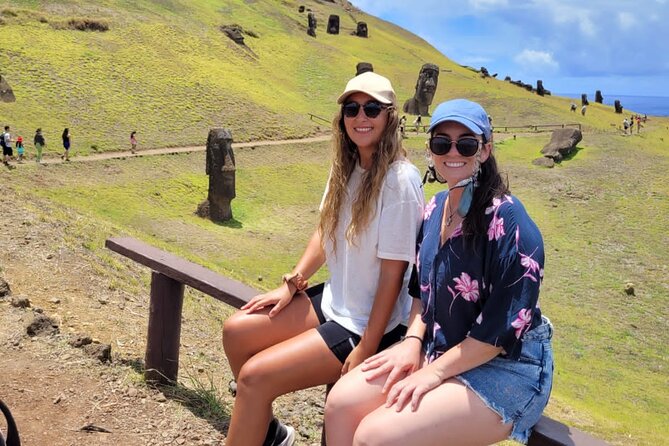
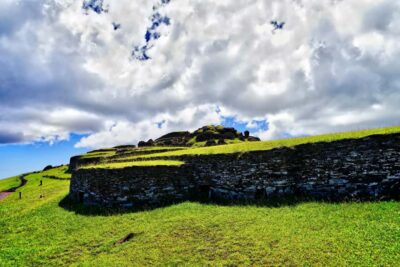
The first major stop is Orongo, a ceremonial village at the top of Rano Kau. You have about 90 minutes here, which is enough time to take in the stone houses and the setting without rushing through the site.
Orongo is tied to the Tangata Manu, or birdman, competition. The location matters as much as the structures. Perched high on the crater rim, the village looks toward the ocean and the small offshore islets connected with the competition. The setting makes the old ceremony easier to understand: this was not an ordinary settlement, but a place built for ritual, status, and a demanding contest.
Admission to Orongo is listed as free within the tour details, but you still need the overall Rapa Nui National Park ticket. That distinction matters. You cannot treat the free site admission as a substitute for the park pass.
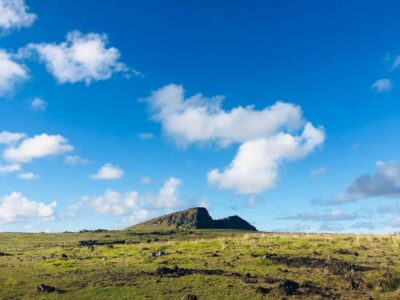
Next comes Rano Kau, the largest volcano on the route and one of the most striking natural settings in Rapa Nui. You have about an hour here. The crater’s immense scale and quiet are the point. Wind, distant surf, and seabirds provide most of the sound.
Bring your attention to the crater rather than expecting a busy attraction with many separate activities. Rano Kau is a place for looking, listening, and understanding how volcanic terrain frames the island. If strong wind or weather affects the day, this is also one of the stops where conditions can shape how long you want to remain outside.
Rano Raraku: the island’s moai workshop
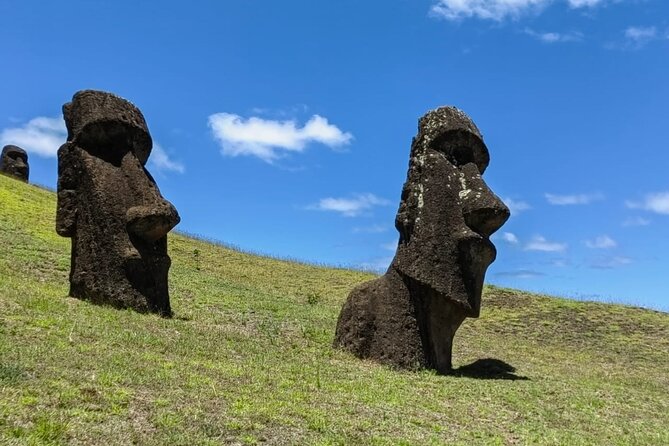
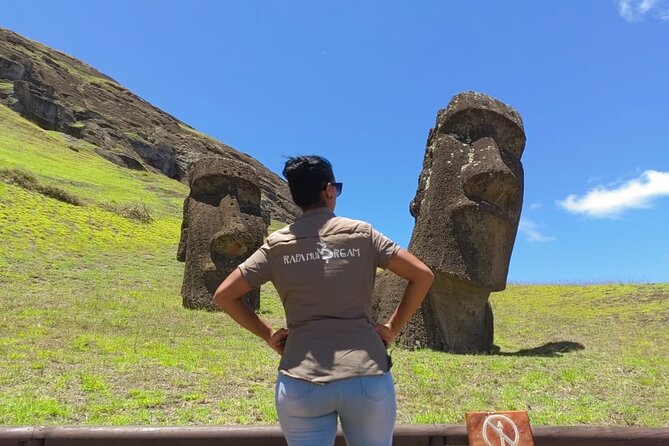
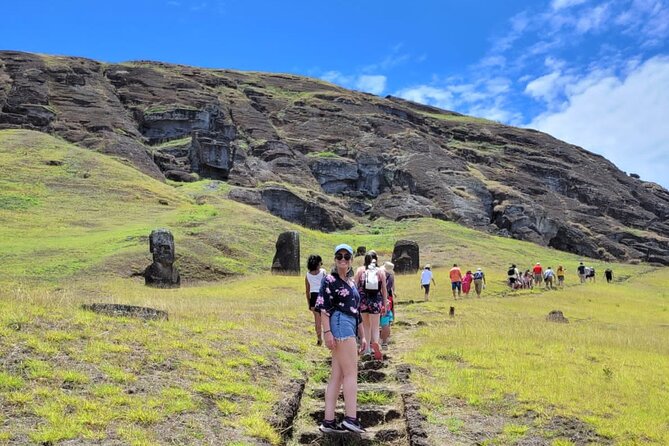
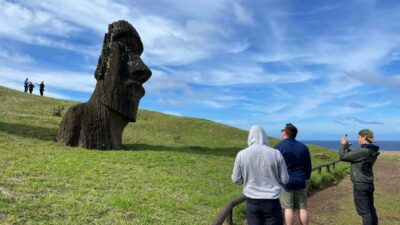
Rano Raraku receives two hours, the longest stop on the schedule. That is sensible. This is the moai factory, with about 400 unfinished statues still connected to the slopes and surrounding area.
The unfinished figures change the way you see the famous completed moai. At Ahu Tongariki, the statues appear as a finished group. At Rano Raraku, you see the work in progress, including figures that were never moved from the volcanic stone. The site gives you a clearer sense that carving and transporting a moai were separate stages of a much larger undertaking.
Two hours also makes room for a slower visit. You can study how the figures remain in different stages of completion and take in the volcanic surroundings without treating the stop as a quick photo break. The site is one of the tour’s most important stops, so I would not want a schedule that cut it down to 30 or 45 minutes.
Rano Raraku requires the National Park ticket, which is not included in the tour price. Wear practical shoes and expect a moderate level of physical activity across the day. The operator specifically asks you to have a moderate fitness level, and that advice is worth taking seriously when a full day includes several outdoor archaeological sites.
Ahu Tongariki and its row of 15 moai
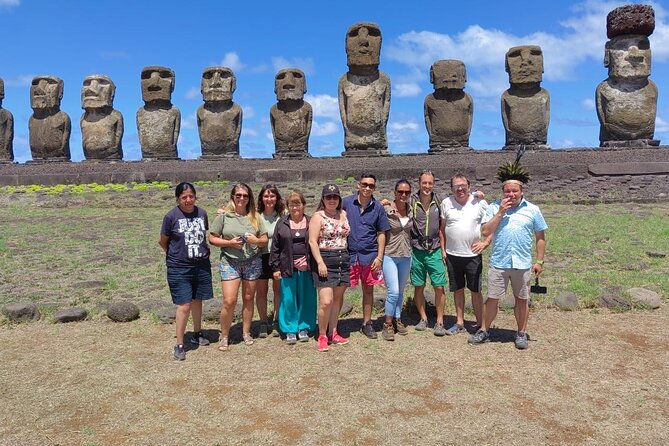
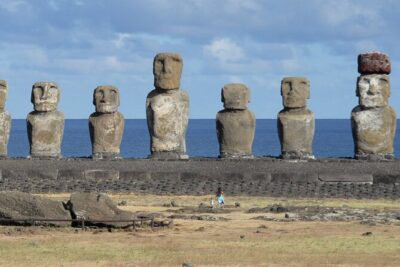
Ahu Tongariki gets about 90 minutes. It is the largest ahu platform in Polynesia and has 15 upright moai with their backs to the ocean.
This is the grandest group view on the route. The line of statues gives the site a strong visual order, while the open setting makes the scale easy to appreciate. After seeing unfinished figures at Rano Raraku, Tongariki feels like the completed expression of the carving tradition.
The statues face inland rather than out toward the sea. That detail is easy to miss if you are focused only on photographs, so listen closely to the guide’s explanation. The orientation helps you think about the relationship between the moai, the community, and the platform behind them.
Ninety minutes is a useful amount of time here. You can take in the full row, look at individual figures, and allow time for the setting to sink in. This is also a good place to avoid rushing from one photo angle to another. The power of Tongariki comes from the group as a whole.
Because the National Park entrance fee is separate, budget for it before you compare the total cost with other island tours. The foreign visitor rate supplied for this activity is $80 per person. Chileans pay CLP20,000 per person.
A few more Easter Island trips worth comparing side by side
- Two days of Full Day Tour of Rapa Nui + Sunrise in Tongariki
★ 4.5 · 132 reviews - Full Day Tour in Rapa Nui
★ 4.5 · 122 reviews - Private Tour: Full Day Easter Island Highlights
★ 5.0 · 106 reviews - Full day tour – DREAM
★ 5.0 · 86 reviews
Ahu Akivi and the seven ocean-facing figures
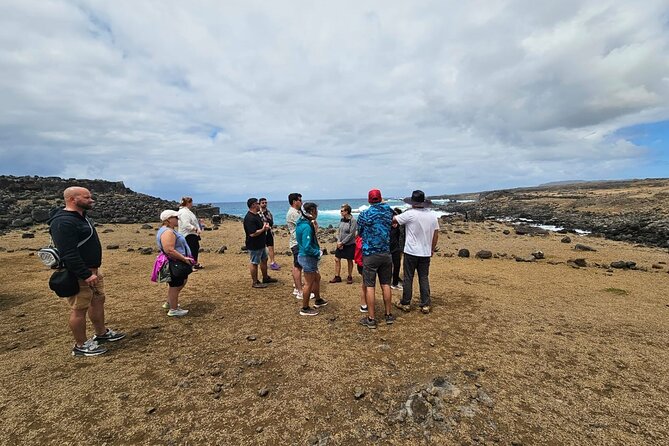
The final listed stop is Ahu Akivi, with about an hour on site. Its seven moai face the ocean, making it different from the inland-facing figures at Ahu Tongariki.
The platform is more than 500 years old and was originally called Ahu Atiu. Its position somewhere in the Polynesian triangle is part of what gives the site its special character. After the larger groups at Rano Raraku and Tongariki, Akivi provides a quieter finish with a more compact arrangement.
I like having Ahu Akivi at the end because it gives you one last point of comparison. You have seen a ceremonial village, a crater, a quarry, and the largest platform. Here, the seven figures create a different visual relationship with the surrounding land and ocean.
The one-hour visit should be enough for a focused stop. As with the other archaeological sites, the National Park ticket is not included in the $300 tour price.
What $300 per person really buys you
At first glance, $300 is a high price for a day tour. For a foreign visitor, add the $80 National Park ticket, bringing the listed basic total to $380 per person before any other personal spending. Chilean visitors pay the CLP20,000 park fee instead.
The value depends on what you want from Rapa Nui. If your priority is the lowest possible cost, this tour may be difficult to justify. If you want one organized day that links the island’s major moai sites and includes lunch, pickup, English-language guiding, and a group capped at 10, the price becomes easier to understand.
You are also paying for time and coordination. The route covers five important places, and the sites are not all clustered together. A smaller group can make it easier to hear explanations and adjust the day if weather or arrival problems interfere.
The strongest evidence of personal service comes from the account involving Bruno. A flight delay put the guests two hours behind schedule, yet Bruno waited and still managed to take them to the places they cared about, along with additional sights. That kind of patience can matter a great deal on an island where flight schedules and weather may not always cooperate.
Still, do not assume every booking will become a private tour. The stated maximum is 10 people, while the praised booking happened to be private for two people. Ask about the expected group size if that detail affects your decision.
Lunch, fitness, and the rhythm of the day
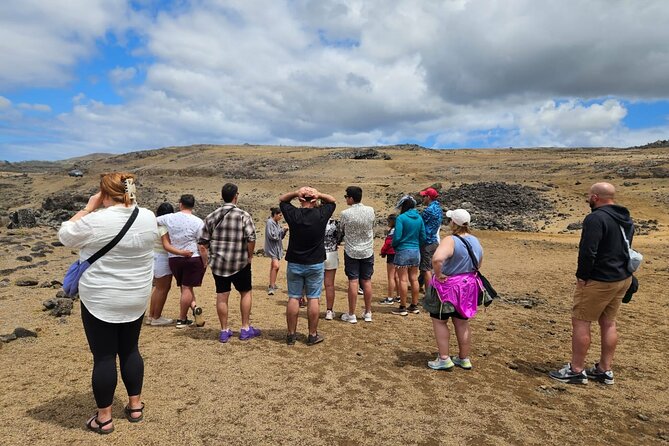
Lunch is included, a useful benefit on a 7 to 8 hour outing. You must notify the operator in advance about allergies or food restrictions. Do not wait until the morning of the tour, since the meal needs to be arranged ahead of time.
The start time is 9:30 a.m. The tour ends back at the meeting point, so you can plan the rest of your evening in Hanga Roa without arranging a separate return transfer. The day is long, but the schedule gives the major sites enough time rather than racing through each one.
Moderate physical fitness is required. The tour details do not provide a full accessibility assessment or specify the exact walking conditions at every stop, so you should contact RAPA NUI DREAM if you have mobility concerns. Even without a strenuous hike listed, five outdoor sites over many hours can be tiring.
Weather deserves practical attention. The experience of Bruno waiting through a two-hour arrival delay shows that flexibility can matter. I would keep the evening after this tour fairly open and avoid scheduling an important connection immediately afterward.
Who will get the most from this Rapa Nui day tour?
This outing suits you best if you have limited time on Easter Island and want to see the main sites with one organized plan. It is also a strong match if you prefer an English-language guide and want lunch and pickup handled for you.
You will likely appreciate it if archaeological sites mean more when someone explains the setting and purpose. Orongo, Rano Raraku, Tongariki, and Akivi each carry details that are easy to miss when you visit without context.
The tour is less suited to you if you want a very slow visit at every site, a guaranteed private vehicle, or the freedom to change the route throughout the day. The maximum group is 10, and the schedule has fixed time blocks. The day is designed for broad coverage, not an unhurried stay at one location.
It is also not ideal for anyone who has not arranged the National Park pass. You must have that ticket before the first day of the excursion. It can be purchased in person at the Ma’u Henua offices or through the Rapa Nui National Park website provided by the operator.
Booking advice and cancellation terms
Confirmation is received at the time of booking, and the activity is generally booked about 35 days in advance. That lead time suggests you should not leave it until the last minute if this is a key part of your Rapa Nui plans.
Free cancellation is available up to 24 hours before the local start time for a full refund. Cancellations or changes made less than 24 hours before the start are not accepted for a refund.
The meeting point is Mata Nui Hostel, Ara Roa Rakei, near Hanga Roa Catholic Church. Pickup is offered, but you should wait at the entrance or reception of your accommodation as requested and confirm the exact arrangement before the morning departure.
Should you book it?
I would book this tour if you want a practical first look at Rapa Nui’s major sites and value a small group, included lunch, and a guide who may bring real flexibility to the day. The route is well chosen: Orongo and Rano Kau provide ceremony and volcanic drama, Rano Raraku explains the moai-making process, and Tongariki and Akivi show two very different ahu settings.
I would hesitate only if the combined $300 tour price and National Park fee strain your budget, or if you need a private itinerary with no fixed schedule. For most visitors with one precious day to see the island’s best-known archaeological sites, the coverage and personal service make this a serious option. Request Bruno by name if possible, confirm the group size, arrange the park ticket in advance, and disclose any food restrictions before you go.
FAQ
How long does the full-day Rapa Nui tour last?
The tour lasts approximately 7 to 8 hours and begins at 9:30 a.m.
Which sites are included?
The route includes Orongo, Rano Kau, Rano Raraku, Ahu Tongariki, and Ahu Akivi.
Is lunch included?
Yes. Lunch is included, but food allergies and dietary restrictions must be reported in advance.
Is the National Park entrance ticket included?
No. Foreign visitors pay $80 per person, while Chileans pay CLP20,000 per person. You must have the ticket before the first excursion day.
Where does the tour start and finish?
It starts at Mata Nui Hostel on Ara Roa Rakei near Hanga Roa Catholic Church and ends back at the meeting point.
Is pickup available?
Yes. Pickup is offered, and passengers are preferably asked to wait at the entrance or reception of their accommodation.
How many people can join the tour?
The tour has a maximum of 10 participants.
Just added around Easter Island
- Volcanic Refuges: Excursion to Underground Civilization★ 4.7 · 8 reviews
- Easter Island Ancestral Dinner and Show with Transport★ 4.5 · 2 reviews
- Volcanic Wonders and the Kingdom of the Birdman: Half Day★ 5.0 · 6 reviews
- Half Day Private Tour: Caves and Volcanic Refuges★ 4.0 · 14 reviews
- Tour to the Motus: Boat trip and snorkeling in Rapa Nui★ 5.0 · 8 reviews
- Birdman Ceremonial Route: Orongo, Ranu Kau Half-Day Tour★ 4.5 · 16 reviews
- Visit Rapa Nui in 4 days with 3 Tours and Accommodation included★ 4.0 · 2 reviews
- Private Tour: Tongariki Sunrise Experience★ 4.5 · 20 reviews
Easter Island Tours, compared.
Two days of Full Day Tour of Rapa Nui + Sunrise in Tongariki
Read our review →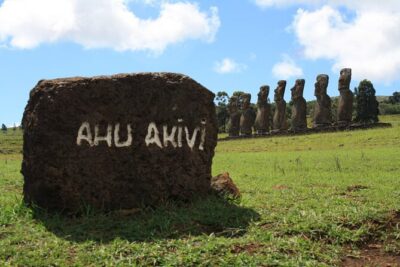
2-Day Private Tour Easter Island Highlights Complete Discovery
Read our review →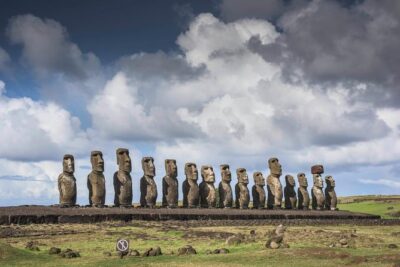
Private Tour: Full Day Easter Island Highlights
Read our review →
Browse the lists this tour appears in