
Reviewed · EASTER ISLAND TOURS
Easter Island: Half-Day Archaeology Tour
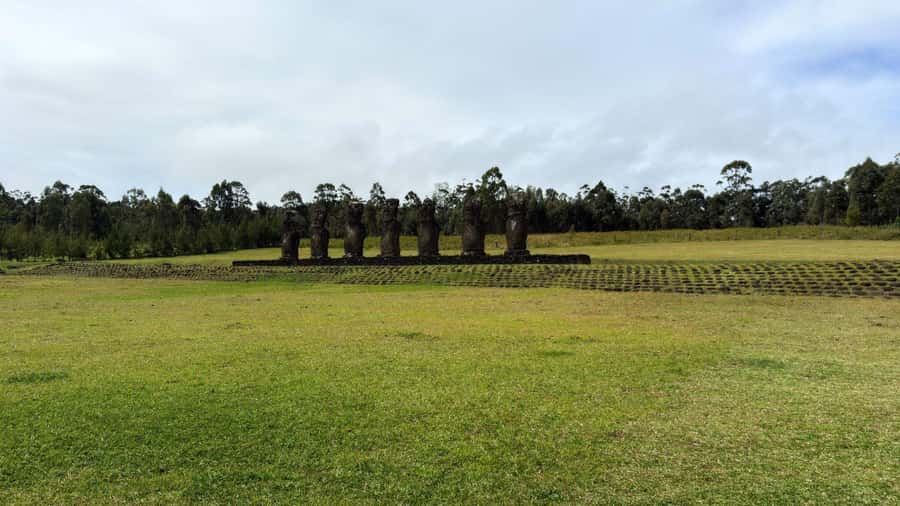
Seven stone figures face the sea. This three-hour archaeology tour gives you a smart introduction to Rapa Nui, with the seven moai at Ahu Akivi and the red-stone quarry at Puna Pau as its strongest stops. I like the small group limit of 15 and the easy hotel pickup from Hanga Roa.
The main drawback is the extra $100 Rapa Nui National Park entrance fee, which makes the real cost $191 per person before any other spending. The tour is also too short to cover every major site on Easter Island, so it works best as an introduction or as a compact option for a tight schedule.
In This Review
- Key points at a glance
- Why this three-hour route works on Easter Island
- Ahu Tahai and the first look at a moai
- Puna Pau, where red pukao changed the look
- Ahu Akivi and the seven statues facing the ocean
- Ahu Huri a Urenga and the island’s interior
- What the guide adds to the experience
- The real price: $191 before other costs
- Pickup, timing, and what to bring
- Who should book this Easter Island tour?
- Should you book it?
- FAQ
- How long does the Easter Island archaeology tour last?
- What is the price of the tour?
- Is the national park entrance fee included?
- Which sites does the tour visit?
- Does the tour include hotel pickup?
- What languages are available?
- How large is the group?
- Is the tour suitable for cruise ship passengers?
- Is the tour wheelchair accessible?
- What should I bring?
Key points at a glance
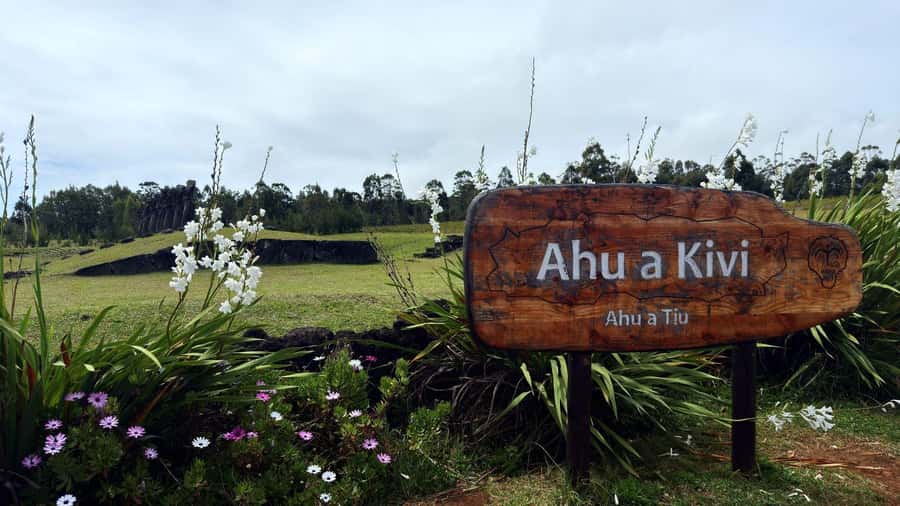
- Seven ocean-facing moai: Ahu Akivi is unusual because its statues look toward the sea instead of turning their backs to it.
- Red pukao at Puna Pau: See the quarry where the red scoria topknots were made for some moai.
- Four archaeological sites: The route includes Ahu Tahai, Puna Pau, Ahu Akivi, and Ahu Huri a Urenga.
- Hotel pickup in Hanga Roa: Transport is included, so you do not need to arrange a separate ride to the sites.
- English and Spanish guiding: A live guide explains the sites in either language.
- Short, focused format: Three hours is enough for a useful first look, but not a full exploration of Rapa Nui National Park.
Why this three-hour route works on Easter Island
Easter Island, or Rapa Nui, is not a place you understand from a quick photo stop. Its moai are tied to family groups, ceremonial platforms, volcanic stone, agriculture, and long-standing questions about how the statues were moved. A guide helps connect those pieces while you look at the actual sites.
This tour keeps the route compact. From Hanga Roa, you visit four important places within about three hours, then return to your hotel. I see that as the main strength: you get a clear introduction without giving up an entire day.
The tour operates inside Rapa Nui National Park, a UNESCO World Heritage Site covering most of Easter Island. The park contains about 900 moai and roughly 300 ahu, the ceremonial platforms connected with them. That scale matters. You are not visiting one isolated monument, but a broad archaeological area where each site offers a different clue about Rapa Nui society.
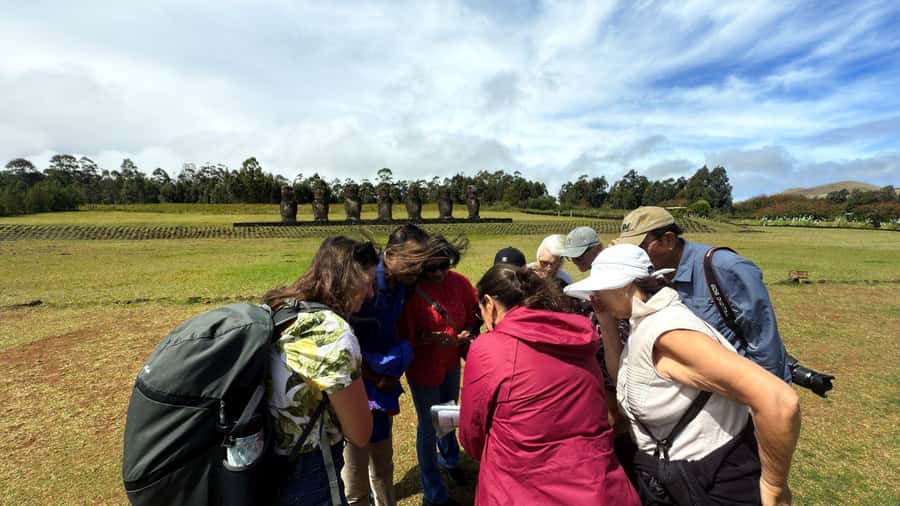
The group limit of 15 should make the experience easier to manage than a large coach outing. It may also give you a better chance to hear the guide at each stop. Previous feedback particularly praises the clear explanations and personable guiding, so the human side of the tour appears to be one of its best features.
More Rapa Nui trips and moai walks:
- From Hanga Roa: Rapa Nui Culture Sightseeing Tour
★ 4.6 · 307 reviews - From Hanga Roa: Easter Island Highlights 2-Day Tour
★ 4.3 · 205 reviews - Full Day Tour in Rapa Nui
★ 4.5 · 122 reviews
Ahu Tahai and the first look at a moai
Ahu Tahai is the first listed stop after hotel pickup. It gives you an immediate introduction to the ahu and moai relationship: a ceremonial platform, a carved figure, and the questions surrounding both.
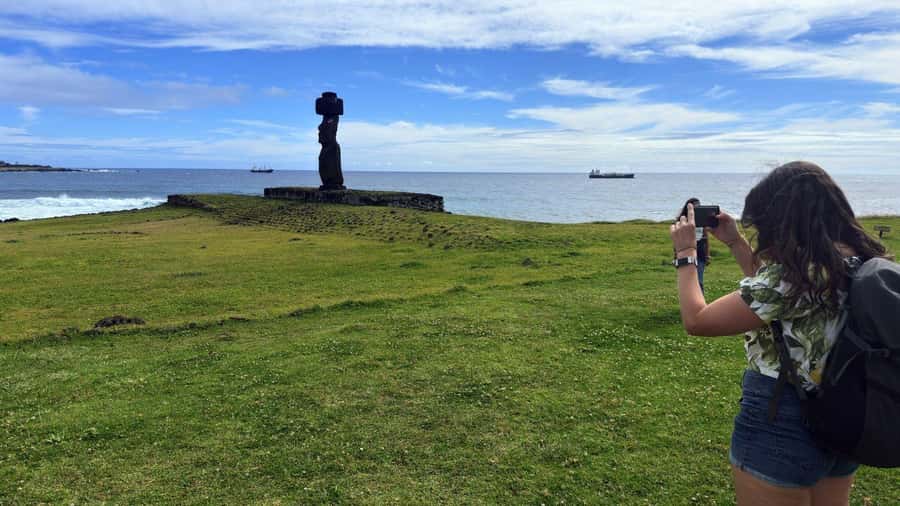
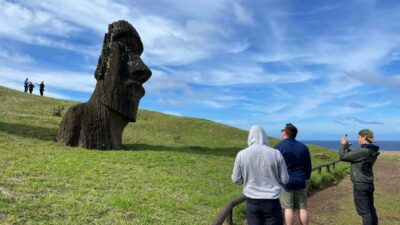
The route description highlights one unusual moai here, a solitary stone figure protected by its imposing size, more than 13 feet tall. That first encounter can be useful because it lets you see the moai at close range before comparing it with the larger group at Ahu Akivi.
I like beginning with a site that is visually direct. You do not need much preparation to appreciate the scale of a single statue. At the same time, do not expect Tahai alone to answer every question about the island. Its value comes from the guide’s explanation and from comparing it with the other ahu later in the morning or afternoon.
The tour is described as an archaeological experience, not a hiking trip. You should still wear comfortable shoes, since you will be moving around outdoor heritage sites. Baby strollers and large bags are not allowed, so pack lightly.
Puna Pau, where red pukao changed the look
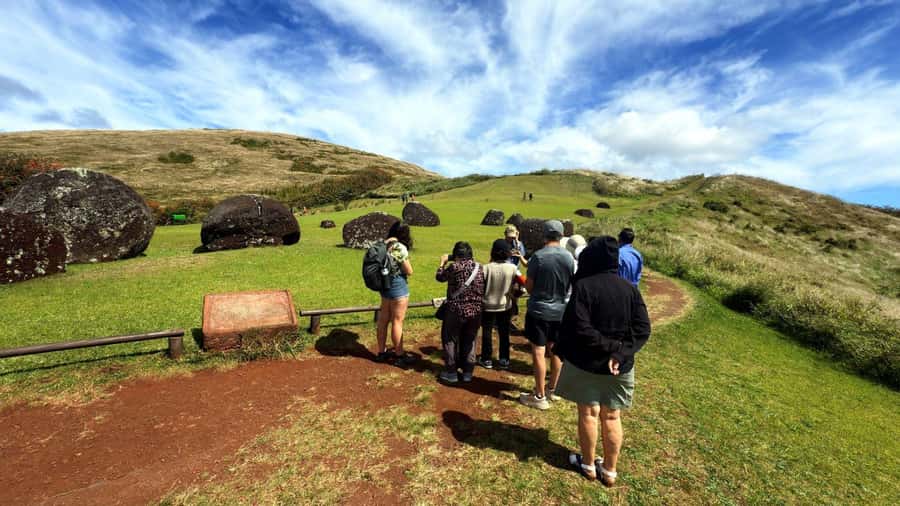
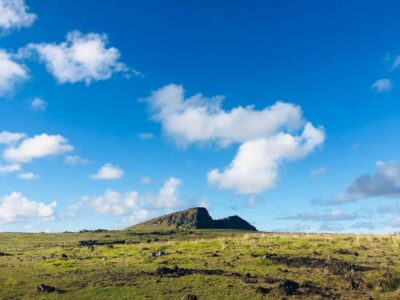
Puna Pau is one of the most distinctive stops because it explains a feature you may notice on other statues: the pukao, or red topknot placed on the head of some moai.
The topknots were made from red scoria, a volcanic rock found at this quarry. About 30 pukao are located in or near Puna Pau. Their color gives them a sharp contrast with the darker stone used for many of the statues.
The practical value of this stop is that it moves your attention beyond the moai themselves. You begin to see the statues as built objects made from different materials, not as single blocks of stone. The explanation that the red rock may have been used to impress rival tribes adds a social dimension to what could otherwise look like a simple quarry visit.
Puna Pau is also a reminder that the moai tradition required planning and labor. The people who made the statues had to select stone, shape it, and use it in a ceremonial setting. The tour does not promise a long walk or an extended quarry visit, so expect a concise explanation rather than a full archaeological study.
If you enjoy details about materials and construction, this may be one of the most rewarding stops. If you mainly want dramatic statues by the coast, Ahu Akivi will probably make the bigger impression.
Ahu Akivi and the seven statues facing the ocean
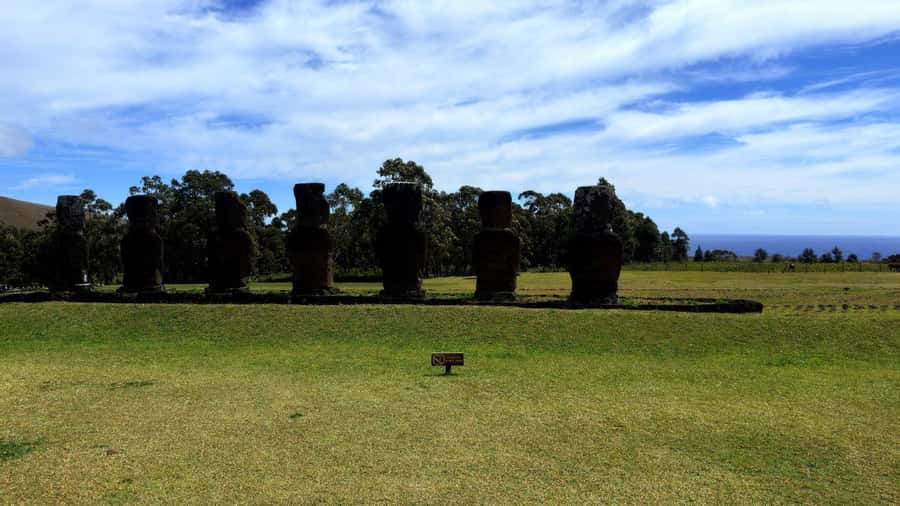
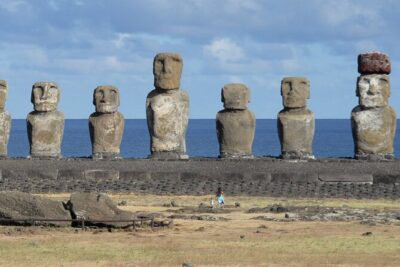
Ahu Akivi is the centerpiece of this half-day outing. Here, seven moai form a line, each about 16 feet tall and weighing roughly 18 tons. Their position is unusual because they face toward the ocean, while moai at many other ahu have their backs to the water.
That orientation gives the site its mystery. One theory says the statues represent seven explorers from Hiva, the Polynesian homeland. According to this idea, a chief sent them to find Rapa Nui, and the statues look back toward the direction from which they came.
The guide can help you separate established facts from interpretation. The statues are there, their placement is clear, and their scale is impressive. The story about the seven explorers is a theory, not a confirmed explanation, and it is best appreciated as part of the island’s continuing archaeological debate.
I like Ahu Akivi because it combines a strong view with a question you can understand at once. Why do these figures face outward? Why is this arrangement different from so many others? You do not need specialist knowledge to enjoy the puzzle.
This is also the stop where the limits of a short tour become clear. Seven statues of this size deserve time. With a three-hour schedule that includes several sites and return transport, your visit may feel efficient rather than leisurely. If you want long photo sessions or quiet time at each ahu, a full-day program would give you more breathing room.
Still, Ahu Akivi gives the tour a clear center. The seven moai are easy to remember, and the ocean-facing arrangement adds meaning beyond their physical size.
A few more Hanga Roa trips worth comparing side by side
- Ahu Vinapu, Rano Kao and Orongo City Half-Day Tour
★ 4.6 · 20 reviews - Birdman Ceremonial Route: Orongo, Ranu Kau Half-Day Tour
★ 4.5 · 16 reviews - Santiago Half-Day Walking Tour with Hotel Pick up & Food Sample
★ 4.5 · 467 reviews - Private Tour: Half-Day Santiago Discovery
★ 5.0 · 276 reviews
Ahu Huri a Urenga and the island’s interior
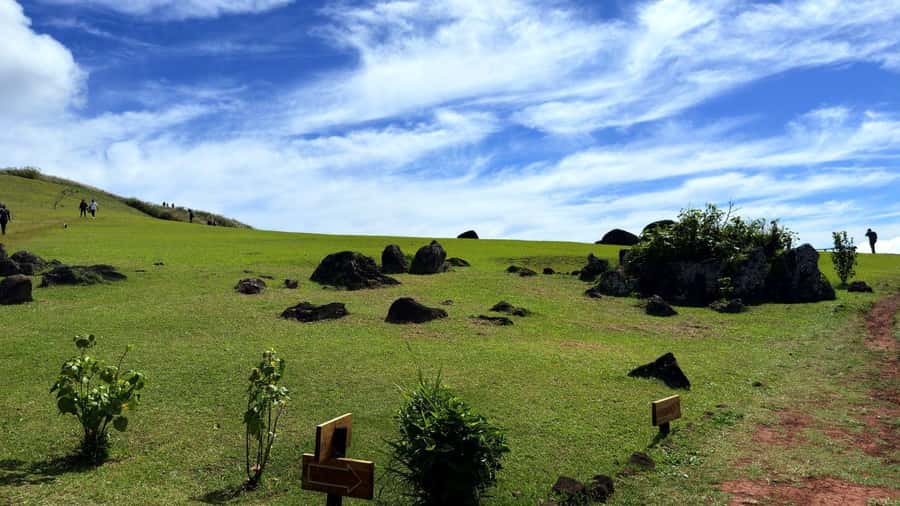
The final stop is Ahu Huri a Urenga, one of about 25 platforms located inland rather than along the coast. Its setting corresponds to an agricultural area, which helps broaden your understanding of Rapa Nui ceremonial life.
Many people first picture Easter Island through coastal moai. An inland ahu shows that the island’s sacred and social spaces were not limited to the shoreline. This stop links ceremonial activity with agriculture, an important contrast to the coastal sites earlier in the route.
I find this a useful final visit because it changes the rhythm of the tour. After the strong visual focus of the seven moai and the red pukao quarry, Ahu Huri a Urenga asks you to think about how people used the interior of the island. It is less about one famous image and more about the way archaeological sites relate to daily life and food production.
The information provided for this experience does not give a long list of structures or a detailed walking route at Ahu Huri a Urenga. You should therefore expect the guide to provide the main context during a short stop, rather than a lengthy independent exploration.
What the guide adds to the experience
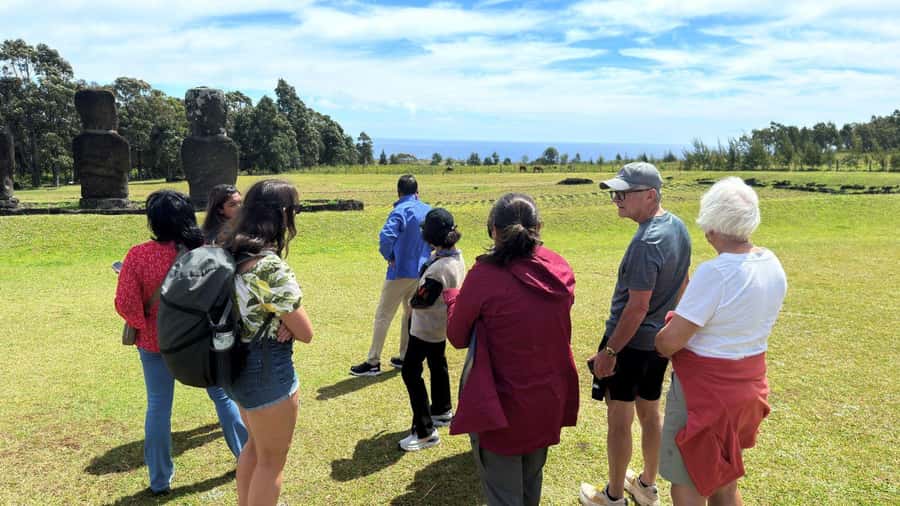
A half-day archaeology tour depends heavily on the guide. Without explanation, an ahu can look like a platform with large stone figures. With a good explanation, you can understand why the figures were made, how their materials differ, and why their placement matters.
The strongest feedback for this experience praises the guide’s informative and personable approach. One comment describes the tour as easygoing, while another emphasizes that the guide helped build a much better understanding of the island’s treasures. That combination is important. You want useful information, but you also want enough breathing room to look around.
The tour is offered in English and Spanish. Confirm your preferred language when booking, particularly if the language of the guide will shape how much you enjoy the archaeological detail.
Because the group is limited to 15 people, the setting should be more manageable than a large bus tour. That does not guarantee a private experience, but it does keep the group relatively small. A smaller group can make it easier to stay with the guide and move between the hotel pickup, sites, and return.
The real price: $191 before other costs
The advertised price is $91 per person, but the required Rapa Nui National Park entrance fee is not included and costs $100. Your effective total is therefore $191 per person before food, drinks, or anything else you may buy separately.
That is not a minor surcharge. The entrance fee is higher than the tour itself, so you should calculate the complete cost before booking. The tour becomes easier to justify if you value included hotel pickup, a live guide, and a compact route that connects several sites in one outing.
The price may be especially useful for you if you have only a short stay in Hanga Roa or want a guided introduction before choosing how to spend the rest of your time. It is less compelling if you already have transport, park access, and a detailed plan for seeing these same sites independently.
I would compare the total $191 with the cost of a longer tour before deciding. A full-day option may provide more sites and more time, while this half-day route offers a shorter commitment. The right choice depends on how much archaeological sightseeing you want in one day.
Pickup, timing, and what to bring
Hotel pickup and drop-off are included for Easter Island hotels. You should wait in the hotel lobby 10 minutes before the scheduled pickup, since the driver will wait no longer than five minutes after the planned time.
The experience lasts three hours, but starting times vary. Check availability carefully before booking, especially if you have flights, meals, or another activity planned around it. The tour returns you to your hotel after the final stop.
Wear comfortable shoes. The tour does not list a strenuous hike, but outdoor archaeological sites are easier to enjoy when your footwear is practical. Large bags and luggage are not allowed, and baby strollers are not permitted. Alcohol and drugs are also prohibited.
The tour is not suitable for wheelchair users. It is also not designed for cruise ship passengers, even though the activity is sometimes shown in general sightseeing searches. The pickup arrangement is specifically for people staying in hotels, so cruise passengers should not assume they can join from a ship or port transfer.
Who should book this Easter Island tour?
I would recommend this tour if you want a short, organized introduction to Rapa Nui’s main archaeological ideas. It suits you especially well if you are staying in Hanga Roa, prefer hotel pickup, and want an English or Spanish guide to explain what you are seeing.
It is also a good fit if Ahu Akivi is high on your list. The seven ocean-facing moai are the most memorable part of the route, and Puna Pau adds a useful explanation of the red topknots found on other statues.
You may want a longer outing instead if you are keen on a broad survey of the island, extended time at each site, or a more relaxed photography schedule. Three hours passes quickly once pickup, driving, explanations, and several stops are included.
The tour is not a good match for cruise ship passengers, wheelchair users, or anyone traveling with large luggage. It also requires you to budget another $100 for park admission, a cost that changes the value calculation considerably.
Should you book it?
Book this experience if you want four important archaeological stops, hotel transport, and a guide in a compact three-hour format. The small group size and strong praise for clear, friendly explanations make it more appealing than a bare transport service.
Before paying, add the $100 park fee to the $91 tour price and check the starting time. If $191 feels reasonable for a focused introduction, this is a practical way to meet Ahu Tahai, Puna Pau, Ahu Akivi, and Ahu Huri a Urenga without planning the transport yourself. If you have a full day available and want a wider view of Rapa Nui, keep looking at longer options.
FAQ
How long does the Easter Island archaeology tour last?
The tour lasts three hours, including the visits to the listed archaeological sites and the return to your hotel.
What is the price of the tour?
The tour costs $91 per person. The Rapa Nui National Park entrance fee is separate and costs $100.
Is the national park entrance fee included?
No. You must pay the $100 Rapa Nui National Park entrance fee separately.
Which sites does the tour visit?
The detailed route includes Ahu Tahai, Puna Pau Quarry, Ahu Akivi, and Ahu Huri a Urenga.
Does the tour include hotel pickup?
Yes. Hotel pickup and drop-off are included for hotels in Hanga Roa.
What languages are available?
The live guide operates in English and Spanish.
How large is the group?
The tour is limited to 15 participants.
Is the tour suitable for cruise ship passengers?
No. The experience is intended for people staying in hotels and is not suitable for cruise ship passengers.
Is the tour wheelchair accessible?
No. The experience is not suitable for wheelchair users.
What should I bring?
Bring comfortable shoes. Large bags, luggage, and baby strollers are not allowed.
Just added around Hanga Roa
- Volcanic Refuges: Excursion to Underground Civilization★ 4.7 · 8 reviews
- Easter Island Ancestral Dinner and Show with Transport★ 4.5 · 2 reviews
- Volcanic Wonders and the Kingdom of the Birdman: Half Day★ 5.0 · 6 reviews
- Half Day Private Tour: Caves and Volcanic Refuges★ 4.0 · 14 reviews
- Tour to the Motus: Boat trip and snorkeling in Rapa Nui★ 5.0 · 8 reviews
- Birdman Ceremonial Route: Orongo, Ranu Kau Half-Day Tour★ 4.5 · 16 reviews
- Visit Rapa Nui in 4 days with 3 Tours and Accommodation included★ 4.0 · 2 reviews
- Sunrise in Tongariki on Easter Island Rapa Nui★ 3.5 · 5 reviews
Easter Island Tours, compared.
Two days of Full Day Tour of Rapa Nui + Sunrise in Tongariki
Read our review →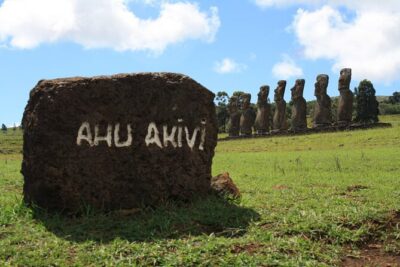
2-Day Private Tour Easter Island Highlights Complete Discovery
Read our review →
Private Tour: Full Day Easter Island Highlights
Read our review →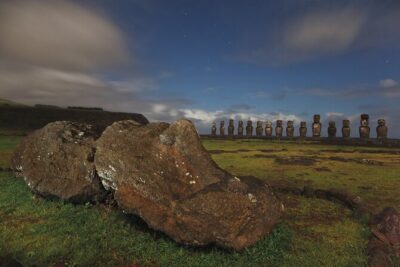
Browse the lists this tour appears in