
Reviewed · EASTER ISLAND TOURS
Easter Island: Demo of How to Carve a Moai statue
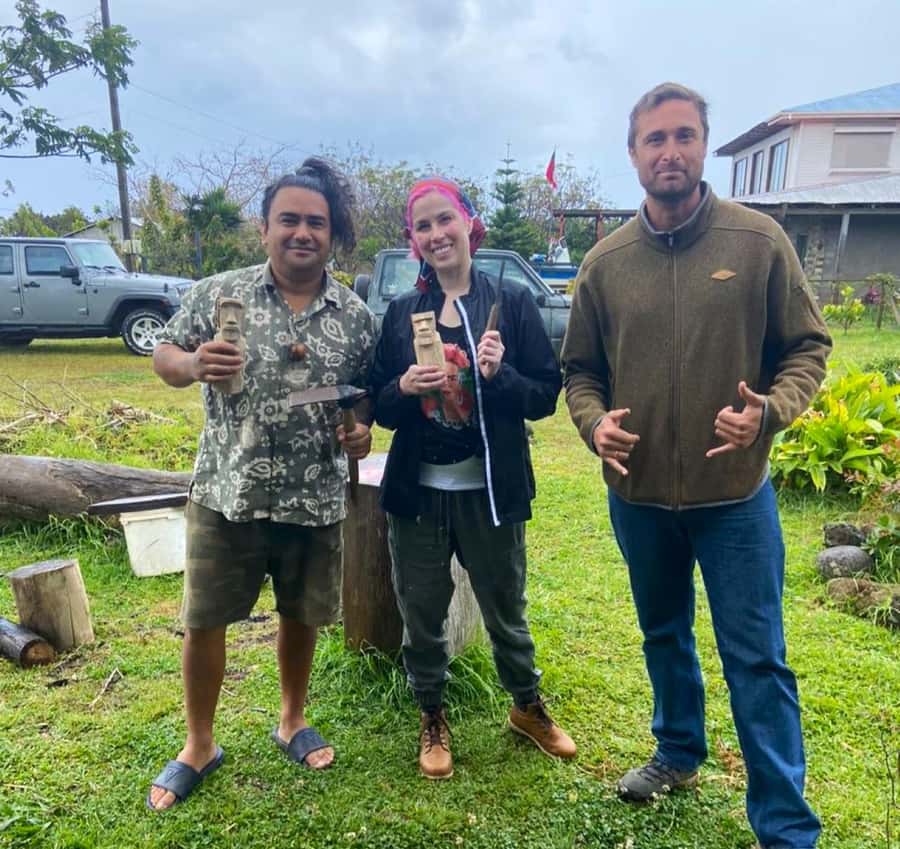
A moai begins as a block of wood. This private two-hour class lets you meet Rapa Nui artist Joaquin Rapu at his home and learn how these famous island figures are carved. I like the personal setting, and I like that the tools, wood, and finished moai are included in the $100 price. The main catch is that you do not necessarily create a separate moai from start to finish, so clarify the finished piece arrangement before booking.
You will hear about ancestral Rapa Nui culture while working with carving tools yourself. The class is especially appealing if you want something more personal than a shop-bought souvenir. Instruction is listed in Spanish, and one booking note describes a guide who spoke only English, so language needs a little checking if you do not speak either language comfortably.
In This Review
- Key points to know before you book
- Why carving a moai adds something different to Rapa Nui
- Arriving at Joaquin Rapu’s house
- The opening conversation about Rapa Nui culture
- Learning the tools before touching the wood
- Turning a block of wood into a moai
- What the private format is worth
- The artist makes the difference
- Taking home a one-of-a-kind souvenir
- Who will enjoy this class most
- Timing, clothing, and cancellation advice
- Should you book the Rapa Nui wood carving class?
- FAQ
- Where does the moai carving class take place?
- How do I get to the meeting point?
- How long does the activity last?
- How much does the activity cost?
- Is the class private?
- Who teaches the class?
- What language is the class offered in?
- Are tools and wood provided?
- Do I get to take a carved moai home?
- Can children join the class?
- What should I wear and bring?
- Can I cancel the booking?
Key points to know before you book
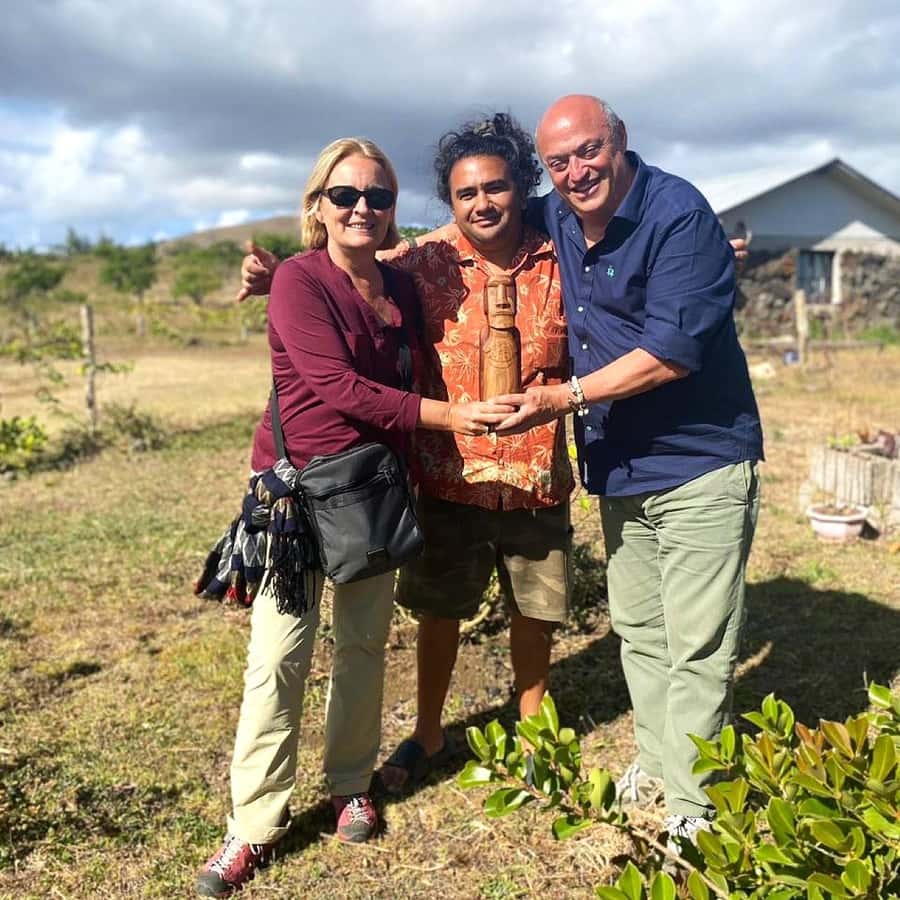
- Private class at Joaquin Rapu’s home: You work in a personal setting rather than in a large commercial workshop.
- A two-hour hands-on lesson: You learn about the tools and take part in the carving process instead of only watching a demonstration.
- Wood, tools, and supplies included: You do not need to bring carving equipment or buy materials separately.
- Your own wooden moai to take home: The finished piece gives you a useful reminder of Rapa Nui beyond the usual photographs.
- Spanish instruction and private group format: Confirm language details ahead of time if Spanish is not comfortable for you.
- Ages 12 and older: This is not suitable for children under 12.
Why carving a moai adds something different to Rapa Nui
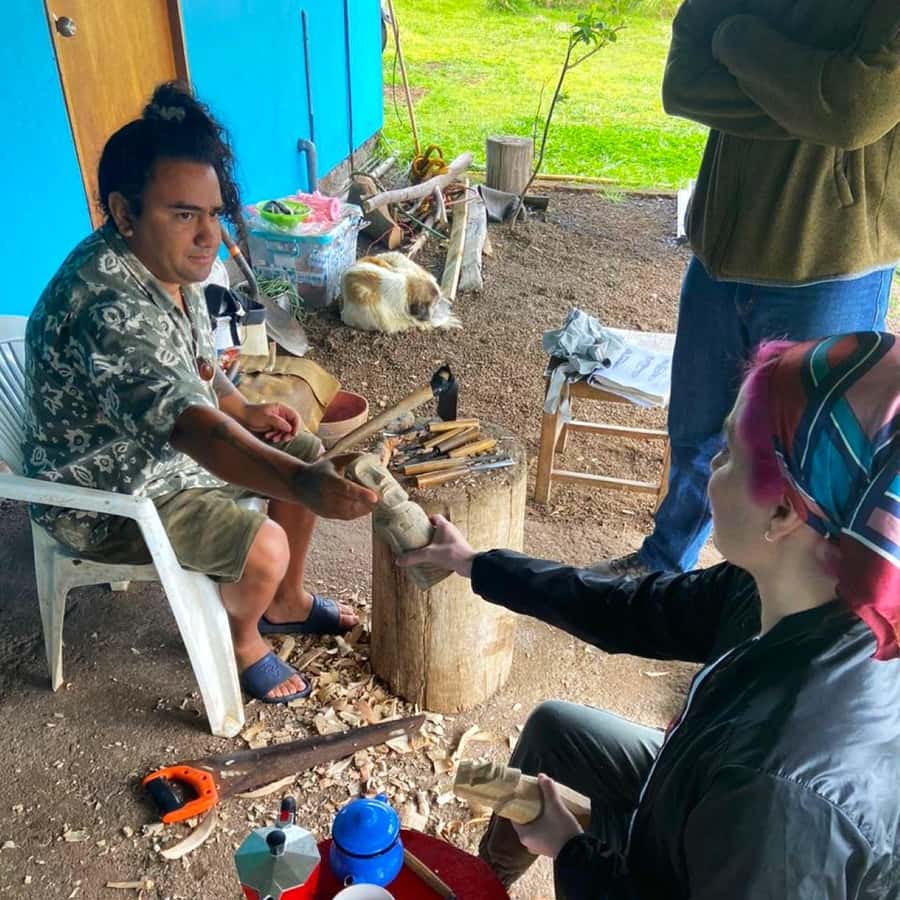
Rapa Nui is famous for its stone moai, but this class shifts your attention to the craft behind the familiar image. Instead of only seeing monumental statues in archaeological settings, you get to handle wood, learn about carving tools, and watch a local artist shape a recognizable island symbol.
That change matters. A museum visit or roadside stop can show you what the moai look like. This class gives you a small sense of how an artist works with form and material. You will not reproduce the full scale or sacred purpose of an ancient statue, of course, but you will gain a more direct connection to the island’s artistic tradition.
The experience is also private. That usually makes it easier to ask questions, work at your own pace, and pay attention to the artist’s hands. The class is not designed as a crowded show where you stand at the back and try to see over someone’s shoulder.
The activity is described as a demonstration and a master class, so you should understand the format before arriving. You will learn the stages and use the provided tools, but the finished arrangement may involve one shared moai rather than one separate statue for every person. One booking note specifically says the group created a single moai and then bought a second piece so each person could take one home.
That is not necessarily a flaw. Watching Joaquin turn a plain block into a recognizable moai is part of the appeal. Still, if each member of your party wants to make and keep a separate statue, ask Paikea Tours to explain exactly what is included.
More Rapa Nui trips and moai walks:
- From Hanga Roa: Rapa Nui Culture Sightseeing Tour
★ 4.6 · 307 reviews - From Hanga Roa: Easter Island Highlights 2-Day Tour
★ 4.3 · 205 reviews - From Hanga Roa: Easter Island Sightseeing Full Day Tour
★ 4.5 · 189 reviews
Arriving at Joaquin Rapu’s house
You are responsible for getting to the artist’s home. The meeting point is Joaquin Rapu’s House, and the directions say to ask a taxi to take you there. The house is described as the penultimate light-blue house on the road.
This is one place where you should allow a little extra time. Do not assume that simply typing the activity title into a taxi app will give you the right location. Use the supplied map pin, and keep the address or link available on your phone:
Transportation is not included in the $100 price. The activity information does not give a pickup service, so you need to arrange your own taxi or other transport to and from the house. Ask about the return trip before the class ends, especially if you do not want to search for a taxi after the session.
The home setting is part of what makes the class feel personal. You are meeting the artist where he works, not entering a large visitor center with a fixed display. That can make the welcome more relaxed and gives the artist room to talk about his practice in a direct way.
The opening conversation about Rapa Nui culture
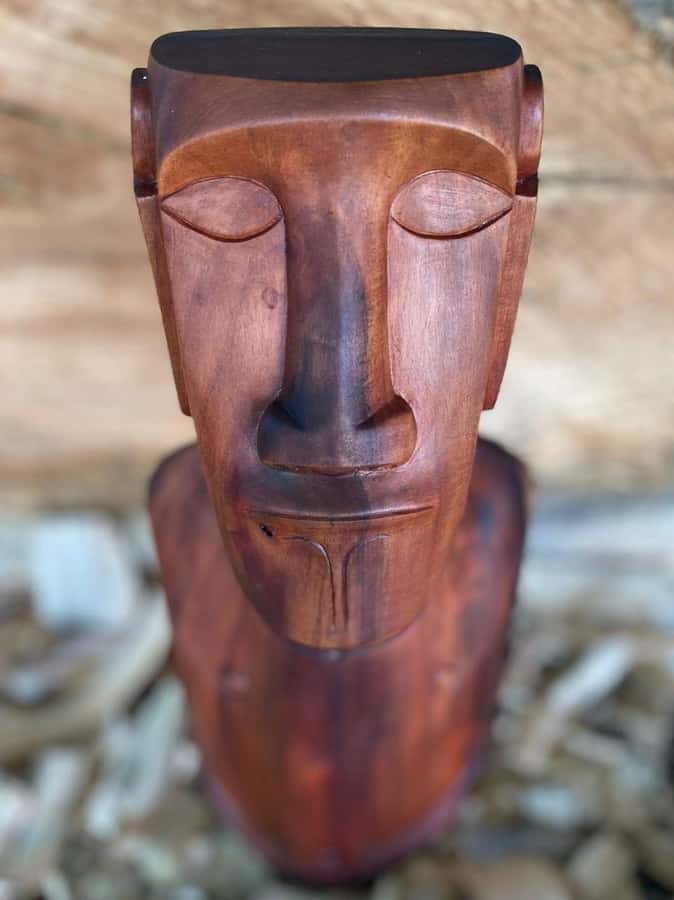
The class begins with contact and conversation rather than a quick handoff of tools. Joaquin introduces the carving process and gives you a glimpse into the ancestral culture connected with the art.
The details available for the session do not provide a minute-by-minute script, so the exact balance between talking, demonstration, and hands-on work may vary. You can expect the cultural explanation to frame the activity, helping you understand why the moai form matters on Rapa Nui.
This is a good moment to ask questions. The class is private, and Joaquin has been described as friendly, welcoming, patient, and informative. One participant with limited Spanish found his patience helpful. If your Spanish is basic, bring a few questions prepared in advance and use gestures or translation support when needed.
Keep your expectations sensible. This is a two-hour art class, not a full archaeological lecture. The main focus is the carving process and the connection to local culture. If you want extensive information about the island’s archaeology, you will need to pair this class with separate visits to Rapa Nui’s major historic sites.
Learning the tools before touching the wood
You are shown the different tools used during the various stages of carving. The supplies are provided, so you can concentrate on the process rather than worry about what to pack.
That is useful for beginners. Wood carving can look simple when an experienced artist does it, but the tools serve different purposes, and the order of the work affects the final shape. Seeing the artist explain each stage gives you a better sense of the care behind a small wooden figure.
You should wear clothes that are comfortable and suitable for working with wood. The activity is hands-on, so this is not the time for delicate clothing or anything that restricts your movement. Bring a camera if you want photographs of the process, but keep it out of the way while you are handling tools.
The class does not say that you need previous carving experience. The emphasis on instruction and provided materials makes it suitable for beginners, provided you are at least 12 years old and comfortable taking part in a creative activity.
Still Chile, but an entirely different landscape:
- Two days of Full Day Tour of Rapa Nui + Sunrise in Tongariki
★ 4.5 · 132 reviews - Full Day Tour in Rapa Nui
★ 4.5 · 122 reviews - 2-Day Private Tour Easter Island Highlights Complete Discovery
★ 5.0 · 110 reviews - Private Tour: Full Day Easter Island Highlights
★ 5.0 · 106 reviews
Turning a block of wood into a moai
The central part of the session is the carving itself. You select or receive the wood used for the statue, learn how to hold and use the tools, and begin shaping the form.
The most satisfying part is the gradual change from a plain block into a recognizable moai. A wooden figure can appear quickly in the hands of an expert, but the process also shows why skill matters. You get to try the work yourself while Joaquin guides the stages.
Do not expect perfection from your first cuts. The point is not to compete with a professional artist who has spent years carving. The point is to understand the work and leave with a piece that carries your participation in it.
The available information does not specify how much of the final carving each participant completes. That makes it important to listen carefully at the start. If the group works on one statue together, you may spend part of the time carving under Joaquin’s direction while he completes other parts.
One particularly useful detail is that the class can produce a single moai for the group. If you are traveling with a partner or family member and each of you wants a statue, ask whether additional pieces can be purchased. A previous participant bought a second moai so everyone in the party had one to take home.
What the private format is worth
At $100 per person, this is not a cheap souvenir activity. Its value depends on what you want from your time on Rapa Nui.
If you only want a small wooden moai, you may find a shop purchase simpler and less expensive. The class earns its price through the personal instruction, the private setting, the supplied tools and materials, and the chance to take part in the making.
The private group format is especially helpful for couples, families with older children, or a small group of friends. You are not paying for a large audience experience. You get more room to ask questions and more direct access to the artist.
The price also includes the finished carved wood moai, which changes the calculation. You are paying for both an activity and a keepsake. The souvenir is not just something you picked from a shelf. You saw the process, handled the tools, and learned how its shape developed.
Still, confirm how many finished pieces are included. The information says you receive your own carved wood moai, but the detailed booking note describes one moai being created during the activity. That small difference could matter to your budget and expectations.
The artist makes the difference
Joaquin Rapu is the named Rapa Nui artist leading the experience. His approach is a major reason to choose this class over a generic craft workshop.
The strongest praise centers on his personality. He has been described as warm, hospitable, friendly, patient, enthusiastic, and informative. Those qualities are important in a practical lesson. A skilled carver who cannot explain the process would make the class frustrating, while a patient teacher can help beginners enjoy the work.
The personal setting also gives Joaquin room to share more than a quick sales pitch. You get a glimpse into his artistic practice and the cultural background of his ancestors. The activity description calls this form of art endemic to Rapa Nui, making the class feel tied to the island rather than easily copied elsewhere.
Language deserves attention. The listed instructor language is Spanish. One booking note says the guide spoke only English, which does not match the main language information. I would contact Paikea Tours before booking if you need instruction in a particular language. Do not assume that English, Spanish, or translation support will be available without checking.
Taking home a one-of-a-kind souvenir
The finished wooden moai is the clearest practical benefit of the class. You leave with something small enough to pack and personal enough to recall the island long after you return home.
The final piece may not look like a museum-quality sculpture. It is connected to a two-hour learning session, and the work may be shared between you and the artist. That is part of its charm. You are taking home a record of participation, not claiming to have produced a monumental statue.
Use care when packing it for your journey. The supplied information does not describe packaging or shipping, so ask the artist how the piece should be protected. If you are flying soon after the class, leave room in your luggage and avoid placing heavy items on top of it.
A second statue may be available for purchase, based on one participant’s experience. Ask about this before or during the class if you are traveling with someone who wants an individual souvenir.
Who will enjoy this class most
I would recommend this activity to you if you want a personal cultural encounter and enjoy making things with your hands. It suits adults, older teenagers, couples, and small private groups who prefer a slower, more direct activity.
It is also a good choice if you have already visited the major moai sites and want a different way to think about Rapa Nui art. The class does not replace the island’s archaeological sites, but it gives you a practical link to the moai form.
You may want to skip it if you dislike craft activities, expect a formal archaeological presentation, or need guaranteed instruction in English. It may also disappoint you if every person in your group expects to carve a separate statue without paying for anything extra.
Children under 12 are not permitted. For older children, the activity could be engaging, but the supplied information does not give a specific child-focused format. Judge the child’s patience and comfort with tools before booking.
Timing, clothing, and cancellation advice
The class lasts two hours, which is long enough to learn the basics without taking an entire day from your Rapa Nui plans. Check the available start times when booking because the exact schedule is not fixed in the activity details.
Wear comfortable clothing suitable for wood carving. Bring a camera, but treat it as secondary to the hands-on work. You may also want to bring translation help if Spanish is not comfortable and the language arrangement has not been confirmed.
You can cancel up to 24 hours before the start time for a full refund. The reserve-now-and-pay-later option lets you hold a place without paying immediately, which is useful when your island schedule depends on flights or weather. Those policies make the booking less risky, but they do not remove the need to arrange transportation.
Should you book the Rapa Nui wood carving class?
Book this class if you value direct contact with a local artist, want to work with traditional island imagery, and would enjoy carrying home a souvenir connected to your own visit. Joaquin Rapu’s warmth and patience are strong reasons to choose it, and the private format gives the lesson a personal feel.
Before paying, confirm two points: the teaching language and whether your group receives one moai or one piece per person. If you are comfortable with the answers, the $100 price can be fair for a private lesson, materials, tools, and a finished keepsake.
I would not book it only because you want a quick photo or a guaranteed individual sculpture with no participation. This is a hands-on class. Its value comes from the process, the conversation, and the chance to see a local artist shape wood into a moai.
FAQ
Where does the moai carving class take place?
The class takes place at Joaquin Rapu’s house. The directions describe it as the penultimate light-blue house on the road.
How do I get to the meeting point?
Transportation is not included. You can ask a taxi to take you to Joaquin Rapu’s House and use the supplied map link for the correct location.
How long does the activity last?
The class lasts two hours.
How much does the activity cost?
The price is $100 per person.
Is the class private?
Yes. It is offered as a private group experience.
Who teaches the class?
The class is taught by local Rapa Nui artist Joaquin Rapu.
What language is the class offered in?
The activity information lists Spanish as the instructor language. One booking note describes a guide who spoke only English, so confirm the language arrangement with Paikea Tours if this is important to you.
Are tools and wood provided?
Yes. The necessary carving tools, wood, and other supplies are included.
Do I get to take a carved moai home?
Yes. The included experience provides a carved wooden moai to take home. Confirm how many pieces are included for your group, since the activity may create one shared statue.
Can children join the class?
Children under 12 are not permitted to take part.
What should I wear and bring?
Wear comfortable clothes suitable for wood carving and bring a camera if you want photographs of the activity.
Can I cancel the booking?
Yes. You can cancel up to 24 hours in advance for a full refund. You can also reserve now and pay later.
Just added around Easter Island
- Volcanic Refuges: Excursion to Underground Civilization★ 4.7 · 8 reviews
- Easter Island Ancestral Dinner and Show with Transport★ 4.5 · 2 reviews
- Volcanic Wonders and the Kingdom of the Birdman: Half Day★ 5.0 · 6 reviews
- Half Day Private Tour: Caves and Volcanic Refuges★ 4.0 · 14 reviews
- Tour to the Motus: Boat trip and snorkeling in Rapa Nui★ 5.0 · 8 reviews
- Birdman Ceremonial Route: Orongo, Ranu Kau Half-Day Tour★ 4.5 · 16 reviews
- Visit Rapa Nui in 4 days with 3 Tours and Accommodation included★ 4.0 · 2 reviews
- Astronomical Tour on Easter Island★ 3.5 · 3 reviews
Easter Island Tours, compared.

Two days of Full Day Tour of Rapa Nui + Sunrise in Tongariki
Read our review →
2-Day Private Tour Easter Island Highlights Complete Discovery
Read our review →
Private Tour: Full Day Easter Island Highlights
Read our review →
Browse the lists this tour appears in