
Reviewed · EASTER ISLAND TOURS
3 Tours on Easter Island.
Start early, see nearly everything. This 13-hour Easter Island experience links the island’s major moai sites, volcanoes, ceremonial villages, and beaches in one long day. I especially like the small maximum group of 12 and the chance to see Ahu Tongariki, Rano Raraku, Anakena, Orongo, and Ahu Akivi without arranging separate transport. I also like that a box lunch and hotel pickup are included.
The main drawback is the pace. You will spend most of the day on the move, with a one-hour walk at Rano Raraku and several outdoor stops. The National Park entrance fee is not included, and the tour is non-refundable, so check your plans carefully before paying.
In This Review
- Key points before you book
- One long day across Easter Island
- Vaihu and Akahanga: beginning with village life
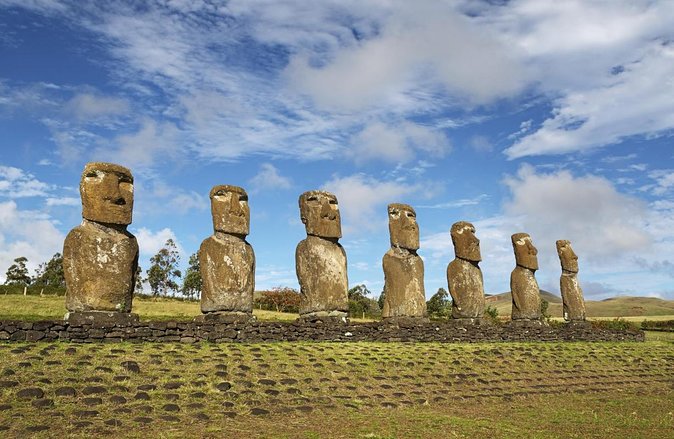
- Ahu Tongariki and the famous fifteen moai
- Rano Raraku, the moai quarry
- Anakena beach: a welcome change of pace
- Vinapu and Ahu Tahira: stonework with an unusual detail
- Rano Kau and Orongo’s bird-man ceremony
- Ahu Tahai, Ahu Akivi, and Puna Pau
- What the group size and transport mean
- Is $299 a fair price?
- Who should book this Easter Island experience?
- Should you book these three Easter Island tours?
- FAQ
- How long does the Easter Island tour last?
- What time does the tour start?
- Is hotel pickup included?
- Is the National Park entrance fee included?
- What is included in the price?
- How many people can join the tour?
- Can I cancel or change the booking?
Key points before you book
- Ahu Tongariki and Rano Raraku anchor the day: You see the island’s most famous row of restored moai and the quarry where hundreds of statues were carved.
- The route covers three distinct areas: The day includes the south and east coast, the Orongo ceremony village, and inland sites near Hanga Roa.
- Anakena adds a beach break: White coral sand, turquoise water, Ahu Nau Nau, and Ahu Ature Huki give the long day a welcome change of scene.
- A maximum of 12 people keeps the group manageable: You get shared transport without the feel of a large coach outing.
- The guide can speak English or Spanish: Bruno is specifically praised for his passion and informative style.
- Bring the park fee into your budget: You must purchase entry on arrival at Mataveri International Airport.
One long day across Easter Island
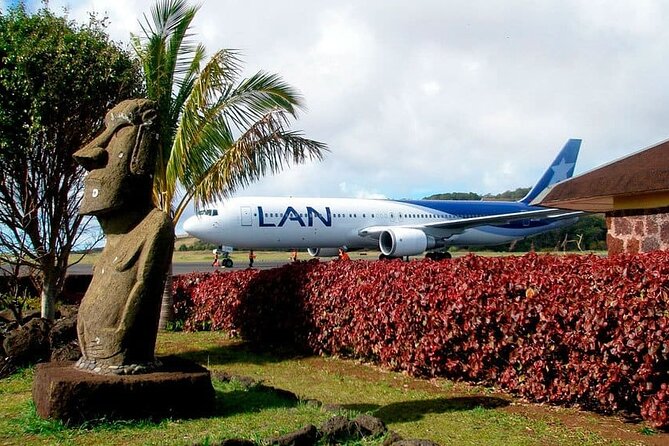
The tour begins at 7:00 am, with pickup at your hotel. The stated starting point is Mataveri International Airport, which matters because the National Park entrance must be purchased there on arrival. If your hotel pickup and airport arrival timing need coordination, confirm the details before the morning of the tour.
You are paying $299 per person for shared transport, a local guide, a box lunch during the Anakena portion, and a full day of sightseeing. The price is easier to justify if you want to see the island’s main archaeological sites in one organized outing. Hiring separate transport and arranging explanations at every site could take more work, while a rental car would leave you responsible for route planning and timing.
The value depends on your style. If you prefer slow mornings and long quiet visits at one or two sites, this will feel busy. If you have limited time on Easter Island and want a strong first look at its major sites, the coverage is excellent.
The tour is offered in English or Spanish. The only published rating is five out of five from two reviews, so that is a very small sample. One specific compliment praises Bruno for being passionate and informative, with the tour covering the island’s major places. That is useful context, but guide assignments can vary, so do not assume Bruno will lead every departure.
More Rapa Nui trips and moai walks:
- From Hanga Roa: Rapa Nui Culture Sightseeing Tour
★ 4.6 · 307 reviews - From Hanga Roa: Easter Island Highlights 2-Day Tour
★ 4.3 · 205 reviews - From Hanga Roa: Easter Island Sightseeing Full Day Tour
★ 4.5 · 189 reviews
Vaihu and Akahanga: beginning with village life
The first section heads along the south coast toward Vaihu. This is a good choice for the opening stop because it puts the moai within a wider picture of Rapa Nui life.
At Vaihu, you visit a Rapa village interpretation area showing traditional family structures. You can see houses, ovens, and chicken coops, each offering a practical look at how households were organized in earlier times. These details can be easy to miss when an itinerary is built only around famous statues. Here, the focus shifts from monumental stone figures to daily life.
The next stop is Ahu Akahanga, a platform associated with 12 moai. You also see an unrestored Rapanui village with house remains, old ovens, and a small cave. The unrestored character is important. The site is not presented as a polished reconstruction, so you need to pay attention to low walls, foundations, and scattered traces.
This part of the route rewards a guide who can explain what you are seeing. Without context, an oven or house base may look like a pile of stones. With an explanation, it becomes evidence of how people lived, cooked, and built family spaces.
Ahu Tongariki and the famous fifteen moai
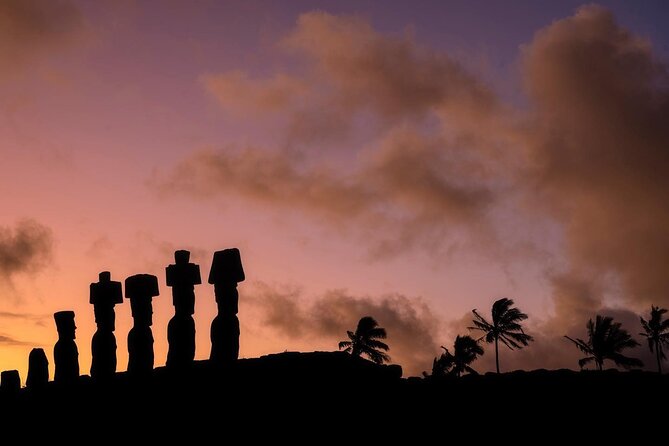
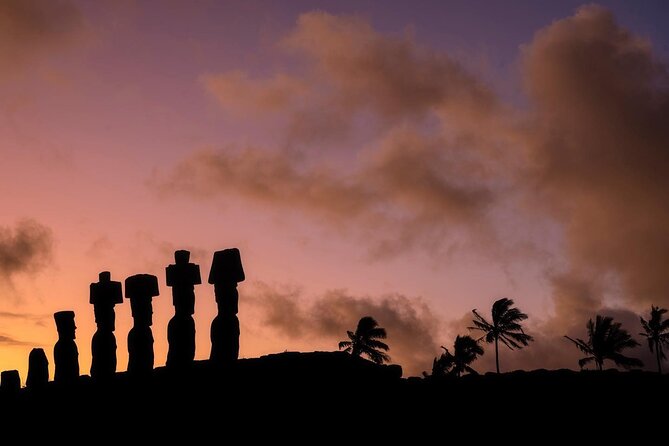
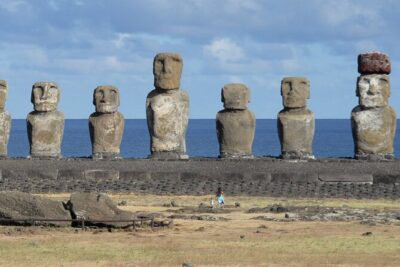
Ahu Tongariki is likely to be one of the emotional high points of the day. Fifteen restored moai line the platform, creating one of Easter Island’s most recognizable views.
The scale is what makes this stop special. You are not seeing one isolated statue but a carefully restored group arranged together. The site gives you a direct sense of the effort involved in placing and maintaining these enormous figures.
It is also a place where the group format has both benefits and limits. Shared transport gets you there efficiently, and a local guide can point out details you might miss. At the same time, the stop has a fixed rhythm, so you may not have unlimited time to wander or sit quietly. If photography matters to you, keep your camera ready and listen closely for the guide’s timing instructions.
Ahu Tongariki is one of the places that makes the $299 price easier to understand. Reaching it is a central reason many people come to Easter Island, and it is paired here with several less obvious sites rather than offered as a quick single stop.
Rano Raraku, the moai quarry
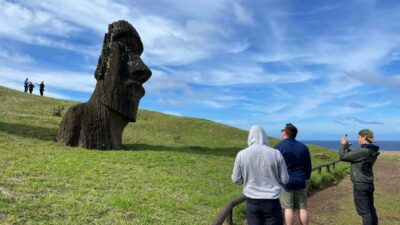
The tour continues to Rano Raraku, the volcanic quarry where more than 400 moai remain in different stages of carving. The visit includes about an hour of walking.
This is where the story of the statues becomes more tangible. Instead of seeing only finished figures placed on ceremonial platforms, you see moai connected to the carving process itself. Some were still being worked, while others were left at different points in production. The unfinished statues help you picture the quarry as a place of labor, planning, and movement.
Plan for uneven outdoor walking and a full hour on foot. The supplied details do not specify the exact trail conditions, so sensible shoes are a wise choice. The tour is not just a drive-by visit, and that is a strength, but the walk may feel demanding after several earlier stops.
Rano Raraku also gives the guide a chance to explain how the statues were carved and transferred. Those explanations matter here. The visual experience is powerful, but the practical questions are just as interesting: how the stone was shaped, why so many figures were left unfinished, and how the completed statues reached other parts of the island.
Still Chile, but an entirely different landscape:
- Two days of Full Day Tour of Rapa Nui + Sunrise in Tongariki
★ 4.5 · 132 reviews - Full Day Tour in Rapa Nui
★ 4.5 · 122 reviews - 2-Day Private Tour Easter Island Highlights Complete Discovery
★ 5.0 · 110 reviews - Private Tour: Full Day Easter Island Highlights
★ 5.0 · 106 reviews
Anakena beach: a welcome change of pace
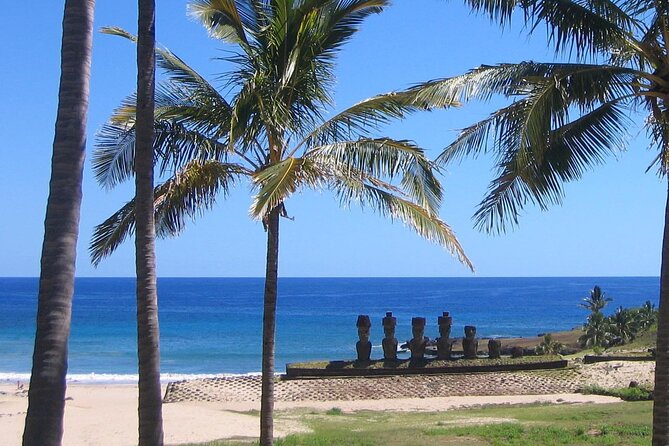
The first major touring section ends at Anakena, a beach with white coral sand and turquoise water. After a morning focused on stone platforms and quarries, the beach offers a needed change of rhythm.
Anakena is not only a place to rest. It also includes Ahu Nau Nau and Ahu Ature Huki, both connected with major discoveries on the island. The combination of archaeology and shoreline makes this one of the most varied stops of the day.
A box lunch is included for the Anakena tour. That saves you from arranging food during a long day, though the supplied information does not describe the menu or whether drinks are included. You may want to carry water and any snacks you prefer, since the day runs from early morning into the evening.
The beach can be especially appealing if you want more than a succession of archaeological sites. You get sand, sea, and ceremonial structures in one setting. Still, do not mistake this for a leisurely beach day. Anakena is one part of a much longer route, not several hours of unstructured free time.
Vinapu and Ahu Tahira: stonework with an unusual detail
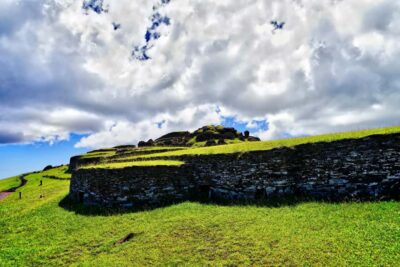
The second tour section visits Ahu Vinapu, including the wall of Ahu Tahira. The masonry is described as similar to Inca walls, which makes this a useful stop for anyone interested in how the island’s stonework is understood and compared.
You also see a moai made from red scoria, described as possibly representing a woman with two heads. That unusual statue gives the visit a different character from the familiar tall moai at Tongariki. It is a reminder that the island’s carved figures are not all identical in material, form, or purpose.
The information provided does not promise a specific amount of walking here, so the stop should be easier than the hour-long route at Rano Raraku. Your guide’s explanation will be important because the wall and red-scoria figure may raise questions that are not answered by sight alone.
Rano Kau and Orongo’s bird-man ceremony
From Vinapu, the vehicle climbs to Rano Kau, described as the island’s largest and most beautiful crater. The view combines the broad crater with the surrounding sea, creating one of the day’s strongest outlooks.
Rano Kau is a good reminder that Easter Island is shaped by volcanoes as much as by moai. The crater gives you a sense of the island’s physical setting, while the sea around it reinforces the isolation that makes Rapa Nui so compelling.
The route then continues to Orongo ceremonial village. Here, the focus turns to the bird-man competition, known as Tangata Manu. The contest lasted for more than two centuries and ended around 1864. Participants sought an egg from the Manutara bird on the islet of Motu Nui, with the winner becoming king or island leader.
This is one of the most valuable parts of the day for anyone who wants cultural context rather than only famous views. The ceremony shows a later period of Rapa Nui society and gives the sites a political and spiritual dimension.
The Orongo section is listed as about three hours, including the visit to Vinapu, Rano Kau, and the ceremony village. That is a substantial portion of the day, but it should not be read as three hours at Orongo alone. The timing includes multiple locations.
After returning to town, the plan includes time for a sunset near Ahu Tahai or somewhere along the sea. Since sunset conditions and exact timing can vary, treat this as a planned opportunity rather than a guaranteed private sunset outing.
Ahu Tahai, Ahu Akivi, and Puna Pau
The final section begins at Ahu Tahai in town. The site has three restored platforms and includes the only moai described here with eyes made from white coral.
That detail makes Tahai more than a convenient town stop. The eyes change the way you look at the statues. Rather than treating each moai as a simple stone silhouette, you begin to notice how facial features and added materials affected their appearance.
The tour then heads to Ahu Akivi, where seven moai face the sea. These statues were restored in 1960. Their arrangement gives you another useful comparison with Tongariki, where 15 moai face inland from a large coastal platform.
The last stop is Puna Pau, a small volcanic area associated with the red scoria pukao, or moai hairpieces. You walk toward the top of the volcano to see the red scoria crater where these pieces were carved. The view extends toward Terevaka and the village.
Puna Pau is especially worthwhile because it explains a feature that can seem mysterious at other sites. The red pieces were not simply decorative additions found at random. They came from a particular source, and this stop connects the finished pukao with the place where the material was worked.
The final section is listed as three hours. As with Orongo, that includes several stops and transport between them. You should expect a steady schedule, not a long unplanned break at any one site.
What the group size and transport mean
A maximum of 12 people is a practical middle ground. You avoid the scale of a large coach, while still sharing the cost of transport and a guide. A small group also makes it easier to hear explanations and keep the day moving.
Pickup is offered at your hotel, and the experience uses shared transport. That is useful on Easter Island because the route covers distant coastal and volcanic sites. You do not need to arrange separate rides between Vaihu, Tongariki, Rano Raraku, Anakena, Orongo, and Ahu Akivi.
The tradeoff is independence. You will follow the group’s route and timing, and the schedule is already full. If one place grips you more than the others, you may wish for extra time. The benefit is that you also avoid spending a day worrying about directions, parking, or fitting the major sites into the correct order.
Is $299 a fair price?
At $299 per person, this is not a budget outing. The cost includes shared transportation, a local English or Spanish-speaking guide, and a box lunch, but not National Park admission.
I think the price is reasonable for a first or only full day on Easter Island if you value coverage and convenience. The tour reaches the island’s most important sites, includes the major quarry and ceremonial areas, and handles the long distances between them.
The value is weaker if you already have transport, plan to visit the sites over several days, or prefer independent exploration. In that case, a one-day package may feel too compressed.
Remember to add the park entry fee to your total budget. You purchase it on arrival at Mataveri International Airport. Also note that the experience is non-refundable and cannot be changed after booking, so only reserve once your dates and plans are firm.
Who should book this Easter Island experience?
I would choose this tour if you have limited time, want a broad introduction to Rapa Nui, or prefer a guide to connect the sites. It suits people who can manage a long day outdoors, an hour of walking at Rano Raraku, early pickup, and a fixed schedule.
It is also a good fit if you want both famous places and smaller cultural details. Vaihu’s houses and ovens, Akahanga’s old village remains, Puna Pau’s pukao crater, and Orongo’s bird-man story prevent the day from becoming a simple parade of statues.
I would think twice if you need a relaxed pace, dislike shared transport, or want to spend much of the day at Anakena beach. The itinerary is ambitious by design. You see a great deal, but you pay for that coverage with time and energy.
Should you book these three Easter Island tours?
Book it if your priority is seeing the main archaeological sites in one organized day. Ahu Tongariki, Rano Raraku, Anakena, Orongo, Ahu Akivi, and Puna Pau create a strong sweep across Easter Island, while the small group and included lunch add practical value.
Before booking, confirm your hotel pickup, choose English or Spanish, budget separately for National Park admission, and prepare for a long outdoor day. If those points suit you, this is a sensible way to get your bearings and understand why Easter Island is far more than a collection of famous stone figures.
FAQ
How long does the Easter Island tour last?
The experience lasts approximately 13 hours. The three sections are listed as about seven hours for the Anakena route, three hours for Orongo, and three hours for Ahu Akivi.
What time does the tour start?
The stated start time is 7:00 am. Pickup is offered at your hotel.
Is hotel pickup included?
Yes. Pickup details state that all passengers are picked up at their hotel. The stated starting location is Mataveri International Airport on Easter Island.
Is the National Park entrance fee included?
No. The National Park entrance must be purchased upon arrival at Mataveri International Airport.
What is included in the price?
The price includes shared transport, a box lunch for the Anakena tour, and a local guide in English or Spanish.
How many people can join the tour?
The activity has a maximum of 12 participants.
Can I cancel or change the booking?
No. The experience is non-refundable and cannot be changed for any reason.
Just added around Easter Island
- Volcanic Refuges: Excursion to Underground Civilization★ 4.7 · 8 reviews
- Easter Island Ancestral Dinner and Show with Transport★ 4.5 · 2 reviews
- Volcanic Wonders and the Kingdom of the Birdman: Half Day★ 5.0 · 6 reviews
- Half Day Private Tour: Caves and Volcanic Refuges★ 4.0 · 14 reviews
- Tour to the Motus: Boat trip and snorkeling in Rapa Nui★ 5.0 · 8 reviews
- Birdman Ceremonial Route: Orongo, Ranu Kau Half-Day Tour★ 4.5 · 16 reviews
- Visit Rapa Nui in 4 days with 3 Tours and Accommodation included★ 4.0 · 2 reviews
- Sunrise in Tongariki on Easter Island Rapa Nui★ 3.5 · 5 reviews
Easter Island Tours, compared.
Two days of Full Day Tour of Rapa Nui + Sunrise in Tongariki
Read our review →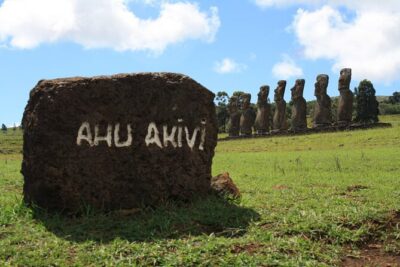
2-Day Private Tour Easter Island Highlights Complete Discovery
Read our review →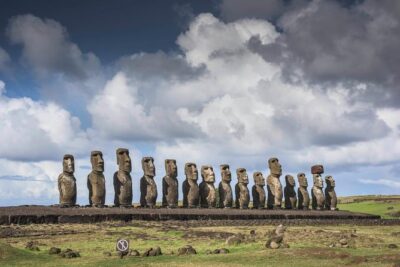
Private Tour: Full Day Easter Island Highlights
Read our review →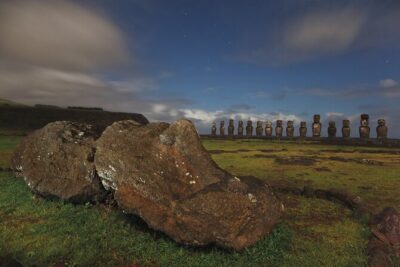
Browse the lists this tour appears in