
Reviewed · STARGAZING & ASTRONOMY
Stargazing Hiking Valle de Elqui
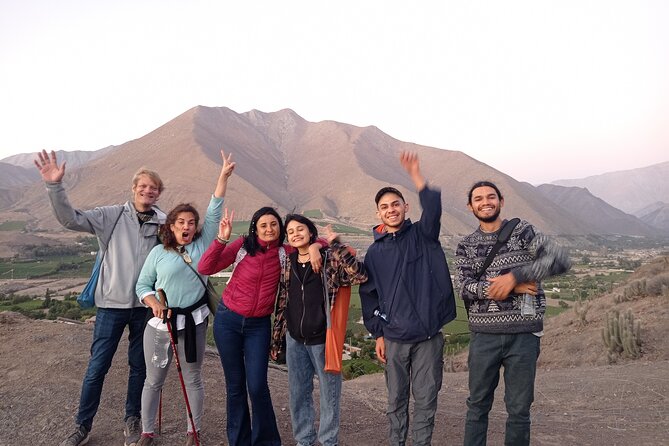
The Elqui sky earns its own appointment. This four-and-a-half-hour outing pairs a mountain sunset with Andean astronomy, meditation, and a close look at the stars through Celestron 20×80 binoculars. I like the thoughtful mix of nature and culture, especially the introduction to indigenous views of the sky. I also like that the experience stays private, with only your group taking part.
The main consideration is the effort and timing. You need hiking shoes, moderate fitness, and strict punctuality, and the late evening schedule may not suit anyone who prefers an easy dinner and an early night. At $100 per person, the price makes the most sense if you want more than a standard stargazing stop.
In This Review
- Key points at a glance
- From Vicuña to Villaseca after sunset
- The sunset viewpoint gives the evening a strong opening
- Sound bowls and meditation change the pace
- Indigenous astronomy adds meaning to the stars
- Celestron 20×80 binoculars bring the sky closer
- Astronomical photography gives you a keepsake
- Coffee, herbal tea, and a portable chair keep it comfortable
- Timing changes through the Chilean summer
- Is $100 a fair price for four and a half hours?
- Who will enjoy this private Elqui Valley evening?
- Should you book Stargazing Hiking Valle de Elqui?
- FAQ
- How long does the stargazing hiking experience last?
- Where does the experience begin?
- Where does the activity end?
- Is transportation included?
- What should I wear?
- Are children allowed to participate?
- What happens if the weather is poor?
Key points at a glance
- Sunset comes first: You begin at a mountain viewpoint, where the changing colors over the Elqui Valley set the mood for the night.
- Loreto leads the experience: Her enthusiasm for the cultural side of astronomy is a major part of the outing.
- The sky is viewed with serious equipment: Celestron 20×80 astronomical binoculars on a tripod offer a stronger view than ordinary handheld binoculars.
- Meditation and sound therapy slow the pace: Bowls and guided reflection create a quiet transition from daylight to starlight.
- It is a private activity: Only your own group participates, which makes the cultural and reflective sections more personal.
- The package covers useful comforts: Trekking poles, a portable chair, herbal tea or coffee, snacks, and astronomical photography are included.
From Vicuña to Villaseca after sunset
The experience begins at Casa Pumagui, with safety recommendations before the outdoor portion gets underway. The meeting point is in Navarino, Peralillo, in the Vicuña area of Coquimbo, Chile. You should arrive 15 minutes early. This is not a suggestion to stroll in at the last minute: a delay of more than 10 minutes can mean exclusion from the activity.
Private transportation is provided from Vicuña to Villaseca, the place of the activity. That is useful if you are based in Vicuña and want to avoid arranging your own ride for an evening outing. Transfers from La Serena or other places not specifically named are not included, so you need to plan that part yourself.
The vehicle is private for your group, but the price does not include an air-conditioned vehicle. That detail may matter during warmer months, though most of the experience takes place as the day cools and darkness arrives. Since the activity ends back at the meeting point, you do not need to arrange a second pickup from Villaseca.
The group size is one of the better features here. This is a private activity, so you are not folded into a large crowd around a telescope or asked to keep pace with strangers. A private format is especially useful during meditation and cultural discussion, where a calm setting helps you pay attention.
More night sky trips from Chile:
- San Pedro de Atacama: Etno-Stargazing Tour with Transfer
★ 4.8 · 629 reviews - The Roofless Experience San Pedro de Atacama Stargazing Tour
★ 5.0 · 522 reviews - San Pedro de Atacama: Stargazing Experience
★ 4.7 · 489 reviews
The sunset viewpoint gives the evening a strong opening
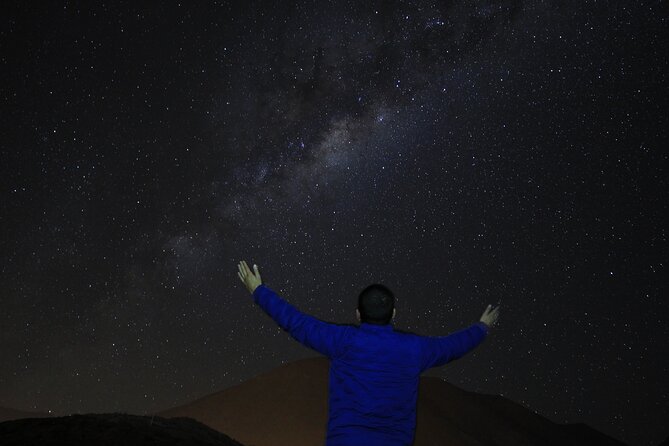
The first major stop is a viewpoint overlooking the mountains. Before the stars appear, you watch the sunset spread color across the Elqui Valley. This is more than a quick photo stop. It gives the experience a clear rhythm, moving from bright mountain views to the darker sky needed for astronomy.
I like this order. You are not asked to think about constellations while still rushing through daylight arrangements. Instead, you have time to look outward first, then settle into the night. The viewpoint also gives the outing a visual highlight before the more reflective parts begin.
The exact route and walking distance are not specified, so you should not assume a gentle paved stroll. Trekking poles are included, and participants need moderate physical fitness. Hiking shoes are required. Those details suggest that uneven ground or a short trail may be part of the setting, even though a precise difficulty rating is not provided.
Wear footwear you trust in the dark. A proper hiking shoe offers more support than casual sneakers, and it is one of the stated participation requirements. The poles are a welcome extra for anyone who feels less steady on an outdoor path.
Sound bowls and meditation change the pace
Once the setting shifts from sunset viewing to the night program, the experience begins with meditation and sound therapy using bowls. This is a notable choice. Many astronomy outings rush straight to equipment and star names. Here, you are given time to quiet your attention and notice the surroundings before looking upward.
You may enjoy this part most if you like guided reflection, wellness practices, or nature experiences that do not feel hurried. It also gives the night a sense of purpose beyond taking photographs. The session is not presented as a technical astronomy class alone. It is meant to connect your body, the setting, and the sky.
If meditation is not your style, this section could feel slower than expected. The activity clearly makes it part of the central program, so anyone booking it should be comfortable with a reflective approach. You are not simply signing up for a telescope viewing with a few facts added on.
The private group format helps here. A small, familiar group can take part without the self-consciousness that sometimes comes with quiet exercises in a large public gathering. Loreto has been praised for her passion and for creating an experience intended to be memorable, and that personal energy appears to be especially important during these slower moments.
Indigenous astronomy adds meaning to the stars
The cultural portion introduces the indigenous worldview and the ancestral links between cultures and astronomy. This is one of the strongest reasons to choose this experience over a basic night-sky excursion. It asks you to consider that the stars are not just objects for scientific measurement. They can also carry stories, direction, seasonal meaning, and connections between people and place.
The description does not identify every culture or constellation covered, so you should not expect a fixed list of names in advance. What is clear is that the guide connects astronomy with ancestral perspectives and then directs your attention to Andean constellations.
I value that approach because it keeps the Elqui Valley from becoming a mere backdrop for stargazing. The sky is part of the local setting, and the cultural discussion gives you another way to understand what you see. It also suits anyone who wants a thoughtful introduction rather than a rapid-fire collection of star facts.
Loreto’s role matters here. Her enthusiasm for the subject is frequently highlighted, and the experience depends on her ability to join meditation, cultural explanation, and observation into one evening. If you want a fully formal astronomy lecture, this may not be the right format. If you enjoy a human guide who treats the sky as both a scientific and cultural subject, it is a strong fit.
More Elqui Valley trips:
- Elqui Valley Tour: History and Flavors (NOT FOR CRUISES)
★ 5.0 · 139 reviews - Pisco Elqui: Mountaintop Stargazing and Night Portrait
★ 4.6 · 20 reviews - Elqui Valley and Vicuna Private Tour Including Lunch
★ 4.5 · 18 reviews - Classic Elqui Valley (Between vineyards and fruit trees)
★ 5.0 · 16 reviews
Celestron 20×80 binoculars bring the sky closer
The main observing tool is a pair of Celestron 20×80 astronomical binoculars mounted on a tripod. That combination is worth noting. At 20x magnification, handheld viewing would be difficult, so the tripod provides the stability needed for a clear look.
Astronomical binoculars also offer a different experience from looking through a narrow telescope eyepiece. You use both eyes, which can make the viewing feel more natural and comfortable. The guide directs your gaze toward Andean constellations and explains what you are seeing, rather than leaving you to search the sky on your own.
The equipment does not turn the experience into a professional observatory visit. Binoculars cannot provide every detail of a large telescope, and the supplied information does not promise a long technical session or a specific list of planets and deep-sky objects. Still, the Celestron setup is a meaningful step up from casual stargazing with your own eyes.
The quality of the evening will also depend on weather. This activity requires good conditions, and poor weather can lead to a different date or a full refund. That policy is sensible for an outdoor astronomy program, since cloud cover can remove the main reason for going.
Astronomical photography gives you a keepsake
Astronomical photography is included, which adds value to the $100 cost. You are not only looking through the binoculars and then leaving with a memory that exists only in your head. The experience includes a photographic record of the encounter with the night sky.
The exact number, format, and delivery method of the photographs are not specified, so you should ask the provider if those details matter to you. Do not assume that a full professional photo package or individual portrait session is included. The clear promise is astronomical photography connected with the activity.
I like this inclusion because night photography is difficult to manage on your own. It can involve a tripod, careful timing, and settings that are not obvious to a casual camera user. Having photography built into the evening lets you focus on the setting instead of spending the whole time trying to make your phone behave like an observatory camera.
Bring your own phone or camera if you want personal snapshots, but use it with restraint. Bright screens can interfere with dark-sky viewing and with the quiet mood of the program. The included photography means you do not need to treat your own device as the only way to preserve the night.
Coffee, herbal tea, and a portable chair keep it comfortable
Small comforts matter during a four-and-a-half-hour outdoor activity. Coffee or herbal tea, snacks, and a portable chair are included. Those items help bridge the gap between an active walk and a long period of standing or looking upward.
The chair is particularly practical. Stargazing can become tiring when you remain on your feet, and a seat lets you settle in while the guide explains the sky. The snacks are not described as a full meal, so you should eat beforehand if you need dinner rather than a light refreshment.
The tea or coffee also fits the shift from sunset to night. It gives the group a simple pause without turning the experience into a formal dining event. If you have dietary needs, the available snack details are not provided, so check before booking.
The trekking poles serve a different purpose. They are useful support for the walking portion, but they do not replace good shoes or reasonable fitness. You should still expect to manage an outdoor route under evening conditions.
Timing changes through the Chilean summer
The start window changes by month:
- In January, the activity runs Monday through Sunday from 8:00 PM to 9:00 PM.
- In February, it runs Monday through Sunday from 7:30 PM to 9:00 PM.
- In March, it runs Monday through Saturday from 7:00 PM to 9:00 PM.
The published hours appear to describe the available start period rather than the full four-and-a-half-hour length. Confirm the exact departure time when you book, then arrive 15 minutes early.
These seasonal changes make sense for an experience built around sunset and darkness. A January start is later than a March start, so the light conditions shift with the calendar. The March schedule also removes Sundays, which matters if your trip is built around a weekend.
Alcohol is not allowed before or during participation, and the provider reserves the right to refuse admission to anyone under the influence. Service animals are allowed, and the meeting area is near public transportation. The activity is designed for people aged 14 and older, not younger children.
Is $100 a fair price for four and a half hours?
At $100 per person, this is not the cheapest way to see stars in the Elqui Valley. You are paying for a private experience rather than a basic shared transfer to a lookout. The package also includes transportation from Vicuña to Villaseca, guide-led cultural interpretation, meditation with sound bowls, astronomical binoculars, a chair, trekking poles, refreshments, and photography.
That list makes the price easier to justify for someone who values a complete evening with one group. The private format is the key factor. If you are traveling with family or friends and prefer not to share the experience with a large crowd, the added cost may feel worthwhile.
The value is less clear if your only goal is to see stars through powerful equipment. In that case, a dedicated observatory visit might suit you better, though no comparison with another provider is included here. This outing is deliberately broader, combining the sunset, walking, cultural context, sound therapy, and photography.
I would book it for a special evening in Vicuña, especially if astronomy and local culture matter equally to you. I would skip it if you want a short, highly technical viewing or if you dislike meditation-based activities.
Who will enjoy this private Elqui Valley evening?
This experience is a good match for you if you:
- Are 14 or older and comfortable with a moderate outdoor activity
- Enjoy astronomy but also want cultural interpretation
- Like meditation, sound therapy, and quiet time outdoors
- Prefer a private group instead of a large shared outing
- Want guided photography without arranging all the equipment yourself
- Are staying in or near Vicuña and can reach the stated meeting point on time
It may not suit you if you need a fully accessible route, since the activity requires moderate fitness and hiking shoes. The precise trail conditions are not supplied, so anyone with mobility concerns should ask about the walking surface before paying.
The late schedule also deserves attention. Your evening begins around sunset and continues into the night, with the total experience lasting about four hours and 30 minutes. Plan your meal and transport around that timing rather than treating this as a quick after-dinner stop.
Should you book Stargazing Hiking Valle de Elqui?
Book this experience if you want the night sky presented as part of a larger story. The sunset, sound therapy, indigenous astronomy, Andean constellations, quality binoculars, and private setting create a more personal evening than a simple star-viewing session.
The strongest reason to go is Loreto’s passionate, human approach. The experience is built around connection, not just equipment. The main cautions are the $100 price, the moderate physical requirement, the strict arrival rule, and the possibility of rescheduling for bad weather.
For an astronomy-focused evening with cultural depth, included photography, and a private group, I think it offers solid value. Arrive early, wear proper hiking shoes, avoid alcohol, and confirm the exact seasonal start time. Do that, and you will be prepared for an evening that moves from mountain light to Andean stars at an unhurried pace.
FAQ
How long does the stargazing hiking experience last?
The activity lasts approximately four hours and 30 minutes.
Where does the experience begin?
It begins at Navarino, Peralillo, in Vicuña, Coquimbo, Chile, with safety recommendations at Casa Pumagui.
Where does the activity end?
The experience ends back at the meeting point.
Is transportation included?
Private transportation is included from the city of Vicuña to Villaseca, the activity location. Transfers from La Serena or other places not specifically mentioned are not included.
What should I wear?
You must wear hiking shoes. Participants should also have a moderate level of physical fitness.
Are children allowed to participate?
The experience is designed for participants aged 14 and older. It is not suitable for children under 14.
What happens if the weather is poor?
The activity requires good weather. If it is canceled because of weather, you will be offered a different date or a full refund. You can also cancel for a full refund up to 24 hours before the start time. Cancellations made within 24 hours are not refundable.
More Hiking Tours in Chile
- Puerto Natales: Base of the Towers Day Hike
★ 4.8 · 727 reviews - From Santiago: Cajón del Maipo and Volcán San José Hike 8K
★ 4.9 · 418 reviews - Puerto Natales: Base of the Towers Trekking Experience
★ 4.8 · 191 reviews - Puerto Natales: Base Torres Small Group Trekking
★ 4.9 · 106 reviews
Just added around Chile
- Volcanic Refuges: Excursion to Underground Civilization★ 4.7 · 8 reviews
- Walking City Tour with Funicular, Cable Car and Tasting★ 4.3 · 6 reviews
- Viña del Mar and Valparaiso: guided day tour★ 4.2 · 8 reviews
- Viña del Mar: Guided city tour★ 4.9 · 10 reviews
- Tour VIÑA CONCHA Y TORO + CASA MARQUES – Chile, from Santiago.★ 5.0 · 2 reviews
- Viña del Mar and Reñaca 4-Hour Pacific Coast Tour★ 4.7 · 14 reviews
- VIÑA DEL MAR AND VALPARAISO TOUR★ 4.8 · 20 reviews
- Valparaíso, Viña del Mar and Casablanca Full Day Experience★ 4.7 · 14 reviews
Stargazing & Astronomy, compared.
The Roofless Experience San Pedro de Atacama Stargazing Tour
Read our review →
Astronomical Tour with Guide and Pick Up San Pedro de Atacama
Read our review →
“Astronomical Adventure in San Pedro de Atacama”
Read our review →Browse the lists this tour appears in