
Reviewed · STARGAZING & ASTRONOMY
Stargazing in the Andes from Santiago
Look up, and Santiago feels far away. This seven-hour outing takes you 105 kilometers north of the city to a private, self-built observatory where about 260 clear nights a year and very dark skies give the stars room to shine. I like the mix of telescope viewing and Mapuche and Incan sky traditions, and I like that the hosts welcome you with homemade food rather than a standard bus-tour snack.
The main tradeoff is the long drive. Only about three hours are spent at the observatory, with the rest assigned to transport, so this is not a quick evening activity. Still, the private group format, hotel pickup, and patient pace make the journey easier to accept, especially if astronomy matters to you.
In This Review
- Key points to know before booking
- Why the long drive can be worth it
- Arriving at a private, self-built observatory
- Starting with once chilena and homemade Chilean food
- Learning how Mapuche and Incan cultures read the sky
- Finding the Milky Way’s dark spaces
- Moving from naked-eye viewing to telescopes
- How the private format changes the evening
- Is $286.40 a fair price?
- Who will enjoy this most?
- Booking, timing, and cancellation advice
- Should you book Stargazing in the Andes from Santiago?
- FAQ
- Where does the stargazing tour take place?
- How long does the full experience last?
- Is hotel pickup available in Santiago?
- What time does pickup usually happen?
- What food and drinks are included?
- Is the tour offered in English?
- Can children join the experience?
- What happens if the weather is poor?
Key points to know before booking
- The observatory is 105 kilometers north of Santiago: Expect substantial travel time, but you are heading toward darker skies and a site with around 260 clear nights each year.
- The evening begins with a traditional once chilena: Homemade bread, local cheeses, sweets, savoury treats, tea, coffee, juice, and wine are included.
- The astronomy lesson covers three viewpoints: You learn about Western astronomy as well as Mapuche and Incan ideas about the sky.
- The experience includes naked-eye and telescope observation: The session begins with the Milky Way’s dark spaces before moving to telescopes.
- You get a private outing: Only your own group participates, with private transport and pickup from your Santiago hotel.
- Astrophotography is possible during free time: The pace can be adjusted to suit the group, and one past participant especially appreciated time to take photographs.
Why the long drive can be worth it
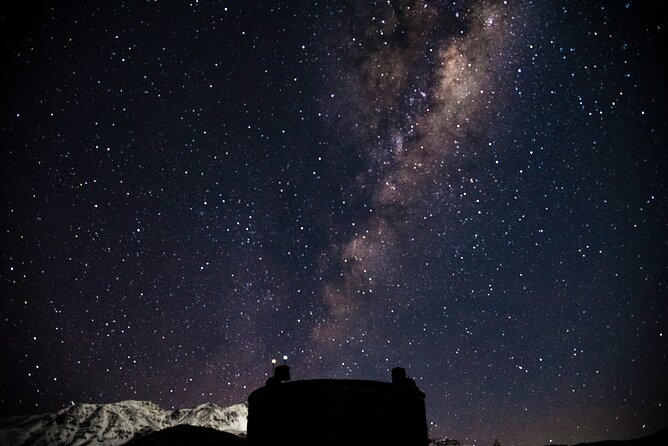
Santiago is a good base for exploring central Chile, but a large city is not the place to seek the darkest sky. This experience takes you into the Andes, to a private observatory positioned far enough from Santiago for the night sky to become the main event.
The distance is important when you plan your day. The full outing lasts about seven hours, but the observatory portion lasts roughly three hours. The remaining time is used for driving, pickup, and return. You should treat this as a full evening commitment, not a short add-on after dinner in the city.
I see the travel time as the cost of getting to a better viewing site. The stated total of about 260 clear nights per year is encouraging, though no astronomy outing can promise perfect viewing on your particular date. Weather still matters, and poor conditions can lead to a different date or a full refund.
The drive also gives the outing a clear rhythm. You leave the city, reach a quieter mountain setting, spend the evening with the hosts and astronomer, then return to Santiago. It is less about rushing from one telescope to the next and more about giving the night enough time to unfold.
More night sky trips from Santiago:
- Santiago: Sky Costanera Observatory Admission Ticket
★ 4.3 · 208 reviews - Observatory Stargazing Tour from Santiago
★ 4.5 · 32 reviews - Santiago: Sky Costanera Observatory Skip-the-Line Entry Ticket
★ 4.0 · 27 reviews
Arriving at a private, self-built observatory
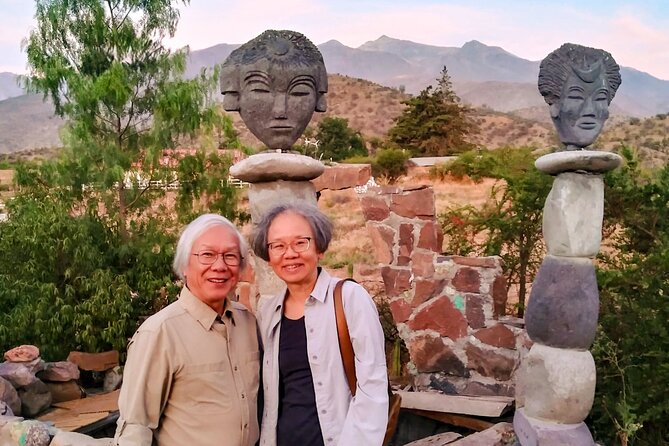
The observatory is private and self-built, which gives the experience a personal character. This is not presented as a large public science center with crowds moving through a fixed program. Only your group participates, and the hosts, Ali and Yerko, open their home and observatory to you.
That personal setting is one of the strongest reasons to book. The hosts have been praised for making people feel like family, and that warmth seems to be part of the experience rather than a small extra. You are not simply handed a telescope and left to figure it out alone.
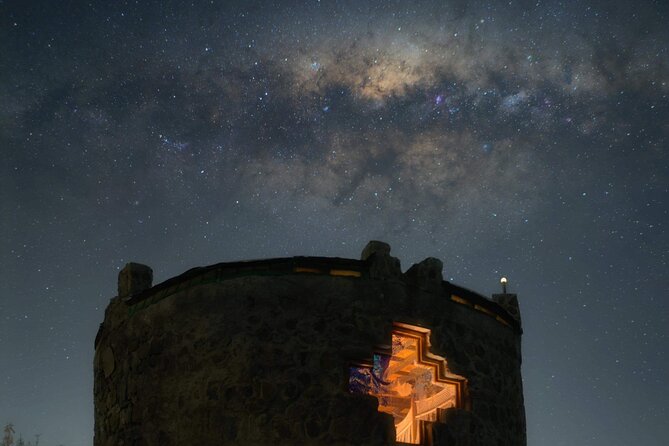
The buildings themselves are designed around astronomical phenomena. That detail adds interest before the first telescope comes out. You can look at the structures as part of the lesson, not just as shelter or equipment storage.
The private format also helps if your group has different levels of interest. Someone fascinated by astronomy can spend more time asking questions, while someone newer to the subject can follow the explanations without feeling lost in a large crowd. The pace is adapted to the group’s needs, and free time may be available for astrophotography.
Starting with once chilena and homemade Chilean food
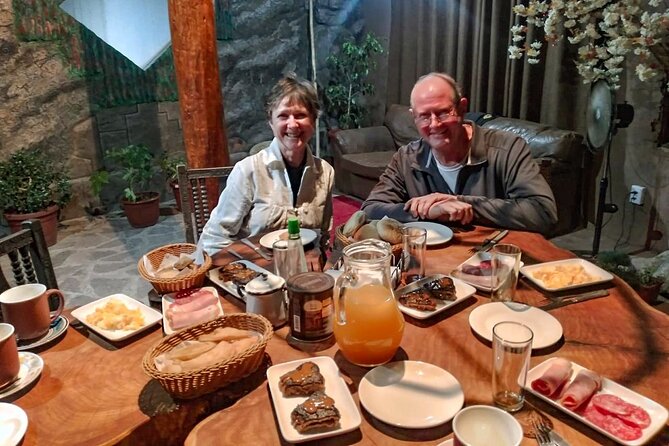
Your visit begins with a traditional once chilena, Chile’s version of tea time. The meal includes homemade bread, craft cheeses, local products, sweet and savoury homemade treats, tea, coffee, juice, and wine.
This is more than a practical meal before a late-night activity. It gives you a relaxed introduction to the hosts and a taste of local hospitality. The food is made up of familiar, home-style items rather than a formal restaurant dinner, so you should expect something warm and informal.
I especially like that the meal comes before the astronomy talk. You have time to settle in, warm up with tea or coffee, and get comfortable before standing outside or focusing through a telescope. The wine is included, but remember that the trip back to Santiago follows the viewing session.
The meal is described as dinner, though the menu is closer to a generous Chilean tea spread than a multi-course restaurant meal. If you need a highly specific dinner for dietary reasons, ask before booking, since the provided details do not list dietary substitutions.
Learning how Mapuche and Incan cultures read the sky
The astronomy introduction is one of the elements that makes this outing different from a basic stargazing session. Your astronomer discusses Western cosmology alongside Mapuche and Incan culture and cosmology, with attention to the meaning certain celestial objects held for Andean peoples.
That context matters because the night sky is not only a collection of scientific objects. Different cultures have looked at the same stars and assigned different patterns, stories, uses, and sacred meanings. The talk gives you a way to consider the sky through more than one set of ideas.
The presentation also connects the experience to the land around you. You are not getting a generic astronomy lecture that could happen anywhere. The Andean setting and local cultural viewpoints are part of the subject.
You should expect an introduction rather than a university course. The supplied details do not promise a set lecture length or a particular list of stars and planets. The astronomer explains the ideas in a way that supports the viewing session, then uses current Western cosmology to place the objects you see in context.
A few more Santiago trips worth comparing side by side
- Valparaiso Port and Viña del Mar with Casablanca Wine Tasting
★ 5.0 · 6,110 reviews - Santiago: Cajon del Maipo/Embalse del Yeso Tour with Picnic
★ 4.3 · 3,789 reviews - Santiago: Vina Del Mar, Valparaiso, Casablanca & Reñaca Tour
★ 4.2 · 2,838 reviews - Cable Car, Funicular and Sightseeing Bus in Santiago one day
★ 5.0 · 2,325 reviews
Finding the Milky Way’s dark spaces
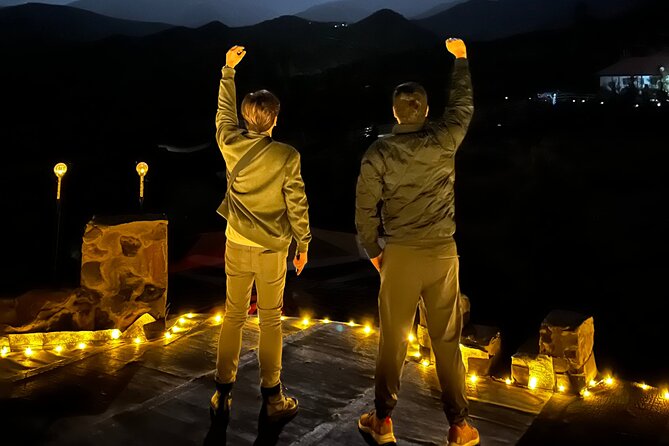
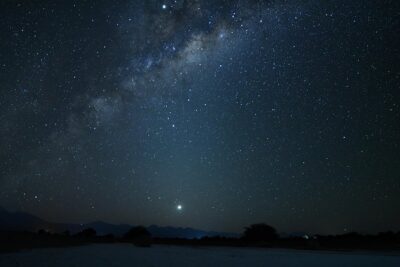
Before telescope viewing, you move to the tower. The tour explains how to observe the negative spaces in the Milky Way, areas that appear dark because of the way dust blocks the light behind it.
These dark patches are especially meaningful in the cultural portion of the evening. They are described as sacred to many ancient peoples of the southern part of the world, so the lesson asks you to notice more than the bright stars. You learn to look at the shape and absence within the Milky Way.
This is a useful approach for anyone who thinks stargazing means waiting for a telescope to reveal something dramatic. You begin with your own eyes. The dark sky and clear conditions are important here, since the lesson depends on seeing a broad band of stars rather than a washed-out patch of sky.
Clouds or poor weather can change what is possible. The operator requires good weather and offers another date or a full refund if conditions force a cancellation. That policy is worth remembering when you plan this as the highlight of your evening.
Moving from naked-eye viewing to telescopes
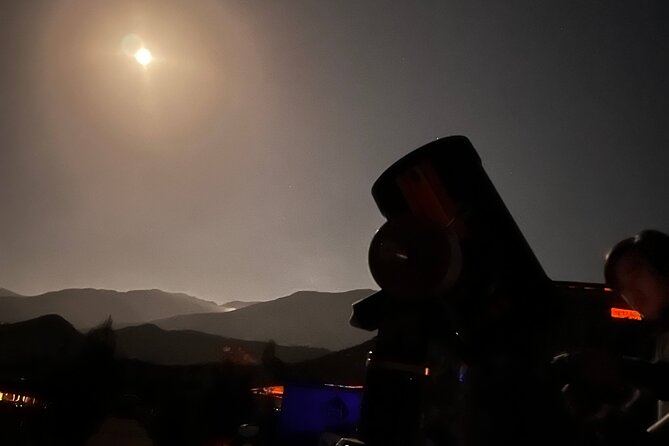
After the introduction to the sky, the evening moves to telescope observation. The astronomer explains the objects you see and uses current Western cosmology to give them a scientific setting.
The step-by-step order works well. First, you learn what to look for without equipment. Then you hear how different cultures understood the sky. Finally, you use telescopes to examine selected objects more closely. The sequence gives the viewing a purpose instead of turning it into a quick line at a telescope.
The experience can include free time for astrophotography. One participant particularly valued being able to take photographs, and the hosts aim to adjust the rhythm to the group’s personal interests. That flexibility may appeal to people who want more than a brief look through the eyepiece.
Still, you should not book this as a guaranteed planet or galaxy checklist. The details do not promise specific objects on a certain date, and the sky changes with weather and timing. The attraction is the combination of dark skies, guidance, cultural interpretation, and a private setting.
How the private format changes the evening
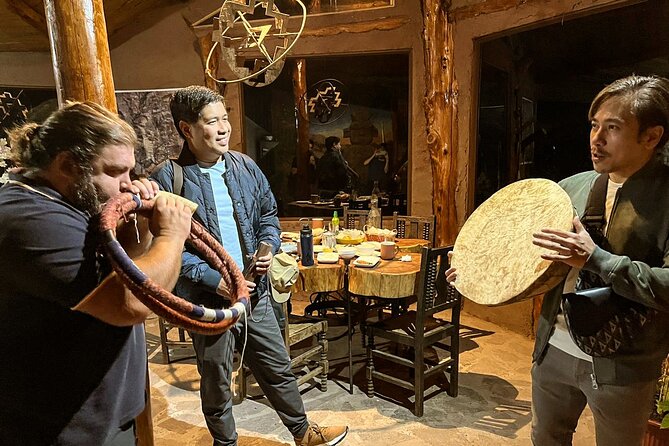
This is a private activity, meaning only your own group participates. The minimum booking is two people, so it is designed for couples, families, and small parties rather than solo booking.
Private transport is included, and pickup is offered from your Santiago hotel. You send the hotel details after booking, while the astronomer determines the exact pickup time. In summer, pickup is generally around 5:00 or 5:30 p.m.; in winter, it is around 3:00 or 4:30 p.m.
Those are broad windows, not fixed appointments. You receive the confirmed time after booking, so keep your schedule open and avoid placing a tight dinner reservation or another evening activity immediately afterward.
The private setup is also useful for children, though children must be accompanied by an adult. Most people can participate, and service animals are allowed. The provided information does not list special physical requirements, so ask the operator directly if anyone in your group has specific mobility or access needs.
The experience is offered in English and includes a bilingual guide. That should make the astronomy and cultural explanations accessible to English-speaking visitors, while the private format gives you a better chance to ask for clarification.
Is $286.40 a fair price?
At $286.40 per person, this is not a budget evening. The price needs to be judged against what is included and how much of the experience is private.
You receive hotel pickup, private transport, a bilingual guide, the astronomer’s explanation, the once chilena meal, drinks, and telescope viewing. You are also paying for a small-scale experience hosted at a private observatory rather than joining a large public group.
The value is strongest for two kinds of people. If you care about astronomy, the cultural material and telescope time give the evening more substance than a simple transfer to a viewing area. If you value local contact, the chance to eat homemade food in the hosts’ setting adds something you would not get from a standard observatory visit.
The price is harder to justify if you mainly want a quick look at the stars. With nearly four hours assigned to transport and related timing, the cost per hour at the observatory is high. Group discounts are available, which may help families or larger private parties.
I would compare the price with your priorities rather than with a basic city excursion. This is a specialist evening with transport and hospitality built in. You are paying for access, instruction, and a personal setting as much as for the telescope itself.
Who will enjoy this most?
I would choose this outing if you want astronomy explained in plain terms and you enjoy learning how local cultures understood the sky. It suits couples, families with older children, and small groups who prefer a private pace.
Astrophotographers may also find it appealing because free time can be set aside for photography. The operator tries to adapt the rhythm to the group, though the supplied details do not specify camera support, equipment rental, or technical photography instruction.
The experience is less suitable if you dislike long drives or want a packed schedule with several attractions. You spend the evening at one observatory, and the journey from Santiago takes up a large share of the seven-hour outing.
It may also be a poor match for anyone who needs certainty about exactly what will be visible. Astronomy depends on the weather and date. The tour offers a new date or full refund when poor weather cancels the experience, but clear conditions cannot be guaranteed in advance.
Booking, timing, and cancellation advice
The experience is often booked about 13 days ahead, so I would avoid waiting until the last minute if your Santiago schedule is fixed. At least two people are required per booking, and confirmation is provided when you book.
Send your Santiago hotel details so pickup can be arranged. Since the exact time is set by the astronomer, check your messages before the outing and leave room for the return journey.
Free cancellation is available when you cancel at least 24 hours before the start time. A cancellation made less than 24 hours ahead is not refunded, and late changes are not accepted. The cutoff uses local time in Chile.
Poor weather is treated differently. If the operator cancels because conditions are unsuitable, you can choose another date or receive a full refund. Travel insurance is not included, and gratuities for guides and drivers are optional.
Should you book Stargazing in the Andes from Santiago?
Book it if you want a personal astronomy evening rather than a quick stop at a telescope. The combination of dark Andean skies, a self-built observatory, homemade once chilena, and Mapuche and Incan sky traditions gives the experience a clear sense of place.
I would be especially inclined to book if you have a real interest in astronomy, cultural interpretation, or astrophotography. The private setting and flexible pace make the $286.40 price easier to defend.
Skip it if seven hours feels too long for one evening or if you want guaranteed views of particular planets. The 105-kilometer journey is the main drawback, but it is also what takes you away from Santiago’s city light. For the right audience, that trade is worthwhile.
FAQ
Where does the stargazing tour take place?
The experience takes place at a private, self-built observatory in the Andes, 105 kilometers north of Santiago.
How long does the full experience last?
The outing lasts approximately seven hours. About three hours are spent at the observatory, with the remaining time used for travel.
Is hotel pickup available in Santiago?
Yes. Pickup is offered, and you provide your Santiago hotel details so the operator can arrange it.
What time does pickup usually happen?
Summer pickup is generally around 5:00 or 5:30 p.m. Winter pickup is generally around 3:00 or 4:30 p.m. The astronomer confirms the exact time after booking.
What food and drinks are included?
The traditional once chilena includes homemade bread, craft cheeses, sweet and savoury homemade treats, tea, coffee, juice, and wine.
Is the tour offered in English?
Yes. The experience is offered in English and includes a bilingual guide.
Can children join the experience?
Yes. Children can participate, but they must be accompanied by an adult.
What happens if the weather is poor?
The experience requires good weather. If poor conditions cause a cancellation, you can choose a different date or receive a full refund.
Just added around Santiago
- Walking City Tour with Funicular, Cable Car and Tasting★ 4.3 · 6 reviews
- Tour VIÑA CONCHA Y TORO + CASA MARQUES – Chile, from Santiago.★ 5.0 · 2 reviews
- VIÑA DEL MAR AND VALPARAISO TOUR★ 4.8 · 20 reviews
- Undurraga Wine tour★ 4.2 · 15 reviews
- Undurraga + Isla Negra + San Afonso del Mar —– Full day★ 4.1 · 8 reviews
- wetravelneruda’s route – Pablo Neruda’s route – Private tour★ 5.0 · 6 reviews
- Southcoast – Private Full-Day tour★ 5.0 · 6 reviews
- Santiago Private walking tour with Lunch★ 5.0 · 5 reviews
Stargazing & Astronomy, compared.
The Roofless Experience San Pedro de Atacama Stargazing Tour
Read our review →
Astronomical Tour with Guide and Pick Up San Pedro de Atacama
Read our review →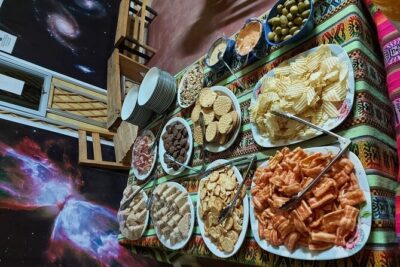
“Astronomical Adventure in San Pedro de Atacama”
Read our review →Browse the lists this tour appears in