
Reviewed · HISTORICAL TOURS
Santiago Walking Tour: Heart of Santiago, Queer History & Culture
Santiago’s best stories are often written between the landmarks. This walking tour links La Moneda, Plaza de Armas, Santa Lucía Hill, and Lastarria with Chile’s political history and LGBTQ+ past, giving you more than a standard city-center orientation. I like the strong focus on stories that official tours often skip, and I like the personal guidance from Freddy, whose warm style has helped solo visitors feel at ease quickly.
The tour also gives you a useful first look at central Santiago. You finish near restaurants in the Lastarria District, and past outings have included practical advice on nightlife, safety, public transportation, and places to eat. The main consideration is the walking: the experience lasts about two to four hours, with the longest stop at Plaza de Armas and a 40-minute visit to Santa Lucía Hill.
In This Review
- Key points to know before booking
- Why this Santiago walk feels different
- Starting at La Moneda and Plaza de la Constitución
- The Court Palace and Santiago’s built-in messages
- Plaza de Armas, where official history gets questioned
- Santa Lucía Hill for views and older stories
- Ending in Lastarria with room for practical advice
- Freddy’s guiding style and the personal touch
- What the $65 price buys you
- Timing, weather, and who should book
- Should you book the Heart of Santiago tour?
- FAQ
- Where does the tour start?
- Where does the tour end?
- How long does the tour last?
- How much does the tour cost?
- What places are included?
- Is admission included at the stops?
- How large is the group?
- Is the tour suitable for solo visitors?
- Are service animals allowed?
- What happens if the weather is poor?
- Can I cancel for a full refund?
Key points to know before booking
- Political history begins at La Moneda: Learn how Chile’s democracy developed and broke down, with time for photos outside the palace.
- Queer history is part of the main story: The tour connects the 1973 political crisis with cultural change and LGBTQ+ activism in Chile.
- Plaza de Armas gets the most attention: This is where the city’s official story, colonial beginnings, and first LGBTQ+ protest come together.
- Santa Lucía Hill mixes views with history: The hill matters to Chile’s first inhabitants, Spanish conquerors, and the country’s queer community.
- Small groups keep the walk personal: The maximum group size is 10 people, and some outings have been private or nearly private.
- Lastarria is a useful ending point: You finish near restaurants and cafés, with a better sense of where to continue your evening.
Why this Santiago walk feels different
Many central-city walks point out buildings and dates, then move on. This one uses the buildings as entry points into questions about power, identity, memory, and public space.
That approach matters in Santiago. La Moneda is not just an attractive neoclassical building. Plaza de Armas is not simply a place to photograph the cathedral. Santa Lucía Hill is not merely a lookout. Each stop carries several layers of Chilean history, and the guide connects those layers to the development of LGBTQ+ life and activism.
I especially like that the tour does not treat queer history as a separate add-on. It is woven into the wider story of the capital. You hear about the city’s official version of events, then consider what that version leaves out.
The tone also seems personal rather than academic. Freddy has been praised for making people comfortable, explaining details clearly, and adjusting the experience to the person in front of him. That can be valuable if you are traveling alone, visiting Santiago for the first time, or want advice beyond the printed route.
More History Tours in Santiago
- Santiago: Guided Walking Tour of the Historical Old Town
★ 4.8 · 459 reviews - Tour Viña Santa Rita: History, Wine and Picnic Outdoors
★ 4.5 · 141 reviews - Viña Del Mar and Valparaiso world heritage site.
★ 4.5 · 89 reviews
Starting at La Moneda and Plaza de la Constitución
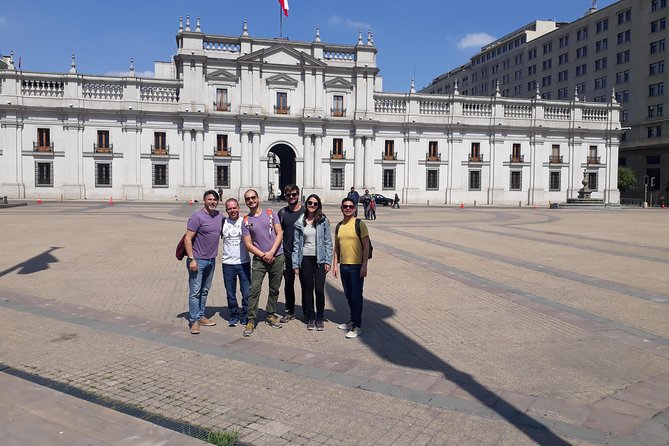
The meeting point is La Moneda Palace, in central Santiago. The first stop lasts about 15 minutes and costs nothing to enter, since the visit focuses on the exterior and surrounding public space.
This is a good place to begin because the building gives you an immediate visual anchor. You can take photos while hearing about La Moneda’s role in Chilean government and the development of democracy from the 1970s onward.
The walk then crosses to Plaza de la Constitución, on the opposite side of the palace. Here the discussion turns more directly to the breakdown of democracy in 1973 and the effects on Chilean culture and LGBTQ+ development.
That change in subject gives the opening of the tour real weight. You are not just learning how the government works. You are considering what happens to culture, public expression, and minority communities when democratic institutions fail.
The two palace-area stops take roughly 30 minutes together. If you want polished photos of Santiago’s government quarter, this is an easy win. If you prefer a tour that gets quickly into street life, the opening may feel more formal, but the political context helps explain much of what follows.
The Court Palace and Santiago’s built-in messages
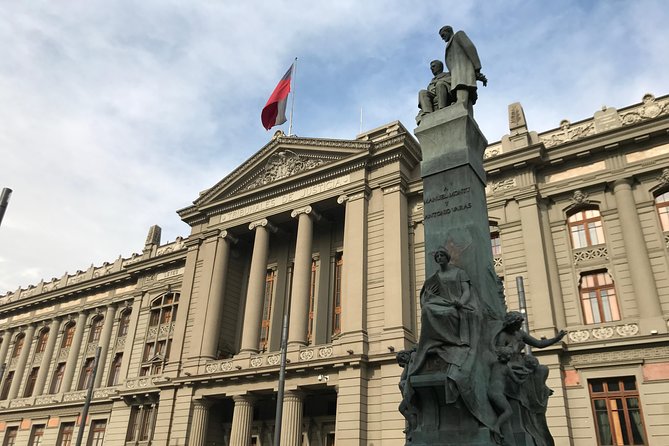
The Palacio de Tribunales de Justicia receives only about five minutes. That tells you what this tour is not: it is not an architecture tour with long interior visits at every major building.
Instead, this is a quick pause to appreciate the surrounding buildings, their design, and the messages built into their construction. The short stop works as a transition between government history and the social history of the city center.
You should not expect an extended architectural lecture or a long visit inside the court complex. Think of it as a brief look at how power is presented through public buildings. The guide’s interpretation is likely to matter more here than the amount of time spent on site.
Plaza de Armas, where official history gets questioned
Plaza de Armas is the heart of the route and the place where you spend the most time. The scheduled stop lasts about 30 minutes, although the full area may take longer depending on the group and the day’s pace.
Before entering the main square, you stop near its entrance to learn how LGBTQ+ people once used the area to meet. This is an important detail because it shifts your attention from monuments to human behavior. Public squares can be government spaces, religious spaces, market spaces, and meeting places all at once.
Inside Plaza de Armas, the tour begins with the origins of Santiago. You discuss the official version of the city’s founding and the difference between accepted stories and less comfortable truths. That distinction gives the square more meaning than a quick photo stop.
You also have time to explore buildings such as the cathedral or the National Museum. The information provided does not promise an extended guided interior visit, so treat this as an opportunity to see the buildings while the guide explains their place in the city.
The most important moment here is the stop connected with the first LGBTQ+ protest in Chile. You discuss diversity and acceptance in the country, linking a specific place to a wider social movement.
I like this format because it keeps the subject grounded. Instead of discussing LGBTQ+ history in the abstract, you stand in the same public space where people met, organized, and challenged accepted norms.
Plaza de Armas can also be the busiest section of the walk. You may find more noise, foot traffic, and distractions here than at the palace or hill. That is part of the point, but it means you should stay close to the guide and be ready to listen in an active public space.
More Walking Tours in Santiago
- The best walking tour in Santiago de Chile
★ 5.0 · 629 reviews - Santiago Half-Day Walking Tour with Hotel Pick up & Food Sample
★ 4.5 · 467 reviews - A Fabulous Walking tour by the Old Santiago of Chile –
★ 5.0 · 466 reviews - Private Santiago 3-Hour Walking Tour
★ 5.0 · 237 reviews
Santa Lucía Hill for views and older stories
Santa Lucía Hill is the longest scheduled stop, at about 40 minutes. You walk through the park areas, hear about the importance of the hill to the first inhabitants of Chile and the Spanish conquerors, and learn how the site connects with LGBTQ+ history.
The hill gives the tour a welcome change of pace. After government buildings and a busy central square, you get open views across Santiago and good photo opportunities.
The visit is still a walking stop, not simply a lookout. You move through the park and consider how one place can carry different meanings for different communities. The hill’s connection to Indigenous history, Spanish conquest, and queer culture gives the final major stop a broad time span.
You should wear comfortable shoes. The total duration may be closer to four hours if the group spends time talking, and the hill adds walking after the central-city stops. The route is described as suitable for most people, but anyone with mobility concerns should ask about the specific route before booking.
Ending in Lastarria with room for practical advice
The tour ends around José Victorino Lastarria in the Lastarria District. This is a smart finish because the neighborhood gives you options for the rest of the day, especially restaurants and cafés.
Past outings have also included suggestions about city sights, nightlife, safety, and local transportation. One solo visitor was introduced to the metro and received help getting oriented early in a Santiago visit. Another outing grew into a longer day with lunch, restaurants, and cafés.
Do not assume every booking will become a full-day private tour. The advertised experience is about two to four hours, and the details can vary. Still, the guide’s willingness to respond to flight delays and adjust meeting arrangements has been part of the service for some bookings.
Lastarria is also a practical place to end if you want to continue exploring on foot. You finish with a neighborhood guidepost rather than being left at an isolated attraction.
Freddy’s guiding style and the personal touch
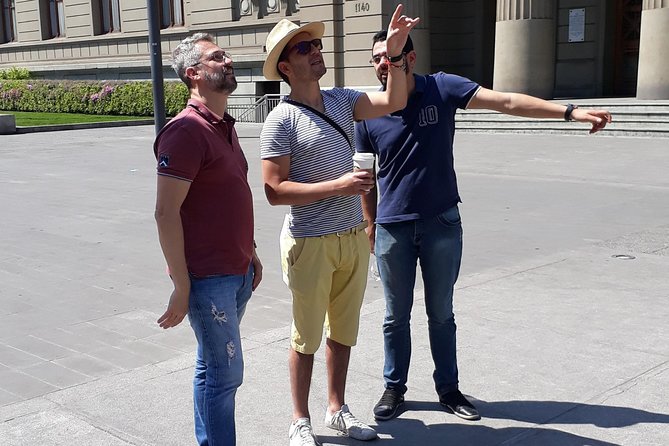
Freddy is the guide most closely associated with this experience. His strengths are not limited to reciting dates. He has been praised for clear communication before the tour, a welcoming manner, and the ability to tailor recommendations as he learns what interests you.
That makes the experience especially appealing for solo visitors. A first walk through Santiago can feel easier when you have someone who can explain the metro, suggest places to eat, and discuss safety in a direct way.
Freddy has also been praised for creating an inclusive atmosphere. That is central to this tour’s subject, but it matters even if you are not booking specifically for LGBTQ+ content. The walk aims to show Santiago as a city made by many communities, not as a collection of official monuments.
Other guides connected with Pride Tours include Mauricio and Ivan. Ivan has also led an outing focused on Santiago’s central sights, traditional food, and flexible pacing for an older visitor. Your guide may therefore vary, so check the booking details if a particular guide is important to you.
A Pisco Sour has been part of some outings, including one near the end of the walk. It sounds like a pleasant local touch, but do not treat it as a guaranteed inclusion unless it is confirmed when you book.
What the $65 price buys you
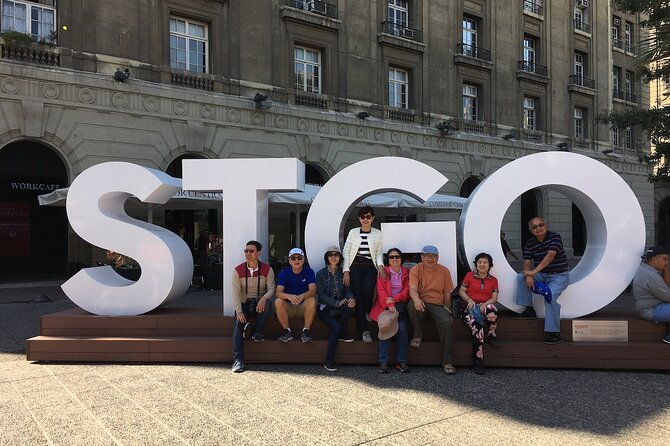
At $65 per person, this is priced above a basic free walking tour, so the value depends on what you want from the guide.
You are paying for a small-group experience with a maximum of 10 people, a focused theme, and interpretation that connects politics, architecture, city origins, and LGBTQ+ culture. Admission is free at the listed stops, so the cost is mainly for the guide’s time and the personalized conversation.
The price looks strongest for a first visit. You get the central landmarks, learn how they fit together, and finish in a useful neighborhood. It also offers value for solo visitors who want an easier first day and practical local advice.
The calculation is different if you only want landmark photos. In that case, you can see several of these places independently for less. The tour earns its price through context and conversation, not entry tickets.
The average booking lead time is about 19 days. That suggests you should not wait until the last minute if your dates are fixed, especially since the group is capped at 10 people.
Timing, weather, and who should book
The advertised length is approximately two to four hours. The route includes several short stops, a longer visit to Plaza de Armas, and 40 minutes at Santa Lucía Hill. The actual pace can change with questions, group size, and the guide.
The tour requires good weather. If poor weather cancels it, you can receive another date or a full refund. Free cancellation is available up to 24 hours before the start time, while cancellations or changes inside that window are not accepted.
Service animals are allowed, and the route is near public transportation. Most people can participate, but this is still a walking experience with time outdoors and a hill section.
I would recommend it most strongly to:
- First-time visitors who want central Santiago explained in context
- Solo visitors who want help getting their bearings
- LGBTQ+ visitors and allies seeking Chilean queer history
- People who prefer conversation and local guidance over a scripted sightseeing circuit
- Couples or friends who want a thoughtful introduction to Santiago’s political and cultural life
I would be less likely to choose it if you want a relaxed food tour, a museum-heavy outing, or a completely flat route. It also may not suit someone who wants every minute tightly scheduled, since the guide’s personal recommendations and questions can lengthen the experience.
Should you book the Heart of Santiago tour?
Book it if you want Santiago’s central sights to make sense as part of a larger story. The route is compact, but the themes are not: democracy, dictatorship, city origins, public protest, Indigenous history, Spanish conquest, and LGBTQ+ life all appear along the way.
The strongest reason to choose this walk is the guide. Freddy’s personal style, practical advice, and care with solo visitors add value that a map cannot provide. The small group limit helps keep the conversation open.
Choose another tour if your main goal is architecture, interiors, or food. But if you want a thoughtful first look at Santiago, with queer history treated as part of the city’s main story, $65 is a fair price for the experience.
FAQ
Where does the tour start?
It starts at La Moneda Palace in Santiago, Chile.
Where does the tour end?
It ends around José Victorino Lastarria in the Lastarria District of Santiago.
How long does the tour last?
The tour lasts approximately two to four hours.
How much does the tour cost?
The listed price is $65 per person.
What places are included?
The route includes La Moneda, Plaza de la Constitución, the Palacio de Tribunales de Justicia, Plaza de Armas, Santa Lucía Hill, and the Lastarria District.
Is admission included at the stops?
The listed stops have free admission. The tour information does not list separate paid entry tickets.
How large is the group?
The maximum group size is 10 people.
Is the tour suitable for solo visitors?
Yes. The tour is open to solo participants, and the guiding style includes help with orientation, transportation, safety, and local recommendations.
Are service animals allowed?
Yes, service animals are allowed.
What happens if the weather is poor?
The experience requires good weather. If it is canceled for that reason, you can be offered a different date or a full refund.
Can I cancel for a full refund?
Yes. You must cancel at least 24 hours before the experience start time for a full refund. Changes or cancellations made less than 24 hours before the start time are not accepted.
More Historical Tours in Santiago
- Essence of Santiago : History, Flavors and Panoramic Views
★ 5.0 · 45 reviews - Santiago: Private tour, historic center, high altitude viewpoint, cable car
★ 4.9 · 27 reviews - La Moneda Palace, Plaza de Armas & Historic Santiago Walking Tour
★ 5.0 · 20 reviews - Historic Valparaiso and Viña del Mar from Santiago
★ 3.5 · 19 reviews
Just added around Santiago
- Walking City Tour with Funicular, Cable Car and Tasting★ 4.3 · 6 reviews
- Tour VIÑA CONCHA Y TORO + CASA MARQUES – Chile, from Santiago.★ 5.0 · 2 reviews
- VIÑA DEL MAR AND VALPARAISO TOUR★ 4.8 · 20 reviews
- Undurraga Wine tour★ 4.2 · 15 reviews
- Undurraga + Isla Negra + San Afonso del Mar —– Full day★ 4.1 · 8 reviews
- wetravelneruda’s route – Pablo Neruda’s route – Private tour★ 5.0 · 6 reviews
- Southcoast – Private Full-Day tour★ 5.0 · 6 reviews
- Santiago Private walking tour with Lunch★ 5.0 · 5 reviews
Historical Tours, compared.
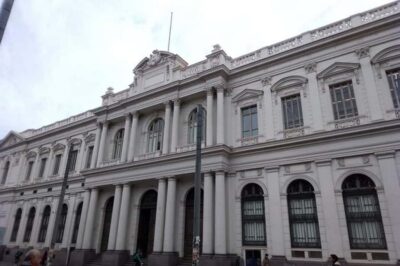
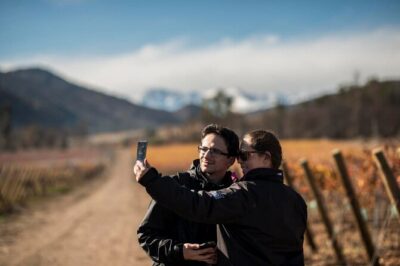
Tour Viña Santa Rita: History, Wine and Picnic Outdoors
Read our review →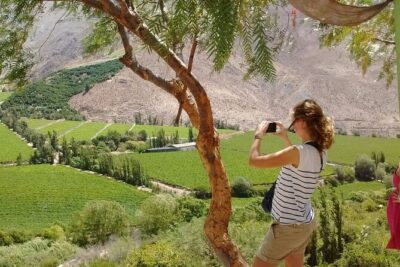
Elqui Valley Tour: History and Flavors (NOT FOR CRUISES)
Read our review →
Viña Del Mar and Valparaiso world heritage site.
Read our review →
Walking Tour Valparaiso, History & Art – Private Optional
Read our review →
Essence of Santiago : History, Flavors and Panoramic Views
Read our review →
2 Day Private Tour: Easter Island’s Cultural Heritage
Read our review →
Browse the lists this tour appears in