
Reviewed · HISTORICAL TOURS
La Moneda Palace, Plaza de Armas & Historic Santiago Walking Tour
Santiago reveals itself on foot. This 2.5-hour tour links La Moneda Palace, colonial churches, the Stock Exchange, Plaza de Armas, and Cerro Santa Lucía, giving you a useful first look at Chile’s capital. I especially like the mix of grand political spaces and ordinary city streets, plus the small-group limit of 10 people, which should make questions and conversation easier.
I also like the way the route finishes at Santa Lucía Hill, where you get city views instead of simply being dropped beside another downtown building. The main consideration is safety: parts of central Santiago require close attention to your belongings, and two people reported having jewelry or a bracelet snatched during the walk. Keep valuables out of sight and follow the guide’s advice.
In This Review
- Key points to know before you book
- Why this walking tour works for a first day
- Starting at Citizenship Park and La Moneda
- Churches, colonial buildings, and the city’s older layers
- Plaza de Armas and the cathedral
- Mercado Central, Parque Forestal, and the cultural quarter
- The final climb to Cerro Santa Lucía
- Guide quality, group size, and personal safety
- Is $29 good value for Santiago?
- Who should book this walk?
- Should you book the La Moneda and Historic Santiago tour?
- FAQ
- How long does the tour last?
- How much does the tour cost?
- Where does the tour start?
- Where does the tour finish?
- Is transportation included?
- How large is the group?
- What languages does the guide speak?
- Does the tour enter La Moneda Palace?
- Are churches and landmarks visited inside?
- Can I cancel for a refund?
Key points to know before you book
- A compact tour with a wide reach: In about 2 hours and 30 minutes, you cover civic plazas, churches, commercial streets, museums, markets, and a hilltop park.
- Small groups matter: The maximum is 10 people, with a certified local guide speaking Portuguese or English.
- La Moneda is viewed from outside: The palace is an important stop, but the experience focuses on its façades and surrounding plazas rather than a guaranteed interior visit.
- The best finish is Cerro Santa Lucía: The route ends at Neptune’s Terrace, with access to several transportation options and panoramic views.
- History comes with city life: Paseo Estado, Plaza de Armas, Mercado Central, and the streets around La Moneda show Santiago as a working capital, not just a collection of monuments.
- Stay alert downtown: Leave expensive jewelry at your hotel, keep your phone and wallet secure, and avoid displaying valuables while crossing streets.
Why this walking tour works for a first day
At $29 per person, this is priced as an affordable orientation tour rather than a full museum experience. You are paying for a local guide, a narrated route, historical explanation, photo stops, and suggestions for food and later activities. Since there is no transportation included, the value depends on your interest in walking and your desire to understand the city’s center quickly.
The route is especially useful if you have only a short time in Santiago. It touches the city’s government district, colonial core, financial quarter, major cathedral, cultural institutions, and one of its best-known viewpoints. You will not explore every site at length, but you will learn which places deserve a return visit.
The tour is also a good match for anyone who prefers context over a checklist. A church can seem like just another old building until you know that it survived earthquakes and dates to the early colonial period. A red-painted mansion becomes more memorable when you understand its place in the independence story.
The pace sounds moderate, but the route covers a lot. Wear comfortable shoes and expect to walk through central streets, plazas, and the paths and steps of Santa Lucía Hill. The hill portion is short at about 15 minutes, yet its stairs and viewpoints may feel more demanding than the flat downtown sections.
More History Tours in Santiago
- Santiago: Guided Walking Tour of the Historical Old Town
★ 4.8 · 459 reviews - Tour Viña Santa Rita: History, Wine and Picnic Outdoors
★ 4.5 · 141 reviews - Viña Del Mar and Valparaiso world heritage site.
★ 4.5 · 89 reviews
Starting at Citizenship Park and La Moneda
The meeting point is beside the Monument to General Bernardo O’Higgins Riquelme on Avenida Libertador Bernardo O’Higgins. From there, the first stop is Plaza de la Ciudadanía, also called Citizenship Park.
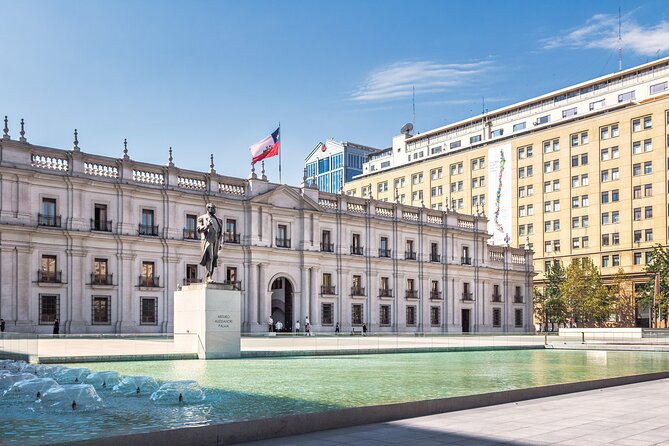
This broad civic space runs along the southern side of La Moneda Palace. Its design belongs to Santiago’s 2006 redevelopment work connected with the country’s Bicentennial Project. Water mirrors, the large Bicentennial Flag, and the underground Centro Cultural La Moneda give the plaza a modern public face.
The Altar de la Patria adds a more solemn note. It contains the remains of Bernardo O’Higgins, one of Chile’s leading independence figures, and is joined by statues honoring other national leaders. Your guide can help connect these symbols to Chile’s political identity instead of leaving you to read the space as decoration.
La Moneda Palace is next. Completed in 1805, it began life as a colonial mint, which explains its name. Today it is Chile’s presidential palace and houses important government offices.
The tour allows only about five minutes at La Moneda, so expect an exterior visit and an explanation of the building’s role. You can admire the neoclassical columns, courtyards, and carefully ordered façades, but you should not book this expecting a complete palace tour. The surrounding plazas and public art are part of the experience.
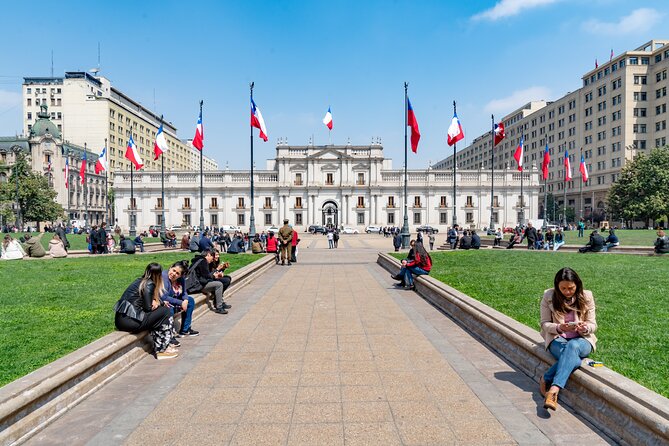
Plaza de la Constitución provides another view of La Moneda. This is the political heart of the capital, a place connected with national ceremonies, demonstrations, and major public events. Its formal buildings and open space offer a useful pause before the route moves into older churches and commercial streets.
Churches, colonial buildings, and the city’s older layers
The Church of San Francisco is one of the most meaningful stops. Dating to 1618, it is the oldest standing building in Santiago. Its survival through major earthquakes says much about both the city’s difficult natural setting and the importance of the church to local life.
Inside, when access is available, you can see religious art from the colonial period. The visit is brief, so your guide’s explanation matters. A five-minute stop will not allow a slow examination of every painting or chapel, but it gives you a reason to return if this is the kind of place you enjoy.
The route then passes through Paseo Estado, one of central Santiago’s main pedestrian streets. Shops, historic façades, and constant foot traffic show the commercial side of the capital. This is not a polished monument zone. It is a useful stretch of city where older architecture meets everyday business.
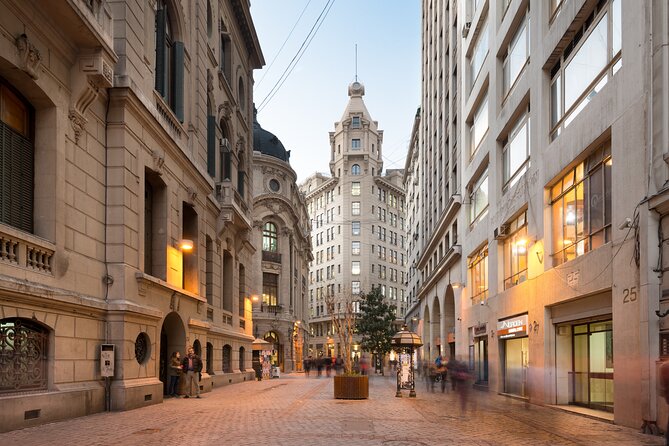
Paseo Nueva York offers a sharp change of mood. This short street has early 20th-century neoclassical buildings and a name that reflects Santiago’s wish, during its modernization, to resemble major European and American cities. It is quieter and more formal than the nearby shopping streets, making it a good place to notice how the city borrowed ideas from abroad.
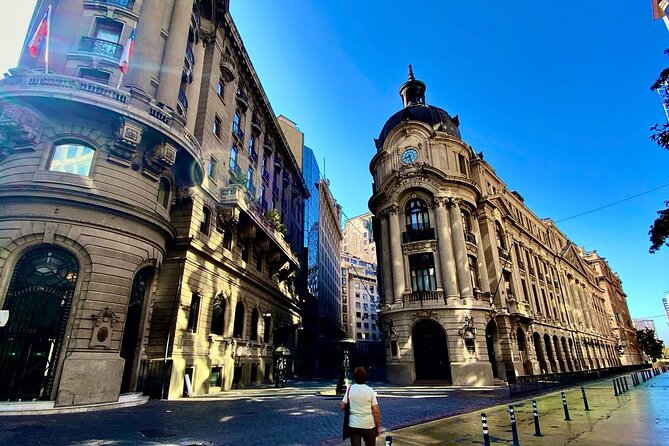
The Santiago Stock Exchange adds an economic chapter. Founded in 1893, it occupies a French-style building tied to Chile’s late 19th and early 20th-century growth. The guide’s explanation can help you see this as more than a pretty façade. The building reflects Chile’s connection to international markets and the ambitions of a young republic.
Casa Colorada brings you back to the colonial era. Built in 1769, this red-fronted mansion is one of Santiago’s best-preserved colonial houses. It was associated with important figures in the independence movement and helps fill in the gap between the city’s Spanish beginnings and its later republican architecture.
The Church of St. Augustine is another old religious landmark. Built in the early 1600s, it is known for baroque design and the Cristo de Mayo crucifix. The statue is linked to a famous earthquake story, so listen for the explanation rather than simply taking a quick photograph. As with San Francisco, access can depend on what is open at the time.
Plaza de Armas and the cathedral
Plaza de Armas is the historical center of Santiago. The city was founded in 1541, and this square has served as its principal public space for centuries. It is also one of the places where the tour’s different themes come together: colonial origins, republican architecture, religious life, and modern street culture.
You may see street artists, performers, and local people using the square as part of their daily routine. That matters because the plaza is not only a historic site. It remains a public meeting place.
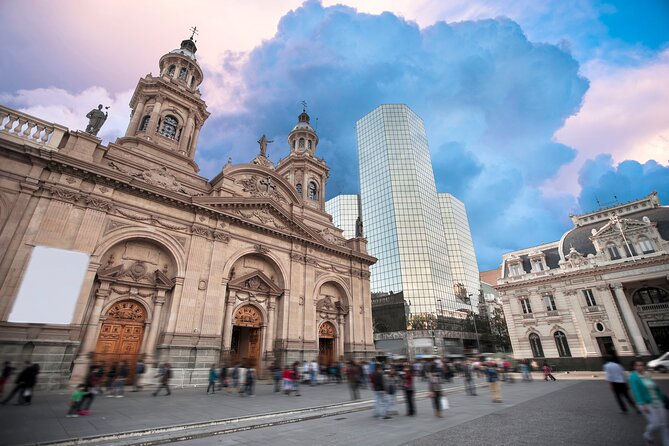
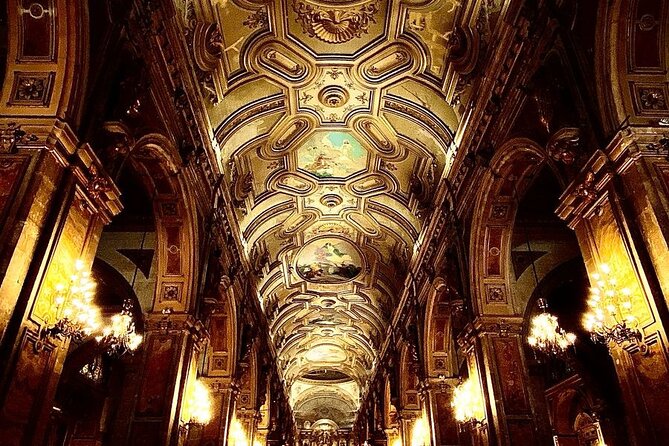
The Metropolitan Cathedral sits beside Plaza de Armas and was built over the 18th and 19th centuries. Its neoclassical exterior gives way to a decorated interior shaped by centuries of Catholic practice and repeated rebuilding.
The scheduled visit is about five minutes. That is enough to step inside and understand the main features, but not enough for a detailed art study. If the interior appeals to you, note the cathedral’s location so you can return after the tour at your own pace.
The former National Congress building is also included in the broader route. Its 19th-century neoclassical design and gardens offer another look at Chile’s republican period. The building helps explain why central Santiago can feel like several cities layered together: colonial streets, 19th-century public institutions, and modern commercial life all occupy the same compact area.
More Walking Tours in Santiago
- The best walking tour in Santiago de Chile
★ 5.0 · 629 reviews - Santiago Half-Day Walking Tour with Hotel Pick up & Food Sample
★ 4.5 · 467 reviews - A Fabulous Walking tour by the Old Santiago of Chile –
★ 5.0 · 466 reviews - Private Santiago 3-Hour Walking Tour
★ 5.0 · 237 reviews
Mercado Central, Parque Forestal, and the cultural quarter
Mercado Central is described as Santiago’s famous seafood market, opened in 1872 inside an iron structure designed in Britain. It is an important stop for understanding Chile through food, trade, and daily commerce.
The tour does not promise a meal or a long market visit, so think of it as a brief introduction. Your guide can point out why the market matters and may offer food recommendations for later. If seafood is a priority for you, ask for practical advice before the group moves on.
Parque Forestal follows the Mapocho River and gives downtown a stretch of open green space. Created in the late 19th century, it is used for walking, exercise, relaxation, and outdoor art. The park also connects several major cultural sites, so it helps you see how Santiago’s center is arranged rather than experiencing each monument in isolation.
The Museo Nacional de Bellas Artes occupies a Beaux-Arts building from 1910. Its collection is among the oldest in Latin America and includes Chilean and international art. The tour does not include a full museum visit, but the exterior and setting may help you decide if you want to return.
This part of the route is valuable because it broadens the tour beyond political history. You get architecture, food, public parks, and art in the same walk. The drawback is time. With so many places named along the way, some will receive only a short explanation or an outside view.
The final climb to Cerro Santa Lucía
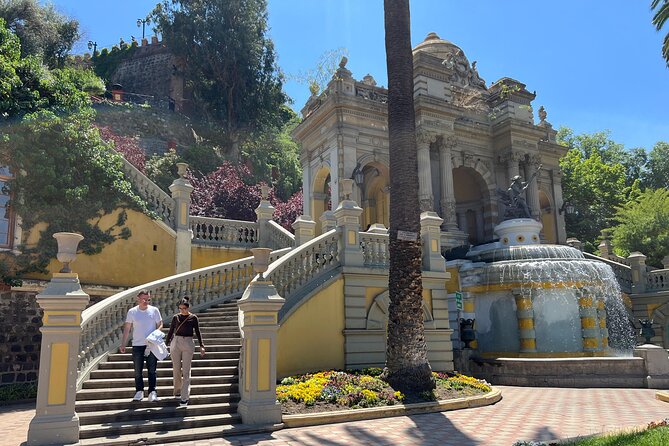
Cerro Santa Lucía is the tour’s strongest closing stop. Santiago was officially founded here in 1541, when the hill was a rocky outcrop rather than the landscaped urban park you see today.
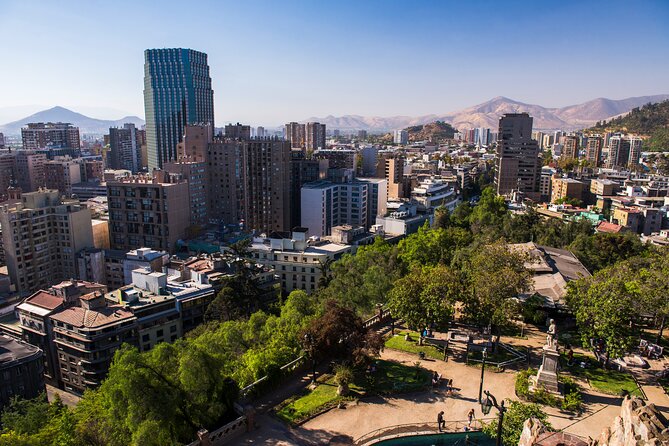
Paths, stairways, fountains, and viewpoints make the hill feel different from the formal plazas below. The route ends in front of Neptune’s Terrace, where you can take in panoramic views of the city. This is a practical finish because you can pause, take photographs, and then continue exploring or use nearby transportation.
The hill visit lasts about 15 minutes. That is enough for a clear introduction and a viewpoint, but not a long walk through every section. If you want a slower visit, treat the tour’s ending as a starting point for your own return.
The hill also gives the tour a sense of place. La Moneda explains the state, Plaza de Armas explains the founding city, and Santa Lucía lets you look back across the center and see how those parts fit together.
Guide quality, group size, and personal safety
The strongest part of this experience is likely to be the guide. Emmanuel received particularly warm praise for making Chilean history clear, interesting, and interactive without rushing the group. Felipe was appreciated for explaining the history of the mint and the different sections of Santa Lucía Hill. Another positive account singled out Paul, also referred to as Pablo, for being welcoming and pleasant.
Because the group is capped at 10 people, you should have a better chance of hearing the explanation and asking questions than on a large city walk. The guide is certified and speaks Portuguese or English. The tour includes recommendations for food, shopping, and things to do after the walk, which can be especially useful early in your stay.
Safety deserves direct attention. Two separate accounts described jewelry or a bracelet being snatched during the walk. The operator says its booking notes advise leaving jewelry at the hotel and that guides give a safety reminder at the start. Even so, I would treat this as a place to take your own precautions.
Leave gold chains and flashy watches behind. Keep your phone and wallet secured, especially while crossing streets or moving through crowded areas. Do not let concern ruin the walk, but do take the downtown setting seriously and stay close to the guide.
Is $29 good value for Santiago?
For $29, you receive a small-group walking tour, a local guide, explanations at a long list of major sites, selected church and landmark entry when possible, photographs stops, and a hilltop finish. You do not pay for transportation, meals, or a full interior tour of every building.
I consider the price fair if you want a structured introduction and local interpretation. The tour would be less valuable if you prefer to spend 20 or 30 minutes inside each church, museum, or market. Its strength is range, not depth.
The 4.8 rating from 20 reviews and the 95 percent recommendation rate suggest a strong overall experience, while the safety incidents show why you should read the practical details before booking. Free cancellation is available up to 24 hours before the start time. Changes or cancellations inside that window are not accepted for a refund.
Who should book this walk?
I would choose this tour for a first visit, a short stay, or a morning when you want to understand Santiago before exploring alone. It suits people who enjoy architecture, national history, churches, public squares, and street life in one outing.
It is also useful for visitors who want recommendations from a local guide. The route ends in a central location, so you can continue to a museum, meal, market, or another part of the city afterward.
I would think twice if you have difficulty walking for 2.5 hours or if you want guaranteed access to interiors. The itinerary includes many short stops, and some are exterior views. The safety issue also means you should be comfortable staying alert in a busy urban center.
Should you book the La Moneda and Historic Santiago tour?
Book it if you want a compact, inexpensive introduction to Santiago with a small group and a strong mix of political, colonial, religious, commercial, and cultural sights. The final views from Santa Lucía Hill add real value, and guides such as Emmanuel, Felipe, and Paul have helped make the history easy to follow.
Skip it if your priority is a slow museum visit, a private tour, or a relaxed walk with no need to watch your belongings. For most first-time visitors, though, the route gives you a useful map of central Santiago. Keep valuables hidden, wear good shoes, and use the tour to decide where you want to return on your own.
FAQ
How long does the tour last?
The walking tour lasts approximately 2 hours and 30 minutes.
How much does the tour cost?
The listed price is $29 per person.
Where does the tour start?
It starts at the Monument to General Bernardo O’Higgins Riquelme on Avenida Libertador Bernardo O’Higgins, 8330109 Santiago.
Where does the tour finish?
It ends at Santa Lucía Hill, in front of Neptune’s Terrace. Several transportation options are available from the ending point.
Is transportation included?
No. Transportation is not included in the tour.
How large is the group?
The maximum group size is 10 travelers. For parties of 10 or more, arrangements can be made to preserve the same level of attention.
What languages does the guide speak?
The certified local guide speaks Portuguese or English.
Does the tour enter La Moneda Palace?
The tour includes a visit around La Moneda Palace and views of its exterior. Entry inside the palace is not promised.
Are churches and landmarks visited inside?
The tour includes entry into select churches and historic landmarks when they are accessible.
Can I cancel for a refund?
Yes. You can cancel at least 24 hours before the local start time for a full refund. Cancellations or changes made less than 24 hours before the start time are not refunded or accepted.
More Historical Tours in Santiago
- Essence of Santiago : History, Flavors and Panoramic Views
★ 5.0 · 45 reviews - Santiago Walking Tour: Heart of Santiago, Queer History & Culture
★ 5.0 · 27 reviews - Santiago: Private tour, historic center, high altitude viewpoint, cable car
★ 4.9 · 27 reviews - Historic Valparaiso and Viña del Mar from Santiago
★ 3.5 · 19 reviews
Just added around Santiago
- Walking City Tour with Funicular, Cable Car and Tasting★ 4.3 · 6 reviews
- Tour VIÑA CONCHA Y TORO + CASA MARQUES – Chile, from Santiago.★ 5.0 · 2 reviews
- VIÑA DEL MAR AND VALPARAISO TOUR★ 4.8 · 20 reviews
- Undurraga Wine tour★ 4.2 · 15 reviews
- Undurraga + Isla Negra + San Afonso del Mar —– Full day★ 4.1 · 8 reviews
- wetravelneruda’s route – Pablo Neruda’s route – Private tour★ 5.0 · 6 reviews
- Southcoast – Private Full-Day tour★ 5.0 · 6 reviews
- Santiago Private walking tour with Lunch★ 5.0 · 5 reviews
Historical Tours, compared.
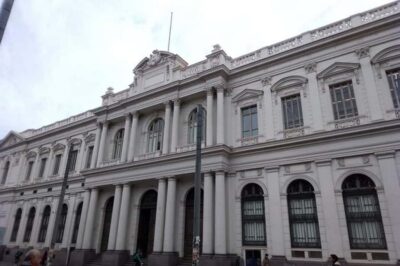
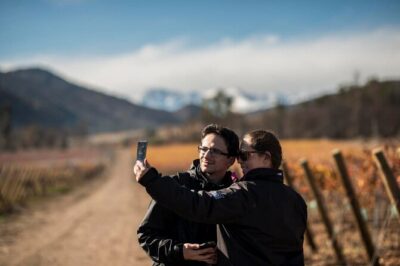
Tour Viña Santa Rita: History, Wine and Picnic Outdoors
Read our review →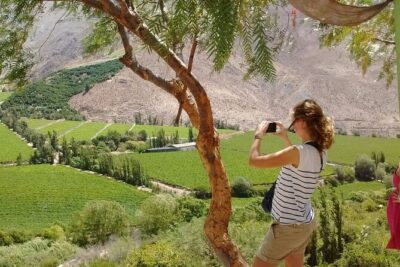
Elqui Valley Tour: History and Flavors (NOT FOR CRUISES)
Read our review →
Viña Del Mar and Valparaiso world heritage site.
Read our review →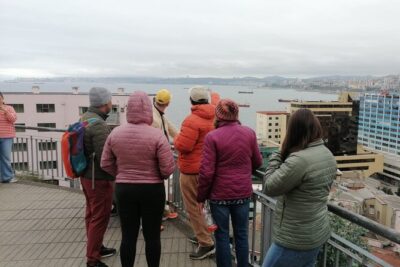
Walking Tour Valparaiso, History & Art – Private Optional
Read our review →
Essence of Santiago : History, Flavors and Panoramic Views
Read our review →
2 Day Private Tour: Easter Island’s Cultural Heritage
Read our review →
Browse the lists this tour appears in