
Reviewed · NATIONAL PARKS
Fray Jorge ice-age relict forest UNESCO National Park
A forest survives where it should not. From La Serena, this full-day trip takes you along the Limarí Valley coast to Fray Jorge National Park, where ancient southern trees live beside the Atacama Desert. The forest stays alive through Camanchaca, the thick ocean fog that rolls inland and supplies moisture to mosses, ferns, lichens, shrubs, and trees.
I like the small group of up to 15 people, which gives the guide room to answer questions and adjust the pace. I also like that the experience is more than a park transfer: you get coastal stops, binoculars and magnifying glasses, a guided walk, and lunch in Tongoy. The main drawback is the price, $260 per person, which is a serious spend for one day, especially if you are mainly looking for a short nature walk.
Still, this is a strong choice if you want an unusual natural experience rather than another standard city tour. The trip also has a human story, linking ancient coastal cultures, early farmers and shepherds, Franciscan history, pirates, and a shipwrecked English sailor whose tale became part of the forest’s legend.
In This Review
- Key points to know before booking
- Why Fray Jorge feels impossible
- Leaving La Serena for the coastal road
- The two-hour walk inside Fray Jorge
- Camanchaca, the forest’s daily water supply
- A human story stretching from prehistory to the Franciscans
- Wildlife watching along the route
- Lunch and the Tongoy stop
- What the $260 price includes
- Guide quality and the small-group advantage
- Who should book this day trip?
- Practical details to check before you go
- Should you book the Fray Jorge experience?
- FAQ
- Where does the Fray Jorge tour begin?
- How long does the tour last?
- What language is the guided tour in?
- Is lunch included?
- Are park entrance tickets included?
- What information is needed for the park tickets?
- How large is the group?
Key points to know before booking
- Fray Jorge is a southern forest in the far north: Its trees are relicts from a much colder ice-age climate.
- Camanchaca keeps the forest alive: Ocean fog provides the moisture that the surrounding dry country cannot.
- The tour starts and ends in La Serena: Pickup and return transportation from your accommodation are included.
- The day includes more than the park: Coquimbo, Totoralillo, Guanaqueros, and Tongoy add coastal scenery and local context.
- Wildlife can be a real highlight: Guanacos, eagles, iguanas, birds, and other animals may appear along the route.
- The package includes useful extras: Park entry, an English-speaking specialist guide, binoculars, magnifying glasses, and lunch are covered.
Why Fray Jorge feels impossible
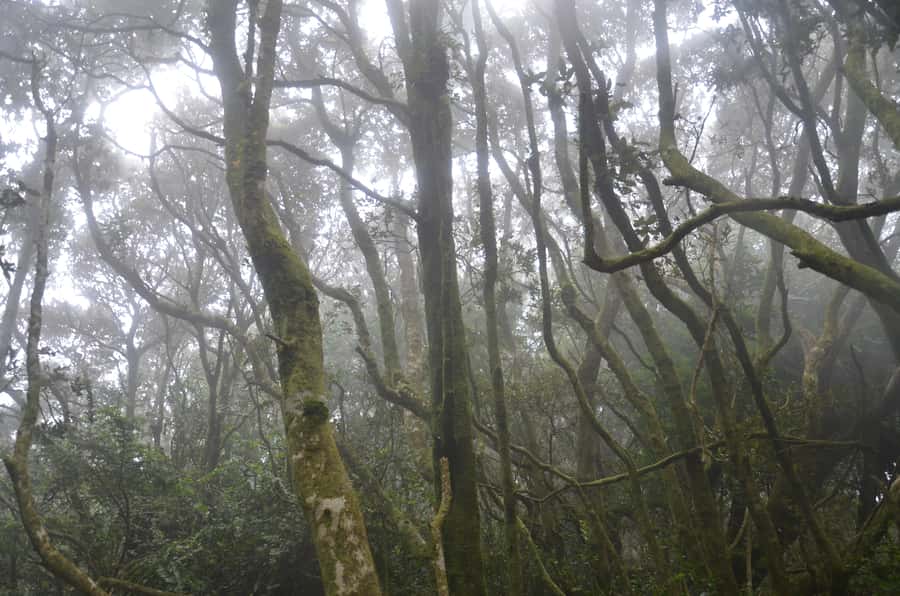
Fray Jorge makes sense only after you understand its climate. The park sits in the northern part of Chile, near the coast of the Limarí Valley, yet its forest contains plant life associated with much farther south. These trees and other species survived from the last ice age, when cooler and wetter conditions reached much farther north.
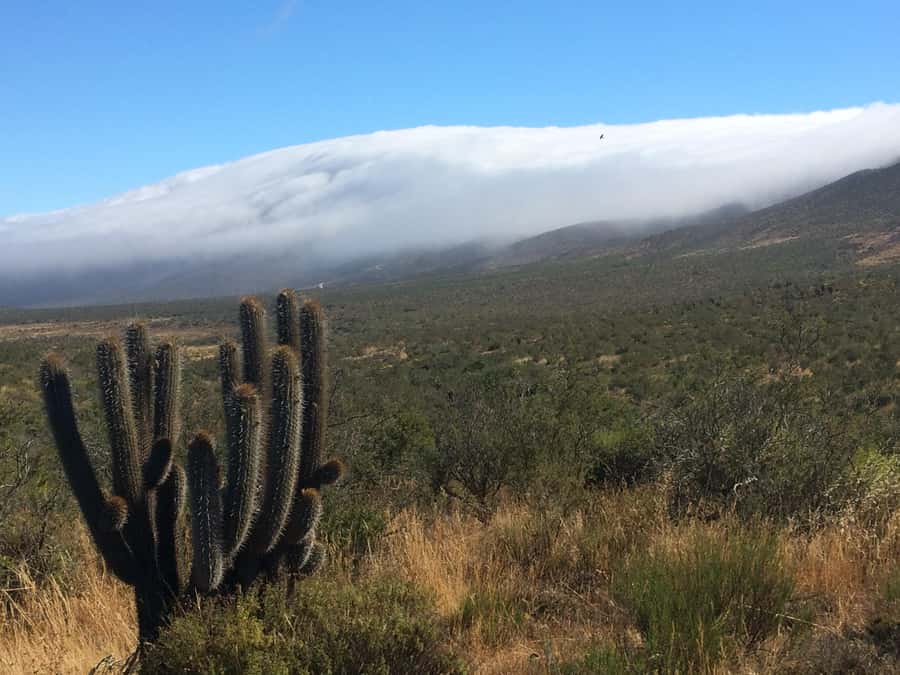
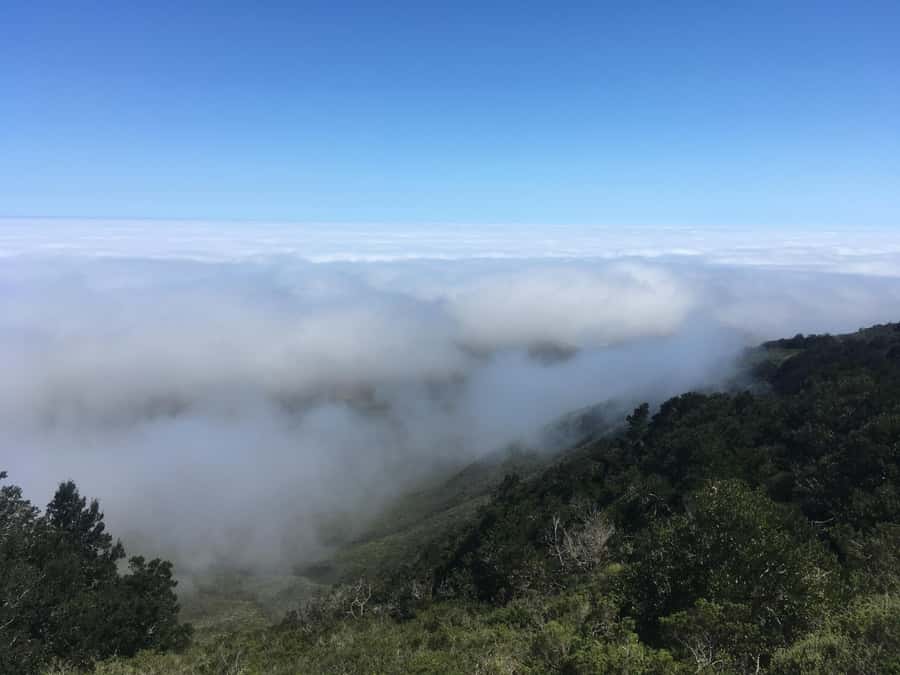
Today, the surrounding country is dry and shaped by the advance of the Atacama Desert. Fray Jorge survives because the Pacific Ocean sends in Camanchaca fog. The fog collects on vegetation and releases moisture slowly, allowing the forest to live in a place where ordinary rainfall would not be enough.
That contrast is the real attraction. You are not simply walking through attractive woodland. You are seeing a small pocket of a former climate, preserved by fog and protected by geography. The park’s ridges, coastal position, and local weather patterns all help create this odd green island.
The forest also carries formal recognition. Fray Jorge is a national park, a Starlight site, and a UNESCO biosphere reserve. Those labels matter because they point to the park’s ecological value, but the best way to understand it is still with your eyes: dry surroundings, then moss, ferns, lichens, shrubs, cactus, and trees gathered in one remarkable place.
A few more La Serena trips worth comparing side by side
- Activity in Fray Jorge National Park
★ 5.0 · 3 reviews - Full Day Tour to Torres del Paine National Park
★ 5.0 · 513 reviews - Full-Day Tour Torres del Paine National Park from Puerto Natales
★ 4.5 · 251 reviews
Leaving La Serena for the coastal road
The tour begins with pickup at your accommodation in La Serena. Having transport included is important here. Fray Jorge is not a simple walk from the city, and arranging your own transport would remove much of the ease that makes a full-day outing worthwhile.
The drive begins with a guided pass through Coquimbo, listed as roughly 15 minutes of sightseeing and scenic views. Coquimbo gives the day a coastal setting from the start, and your guide can connect the port city and surrounding coast with the wider story of northern Chile.
The next stop is Totoralillo, a short scenic section of about 10 minutes. Then comes Guanaqueros, also about 10 minutes. These stops are brief, so you should not expect long independent visits at each place. Their value lies in the changing coastal scenery and in the way they break up the road to the park.
Guanaqueros also matters for the cultural story. The area is associated with the Guanaqueros culture, while the older Huentelauquén culture represents some of the earliest coastal life in Chilean prehistory. The route brings together archaeology, geography, and the sea without turning the morning into a museum lecture.
The two-hour walk inside Fray Jorge
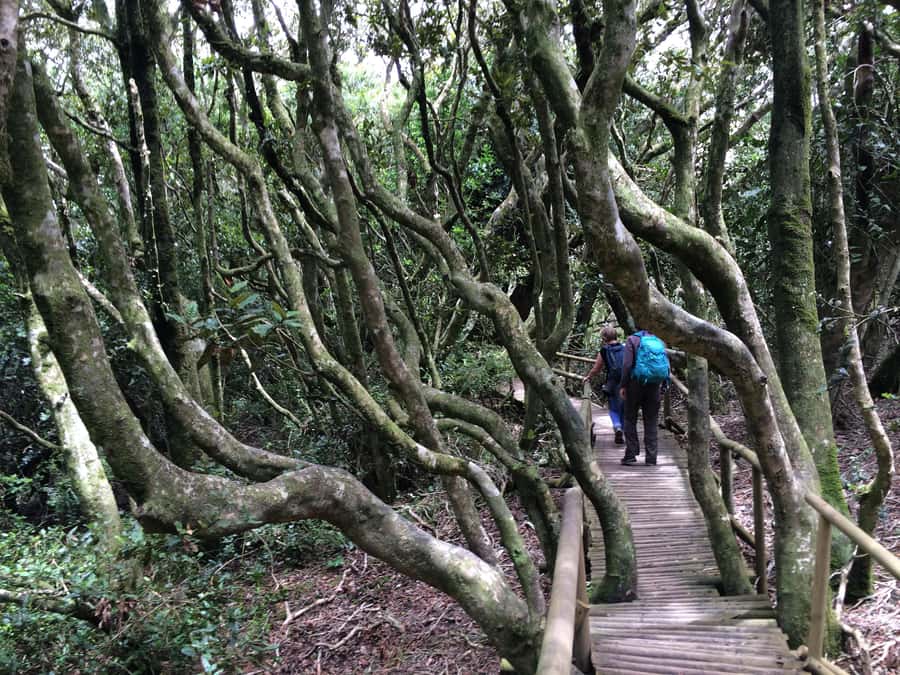
The main visit lasts about two hours and includes a guided walk and hiking. This is the part of the day that justifies the trip’s unusual subject. You get time to look closely rather than simply stop for a photograph and leave.
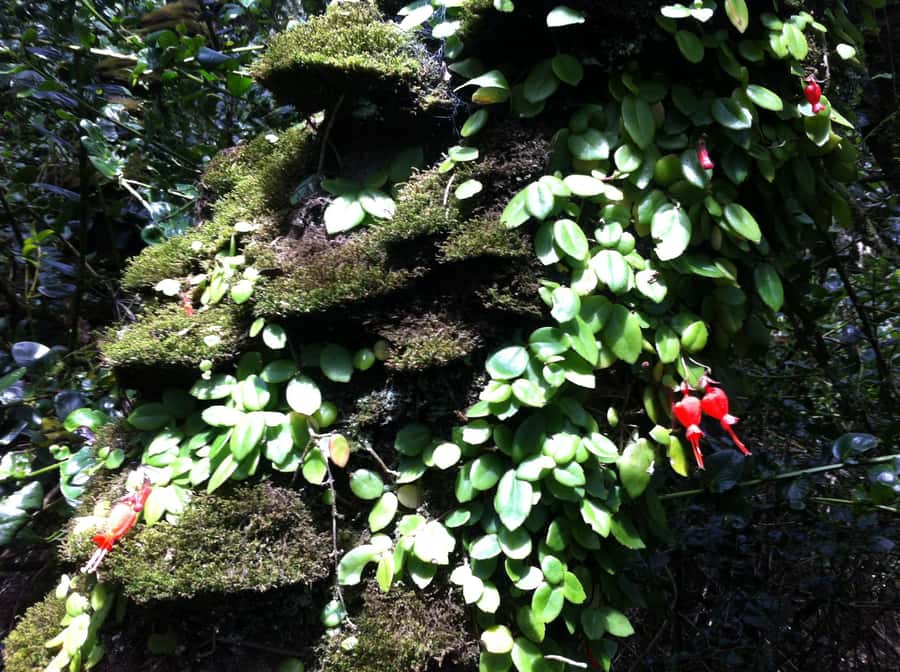
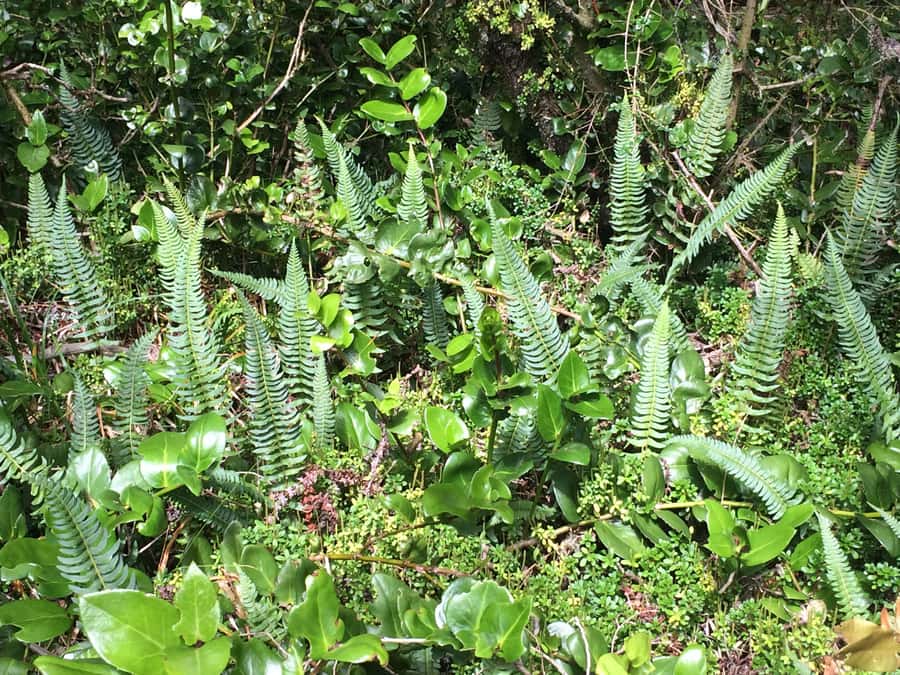
Bring your attention down to the smaller plants. The park contains numerous lichens, mosses, and ferns, along with shrubs, cactus, and trees. The supplied magnifying glasses are useful here. They encourage you to inspect the fine detail of the forest instead of treating it as a wall of greenery.
The binoculars serve a different purpose. The park has many bird species, and wildlife along the route can include guanacos, eagles, iguanas, and other animals. Sightings are never guaranteed, but the equipment gives you a better chance to notice movement in the trees or open country.
I would think of this as a nature walk with interpretation, not a demanding expedition. The exact difficulty is not specified, so you should ask about the walking conditions if mobility or stamina is a concern. The experience is listed as wheelchair accessible, but the park visit includes walking and hiking, so accessibility needs may vary within the natural area.
The guide’s role is especially important inside the park. Without context, an ice-age relict forest can look like an attractive patch of vegetation. With a good explanation, you begin to see why each plant matters and how the fog, coast, elevation, and dry climate work together.
Camanchaca, the forest’s daily water supply
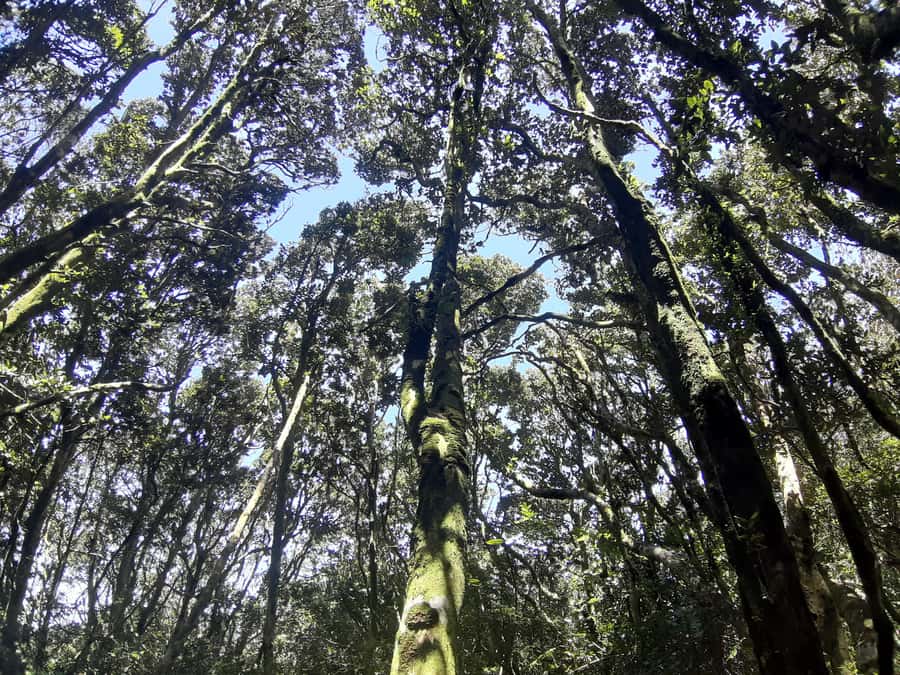
The fog is not just a scenic effect. It is the forest’s main practical lifeline. Moisture from the ocean moves inland as Camanchaca, touching the vegetation and helping sustain a community of plants that would otherwise struggle in the desert climate.
You may notice how different the air feels as the forest appears. The tour description emphasizes the atmosphere, airborne moisture, lichens, moss, and other small life forms. That is useful because Fray Jorge is not only about large trees. Its character is in the dampness, textures, and close-up details.
This is also why the trip can feel like a lesson in adaptation. The northernmost Patagonian trees are not thriving because the region is naturally wet. They are surviving because a narrow combination of ocean fog and local geography gives them just enough support.
The park’s importance comes from this fragile balance. The forest is a living record of a colder age, but it is not frozen in time. It remains exposed to the pressure of the surrounding desert and to the conditions that control fog. A visit helps you understand both its beauty and its vulnerability.
Still Chile, but an entirely different landscape:
- Elqui Valley Tour: History and Flavors (NOT FOR CRUISES)
★ 5.0 · 139 reviews - Pisco Elqui: Mountaintop Stargazing and Night Portrait
★ 4.6 · 20 reviews - Elqui Valley and Vicuna Private Tour Including Lunch
★ 4.5 · 18 reviews - Classic Elqui Valley (Between vineyards and fruit trees)
★ 5.0 · 16 reviews
A human story stretching from prehistory to the Franciscans
Fray Jorge is often described through plants, but the human history adds another layer. The coastal region preserves evidence connected with the Huentelauquén culture, followed by the arrival of early farmers and indigenous shepherds associated with the Guanaqueros culture.
The wider historical account also includes the Molle and Diaguita cultures. The tour’s interpretation connects these groups with movement from the Chaco Forest and Argentine pampas, as well as with shamanic traditions linked toward the Atlantic Amazon side. These connections are complex, and the story is best heard from the guide rather than reduced to a quick label.
Later chapters bring in pirates, Black slaves, and a legendary English sailor. According to the local tale, the sailor survived a shipwreck on the coast near Coquimbo, was taken in by Franciscans who needed a servant, and later explored the region. He supposedly found the old forest and eventually became a friar.
You should treat the sailor story as local legend rather than a simple proven fact. That does not make it useless. Stories like this show how people have tried to explain and remember a place that feels hidden, ancient, and out of place. The best tours allow the legend and the ecological evidence to sit side by side.
Wildlife watching along the route
Wildlife is one of the day’s pleasant bonuses. The route can produce sightings of guanacos, eagles, iguanas, and many birds. You will want to keep your eyes open during both the road sections and the park visit, since animals are not limited to the formal walking area.
The included binoculars make a real difference for distant birds and larger animals. They also save you from packing extra gear. A magnifying glass may seem like a small touch, but it suits this forest well, where lichens, mosses, and ferns reward close observation.
I would not book the tour solely for wildlife. The number and variety of sightings depend on conditions, and no fixed list of animals is guaranteed. Instead, see wildlife as one part of a broader day built around rare vegetation, fog, coastal geography, and local history.
Lunch and the Tongoy stop
After the park, the route continues to Tongoy for about 75 minutes. This is the main break of the day and includes lunch, an aperitif, a photo stop, free time, and regional food.
The included lunch has a starter, a main course with an accompaniment, dessert, and a drink. That matters at $260, because buying a full meal separately would add to the cost and make the day less straightforward. Tongoy also gives you a chance to shift from forest observation to coastal food and scenery.
The timing is generous enough for a proper pause, but not so long that the day loses its shape. You should expect a structured stop rather than an open-ended afternoon in town. If you want a leisurely independent visit to Tongoy, this tour may feel too organized.
One useful feature is the guide’s local role. The guide can introduce you to regional produce and local food in a way that a standard transfer cannot. A past outing with guide Cristóbal included fresh local produce and an excellent seafood restaurant recommendation, showing the kind of personal local knowledge that can make the food stop more than a box-checking lunch.
What the $260 price includes
At $260 per person, this is a premium day trip. The value depends on how much planning and interpretation you want handled for you.
The cost includes:
- Pickup and return transport from your accommodation in La Serena
- An English-speaking bilingual guide
- Park entrance tickets
- A guided visit and walk in Fray Jorge National Park
- Binoculars
- Magnifying glasses
- A complete lunch with starter, main dish, accompaniment, dessert, and drink
The park is far enough from La Serena that transport alone is a meaningful part of the package. Add entry fees, a full meal, specialist equipment, and a small group capped at 15, and the price becomes easier to understand.
It is still not a budget excursion. If you prefer to travel cheaply and arrange every piece yourself, you may find it expensive. But Fray Jorge is a specialized nature outing, not a basic sightseeing loop. The price makes more sense for someone who values an English-speaking guide, efficient transport, natural interpretation, and a day that combines several places without having to coordinate them independently.
Guide quality and the small-group advantage
The guide can make or break this kind of experience. The forest’s importance is not obvious at first glance, and the human history includes several cultures and legends that need careful explanation.
Cristóbal received particular praise for punctuality, flexibility, and the way he adapted the day to individual interests. A solo outing with him included more than the basic route, with local produce, food advice, and extra historical context. That suggests the small-group setup can feel personal rather than anonymous.
The group limit of 15 is a good middle ground. You are not paying for a private tour, but you also are not being moved through the park in a large crowd. A smaller group makes it easier to stop for a bird, ask about a plant, or hear the guide during the walk.
The advertised guide language is English. If clear interpretation is important to you, this is a strong reason to choose this experience over a self-guided visit. The guide’s explanations are central to understanding why the forest exists.
Who should book this day trip?
I would recommend this tour to you if you enjoy unusual natural places, short hikes, coastal scenery, wildlife watching, and history that connects the environment with human settlement. It is especially suited to people staying in La Serena who want one major day outside the city.
You should also choose it if you value convenience. Pickup, park tickets, lunch, equipment, and the return journey are included, so you do not need to solve the practical pieces yourself.
You may want to skip it if your main goal is a long, strenuous hike, a relaxed beach day, or the lowest possible price. The coastal stops are brief, and the day covers several subjects. That variety is a strength for curious visitors, but it may feel busy if you prefer to spend all day in one place.
The experience is also a good match for solo visitors. A small group and a flexible guide can prevent a solo day from feeling isolated, while the structured transport removes the uncertainty of reaching a remote national park.
Practical details to check before you go
The tour lasts one full day, with starting times based on availability. Pickup and return are from your accommodation site in La Serena.
For park tickets, you must provide your complete name, date of birth, passport number, and country of origin. Have those details ready when booking so the entrance arrangements do not slow things down.
The tour is listed as wheelchair accessible, but it includes a two-hour park visit with walking and hiking. Ask for current details about the walking section if you use a wheelchair or need specific support.
Free cancellation is available up to 24 hours before departure for a full refund. You can also reserve now and pay later, which helps if your La Serena schedule is still changing.
Should you book the Fray Jorge experience?
Book this tour if Fray Jorge is high on your list and you want the day handled by a guide who can explain the fog, plants, wildlife, archaeology, and local stories. The unusual forest is the main prize, but the coastal route and Tongoy meal give the outing a satisfying shape.
At $260, I would not call it a casual impulse purchase. I would call it good value for a specialized, transport-inclusive day with a small group, park entry, lunch, equipment, and English interpretation. The strongest reason to book is not simply that the forest is scenic. It is that Fray Jorge lets you see an ice-age survivor holding on beside the Atacama Desert, and that is a rare experience anywhere.
FAQ
Where does the Fray Jorge tour begin?
Pickup is included from your accommodation in La Serena, and the tour returns you there at the end of the day.
How long does the tour last?
The experience lasts one full day. Starting times depend on availability.
What language is the guided tour in?
The tour includes a live English-speaking guide.
Is lunch included?
Yes. Lunch includes a starter, a main course with an accompaniment, dessert, and a drink. The Tongoy stop also includes regional food, an aperitif, and free time.
Are park entrance tickets included?
Yes. Entrance to Fray Jorge National Park is included.
What information is needed for the park tickets?
You need to provide your complete name, date of birth, passport number, and country of origin.
How large is the group?
The tour is a small-group experience limited to 15 participants.
Just added around La Serena
- Astronomical Observation Milky Way Sanctuary Pangue Observatory★ 3.5 · 7 reviews
- La Serena & Elqui Valley : Ancestral & Avant Garde Wines & Piscos★ 5.0 · 2 reviews
- Sailing and Hiking Isla Damas : Humboldt Penguin Reserve★ 4.0 · 13 reviews
- Night walk with astro photography★ 4.5 · 3 reviews
- La Serena: Full day to Isla Damas & Humbolt Pinguino National Reserve★ 4.5 · 11 reviews
- La Serena and Coquimbo Private City Tour Including Lunch, Shore Excursion★ 5.0 · 5 reviews
- La Serena: Full day Tour to Elqui Valley★ 5.0 · 11 reviews
- Costa DE Desierto Atacama : La Serena-Llanos del Challe-Pan de Azucar★ 4.5 · 3 reviews
National Parks, compared.
Full Day Tour to Torres del Paine National Park
Read our review →
Full-Day Tour Torres del Paine National Park from Puerto Natales
Read our review →
Full-Day Torres del Paine National Park from El Calafate
Read our review →
King Penguin Nature Reserve – Tierra del Fuego Island
Read our review →
Private Tour: Puerto Montt, Puerto Varas and Vicente Peres Rosales National Park
Read our review →
Full-Day Tour of Torres del Paine National Park from Puerto Natales
Read our review →
Osorno Volcano and National Park Shore Tour for Cruisers
Read our review →
Full-day excursion to Torres del Paine National Park
Read our review →Browse the lists this tour appears in