
Reviewed · WALKING TOURS
Santiago Walking City Tour
Santiago reveals itself one square at a time. This private walking tour links the city’s major civic sights with neighborhood cafés, public art, old churches, and the lively streets of Lastarria. I especially like the small-group format, limited to four people, and the guide’s willingness to shape the conversation around your interests. I also like that the route moves beyond postcard views into Chile’s recent political past, including the 1973 coup and current public life.
The main consideration is physical effort. You will walk for nearly four hours, and Cerro Santa Lucía has uneven paths and an uphill section that requires some fitness. A few stops can also change with the day: the art museum and hill are normally closed Monday, and the cathedral or former Congress may limit access at certain times.
In This Review
- Key points at a glance
- What the $229 private price really buys
- Starting near Bellas Artes
- Cerro Santa Lucía: greenery above the city streets
- La Moneda and the weight of Chilean history
- Espacio M and the city behind the headlines
- Justice, Congress, and current public affairs
- Inside Santiago Metropolitan Cathedral
- Plaza de Armas, where Santiago began
- Barrio Lastarria brings the tour back to daily life
- What the guides add to the walk
- Time, comfort, and practical limits
- Who should book this Santiago walk?
- FAQ
- How much does the Santiago Walking City Tour cost?
- How long does the tour last?
- Where does the tour begin?
- Where does the tour end?
- Is the tour private?
- Is admission included?
- Is bottled water included?
- Is Cerro Santa Lucía open every day?
- Can you enter the National Museum of Fine Arts?
- Can you take photographs inside the cathedral?
- What happens if bad weather cancels the tour?
- How far in advance can you cancel?
Key points at a glance
- Eight central Santiago stops: See the National Museum of Fine Arts, Cerro Santa Lucía, La Moneda, Plaza de Armas, the cathedral, and Barrio Lastarria.
- Private tour for up to four people: The $229 group price becomes more reasonable when shared by two, three, or four people.
- A guide-led look at Chilean politics: Plaza de la Constitución and Plaza Montt Varas open discussion about government, justice, civic duty, and the 1973 coup.
- Cerro Santa Lucía adds a physical break: The hill offers greenery, lookout points, and a quiet pause from downtown noise.
- English-language guiding is available: Juan Pablo has been praised for strong English and for speaking several languages. Catalina and Maria have also led tours.
- Finish in Barrio Lastarria: You end near cafés, bars, street performers, food, and public transport options.
What the $229 private price really buys
The tour costs $229 per group of up to four people, not $229 per person. For a full group, that works out to about $57.25 each. For two people, the cost is $114.50 per person, so the value depends heavily on your group size.
For a private experience, the price gives you something a standard group walk cannot: room to ask questions, adjust the pace, and focus on the subjects you care about. Past guiding has included changes based on personal interests, hotel pickups in some cases, and extra time when schedules called for it. The advertised meeting point is at Monjitas and Mosqueto, but communication with the guide matters if you need a different arrangement.
The tour includes all fees and taxes. Food, drinks, and bottled water are not included, though Espacio M provides a natural chance for coffee and a bathroom stop. The route itself uses public streets and free public sights, so the price is mainly for the guide’s time, local interpretation, language skills, and flexibility.
I would call it a sensible buy for a couple or family that wants context rather than a quick checklist of buildings. Solo visitors pay the full group price, which makes the value less attractive unless you place a high premium on a private guide.
More City Tours in Santiago
- Private Santiago City Half Day Tour
★ 4.0 · 414 reviews - Santiago: Full day tour to Valparaiso and Viña del Mar city
★ 4.0 · 188 reviews - City tour by Santiago of Chile -A beautiful experience – Half day
★ 4.5 · 176 reviews
Starting near Bellas Artes
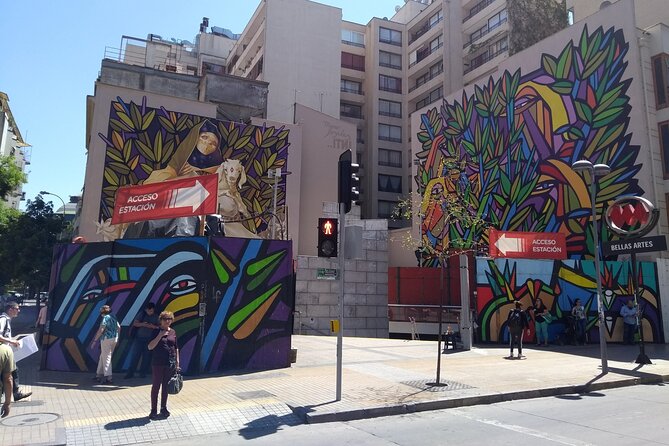
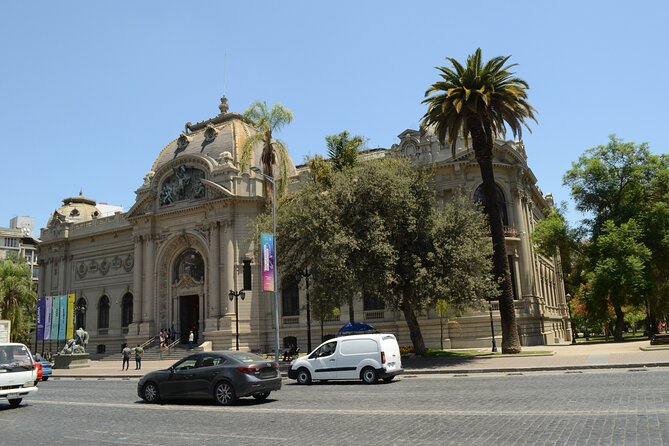
The walk begins at Monjitas and Mosqueto, close to the Bellas Artes area and public transportation. The first stop is the National Museum of Fine Arts, next to the Bellas Artes subway station.
The neighborhood itself gives the guide an easy opening. Cafés, beer spots, and conversation areas have formed around the museum and subway station, creating a local meeting place rather than a silent museum district. I like this start because it frames Santiago as a city where daily life and cultural institutions sit side by side.
The museum may be open from 10 a.m. to 6 p.m. on most days except Monday. Admission is free, but entry depends on strikes, maintenance, and other operating changes. If the doors are closed, you can still examine the building and the surrounding public space while discussing how the district has changed.
Allow about 20 minutes here. That is enough for an introduction and a short look inside, but not enough for a serious museum visit. If art is your main interest, treat this as an orientation and return later on your own.
Cerro Santa Lucía: greenery above the city streets
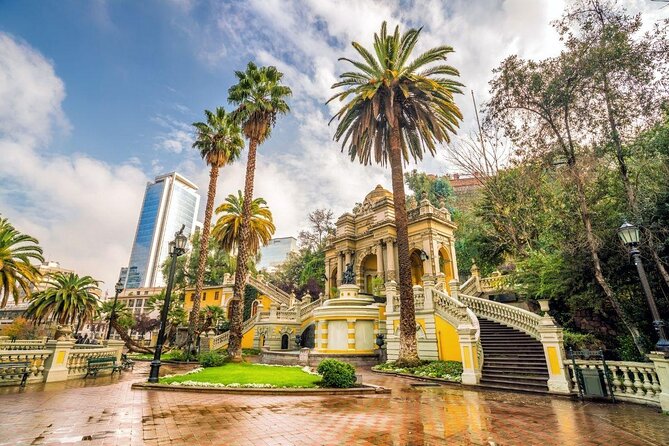
From the museum area, the walk reaches Cerro Santa Lucía. This compact hill is one of the best changes of mood on the route. Downtown traffic and conversation fade as you enter a green public park, even though you remain in the middle of Santiago.
The north entrance is normally used, except Monday, when the park is regularly closed. The route can reach the main terrace or continue toward the tower at the top. You will find lookout points and several angles on the city, but not one complete view of all Santiago.
That limitation is part of the appeal. Instead of one grand panorama, the hill gives you smaller views and corners to examine. You can stop for photographs, talk about present-day city life, and connect the hill’s setting with Santiago’s development.
This is also the tour’s clearest physical test. The paths are uneven because you are walking on a rocky hill, and reaching the highest point requires more effort. Tell the guide if you prefer a gentler pace or the main terrace rather than the tower. Comfortable shoes are a practical choice, and you should carry water since bottled water is not included.
Plan on about one hour here. That is a generous portion of the tour, but the time makes sense if you want to walk slowly, pause at viewpoints, and avoid turning the hill into a rushed climb.
La Moneda and the weight of Chilean history
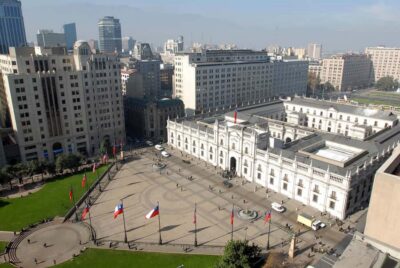
The route then reaches Plaza de la Constitución, north of La Moneda, Chile’s government palace. The building was first designed as a mint and opened in 1804. Joaquín Toesca, a Roman architect who arrived in colonial Santiago in 1780, led much of the construction, though he died before the work was complete.
The square offers an important shift from architecture to national memory. The 1973 coup took place here, and the guide uses the setting to discuss human rights, civic responsibility, and Chile’s hopes for the future.
This part may be especially valuable if you want more than dates and building names. The discussion is meant to provide information for your own judgment, not push you toward one political view. Chile’s recent past remains a serious subject, and standing beside La Moneda gives the conversation a direct connection to place.
Presidential statues around the square add another layer. Each one connects to a period in the country’s government, giving you useful reference points as the guide explains how Chile’s public life has developed.
The stop lasts about 35 minutes. Expect traffic noise, car horns, and the sound of the city around you. This is not a quiet museum-style lesson. It is a public square where government, protest, memory, and ordinary urban movement occupy the same space.
More Walking Tours in Santiago
- The best walking tour in Santiago de Chile
★ 5.0 · 629 reviews - Santiago Half-Day Walking Tour with Hotel Pick up & Food Sample
★ 4.5 · 467 reviews - A Fabulous Walking tour by the Old Santiago of Chile –
★ 5.0 · 466 reviews - Santiago: Guided Walking Tour of the Historical Old Town
★ 4.8 · 459 reviews
Espacio M and the city behind the headlines
Espacio M occupies the former facility of the newspaper El Mercurio. The commercial gallery opened in 2012 and offers a look at Santiago’s business and entrepreneurial side.
It is also a sensible pause in the middle of a long walk. You can use the bathroom and possibly stop for coffee. Those small practical breaks matter when the route lasts nearly four hours.
The guide may also discuss the building’s construction, its architecture, and the social life of the city before the republican period. Stories connected to the conservative Larraín and Edwards families add a personal and economic angle to Chilean public life. These families remain relevant to the country’s private and public affairs.
You have about 20 minutes here. The commercial setting may not be the most memorable visual stop, but it helps connect old Santiago with the modern city. I would value it less as a destination and more as a useful pause that keeps the day comfortable.
Justice, Congress, and current public affairs
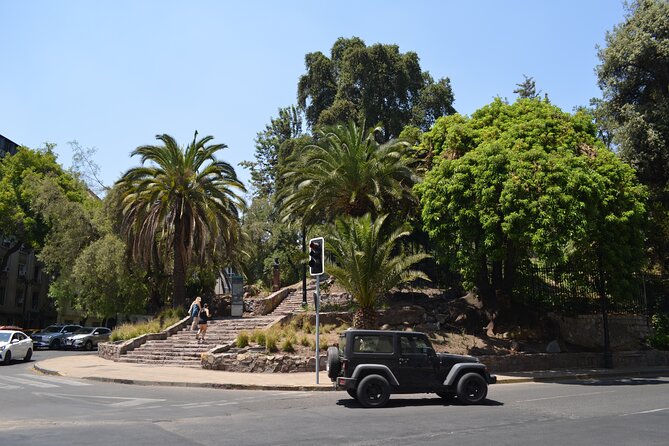
Plaza Montt Varas brings the route back to government. Flat fountains and statues of President Manuel Montt and Antonio Varas face the imposing Supreme Court of Justice.
The square often includes a demonstrator near the court gates. That detail gives the stop a lived-in quality. Justice is not an abstract idea here. It is a working institution, and people may gather outside because they feel the system has not treated all sides fairly.
Across from the court is the former National Congress building. It closed after the 1973 coup, though important meetings now take place there. Entrance is not always permitted, even though the site is public, so plan to view it from outside.
This 15-minute stop is short but focused. The guide can explain Chile’s three branches of government and connect the buildings to current public affairs. The value lies in having a local interpreter explain how the institutions fit together, while leaving you free to form your own opinion.
Inside Santiago Metropolitan Cathedral
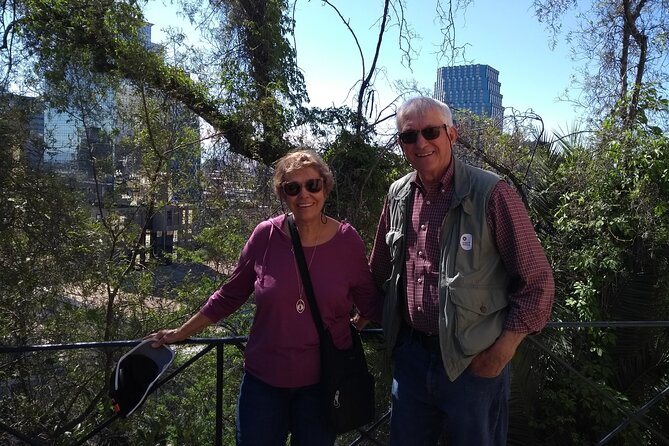
The Metropolitan Cathedral gives the walk a quieter interval. Its construction stretched from the mid-18th to the 19th century, and the current building replaced earlier temples on the same site. It has been modified many times since its consecration, including changes made before the First World War.
You can usually enter during the week and often around noon on weekends, though services may affect access. Photography is allowed in many areas unless signs say otherwise. Keep your voice low, switch off the flash, and do not enter with food or drinks.
Look for the symbols built into the religious complex. Ideas of kindness, martyrdom, patriotism, and faith appear in the decoration and arrangement of the space. The Capilla del Santísimo Sacramento and the Parroquia El Sagrario are important parts of the complex and deserve respectful attention.
The visit lasts about 20 minutes. That is enough to see the principal interior and hear the building’s story, but not enough for a detailed study of every chapel. If a service is underway, the guide will need to keep the visit brief and quiet.
Plaza de Armas, where Santiago began
Plaza de Armas is the historical center of the route. Santiago’s main square was established on February 12, 1541, according to the traditional account, with Pedro de Valdivia’s governor’s house on the northwest side.
The square began as a practical colonial space. Horses, weapons, carts, and defenses needed room to operate. Churches, government offices, a jail, a gallows, a city council, religious events, rodeos, and public contests later filled the surrounding area.
Today the square is a place for commerce, entertainment, and everyday city life. There is usually something happening, and the guide helps you picture the earlier uses beneath the modern activity.
You will spend about 25 minutes here. It is a good place to pause and watch how Santiago uses its oldest civic space. Keep your attention on your belongings in crowded public areas, and stay close enough to hear the guide amid the noise.
Barrio Lastarria brings the tour back to daily life
The final walk passes through Mosqueto to Barrio Lastarria. This is a fitting finish because the neighborhood combines culture, food, and ordinary social life rather than closing with another formal monument.
You will find bars, cafés, street sellers, performers, and many places to continue the afternoon. The area can be colorful and noisy, and its small streets can be confusing if you lose track of your direction. That is not a major problem during the tour, since the guide keeps you moving, but it is worth noting if you plan to wander alone afterward.
The final 35 minutes are less about one landmark and more about learning where Santiago residents eat, meet, and spend time. The guide can point you toward options for food or a drink, and you finish at José Victorino Lastarria and Villavicencio, close to plenty of places to continue on foot.
This ending works well for first-time visitors. You are not left at an isolated attraction. You finish in a neighborhood that can serve as your next stop.
What the guides add to the walk
The strongest reports of this experience center on the guides’ warmth, language ability, and personal approach. Juan Pablo, also called JP, has led many outings and is described as fluent in English and able to speak several languages. He is praised for combining history, politics, culture, humor, and personal stories without losing the thread of the walk.
Catalina has also shown flexibility, including meeting a couple at a hotel in Providencia and extending a planned short tour to almost five hours. Maria has led city walks as well. These examples suggest that the guiding team can adapt when flight timing, hotel location, or personal interests change, but you should confirm any special arrangement in advance.
Food stops are not part of the listed price, yet past outings have included local items such as an empanada pino, drinks, ice cream, and a Santiago snack. Treat those as possible additions, not promises. If you want a food stop, ask before the walk begins.
Time, comfort, and practical limits
The stated duration is about three and a half to four hours. The listed stop times total roughly three hours and 50 minutes, before adding the time between sites. In practice, the walk may be shorter or longer depending on questions, photo stops, access, and pace.
You need moderate physical fitness. Cerro Santa Lucía is the main challenge, with uneven paths and an uphill route. The rest of the walk covers city streets and public squares, but standing and walking for several hours can still be tiring.
The tour is private, so your group controls the rhythm more than it would on a large group outing. That is useful for families, couples, and small groups with different interests. It is less ideal if you want a relaxed museum day with long indoor visits, since most stops are brief and outdoors.
The experience requires good weather. If poor conditions cancel the walk, you can receive another date or a full refund. You can cancel for a full refund up to 24 hours before the start time, while changes or cancellations inside that window are not accepted.
Who should book this Santiago walk?
I would choose this tour if you have one day in central Santiago and want a strong first orientation. It works particularly well for a short stopover, a first morning after arrival, or a family that wants a private pace.
It is also a good match for anyone interested in Chilean politics and modern history. The stops at La Moneda, the Supreme Court, and the former Congress give the day more substance than a simple sightseeing circuit.
I would think twice if your group dislikes uphill walking, wants extensive time inside museums, or prefers a quiet tour with little discussion. The guide talks throughout the route, and the subject matter can move from architecture to dictatorship, human rights, religion, and current government.
Book it if you value a personable guide and want help making sense of Santiago as a living capital. Skip it if you only need transportation between sights or want to explore at your own pace without a set route.
FAQ
How much does the Santiago Walking City Tour cost?
The price is $229 per private group of up to four people.
How long does the tour last?
The approximate duration is three hours and 30 minutes to four hours.
Where does the tour begin?
It begins at Monjitas and Mosqueto, 8320083 Santiago, in the Región Metropolitana.
Where does the tour end?
The tour ends at José Victorino Lastarria and Villavicencio in Barrio Lastarria.
Is the tour private?
Yes. Only your group participates, with a maximum group size of four people.
Is admission included?
All fees and taxes are included. The listed public attractions have free admission, but entry can depend on operating conditions.
Is bottled water included?
No. Bottled water is not included.
Is Cerro Santa Lucía open every day?
Cerro Santa Lucía is regularly closed on Monday. The tour normally enters through the north entrance on other days.
Can you enter the National Museum of Fine Arts?
The museum is most likely to admit visitors between 10 a.m. and 6 p.m. on days other than Monday, unless a strike or maintenance prevents entry. If it is closed, you can view the architecture from outside.
Can you take photographs inside the cathedral?
Photography is allowed in many parts of the Metropolitan Cathedral unless signs indicate otherwise. Keep your voice low and turn off the flash.
What happens if bad weather cancels the tour?
You will be offered a different date or a full refund.
How far in advance can you cancel?
You can cancel at least 24 hours before the start time for a full refund. Cancellations or changes made less than 24 hours before the start time are not accepted.
Just added around Santiago
- Walking City Tour with Funicular, Cable Car and Tasting★ 4.3 · 6 reviews
- Tour VIÑA CONCHA Y TORO + CASA MARQUES – Chile, from Santiago.★ 5.0 · 2 reviews
- VIÑA DEL MAR AND VALPARAISO TOUR★ 4.8 · 20 reviews
- Undurraga Wine tour★ 4.2 · 15 reviews
- Undurraga + Isla Negra + San Afonso del Mar —– Full day★ 4.1 · 8 reviews
- wetravelneruda’s route – Pablo Neruda’s route – Private tour★ 5.0 · 6 reviews
- Southcoast – Private Full-Day tour★ 5.0 · 6 reviews
- Santiago Private walking tour with Lunch★ 5.0 · 5 reviews
Walking Tours, compared.

Walk with Penguins on Magdalena & Marta Island
Read our review →
Santiago Half-Day Walking Tour with Hotel Pick up & Food Sample
Read our review →
A Fabulous Walking tour by the Old Santiago of Chile –
Read our review →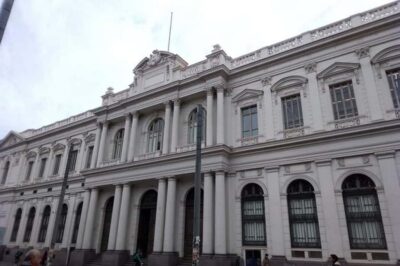
Santiago Half-Day Walking Tour with Hotel Pick up & Brunch
Read our review →
Santiago Skyline: Cable Car & San Cristobal Walking Tour
Read our review →Browse the lists this tour appears in