
Reviewed · WALKING TOURS
Santiago Barrio Yungay Street Art Walking Tour Experience
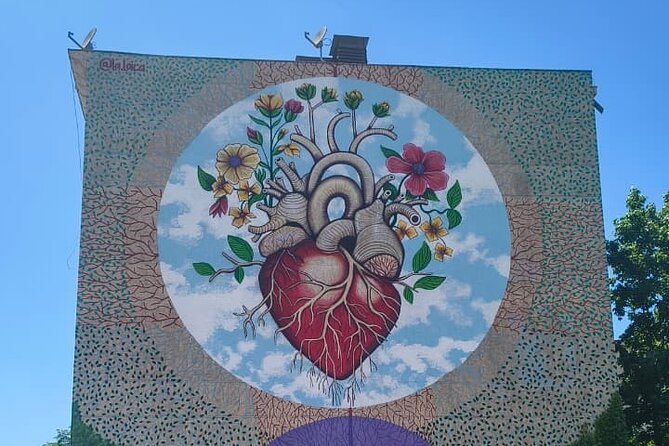
Santiago tells its story on walls. This two to three hour walk links Quinta Normal, the Museum of Memory and Human Rights, Barrio Yungay, Barrio Brasil, and a working mural studio into one thoughtful route. I especially like the way the museum gives the street art and neighborhood history a clear political context, and I like the chance to meet local artists rather than simply photograph their work. The main consideration is pace: the tour covers several areas, and the museum visit deals with Chile’s dictatorship in a concise but serious way.
Guide Héctor receives the strongest praise here. His love for Chile comes through in the way he explains the country, and the visit to a collaborative artist workshop adds something you cannot get from a standard walk past painted walls. At $50 per person, the tour is not the cheapest way to see Santiago, but the small group limit of 15, the local access, and the included food and film guides make it a useful choice for first-time visitors who want more than a quick photo stop.
In This Review
- Key points before you book
- Why Barrio Yungay makes a better walk than a standard city tour
- Starting at Quinta Normal on Matucana Avenue
- The Museum of Memory and Human Rights sets the tone
- Walking through Barrio Yungay’s old streets and murals
- Adriana Cousiño and the story of the cités
- A quick crossing through Barrio Brasil
- Peluquería Francesa, Boulevard Lavaud, and a living old business
- Finishing in Concha y Toro
- What the $50 price really covers
- The guide can shape the whole experience
- Who should book this Barrio Yungay walk
- Should you book it?
- FAQ
- How long does the Santiago Barrio Yungay Street Art Walking Tour last?
- Where does the tour begin?
- Where does the tour end?
- Is lunch included?
- Is public transportation included?
- How many people can join the tour?
- What happens if bad weather cancels the tour?
Key points before you book
- The Museum of Memory comes first, giving you vital context before the murals and neighborhoods.
- Héctor’s storytelling is a major part of the experience, especially for Chile’s modern political history.
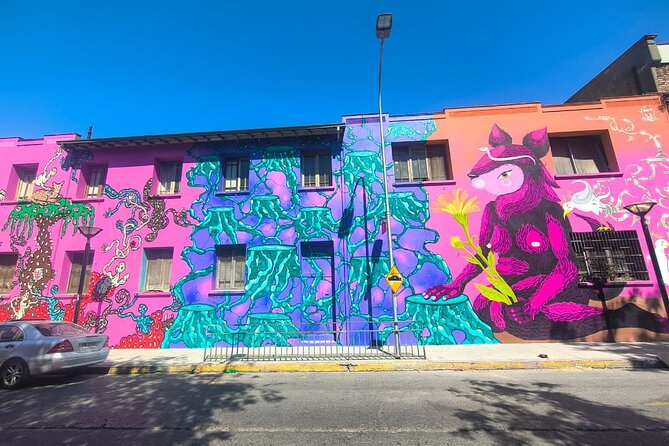
- The Barrio Yungay walk includes a muralist studio, where you may hear directly about the artists’ work.
- You see old Santiago housing and architecture, including more than century-old façades and former cités.
- The route ends in Concha y Toro, after passing through Barrio Brasil and the historic Peluquería Francesa.
- The $50 price includes useful follow-up material, but lunch and all transport costs are extra.
Why Barrio Yungay makes a better walk than a standard city tour
Barrio Yungay was the first neighborhood designed in Santiago after Chile gained independence. That fact gives the walk a different feel from a simple central-city sightseeing route. You are not just checking off buildings. You are following the growth of Santiago through housing, public spaces, political memory, working businesses, and street art.
The neighborhood also gives you a look at how older parts of the city continue to change. Grand façades sit beside modest homes, newer murals, local shops, and former shared housing areas. The art is not treated as decoration alone. It becomes part of the conversation about identity, community, and the city’s past.
I would choose this tour if you want a route with ideas behind it. If your goal is mainly to see famous monuments quickly, another city tour may suit you better. This experience asks you to slow down and listen.
More Walking Tours in Santiago
- The best walking tour in Santiago de Chile
★ 5.0 · 629 reviews - Santiago Half-Day Walking Tour with Hotel Pick up & Food Sample
★ 4.5 · 467 reviews - A Fabulous Walking tour by the Old Santiago of Chile –
★ 5.0 · 466 reviews
Starting at Quinta Normal on Matucana Avenue
The meeting point is Parque Quinta Normal, at Avenida Matucana 520. The park was the site of Santiago’s first agricultural research center and is now one of the city’s important green spaces. It also contains museums and cultural venues, so the opening stop places you in a part of Santiago where science, public space, and civic culture overlap.
The scheduled visit here is brief, about 10 minutes, with no admission fee. Think of it as an orientation rather than a full park tour. You get your bearings, meet the group, and begin to understand why this western part of Santiago matters.
The location is near public transportation, which is helpful. Still, public transportation is not included in the tour price, and private transportation is not provided. Plan your route to the starting point before you leave your accommodation. You will also want comfortable walking shoes, since the experience is built around moving through several neighborhoods.
The Museum of Memory and Human Rights sets the tone
The Museum of Memory and Human Rights is the most serious stop. The visit lasts about 30 minutes and focuses on what Chile experienced during the dictatorship, with attention to its human cost and its political effects today.
That short visit is not meant to replace a full museum visit. Instead, it gives you a compact frame for understanding the rest of the walk. This is one of the tour’s best choices. Street art in Santiago often carries political meaning, and seeing the museum first helps you read the murals with greater care.
You should expect a sober part of the morning or afternoon. This is not a light introduction to the city, and some material may be difficult. The tour keeps the visit concise, which may help if you want context without spending several hours indoors. If you have a strong interest in Chile’s dictatorship, you may want to return to the museum independently for more time.
I like the balance here. The tour does not pretend that art and architecture exist apart from history. It gives you enough background to ask better questions once you reach Barrio Yungay.
Walking through Barrio Yungay’s old streets and murals
The main neighborhood visit lasts about 1 hour and 15 minutes. This is where the tour earns most of its price.
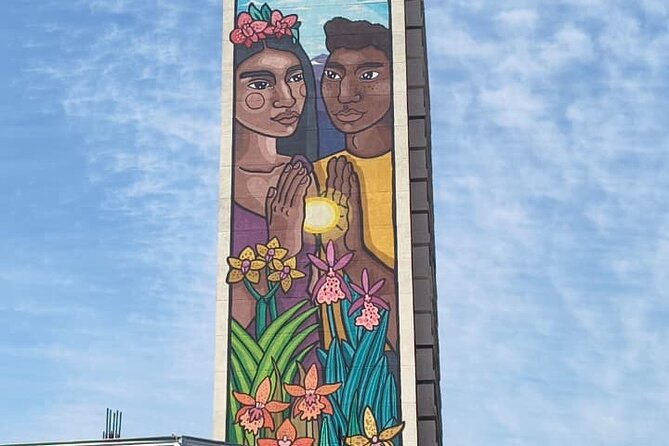
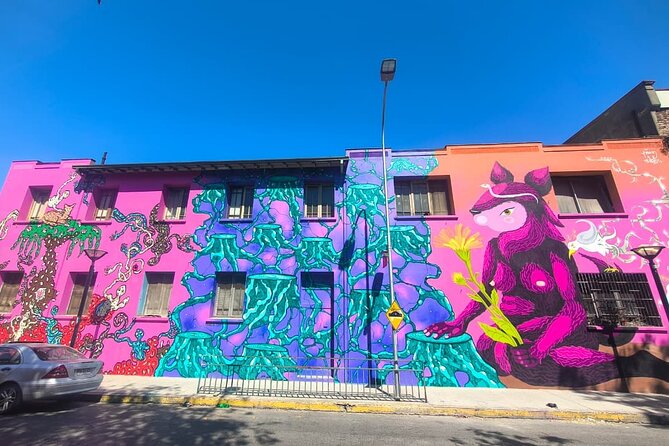
You will look at the area’s early urban design, older architecture, and extensive mural art. The guide also introduces local artists and explains how their work fits into the neighborhood. Instead of treating every painted wall as a quick backdrop, the walk connects the images to the people and place around them.
The strongest part is the opportunity to visit a muralist studio. The experience includes a stop at an artists’ workspace with colorful murals inside the neighborhood. Héctor may also introduce you to local street artists working together there. That direct contact is important. You get a chance to hear about the work from the people creating it, rather than relying only on a guide’s description.
There is no guarantee that every artist will be present at every departure, so I would treat this as a valuable possibility rather than the sole reason to book. Even without a conversation, the studio visit gives you a look at the working side of street art, not just the finished product on a public wall.
The neighborhood walk also rewards people who enjoy details. Look for changing façades, unusual doorways, layered paint, and the way public art alters older buildings. You may find that the most interesting images are not the largest ones. A good guide can point out small works and local references that you would likely miss alone.
Other guided walks in Santiago:
- Santiago: Guided Walking Tour of the Historical Old Town
★ 4.8 · 459 reviews - Private Santiago 3-Hour Walking Tour
★ 5.0 · 237 reviews - Santiago Half-Day Walking Tour with Hotel Pick up & Brunch
★ 4.7 · 148 reviews - Santiago Skyline: Cable Car & San Cristobal Walking Tour
★ 5.0 · 142 reviews
Adriana Cousiño and the story of the cités
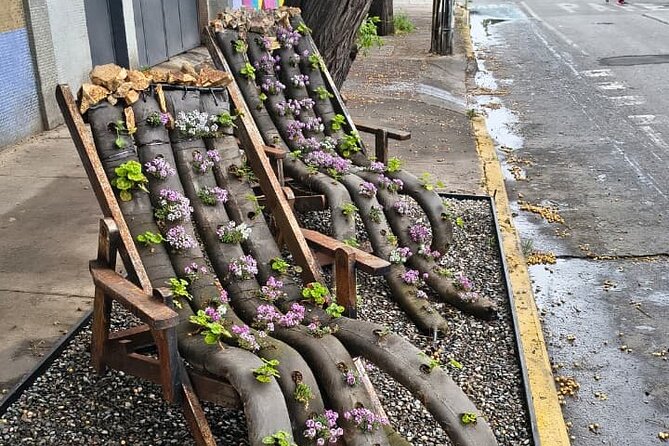
The 15-minute stop at Adriana Cousiño introduces the cités, a distinctive form of shared housing. The tour explains how the idea developed and changed over time, while showing elegant façades more than 100 years old.
This is a short stop, but it adds useful social history. Housing tells you how a city grew and who lived there. A cité can reveal more about everyday urban life than an official monument does. The old façades also help you see Barrio Yungay as a living neighborhood rather than an open-air museum.
Because the stop is brief, do not expect a detailed architectural lecture on every building. Its value comes from the connection between design, age, and changing use. I would listen closely here, especially if you are interested in how Santiago’s neighborhoods developed beyond the grand civic center.
A quick crossing through Barrio Brasil
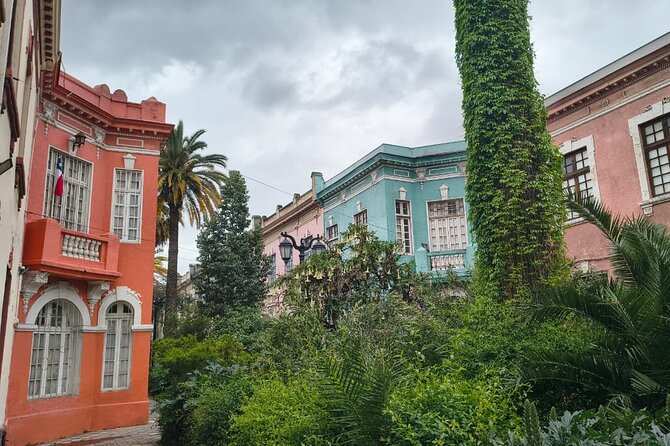
The route then passes through Barrio Brasil, known for nightlife, attractive squares, and streets lined with palm trees. The scheduled time is about 15 minutes, so this is a brief introduction rather than a full exploration.
That shorter visit works as a change of mood after the museum and the more concentrated Yungay walk. You get a sense of another central Santiago neighborhood, one with a different public rhythm and evening character.
Do not book this experience expecting a complete Barrio Brasil food or nightlife tour. The area is part of the larger route, not the main subject. If you like what you see, the post-tour list of food and activities in Chile can help you plan a return visit.
Peluquería Francesa, Boulevard Lavaud, and a living old business
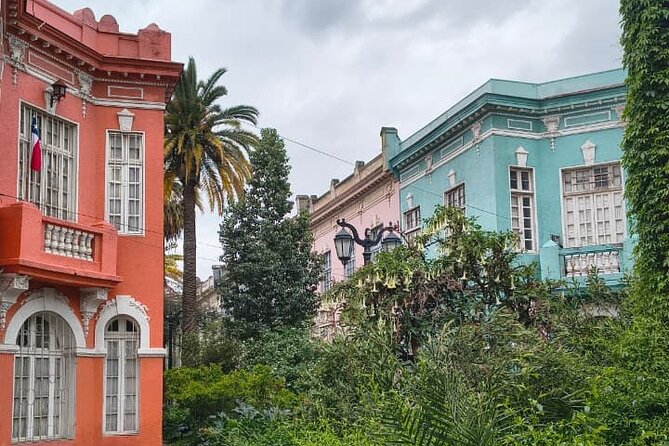
One of the most memorable stops is Restaurante Peluquería Francesa, also called Boulevard Lavaud or Barbería Patrimonial Barrio Yungay. The tour describes the hair salon as the second-oldest in the world still operating, next to a restaurant that appears frozen in time.
This stop lasts about 20 minutes and gives the walk a welcome everyday quality. You are seeing a working business, not merely a preserved façade. The combination of a traditional barber shop and an old-style restaurant makes the past feel practical and close at hand.
The wording frozen in time should not make you expect a museum display. The point is the atmosphere and continuity. A place like this shows how old neighborhood traditions can remain part of daily life. It also gives you a chance to notice interiors and commercial details that street walks often skip.
Lunch is not included, so you should not count on a meal as part of the tour. If you want to eat here or elsewhere, keep that separate from the walking schedule and budget.
Finishing in Concha y Toro
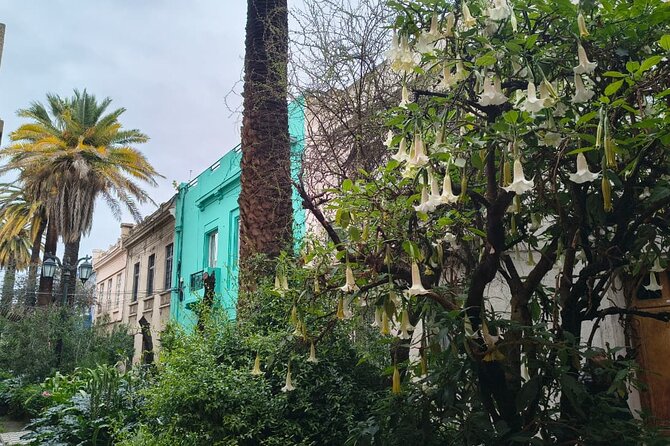
The tour ends in Barrio Concha y Toro, described as a unique neighborhood that may change your view of Santiago. This gives the route a strong final setting after its passage through Yungay and Brasil.
The ending is useful because you are not returned to the starting point. You finish in a different part of the city, so think ahead about your next stop. You can continue exploring, find food nearby, or use public transportation to reach another area. Since transport is not included, the cost and time of getting back are yours to manage.
The final neighborhood also reinforces the tour’s central idea: Santiago is best understood through connected districts, not one isolated attraction. The walk moves from park to museum, from historic housing to public murals, from an old business to another distinctive neighborhood.
What the $50 price really covers
At $50 per person, this is a mid-priced walking experience. You are not paying for entrance tickets, since the listed stops are free, and you are not receiving lunch or transportation. The value comes from the route, the interpretation, the small group size, and access to local places that may be difficult to find on your own.
The maximum group size is 15 people. That is large enough for a social walk but small enough to make questions possible. A smaller group would feel more personal, but 15 remains a reasonable limit for city streets and a studio visit.
I think the price makes sense if you value explanation and local contact. A person who only wants to photograph murals could spend less by walking independently. You would, however, miss the museum context, the discussion of cités, the historical links between neighborhoods, and the chance to meet muralists.
The strongest value is the combination. Each part supports the next. The museum gives political context. Yungay gives the neighborhood setting. The studio gives a personal connection to the art. The historic businesses and housing show how the area functions beyond tourism.
The guide can shape the whole experience
Héctor is central to this tour’s appeal. He is praised for his passion, friendliness, and clear love for Chile. That matters on a route covering difficult political history as well as art and architecture.
A good guide can keep the museum discussion respectful, explain why a mural matters, and help you understand how local places fit together. Héctor’s approach appears especially strong when he brings you into local businesses and introduces you to artists at their collaborative workshop.
That kind of access is not guaranteed on every urban walk. It depends on timing, availability, and the people working in the neighborhood that day. Still, the design of the tour makes room for it, which is a real advantage.
The tour has earned a perfect rating from 19 submitted reviews, with 100 percent recommending it. That is a small sample, so I would not treat it as proof that every departure will be identical. It does show a clear pattern of satisfaction, especially around Héctor’s storytelling and the artist visit.
Who should book this Barrio Yungay walk
I would recommend it most strongly for:
- First-time visitors who want historical context before exploring Santiago alone
- People interested in street art as a form of local expression
- Anyone curious about Chile’s modern political history
- Architecture fans who enjoy older homes, façades, and housing patterns
- Visitors who prefer small-group walking tours to large bus routes
- People who want practical food, film, and activity suggestions after the tour
It may be less suitable if you want a relaxed stroll with little discussion. The museum section is serious, and the route covers several subjects in one outing. You should also be comfortable walking for up to three hours, although the exact duration is approximately two to three hours.
Service animals are allowed, and most people can participate. The activity requires good weather. If poor weather cancels the tour, you are offered another date or a full refund.
The operator also provides a post-tour foodie guide, a list of documentaries and films, and a list of food and other activities to try in Chile. These extras are more useful than generic discount cards because they help you keep exploring the themes introduced on the walk.
Should you book it?
Book this tour if you want Santiago explained through history, art, and ordinary neighborhood life, not just photographed from a lookout. The Museum of Memory, Barrio Yungay murals, old cités, Peluquería Francesa, and artist studio create a strong mix, and Héctor appears to add genuine warmth and purpose.
Skip it if you only want a short mural photo walk or if you would rather avoid a serious museum visit. For everyone else, $50 is a fair price for the local perspective and carefully connected route. Cancel at least 24 hours before the start time for a full refund. Changes or cancellations within 24 hours are not refunded or accepted.
FAQ
How long does the Santiago Barrio Yungay Street Art Walking Tour last?
The tour lasts approximately two to three hours.
Where does the tour begin?
It begins at Parque Quinta Normal, Avenida Matucana 520, Santiago, Chile.
Where does the tour end?
It ends in Barrio Concha y Toro in Santiago.
Is lunch included?
No. Lunch is not included in the tour price.
Is public transportation included?
No. Public transportation and private transportation are not included.
How many people can join the tour?
The maximum group size is 15 people.
What happens if bad weather cancels the tour?
If the tour is canceled because of poor weather, you are offered a different date or a full refund.
More Street Art in Santiago
- Street Art in Valparaiso and Wines in Casablanca from Santiago
★ 5.0 · 126 reviews - Valparaiso: Street Art, Funiculars and Port City Tour
★ 4.8 · 214 reviews - Tour in Valparaiso: Street Art, funiculars and port
★ 5.0 · 111 reviews
Just added around Santiago
- Walking City Tour with Funicular, Cable Car and Tasting★ 4.3 · 6 reviews
- Tour VIÑA CONCHA Y TORO + CASA MARQUES – Chile, from Santiago.★ 5.0 · 2 reviews
- VIÑA DEL MAR AND VALPARAISO TOUR★ 4.8 · 20 reviews
- Undurraga Wine tour★ 4.2 · 15 reviews
- Undurraga + Isla Negra + San Afonso del Mar —– Full day★ 4.1 · 8 reviews
- wetravelneruda’s route – Pablo Neruda’s route – Private tour★ 5.0 · 6 reviews
- Southcoast – Private Full-Day tour★ 5.0 · 6 reviews
- Santiago Private walking tour with Lunch★ 5.0 · 5 reviews
Walking Tours, compared.

Walk with Penguins on Magdalena & Marta Island
Read our review →
Santiago Half-Day Walking Tour with Hotel Pick up & Food Sample
Read our review →
A Fabulous Walking tour by the Old Santiago of Chile –
Read our review →
Santiago Half-Day Walking Tour with Hotel Pick up & Brunch
Read our review →
Santiago Skyline: Cable Car & San Cristobal Walking Tour
Read our review →Browse the lists this tour appears in