
Reviewed · ATACAMA DESERT TOURS
San Pedro de Atacama: Stargazing + Hot Drinks
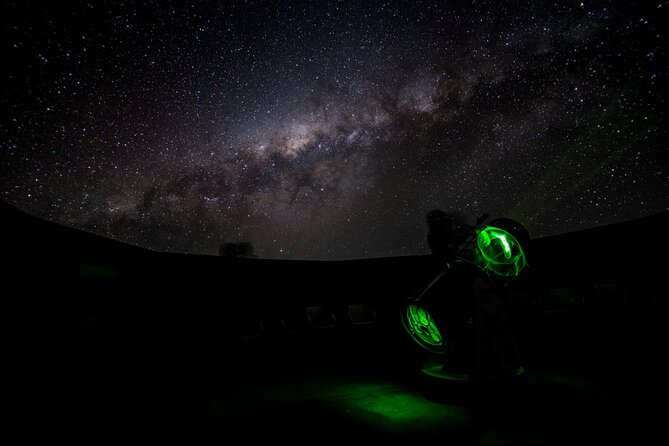
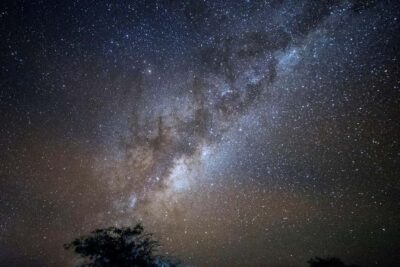
The desert sky puts on a show. This 2.5-hour evening outing gives you deep-sky viewing through specialized telescopes, plus a clear introduction to Southern Hemisphere constellations and Andean cultural astronomy. It is a small-group experience, capped at 15 people, with pickup offered and English presentation available.
I especially like the chance to see more than bright stars, with reported views including Saturn, Andromeda, and the lunar surface. I also like the human touch: guides such as Alex Izquierdo and Jane have been praised for their clear explanations and enthusiasm. The main catch is that moonlight and weather can change what you see, so no night can promise the same spectacle.
In This Review
- Key points for deciding quickly
- Why San Pedro is made for a night under the stars
- The 9:00 pm arrival and small-group setup
- Using the laser pointer to find the Southern Hemisphere sky
- What you may see through the telescopes
- The hot drinks and the cold desert night
- The value of the $42 price
- Photography and the memorable final touch
- Who will enjoy this evening most
- Practical advice before you reserve
- Should you book San Pedro’s stargazing tour?
- FAQ
- What time does the stargazing experience start?
- How long does the experience last?
- Where does the tour take place?
- Is the tour offered in English?
- How many people can join the tour?
- What should I bring?
- What happens if the weather is poor?
Key points for deciding quickly
- Specialized telescopes: The strongest part of the evening is the chance to view planets, star clusters, galaxies, and the Moon through proper observing equipment.
- Andean sky traditions: A laser pointer helps connect Southern Hemisphere constellations with ancestral Andean astronomy and archaeoastronomy.
- Small group size: The outing accepts no more than 15 people, a useful limit for an activity that depends on clear explanations and telescope time.
- 9:00 pm start: Plan for a late evening and a total duration of about 2 hours and 30 minutes.
- Warm drinks and cold-weather clothing: Hot drinks are part of the experience, but you still need warm clothes suited to wind and low temperatures.
- Flexible weather policy: Poor weather can lead to a new date or a full refund, while cancellations made at least 24 hours ahead receive a full refund.
Why San Pedro is made for a night under the stars
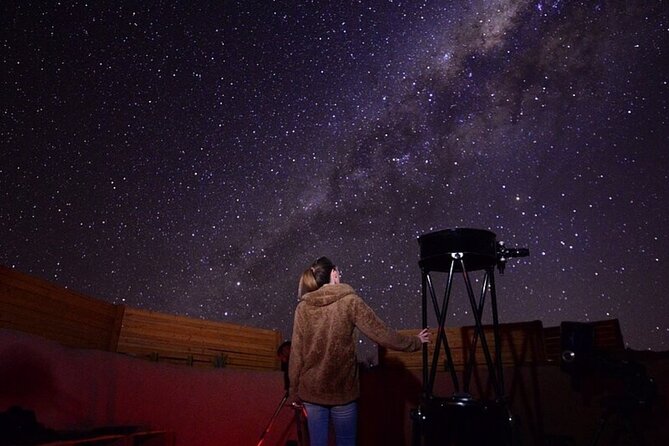
San Pedro de Atacama is a fitting place for an astronomy outing because the experience is built around the night sky, not simply a scenic night drive. You are taken beyond casual star spotting and shown how to identify constellations, planets, clusters, and galaxies with optical equipment.
That distinction matters. Looking up from a hotel patio can be pleasant, but it rarely gives you much help in understanding what you see. Here, the laser pointer and guide’s commentary give the sky a structure. You can learn where to look, what you are seeing, and how the Southern Hemisphere differs from the familiar star patterns of the north.
I also appreciate that the program includes Andean cultural astronomy. The sky is not treated only as a collection of scientific objects. You are introduced to the relationship between celestial patterns and ancestral cultures in the region, along with archaeoastronomy. That makes the evening more meaningful than a simple list of stars and planets.
The exact objects available for viewing vary by season. This is not a weakness in itself, but it is important to set your expectations correctly. One visit might favor a planet or a galaxy, while another may offer a different set of targets. The sky is the schedule here.
More Stargazing Tours in San Pedro de Atacama
- San Pedro de Atacama: Etno-Stargazing Tour with Transfer
★ 4.8 · 629 reviews - The Roofless Experience San Pedro de Atacama Stargazing Tour
★ 5.0 · 522 reviews - San Pedro de Atacama: Stargazing Experience
★ 4.7 · 489 reviews
The 9:00 pm arrival and small-group setup
The evening begins at 9:00 pm, with pickup offered. The listed meeting point is Astrotour Chile, so check your confirmation carefully for the exact pickup instructions and meeting details.
A late start is part of the deal. You will need to keep the rest of your evening open, and the end time will be roughly 11:30 pm if the tour runs for its estimated 2.5 hours. That timing works well for a dedicated night-sky outing, though it may not suit young children or anyone who prefers early nights.
The group limit is 15 people. That is a sensible size for telescope viewing. You are not guaranteed a private lesson, but a group of this size should make it easier to hear the guide, follow the laser pointer, and take your turn at the instruments without the outing feeling like a large crowd.
The experience is offered in English, which helps if you want the explanations to be a central part of the evening. Confirmation is sent at booking, and most people can participate. No special fitness level is stated, but you should be comfortable being outside at night in cold and windy conditions.
Using the laser pointer to find the Southern Hemisphere sky
The laser pointer is more useful than it may sound. A dark sky can be confusing at first because there are so many points of light. Without help, you might see plenty of stars but have no idea which pattern is a constellation or where to direct your attention.
The guide uses the laser to point out constellations in the Southern Hemisphere and give you a firm starting point. I like this approach because it turns the sky into something you can read rather than a black ceiling scattered with lights.
The cultural section adds another layer. Andean astronomy reflects the way ancestral cultures understood and related to the sky. Archaeoastronomy looks at that connection through the remains and practices of earlier societies. The material is presented as an introduction, so do not expect a long academic lecture. Instead, you get context that can change the way you look at the stars during the rest of your time in the Atacama.
Guides have been praised for answering questions and sharing a steady stream of facts. Alex Izquierdo received particular praise for his professionalism, attention to detail, and passion for the cosmos. Alex and Jane were also singled out for their explanations. Guide quality matters greatly here, since the telescope itself cannot tell you what you are looking at.
What you may see through the telescopes
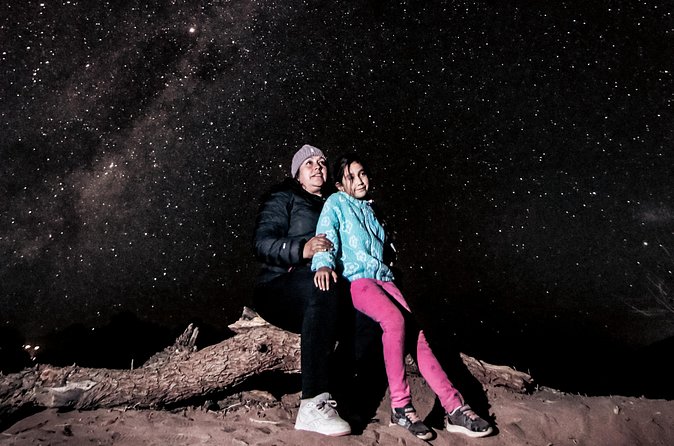
The main attraction is the specialized telescope viewing. The program aims to show planets, star clusters, galaxies, and the vastness of the firmament. These categories give you a sense of the range, but the actual targets depend on the season and the conditions on the night.
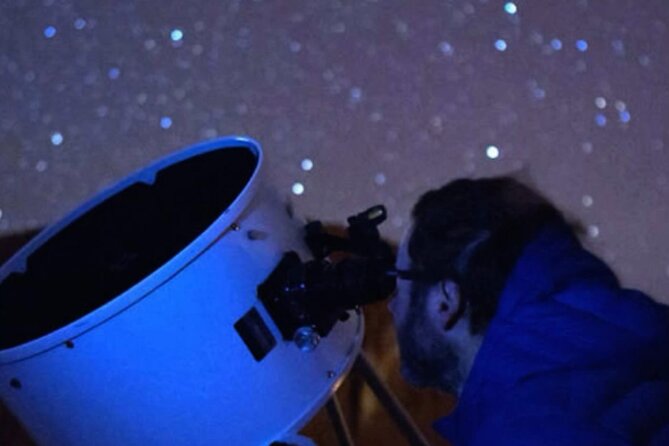
Specific observations reported from this outing include Saturn, Andromeda, and the lunar surface. Those examples are useful because they show how varied the viewing can be. A planet can appear as a distinct world, a galaxy can make the scale of space feel much larger, and the Moon can reveal surface detail that is easy to miss with the naked eye.
I would treat those objects as possible highlights, not a fixed checklist. Astronomy tours are controlled by conditions that change. The provider also states that good weather is required, so clouds or other poor conditions may cancel the outing or require a new date.
Moonlight deserves special attention. One outing took place under a very bright Moon, yet the guide still made it interesting with plenty of information and telescope viewing. This is encouraging if your dates do not line up with a dark-moon period, but the full experience may feel different when moonlight is strong.
A bright Moon can become an object of interest in its own right, especially when the telescope brings out the lunar surface. At the same time, it may affect the visibility of fainter targets. If seeing distant galaxies is your top goal, ask about moon conditions when you book if that information is available.
Other Atacama desert trips from San Pedro de Atacama:
- San Pedro de Atacama: El Tatio Geysers Tour
★ 4.7 · 943 reviews - Half Day Tour to Geysers del Tatio
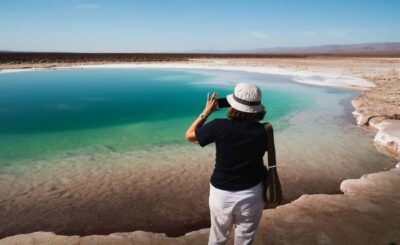
★ 5.0 · 499 reviews - San Pedro Atacama: Baltinache Lagoons
★ 4.6 · 359 reviews - San Pedro de Atacama: Valle de la Luna Guided Tour
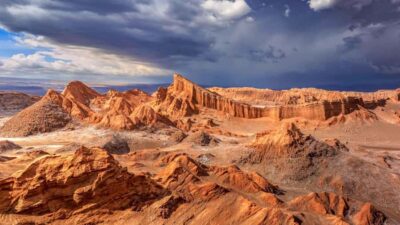
★ 4.4 · 312 reviews
The hot drinks and the cold desert night
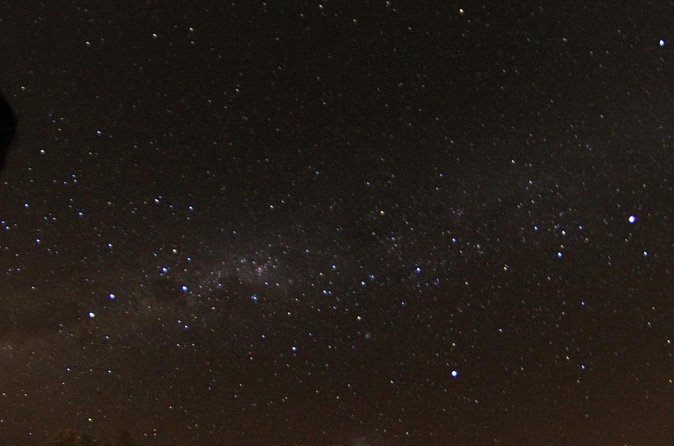
Hot drinks are a small but welcome part of the evening. They do not replace proper clothing, and the instructions specifically call for warm layers suitable for wind and low temperatures.
Take that advice seriously. You may be standing outside for telescope viewing, and staying comfortable affects how much you enjoy the explanations. Cold fingers and a sharp wind can make even an excellent star field feel like work.
Bring warm clothing rather than relying on the hot drink alone. Since the supplied details do not specify the exact beverage, do not book this expecting a particular tea, coffee, or cocoa. Think of it as a practical comfort included with the astronomy program.
This is also an outing where patience helps. Telescope viewing works best when you have time to listen, look, and wait for your turn. The hot drink gives the night a relaxed rhythm, while the guide’s presentation keeps the focus on the sky.
The value of the $42 price
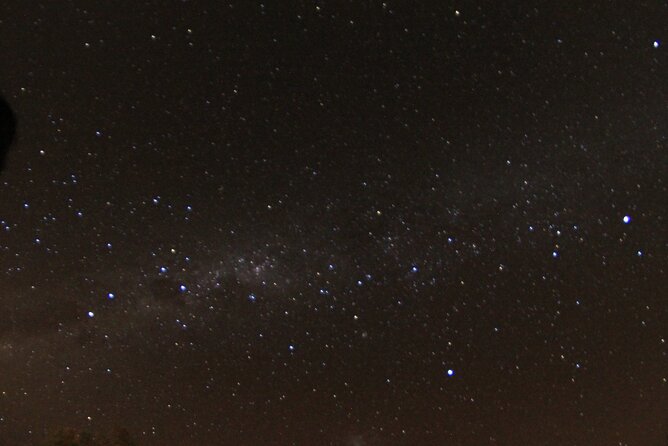
At $42 per person, this is priced as an accessible specialist activity rather than an all-day excursion. You are paying for about 2.5 hours, a small group, telescope access, guiding, the laser-pointer presentation, cultural astronomy, and hot drinks.
That package offers good value if you are genuinely interested in the sky. The telescopes and guide-led interpretation are the parts that justify the price. You are not simply being driven somewhere dark and told to look up. The evening gives you equipment and an explanation of what you are seeing.
The value is less obvious if you only want a short photo stop or a casual look at the stars. The 9:00 pm start and late finish require a real commitment, and the weather may affect the program. You should also accept that your favorite object may not be visible on your date.
For an astronomy enthusiast, a curious first-timer, or anyone who wants a different side of San Pedro, $42 is reasonable. It is especially appealing if you enjoy guided interpretation and want more than scenery. If your interest is low, the same money may feel better spent on an activity with a more predictable result.
Photography and the memorable final touch
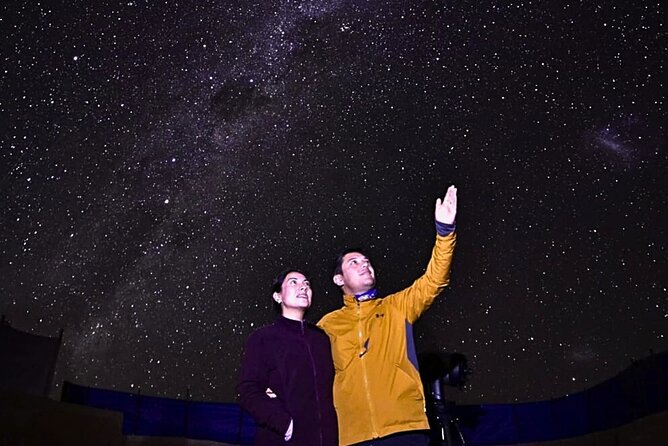
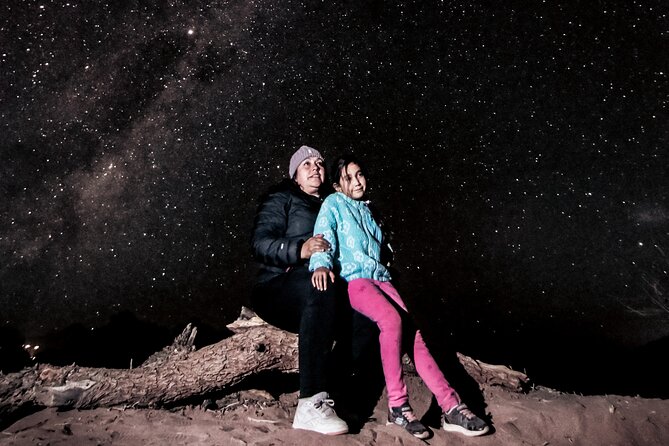
Astrophotography is part of the reported experience, including photographs taken with the firmament behind you. This can be a fine way to preserve the evening, especially because the setting is so unlike an ordinary night at home.
I would keep expectations measured. The provided details do not explain the camera setup, how many photographs are included, or how the images are delivered. Treat the photography as a welcome feature, not the main reason to book.
The appeal is clear, though. You get a personal record of the night after hearing about planets, galaxies, constellations, and Andean astronomy. The best image may not be the most technically perfect one. It may simply remind you of standing in the desert, looking upward, with the guide’s laser tracing a pattern across the Southern Hemisphere sky.
Who will enjoy this evening most
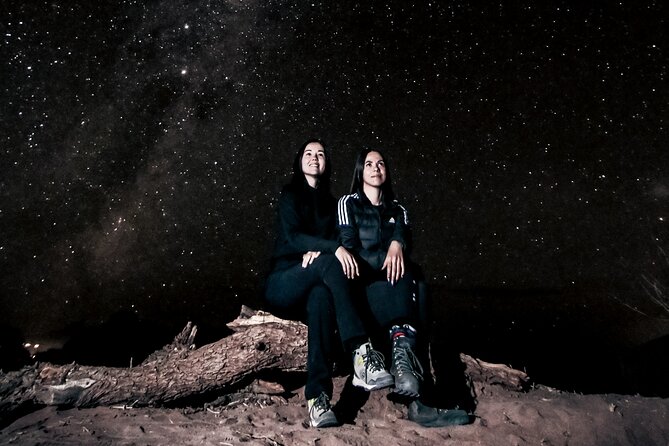
I would recommend this outing to you if you like learning while you look. The astronomy commentary, cultural material, and telescope observations work together, so curiosity is more important than prior knowledge.
It also suits couples, small groups of friends, and solo visitors who want a focused evening activity. The 15-person limit keeps the scale manageable, and the English option makes the explanations easier to follow for English-speaking participants.
Families may also find it worthwhile, since most people can participate, but the late start is the key issue. A 9:00 pm beginning and an expected finish around 11:30 pm may be too much for very young children.
You should think twice if you dislike cold outdoor activities, need a guaranteed clear view, or want a tightly predictable list of objects. The program depends on season, weather, moonlight, and the night’s observing conditions.
Practical advice before you reserve
Reserve ahead if your schedule is tight. The experience is booked, on average, about 15 days in advance, which suggests that popular dates may fill before you arrive.
Choose your date with the weather policy in mind. If poor weather cancels the outing, you will be offered another date or a full refund. If your own plans change, you can cancel for a full refund up to 24 hours before the start time. Cancellations or changes made less than 24 hours before the outing are not refunded or accepted.
Wear warm clothing suited to wind and low temperatures. Since the tour is outdoors and the viewing is central to the program, this is not a minor packing suggestion. A comfortable evening gives you more time to pay attention to the sky.
If you are hoping to see a particular object, ask about seasonal viewing and moonlight before booking. The available sights change, and the program does not promise one fixed set of planets or galaxies.
Should you book San Pedro’s stargazing tour?
You should book it if you want an affordable, guide-led introduction to the Atacama night sky, especially if telescope viewing and Andean astronomy appeal to you. The strongest features are the specialized instruments, the small group, the clear Southern Hemisphere orientation, and guides such as Alex Izquierdo and Jane, whose enthusiasm has been praised.
Go in with flexible expectations. The sky may feature Saturn, Andromeda, the Moon, clusters, galaxies, or other seasonal targets, but moonlight and weather can change the night. Bring serious warm clothing, keep the late timing in mind, and view the hot drinks and photography as useful extras rather than guarantees of a particular menu or image package.
For $42, this is a strong choice for a curious first visit to the Atacama sky. It is less suitable if you want a quick, guaranteed spectacle. The desert supplies the setting, but the guide, telescope, and conditions decide how memorable the evening becomes.
FAQ
What time does the stargazing experience start?
The tour starts at 9:00 pm.
How long does the experience last?
It lasts approximately 2 hours and 30 minutes.
Where does the tour take place?
The itinerary lists Astrotour Chile as the stop. Pickup is offered, and your booking confirmation should provide the relevant meeting details.
Is the tour offered in English?
Yes. The experience is offered in English.
How many people can join the tour?
The group has a maximum of 15 participants.
What should I bring?
Bring warm clothing suitable for wind and low temperatures. Hot drinks are included as part of the experience.
What happens if the weather is poor?
The experience requires good weather. If it is canceled because of poor weather, you will be offered a different date or a full refund.
Just added around San Pedro de Atacama
- Vallecito★ 4.7 · 13 reviews
- Atacama Desert and Magic Bus Visit★ 4.8 · 15 reviews
- San Pedro de Atacama: Valle de la luna★ 3.0 · 3 reviews
- Valle de la Luna: A Moon-Like Escape in Atacama★ 5.0 · 3 reviews
- 3 Perfect Days in Atacama + Transfer★ 4.5 · 3 reviews
- Atacama Stargazing Tour Under One of the World’s Clearest Skies★ 4.0 · 3 reviews
- Valley of the Moon In San Pedro de Atacama★ 4.5 · 9 reviews
- Moon Valley Tour, the Best Seller★ 4.5 · 2 reviews
Atacama Desert Tours, compared.
The Roofless Experience San Pedro de Atacama Stargazing Tour
Read our review →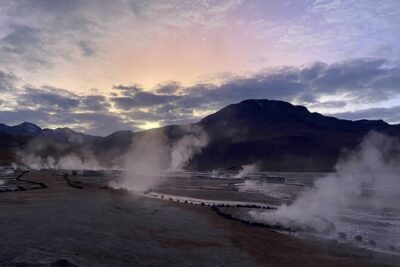
Browse the lists this tour appears in