Reviewed · CRUISES & BOAT TOURS
Pre or Post San Antonio Cruise with Santiago City Tour and optional Vineyard
Santiago and wine make a smart pairing. This San Antonio cruise transfer combines a city introduction with a visit to Undurraga Winery, so you can see Chile’s capital without giving up a full day to transport. I especially like the chance to visit Santiago’s historic center and enjoy four reserve wines at the vineyard. I also like the small-group promise, with no more than 15 people.
The main concern is reliability. Several bookings went well, with guides such as Sebastian, Luis, Rodrigo, Max, and Gonzalo earning warm praise for their English and local knowledge. But delayed pickups, mixed tour groups, substituted itineraries, and confusion over airport timing appear often enough that you should confirm every detail before departure.
In This Review
- Key points to know before booking
- Why this tour can work well after a cruise
- San Antonio pickup and the first practical test
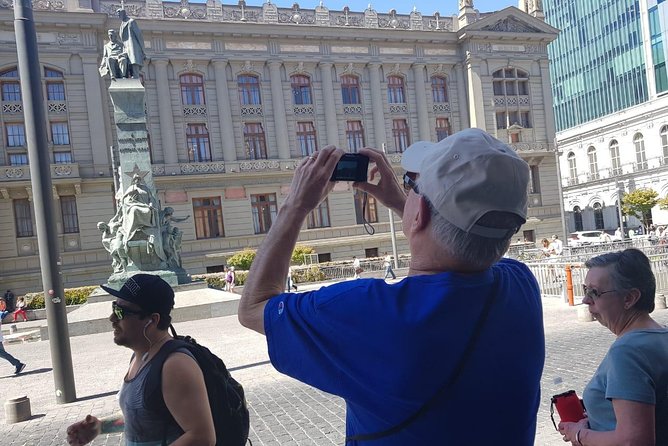
- Santiago’s old center, from Paseo Ahumada to La Moneda
- Santa Lucia and San Cristobal, the city from above
- Government buildings, museums, and modern Santiago
- Undurraga Winery and four reserve wines
- Guides can shape the entire day
- The biggest risk: combined or substituted itineraries
- Timing, lunch, and airport drop-off
- Who should book this San Antonio to Santiago tour?
- Should you book it?
- FAQ
- How long does the San Antonio to Santiago tour last?
- What time does pickup begin?
- Is the Undurraga Winery visit included?
- How many people can join the group?
- Is lunch included?
- Can cruise passengers book this experience?
- Can the tour finish at Santiago Airport?
Key points to know before booking
- A useful port-to-city combination: You can travel from San Antonio to Santiago while sightseeing instead of paying for a simple transfer.
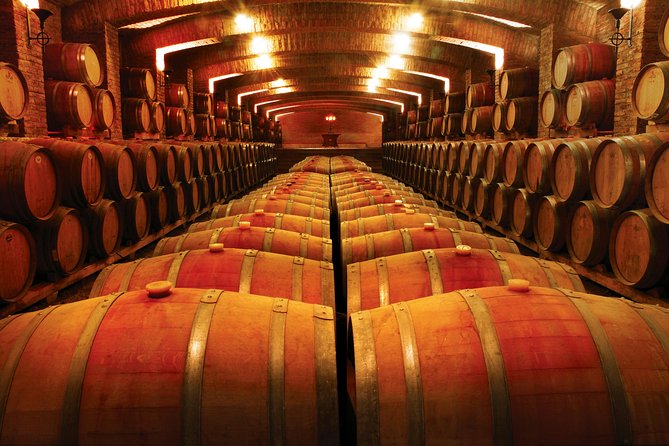
- Undurraga includes four wines: The winery visit covers the gardens, Mapuche cultural display, vineyards, cellars, and a tasting of four reserve wines.
- Santiago is covered broadly, not deeply: Expect photo stops and short walks around major sights rather than long interior visits.
- Cruise timing needs careful attention: Ship name, docking time, disembarkation time, and re-boarding time are required at booking.
- The advertised group limit is 15: This should suit you if you want company but not a large coach.
- The operator has an uneven record: Strong guides can rescue a difficult day, but delays and itinerary changes are serious risks for anyone with a flight to catch.
Why this tour can work well after a cruise
At $94.80 per person, this is priced between a basic transfer and a full private day tour. That matters because the drive from San Antonio to Santiago takes a substantial part of the day. With this arrangement, you get transportation, a guide, city sightseeing, wine tasting, and possible airport drop-off in one booking.
I like this setup best for a post-cruise day. You leave the ship with your luggage, see a few important parts of Santiago, visit a Chilean winery, and finish at a Santiago hotel or the airport. It is far more useful than spending the day in a vehicle with no sightseeing at all.
The scheduled outing lasts about seven to eight hours and begins around 8:00 a.m. Pickup is offered at the San Antonio port, hotels in San Antonio, Santiago, Viña del Mar, and Valparaíso, as well as Valparaíso port. Drop-off rules vary by starting point, so read them closely. Airport drop-off is listed, but port drop-off is generally included only when the service begins in Santiago.
That last point is easy to miss. If you start at San Antonio port, you should confirm your exact final destination before paying. Cruise passengers also need to provide their ship name, docking time, disembarkation time, and re-boarding time.
More Boat Trips in Valparaiso & Vina del Mar
- San Antonio after Cruise tour to Valparaiso and Casablanca Drop off in Santiago
★ 4.5 · 232 reviews - Transfer to San Antonio port prior cruise with tour in Valparaiso and Casablanca
★ 4.5 · 105 reviews - Private Cruise Transfer : Santiago → Valparaiso or San Antonio
★ 4.5 · 51 reviews
San Antonio pickup and the first practical test
The port pickup is the most important part of the day. A smooth start gives you time for Santiago and the winery. A late start can remove both.
Some departures have been handled well. Guides have tracked ship arrivals, met groups near the terminal entrance, helped with luggage, and adjusted pickup times when needed. Other departures involved waits of one hour and 45 minutes, two hours, or even two and a half hours while the vehicle waited for people who did not appear.
That is not a small inconvenience. A missed hour at the port can turn a city tour into a rushed drive to the airport. If you are connecting to a flight, I would give the operator your flight details in writing and ask what happens if another participant is late or absent.
The advertised vehicle is an air-conditioned minivan. The maximum group size is 15. Yet one booking was handled in a small Toyota Yaris, and another involved a poorly air-conditioned bus. Those reports do not match the promised setup, so luggage and vehicle conditions deserve a direct confirmation.
Each person may bring up to two suitcases. Oversized items such as bicycles, golf clubs, and surfboards may not fit. Ask before the day of departure, especially if you are carrying cruise luggage for several weeks.
Santiago’s old center, from Paseo Ahumada to La Moneda
The city portion begins with a quick look at central Santiago. Paseo Ahumada is a four-block pedestrian shopping street running between Plaza de Armas and Avenida Libertador Bernardo O’Higgins. It is a useful first glimpse of central city life, though the scheduled stop is only about 10 minutes.
The Metropolitan Cathedral is nearby on Plaza de Armas. Its neoclassical building was begun in 1753 and completed in 1799, with later changes giving it the appearance you see today. You have about 10 minutes here, and the cathedral is the main central building that you may enter.
The Central Post Office and the former Congress building add civic context. The post office sits on the north side of Plaza de Armas, on land once owned by Pedro de Valdivia. The former Congress building recalls the period before Congress moved to Valparaíso after the 1973 military coup.
La Moneda, the presidential palace, is another key stop. It occupies an entire city block and remains the working seat of Chile’s president. The tour mainly gives you an outside view, so do not expect an extended palace visit.
The Central Market is one of Santiago’s best-known food markets and has received international recognition for its fresh produce and connection to everyday life. The schedule gives the market a place in the city route, but the exact time available may vary. If you want lunch here, ask the guide early. Food is not included.
One useful feature of these stops is the guide’s local help. Daniel, one of the named guides, was praised for translating purchases, pointing out inexpensive souvenirs, and showing where to find food. That sort of small assistance can be more helpful than a long speech about architecture.
Santa Lucia and San Cristobal, the city from above
Castillo Hidalgo sits on Santa Lucia Hill, a historic fortification built in 1816 during the Spanish Reconquest. The stop is brief, around 10 minutes, but it connects the hill with Santiago’s colonial and military past.
Cerro Santa Lucia itself offers a more scenic pause. The hill is the remnant of a very old volcano, and Pedro de Valdivia declared the founding of Santiago here in 1541. In the 19th century, it was turned into a public park with gates, stairways, fountains, and statues.
You get about 20 minutes at Santa Lucia. That is enough for a taste of the setting and some photos, but not enough for a leisurely climb through every path. Wear shoes suitable for stairs if you expect to walk beyond the vehicle.
Cerro San Cristobal is listed as an optional stop in the supplied schedule, while other descriptions treat the hill as part of the route. The hill provides one of the best city views, with the Andes to one side and the coastal range to the other. The planned visit is about 30 minutes, and admission is listed as included when selected.
The Parque Metropolitano surrounds San Cristobal Hill. It includes the National Zoo and hill services, and the park stop is listed at about 25 minutes. Some guides have arranged a gondola ride for an extra charge, reported as $5 for two people in one case. Treat that as an optional extra, not part of the listed price.
These hill stops are especially valuable if you have never seen Santiago before. They help you understand the city’s position between two mountain ranges. They also break up the central-city buildings with open views.
More City Tours in Valparaiso & Vina del Mar
- Valparaiso: Street Art, Funiculars and Port City Tour
★ 4.8 · 214 reviews - Santiago: Full day tour to Valparaiso and Viña del Mar city
★ 4.0 · 188 reviews - Valparaiso 4-Hour City Tour by Van and Funicular
★ 4.9 · 45 reviews - Private City Tour of Valparaiso and Vina del Mar
★ 5.0 · 25 reviews
Government buildings, museums, and modern Santiago
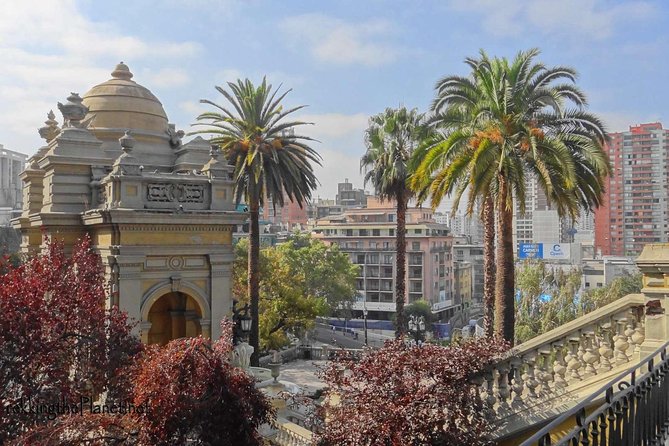
The route continues through the civic district around Plaza de la Constitución. This full-block plaza faces the north side of La Moneda and is surrounded by government offices, the Central Bank, and other public buildings.
The Centro Cultural Palacio de La Moneda sits below Plaza de la Ciudadanía. Its glass roof lights an underground space, which includes the Cineteca Nacional and temporary exhibition rooms. The scheduled visit is about 10 minutes, so think of it as an architectural glance rather than a museum visit.
The route also passes the National Library, the Supreme Court, and the Gabriela Mistral Cultural Centre. The library dates to the early years of the Chilean republic. The cultural centre draws inspiration from Gabriela Mistral, Chile’s Nobel Prize winning poet and an important teacher and writer.
Parque Forestal follows the Mapocho River through central Santiago. It connects several major sights, including the Central Market area and the National Museum of Fine Arts. The museum opened in 1880 and occupies a Beaux-Arts building from 1910, but the schedule does not allow a full museum visit.
Bellavista adds a different side of Santiago. The district sits between the Mapocho River and San Cristobal Hill and is associated with restaurants, galleries, bars, and Pablo Neruda’s Santiago home, La Chascona. The Patio Bellavista complex offers restaurants, shops, and bars near Pio Nono and Constitución.
You may also see the Sculpture Park along the Mapocho River. It opened in 1982 as an outdoor art space with works by Chilean and international artists. Again, the value here is the range of sights. You get a broad orientation to Santiago, but you will not have time to study each place.
Parque Bicentenario provides a modern contrast. Located beside the financial district known as Sanhattan, it has lawns, two artificial lagoons, birds, and family recreation areas. The stop lasts about 25 minutes and is one of the less historic, more relaxed portions of the day.
Torre Costanera, designed by César Pelli, rises 300 meters and is identified as the tallest building in Latin America. Seeing it from the vehicle helps you connect the historic center with Santiago’s newer business district.
Undurraga Winery and four reserve wines
The vineyard portion lasts about three hours, including roughly one hour for the guided winery visit. That makes it a substantial part of the day, not a quick tasting added at the end.
At Viña Undurraga, you walk through the winery park and the Aliwen corner, which recreates vegetation from southern Chile. Totem poles recognize Mapuche culture. The route then continues through the vineyard, the garden of grape varieties, and the winemaking cellars.
The tasting includes four reserve wines and alcoholic beverages are included. Food is not included, so you should not assume lunch is part of the winery visit. Several outings arranged lunch at a separate restaurant, with the bill paid by participants.
Undurraga seems to be the most consistently praised element of the experience. The gardens are attractive, the winery staff conduct the tasting, and the setting offers a calm break after the city traffic. If wine interests you, the vineyard gives this tour a clear advantage over a plain Santiago transfer.
There is one important contradiction. The title describes the vineyard as optional, but some participants were told on the day that it was required. Others booked without it. Confirm your chosen option in writing, and ask how much time the city route receives under each version.
Guides can shape the entire day
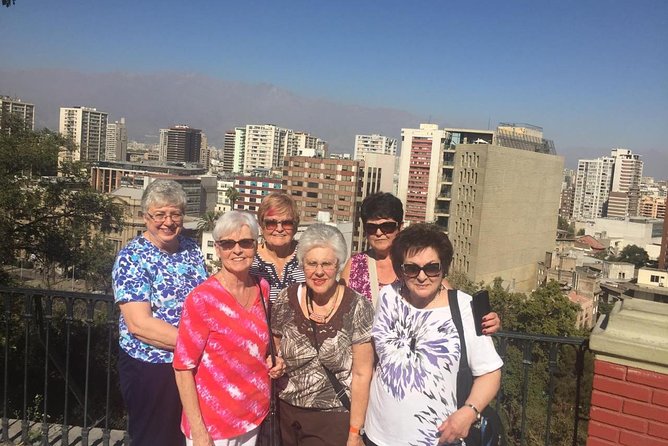
The individual guide matters greatly here. Sebastian received especially strong praise for meeting groups on time, helping with bags, keeping people together, and explaining his home city. Luis was described as patient and well informed about Chilean history. Rodrigo, Max, Gonzalo, and Daniel also received positive comments for their English, humor, flexibility, and local explanations.
Pablo was liked for his friendly manner and broad understanding of Santiago, though he appeared relatively new to guiding. That is not automatically a problem, but it suggests that the quality of the day can vary by assignment.
A good guide has sometimes changed the route when protests, public events, or crowded streets made a planned stop impractical. That flexibility is useful in Santiago, where downtown access can change. The problem comes when a changed route is not explained clearly.
There were also complaints about guides speaking over a radio, unclear communication, poor translation, and stops at jewelry shops that felt unrelated to the main tour. A lapis lazuli workshop appeared in some city transfers. Lapis lazuli is strongly associated with Chilean souvenirs, but you should ask if shopping stops are part of your version before you set out.
The biggest risk: combined or substituted itineraries
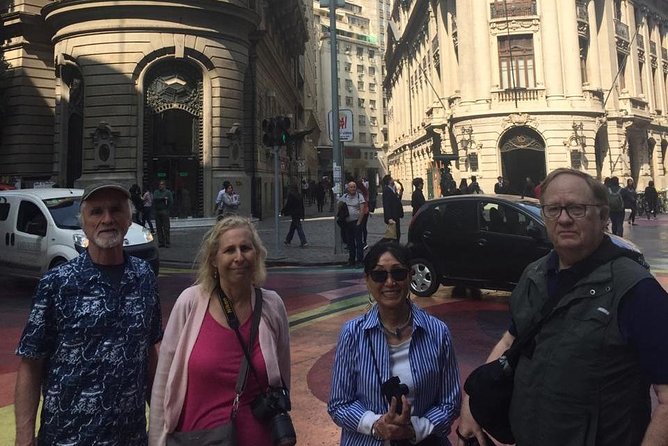
The most serious problem is not the sightseeing itself. It is the possibility that separate bookings are combined into a different route.
Some people booked Santiago with a winery and instead visited Valparaíso and Viña del Mar. One group went to a winery that was not Undurraga. Another spent much of the day at lunch and on coastal sightseeing, leaving little time in Santiago.
This can happen after a ship diversion. One cruise was redirected from San Antonio to Valparaíso because of sea conditions, causing a four-hour delay and cutting the Santiago portion almost entirely. That situation was outside the operator’s control, but the result was still a poor match for the planned experience.
Public holidays and city events can also affect access. In one case, listed visits were unavailable on a holiday and the winery was canceled without enough advance notice. The guide may do his best, but you deserve to know about changes before the vehicle leaves the port.
The safe approach is simple: ask the operator to repeat your route, winery choice, group size, and final drop-off before departure. Show the guide your confirmation if the plan changes. If the answer is vague, you may prefer a dedicated transfer or private car.
Timing, lunch, and airport drop-off
The advertised seven to eight hours can include driving, waiting, lunch, wine tasting, photo stops, and hotel or airport drop-offs. It does not mean seven full hours of sightseeing.
Lunch is at your own expense. Some groups were directed toward a buffet costing about $30 per person, while others chose an à la carte restaurant or used nearby market facilities instead. If you have dietary needs, limited mobility, or simply prefer a quick meal, tell the guide before lunch arrangements are fixed.
Airport drop-off is a strong reason to consider the tour, but it also makes timing critical. One group reached the airport successfully after a full day, while another feared missing a late flight because city hotel drop-offs came before the airport. If you have a flight, insist that the airport order and estimated arrival time are confirmed.
The tour is free to cancel up to 24 hours before the local start time. Changes made inside that window are not accepted for a refund. That policy gives you some protection before the day, but it cannot repair a late pickup or an unexpected route.
Who should book this San Antonio to Santiago tour?
I would consider it if you have a full day between your cruise and a Santiago hotel or airport, want a small group, and value seeing several sights rather than entering museums at length. It is also a sensible choice if the Undurraga tasting is important to you and you are comfortable with a busy schedule.
It suits independent people who can adapt. You may walk on hills, eat at your own expense, share the vehicle with people headed to different hotels, and spend time in traffic.
I would be cautious if your flight is tight, if you paid for a truly private tour, or if you need the exact published route. The reports of long waits, mixed itineraries, substitute wineries, and poor vehicle conditions are too serious to ignore.
Should you book it?
At $94.80, the package can be good value when the pickup is on time, the group stays small, and the planned Santiago and Undurraga route is delivered. The guides who receive the strongest praise add real value, especially when they explain Chilean history, help with translation, and adjust sensibly to crowds or demonstrations.
My advice is to book only after confirming four points: the exact starting port, the winery option, the final drop-off, and the airport timing. If those details are firm and you have generous time, this can be an efficient first look at Santiago with a pleasant wine stop. If missing a flight or losing the city tour would ruin your trip, pay more for a private, dedicated transfer.
FAQ
How long does the San Antonio to Santiago tour last?
The scheduled duration is approximately seven to eight hours. Actual time can change because of port delays, traffic, lunch, city events, ship diversions, or waiting for other participants.
What time does pickup begin?
The listed start time is 8:00 a.m. Pickup is available at San Antonio port and selected hotels and ports in San Antonio, Santiago, Viña del Mar, and Valparaíso.
Is the Undurraga Winery visit included?
The winery visit is listed as an optional selection, but some departures have treated it as required. Confirm your exact option before the tour begins. The visit includes a guided winery route and four reserve wine tastings.
How many people can join the group?
The maximum group size is listed as 15 people. The promised vehicle is an air-conditioned minivan, though vehicle conditions have varied on some departures.
Is lunch included?
No. Food and drinks are not included unless specifically stated. The wine tasting and alcoholic beverages at the winery are included.
Can cruise passengers book this experience?
Yes. Cruise passengers can book pickup from San Antonio port or Valparaíso port. At booking, you must provide the ship name, docking time, disembarkation time, and re-boarding time.
Can the tour finish at Santiago Airport?
Yes, Santiago Airport is listed as a drop-off location. If you need an airport transfer, confirm the drop-off order and expected arrival time, especially if other people in the vehicle are going to hotels.
More Wine Tours around Valparaiso & Vina del Mar
- Private Tour: Viña del Mar and Valparaíso Tour with Wine Tasting in Casablanca Valley
★ 4.5 · 188 reviews - Santiago: Viña del Mar, Valparaiso, with Casablanca Wine Tasting
★ 5.0 · 156 reviews - Santiago: Tour to Isla Negra, Algarrobo and Undurraga Wines
★ 4.3 · 136 reviews - Street Art in Valparaiso and Wines in Casablanca from Santiago
★ 5.0 · 126 reviews
More Wine Tours in Valparaiso & Vina del Mar
- Valparaiso Port and Viña del Mar with Casablanca Wine Tasting
★ 5.0 · 6,110 reviews - Tour to Valparaíso, Viña del Mar, Pablo Neruda Museum and Vineyard
★ 5.0 · 2,273 reviews - Santiago: Viña del Mar, Valparaiso, with Wine Tasting
★ 4.7 · 351 reviews - Carob, Vineyard Houses of the Forest and Museum Neruda Isla Negra
★ 5.0 · 260 reviews
Just added around Valparaiso & Vina del Mar
- Viña del Mar and Valparaiso: guided day tour★ 4.2 · 8 reviews
- Viña del Mar: Guided city tour★ 4.9 · 10 reviews
- Viña del Mar and Reñaca 4-Hour Pacific Coast Tour★ 4.7 · 14 reviews
- VIÑA DEL MAR AND VALPARAISO TOUR★ 4.8 · 20 reviews
- Valparaíso, Viña del Mar and Casablanca Full Day Experience★ 4.7 · 14 reviews
- Valparaíso y Viña del Mar full day★ 4.6 · 3 reviews
- Private: Viña del Mar and Valparaiso Day Tour★ 5.0 · 5 reviews
- Valparaíso to Casablanca: wine tour with premium tasting and transportation★ 4.4 · 3 reviews
Cruises & Boat Tours, compared.
Torres del Paine: 3-Hour Scenic Boat Tour to Grey Glacier
Read our review →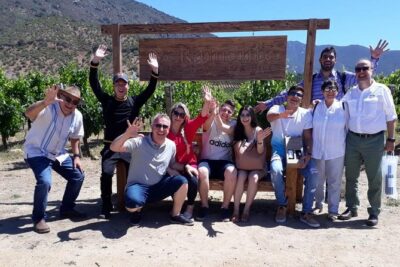
San Antonio after Cruise tour to Valparaiso and Casablanca Drop off in Santiago
Read our review →
Magdalena Island Penguin Tour by Boat from Punta Arenas
Read our review →
Transfer to San Antonio port prior cruise with tour in Valparaiso and Casablanca
Read our review →
Balmaceda & Serrano Glaciers Boat Tour and traditional lunch.
Read our review →Magdalena Island Penguin Tour by Boat from Punta Arenas
Read our review →
Balmaceda and Serrano Glaciers Sightseeing Cruise from Puerto Natales
Read our review →