
Reviewed · SAN PEDRO DE ATACAMA TOURS
Chile: Tour Red stones + Altiplanic Lagoons + Laguna Chaxa
Red rocks meet flamingo lagoons here. This 11-hour outing links Toconao, Laguna Chaxa, the Miscanti and Meñiques Lagoons, and Piedras Rojas in one long day. I like the wide range of scenery, from quiet village streets to volcanoes and salt flats, and I like that breakfast and lunch are included. The main drawback is altitude: the lagoons sit around 4,200 meters, so this is a demanding day for some people.
You also need to budget for the park admission, which is not included in the $85 price and must be paid in advance. Still, with pickup, shared transport, a bilingual guide, two meals, and a central drop-off included, this tour offers a practical way to reach places that are difficult to connect on your own.
In This Review
- Key points at a glance
- Why this full-day Andes route is worth your time
- Toconao brings a quiet village into the picture
- Laguna Chaxa turns the salt flat into a wildlife stop
- Socaire adds agriculture and Andean village life
- Miscanti and Meñiques show the high Andes at full scale
- Piedras Rojas explains the color in the rocks
- What the $85 price really includes
- Who should book this 11-hour outing?
- Should you book the Red Stones and Altiplanic Lagoons tour?
- FAQ
- How long does the tour last?
- What places does the tour visit?
- How much does the tour cost?
- Are park entrance tickets included?
- How much is the entrance ticket?
- What meals are included?
- Is transportation included?
- What languages are available for the guide?
Key points at a glance
- Toconao gives the day a human start: Visit a calm Atacama town known for Kunza meaning Lost Corner, simple architecture, crafts, and local agriculture.
- Laguna Chaxa is the flamingo stop: This sector of the Salar de Atacama lies within Los Flamencos National Reserve and is home to several bird species.
- Miscanti and Meñiques reach serious altitude: At about 4,200 meters, the lagoons bring volcano views, cold mountain air, and a need to pace yourself.
- Piedras Rojas gets its color naturally: Oxidation and weathering give the rocks their deep red tones at the Salar de Talar.
- The $85 package covers the basics well: Shared transport, pickup, guide, breakfast, lunch, and central drop-off are included.
- Park admission is an extra cost: The ticket must be paid ahead of time, so confirm the current amount before booking.
Why this full-day Andes route is worth your time
This is not a short scenic outing with one viewpoint and a quick return. It is a long circuit through several very different parts of northern Chile. You move from a settled village to salt-flat wetlands, then climb into the high Andes before finishing among red volcanic rocks.
That variety is the strongest reason to choose it. I like tours that show how people, wildlife, water, and geology share one dry region. Here, the contrast is clear. Toconao depends on agriculture and local craft traditions, while Laguna Chaxa supports flamingos in an otherwise stark salt-flat setting. Higher up, melted ice feeds the Miscanti and Meñiques Lagoons.
You should also understand the trade-off. Eleven hours is a lot of time in a shared vehicle. The day begins early enough to fit several distant stops, and the route reaches high elevation. If you want a slow morning or dislike long road sections, this may feel packed. If you want to see the region’s main natural highlights in one organized day, the schedule makes sense.
A few more San Pedro De Atacama trips worth comparing side by side
- San Pedro de Atacama: El Tatio Geysers Tour
★ 4.7 · 943 reviews - Tour to the Hidden Lagoons of Baltinache
★ 5.0 · 694 reviews - San Pedro de Atacama: Etno-Stargazing Tour with Transfer
★ 4.8 · 629 reviews
Toconao brings a quiet village into the picture
Toconao is described by its Kunza name, Lost Corner, and the name fits its quiet character. The town offers a gentler beginning than the dramatic high-altitude stops later in the day. You can expect a visit focused on its calm atmosphere, architecture, crafts, and the way local life has adapted to the special climate.
The stop matters because it keeps the tour from becoming a string of empty viewpoints. You get a look at a community in the Atacama rather than only seeing the desert as scenery. The visit also introduces agriculture, which becomes more meaningful after you see how little water the surrounding region appears to have.
Crafts are part of Toconao’s appeal, though the supplied details do not specify exactly how much time is provided for browsing or shopping. I would treat this as a short cultural stop, not a dedicated market visit. If local handicrafts matter to you, ask the guide how long you will have in town.
The architecture is another reason to pay attention. Simple forms and local building traditions make more sense when you see them in relation to the dry climate and remote setting. This is a place to slow down for a few minutes, notice the details, and avoid rushing straight to the next photo.
Laguna Chaxa turns the salt flat into a wildlife stop
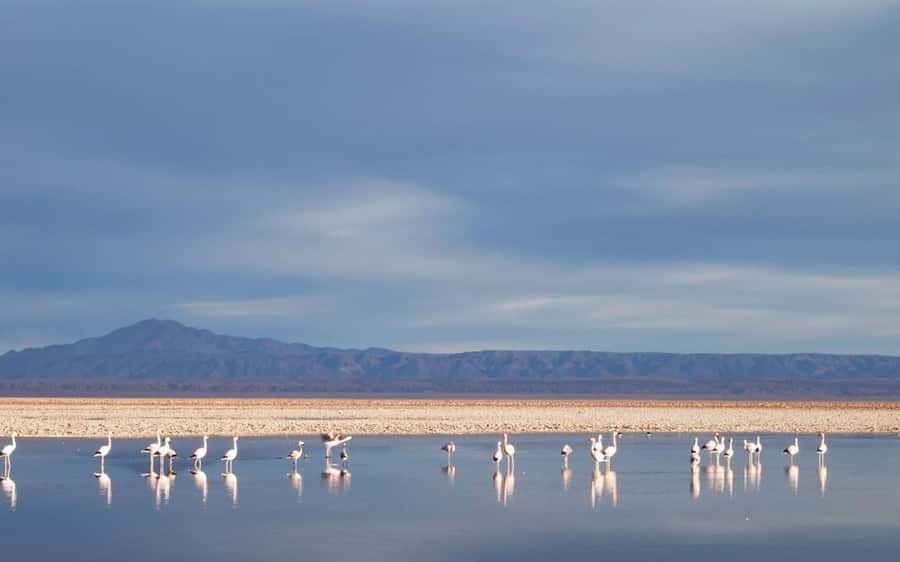
From Toconao, the route reaches Laguna Chaxa in the Soncor Sector of Los Flamencos National Reserve. This is the marginal area of the Salar de Atacama, where shallow water and salt-flat conditions create habitat for birds.
The main attraction is the flamingos. The area is associated with Parinas Chicas, or small flamingos, along with other species listed for the reserve. You might also find Horned Tagua, Caití, Baird’s Sandpiper, Puna Plover, Juarjual Duck, and Guallata.
That list tells you why this stop deserves more than a quick glance. Laguna Chaxa is not simply a white salt surface with birds placed in the distance. It is a working wetland within a very dry region. The value comes from seeing how water creates life here, even in a place that first appears almost empty.
Bring patience. Wildlife sightings are never guaranteed at a precise spot, and the information provided does not promise a particular number of flamingos or a close approach. I would bring a camera with a useful zoom and keep expectations sensible. The reserve setting, open views, and bird habitat are the point, not a staged animal encounter.
The ticket for this reserve and the other sites is separate from the tour price. Since the admission must be paid in advance, handle that requirement before the morning of departure. The listed amounts are 20,200 for nationals and 28,7500 for foreigners, but the foreign amount contains an unusual extra zero in the supplied pricing. Confirm the exact current figure with the provider before paying.
Socaire adds agriculture and Andean village life
The route then turns southeast toward the Andes and reaches Socaire, an Altiplano town. The visit includes its church and an explanation of local agriculture. This is a useful pause before the road climbs higher.
Socaire helps you understand that the Altiplano is not only a place of volcanoes and cold blue water. People cultivate land there, and the village has its own pace and traditions. The church gives the stop a clear focal point, while the agriculture discussion adds context that a viewpoint alone cannot provide.
I would pay close attention to this part of the tour if you are interested in how communities adapt to remote mountain conditions. The supplied information does not specify the crops, length of the visit, or whether you enter the church, so do not expect a detailed farm tour unless the guide confirms it.
The practical benefit is also physical. A village stop breaks up the drive before the highest section of the route. You can use the pause to eat lightly, drink water, and judge how your body is responding before continuing to about 4,200 meters.
Still Chile, but an entirely different landscape:
- Piedras Rojas, Altiplanics Lagoons & Salar Full-Day Tour
★ 4.7 · 592 reviews - The Roofless Experience San Pedro de Atacama Stargazing Tour
★ 5.0 · 522 reviews - Half Day Tour to Geysers del Tatio
★ 5.0 · 499 reviews - San Pedro de Atacama: Stargazing Experience
★ 4.7 · 489 reviews
Miscanti and Meñiques show the high Andes at full scale
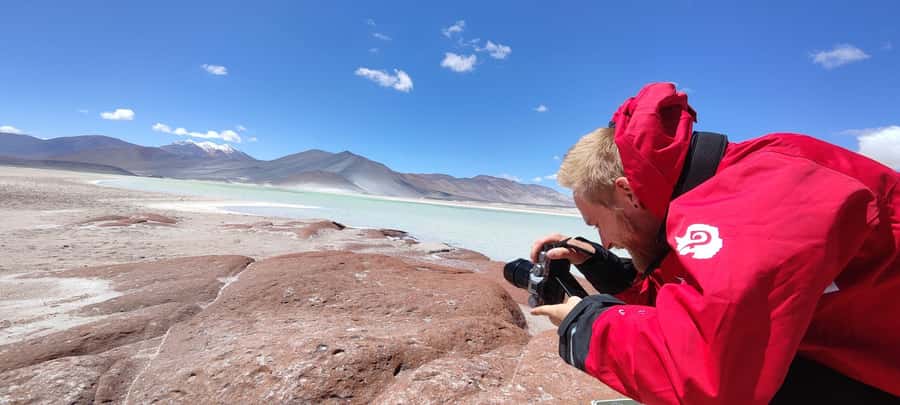
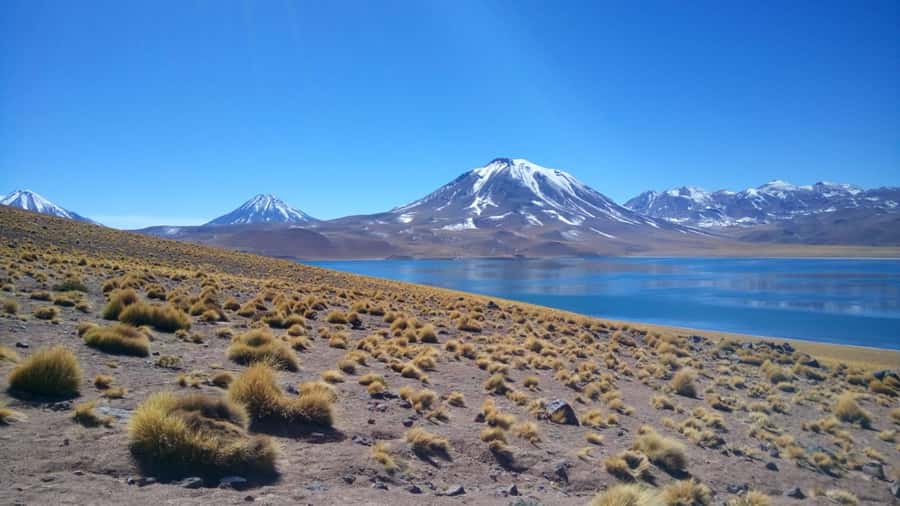
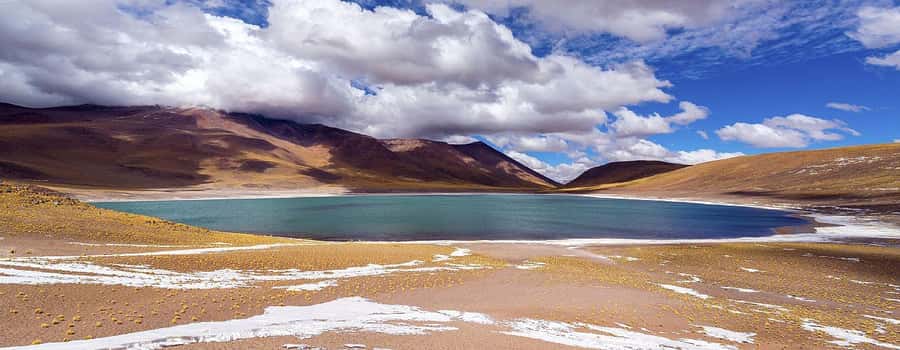
The Miscanti and Meñiques Lagoons are the highest part of the day, at approximately 4,200 meters above sea level. They sit among volcanoes and steep mountain forms, including Cerro Miscanti and the Meñiques Volcano.
The setting is the tour’s great visual payoff. The lagoons are fed by underground water from melted ice, a detail that gives the scenery extra meaning. Water that begins as ice in the high Andes eventually supports lakes, wildlife, and human settlement farther below.
You may see Horned Tagua, Parinas Chicas, Caití, Baird’s Sandpiper, Puna Plover, Juarjual Duck, and Guallata in this area as well. The plant life is described mainly as llareta and paja brava. These are not decorative extras. They show the small number of plants able to cope with cold, dry air and high elevation.
Altitude is the serious practical issue. The tour data does not provide a detailed acclimatization policy or medical guidance, so you need to judge your own readiness. If you already know that high altitude affects you, ask the provider for current advice before booking. At the very least, plan to move slowly and avoid treating the stop like a normal lowland walk.
The cold can also surprise you. No clothing list is provided, but the elevation and mountain setting make warm layers a sensible choice. Since the day includes breakfast and lunch on route, you do not need to arrange those meals yourself, but keep your own water and any personal essentials close at hand.
Piedras Rojas explains the color in the rocks
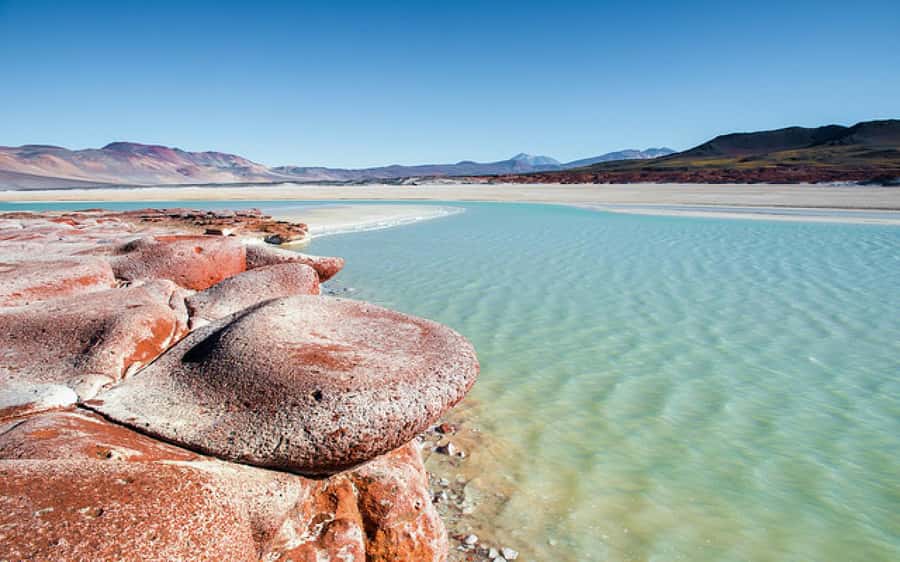
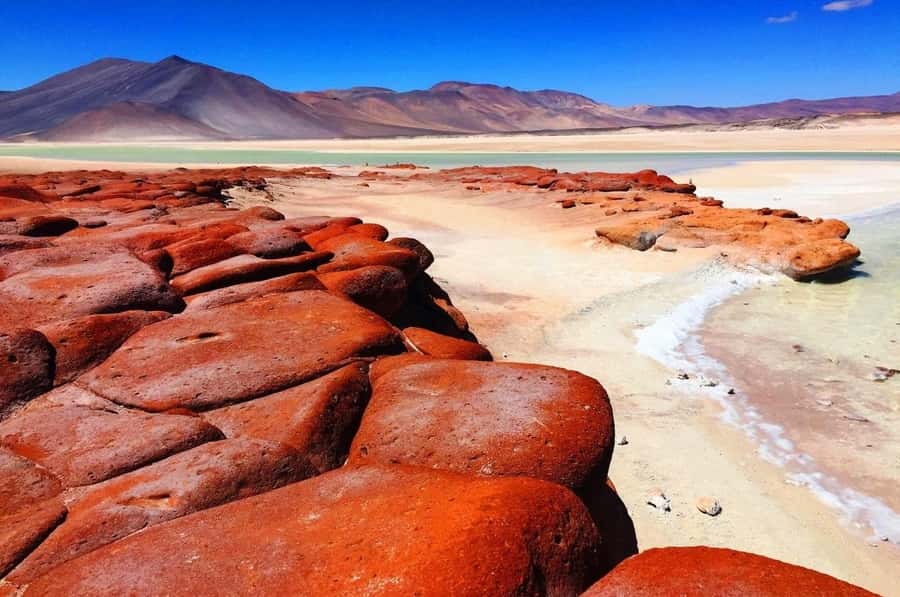
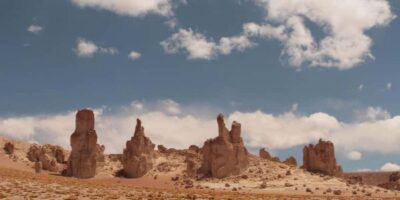
The final major natural stop is the Salar de Talar, known to visitors as Piedras Rojas. Here, the rocks have been altered by natural oxidation and weathering, producing their red tones.
The color is the reason most people remember this stop, but the geology makes it more than a pretty backdrop. Oxidation changes minerals in the rock, while weathering breaks them down over time. The result is a bold contrast with the pale salt surfaces and high Andean setting.
The description says the rocks lose some intensity in the wider Andes, which is a useful reminder not to expect one fixed shade in every condition. Light, weather, and viewing distance can affect how strong the red appears. I would think of Piedras Rojas as a place for broad views and natural color rather than a single perfect photo point.
The route reaches this area after the high lagoons, so the day may feel tiring by then. That is another reason to appreciate the shared transport and organized route. You can look out from the vehicle between stops instead of concentrating on directions, roads, and parking.
What the $85 price really includes
At $85 per person, this is a practical package rather than a private or highly customized outing. The price includes:
- Pickup
- Shared transportation
- A Spanish and English-speaking driver-guide
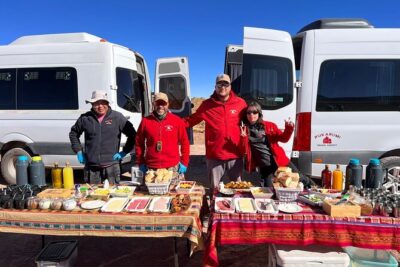
- Breakfast on the route
- Lunch on the route
- Drop-off in the center
Those inclusions matter because the main cost of this day is not just entrance to a viewpoint. It is the distance, vehicle time, high-altitude route, meals, and coordination needed to connect several remote sites.
Shared transport keeps the price within reach, but it also means you give up some control over timing. You may not be able to linger at a favorite stop or change the order. The data does not state the group size or vehicle type, so ask if space and personal comfort are important to you.
The park ticket is the main extra expense. The stated national price is 20,200, while the foreign price appears as 28,7500. Because that figure is unclear, confirm the exact amount, currency, and which sites it covers. The ticket must be paid in advance, so do not assume the $85 covers every admission.
Breakfast and lunch improve the value. On an 11-hour route, buying both meals separately could add cost and create delays. The supplied information does not describe the menu or dietary options, so tell the provider about food needs before the tour if that applies to you.
Who should book this 11-hour outing?
I would recommend it to you if you want the main Atacama and high-Andes sights in one day, especially if you value scenery, birds, geology, and small-town context equally. It suits people who prefer a planned route and do not want to arrange several remote visits themselves.
It is also a good choice for photographers and bird watchers who want several distinct settings. Laguna Chaxa offers wildlife potential, Miscanti and Meñiques provide mountain and water views, and Piedras Rojas adds unusual color. The tour gives you more range than a single salt-flat visit.
I would be more cautious if you want a relaxed pace. The route lasts 11 hours, uses shared transport, and reaches roughly 4,200 meters. The combination of long road time and altitude can make the day feel strenuous, even though meals and transport are handled for you.
The bilingual guide is another plus for English-speaking visitors. Spanish and English are offered, but no individual guide name is provided. If language support is a major concern, confirm how the guiding is shared between the two languages.
Free cancellation up to 24 hours before departure and the reserve-now, pay-later option give you some flexibility. Keep those terms in mind, but focus first on the altitude, the extra ticket, and the long schedule. Those factors will shape your enjoyment more than the booking conditions.
Should you book the Red Stones and Altiplanic Lagoons tour?
Book it if you want a full day that connects flamingo habitat, village life, volcanoes, high lagoons, and red rock without arranging separate transport. The $85 cost is fair for the included pickup, shared vehicle, bilingual guide, breakfast, lunch, and central drop-off.
Before committing, confirm the foreign park admission price and think honestly about the 4,200-meter elevation. If you are comfortable with a long, structured day and want broad coverage of northern Chile, this is a strong value. If you prefer short outings or need a low-altitude schedule, choose a gentler experience instead.
FAQ
How long does the tour last?
The tour lasts 11 hours.
What places does the tour visit?
It visits Toconao, Laguna Chaxa in the Soncor Sector of Los Flamencos National Reserve, Socaire, the Miscanti and Meñiques Lagoons, and the Salar de Talar, also known as Piedras Rojas.
How much does the tour cost?
The listed price is $85 per person.
Are park entrance tickets included?
No. Entrance tickets to the parks or places visited are not included and must be paid in advance.
How much is the entrance ticket?
The supplied information lists the national ticket as 20,200 and the foreign ticket as 28,7500. Confirm the foreign amount with the provider because the figure is written with an unusual extra zero.
What meals are included?
Breakfast and lunch on the route are included.
Is transportation included?
Yes. Shared transportation, pickup, and drop-off in the center are included.
What languages are available for the guide?
The live guide service is available in Spanish and English.
Just added around San Pedro De Atacama
- Vallecito★ 4.7 · 13 reviews
- Atacama Desert and Magic Bus Visit★ 4.8 · 15 reviews
- San Pedro de Atacama: Valle de la luna★ 3.0 · 3 reviews
- Valle de la Luna: A Moon-Like Escape in Atacama★ 5.0 · 3 reviews
- 3 Perfect Days in Atacama + Transfer★ 4.5 · 3 reviews
- Atacama Stargazing Tour Under One of the World’s Clearest Skies★ 4.0 · 3 reviews
- Valley of the Moon In San Pedro de Atacama★ 4.5 · 9 reviews
- Moon Valley Tour, the Best Seller★ 4.5 · 2 reviews
San Pedro de Atacama Tours, compared.

Piedras Rojas, Altiplanics Lagoons & Salar Full-Day Tour
Read our review →
The Roofless Experience San Pedro de Atacama Stargazing Tour
Read our review →

Full Day Tour to Piedras Rojas, Altiplanic Lagoons and Chaxa
Read our review →Browse the lists this tour appears in